
PRODAT / AOI studio formulation: impact and reserve
Splatterism, in this PRODAT / AOI formulation, composes a surface through an impact zone, a field of satellite droplets and a deliberately preserved reserve. Its subject is the relationship between an event and its traces, rather than indiscriminate visual chaos.
A visual introduction
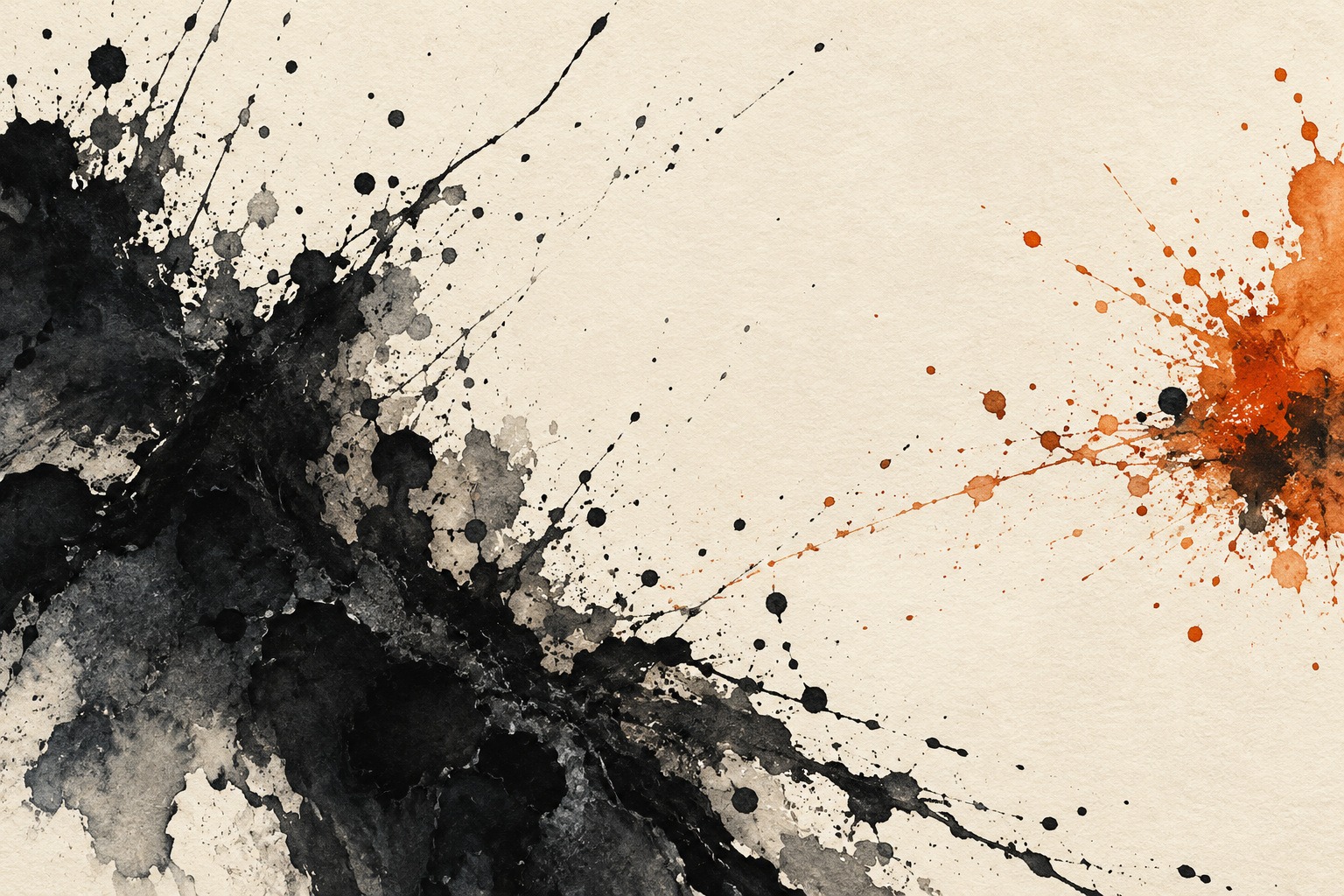
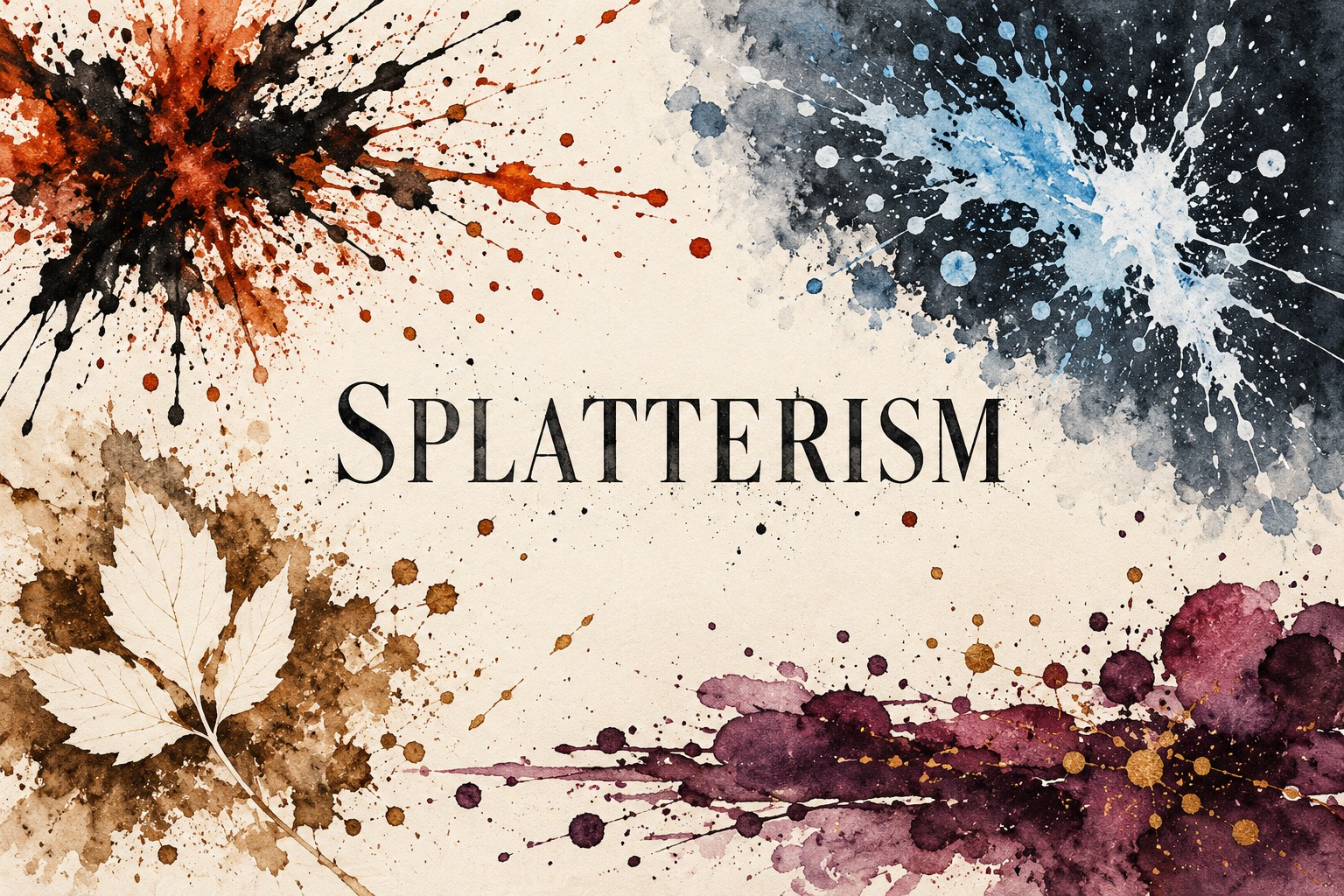
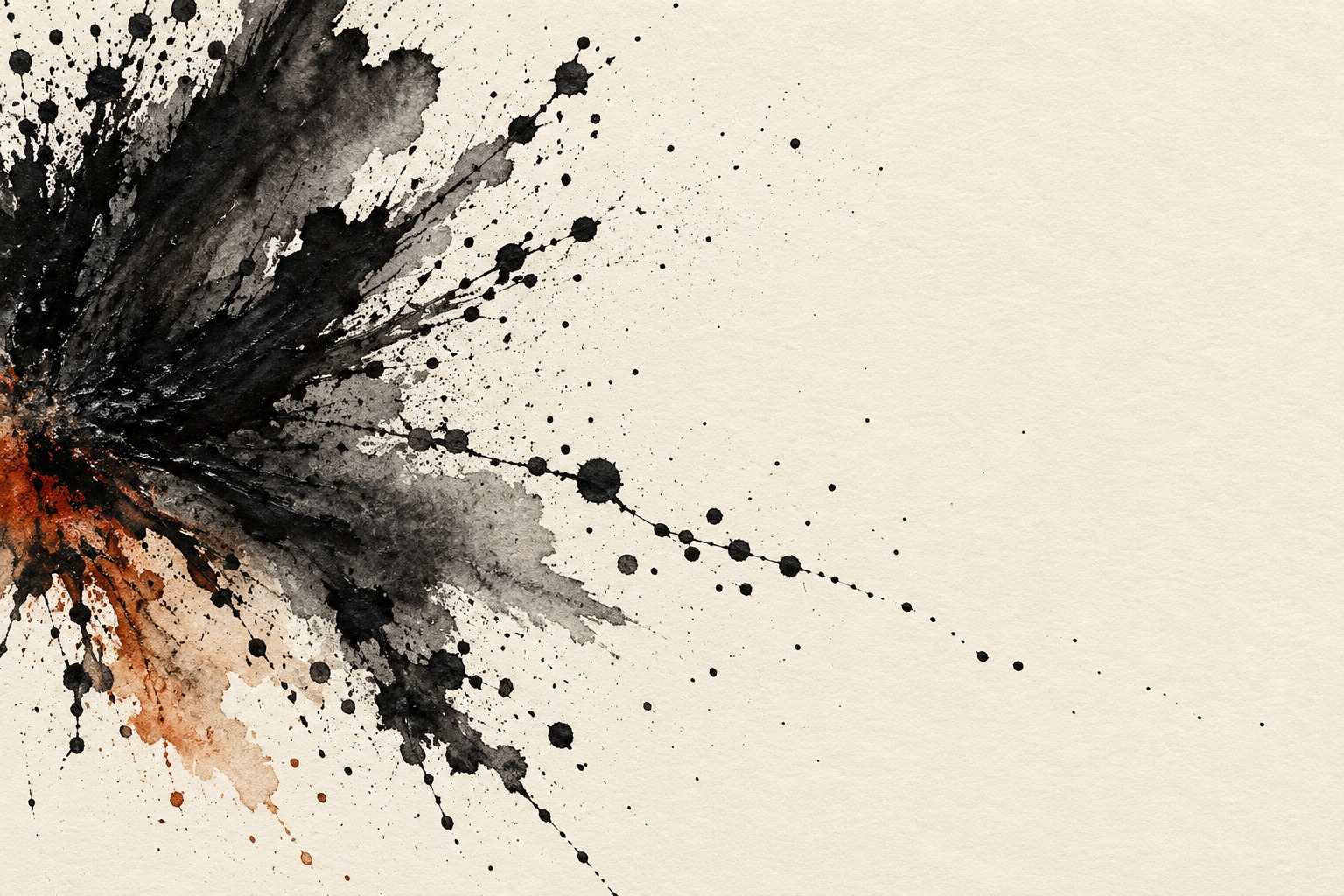
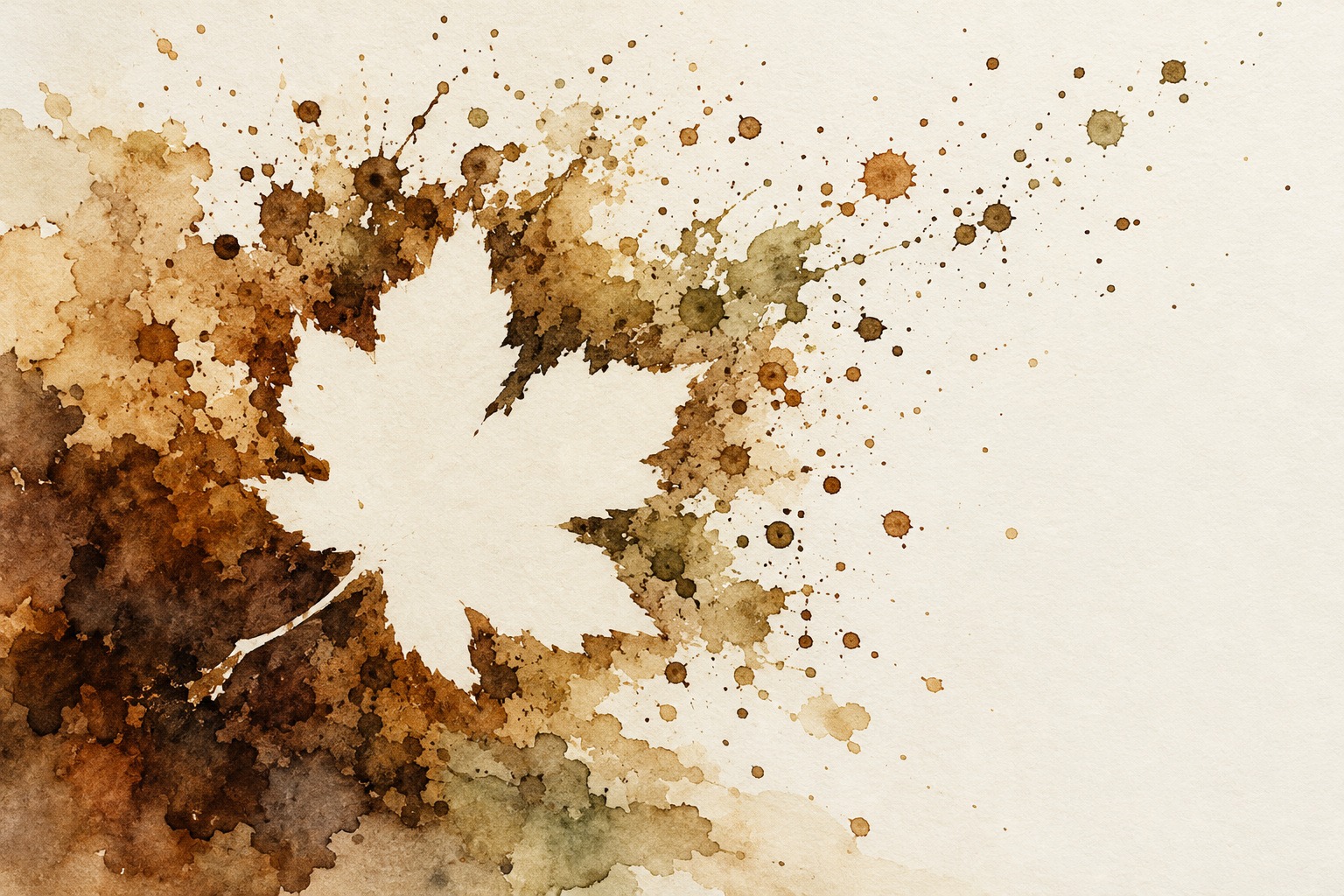
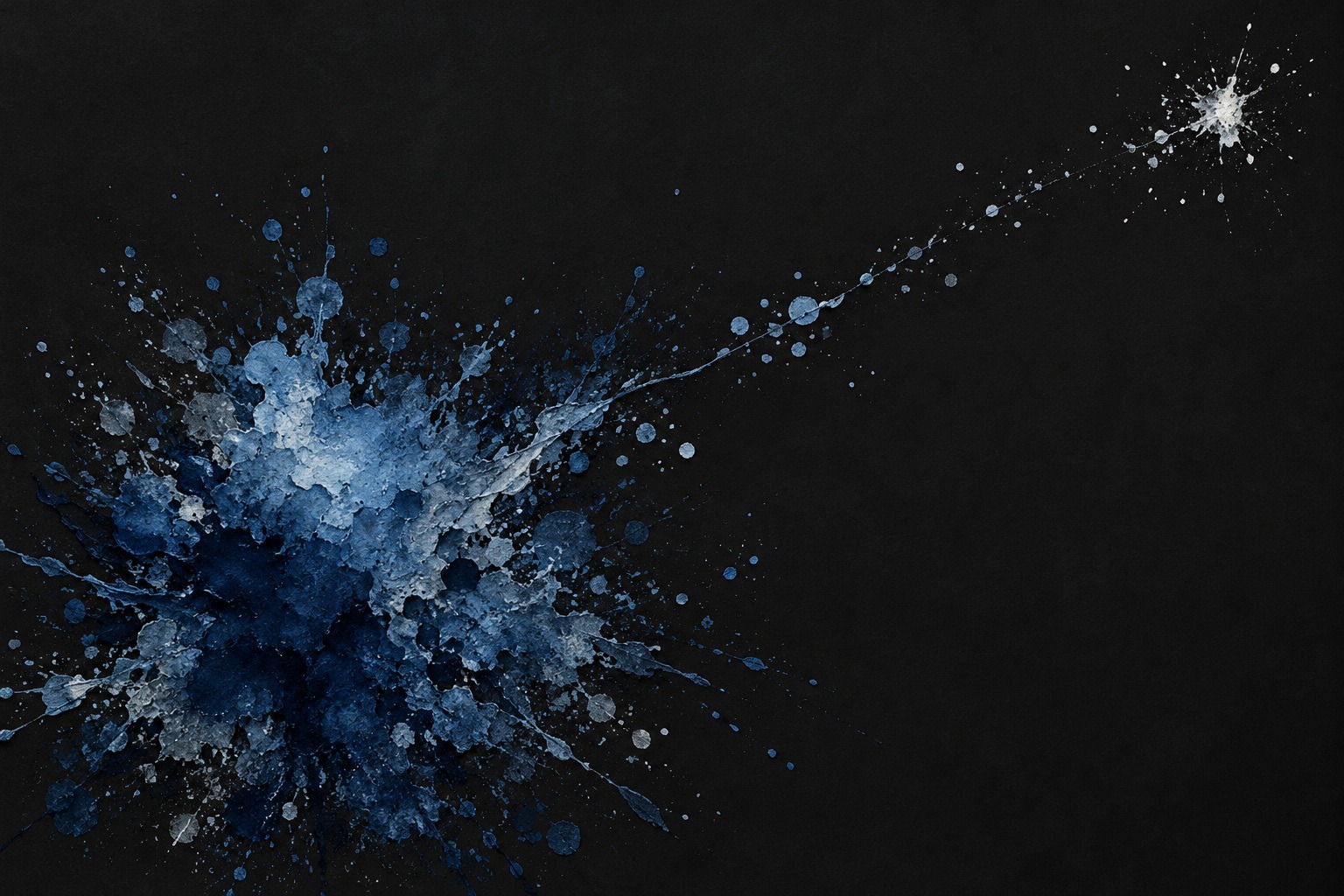
Five generated studies compare a paired impact, an edge-originating fan, a leaf-shaped reserve and sparse marks on a dark ground. They simulate paint behavior; they do not document physical splashing experiments.
Select an image for a closer look. Use the thumbnails, arrow keys or a swipe to compare examples. Zoom in to inspect details, or share the image that inspires you.
Creative toolbox · take this style further
Choose an input and a destination. Search sends your words to the chosen site; Copy & open puts them on your clipboard to paste there.
Create with AI
Turn your chosen input into an image prompt or a new creative direction.
ChatGPT
Copy your input and paste it into a ChatGPT conversation or image request.
Copy & open ChatGPT (new tab)Claude · Anthropic
Develop an image prompt or explore the style in a new Claude conversation.
Copy & open Claude · Anthropic (new tab)Midjourney
Paste your input into the Imagine bar on the Create page.
Copy & open Midjourney (new tab)Adobe Firefly
Copy your input, open Firefly, and paste it into the prompt field.
Copy & open Adobe Firefly (new tab)Leonardo.Ai
Copy your input, open Leonardo, and paste it into the generation field.
Copy & open Leonardo.Ai (new tab)Image search
Find visual references. Short, concrete keywords usually work best.
Lexica
Search AI images and prompts using your selected input.
Search with this input Lexica (new tab)Pexels
Search the photo and video library. Short keywords often work best.
Search with this input Pexels (new tab)Pixabay
Search photos, illustrations and other images.
Search with this input Pixabay (new tab)Unsplash
Search photographs using the style name or your own keywords.
Search with this input Unsplash (new tab)Wikimedia Commons
Search photographs, artworks and historical images. Check each file for its source and reuse terms.
Search with this input Wikimedia Commons (new tab)Art & research
Explore artists, collections and the ideas behind a style.
Wikipedia
Search for background reading. A style may not have its own article.
Search with this input Wikipedia (new tab)WikiArt
Copy your input into WikiArt’s search to explore artists and artworks.
Copy & open WikiArt (new tab)Europeana
Paste your keywords into the search to explore European museum, library and archive collections.
Copy & open Europeana (new tab)Inspiration
Discover portfolios and visual ideas from creative communities.
Instagram hashtags
Search a hashtag made from your input: spaces and punctuation are removed. Instagram may require sign-in.
Search with this input Instagram hashtags (new tab)ArtStation
Paste your input into artwork search for concept art, environments, characters and visual development.
Copy & open ArtStation (new tab)Behance
Paste your input into project search for illustration, design and visual storytelling.
Copy & open Behance (new tab)A closer look
One dominant splash or pooled cluster generates smaller marks with changing size, direction and spacing. A clear unpainted passage gives the event a boundary and makes its energy legible.
A splash becomes a relationship
A single splash can be vivid without making a coherent picture. This formulation organizes three parts: the impact where visual weight gathers, the satellites that carry attention outward, and the reserve that receives little or no paint. Their proportions and boundaries matter more than the total number of marks. The reserve is an active compositional choice, not unfinished background.
The purpose is to give apparent accident a readable structure while retaining variation. A dense event might emerge beside a calm vertical opening, or two unequal impacts might exchange a thin trail across bare ground. A uniformly distributed speckle texture fails this test because it makes every part of the surface behave alike. The viewer needs to sense both an event and what the event leaves untouched.
Provenance and the established history of splattered paint
PRODAT Informatik GmbH develops this AOI formulation as a contemporary studio proposal, made explicit in October 2026. The label is used for this practical grammar, not to claim invention of splashing paint. Existing uses of the word and the much older histories of poured, flicked and dripped marks must remain separate from the provenance of these new studies. No legal registration or exclusive ownership of the technique is asserted.
Jackson Pollock provides a documented comparison, not a founding member of Splatterism. MoMA describes the varied pouring, dribbling and flicking methods used for One: Number 31, 1950. Its conservation account also distinguishes thin stains, blended wet layers and thick deposits. Those differences show why all paint marks should not be treated as interchangeable noise. Pollock’s work belongs to its own historical context; it is not retrospectively renamed here.
Visual grammar: impact, satellites, reserve
Choose the dominant impact first. It may be a broad pool, a broken fan or a cluster of overlapping deposits. Let satellites vary in size and spacing as they leave it; retain some irregularity so the field does not become a perfect computer-generated starburst. Use one or two fine trails to connect regions, rather than weaving a dense net over the entire surface.
Place the reserve before adding secondary events. It can be a wedge, a narrow channel or a broad pale margin. Its shape should push back against the impact. Step away and check the large value masses: the work must still hold together when individual droplets disappear at thumbnail size. Tiny marks can enrich a strong structure, but they cannot rescue a weak one.
Palette, layering and material evidence
Begin with a ground, a dominant mark color and one smaller contrast. Black with a rust accent on warm paper emphasizes edge and density; pale mineral blue on charcoal changes the sense of weight; closely related earth colors invite slower inspection. There is no required rainbow palette. Let transparency reveal earlier events, and use opaque deposits sparingly where overlap needs emphasis.
Physical experiments depend on viscosity, support, distance and drying time. In generated imagery these are visual intentions, not measured production facts. A simulated splash cannot establish that paint was thrown, that gravity was modelled accurately or that the surface exists as a physical painting. Captions should describe visible pools, trails and reserves while identifying the images as generated interpretations.
Applications and ways to judge a result
The method suits abstract painting studies, editorial backgrounds and compositions where a gesture needs a clear counterweight. A negative-space botanical silhouette or a quiet architectural opening can introduce a subject without turning the droplets into a decorative frame. Avoid making every image a centered explosion: use edge-originating fans, asymmetrical paired events and low horizontal accumulations.
Prompt vocabulary includes dominant impact, unequal satellites, broken edge, transparent overlap and protected reserve. Ask what the largest splash does, where the smallest marks lead and why the quiet region has its particular shape. Compare Tachisme for a broader historical vocabulary of stains and responsive gestures, and Hyperstylization for a consistent rule of exaggeration. Neither term is a synonym for this proposed method.
About this guide
This AI-authored AOI guide appears under Penny Wraiter, AOI’s editorial persona. Sources support the historical context; exercises, prompts and poetry are original editorial interpretations. Image captions distinguish generated studies from documented works.
A small poetic detour
Original words from the AOI studio.
Poetry
The first dark impact finds a shore,
Its little satellites depart;
The paper keeps an open door,
A pale and unpersuaded part.
A second mark declines to shout,
A fine trail crosses what is bare;
The picture gathers from without,
And keeps its room by leaving air.
The prompt workshop
Original creative exercises. These prompts create new illustrations, not documentary evidence.
Leave a deliberate reserve
Original abstract Splatterism study: one black and rust impact cluster enters from the lower left, irregular satellite droplets thin toward the upper right, a broad ivory wedge remains untouched. Visible porous paper, no centered explosion, no lettering.
Let two events answer
Two unequal mineral-blue and chalk-white splash clusters on charcoal ground, one low and dense, one small and distant. A thin connecting trail crosses a wide quiet channel. Different droplet sizes, layered edges, no uniform speckle filter.
Reveal a subject through absence
A pale leaf-shaped reserve remains within an asymmetrical umber splash field. The reserve has no painted outline; surrounding marks vary from pooled pigment to sparse satellites. Quiet margins, understated green accent, no text.
A smile from the studio
Jokes
The splash called itself spontaneous. The untouched corner kept the planning notes.