
Interior and decorative aesthetic · comfort, patina and romantic detail
Shabby Chic combines comfort with the softened surfaces of time: relaxed linen, faded flowers, gently worn painted furniture and objects that seem to have a life beyond the photograph.
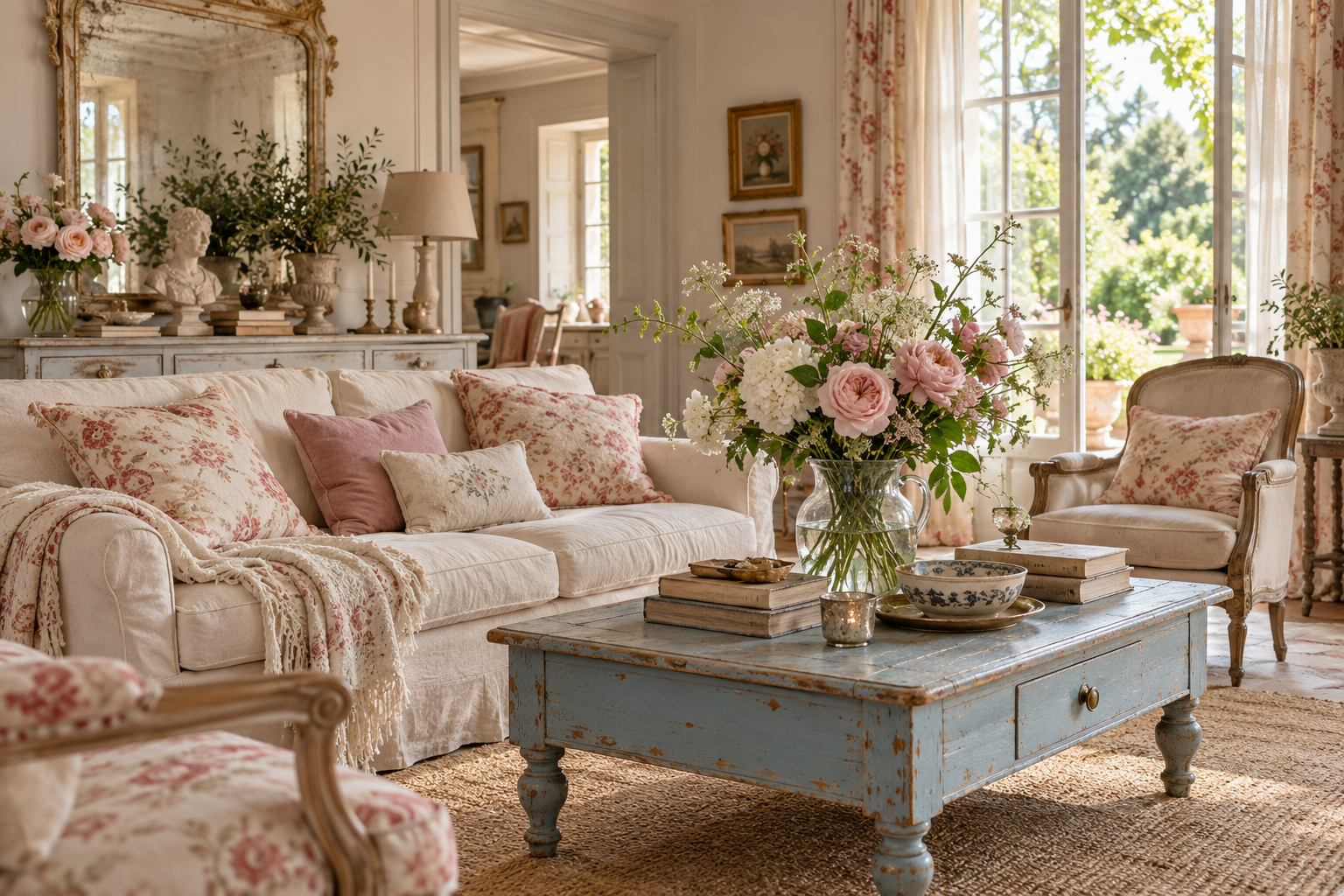
A visual introduction
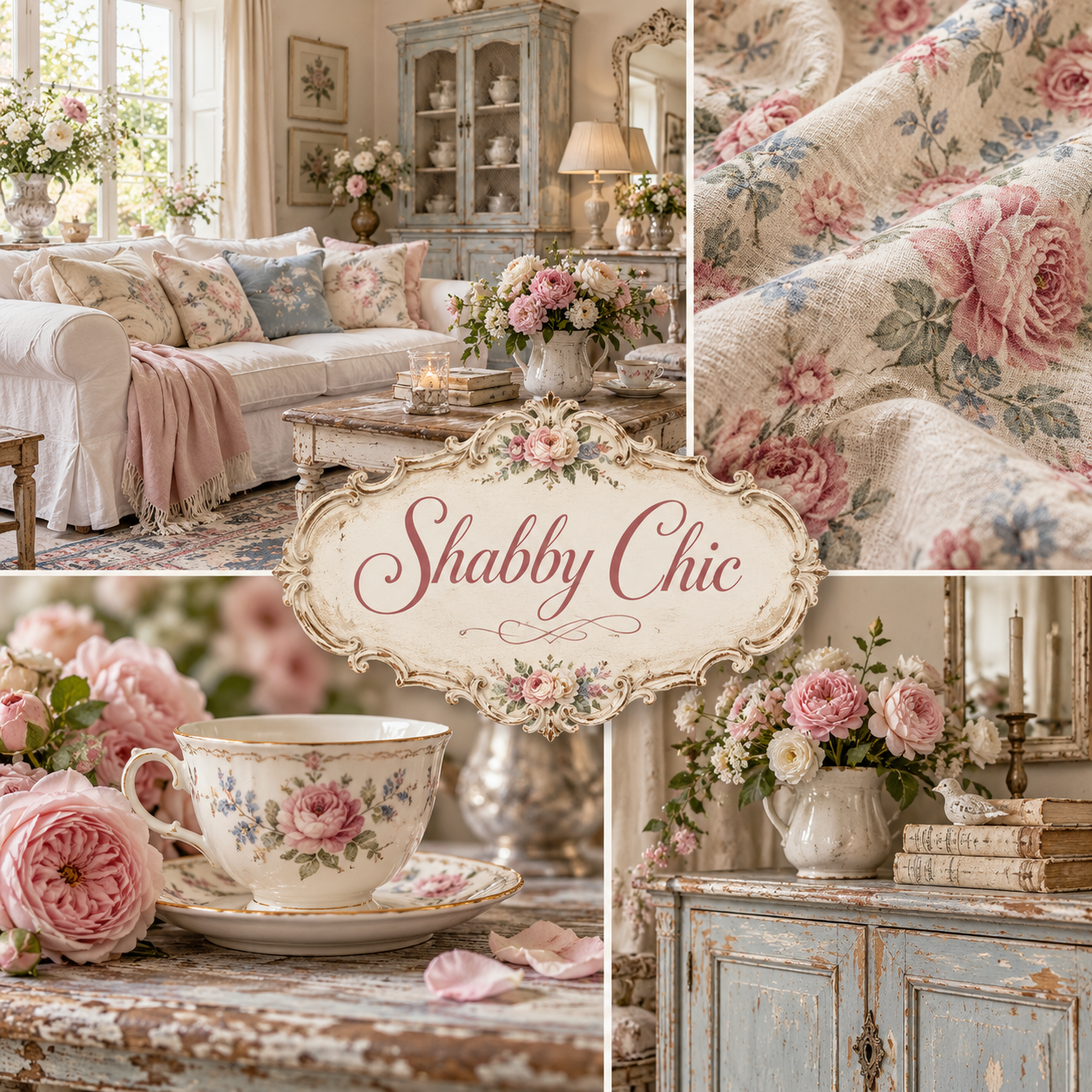
Five original AI-generated AOI interpretations: a dedicated banner, centrally titled collage and three standalone studies. These are illustrative concepts, not historical objects or commercial products.
Select an image for a closer look. Use the thumbnails, arrow keys or a swipe to compare examples. Zoom in to inspect details, or share the image that inspires you.
Creative toolbox · take this style further
Choose an input and a destination. Search sends your words to the chosen site; Copy & open puts them on your clipboard to paste there.
Create with AI
Turn your chosen input into an image prompt or a new creative direction.
ChatGPT
Copy your input and paste it into a ChatGPT conversation or image request.
Copy & open ChatGPT (new tab)Claude · Anthropic
Develop an image prompt or explore the style in a new Claude conversation.
Copy & open Claude · Anthropic (new tab)Midjourney
Paste your input into the Imagine bar on the Create page.
Copy & open Midjourney (new tab)Adobe Firefly
Copy your input, open Firefly, and paste it into the prompt field.
Copy & open Adobe Firefly (new tab)Leonardo.Ai
Copy your input, open Leonardo, and paste it into the generation field.
Copy & open Leonardo.Ai (new tab)Image search
Find visual references. Short, concrete keywords usually work best.
Lexica
Search AI images and prompts using your selected input.
Search with this input Lexica (new tab)Pexels
Search the photo and video library. Short keywords often work best.
Search with this input Pexels (new tab)Pixabay
Search photos, illustrations and other images.
Search with this input Pixabay (new tab)Unsplash
Search photographs using the style name or your own keywords.
Search with this input Unsplash (new tab)Wikimedia Commons
Search photographs, artworks and historical images. Check each file for its source and reuse terms.
Search with this input Wikimedia Commons (new tab)Art & research
Explore artists, collections and the ideas behind a style.
Wikipedia
Search for background reading. A style may not have its own article.
Search with this input Wikipedia (new tab)WikiArt
Copy your input into WikiArt’s search to explore artists and artworks.
Copy & open WikiArt (new tab)Europeana
Paste your keywords into the search to explore European museum, library and archive collections.
Copy & open Europeana (new tab)Inspiration
Discover portfolios and visual ideas from creative communities.
Instagram hashtags
Search a hashtag made from your input: spaces and punctuation are removed. Instagram may require sign-in.
Search with this input Instagram hashtags (new tab)ArtStation
Paste your input into artwork search for concept art, environments, characters and visual development.
Copy & open ArtStation (new tab)Behance
Paste your input into project search for illustration, design and visual storytelling.
Copy & open Behance (new tab)A closer look
Pale layered textiles, softened paint, vintage-inspired profiles and small floral accents create a light, lived-in atmosphere. Patina works with useful furniture and clear space rather than relying on clutter or damage.
A recognizable aesthetic with a named design history
Shabby Chic is associated with relaxed interiors, vintage and vintage-inspired furnishings, pale fabrics and romantic detail. Rachel Ashwell's brand history records the opening of her Santa Monica store in 1989. Her own accounts connect the approach with comfort, beauty and the acceptance of imperfection.
The brand and the broader descriptive aesthetic should be distinguished. These AOI images are independent generated interpretations of visual principles; they are not Rachel Ashwell products or photographs of her interiors. Worn furniture and floral fabrics also have histories beyond any single brand.
Comfort gives the room its structure
Start with the way a person would use the space. A sofa should look comfortable, a bedside table should be reachable, and an entry route should remain clear. Relaxed textiles make more sense when they cover a plausible piece of furniture rather than concealing an impossible shape.
The sitting-room study uses a cream sofa and a pale-blue table as its large masses. Faded rose cushions provide a smaller pattern. An aged mirror and garden flowers add detail without making every surface an exhibit. The resulting warmth depends on proportion as much as on accessories.
Patina should describe use
Wear is more convincing when it occurs where contact would happen: a handle, an edge, a tabletop or the foot of a chair. Large random patches of missing paint can turn a gently aged object into a theatrical prop. Decide whether the surface suggests long use, repair or a deliberate decorative finish.
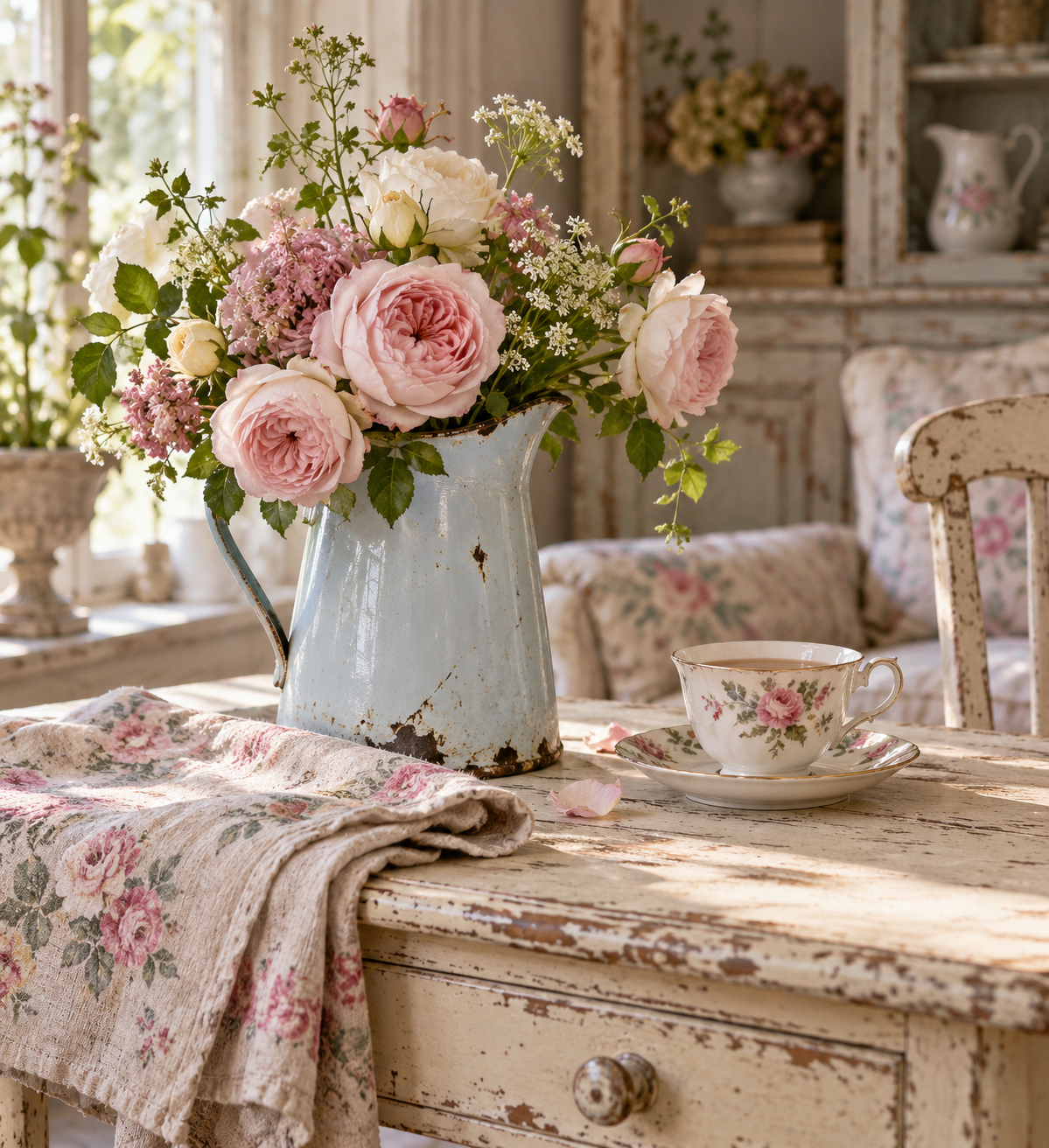
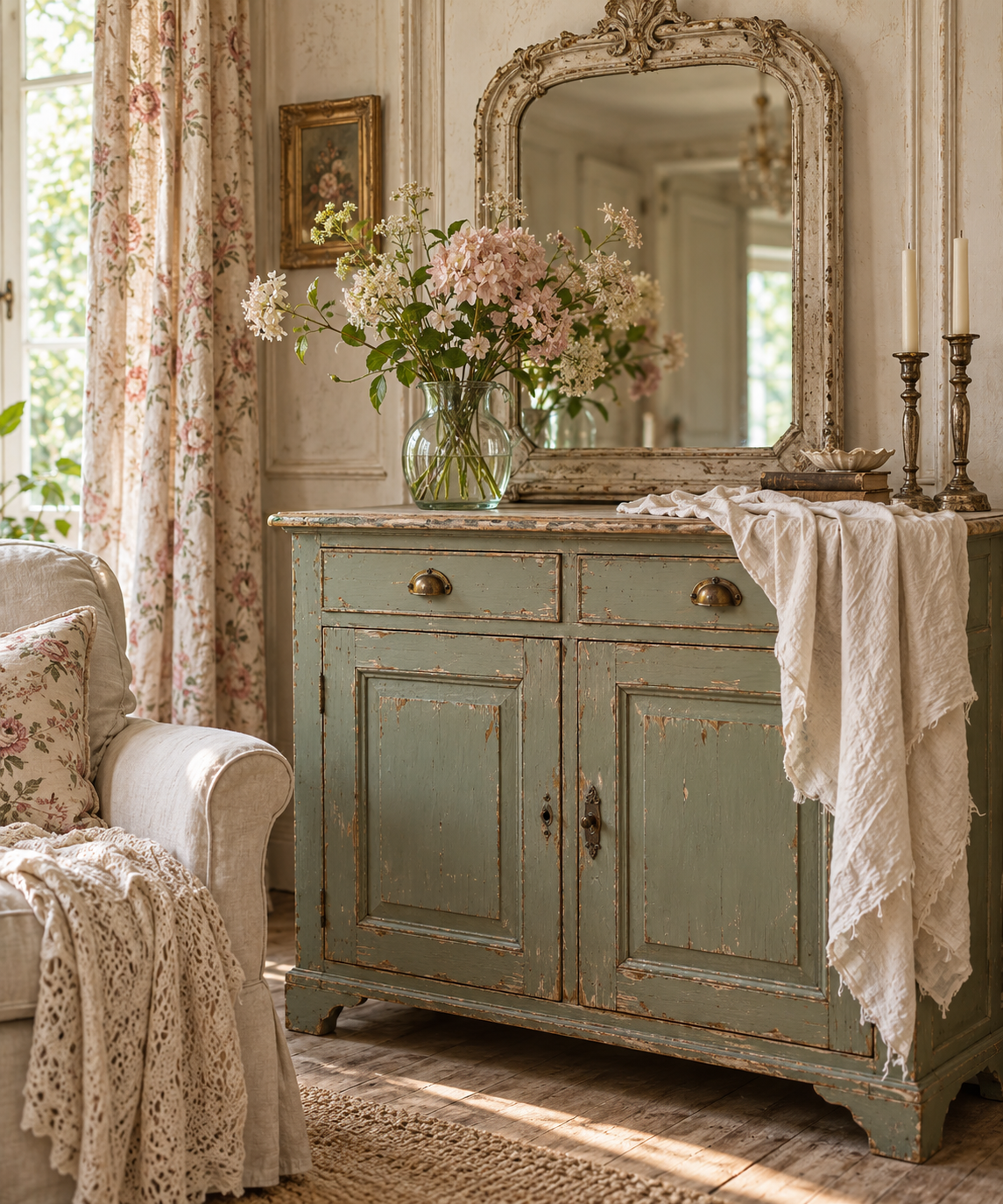
In the cabinet study, softened sage paint and limited edge wear leave the underlying construction readable. Doors and handles still belong to one piece of furniture. The still life uses a time-worn table and enamel jug to compare painted, glazed and textile surfaces.
A generated picture can suggest age but cannot establish provenance. Describe an object as vintage-inspired when its history is invented. Avoid assigning an antique date, maker or restoration story solely because the surface looks old.
Let faded color retain contrast
Ivory, dusty blue, rose and sage can work together without becoming indistinguishable. Use differences in value and texture to separate them: a darker recess beneath a table, a muted floral cushion against plain linen, or transparent glass in front of a softly colored wall.
Flowers are an accent, not a requirement on every surface. Compare one large floral pattern with a quiet weave, and repeat a color in a smaller detail. Warm side light reveals creases and softened paint; excessive brightening can erase the very material information that makes the image interesting.
Distinguish relaxed from indiscriminate
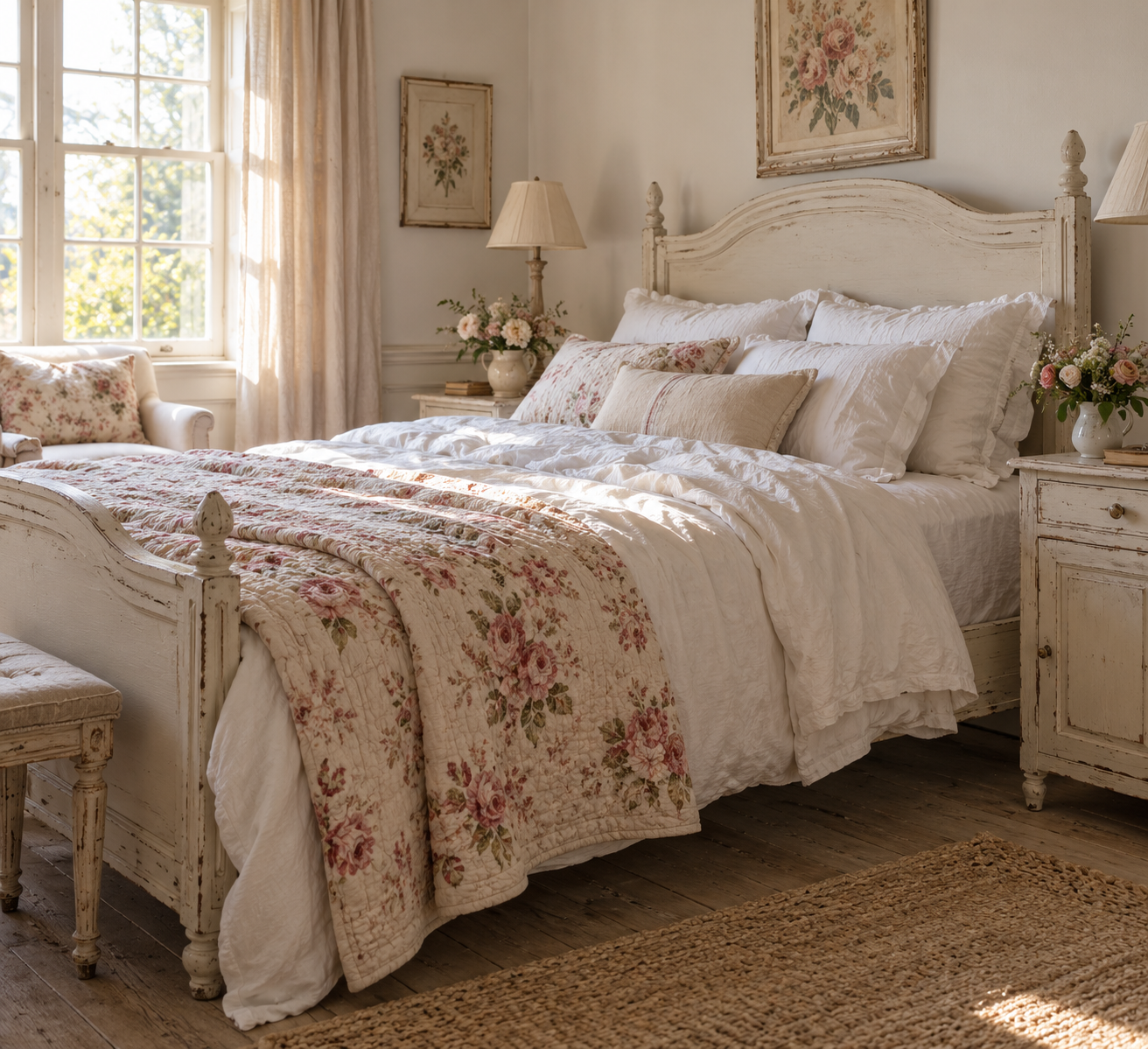
Shabby Chic can overlap with cottage interiors, romantic decoration and vintage collecting, but it need not fill every available space. The bedroom study uses rumpled white linen and a folded floral quilt while keeping the room's basic geometry clear. A sense of ease can be more persuasive than a catalogue of antiques.
Japandi offers an instructive comparison: both can value tactile materials and comfortable restraint, while the visual emphasis here is more romantic, floral and visibly time-softened. Kitsch (Classic) may intensify sentiment and ornamental abundance. These are neighboring choices, not strict boundaries that every image must obey.
Try a small composition first
Arrange a plain textile, one gently worn object and a transparent vessel. Move the light until their materials separate clearly. Then add one floral accent and judge whether it improves the focal structure. This exercise works before any room-sized redesign.
Common failures are uniformly distressed surfaces, weak tonal separation and decorative objects that block use. Keep something crisp: a clean glass edge, a simple silhouette or a calm wall. The contrast allows softness and wear to feel intentional.
A small poetic detour
Original words from the AOI studio.
Poetry
Useful age
The table keeps a pale blue scar;
the linen folds around the day.
A rose leans out above the jar,
then lets the falling petals stay.
The mirror gives the light a room;
the chair remembers someone's weight.
No object hurries into bloom.
No cushion asks me to sit straight.
I set the cup beside the seam.
The house makes ordinary things a dream.
The prompt workshop
Original creative exercises. These prompts create new illustrations, not documentary evidence.
Make a restrained still life
Photograph a vintage-inspired pale-blue enamel jug with garden roses on a gently worn cream table. Add folded faded floral linen and a small teacup. Use soft side light and clear material differences.
Wear should appear at plausible contact points.
Design for actual comfort
Create an airy Shabby Chic bedroom with rumpled white linen, a pale timber bed and a faded rose quilt. Keep the bedside surface reachable and the floor clear.
Relaxed fabric should still reveal a coherent room.
Study patina with one object
Create a sage-painted cabinet vignette with limited edge wear, coherent doors and handles, a mirror and one glass vase. Use a quiet wall and warm daylight.
A crisp glass edge can make surrounding softness more effective.
Your next inspiration
Discover another art style
Follow a visual thread to the next subject.
A smile from the studio
Jokes
The furniture restorer asked where I wanted the distressing. “Just the edges,” I said. “And perhaps a little around the handles.” She nodded professionally. Then she handed me the estimate. The cabinet looked wonderfully relaxed. I was now the distressed element in the room.