
Costume and design aesthetic
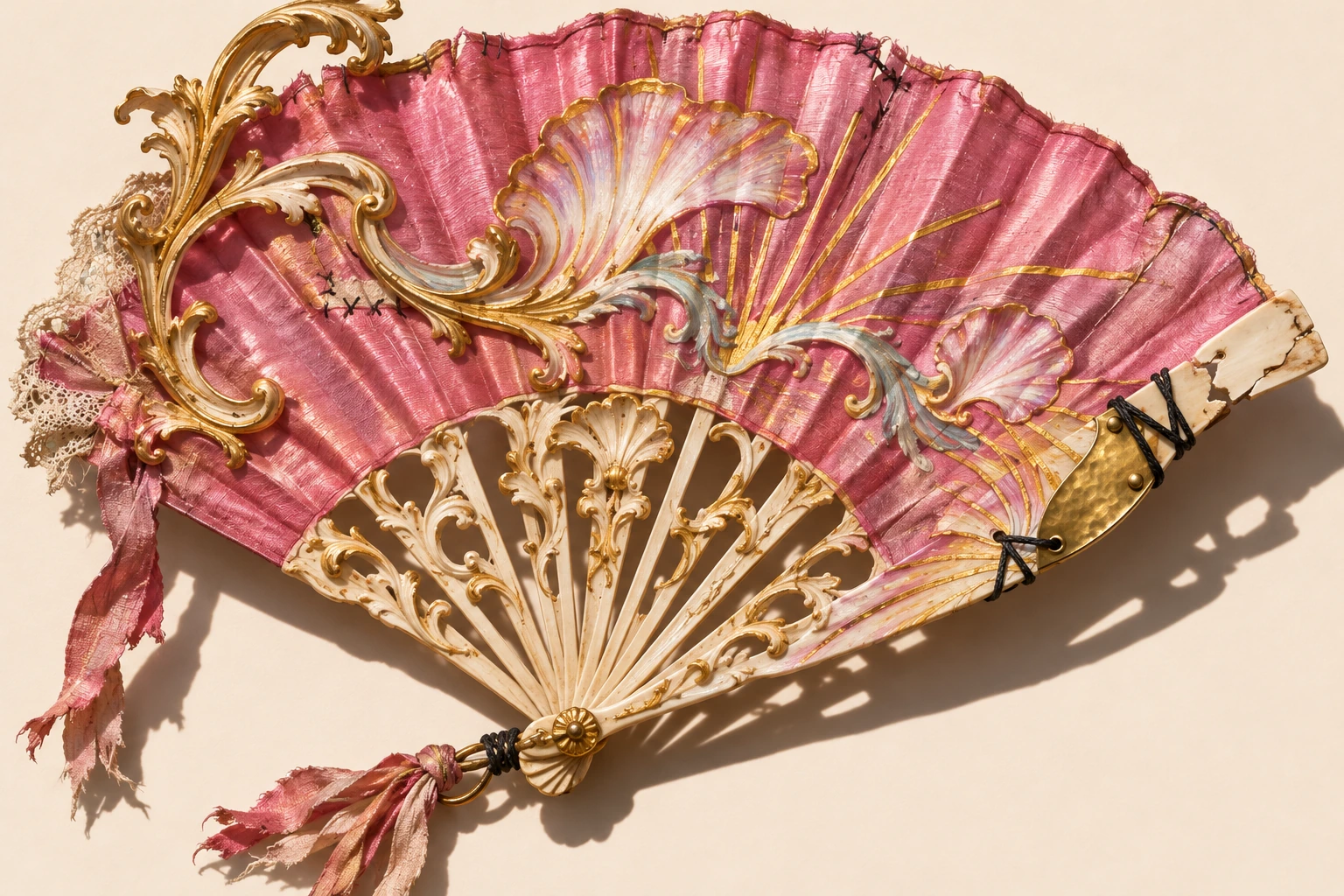
Turn a folding fan over. On the silk side it promises a ball, and on the back a length of black cord holds a cracked guard together. Rococopunk uses that double view to bring eighteenth-century ornament into contemporary costume, performance and DIY design.
A visual introduction
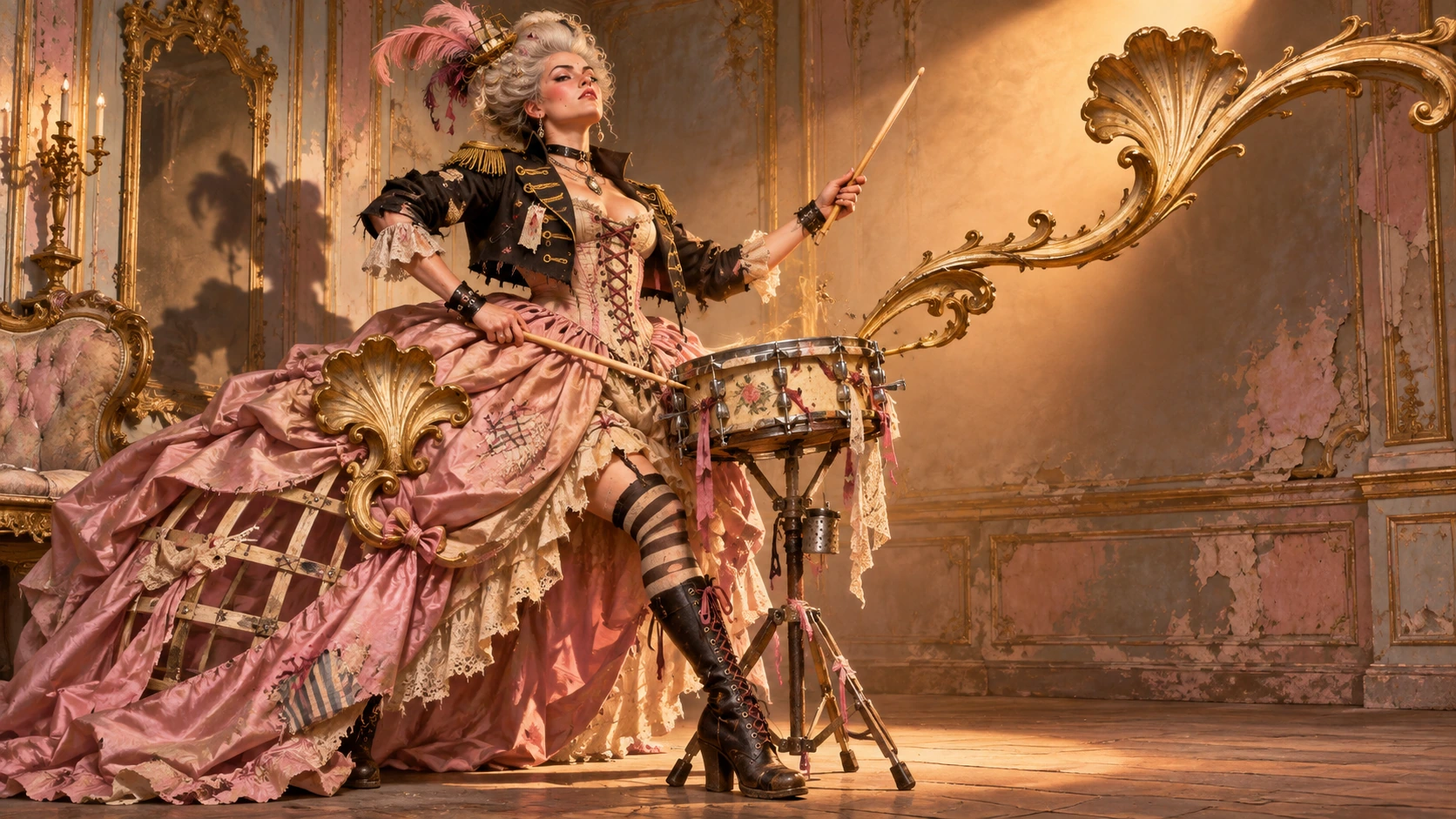
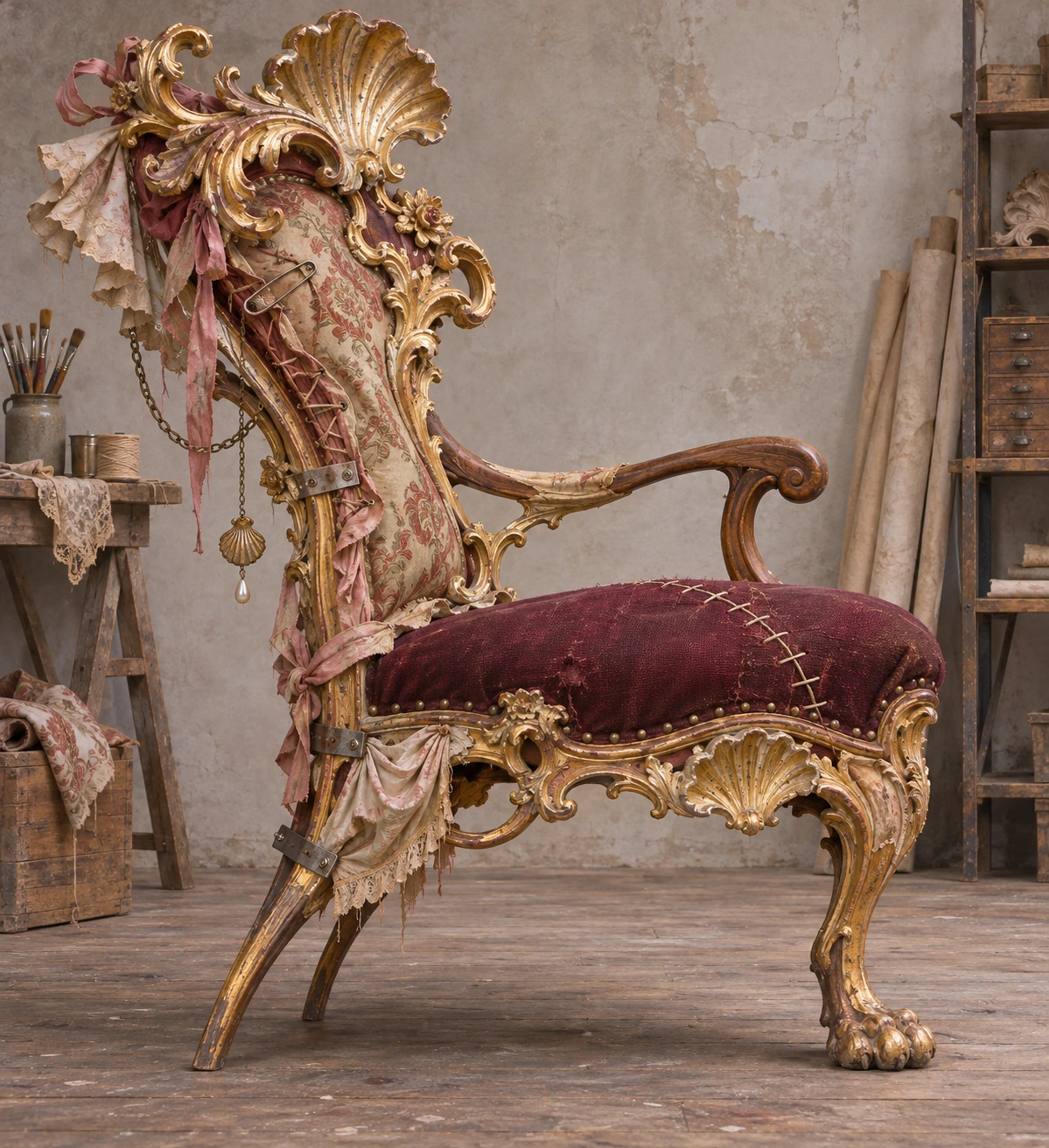
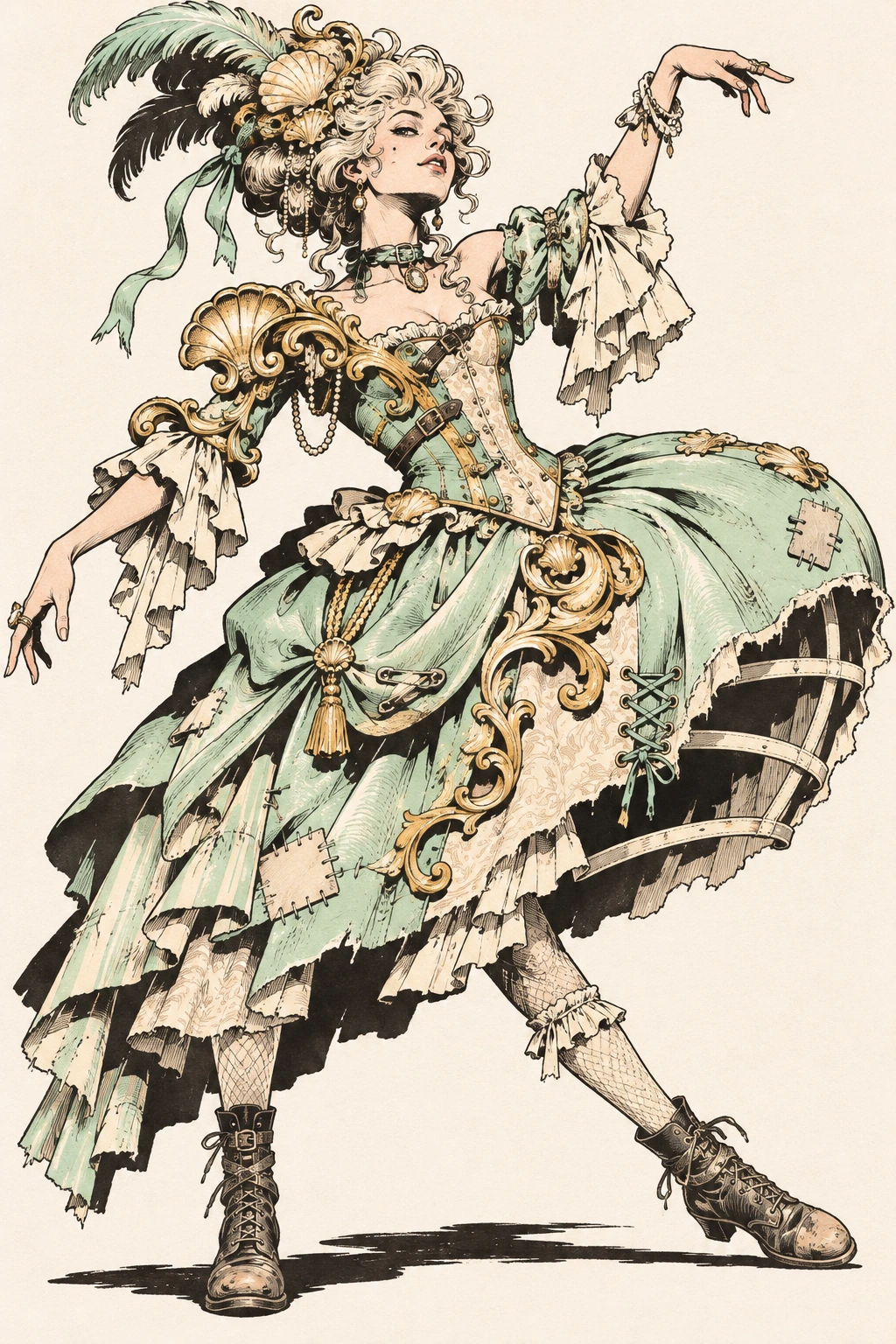
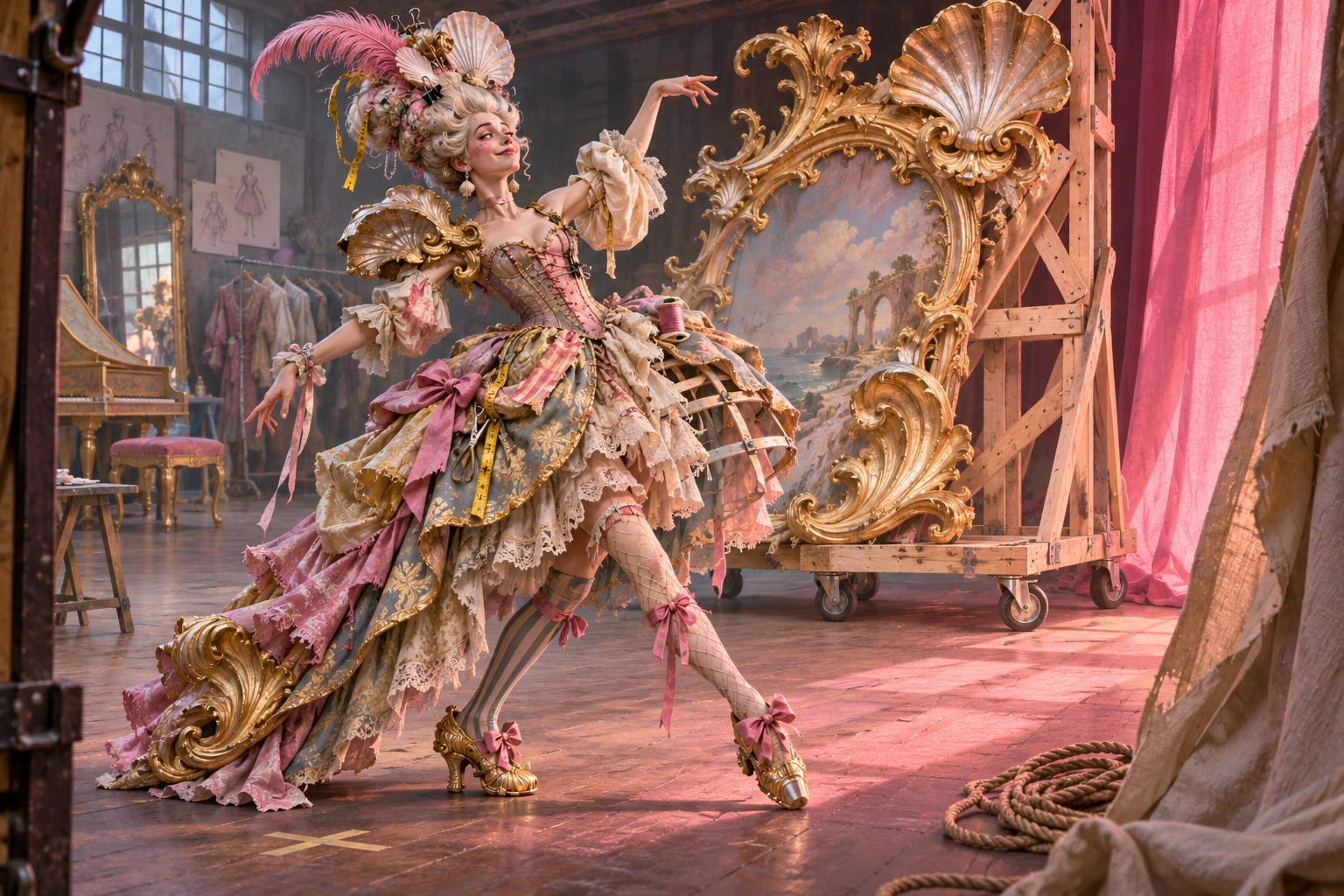
Seven original AI-generated studies explore Rococopunk through performance, dress construction, a repaired fan, furniture and a look behind the scenery.
Select an image for a closer look. Use the thumbnails, arrow keys or a swipe to compare examples. Zoom in to inspect details, or share the image that inspires you.
Creative toolbox · take this style further
Choose an input and a destination. Search sends your words to the chosen site; Copy & open puts them on your clipboard to paste there.
Create with AI
Turn your chosen input into an image prompt or a new creative direction.
ChatGPT
Copy your input and paste it into a ChatGPT conversation or image request.
Copy & open ChatGPT (new tab)Claude · Anthropic
Develop an image prompt or explore the style in a new Claude conversation.
Copy & open Claude · Anthropic (new tab)Midjourney
Paste your input into the Imagine bar on the Create page.
Copy & open Midjourney (new tab)Adobe Firefly
Copy your input, open Firefly, and paste it into the prompt field.
Copy & open Adobe Firefly (new tab)Leonardo.Ai
Copy your input, open Leonardo, and paste it into the generation field.
Copy & open Leonardo.Ai (new tab)Image search
Find visual references. Short, concrete keywords usually work best.
Lexica
Search AI images and prompts using your selected input.
Search with this input Lexica (new tab)Pexels
Search the photo and video library. Short keywords often work best.
Search with this input Pexels (new tab)Pixabay
Search photos, illustrations and other images.
Search with this input Pixabay (new tab)Unsplash
Search photographs using the style name or your own keywords.
Search with this input Unsplash (new tab)Wikimedia Commons
Search photographs, artworks and historical images. Check each file for its source and reuse terms.
Search with this input Wikimedia Commons (new tab)Art & research
Explore artists, collections and the ideas behind a style.
Wikipedia
Search for background reading. A style may not have its own article.
Search with this input Wikipedia (new tab)WikiArt
Copy your input into WikiArt’s search to explore artists and artworks.
Copy & open WikiArt (new tab)Europeana
Paste your keywords into the search to explore European museum, library and archive collections.
Copy & open Europeana (new tab)Inspiration
Discover portfolios and visual ideas from creative communities.
Instagram hashtags
Search a hashtag made from your input: spaces and punctuation are removed. Instagram may require sign-in.
Search with this input Instagram hashtags (new tab)ArtStation
Paste your input into artwork search for concept art, environments, characters and visual development.
Copy & open ArtStation (new tab)Behance
Paste your input into project search for illustration, design and visual storytelling.
Copy & open Behance (new tab)A closer look
An asymmetric shell curve, a broad sideways silhouette or a falling back pleat establishes the Rococo reference. A visible patch, conspicuous lacing or an unexpected fastening changes how the object works. The alteration rewards a second look.
Court ornament meets the costume workshop
Rococo supplies a precise vocabulary. The Victoria and Albert Museum traces the name to rocaille, the rock and shell forms associated with its ornament. A curve swells on one side, pinches on the other and slips off its expected axis. The eye follows this uneven movement across objects as different as a silver vessel and a panel of carved wood.
Rococopunk belongs to modern costume play and speculative design. In January 2013 Austin Sirkin introduced Steampunk R&D readers to a group that included Wilhelmina Frame and Nick Picard. The participants wore outfits they made themselves. That playfulness is a better point of entry than a timeline of imaginary inventions. The speculative question is social as much as mechanical. Who gets to wear the expensive silhouette, and what could a resourceful wearer make of it?
Let the alteration do a job
A safety pin placed at random says very little. A visible repair that takes the load of a broken fan rib gives a viewer something to reconstruct. Carry the painted shell motif across the repair so that the intervention changes both the weight and the rhythm of the object.
For a costume, sketch the outer silhouette before you draw a single pearl. If a skirt extends far to the side, ask how its wearer will move through a doorway. Draw a second view with one panel lifted. A hoop channel, knot or patch can reveal the work hidden by the ceremonial front.
Dress history as a design resource
The V&A documents Vivienne Westwood’s reuse of historical dress, including an adaptation of the sack-back dress associated with Watteau. It is an instructive comparison for the way a designer can change a silhouette by moving its seams. The museum example supplies a specific construction idea. The people who call their costumes Rococopunk bring their own contexts and pleasures to the name.
Keep the intervention legible at two distances. From the back of a theatre the audience can read the tilt of a hoop or a long dark sleeve. At a portrait distance they can see the deliberately rough hand-tacking. The same detail need not do both jobs.
A chair, a fan and the back of the set
Pair surfaces that age differently. Gold leaf wears away at an armrest, velvet flattens under a hand and waxed cord shines at a knot. A chair with a patched seat can say more about use and ownership than a room filled with pristine antiques. For an image of the stage, turn the scenery just far enough to show the brace that holds up its extravagant front.
Pastel color is optional. In a monochrome print, use narrow curling white lines for ornament and broad black diagonals for the alteration. In a color photograph, an oxblood patch small enough to cover with a hand can balance an entire coat of pale celadon.
For a contemporary theatrical example, look at the RococoPunk Project by Fifth Wall Media. A production of Molière’s The Learned Ladies at the University of Calgary sparked the idea. The photographer describes lighting cast members in small groups for a large composite. What looks like a single crowded social occasion was assembled from separate sittings.
Positive editorial review (AI-authored)
The exposed repair gives the ornament a biography. On the fan, an uneven binding can carry the same sweep as an expensive painted scroll. The designer has found a way for economy and extravagance to share a line.
Negative editorial review (AI-authored)
Rows of studs laid over a brocade surface can look like a costume-shop shortcut. Turn the object around. If every alteration disappears on the back without leaving a stitch or a change of weight, the design could use a more convincing intervention.
Neutral editorial review (AI-authored)
Rococopunk is effective in theatrical costume, fashion plates and speculative objects, particularly when the maker can show construction at close range. Its playful alterations require a clear caption whenever a contemporary interpretation appears beside a historical object.
A small poetic detour
Original words from the AOI studio.
Poetry
The fan remembers every hand
that opened it to hide a smile.
One rib gives way. A length of cord
goes round the gilt another mile.
At court they ask what house I serve.
I show the knot. It serves the curve.
The prompt workshop
Original creative exercises. These prompts create new illustrations, not documentary evidence.
Repair the fan
Make a Rococopunk still life of a pink silk folding fan opened on cream paper. Repair one cracked guard with brass and black cord. Let a painted shell line continue across the mend. Show the sharp shadow of the open ribs.
Take the skirt through a doorway
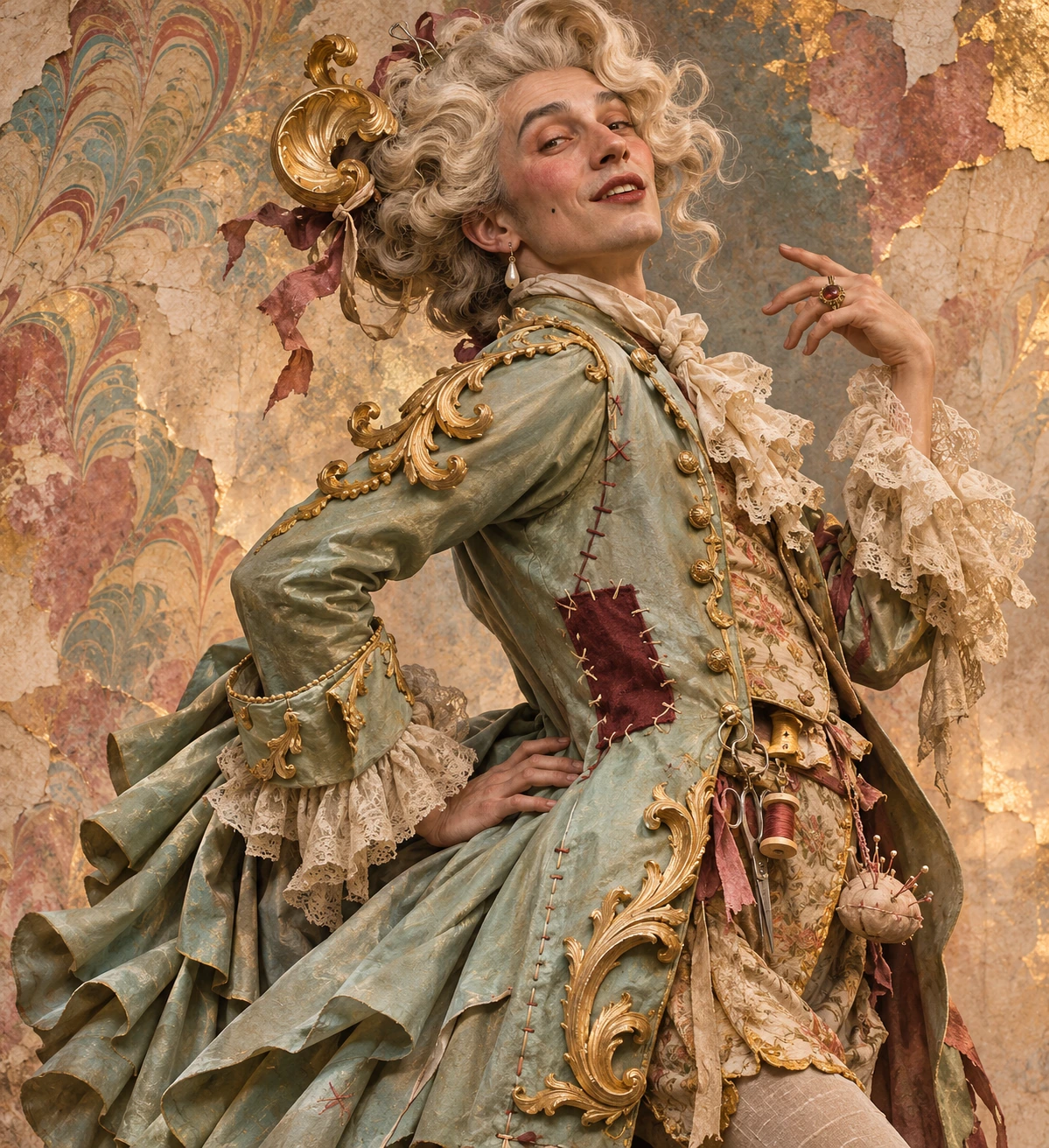
Draw an adult performer moving sideways through a narrow door in a pale mint pannier skirt. Lift one outer panel to show its hoop channel. Give the planted boot a scuffed toe and the coat one dark patched elbow.
Walk behind the palace
Build a theatrical Rococopunk salon from a gilded shell frame on a plain timber brace. Turn the frame towards pink stage light while leaving one caster, a canvas tie and a repair visible to the viewer backstage.
Your next inspiration
Discover another art style
Follow a visual thread to the next subject.

A smile from the studio
Jokes
At the costume fitting they asked whether my skirt would pass through the palace doors. “Sideways,” I said. “And the drummer?” “Also sideways. We rehearse the entrance more often than the music.”
Sources and further exploration
Steampunk R&D • a contemporary illustrated account of Rococopunk costuming and play
Victoria and Albert Museum • identify the shell motifs and asymmetric curves of Rococo
Victoria and Albert Museum • see how Westwood reworked historical silhouettes
Fifth Wall Media • the photographer explains the staging and lighting of the RococoPunk Project