
Art movement and representational approach
Realism can name a historical movement or a broader commitment to recognizable experience. The intended meaning needs to be clear.
A closer look
Choose a concrete situation and observe how people, objects and surroundings relate.
Understanding the subject
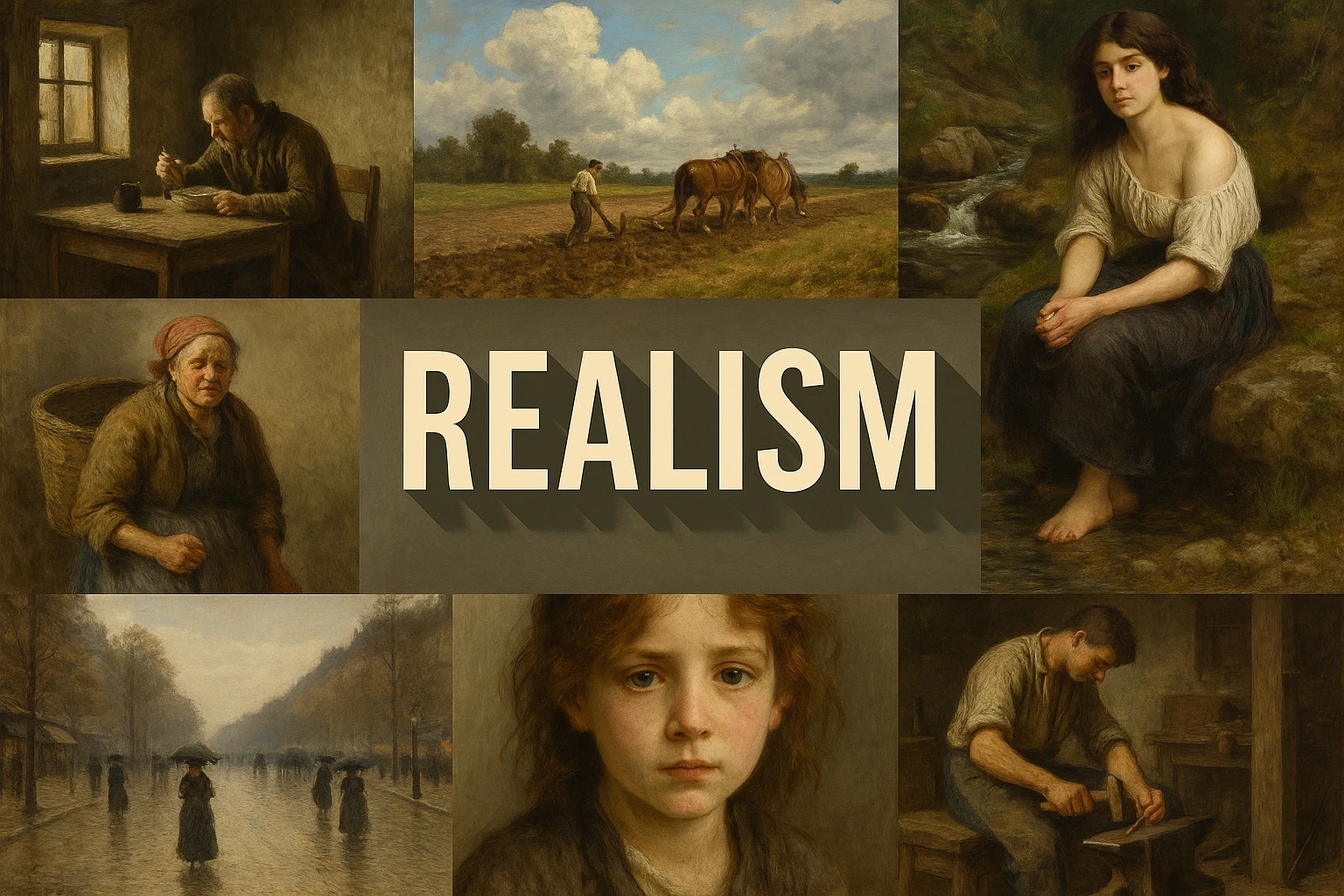
In art history, Realism is associated with particular artists and debates about representing contemporary life. In everyday usage, realism can also mean convincing depiction of surfaces, bodies or space. These meanings overlap but are not identical. A highly polished fantasy scene may look realistic without belonging to the historical movement, while a direct painting of ordinary work may matter for its subject as much as for optical finish.
AOI looking and making workshop
Choose a concrete situation and observe how people, objects and surroundings relate. Weight, contact and use can make a scene convincing even when brushwork remains visible. Avoid replacing specific details with generic symbols of poverty, labor or virtue. In a generated image, inspect anatomy, tools and physical support carefully; surface sharpness can hide structural mistakes. Decide whether the image is an observation, an invented scene or a historical interpretation, and caption it accordingly. Realistic appearance alone does not turn an illustration into evidence.
The prompt workshop
Original creative exercises. These prompts create new illustrations, not documentary evidence.
An ordinary task
Create an original realist-inspired painting of a person repairing a wooden chair in a modest workshop, believable posture, used tools and quiet natural light. Keep the action specific and unidealized.
A shared table
Create an original painting of three coworkers eating a simple lunch, varied gestures and carefully observed objects. Use restrained color and avoid sentimental stereotypes or theatrical posing.
Visible construction
Create a realistic-looking but clearly illustrative study of stacked clay pots and a folded cloth, emphasizing weight, contact shadows and small imperfections rather than excessive glossy detail.
Your next inspiration
Discover another art style
Follow a visual thread to the next subject.


Sources and further exploration
Creative studies to try
Explore these collected prompts as creative interpretations. They are starting points for image-making, not reproductions of historical artworks or evidence about a tradition.
Visual cues: observed detail, believable light, physical presence

Study 1 — Realism
Ultra-wide panoramic banner, a human hand and a sleek robotic hand reaching toward each other, fingertips almost touching, a bright luminous spark of intelligence between them, a subtle world map behind them with global data network lines, symbolizing human-AI collaboration and digital transformation, rendered in Realism style, with refined composition, distinctive materials, elegant lighting, high-detail artistic finish, high quality, high detail, balanced composition, no text, no logo, no watermark, exact aspect ratio 1584:396
Prompt source: 1001 Art Styles. Select the text to copy, then adapt the subject and composition.