
AOI creative concept · Weather and water
Let rain appear only along the creases of a folded landscape surface.
An AOI creative concept, not an established historical movement.
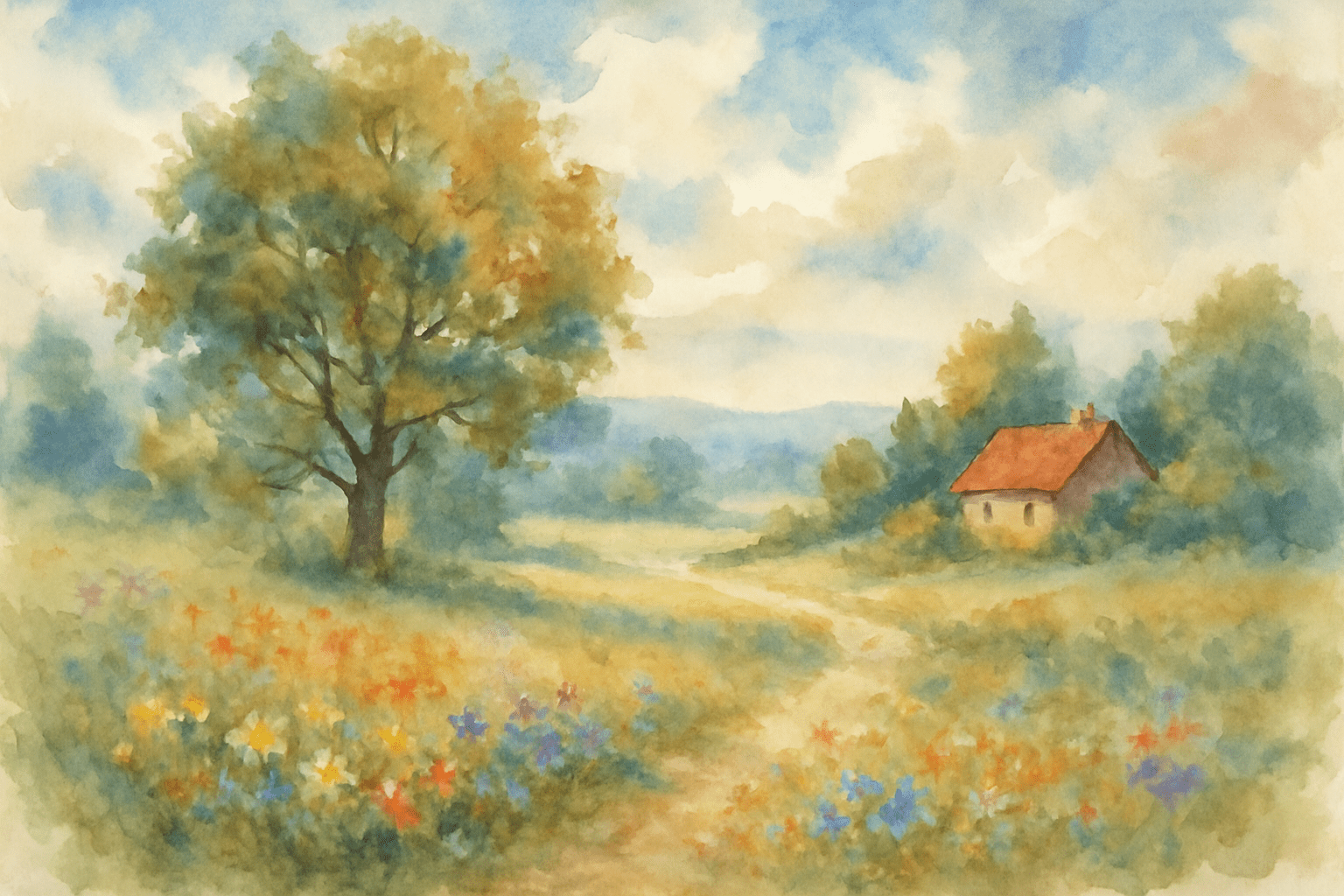
A closer look
Slate blue, pale green and paper white; folded watercolor surface. The focal scene: a paper valley receiving rain only along its central crease.
Give atmosphere a boundary
Let rain appear only along the creases of a folded landscape surface. The fold network directs the weather, while broad flat areas remain dry. This makes a physical support responsible for an invented atmospheric pattern.
Stage the weather
Paint a low hill across a folded paper sheet and place the main crease through its valley. Run fine rain marks down that crease, pooling them slightly where two folds meet. Keep the hilltop simple and dry. Side lighting should reveal the sheet's shape without competing with the narrow weather channel.
Test the spatial rule
An all-over rain overlay erases the defining restriction. Leave enough dry surface for the selective rainfall to be obvious. Avoid literal meteorological explanations; the scene is a constructed visual rule in which paper folds determine where rain can exist.
Technique notes
Turn the folds into an urban street grid and let the rain occupy only its intersections, leaving the buildings unexpectedly dry.
When prompting an image model, spell out the rule and visible relationships. The invented style name alone is not a reliable instruction. Compare outputs against the critique above and revise the specific failed relationship.
The prompt workshop
Original creative exercises. These prompts create new illustrations, not documentary evidence.
Start with the defining rule
Create an original illustration of a paper valley receiving rain only along its central crease. Let rain appear only along the creases of a folded landscape surface. The fold network directs the weather, while broad flat areas remain dry. This makes a physical support responsible for an invented atmospheric pattern. Use slate blue, pale green and paper white; folded watercolor surface. Keep the composition readable, with a clear focal area and quiet surrounding space. No lettering, signatures or watermark.
Build the fuller composition
Create an original Rainfold Landscapes composition. Paint a low hill across a folded paper sheet and place the main crease through its valley. Run fine rain marks down that crease, pooling them slightly where two folds meet. Keep the hilltop simple and dry. Side lighting should reveal the sheet's shape without competing with the narrow weather channel. Use slate blue, pale green and paper white; folded watercolor surface. Preserve the defining constraint: Let rain appear only along the creases of a folded landscape surface. Avoid decorative clutter, readable text and watermarks.
Try a deliberate variation
Create an experimental illustration based on this rule: Let rain appear only along the creases of a folded landscape surface. The fold network directs the weather, while broad flat areas remain dry. This makes a physical support responsible for an invented atmospheric pattern. Variation: Turn the folds into an urban street grid and let the rain occupy only its intersections, leaving the buildings unexpectedly dry. Use slate blue, pale green and paper white; folded watercolor surface. Make the changed relationship unmistakable while keeping supporting details restrained. No captions, signatures or watermark.
Look closer
Explore the image gallery
Select an image to enlarge it. Browse with the arrows, and press Escape to return.
Your next inspiration
Discover another art style
Follow a visual thread to the next subject.