
Genre and visual field
Landscape art makes place, terrain and spatial relationships its principal subject. It can describe an observed site, construct an ideal scene or express memory and values; rural scenery is only one part of its range.
A visual introduction
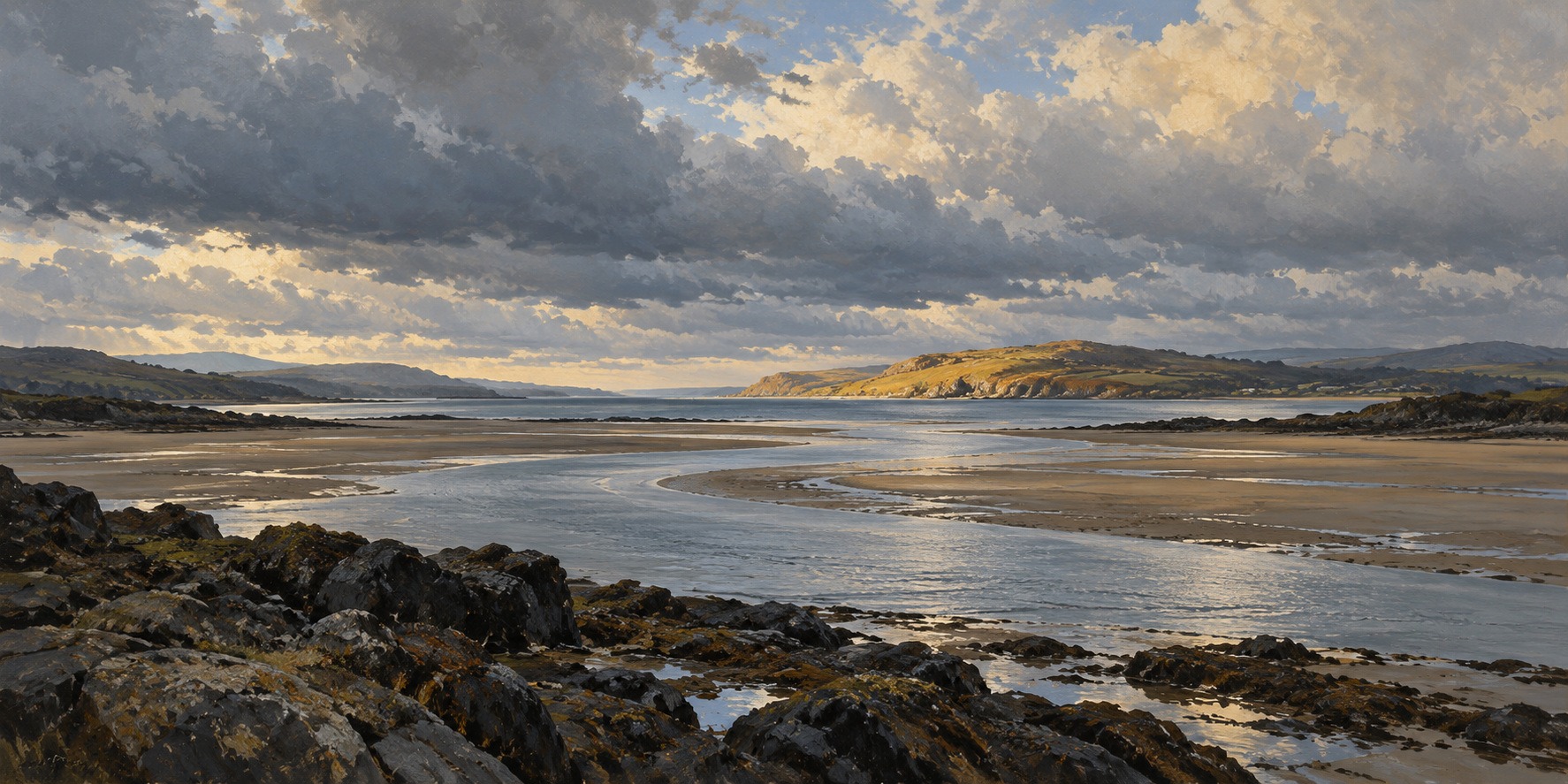
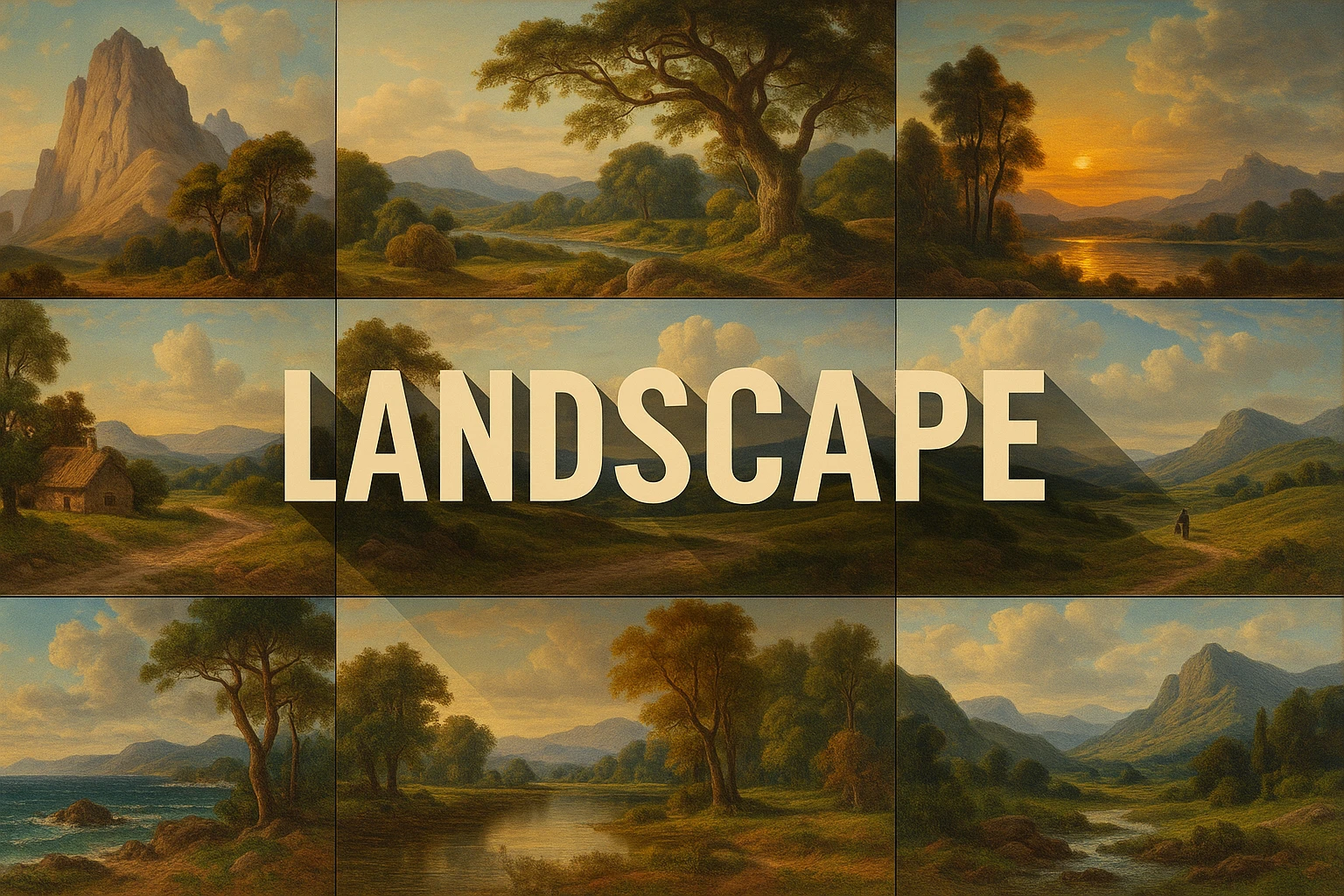
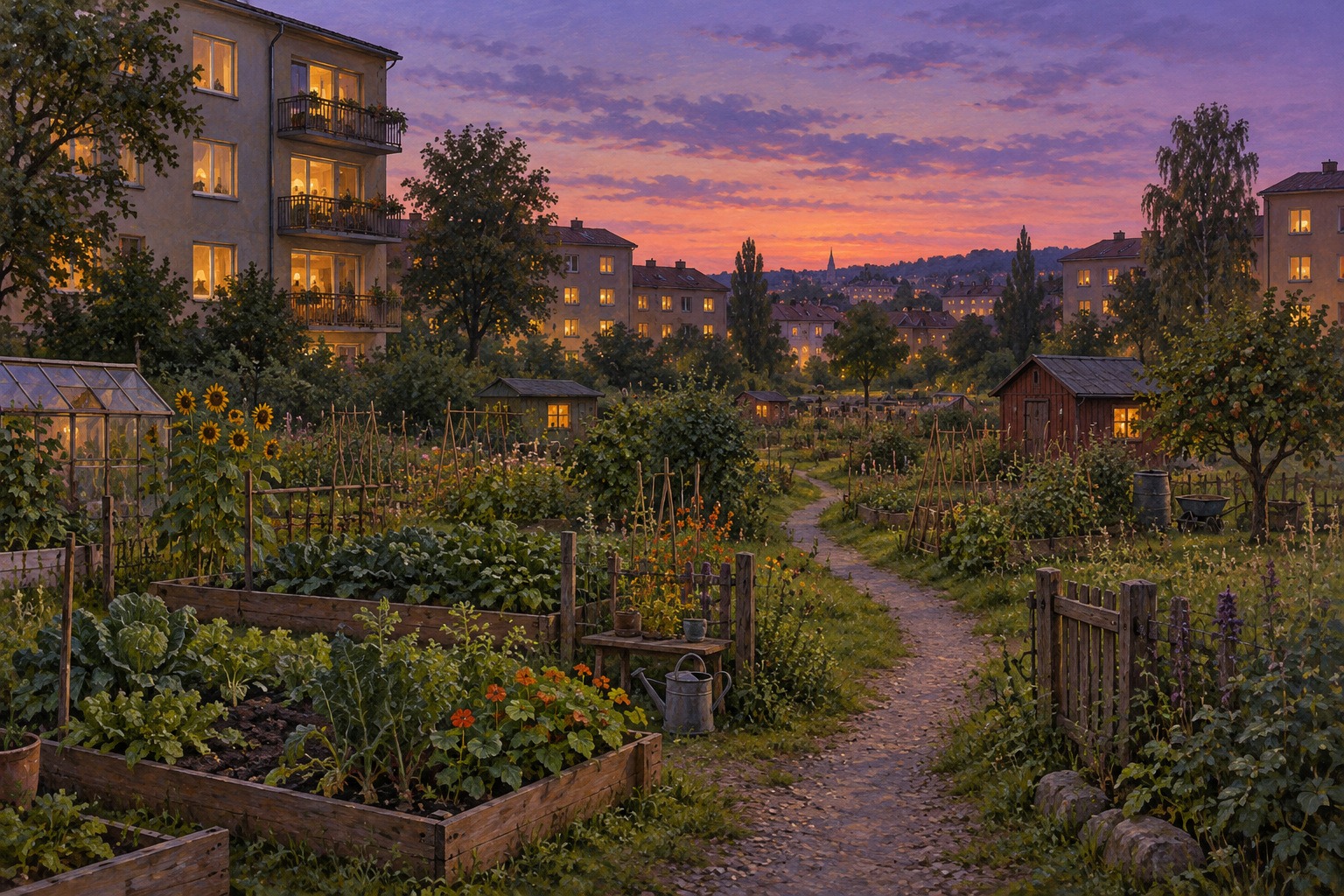
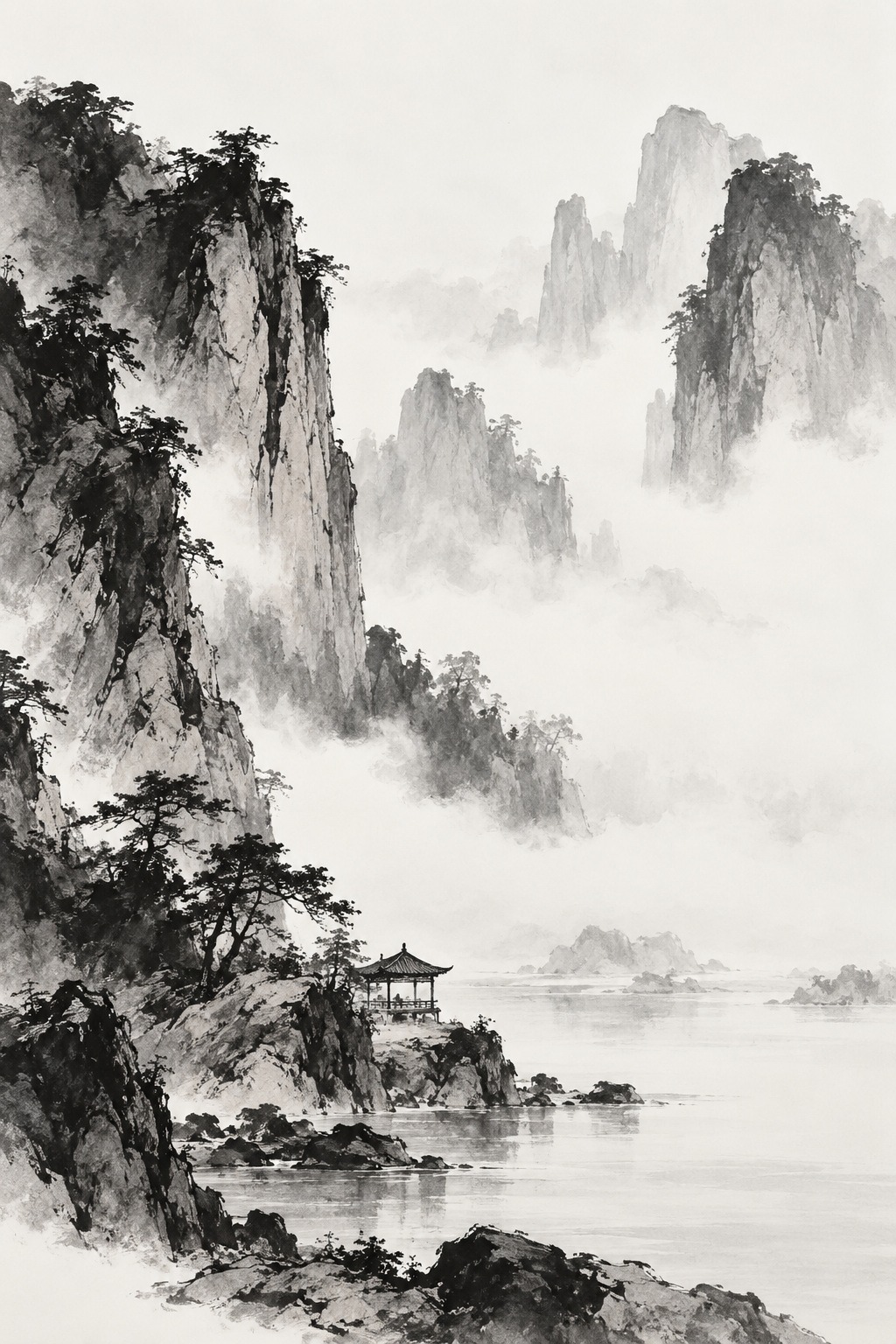
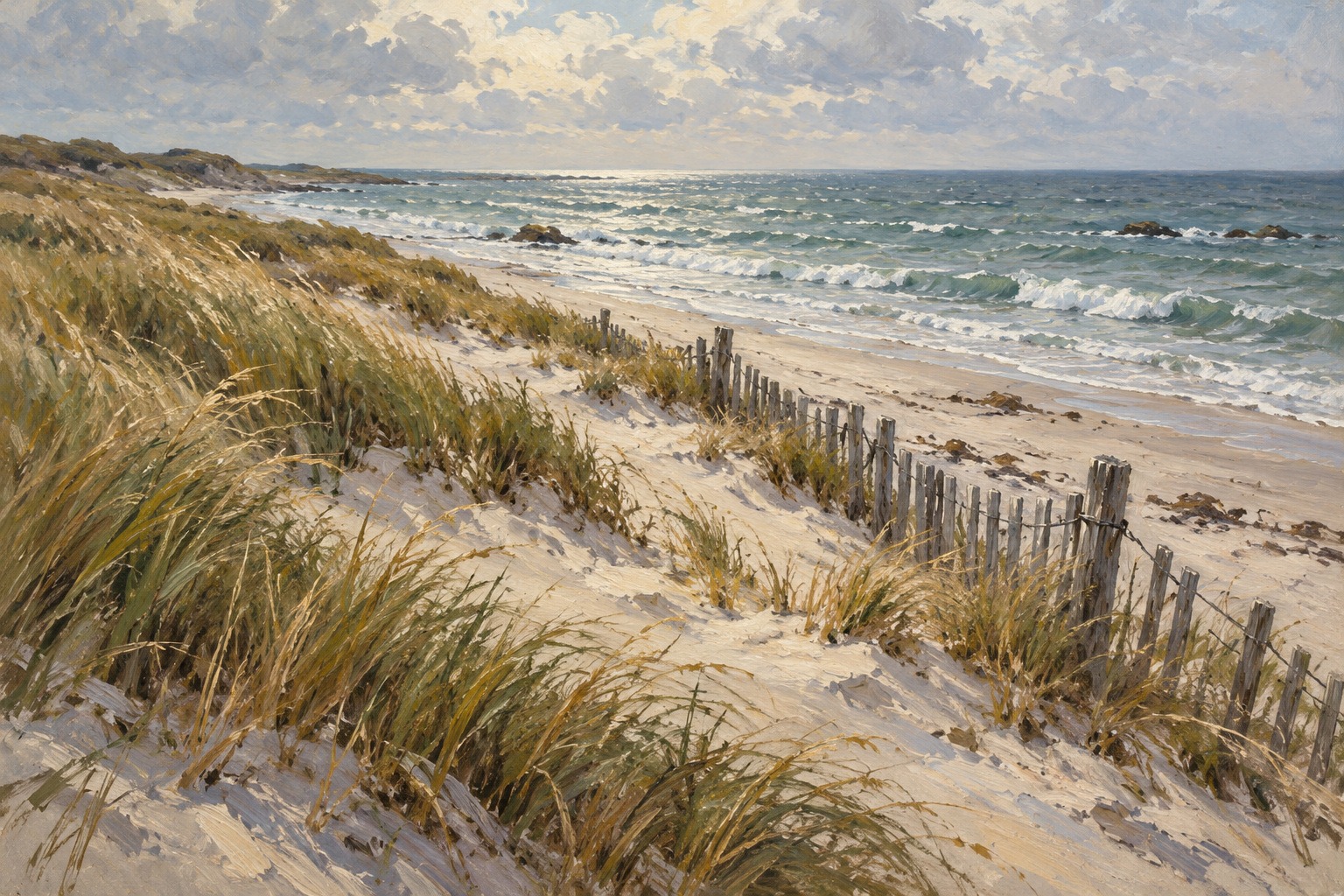
Four new imagined landscapes broaden the retained collage’s pastoral range: estuary, urban gardens, ink-like mountains and a dune coast.
Select an image for a closer look. Use the thumbnails, arrow keys or a swipe to compare examples. Zoom in to inspect details, or share the image that inspires you.
Creative toolbox · take this style further
Choose an input and a destination. Search sends your words to the chosen site; Copy & open puts them on your clipboard to paste there.
Create with AI
Turn your chosen input into an image prompt or a new creative direction.
ChatGPT
Copy your input and paste it into a ChatGPT conversation or image request.
Copy & open ChatGPT (new tab)Claude · Anthropic
Develop an image prompt or explore the style in a new Claude conversation.
Copy & open Claude · Anthropic (new tab)Midjourney
Paste your input into the Imagine bar on the Create page.
Copy & open Midjourney (new tab)Adobe Firefly
Copy your input, open Firefly, and paste it into the prompt field.
Copy & open Adobe Firefly (new tab)Leonardo.Ai
Copy your input, open Leonardo, and paste it into the generation field.
Copy & open Leonardo.Ai (new tab)Image search
Find visual references. Short, concrete keywords usually work best.
Lexica
Search AI images and prompts using your selected input.
Search with this input Lexica (new tab)Pexels
Search the photo and video library. Short keywords often work best.
Search with this input Pexels (new tab)Pixabay
Search photos, illustrations and other images.
Search with this input Pixabay (new tab)Unsplash
Search photographs using the style name or your own keywords.
Search with this input Unsplash (new tab)Wikimedia Commons
Search photographs, artworks and historical images. Check each file for its source and reuse terms.
Search with this input Wikimedia Commons (new tab)Art & research
Explore artists, collections and the ideas behind a style.
Wikipedia
Search for background reading. A style may not have its own article.
Search with this input Wikipedia (new tab)WikiArt
Copy your input into WikiArt’s search to explore artists and artworks.
Copy & open WikiArt (new tab)Europeana
Paste your keywords into the search to explore European museum, library and archive collections.
Copy & open Europeana (new tab)Inspiration
Discover portfolios and visual ideas from creative communities.
Instagram hashtags
Search a hashtag made from your input: spaces and punctuation are removed. Instagram may require sign-in.
Search with this input Instagram hashtags (new tab)ArtStation
Paste your input into artwork search for concept art, environments, characters and visual development.
Copy & open ArtStation (new tab)Behance
Paste your input into project search for illustration, design and visual storytelling.
Copy & open Behance (new tab)A closer look
Horizon placement, overlapping masses, paths through space, light and the distribution of detail organize a landscape. Mountains, city edges, cultivated fields and coastlines each call for a different visual structure.
More than a view of nature
Landscape is a subject category rather than one historical style. The National Gallery of Art’s teaching material traces European developments from settings for narrative subjects toward landscape as an independent focus, including seventeenth-century Dutch painting. That account is regional: it should not be turned into a claim that landscape began everywhere at the same moment.
The Met’s account of Chinese landscape describes traditions in which scenery could express cultivated identity, political ideas and personal feeling as well as visible terrain. Comparing these histories helps reveal why a landscape is never simply a transparent window. What the artist selects, omits and rearranges can matter as much as what the scene resembles.
Build a route through the picture
Begin with the major divisions: land and sky, near and far, open area and enclosing mass. A low horizon gives the sky more weight; a high one can emphasize terrain or patterned ground. Neither is automatically more dramatic. Choose the division that serves the subject, then check the relative sizes of the principal shapes.
Overlap, scale changes and value differences can suggest depth. A path or river can guide attention, but it should lead somewhere useful rather than carry the eye straight out of the image. An open interval may be as important as a detailed foreground. In an ink-inspired composition, unmarked space can connect separated masses without describing every intervening object.
Light, weather and color relationships
Specify a coherent weather and lighting condition. Overcast light can compress contrasts; low sun can create long directional shadows; haze can reduce the separation of distant forms. Avoid treating blue distance or warm foreground as mandatory formulas. Observe the relationships appropriate to the chosen setting, or establish a consistent invented world.
Use detail selectively. A sharp foreground branch can locate the viewer while a distant ridge remains broad. If every leaf, window and cloud receives equal precision, the scene may lose hierarchy. Test a simplified version with only a few values before adding surface information. The landscape should remain legible when its smallest marks disappear.
Include inhabited and altered places
A landscape can include roads, housing, industry, agriculture and traces of maintenance. These features do not automatically spoil the subject; they can explain how a place is used. The Art Gallery of South Australia’s educational overview connects the genre with both appreciation of scenery and representations of authority over place.
When depicting a real location, distinguish observation from invention. Do not label an imagined valley as documentary evidence of a particular community, ecosystem or environmental event. A contemporary artist can ask whose viewpoint is represented and what has been left outside the frame. These questions enrich the image without requiring every landscape to make the same argument.
Three practical experiments
Paint the same broad arrangement as a coastal scene, a city edge and an ink-like mountain study. Preserve one compositional relationship while changing the material and setting. This reveals which choices belong to spatial organization and which depend on a particular tradition or medium. Keep cultural references specific rather than treating all ink painting as interchangeable.
For an AI prompt, state viewpoint, dominant masses, horizon, weather, medium and one focal relationship. Review paths, buildings and water edges for spatial contradictions. Attractive atmosphere cannot repair a river that flows impossibly uphill or architecture that changes scale without reason. The generated studies here are imagined places intended for comparison, not records of actual sites.
About this guide
This AI-authored AOI guide appears under Penny Wraiter, AOI’s editorial persona. Sources support the historical context; exercises, prompts and poetry are original editorial interpretations. Image captions distinguish generated studies from documented works.
A small poetic detour
Original words from the AOI studio.
Poetry
The road bends out beyond the field.
A roof catches the evening gray.
The far hill loses half its edge;
the nearer stones persuade us to stay.
A place is more than what is seen,
more than the sky above the ground.
We choose a frame, then leave a space
for all the lives beyond its bounds.
The prompt workshop
Original creative exercises. These prompts create new illustrations, not documentary evidence.
A coast in three masses
Paint an imagined coast with dark foreground rocks, a pale sea and a broad clouded sky. Low horizon, one sunlit headland, restrained blue-gray and ochre palette, visible brushwork and coherent spatial scale.
The inhabited edge
Create a contemporary landscape painting of allotment gardens beside modest apartment blocks at dusk. A winding footpath connects near plants to distant windows; quiet violet, green and amber, no signage or invented documentary location.
An interval of mist
Create an original ink-like mountain landscape study with separated rocky masses, a small waterside pavilion and broad unmarked mist. Varied dry and wet marks, no imitation seals or calligraphy; label it a contemporary interpretation.
A smile from the studio
Jokes
The horizon asked to move up a little. It wanted a larger role in the landscape.