
Cultural and historical overview
Chinese art encompasses many periods, communities, purposes and media. It is a field of study, not one visual style: a bronze ritual vessel, an ink landscape, a porcelain dish and a contemporary installation require different questions.
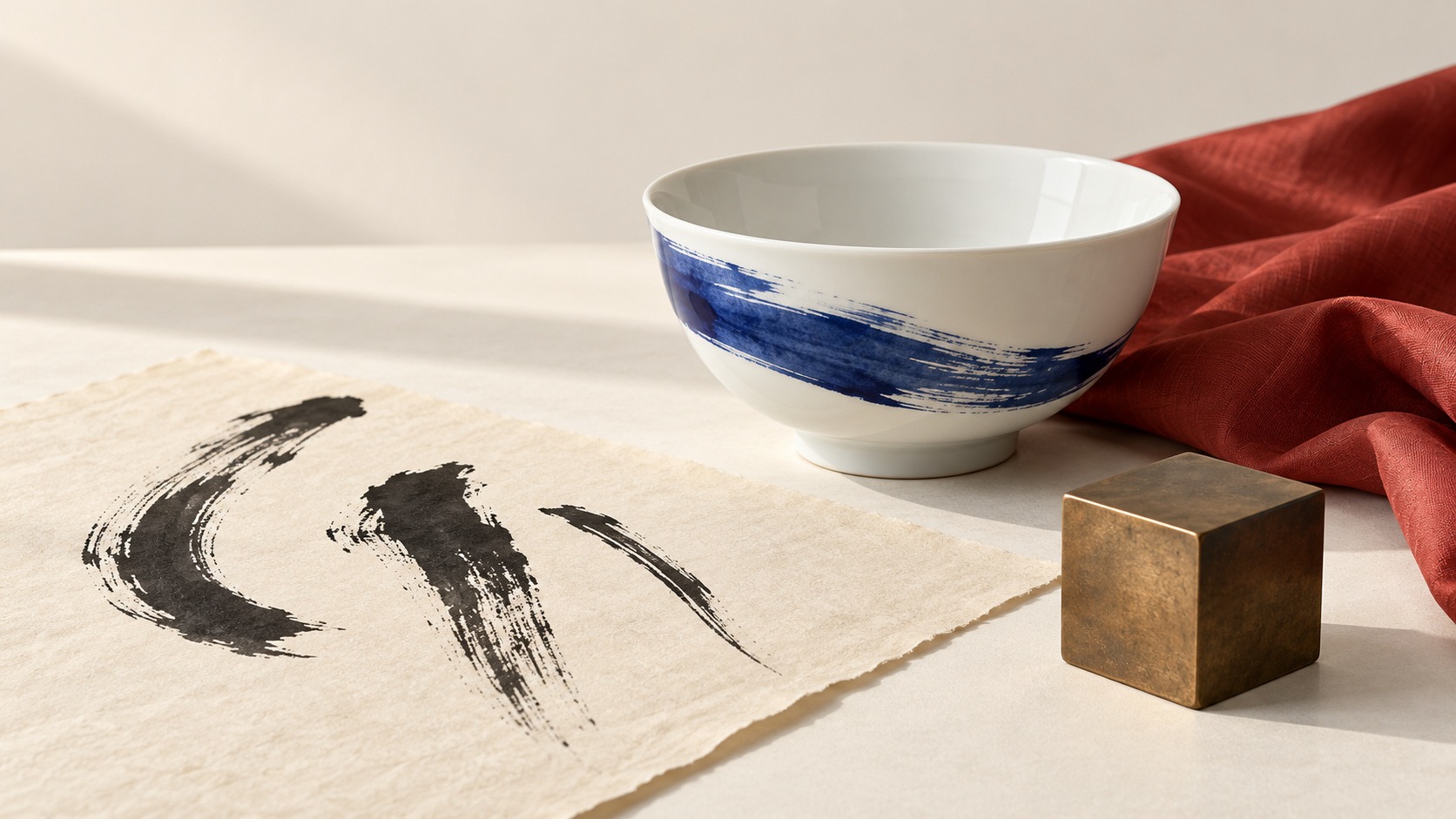
A visual introduction
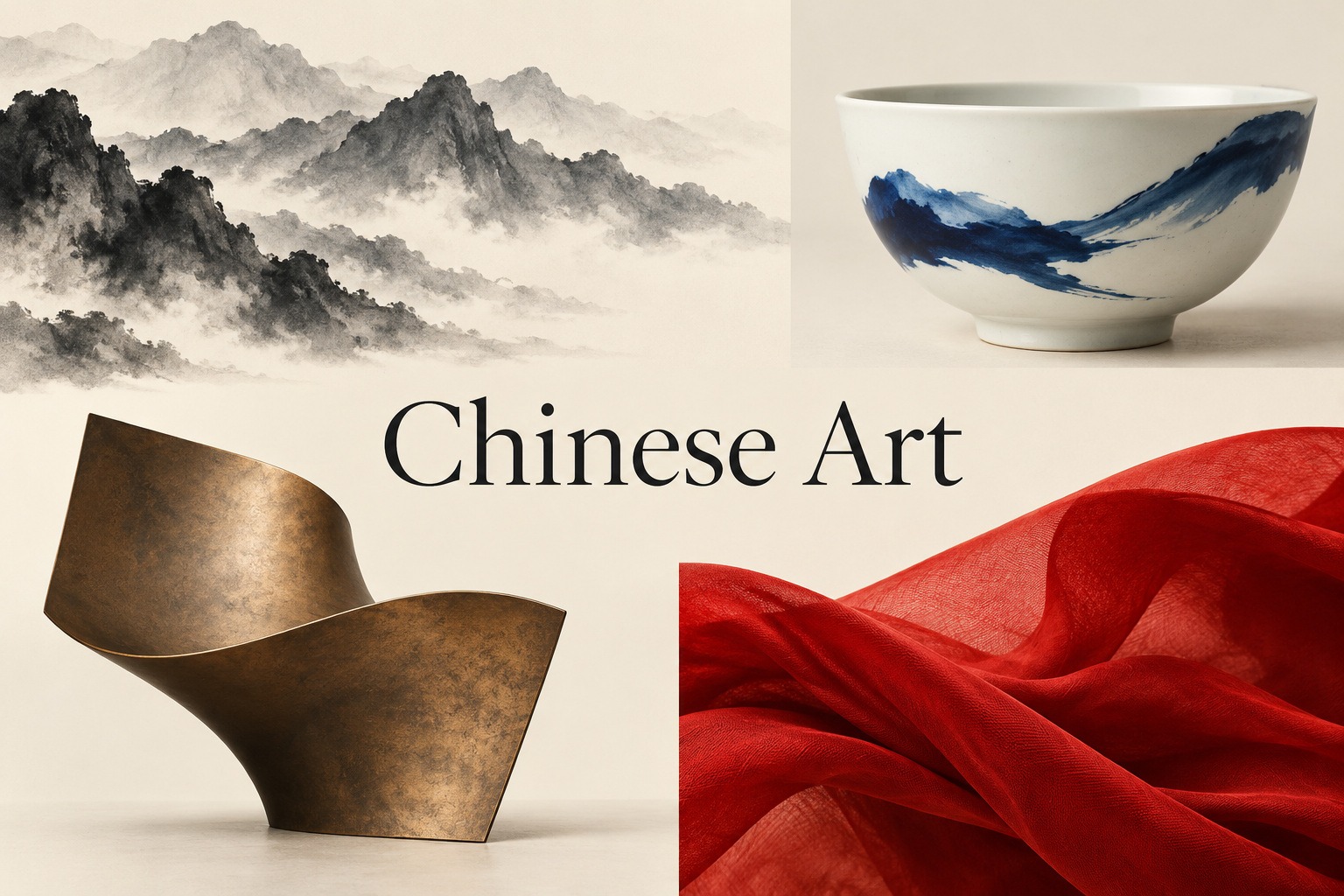
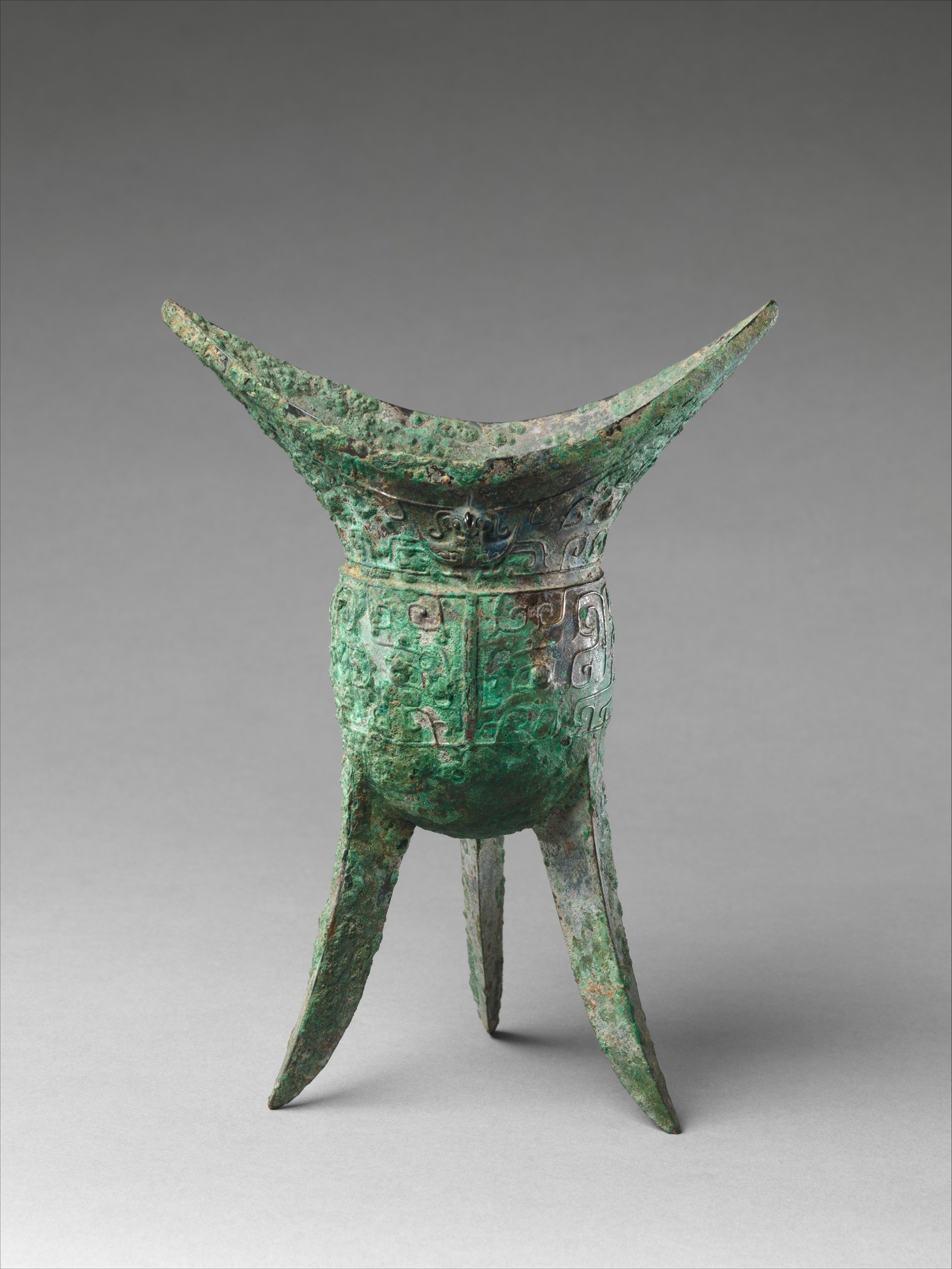
Three documented Met collection objects anchor this overview: a fan-format landscape, a porcelain dish and a bronze vessel. Two generated contemporary material studies introduce the range of media without pretending to be historical artifacts.
Select an image for a closer look. Use the thumbnails, arrow keys or a swipe to compare examples. Zoom in to inspect details, or share the image that inspires you.
Creative toolbox · take this style further
Choose an input and a destination. Search sends your words to the chosen site; Copy & open puts them on your clipboard to paste there.
Create with AI
Turn your chosen input into an image prompt or a new creative direction.
ChatGPT
Copy your input and paste it into a ChatGPT conversation or image request.
Copy & open ChatGPT (new tab)Claude · Anthropic
Develop an image prompt or explore the style in a new Claude conversation.
Copy & open Claude · Anthropic (new tab)Midjourney
Paste your input into the Imagine bar on the Create page.
Copy & open Midjourney (new tab)Adobe Firefly
Copy your input, open Firefly, and paste it into the prompt field.
Copy & open Adobe Firefly (new tab)Leonardo.Ai
Copy your input, open Leonardo, and paste it into the generation field.
Copy & open Leonardo.Ai (new tab)Image search
Find visual references. Short, concrete keywords usually work best.
Lexica
Search AI images and prompts using your selected input.
Search with this input Lexica (new tab)Pexels
Search the photo and video library. Short keywords often work best.
Search with this input Pexels (new tab)Pixabay
Search photos, illustrations and other images.
Search with this input Pixabay (new tab)Unsplash
Search photographs using the style name or your own keywords.
Search with this input Unsplash (new tab)Wikimedia Commons
Search photographs, artworks and historical images. Check each file for its source and reuse terms.
Search with this input Wikimedia Commons (new tab)Art & research
Explore artists, collections and the ideas behind a style.
Wikipedia
Search for background reading. A style may not have its own article.
Search with this input Wikipedia (new tab)WikiArt
Copy your input into WikiArt’s search to explore artists and artworks.
Copy & open WikiArt (new tab)Europeana
Paste your keywords into the search to explore European museum, library and archive collections.
Copy & open Europeana (new tab)Inspiration
Discover portfolios and visual ideas from creative communities.
Instagram hashtags
Search a hashtag made from your input: spaces and punctuation are removed. Instagram may require sign-in.
Search with this input Instagram hashtags (new tab)ArtStation
Paste your input into artwork search for concept art, environments, characters and visual development.
Copy & open ArtStation (new tab)Behance
Paste your input into project search for illustration, design and visual storytelling.
Copy & open Behance (new tab)A closer look
Begin with a particular object, material and viewing format. Brush movement, surface decoration, cast volume and the relationship of image to writing offer different ways to organize attention.
An overview without a single formula
A national label cannot tell us how an artwork was made or what it meant to its first viewers. Identify a date or period, place, maker where known, material and use before drawing a stylistic conclusion. Chinese art includes court, religious, scholarly, commercial and everyday production, as well as modern and contemporary practices. A short overview can introduce this breadth without pretending that three objects represent it all.
The Met’s account of the Ming dynasty shows why context matters even within one period. Court painting and scholar-painting pursued different priorities; ceramic and other decorative arts also developed through regional traditions and international exchange. Blue-and-white porcelain, for example, belongs to histories of manufacture and circulation as well as brush decoration. Neither “timeless tradition” nor “one national aesthetic” adequately describes these relationships.
Brushwork and writing
The Smithsonian’s introduction distinguishes six major Chinese scripts and explains the continued development of calligraphy through writing, carving and rubbing. Calligraphy uses meaningful characters with specific structures. Its movement and line quality can be studied visually, but an attractive arrangement of invented marks is not automatically Chinese writing.
In a painting, look at differences between wet and dry marks, concentrated and diluted ink, continuous contours and interrupted strokes. Ask how empty areas work: they might suggest water, atmosphere or a pause between forms, depending on the composition. Avoid assigning one spiritual explanation to every blank passage. Reading an inscription, identifying a seal or translating a poem requires appropriate linguistic and historical expertise.
Three collection objects, three viewing problems
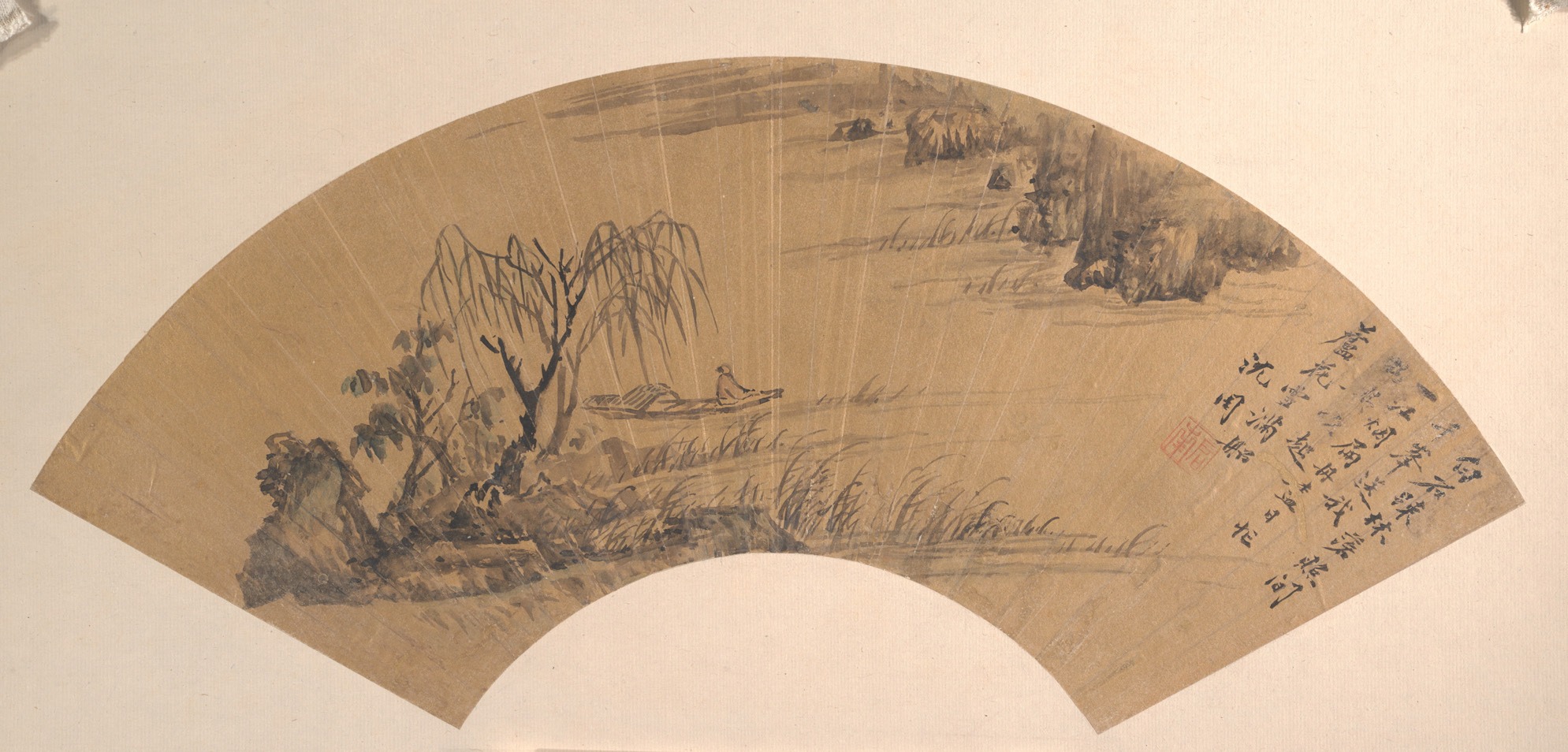
The fan-shaped Landscape in the Met (13.100.73) is by an unidentified artist after Shen Zhou, dated to the sixteenth century or later. That qualified attribution is important: “after” does not mean painted by Shen Zhou. Ink on gold paper and the curved fan format create a different field from a rectangular landscape canvas. Notice how forms adapt to the support rather than treating the photograph’s rectangle as the artwork’s original shape.
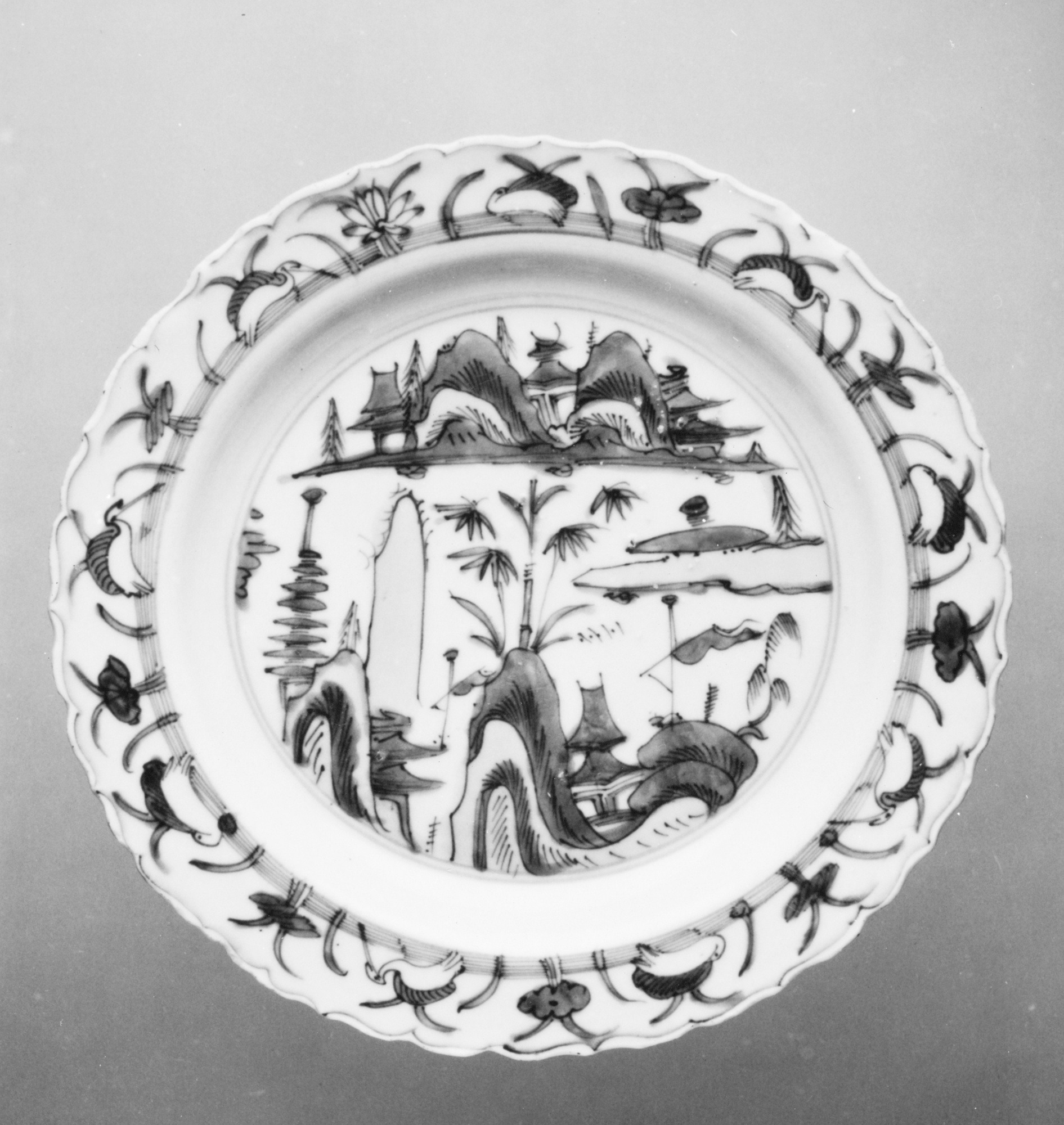
Foliated dish with landscape (1974.356.82), from the early seventeenth century, places cobalt-blue painting on porcelain. The circular center and shaped rim organize the design. Ritual Wine Vessel (Jiao), accession 24.72.13, is a bronze object from the late eleventh century BCE. Its projecting rim, legs and relief surfaces invite viewing around a volume. Compare material and use before treating their decoration as interchangeable motifs.
Format changes the experience
A fan, album leaf, handscroll, hanging scroll and ceramic vessel do not present an image in the same way. A digital photograph can obscure size, mounting, surface and movement. Collection dimensions help restore some of that information. A long handscroll reproduced in one tiny strip is not equivalent to encountering successive passages at a useful viewing scale.
For a close comparison, choose one variable: how a border contains an image, how dark marks establish weight, or how a curved surface changes what is visible. Keep historical identification separate from your own observation. A comparison can be illuminating without claiming that objects from distant periods share one intention or that a visual resemblance proves a direct influence.
Using references thoughtfully
For an original contemporary exercise, study a formal relationship rather than assembling a basket of familiar symbols. A restrained ink landscape, a cobalt line on a white ceramic form and an abstract composition of cast-like planes are different projects. Specify which problem you want to explore and label generated results as contemporary interpretations. Do not invent a dynasty, signature, archaeological provenance or readable inscription.
The documented collection photographs here provide concrete anchors for further study. The banner and collage are clearly identified as contemporary material exercises. This distinction lets the page support both historical learning and creative work while keeping their claims separate. Broader research should add particular artists, places, workshops and living practices instead of treating this introductory selection as a complete canon.
About this guide
This AI-authored AOI guide appears under Penny Wraiter, AOI’s editorial persona. Sources support the historical context; exercises, prompts and poetry are original editorial interpretations. Image captions distinguish generated studies from documented works.
A small poetic detour
Original words from the AOI studio.
Poetry
The paper turns a field of light.
A brush leaves weight, then leaves it thin.
A vessel asks us to move round
the space its curved walls gather in.
One object keeps a longer past
than any caption can contain.
We read its name with care, and look,
then look more carefully again.
The prompt workshop
Original creative exercises. These prompts create new illustrations, not documentary evidence.
Read a collection object
Choose one documented Chinese artwork. Record its museum, accession, material, date and qualified attribution exactly. Describe how its support or shape affects viewing. Separate your visible observations from the museum’s historical interpretation.
A contemporary ink exercise
Create an original contemporary ink landscape study on warm paper. Use three families of marks: dry foreground texture, diluted distant forms and untouched space connecting them. No invented Chinese writing, seals, artist signature or dynasty claim.
Surface and volume
Design an original plain white ceramic bowl with one restrained cobalt-blue abstract band. Show how the band turns around the curved surface in gentle side light. No imitation reign mark, museum label or claim of historical authenticity.
A smile from the studio
Jokes
The shortest route through a vast art history is still not a shortcut: start with one object and read its label carefully.
Sources and further exploration
The Met: Ming Dynasty — different artistic settings and international exchange
Smithsonian: China’s Calligraphic Arts — scripts, materials and the history of writing
The Met: Landscape — qualified attribution, date, medium and open-access photograph
The Met: Ritual Wine Vessel (Jiao) — qualified attribution, date, medium and open-access photograph