
Fictional
Polyhedric Constructionism is an AOI exploration of forms built from polygonal faces, readable edges and deliberate connections. Its subject is the act of assembling space: solid masses, open frameworks and the voids between them become equally important parts of the composition.
An A⊕I –[-.+] creαt¡ve c⊕ncept, n⊕t αn estαbl¡she∂ h¡st⊕r¡cαl m⊕vement.
A visual introduction
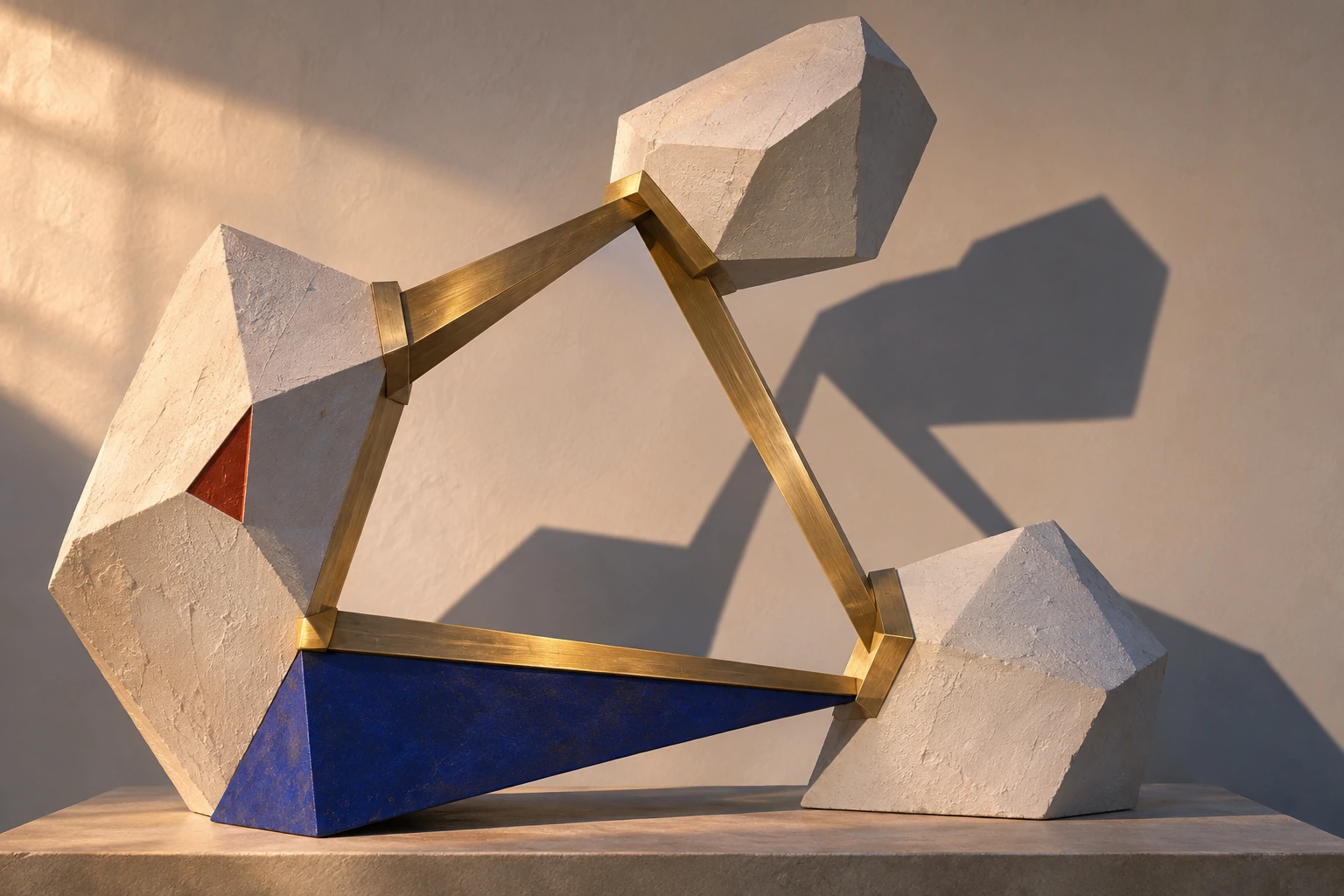
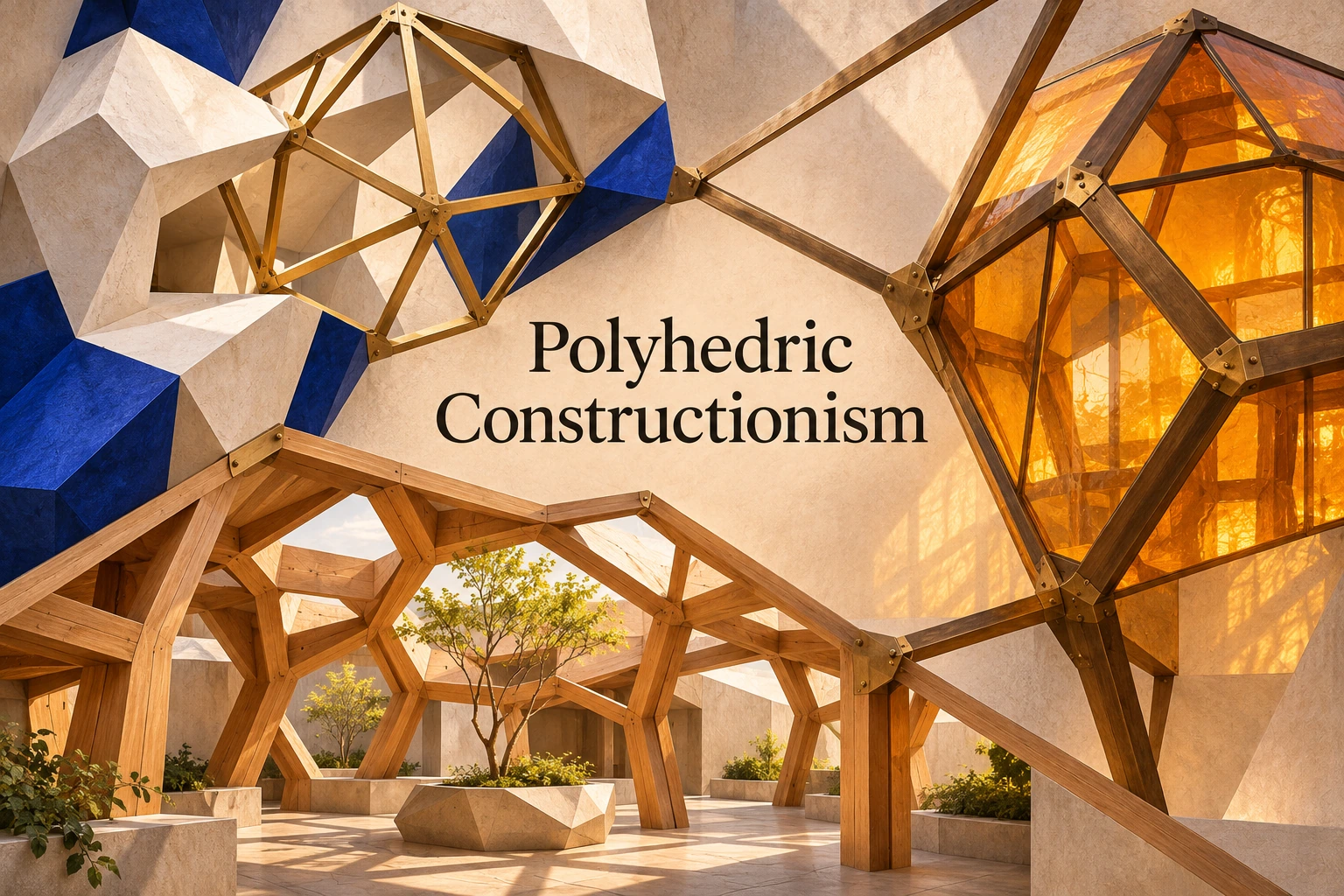
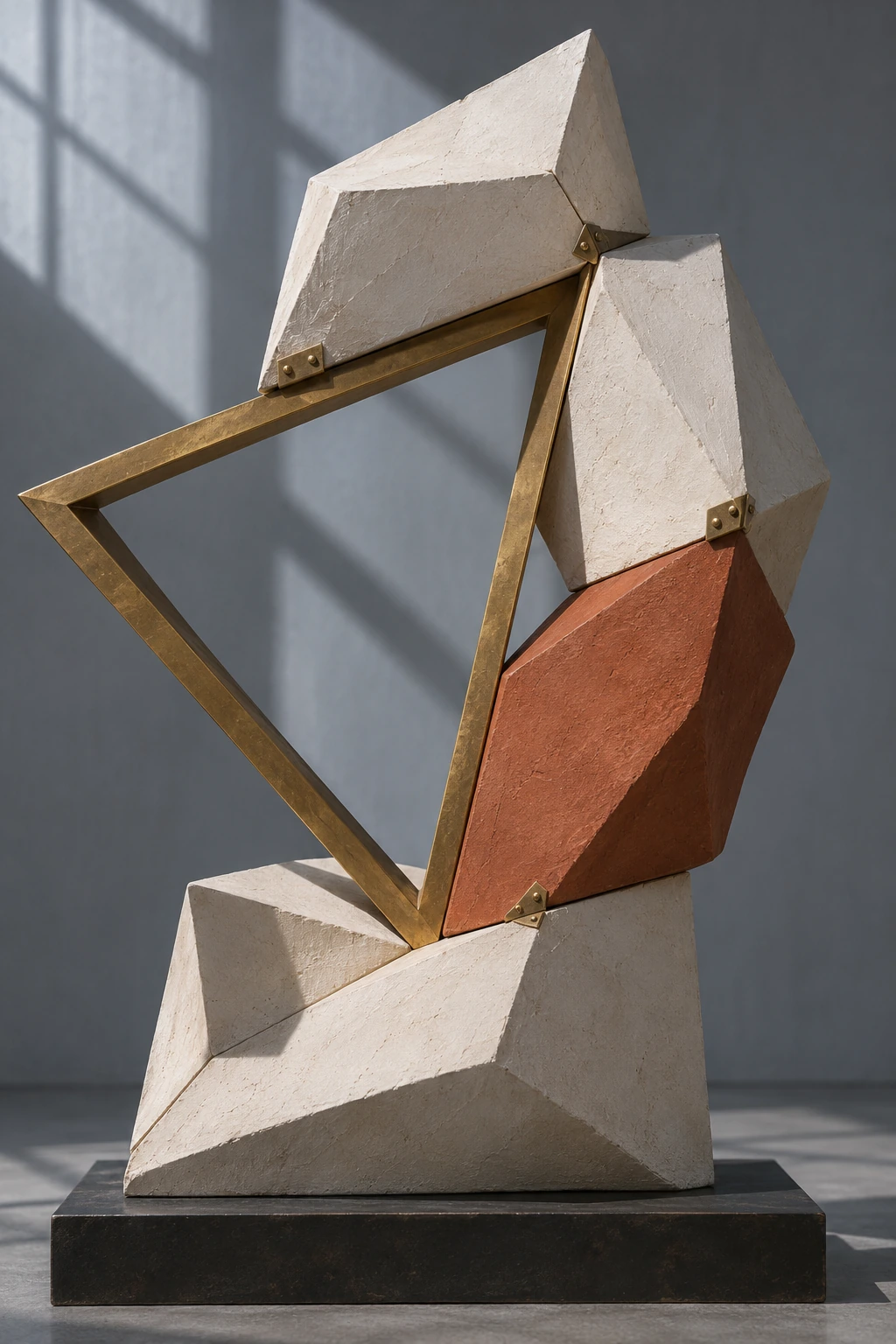
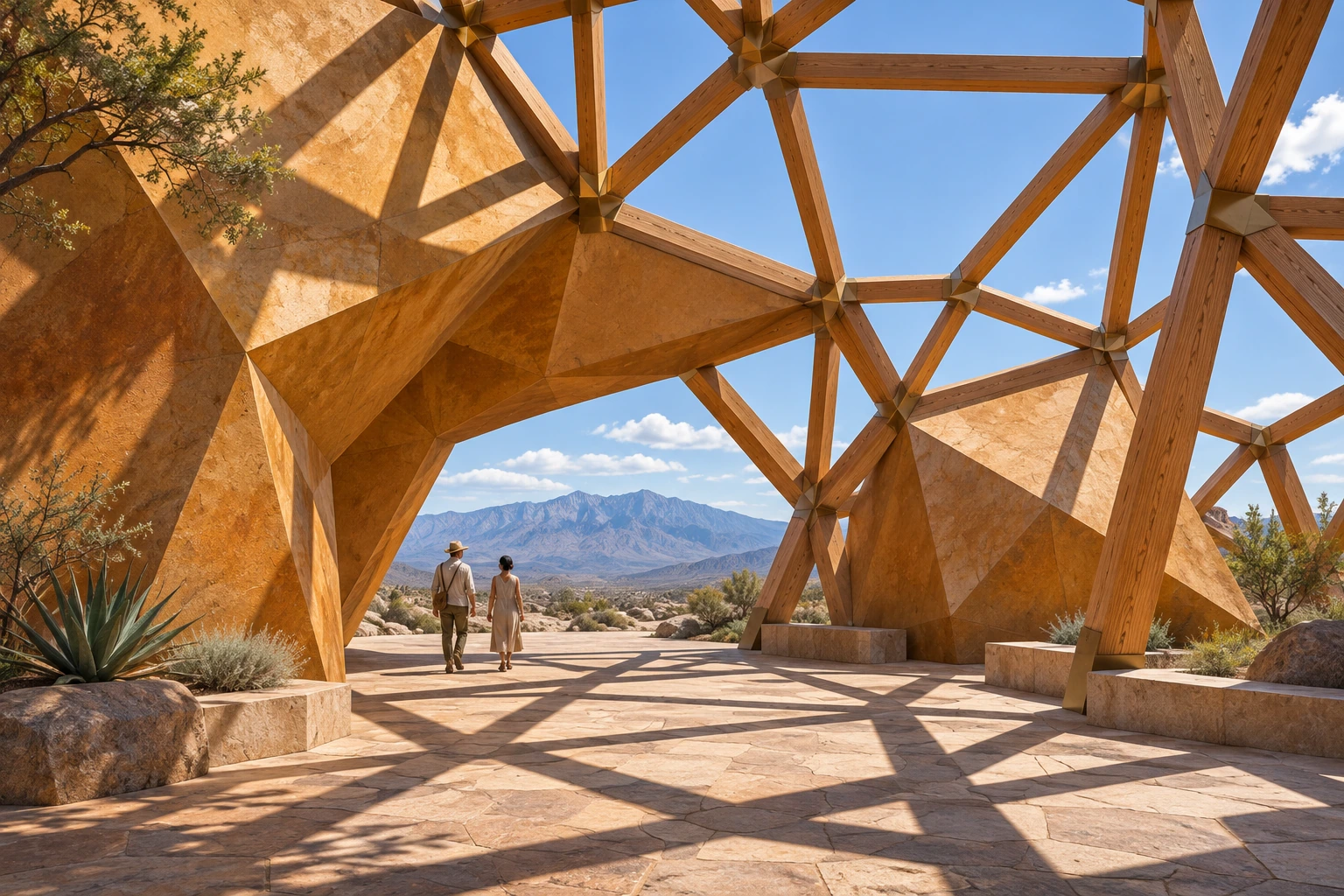
Five original AI-generated studies explore this subject through a banner, a titled collage and three standalone examples.
Select an image for a closer look. Use the thumbnails, arrow keys or a swipe to compare examples. Zoom in to inspect details, or share the image that inspires you.
Creative toolbox · take this style further
Choose an input and a destination. Search sends your words to the chosen site; Copy & open puts them on your clipboard to paste there.
Create with AI
Turn your chosen input into an image prompt or a new creative direction.
ChatGPT
Copy your input and paste it into a ChatGPT conversation or image request.
Copy & open ChatGPT (new tab)Claude · Anthropic
Develop an image prompt or explore the style in a new Claude conversation.
Copy & open Claude · Anthropic (new tab)Midjourney
Paste your input into the Imagine bar on the Create page.
Copy & open Midjourney (new tab)Adobe Firefly
Copy your input, open Firefly, and paste it into the prompt field.
Copy & open Adobe Firefly (new tab)Leonardo.Ai
Copy your input, open Leonardo, and paste it into the generation field.
Copy & open Leonardo.Ai (new tab)Image search
Find visual references. Short, concrete keywords usually work best.
Lexica
Search AI images and prompts using your selected input.
Search with this input Lexica (new tab)Pexels
Search the photo and video library. Short keywords often work best.
Search with this input Pexels (new tab)Pixabay
Search photos, illustrations and other images.
Search with this input Pixabay (new tab)Unsplash
Search photographs using the style name or your own keywords.
Search with this input Unsplash (new tab)Wikimedia Commons
Search photographs, artworks and historical images. Check each file for its source and reuse terms.
Search with this input Wikimedia Commons (new tab)Art & research
Explore artists, collections and the ideas behind a style.
Wikipedia
Search for background reading. A style may not have its own article.
Search with this input Wikipedia (new tab)WikiArt
Copy your input into WikiArt’s search to explore artists and artworks.
Copy & open WikiArt (new tab)Europeana
Paste your keywords into the search to explore European museum, library and archive collections.
Copy & open Europeana (new tab)Inspiration
Discover portfolios and visual ideas from creative communities.
Instagram hashtags
Search a hashtag made from your input: spaces and punctuation are removed. Instagram may require sign-in.
Search with this input Instagram hashtags (new tab)ArtStation
Paste your input into artwork search for concept art, environments, characters and visual development.
Copy & open ArtStation (new tab)Behance
Paste your input into project search for illustration, design and visual storytelling.
Copy & open Behance (new tab)A closer look
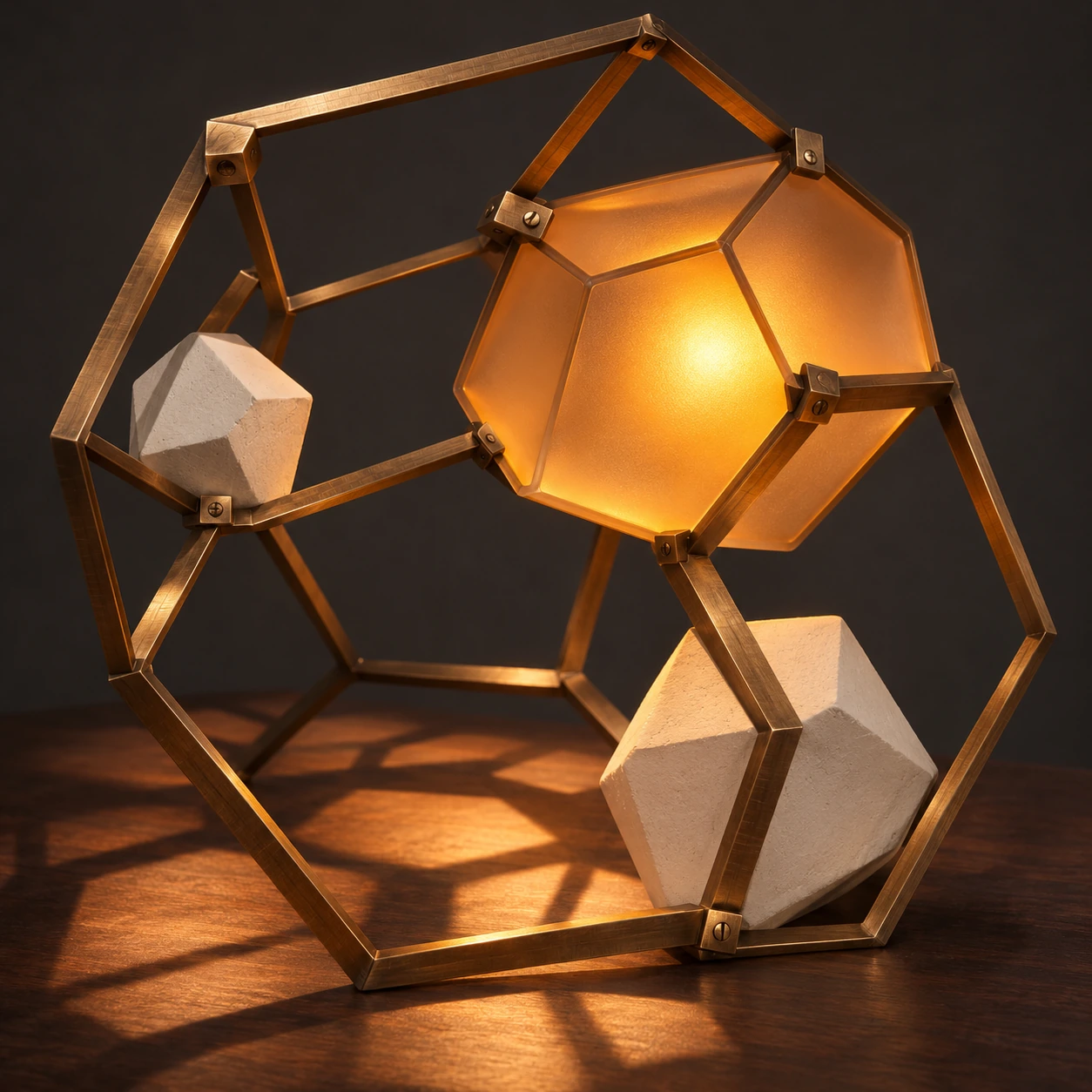
Planes change direction decisively. Joints reveal how one volume meets another, while open cells admit light and frame a background. A restrained material palette and strong directional illumination make the assembly readable without turning every surface into a decorative mesh.
An exploration, with a clear name boundary
This entry proposes an artistic working method, not a newly discovered historical movement. Polyhedric Constructionism is the name of this AOI exploration; its vocabulary draws on familiar geometry and the long artistic practice of constructing abstract forms.
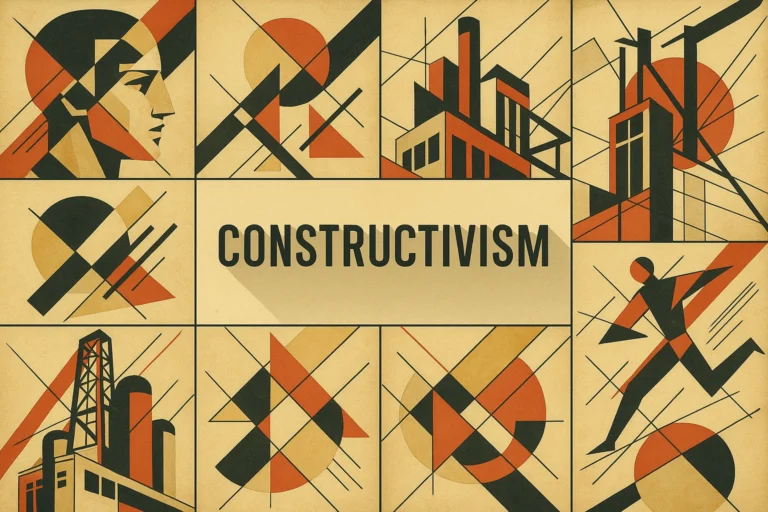
Historical Constructivism and British Constructionism have their own contexts. The National Galleries of Scotland discusses Constructivism in relation to early twentieth-century Russian art and its industrial and social ambitions. Sam Gathercole's study of Kenneth Martin places British constructionism in post-war social space, including Martin's 1953 hospital exhibition. Those histories provide context, not a pedigree claimed for this new label.
From faces to relationships
In elementary geometric use, a polyhedron is a three-dimensional form bounded by polygonal faces. This exploration treats faces, edges and vertices as compositional decisions. A face can catch light, an edge can direct the eye, and a meeting point can concentrate tension.
The important question is what the forms do together. One block might anchor the image while an open frame reaches away from it. A narrow gap can matter more than another added volume. Begin with a small family of forms and establish a relationship before multiplying them.
Three structural voices
Solid construction emphasizes weight: plaster, stone-like surfaces or opaque painted panels make the assembly feel grounded. Skeletal construction exposes edges and allows the background to pass through. A hybrid combines a few closed volumes with an open frame so that mass and absence can be compared directly.
These are workshop options rather than fixed schools. The same arrangement can change character when a closed face is removed or a transparent panel replaces it. Keep that change visible; a uniformly busy network leaves the eye little opportunity to understand what was opened.
Connections earn their place
Design the meeting of forms as carefully as their outlines. A brass collar, recessed seam, pinned corner or continuous fold can suggest a different kind of assembly. Use a small number of connection types consistently, and show enough contact to make the visual premise convincing.
Speculative objects can deliberately challenge balance, but they should read as speculative. The images here are artistic studies, not tested construction details. A dramatic pavilion or furniture concept does not acquire structural validity because its rendering looks precise.
Light is an assembly partner
Directional light reveals the difference between neighboring planes. Arrange a few broad values so the silhouette reads at a distance, then allow smaller seams and surface marks to emerge at close range. Shadows cast through an open cell can continue the structure across a floor or wall.
Materials should contribute distinct behavior: chalky plaster absorbs light, brushed brass catches a narrow reflection, and translucent glass softens what lies behind it. Avoid assigning a different glossy material to every face. Restraint helps the joints and spatial relationships remain the subject.
Beyond a faceted surface
A low-poly treatment can describe an existing object with fewer faces. This exploration instead asks how independent volumes and frameworks construct the object or scene. A portrait covered in triangles may be faceted, but it does not automatically demonstrate this assembly logic.
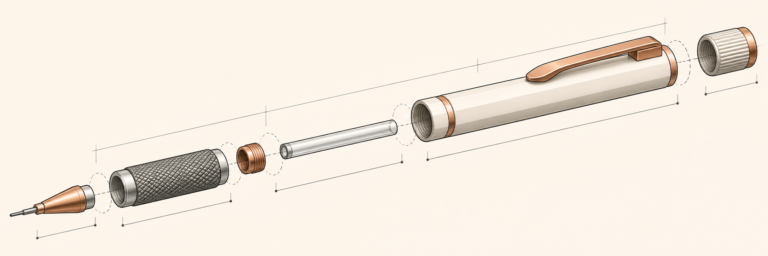
Likewise, an exploded axonometric diagram separates components to explain their relationship. Polyhedric Constructionism can use such a view as a study, yet its finished artwork may be fully assembled, atmospheric and spatial. Explanation and visual experience can support each other without being identical.
A practical sequence
Choose a material family and one organizing action: bridge, cradle, interlock or enclose. Establish three principal masses, remove one face to create an opening, then design the connections. Test the silhouette in a single dark value before adding texture. Finally, move the light and observe which relationships become clear.
Applications range from sculptural still lifes and wall reliefs to speculative pavilions, lighting objects and exhibition installations. Change scale with purpose. A tabletop assembly invites close inspection of a seam; a pavilion makes the viewer's route through a void part of the composition.
A small poetic detour
Original words from the AOI studio.
Poetry
A plane turns light toward a seam,
An edge gives structure to a dream.
Three faces meet; a fourth makes room
For daylight walking through the gloom.
The hollow holds what stone lets go—
A space the solid learns to show.
The prompt workshop
Original creative exercises. These prompts create new illustrations, not documentary evidence.
Mass holds an opening
Create an original Polyhedric Constructionism sculpture: three chalk-white polygonal volumes cradle an open brass polyhedral frame, precise readable joints, one generous central void, cobalt inset face, directional gallery light, tactile plaster and restrained brushed metal, no text. An artistic assembly study.
A pavilion frames the sky
Create a speculative Polyhedric Constructionism pavilion in a quiet desert courtyard: a few large opaque polygonal masses joined to an open timber-and-brass framework, clear walk-through void, strong cast shadows, human scale, warm stone and cool sky, no text, no claim of engineered feasibility.
Light inside the framework
Create a sculptural lighting concept in Polyhedric Constructionism: an asymmetric open bronze polygonal cage supports two opaque chalk-white volumes and one frosted amber glass chamber, visible restrained joints, light falls through the empty cells onto a dark table, museum-quality still life, no text.
Your next inspiration
Discover another art style
Follow a visual thread to the next subject.
A smile from the studio
Jokes
The polyhedron arrived at the design review with a very strong position. Unfortunately, every face had a different one. After six hours of discussion, the committee agreed to remove a panel and call the unresolved issue an architectural void.