
Technical illustration method and artistic visual approach
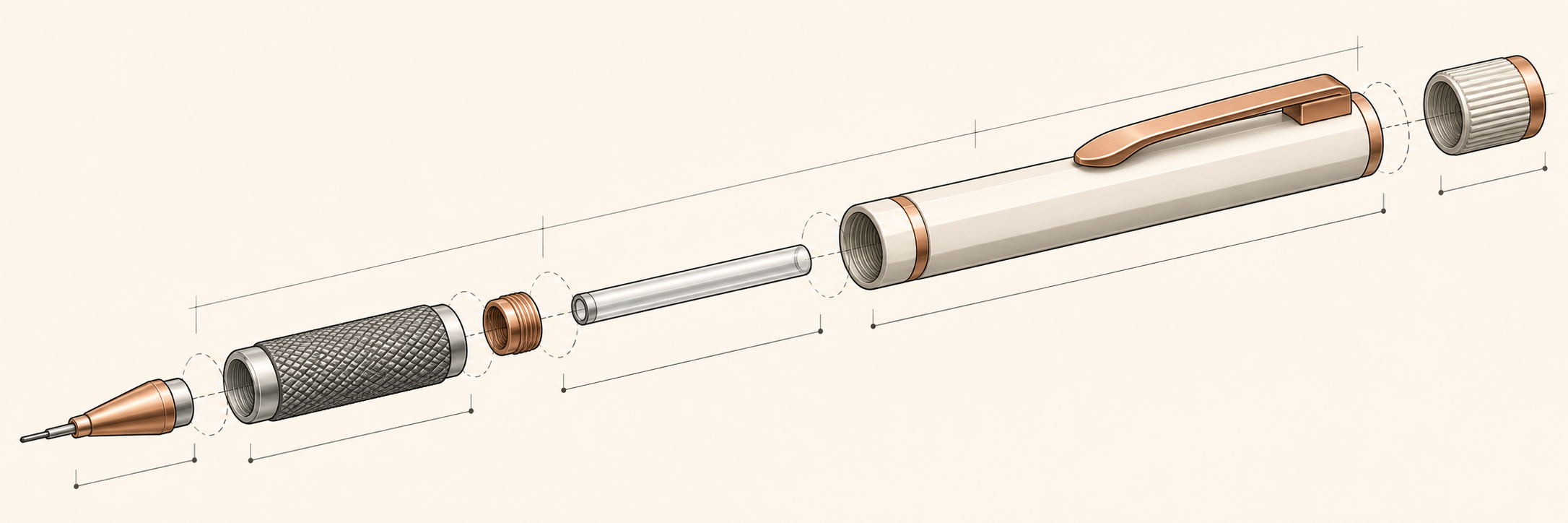
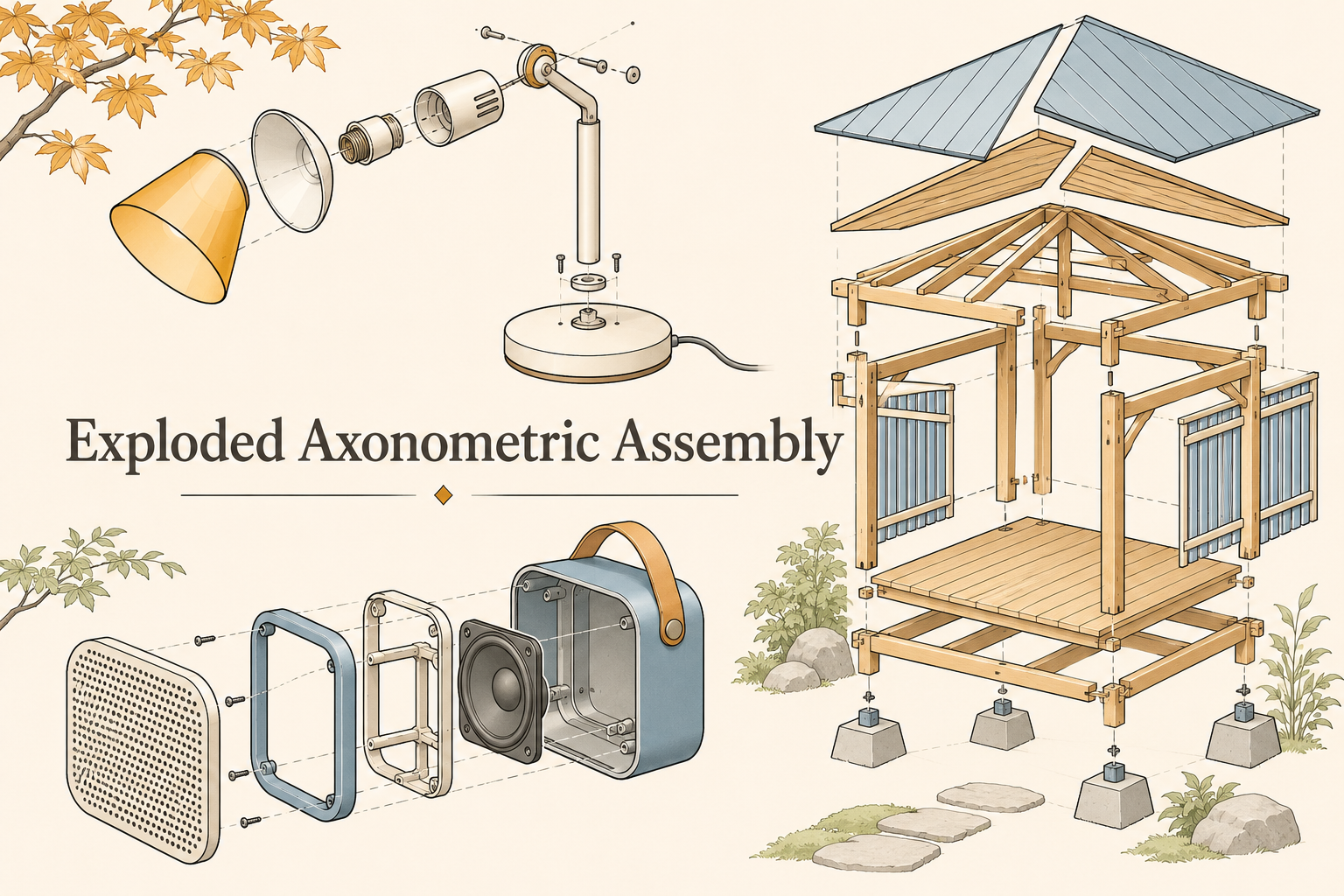
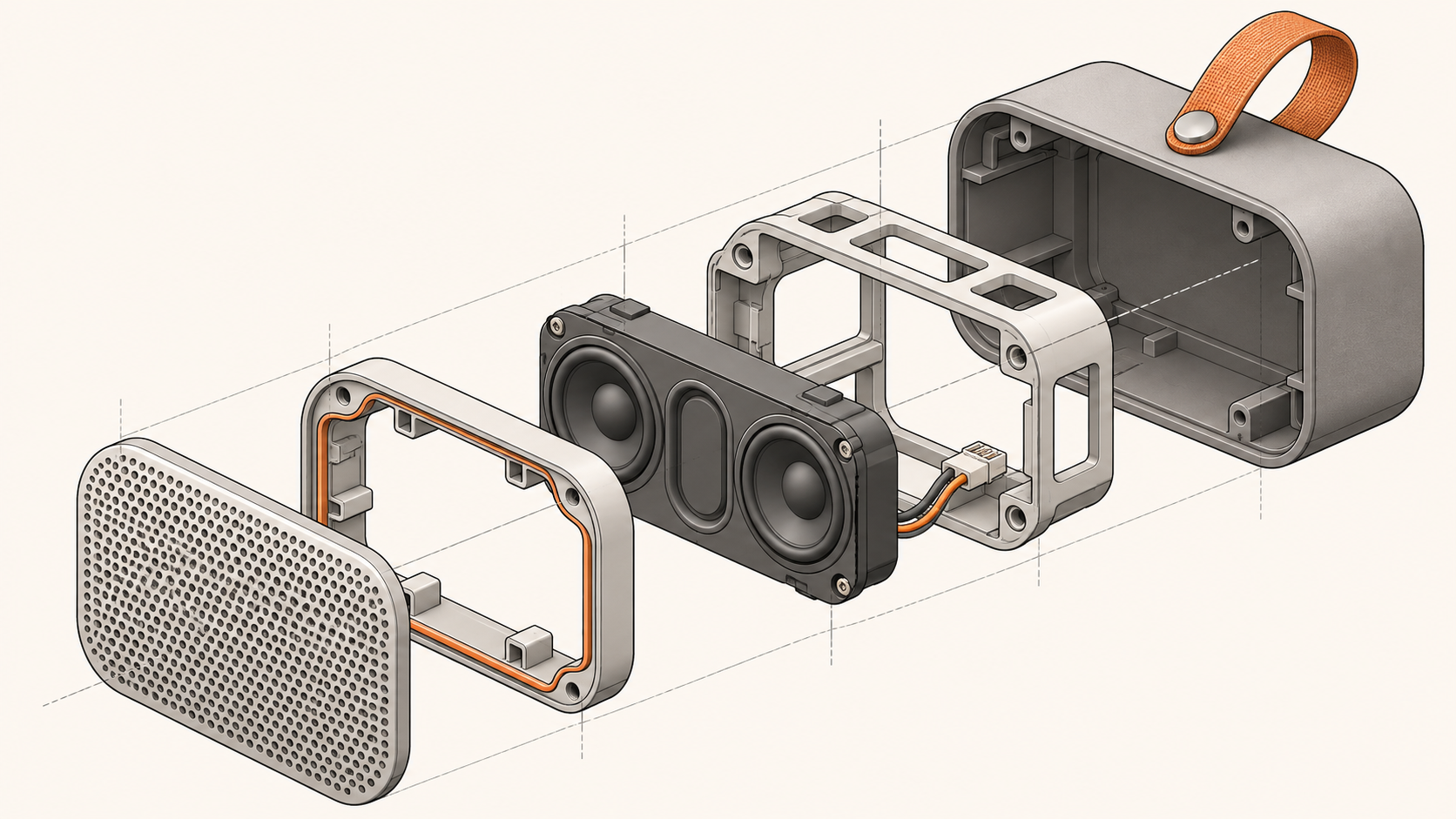
An exploded axonometric assembly separates an object's parts within a consistent parallel projection, turning construction relationships into a clear spatial composition.
A visual introduction
Select an image for a closer look. Use the thumbnails, arrow keys or a swipe to compare examples. Zoom in to inspect details, or share the image that inspires you.
Creative toolbox · take this style further
Choose an input and a destination. Search sends your words to the chosen site; Copy & open puts them on your clipboard to paste there.
Create with AI
Turn your chosen input into an image prompt or a new creative direction.
ChatGPT
Copy your input and paste it into a ChatGPT conversation or image request.
Copy & open ChatGPT (new tab)Claude · Anthropic
Develop an image prompt or explore the style in a new Claude conversation.
Copy & open Claude · Anthropic (new tab)Midjourney
Paste your input into the Imagine bar on the Create page.
Copy & open Midjourney (new tab)Adobe Firefly
Copy your input, open Firefly, and paste it into the prompt field.
Copy & open Adobe Firefly (new tab)Leonardo.Ai
Copy your input, open Leonardo, and paste it into the generation field.
Copy & open Leonardo.Ai (new tab)Image search
Find visual references. Short, concrete keywords usually work best.
Lexica
Search AI images and prompts using your selected input.
Search with this input Lexica (new tab)Pexels
Search the photo and video library. Short keywords often work best.
Search with this input Pexels (new tab)Pixabay
Search photos, illustrations and other images.
Search with this input Pixabay (new tab)Unsplash
Search photographs using the style name or your own keywords.
Search with this input Unsplash (new tab)Wikimedia Commons
Search photographs, artworks and historical images. Check each file for its source and reuse terms.
Search with this input Wikimedia Commons (new tab)Art & research
Explore artists, collections and the ideas behind a style.
Wikipedia
Search for background reading. A style may not have its own article.
Search with this input Wikipedia (new tab)WikiArt
Copy your input into WikiArt’s search to explore artists and artworks.
Copy & open WikiArt (new tab)Europeana
Paste your keywords into the search to explore European museum, library and archive collections.
Copy & open Europeana (new tab)Inspiration
Discover portfolios and visual ideas from creative communities.
Instagram hashtags
Search a hashtag made from your input: spaces and punctuation are removed. Instagram may require sign-in.
Search with this input Instagram hashtags (new tab)ArtStation
Paste your input into artwork search for concept art, environments, characters and visual development.
Copy & open ArtStation (new tab)Behance
Paste your input into project search for illustration, design and visual storytelling.
Copy & open Behance (new tab)A closer look
Aligned displaced components, parallel families of edges, stable part proportions, selective guide lines, generous gaps and a hierarchy of outlines, surfaces and small connecting details.
A drawing method with expressive potential
Exploded Axonometric Assembly combines two established ideas. Axonometry presents several sides of an object using parallel projection; an exploded view separates components so their relationships become visible. Aalto University's drawing guide explains the projection principle, while Autodesk's presentation documentation describes exploded views as a way to reveal otherwise obstructed parts and show how an assembly fits together.
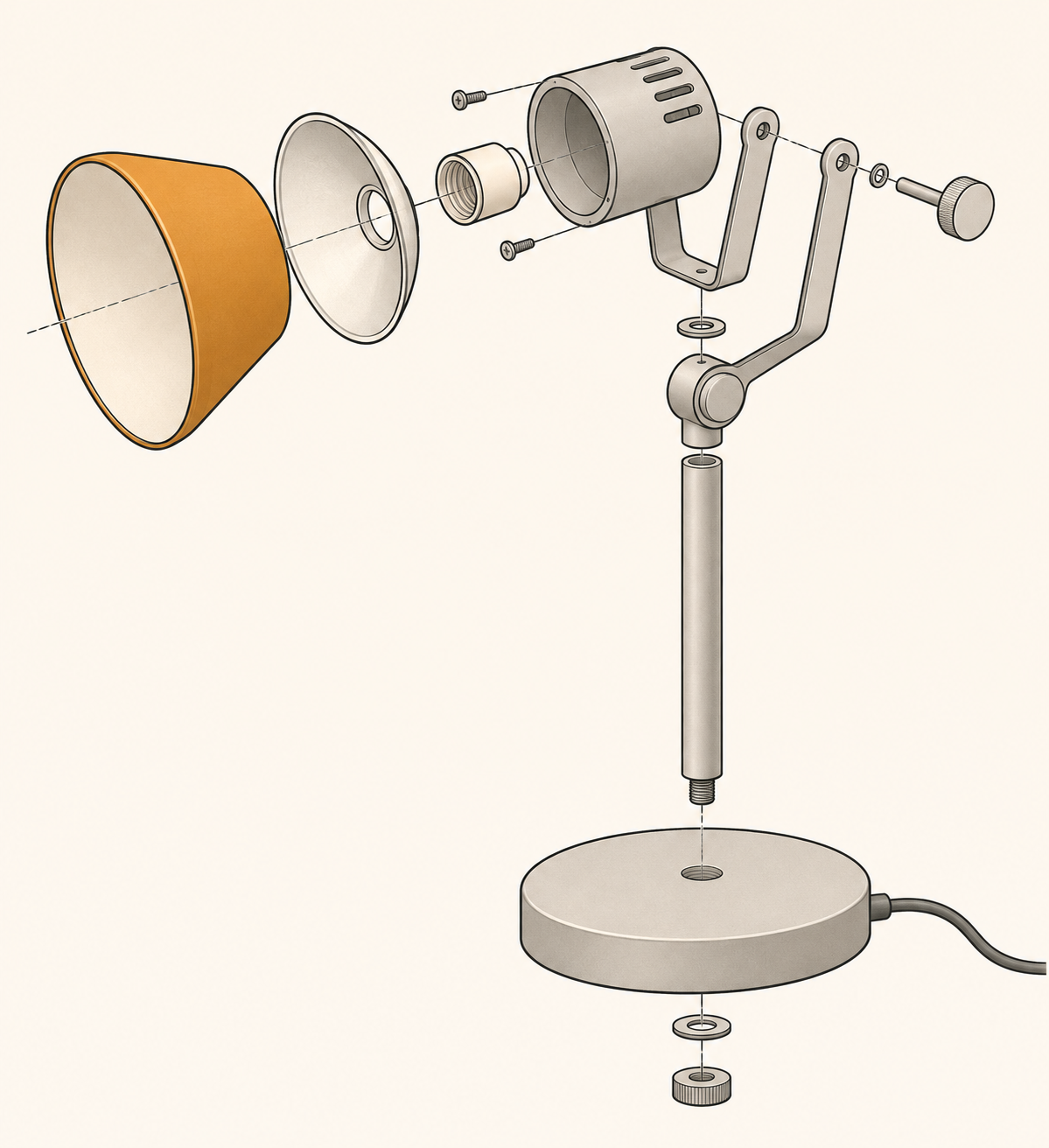
Here the method is also treated as a visual approach for original illustration. It can make an ordinary object feel newly legible: a lamp becomes a sequence of shell, reflector, socket and base. The name does not identify a historical art movement, and an attractive invented assembly is not automatically a valid construction drawing.
Separate the parts without losing the whole
Begin with a believable assembled object. Choose a principal separation direction and move related parts in a controlled sequence, preserving orientation unless rotation serves a specific explanation. Secondary components can move along other axes, but the reader should still understand where they belong.
Use spacing as punctuation. A larger interval can separate major subassemblies; smaller intervals can keep washers, spacers and fasteners associated with a particular joint. More distance does not always mean more clarity. If a small component drifts into an unrelated group, the drawing starts to resemble a box of leftovers.
Keep the projection and hierarchy coherent
In an axonometric view, parallel edges remain parallel rather than converging toward perspective vanishing points. A repeated part does not shrink simply because it is placed farther away in the illustration. Isometric is one axonometric case, not a synonym for every possible axonometric arrangement.
Give the primary silhouettes more visual weight than alignment guides and minor edges. A restricted accent color can identify one subsystem, while pale surfaces preserve the overall object. Soft shadows may help separate overlapping pieces, but dramatic perspective lighting should not conceal the structural relationships the drawing exists to explain.
Variants, uses and failure modes
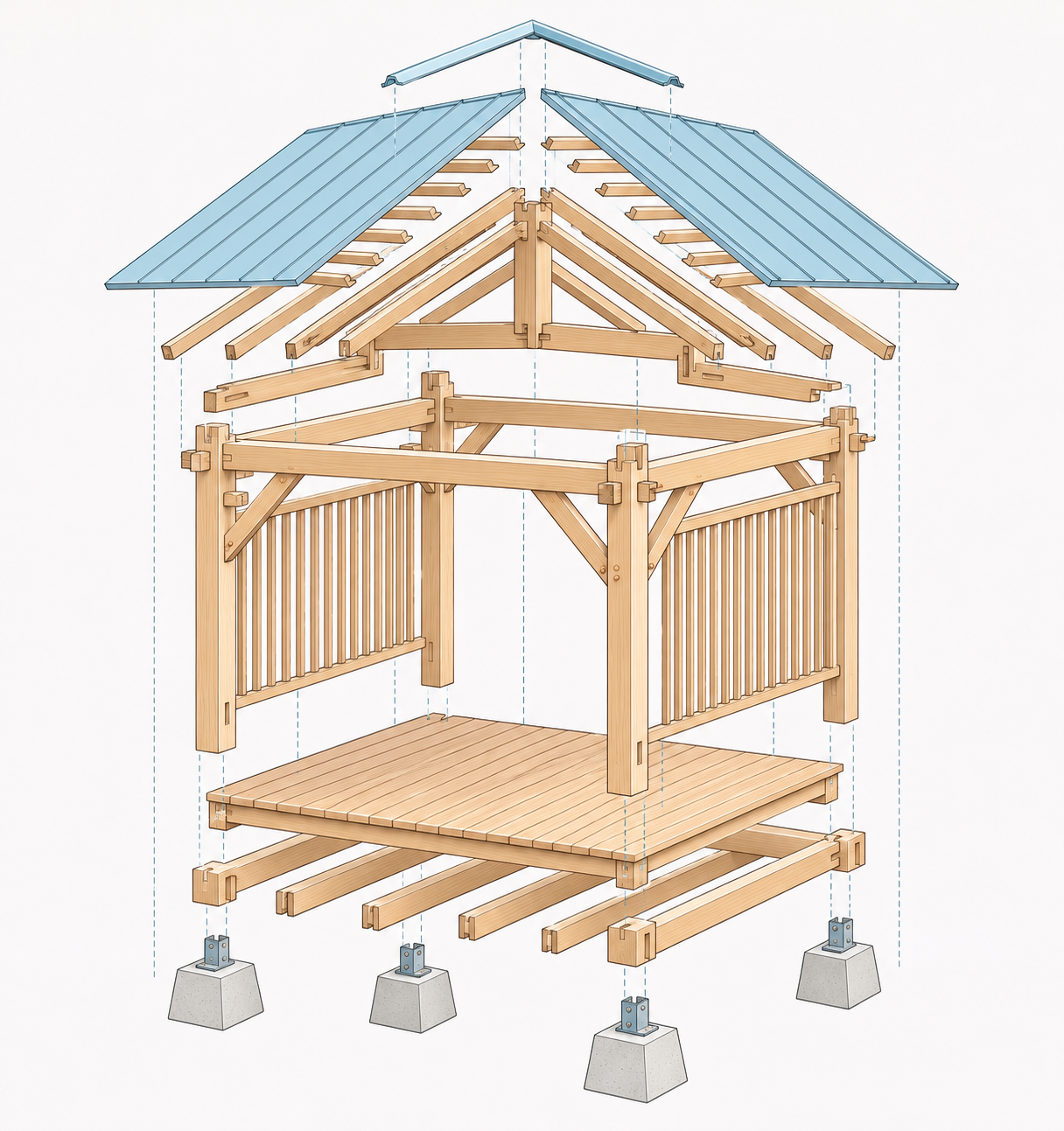
A vertical architectural stack can reveal floors and roof layers; a horizontal mechanical sequence can reveal a shaft and its fittings; a small furniture assembly can explain joints through restrained displacement. These are different compositional problems. A radial arrangement may be effective too, provided it retains an intelligible relationship to the assembled object.
This entry is narrower than the general Exploded View topic, which can use other projections, and distinct from an Axonometric Cutaway, which exposes interiors by removing portions rather than separating components. For an AI interpretation, inspect matching holes, repeated parts and plausible thicknesses. Omit invented dimensions and meaningless labels; call the result a concept illustration unless its geometry has been checked against an actual design.
Positive editorial perspective
AOI editorial perspective (AI-authored). Controlled separation makes hidden relationships visible while preserving the object's identity. A strong composition turns empty space into an explanatory device: each gap helps the viewer mentally reassemble the whole.
Negative editorial perspective
AOI editorial perspective (AI-authored). Decorative disassembly can become a scatter of unrelated parts. Reduce unnecessary components, restore alignment and inspect interfaces before adding color or dramatic shadows. Technical-looking detail is not proof of engineering accuracy.
Neutral editorial perspective
AOI editorial perspective (AI-authored). This is a presentation method that can support explanatory or artistic work. Its defining combination is exploded relationships and parallel projection; the precision of any particular design must be evaluated separately.
A small poetic detour
Original words from the AOI studio.
Poetry
The roof lifts first, the floor stays near;
The hidden fastening comes clear.
A washer waits beside its screw,
A little ring with work to do.
No distant edge forgets its line;
The scattered pieces still align.
Between the shell and quiet core,
The page makes room to notice more.
I leave a gap where hands would go,
A measured pause that lets us know
How separate shapes, correctly placed,
Can give one ordinary object grace.
The prompt workshop
Original creative exercises. These prompts create new illustrations, not documentary evidence.
Explain a small object
Original exploded axonometric concept illustration of a simple desk lamp, shade, reflector, socket housing, stem and base separated along clear axes, consistent parallel edges and matching connection positions, charcoal outlines and one muted amber accent, plain ivory background, no text or dimensions.
Keep the construction simple enough to inspect; this is an invented concept, not an assembly instruction.
Open an architectural stack
An original exploded axonometric illustration of a compact timber garden pavilion, roof panels, beams, floor platform and footings separated vertically, coherent parallel projection, visible plausible joints, restrained wood and pale blue color, fine alignment guides, no labels.
Group related elements; avoid arbitrary rotation or floating pieces without a destination.
Compare material layers
Original axonometric exploded study of an invented portable speaker housing, front grille, inner frame, speaker module and rear shell spaced along one main axis, stable orientations, generous negative space and selective line weight, no logos, dimensions or pseudo-text.
Inspect whether the shell, grille and inner frame could plausibly meet.
A smile from the studio
Jokes
The designer announced that every component had finally been given room to breathe. The washer appreciated the gesture but asked whether it was still employed. 'Of course,' said the designer. 'You're essential.' 'Then please move me back next to my bolt. I'm currently in the lighting department.'