
Action, duration and audience
Performance art makes actions, bodies, time and relationships part of the artwork. A photograph may record or propose a performance, but it cannot by itself reproduce the event or its encounter with an audience.
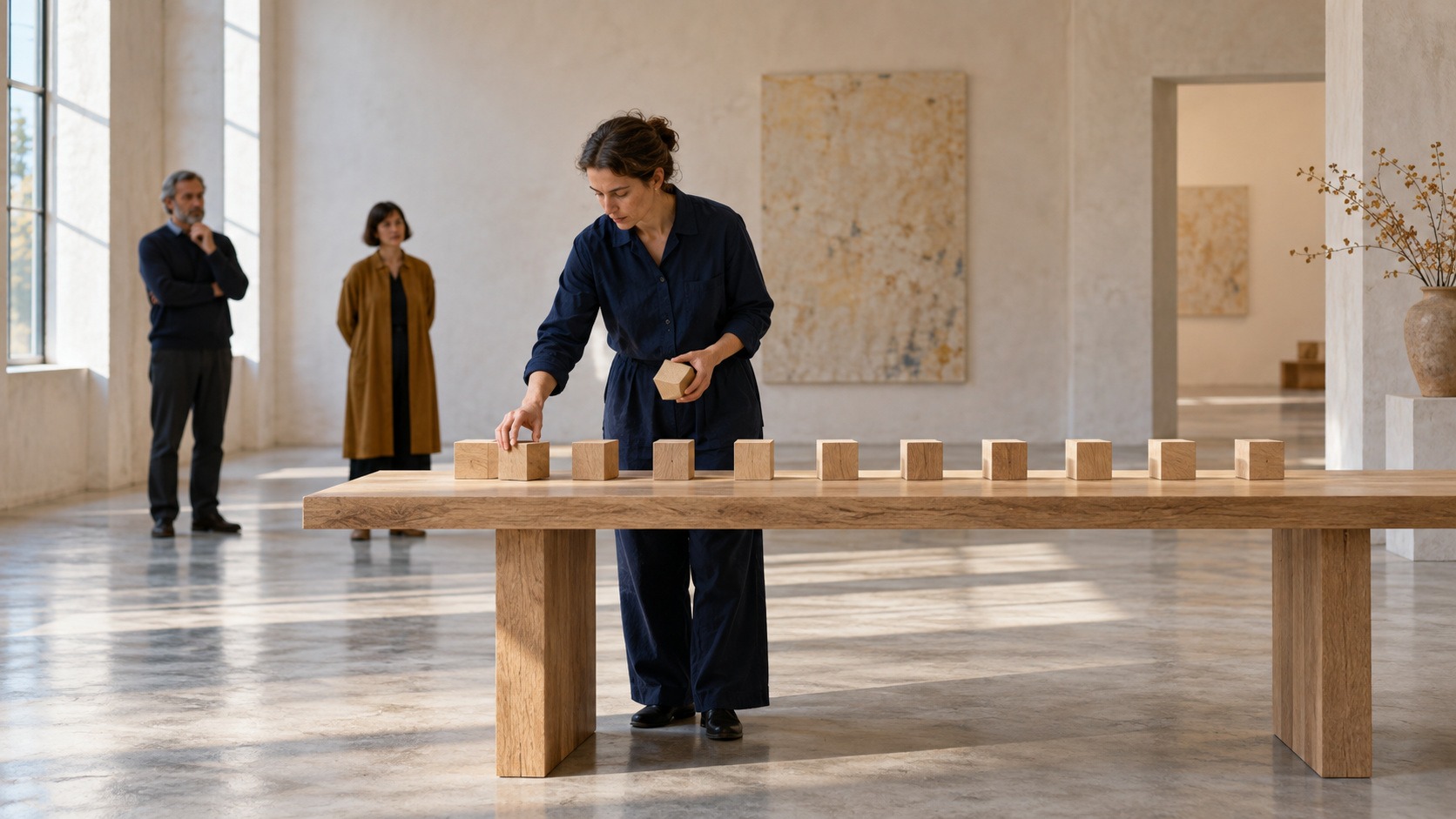
A visual introduction
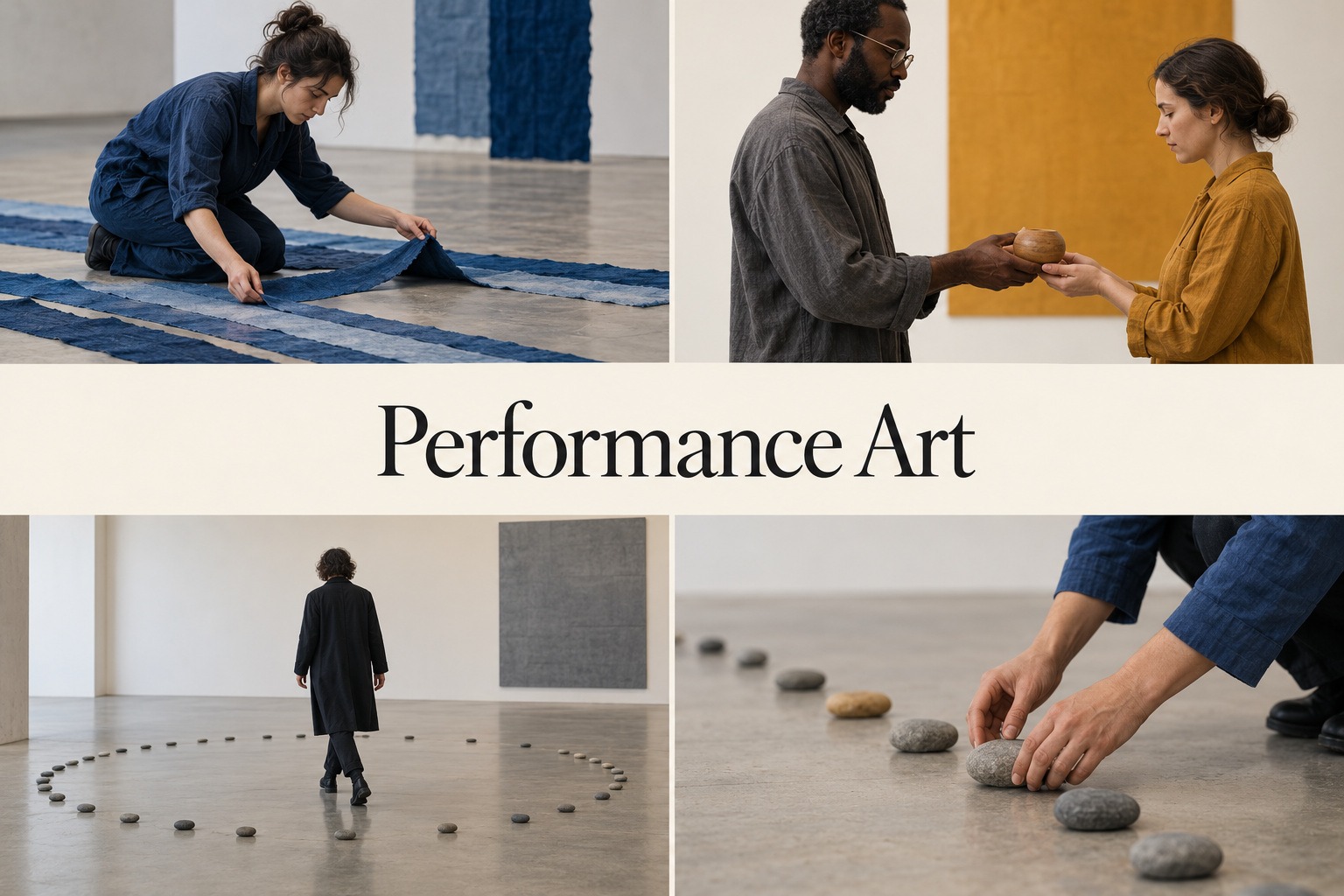
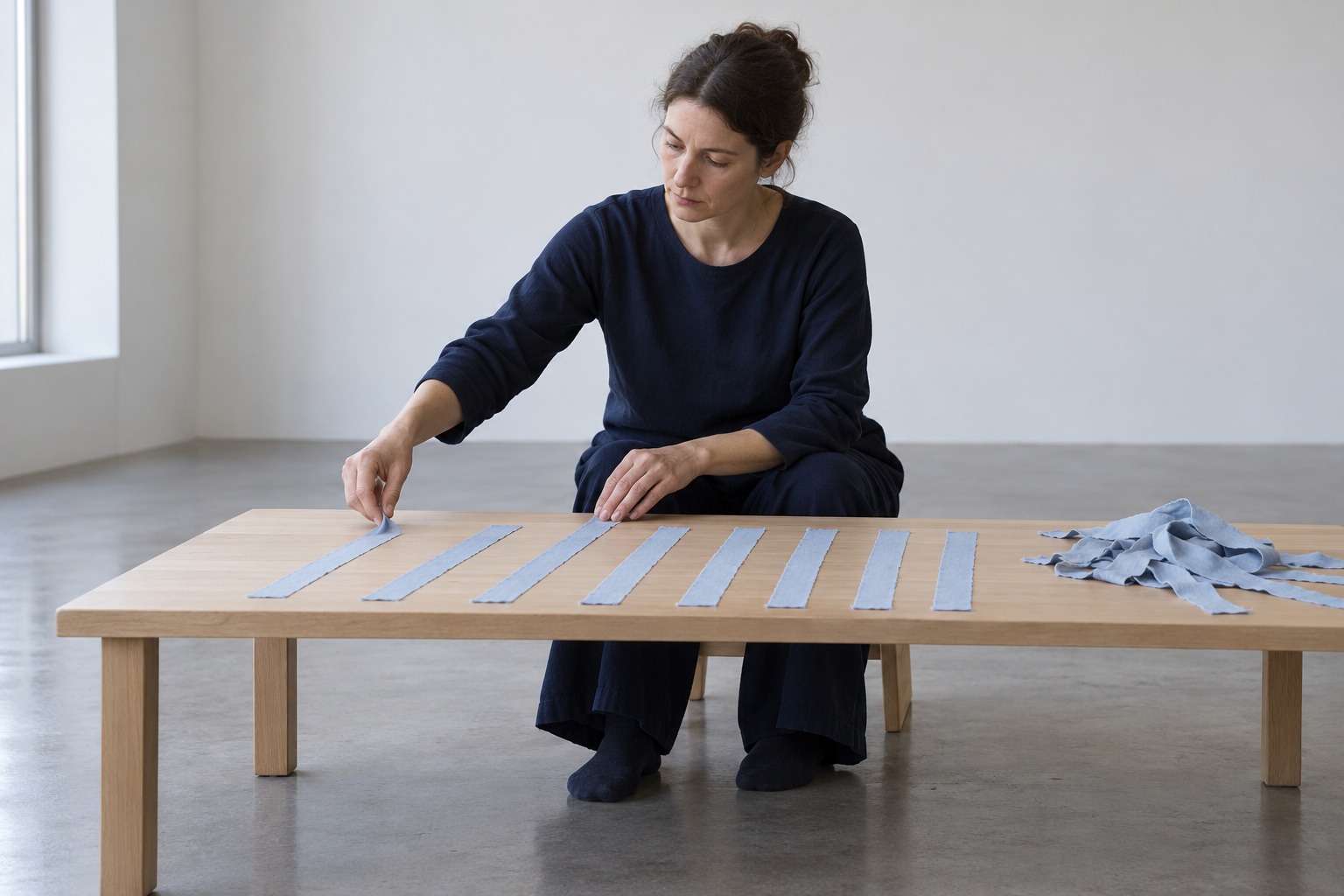
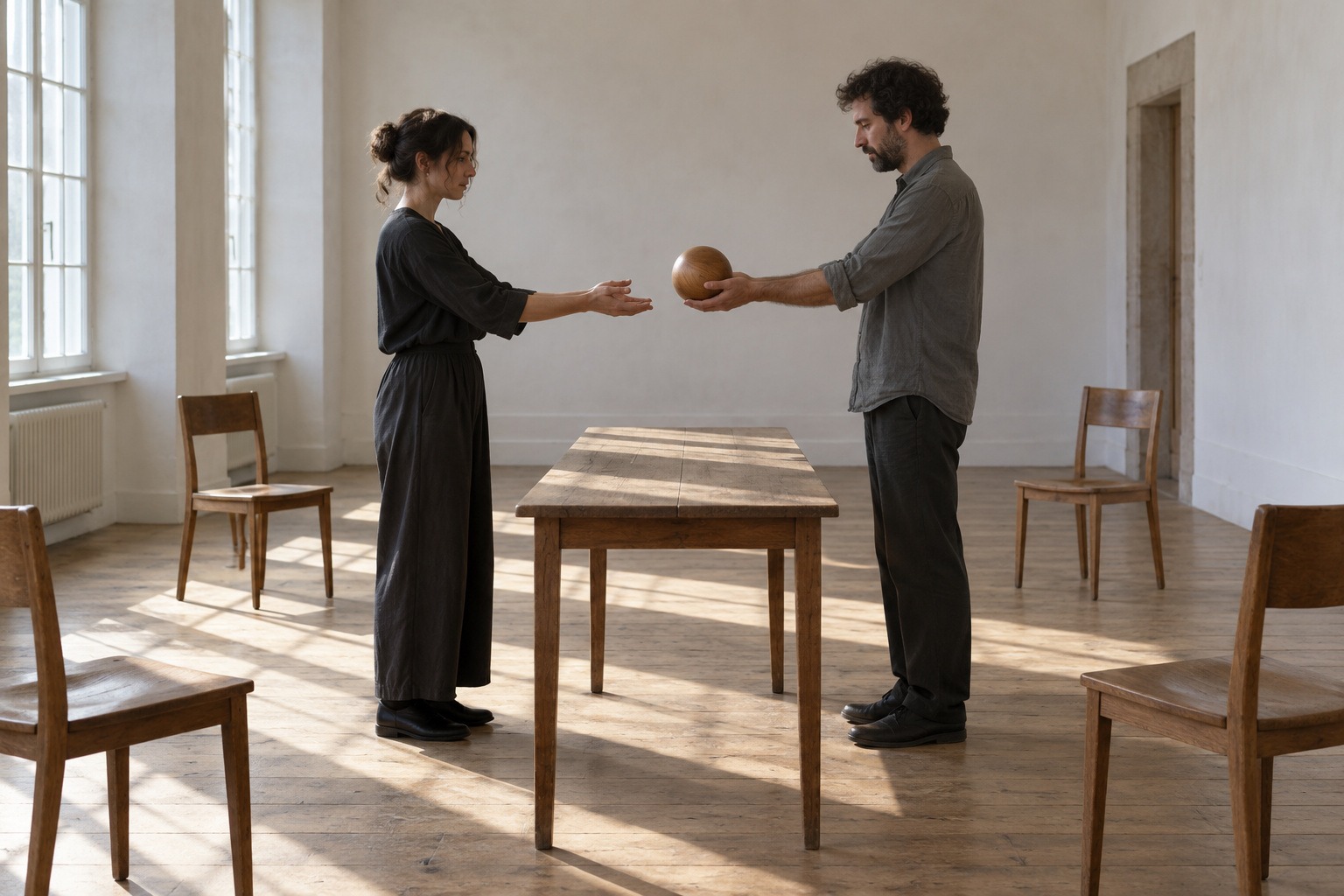
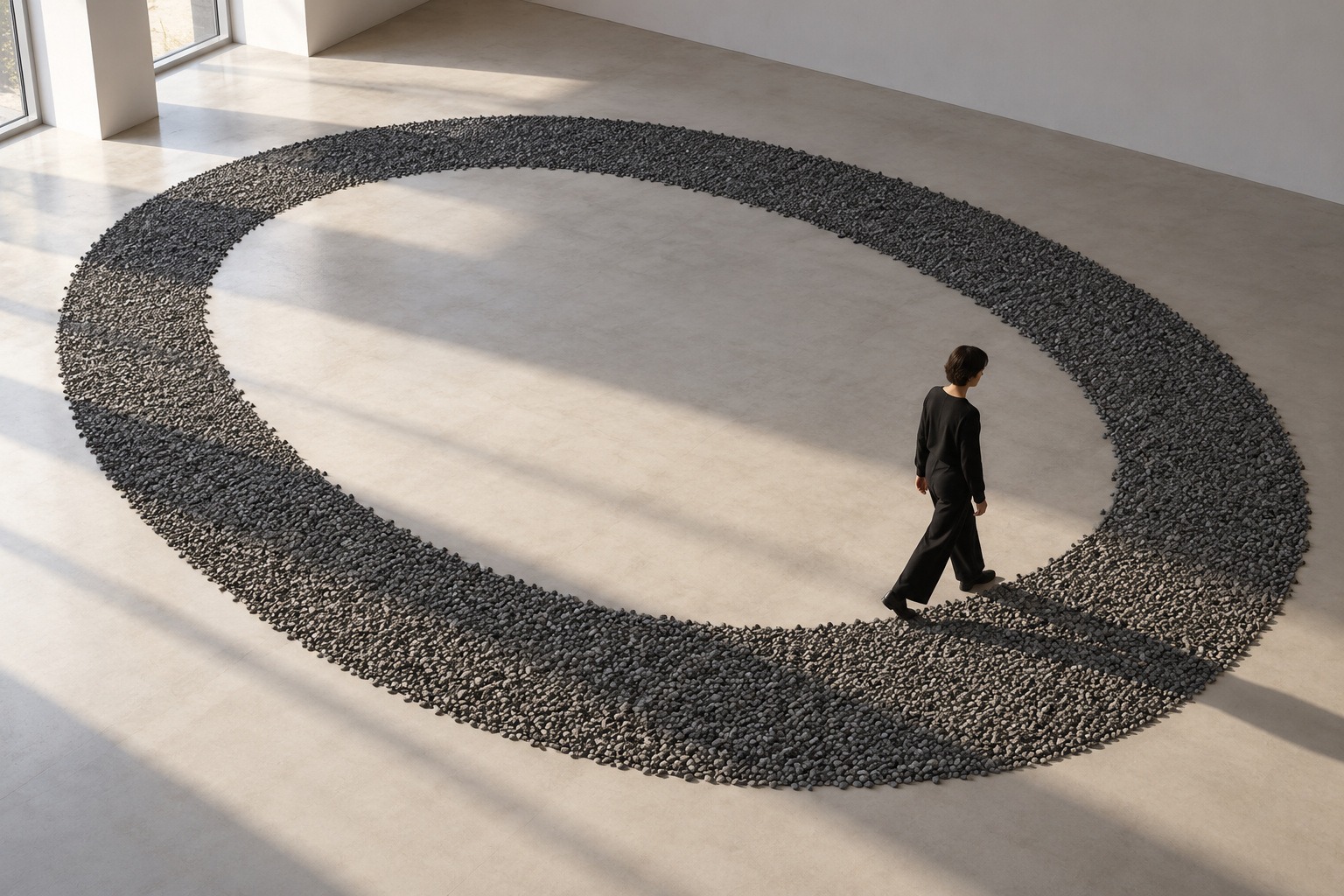
Five generated concept images propose actions involving arrangement, exchange and a walking route. They are not documentation of performed events. A still image cannot show duration or establish an audience’s experience.
Select an image for a closer look. Use the thumbnails, arrow keys or a swipe to compare examples. Zoom in to inspect details, or share the image that inspires you.
Creative toolbox · take this style further
Choose an input and a destination. Search sends your words to the chosen site; Copy & open puts them on your clipboard to paste there.
Create with AI
Turn your chosen input into an image prompt or a new creative direction.
ChatGPT
Copy your input and paste it into a ChatGPT conversation or image request.
Copy & open ChatGPT (new tab)Claude · Anthropic
Develop an image prompt or explore the style in a new Claude conversation.
Copy & open Claude · Anthropic (new tab)Midjourney
Paste your input into the Imagine bar on the Create page.
Copy & open Midjourney (new tab)Adobe Firefly
Copy your input, open Firefly, and paste it into the prompt field.
Copy & open Adobe Firefly (new tab)Leonardo.Ai
Copy your input, open Leonardo, and paste it into the generation field.
Copy & open Leonardo.Ai (new tab)Image search
Find visual references. Short, concrete keywords usually work best.
Lexica
Search AI images and prompts using your selected input.
Search with this input Lexica (new tab)Pexels
Search the photo and video library. Short keywords often work best.
Search with this input Pexels (new tab)Pixabay
Search photos, illustrations and other images.
Search with this input Pixabay (new tab)Unsplash
Search photographs using the style name or your own keywords.
Search with this input Unsplash (new tab)Wikimedia Commons
Search photographs, artworks and historical images. Check each file for its source and reuse terms.
Search with this input Wikimedia Commons (new tab)Art & research
Explore artists, collections and the ideas behind a style.
Wikipedia
Search for background reading. A style may not have its own article.
Search with this input Wikipedia (new tab)WikiArt
Copy your input into WikiArt’s search to explore artists and artworks.
Copy & open WikiArt (new tab)Europeana
Paste your keywords into the search to explore European museum, library and archive collections.
Copy & open Europeana (new tab)Inspiration
Discover portfolios and visual ideas from creative communities.
Instagram hashtags
Search a hashtag made from your input: spaces and punctuation are removed. Instagram may require sign-in.
Search with this input Instagram hashtags (new tab)ArtStation
Paste your input into artwork search for concept art, environments, characters and visual development.
Copy & open ArtStation (new tab)Behance
Paste your input into project search for illustration, design and visual storytelling.
Copy & open Behance (new tab)A closer look
There is no single performance-art look. Repetition, gesture, stillness, movement, objects and spatial arrangements become meaningful through what happens, for how long, and in relation to whom.
The action is part of the work
IMMA describes performance art through people undertaking actions in particular times and spaces, with the body and the performer–audience relationship central to the practice. It can intersect with music, poetry, dance, film or installation. Those intersections do not require a conventional plot or a theatrical character. A quiet repeated gesture can be as deliberate as a large public event.
The National Galleries of Scotland traces twentieth-century experimental precedents and the prominence of performance practices from the 1960s onward. This history contains diverse political, conceptual and bodily investigations. It should not be flattened into a claim that performance art simply means shocking an audience. Intensity, physical risk and spectacle are possibilities in particular works, not requirements for the medium.
Read time as carefully as an image
Ask what changes between the beginning and the end. A repeated action may accumulate objects, exhaust a pattern, expose small differences or alter the audience’s attention. Stillness can make ordinary background movement noticeable. Duration is therefore a compositional decision, not merely the number attached to a video file.
A proposed score can specify a starting condition, a repeatable action and a clear ending. For example, one person might move plain wooden blocks from a dense cluster into a line over five minutes. The score describes an original exercise, not a historical performance. Its value depends on how rhythm, spacing and attention develop when it is actually carried out.
Space and participation
Position affects experience. Viewers facing a performer from rows of seats encounter a different relationship from people who can walk around an action. A threshold, table, corridor or outdoor path can establish distances and possible choices. Describe what the audience may do, rather than using “interactive” as a vague compliment.
Participation should be understandable and voluntary. In a practical workshop, give people a way to observe without joining and make the ending legible. Consider mobility, sightlines and sound levels as artistic conditions. These choices change who can experience the work and how its structure becomes apparent. They belong in the design from the beginning.
Documentation is an interpretation
Photographs isolate moments and viewpoints. Video adds duration and sound but still selects a frame, edit and playback situation. A score records instructions while leaving aspects of their realization open. Objects left behind can become traces or separately exhibited works. The relationship between event and document needs to be stated for each case.
An AI-generated picture of a person in a gallery is not evidence that a performance occurred. The images here visualize original proposed actions. They cannot establish a participant’s experience, the sound of a room or the duration of an event. Captions identify them as proposals so that a useful design illustration does not become fabricated documentation.
Develop a modest, specific proposal
Choose one action with a visible consequence: aligning cloth strips, transferring a small object, or tracing a route through an empty space. Decide what is fixed and what may vary. Change only one condition during rehearsal, such as pace or audience distance, then compare how the experience changes. Describe observations rather than assuming a universal emotional response.
A strong proposal can explain why its action needs to unfold in time. If the entire idea is exhausted by a single publicity photograph, reconsider the score. Conversely, a subtle action may need patient documentation and a precise description to communicate beyond the room. Performance art asks the viewer to attend to an encounter, including the conditions under which that encounter is remembered.
About this guide
This AI-authored AOI guide appears under Penny Wraiter, AOI’s editorial persona. Sources support the historical context; exercises, prompts and poetry are original editorial interpretations. Image captions distinguish generated studies from documented works.
A small poetic detour
Original words from the AOI studio.
Poetry
A hand sets down a small blue square.
Another breath divides the floor.
We watch the interval become
something we did not see before.
The room is changed by being used;
the photograph will keep one view.
The action ends, the people leave,
and time has passed between us too.
The prompt workshop
Original creative exercises. These prompts create new illustrations, not documentary evidence.
A score for changing intervals
Write an original five-minute performance score. One adult moves twelve plain wooden blocks from a cluster into a line, pausing after each move. Specify the start, ending and audience viewing position. Keep participation optional. Do not attribute the score to an existing artist.
Visualize the arrangement
Create a clearly labelled concept image for an imagined performance: one fully clothed adult arranging blue fabric strips on a low table in a quiet gallery. Show space for viewers to stand back. Ordinary safe materials, no spectacle or fake documentary date.
Compare two durations
Propose two realizations of the same simple action, one brisk and one slow. Explain what a viewer could observe in each and what a still photograph would omit. Keep the action and setting constant; change only the timing.
A smile from the studio
Jokes
The score said “repeat until the arrangement changes.” The audience noticed that waiting had already changed it.