
A separation technique and a set of artistic possibilities
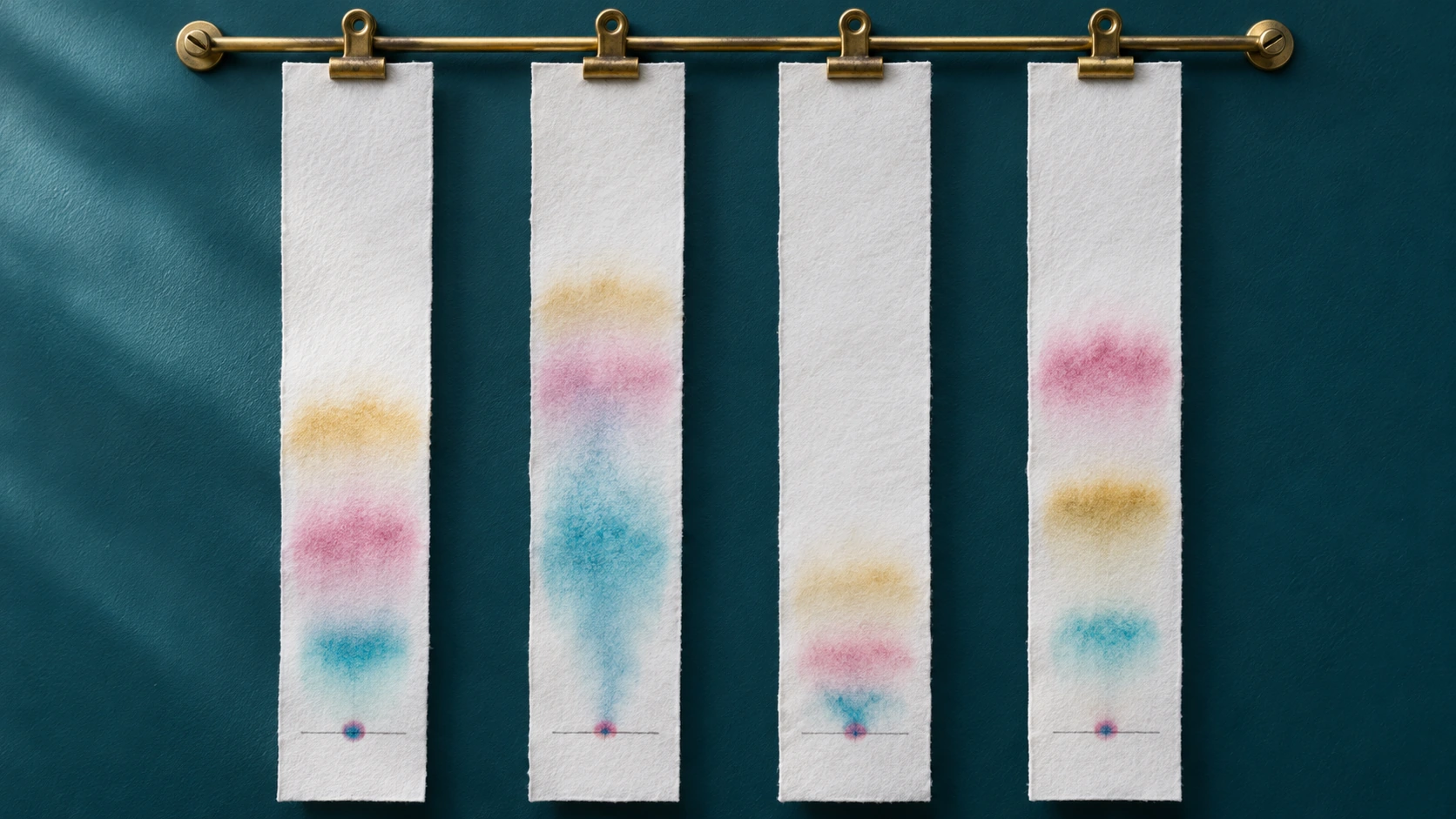
A black dot can leave several colours behind as water climbs a strip of paper. Paper chromatography separates components of a mixture through their different behaviour in a moving solvent and on the stationary paper system. A chemist may read the result as a chromatogram. An artist can keep the same sheet, turn it sideways and find a shoreline in the bands.
A visual introduction
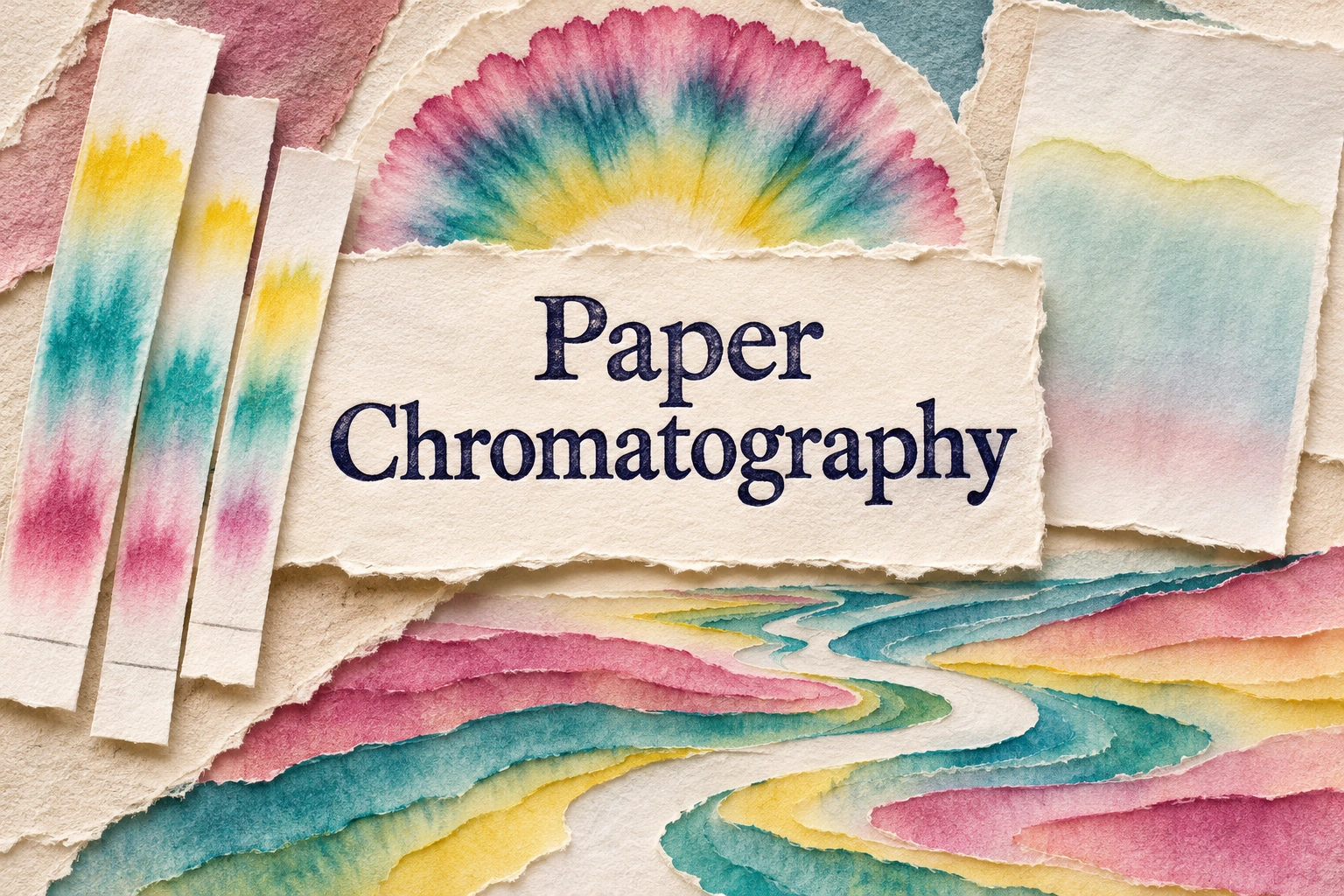
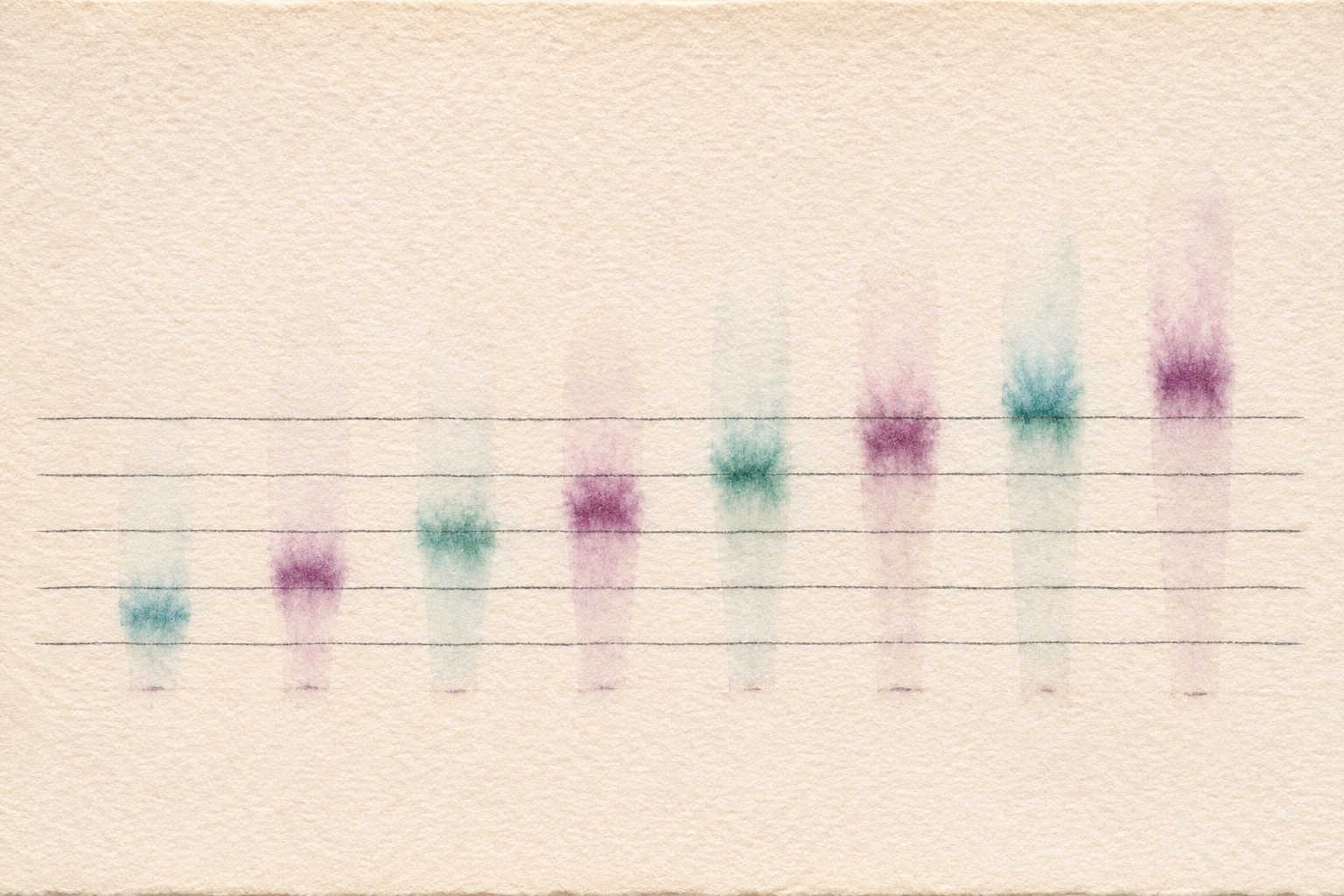
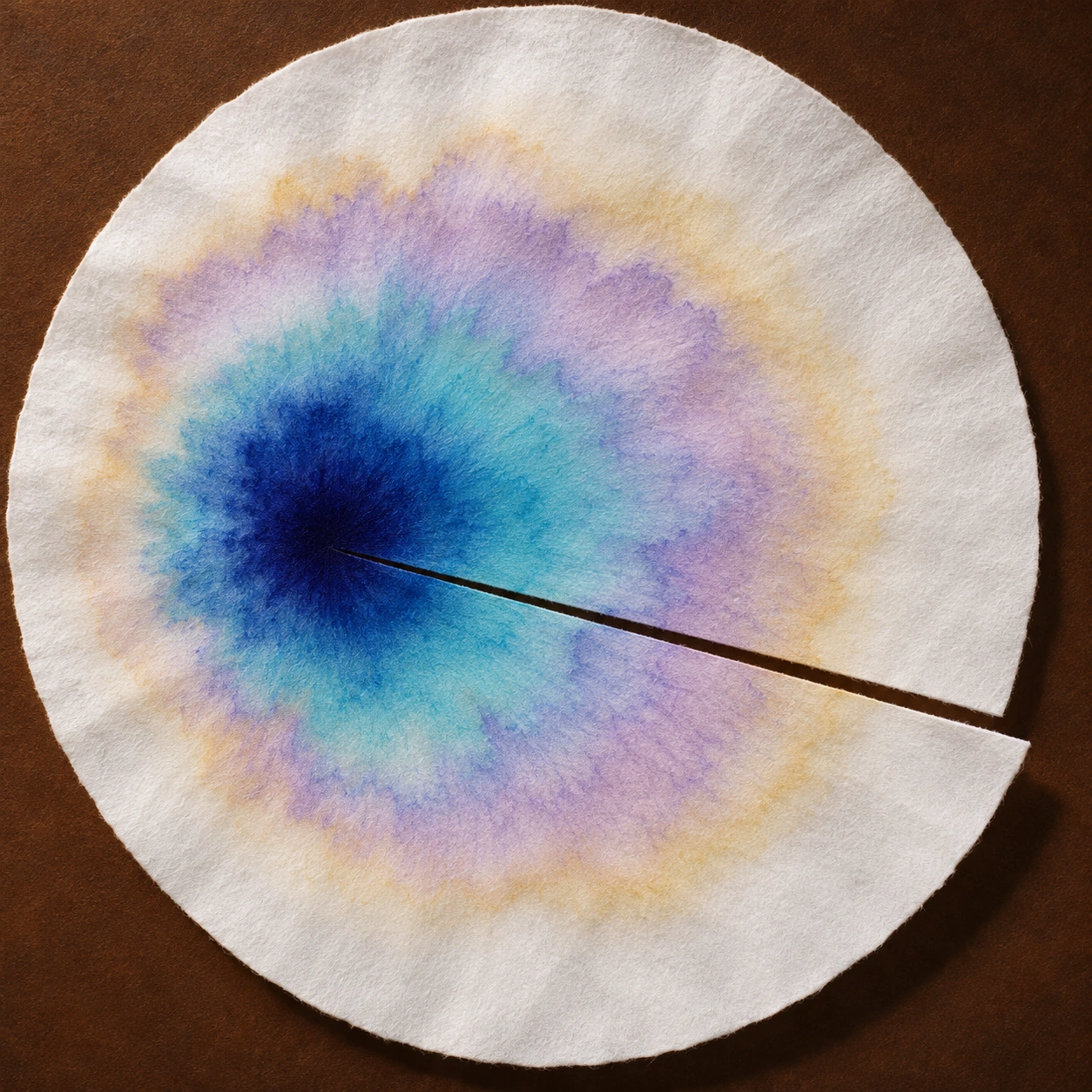
The teaching strip and the three artworks are AI-generated interpretations. Their colours and spacing were composed for this guide. Museum and university sources document the actual processes.
Select an image for a closer look. Use the thumbnails, arrow keys or a swipe to compare examples. Zoom in to inspect details, or share the image that inspires you.
Creative toolbox · take this style further
Choose an input and a destination. Search sends your words to the chosen site; Copy & open puts them on your clipboard to paste there.
Create with AI
Turn your chosen input into an image prompt or a new creative direction.
ChatGPT
Copy your input and paste it into a ChatGPT conversation or image request.
Copy & open ChatGPT (new tab)Claude · Anthropic
Develop an image prompt or explore the style in a new Claude conversation.
Copy & open Claude · Anthropic (new tab)Midjourney
Paste your input into the Imagine bar on the Create page.
Copy & open Midjourney (new tab)Adobe Firefly
Copy your input, open Firefly, and paste it into the prompt field.
Copy & open Adobe Firefly (new tab)Leonardo.Ai
Copy your input, open Leonardo, and paste it into the generation field.
Copy & open Leonardo.Ai (new tab)Image search
Find visual references. Short, concrete keywords usually work best.
Lexica
Search AI images and prompts using your selected input.
Search with this input Lexica (new tab)Pexels
Search the photo and video library. Short keywords often work best.
Search with this input Pexels (new tab)Pixabay
Search photos, illustrations and other images.
Search with this input Pixabay (new tab)Unsplash
Search photographs using the style name or your own keywords.
Search with this input Unsplash (new tab)Wikimedia Commons
Search photographs, artworks and historical images. Check each file for its source and reuse terms.
Search with this input Wikimedia Commons (new tab)Art & research
Explore artists, collections and the ideas behind a style.
Wikipedia
Search for background reading. A style may not have its own article.
Search with this input Wikipedia (new tab)WikiArt
Copy your input into WikiArt’s search to explore artists and artworks.
Copy & open WikiArt (new tab)Europeana
Paste your keywords into the search to explore European museum, library and archive collections.
Copy & open Europeana (new tab)Inspiration
Discover portfolios and visual ideas from creative communities.
Instagram hashtags
Search a hashtag made from your input: spaces and punctuation are removed. Instagram may require sign-in.
Search with this input Instagram hashtags (new tab)ArtStation
Paste your input into artwork search for concept art, environments, characters and visual development.
Copy & open ArtStation (new tab)Behance
Paste your input into project search for illustration, design and visual storytelling.
Copy & open Behance (new tab)A closer look
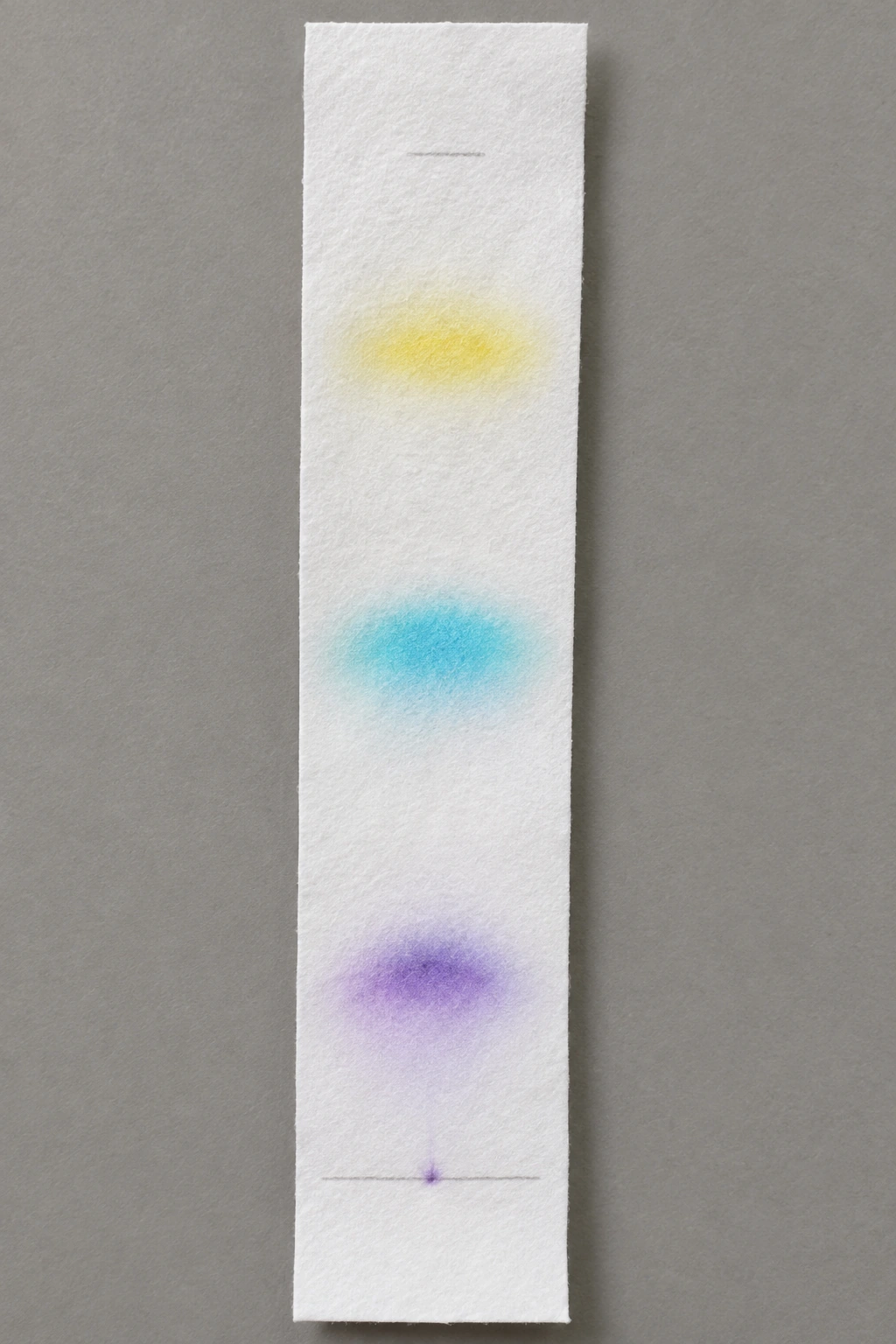
On a vertical strip, look for the starting point, the coloured zones above it and the furthest point reached by the liquid. On a circular sheet the colour can travel outward. Soft edges, pale gaps and paper fibres give a composition both direction and a record of time.
What moves, and why the bands part
Liquid wicks through the fine pores of paper by capillary action. The solvent is the mobile phase. As it travels, dissolved colourants distribute differently between that moving liquid and the stationary paper system, which can include water held by the cellulose. One dye spends more of the run travelling with the solvent. Another lingers closer to the start. A black washable marker may give several coloured zones. Another pen may stay dark, or scarcely move in water at all.
For a small studio trial, put a dot of water-soluble felt-tip ink on a light pencil line near the bottom of a strip of white filter paper. Stand the bottom edge in a shallow pool of water with the dot above the surface. Watch the wet front climb. Lift the paper before the front reaches the top and mark that front in pencil promptly, while you can still see it. Let the strip dry flat. Use a fresh strip for a second ink and keep the paper and water the same if you want to compare the two.
Read the paper before you cut it
Measure in the direction of travel from the starting line to the centre of a coloured spot, then from that same line to the solvent front. Divide the first distance by the second to get the Rf value for that spot under those conditions. If the distances were 20 mm and 50 mm, the ratio would be 0.40. Those numbers are a worked example. None of the generated gallery images supplies a measurement.
Matching heights are a clue when reference and unknown run under the same conditions. Different colourants can travel together. A smear or a broad overlapping zone may give no defensible centre at all. If several ideas for the artwork depend on one useful strip, photograph it with its baseline and front still intact. After it becomes a collage, that record is seldom recoverable.
An earlier meeting of chemistry and picture-making
The Deutsches Museum holds Friedlieb Ferdinand Runge’s 1855 book Der Bildungstrieb der Stoffe. Its account describes how he applied successive solutions to filter paper and obtained characteristic coloured rings through chemical reactions. His pictures belong in a conversation about materials making images. A ring in Runge’s book and a band from a washable pen arise under different conditions. Give each experiment its own name and keep its story with it.
Three things to do with a dried separation
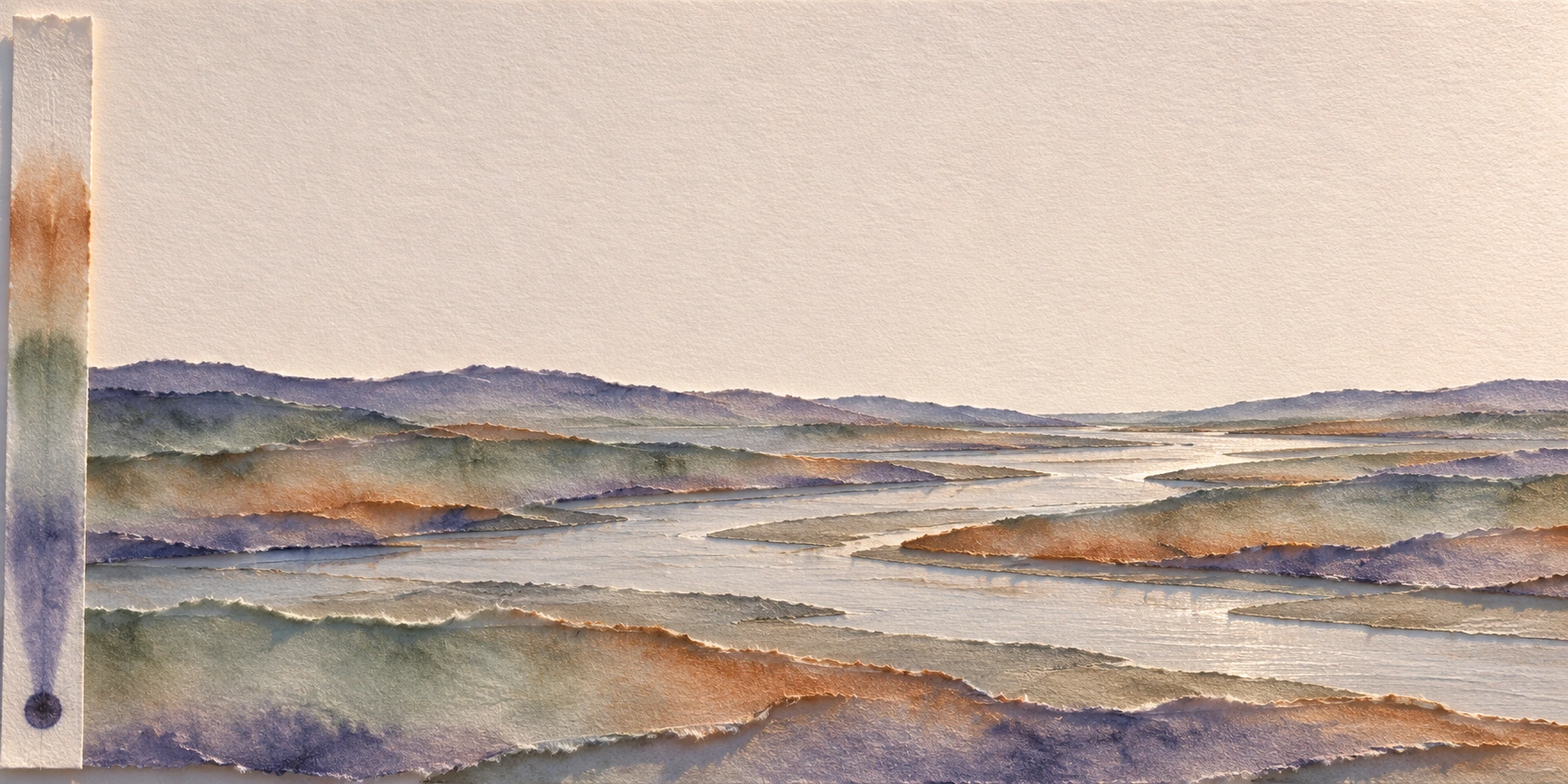
Turn several dried strips ninety degrees. Tear along one pale gap, overlap the strips, and the soft ends of neighbouring bands begin to read as tidal flats. Keep a complete strip along one side so a viewer can reconstruct the gesture. For a score, run several spots in parallel and add five fine graphite lines only after the sheet has dried. A dye pool can suggest duration without deciding what the musician has to play.
For a circular composition, a wick can feed water near the middle of a suitable sheet and carry a soluble colour outward. Keep the offset origin, the uneven edge and the white outer margin. Cutting out a dry wedge and shifting it sideways adds a second event. A fuzzy dye edge records travel through fibre. The sharp cut and its shadow record a later decision by the artist.
A wash, a marble and a chromatogram
Ink wash lets a brush and the wetness of the sheet shape a passage of tone. Paper marbling transfers a pattern from the surface of a bath. In paper chromatography the liquid moves through the sheet and its relative movement separates the mixture. All three can leave a lovely blue edge. Ask how the edge got there before choosing which technique to explore next.
A small poetic detour
Original words from the AOI studio.
Poetry
The pen wrote black.
The water read it slowly.
Blue kept walking,
a little rose took the chair by the door.
I marked where the water stopped.
The dry page would never have told me.
The prompt workshop
Original creative exercises. These prompts create new illustrations, not documentary evidence.
Read one strip
Illustrate one white paper strip on a quiet grey ground. Place a starting spot on a pencil baseline, three small separated dye zones in the same lane, and a faint front mark above all three. Leave white paper between the zones. Label the image as an imagined demonstration in the caption.
Turn the bands into a coast
Compose an estuary from torn, dried chromatography papers laid sideways. Let muted blue and copper dye edges become mudflats. Keep a single upright source strip at the margin. Light the deckled ridges from the side.
Write a score with no fixed pitch
Imagine eight water-developed ink lanes on a long sheet. Across the dried plum and teal pools draw five thin parallel graphite lines. Keep the lines sharp and the pool edges feathery. Leave some lanes almost empty so silence has a shape.
Your next inspiration
Discover another art style
Follow a visual thread to the next subject.
Paper Marbling
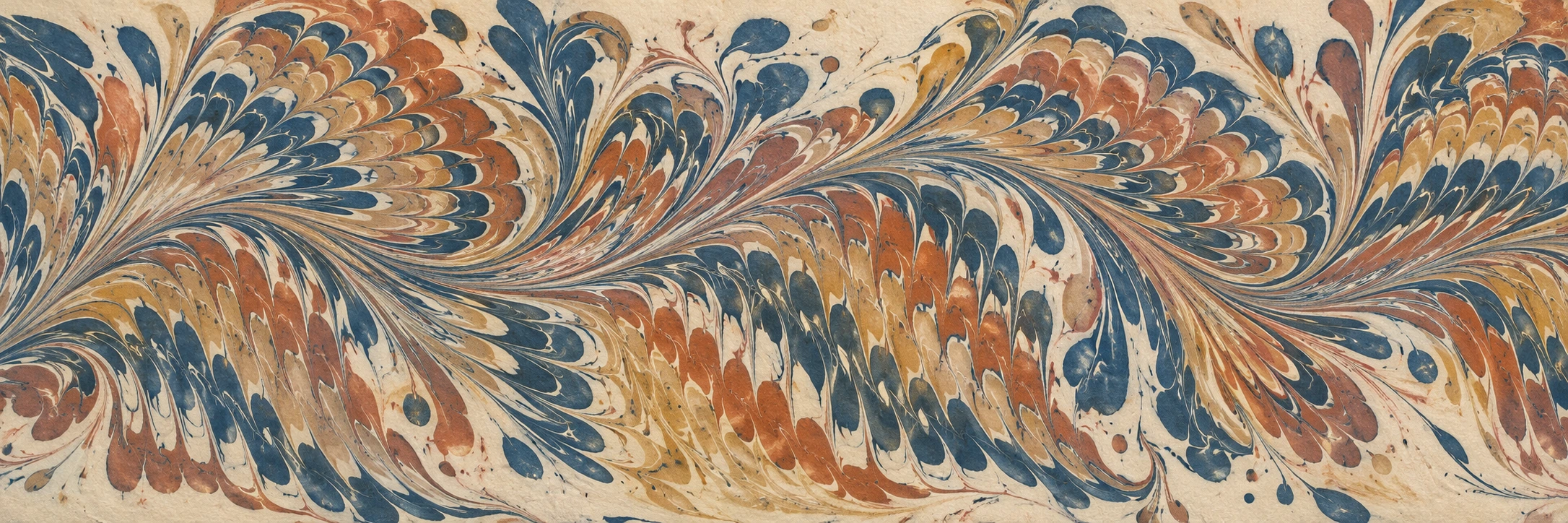
Compare dye travelling through paper with a pattern formed on a bath and transferred to a sheet.

Ink Wash Painting
Compare chromatography’s separation bands with a wash shaped by the brush and the wetness of the sheet.
People & works to explore
References discussed in this article. Consult the sources below for context.
Artists and practitioners
Friedlieb Ferdinand Runge
Paintings and other works
Der Bildungstrieb der Stoffe (1855), Friedlieb Ferdinand Runge’s collection of experimental colour patterns on paper
A smile from the studio
Jokes
I asked the black pen for a single point of view. It requested a glass of water and came back as a committee.