
Painting movement and tendency
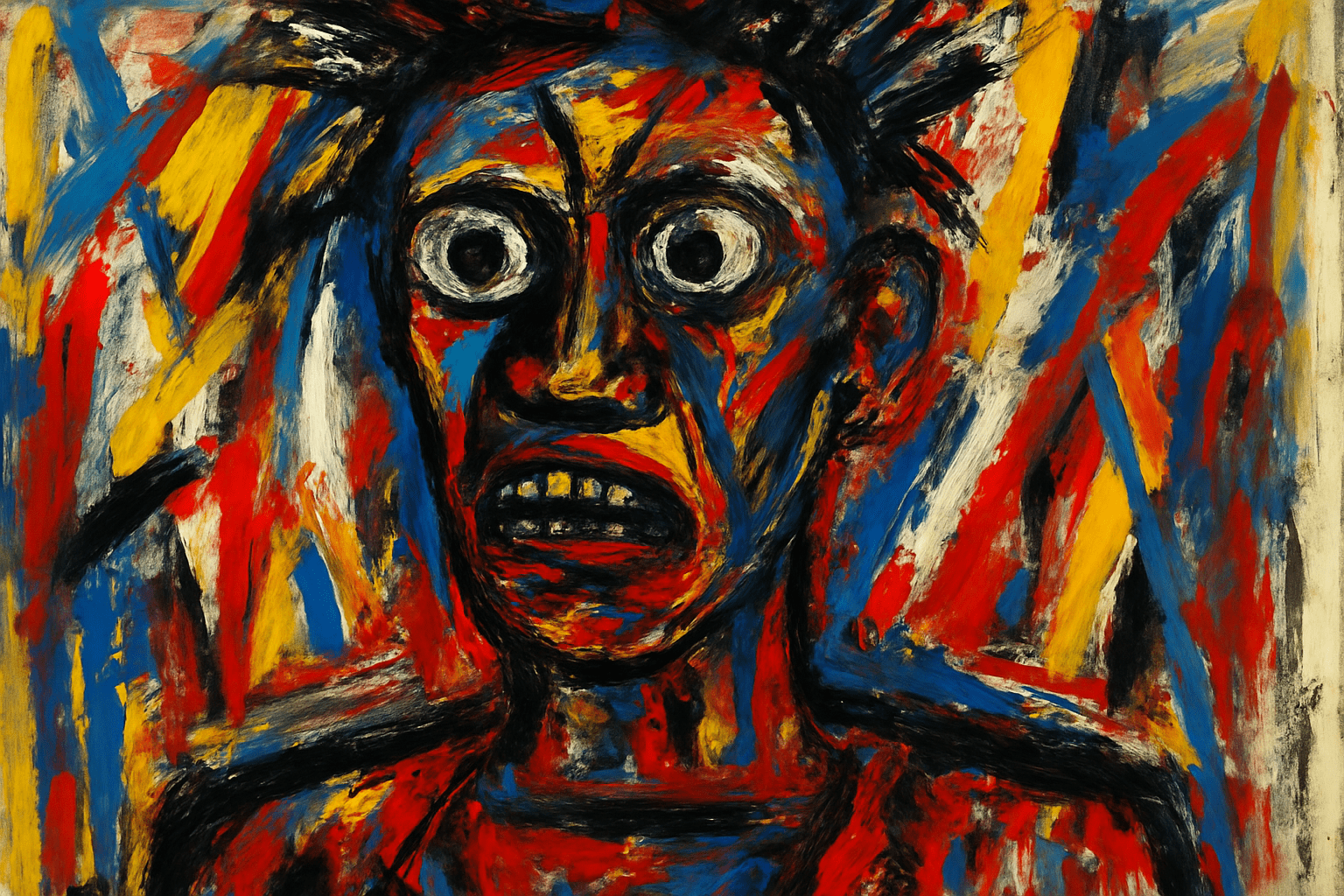
Neo-Expressionism is associated with forceful painting and renewed figurative possibilities. It is different from the optical color experiments of Neo-Impressionism.
A closer look
For an original exercise, decide what kind of tension the image carries before choosing aggressive marks.
Understanding the subject
Neo-Expressionism refers to varied painting practices associated especially with a renewed prominence of expressive and often figurative work in the late twentieth century. Artists differed across national and personal contexts. Energetic handling, rough surfaces or symbolic figures can be useful observations, but no single list captures every work. The term should not be confused with Neo-Impressionism, which concerns a different historical setting and approach to color.
AOI looking and making workshop
For an original exercise, decide what kind of tension the image carries before choosing aggressive marks. A figure pressed against a narrow room might call for compressed space and abrupt edges, while another scene may need a broad unstable field. Let changes in paint handling support the focal relationship. Avoid using distortion as a substitute for meaning or attributing a psychological diagnosis to an invented sitter. In generated work, preserve enough structure for gestures and anatomy to remain intentionally expressive rather than accidentally incoherent.
The prompt workshop
Original creative exercises. These prompts create new illustrations, not documentary evidence.
A compressed room
Create an original expressive painting of a solitary figure in a narrow blue room, forceful brushwork and a few sharp red accents. Make the spatial pressure clear while keeping the pose coherent.
Figure and rough surface
Create an original figurative painting of two people at a crowded table, layered rough textures, shifting scale and a limited earthy palette. Let gesture carry the tension rather than facial caricature.
A symbolic landscape
Create an original expressive landscape with an empty chair, a leaning tree and broad scraped color fields. Use repeated diagonals to connect the objects without claiming a fixed symbolic meaning.
Your next inspiration
Discover another art style
Follow a visual thread to the next subject.

