
Public lettering and image practice
Graffiti covers varied acts of marking and visual communication. Letterform, placement and local context matter as much as color.
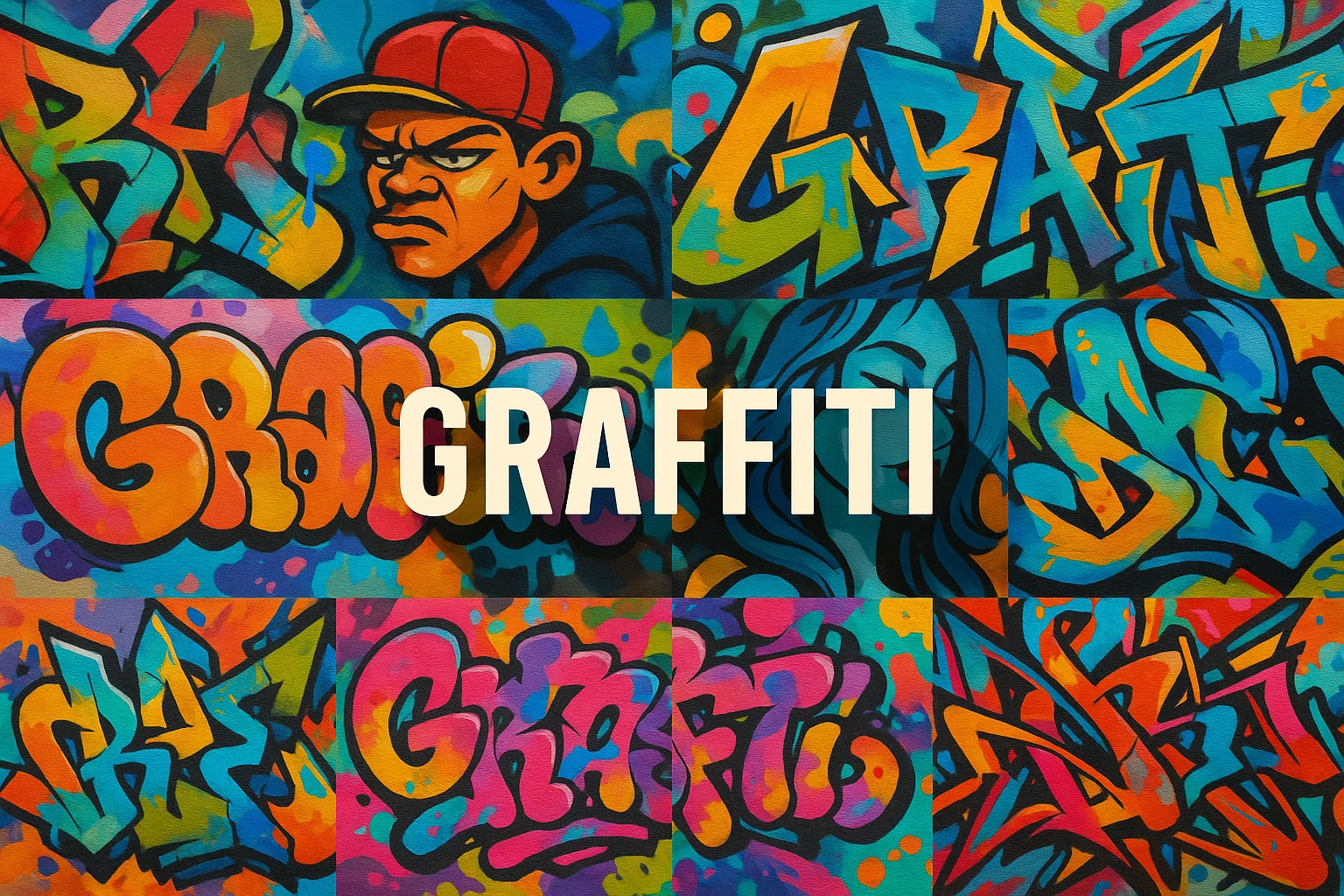
A closer look
For a legal studio or digital exercise, begin with the structure of a short original word or an abstract sequence of letter-like forms.
Understanding the subject
Graffiti is not one unified style or a synonym for all street art. Tags, lettering, pictorial work and other forms have different histories and purposes. A wall’s location, surrounding marks and social context can affect how an image is read. Studying the visual language does not require making unsupported claims about a particular community, and an invented digital wall should not be presented as documentation of an actual public work.
AOI looking and making workshop
For a legal studio or digital exercise, begin with the structure of a short original word or an abstract sequence of letter-like forms. Keep the basic rhythm legible before adding outlines, shadows and fills. Consider how the wall’s seams and scale interact with the design. Use color to separate layers rather than making every surface equally loud. Avoid copying an existing writer’s signature. If generating a concept, add final lettering manually when exact text matters and inspect for accidental names or illegible pseudo-writing.
The prompt workshop
Original creative exercises. These prompts create new illustrations, not documentary evidence.
Letterform rhythm
Design an original graffiti-inspired studio composition of three invented letter-like forms, bold contour, a restrained turquoise-orange palette and clear overlap. Use a neutral wall mockup without copying a signature.
A permitted mural concept
Create an original community-mural proposal combining flowing abstract lettering shapes with local garden imagery, readable large forms and controlled color layers. Show a clean wall mockup, not a claimed existing mural.
Monochrome structure
Create an original black-and-white lettering study using thick and thin interlocking forms, one directional shadow and generous negative space. Emphasize rhythm rather than decorative spray effects.
Your next inspiration
Discover another art style
Follow a visual thread to the next subject.


Sources and further exploration
Evan Roth. Graffiti Taxonomy : New York. 2011 | MoMA
Giant Street Art colouring poster | Art & craft | Tate Shop | Tate