Late twentieth-century painting
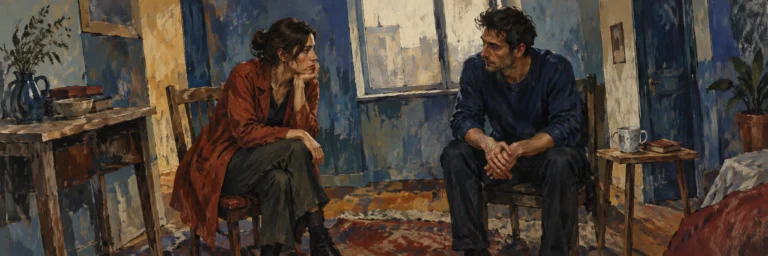
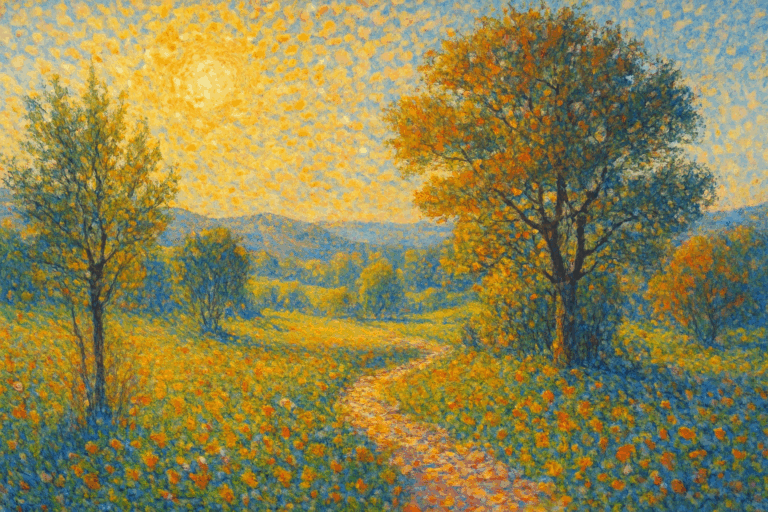
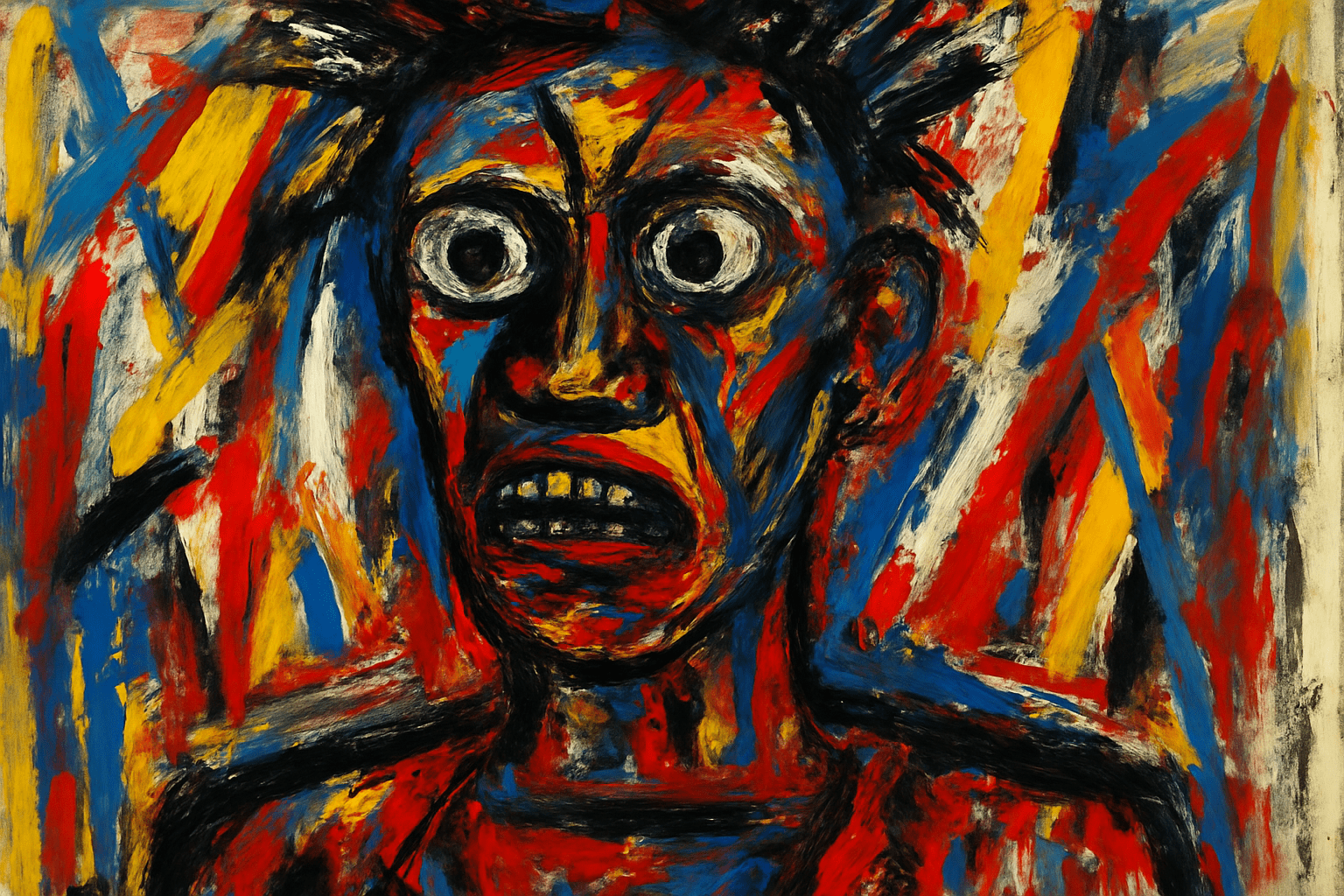
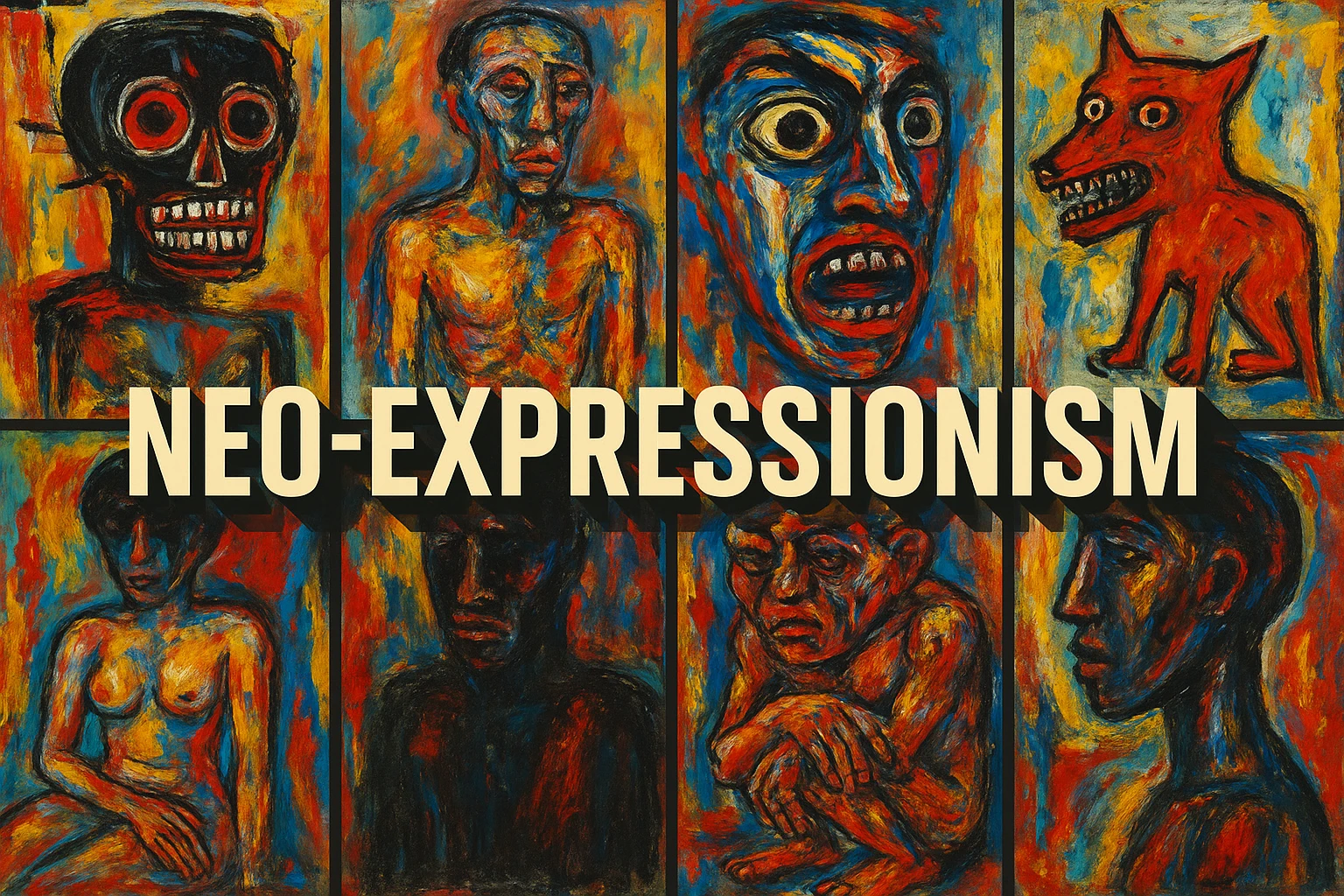
Neo-Expressionism is associated with forceful painting and renewed figurative possibilities. It is different from the optical color experiments of Neo-Impressionism.
A visual introduction
Select an image for a closer look. Use the thumbnails, arrow keys or a swipe to compare examples. Zoom in to inspect details, or share the image that inspires you.
Creative toolbox · take this style further
Choose an input and a destination. Search sends your words to the chosen site; Copy & open puts them on your clipboard to paste there.
Create with AI
Turn your chosen input into an image prompt or a new creative direction.
ChatGPT
Copy your input and paste it into a ChatGPT conversation or image request.
Copy & open ChatGPT (new tab)Claude · Anthropic
Develop an image prompt or explore the style in a new Claude conversation.
Copy & open Claude · Anthropic (new tab)Midjourney
Paste your input into the Imagine bar on the Create page.
Copy & open Midjourney (new tab)Adobe Firefly
Copy your input, open Firefly, and paste it into the prompt field.
Copy & open Adobe Firefly (new tab)Leonardo.Ai
Copy your input, open Leonardo, and paste it into the generation field.
Copy & open Leonardo.Ai (new tab)Image search
Find visual references. Short, concrete keywords usually work best.
Lexica
Search AI images and prompts using your selected input.
Search with this input Lexica (new tab)Pexels
Search the photo and video library. Short keywords often work best.
Search with this input Pexels (new tab)Pixabay
Search photos, illustrations and other images.
Search with this input Pixabay (new tab)Unsplash
Search photographs using the style name or your own keywords.
Search with this input Unsplash (new tab)Wikimedia Commons
Search photographs, artworks and historical images. Check each file for its source and reuse terms.
Search with this input Wikimedia Commons (new tab)Art & research
Explore artists, collections and the ideas behind a style.
Wikipedia
Search for background reading. A style may not have its own article.
Search with this input Wikipedia (new tab)WikiArt
Copy your input into WikiArt’s search to explore artists and artworks.
Copy & open WikiArt (new tab)Europeana
Paste your keywords into the search to explore European museum, library and archive collections.
Copy & open Europeana (new tab)Inspiration
Discover portfolios and visual ideas from creative communities.
Instagram hashtags
Search a hashtag made from your input: spaces and punctuation are removed. Instagram may require sign-in.
Search with this input Instagram hashtags (new tab)ArtStation
Paste your input into artwork search for concept art, environments, characters and visual development.
Copy & open ArtStation (new tab)Behance
Paste your input into project search for illustration, design and visual storytelling.
Copy & open Behance (new tab)A closer look
For an original exercise, decide what kind of tension the image carries before choosing aggressive marks.
A varied revival of expressive painting
Neo-Expressionism is a broad term associated with painting practices that gained prominence in the 1970s and 1980s. The National Galleries of Scotland describes large-scale figurative work, tactile handling and renewed attention to narrative, memory and mythology. The label identifies a historical conversation rather than a uniform recipe followed by every associated artist.
The Guggenheim’s account places this revival in an international setting, including German painting, Italian Transavanguardia and work in New York. These contexts have different histories and artistic priorities. A distorted figure or an energetic surface alone is not enough to identify a historical work as Neo-Expressionist.
Material can carry meaning
Paint handling may alternate between dense and exposed passages, abrupt contours and areas that seem to dissolve. Some associated practices also incorporate other materials. The important question is how the material relates to the image’s particular subject or argument, not whether the surface appears maximally aggressive.
Look at scale as well as texture. A figure that nearly overwhelms its support establishes a different relationship with the viewer from a small figure adrift in a large field. Changes in proportion and placement can make tension visible before any expressive brushwork is added.
Narrative need not become an explanation
A recurring object, emblem or fragment of a setting can imply a story without settling it. Keep such elements connected through the composition. An assortment of symbols becomes weaker when each seems imported from a different image and none affects the others.
For a new study, choose one relationship: a body compressed by an interior, two figures separated by a barrier, or a remembered object enlarged beyond its surroundings. Alter color and form in response to that relationship. Distortion then has a pictorial responsibility rather than functioning as a general signal of emotion.
Compare controlled and unruly passages
Make an initial version with simple shapes and limited values. In a second version, change the handling only where the relationship needs pressure or uncertainty. Preserve enough stable structure for the viewer to recognize that the disruption is intentional.
Inspect a generated figure for accidental joints, duplicated limbs and objects that merge without purpose. Expressive painting can transform anatomy deliberately; an image-generation error should not automatically be redescribed as artistic intensity.
Keep neighboring terms distinct
Expressionism, Abstract Expressionism and Neo-Expressionism refer to different historical groupings, even though individual visual concerns may overlap. Neo-Impressionism is a separate nineteenth-century development associated with color relationships and divided brushwork. Similar names do not establish a common method.
Use the museum sources to study particular works and their contexts. The retained AOI images and workshop prompts are contemporary interpretations, not newly discovered paintings or evidence of an artist’s intentions.
The prompt workshop
Original creative exercises. These prompts create new illustrations, not documentary evidence.
A compressed room
Create an original expressive painting of a solitary figure in a narrow blue room, forceful brushwork and a few sharp red accents. Make the spatial pressure clear while keeping the pose coherent.
Figure and rough surface
Create an original figurative painting of two people at a crowded table, layered rough textures, shifting scale and a limited earthy palette. Let gesture carry the tension rather than facial caricature.
A symbolic landscape
Create an original expressive landscape with an empty chair, a leaning tree and broad scraped color fields. Use repeated diagonals to connect the objects without claiming a fixed symbolic meaning.
Your next inspiration
Discover another art style
Follow a visual thread to the next subject.