
Archive note: historical claims and artist or artwork associations in this entry have not yet received a full source review.
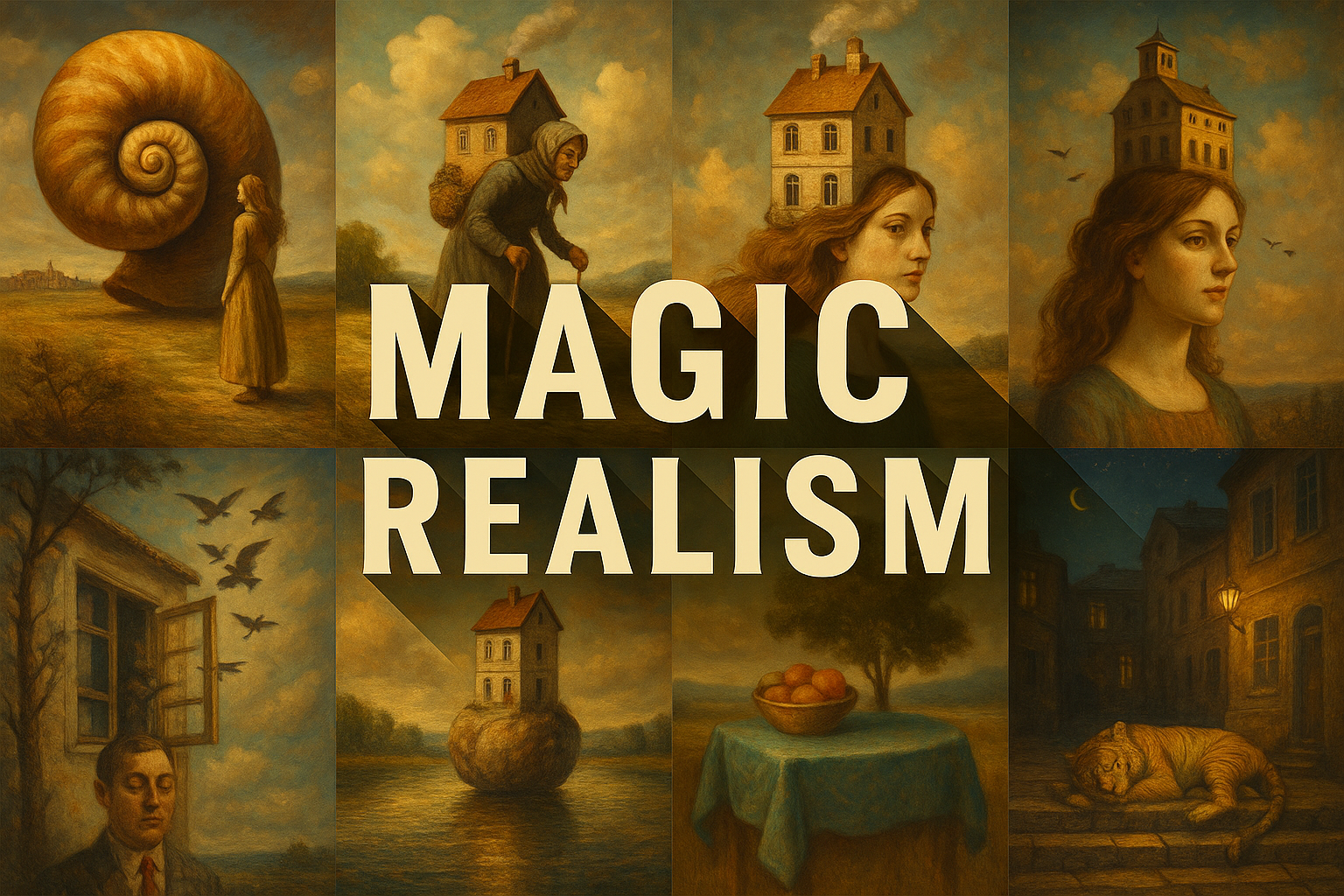
Magic Realism
The art style of Magic Realism is often described as having a dreamlike quality, with elements of both reality and fantasy. This style is often characterized by its use of bright colors and bold patterns, as well as its focus on the everyday lives of ordinary people.
AOI thinking about Magic Realism [+_~]-/
Overview and quick facts
Magic Realism is a genre of art that combines elements of both fantasy and reality. It is often used to create a sense of wonder or mystery, and often features magical or supernatural elements.
Can understand it also, as:
Fantasy, supernatural, myth, legend, fairy tale, enchantment, witchcraft, sorcery, alchemy.
Categorize it as:
Impressionism, Modernism
Detailed description
What is Magic Realism? Magic realism is an art style that combines elements of both fantasy and reality. It is often used to describe works of art, literature, and film that blur the lines between the two genres. Famous magic realism artists include Salvador Dali, René Magritte, and Max Ernst. Some of the most famous magic realism paintings are Dali’s “The Persistence of Memory” and Magritte’s “The Treachery of Images.” Magic realism often uses surrealist techniques to create an atmosphere of dreamlike strangeness. This can be seen in Dali’s painting, which features melting clocks, and in Magritte’s painting, which features a pipe that is also a sentence. Magic realism can be used to comment on social or political issues. Ernst’s “Europe after the Rain” is a painting that was created in the aftermath of World War II and comments on the destruction and devastation that was left in its wake. Magic realism is a style that continues to be popular with artists, writers, and filmmakers today. It is a way to create art that is both beautiful and thought-provoking.
Archive notes — claims to verify
1. Magic realism is a genre of fiction that combines elements of the fantastic or supernatural with realistic fiction.
2. Magic realism is often used to explore social and political issues.
3. Magic realism is often seen as a reaction to the disconnection between the modern world and traditional belief systems.
4. Magic realism is often used to highlight the absurdity of the modern world.
5. Magic realism often has a strong sense of place.
6. Magic realism often uses magical or supernatural elements to explain real-world phenomena.
7. Magic realism often features characters with extraordinary abilities or powers.
8. Magic realism often uses elements of the fantastic to challenge traditional ideas about reality.
9. Magic realism often uses humor and irony to deflate the pretensions of the modern world.
10. Magic realism is often seen as a reaction against the disconnection between the modern world and traditional belief systems.
11. Magic realism is often used to highlight the absurdity of the modern world.
12. Magic realism often has a strong sense of place.
13. Magic realism often uses magical or supernatural elements to explain real-world phenomena.
14. Magic realism often features characters with extraordinary abilities or powers.
15. Magic realism often uses elements of the fantastic to challenge traditional ideas about reality.
16. Magic realism often uses humor and irony to deflate the pretensions of the modern world.
17. Magic realism is often associated with Latin American literature.
18. Magic realism is often seen as a reaction to the disconnection between the modern world and traditional belief systems.
19. Magic realism is often used to highlight the absurdity of the modern world.
20. Magic realism often has a strong sense of place.
Artists and works: references to check
(be aware, can be highly speculative)
Artists (be aware, speculation possible):
Artworks (be aware, speculation possible)
1. The Persistence of Memory, Salvador Dali (1931) 2. The Treachery of Images, René Magritte (1928-9) 3. The Red Horseman, Frida Kahlo (1954) 4. The Dream, Remedios Varo (1957) 5. The Supper at Emmaus, Caravaggio (1601) 6. The Hay Wagon, Andrew Wyeth (1948) 7. The Madonna of the Pomegranate, Sandro Botticelli (1487) 8. The Arnolfini Portrait, Jan van Eyck (1434) 9. The Hunters in the Snow, Pieter Bruegel the Elder (1565) 10. The Garden of Earthly Delights, Hieronymus Bosch (1490-5) 11. The Nightmare, Henry Fuseli (1781) 12. The Tempest, Giorgione (1508) 13. The Annunciation, Leonardo da Vinci (1472-5) 14. The Creation of Adam, Michelangelo (1512) 15. The Battle of San Romano, Paolo Uccello (1438-40) 16. The Ambassadors, Hans Holbein the Younger (1533) 17. The Hay Wain, John Constable (1821) 18. The Raft of the Medusa, Théodore Géricault (1819) 19. The Death of Marat, Jacques-Louis David (1793) 20. The Third of May 1808, Francisco Goya (1814) 21. The Death of Socrates, Jacques-Louis David (1787) 22. The Death of Nelson, Benjamin West (1806) 23. The Anatomy Lesson of Dr. Nicolaes Tulp, Rembrandt (1632) 24. The Last Supper, Leonardo da Vinci (1495-8) 25. The Hay Wain, John Constable (1821) 26. The Raft of the Medusa, Théodore Géricault (1819) 27. The Death of Marat, Jacques-Louis David (1793) 28. The Third of May 1808, Francisco Goya (1814) 29. The Death of Socrates, Jacques-Louis David (1787) 30. The Death of Nelson, Benjamin West (1806)
Epoch
Creative tools and further exploration
Search results are starting points for exploration, not evidence for the historical claims or attributions in this legacy entry.
- Practical AI tools and critical guidance
- Build a repeatable image workflow
- Search Wikipedia for this subject
- Search Lexica for visual interpretations
- Browse the Art Style Database
Creative studies to try
Explore these collected prompts as creative interpretations. They are starting points for image-making, not reproductions of historical artworks or evidence about a tradition.
Visual cues: dream logic, impossible atmosphere, symbolic space
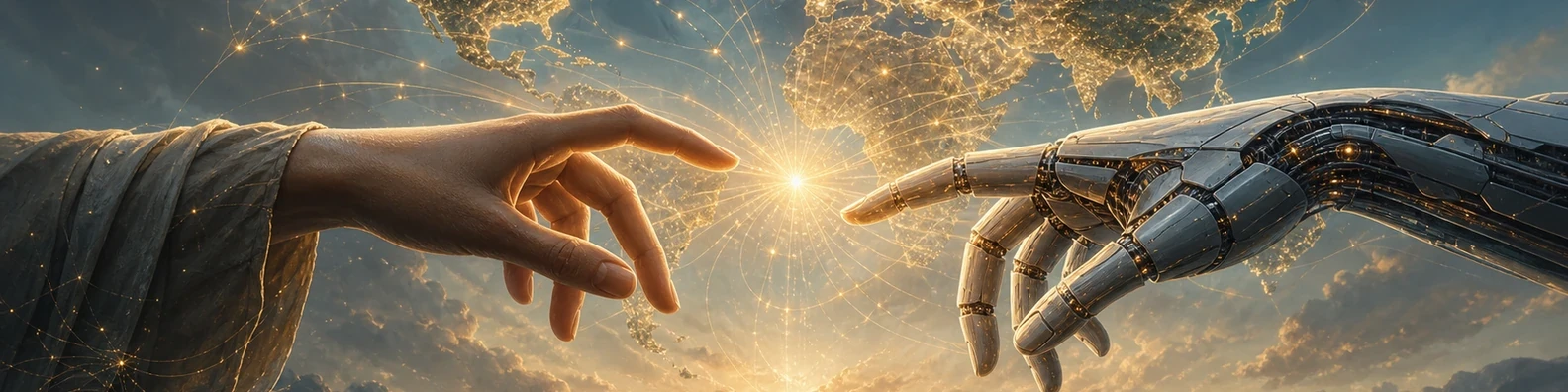
Study 1 — Magic Realism
Ultra-wide panoramic banner, a human hand and a sleek robotic hand reaching toward each other, fingertips almost touching, a bright luminous spark of intelligence between them, a subtle world map behind them with global data network lines, symbolizing human-AI collaboration and digital transformation, rendered in Magic Realism style, with refined composition, distinctive materials, elegant lighting, high-detail artistic finish, high quality, high detail, balanced composition, no text, no logo, no watermark, exact aspect ratio 1584:396
Prompt source: 1001 Art Styles. Select the text to copy, then adapt the subject and composition.