
Fictional
Logicsublayer ASCII-Fog Aesthetic is an invented AOI style in which recognizable forms reveal a structured, character-based underlayer through selective veils of mist. Crisp details anchor the image while organized marks fade in and out across portraits, landscapes, architecture, objects and graphic compositions.
An A⊕I –[-.+] creαt¡ve c⊕ncept, n⊕t αn estαbl¡she∂ h¡st⊕r¡cαl m⊕vement.
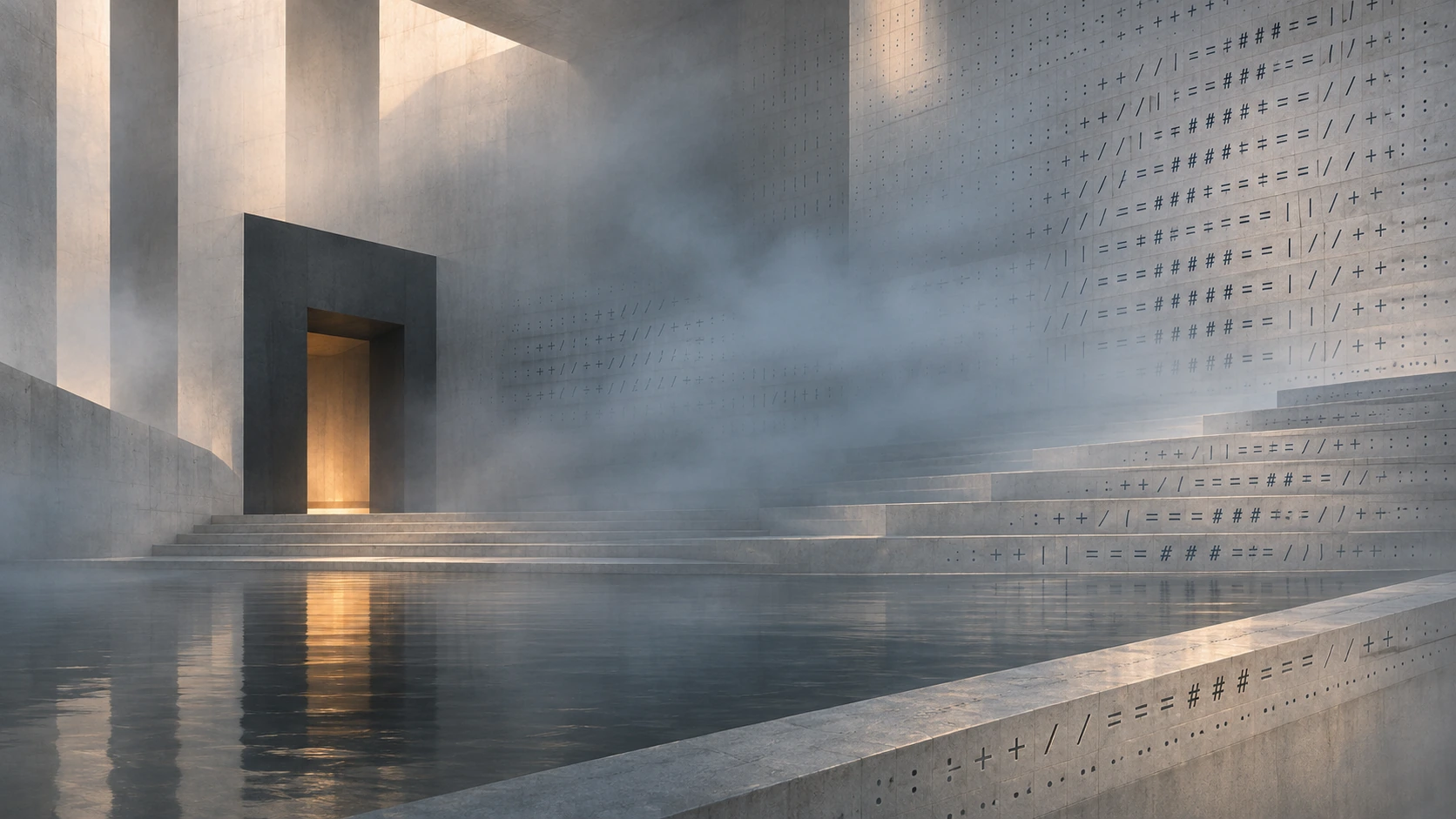
A visual introduction
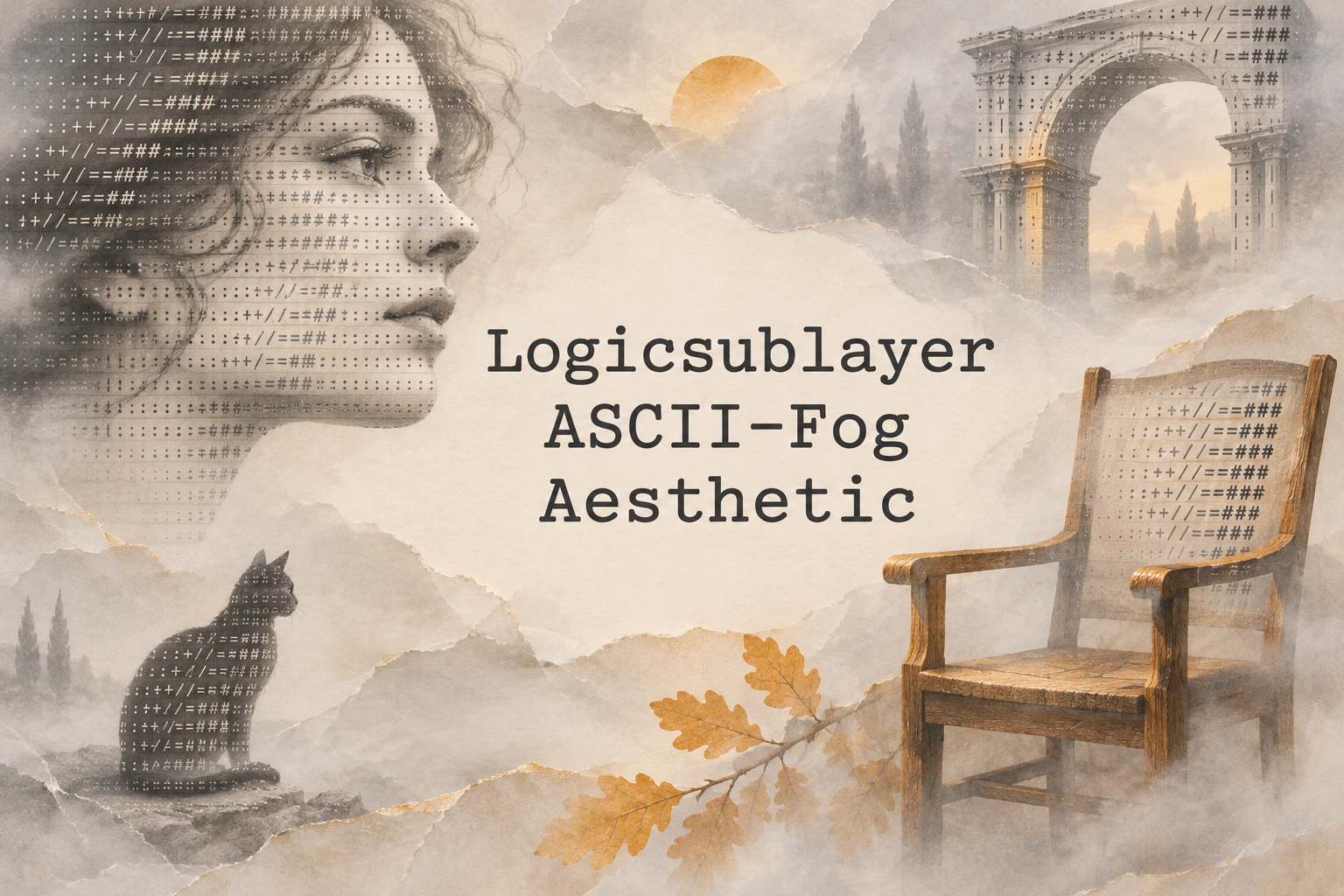
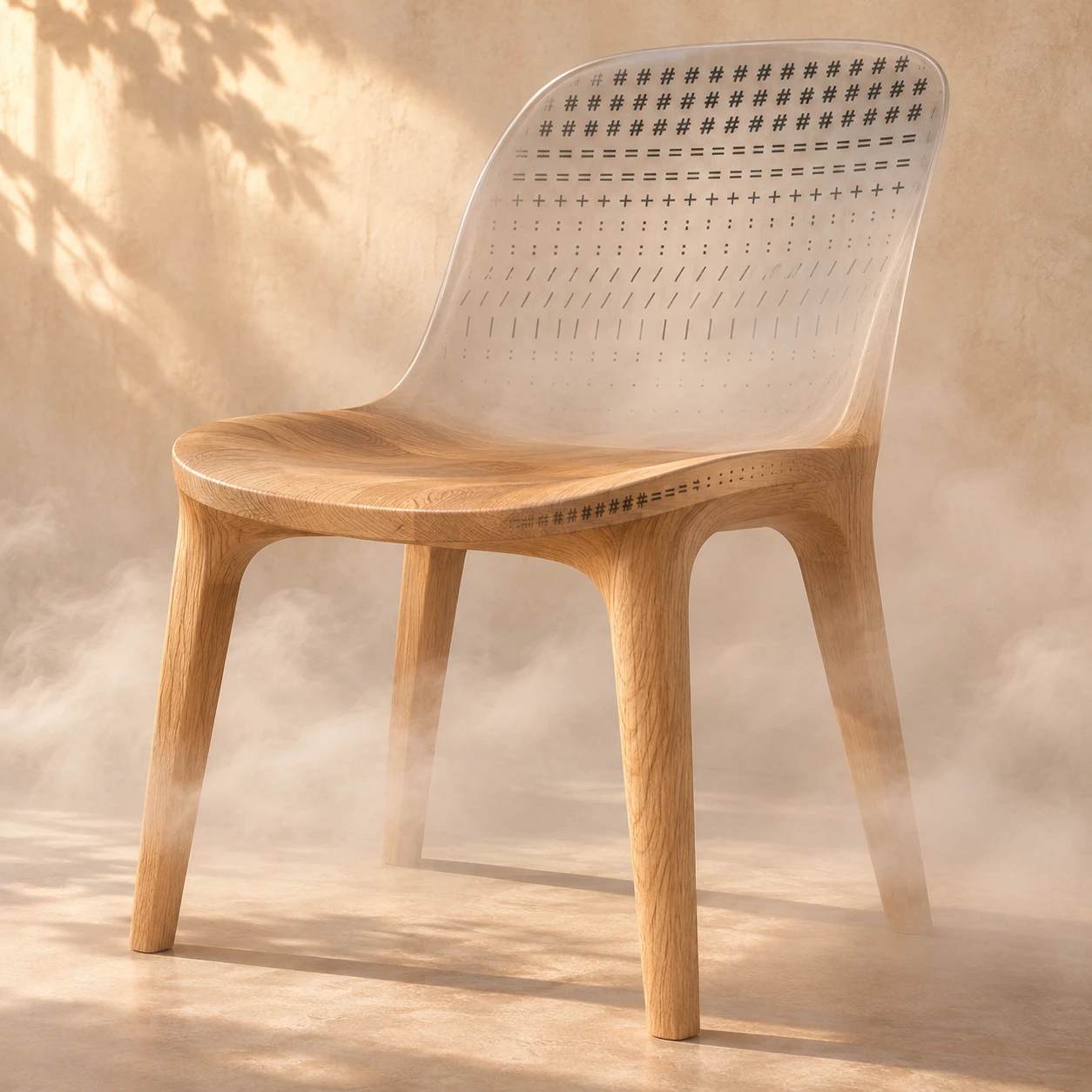
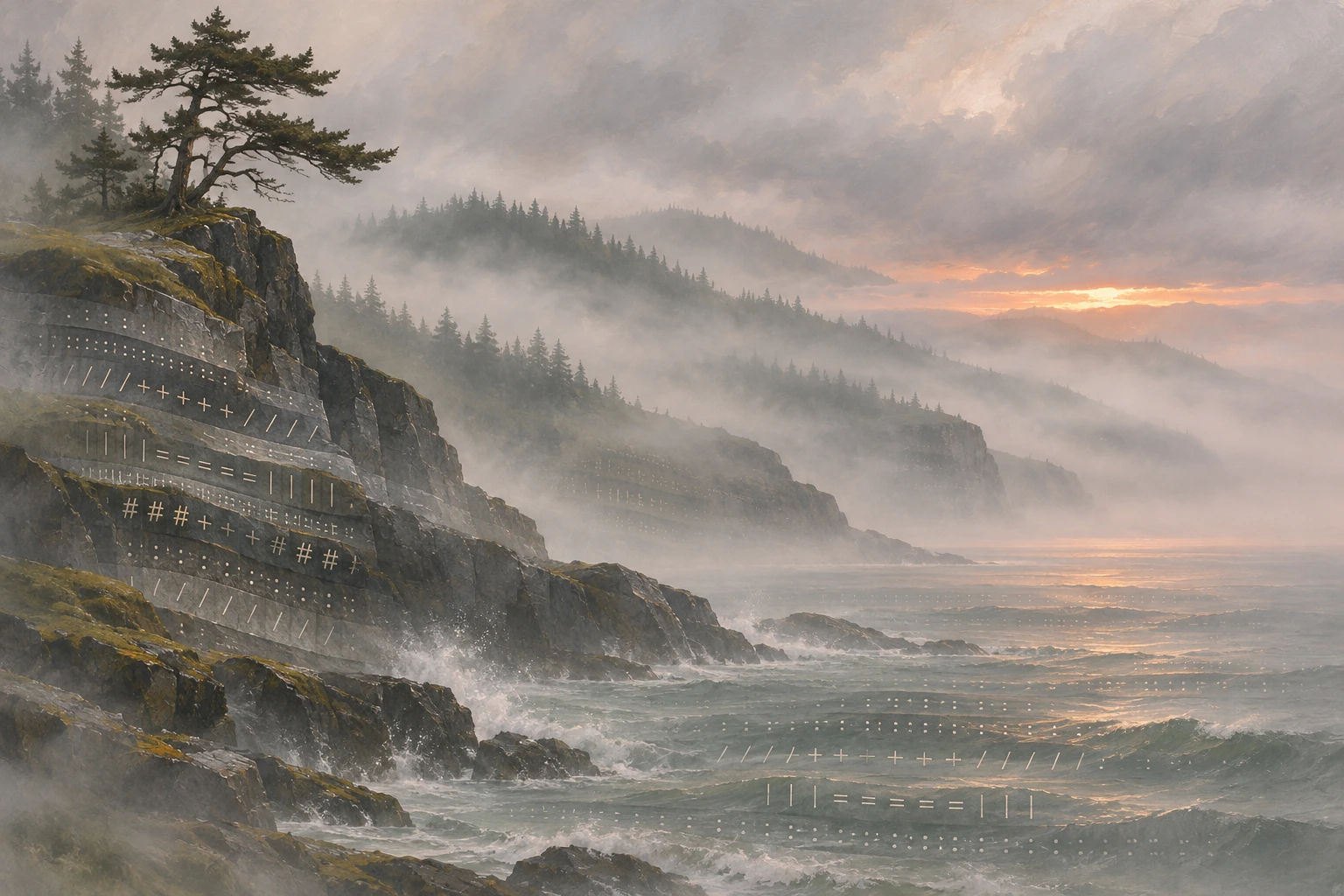
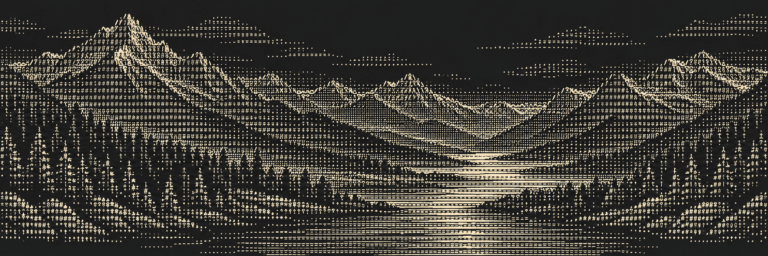
Five original AI-generated studies explore architectural space, a titled collage, portraiture, furniture and landscape. Character details are ASCII-inspired raster imagery, not verified text code.
Select an image for a closer look. Use the thumbnails, arrow keys or a swipe to compare examples. Zoom in to inspect details, or share the image that inspires you.

Creative toolbox · take this style further
Choose an input and a destination. Search sends your words to the chosen site; Copy & open puts them on your clipboard to paste there.
Create with AI
Turn your chosen input into an image prompt or a new creative direction.
ChatGPT
Copy your input and paste it into a ChatGPT conversation or image request.
Copy & open ChatGPT (new tab)Claude · Anthropic
Develop an image prompt or explore the style in a new Claude conversation.
Copy & open Claude · Anthropic (new tab)Midjourney
Paste your input into the Imagine bar on the Create page.
Copy & open Midjourney (new tab)Adobe Firefly
Copy your input, open Firefly, and paste it into the prompt field.
Copy & open Adobe Firefly (new tab)Leonardo.Ai
Copy your input, open Leonardo, and paste it into the generation field.
Copy & open Leonardo.Ai (new tab)Image search
Find visual references. Short, concrete keywords usually work best.
Lexica
Search AI images and prompts using your selected input.
Search with this input Lexica (new tab)Pexels
Search the photo and video library. Short keywords often work best.
Search with this input Pexels (new tab)Pixabay
Search photos, illustrations and other images.
Search with this input Pixabay (new tab)Unsplash
Search photographs using the style name or your own keywords.
Search with this input Unsplash (new tab)Wikimedia Commons
Search photographs, artworks and historical images. Check each file for its source and reuse terms.
Search with this input Wikimedia Commons (new tab)Art & research
Explore artists, collections and the ideas behind a style.
Wikipedia
Search for background reading. A style may not have its own article.
Search with this input Wikipedia (new tab)WikiArt
Copy your input into WikiArt’s search to explore artists and artworks.
Copy & open WikiArt (new tab)Europeana
Paste your keywords into the search to explore European museum, library and archive collections.
Copy & open Europeana (new tab)Inspiration
Discover portfolios and visual ideas from creative communities.
Instagram hashtags
Search a hashtag made from your input: spaces and punctuation are removed. Instagram may require sign-in.
Search with this input Instagram hashtags (new tab)ArtStation
Paste your input into artwork search for concept art, environments, characters and visual development.
Copy & open ArtStation (new tab)Behance
Paste your input into project search for illustration, design and visual storytelling.
Copy & open Behance (new tab)A closer look
A legible silhouette or spatial framework sits above or within orderly monospaced character fields. Fog selectively lowers contrast and interrupts their visibility. One clear focal detail survives. Mark spacing, surface alignment and transitions between hard edges and soft atmosphere carry the style more than any fixed palette.
An invented style with a working theory
Logicsublayer ASCII-Fog Aesthetic is an original AOI interpretation developed from the user-supplied name. It proposes a relationship between three things: a recognizable subject, a partially visible system of character-based marks, and an atmospheric veil. The subject gives the viewer something to recognize; the underlayer suggests how it might be organized; the fog limits how much of that organization can be seen at once.
Its central idea is partial legibility. Enough structure survives to invite inspection, while enough remains concealed to keep the image open. “Logic” refers to visible relationships such as alignment, repetition, grouping and continuity. It does not mean that a generated image contains an executable program or a formally correct proof. “Sublayer” names the apparent position of the character structure beneath or within the depicted surface.
A compact style specifier is: Logicsublayer ASCII-Fog Aesthetic, coherent forms, structured monospaced ASCII underlayers, selective translucent mist, islands of crisp detail. Treat this as a repeatable artistic method, not a claim of a historical movement, documented school or exclusive invention.
The visual grammar: three layers and one clear anchor
First establish the subject with a coherent silhouette, viewpoint and material. Then build a restricted field of repeated characters that follows a plane, contour or volume. Finally add mist in selected bands or pockets. Preserve one sharp anchor: an eye, a chair joint, a doorway, a ridge or a small exposed patch of symbols. This anchor gives the viewer a way into the composition.
The layers should interact. A row of marks may disappear behind a fog bank and reappear along the same surface. Dense characters can describe shadow while wider spacing opens a highlight. Some passages can feel almost solid; others can be reduced to sparse punctuation. The structure becomes convincing through these relationships, not through the sheer number of glyphs.
What ASCII contributes—and where the term stops
ASCII is a character encoding. RFC 20 documents the standard 7-bit repertoire, including letters, digits and punctuation. In character-based imagery, the shape and spacing of marks can become a drawing material. This proposed aesthetic uses that visual vocabulary: periods, colons, slashes, bars, plus signs and denser marks can form different textures on a monospaced grid.
A strict ASCII artwork can be stored as actual text with controlled characters and line breaks. The raster illustrations here are ASCII-inspired mixed-media interpretations; their small glyphs are generated image details and are not guaranteed to be exact, selectable or limited to the ASCII repertoire. For a technically exact version, typeset a real character layer and verify it before compositing. Colored light, translucent fog and painterly surfaces belong to the wider proposed aesthetic rather than to plain-text ASCII itself.
Fog as selective concealment
The National Gallery explains atmospheric perspective through changes in color and tone with distance. That is a useful reference for separating near and far layers. The proposal also allows fog to move across the foreground, briefly obscuring a nearer structure. A thin veil can lower contrast without destroying a contour; a denser passage can suspend the continuation of a line.
Fujiko Nakaya’s Fog Bridge, documented by the Exploratorium, offers a separate artistic reference for fog changing how built structure and people appear. It is not a precedent for this invented ASCII style, nor is Nakaya being presented as its founder. The useful comparison is the active role of visibility: mist can change the viewer’s relationship to a space rather than merely decorate it.
People, animals and landscapes
In a portrait, keep the face readable and place the underlayer selectively across clothing, hair or one shadow plane. Preserve the eye and the anatomy of the silhouette. In an animal study, let character spacing follow fur direction, feathers or the curve of a shell; retain the features that identify the creature. Covering every surface equally tends to turn personality into texture.
For landscapes, use ASCII-like bands as contour terraces, tree groupings, water surfaces or distant strata. A continuous horizon can remain visible while the middle distance disappears. The marks may suggest an imagined survey or hidden organization, but should not be presented as measured topographic data. Organic forms can coexist with a strict grid when the transition is deliberate.
Architecture, furniture, clothing and graphic work
Architecture can reveal a gridded interior through a misted facade, or let symbols trace the rhythm of bays, steps and openings. In a furniture concept, keep the load-bearing silhouette understandable and concentrate the character layer on an inset, translucent panel or textile surface. These are visual design studies; the style does not supply engineering validation.
For clothing, adapt the structure into woven-looking bands, printed gradients or sheer overlays that intermittently reveal a denser pattern. Consider how a repeat behaves across seams and folds. For wall art and editorial graphics, use the clearest region to carry the subject or title and reserve a quieter region for breathing space. In an interface, keep essential labels and controls outside the fog treatment so the artistic effect does not obstruct use.
Variants that retain the identity
A nocturnal version can pair charcoal with restrained cyan and one amber highlight. A daylight version can use ivory mist, graphite characters and warm wood. Monochrome works through density and edge contrast alone. A mineral landscape can use slate, moss and pale limestone. The palette is flexible; the relationship between recognizable form, organized marks and selective concealment is the signature.
A sparse version exposes only a narrow seam of characters. A dense version lets most of the subject emerge from character fields while leaving several crisp edges intact. In motion, the veil can drift slowly while the underlying grid stays stable. If both layers flicker continuously, the viewer loses the chance to discover a consistent structure.
A practical method and useful limits
Choose the subject and decide what its hidden order will be: a grid, a sequence, a contour system or repeated modules. Build a clear image before adding the underlayer. Limit the character vocabulary, vary spacing with purpose, and make the marks belong to a particular surface. Add fog last, protecting the focal anchor and the most informative joins.
Inspect the result at both full size and thumbnail size. At a distance, the subject should survive; close up, the underlayer should reward attention. Watch for random text pasted across unrelated planes, broken anatomy, melting architecture and mist that reduces everything to the same gray. Too much explanation can be a weakness too: the picture should establish its own tension before a caption names the idea.
How this entry relates to neighboring styles
The earlier AOI Logic Fog Aesthetic entry uses a broader metaphor of clarity and ambiguity. This proposal makes the character-based underlayer a defining requirement and is documented as a distinct named entry. It also differs in emphasis from pure ASCII Art, where the characters can constitute the entire image, and from Wireframe Perspective Sketch, where line structure usually stays explicit.
The five original illustrations demonstrate the proposal across an architectural banner, a titled collage, a portrait, a furniture concept and a landscape. They are AI-generated visual interpretations, not evidence of an established movement or photographs of realized objects. Their purpose is to make the proposed method recognizable across subjects while leaving room for different materials, moods and degrees of abstraction.
A small poetic detour
Original words from the AOI studio.
Poetry
The doorway keeps a single edge;
The rest returns as weather.
Small marks beneath the window ledge
Hold scattered rooms together.
A colon waits beside a seam,
A slash survives the rain.
The fog lets half the structure dream
And leaves one line to name.
The prompt workshop
Original creative exercises. These prompts create new illustrations, not documentary evidence.
A room with one visible rule
Logicsublayer ASCII-Fog Aesthetic, coherent forms, structured monospaced ASCII underlayers, selective translucent mist, islands of crisp detail. An empty architectural room in ivory and graphite, one crisp dark doorway, orderly punctuation rows following wall planes beneath drifting translucent mist, a small warm light, calm negative space. Keep structural edges coherent. No labels, prose or logos; isolated character marks are part of the artwork.
A portrait partly revealed
Logicsublayer ASCII-Fog Aesthetic, coherent forms, structured monospaced ASCII underlayers, selective translucent mist, islands of crisp detail. A dignified adult portrait with one sharply visible eye and coherent facial anatomy, charcoal clothing with a structured character underlayer, pale mist crossing the far shoulder, restrained amber edge light. Use symbols as material and spacing, not readable prose or a screen overlay.
Daylight object study
Logicsublayer ASCII-Fog Aesthetic, coherent forms, structured monospaced ASCII underlayers, selective translucent mist, islands of crisp detail. A sculptural wooden chair with a clear four-leg silhouette and translucent back panel containing orderly monospaced punctuation, soft ivory haze crossing the lower background, tactile oak and graphite tones, spacious editorial composition. A design concept, no technical labels or advertising copy.
Your next inspiration
Discover another art style
Follow a visual thread to the next subject.



A smile from the studio
Jokes
The architect presented a chair with a beautifully organized ASCII underlayer. “Where is the seat?” asked the client. “Selectively concealed by atmospheric ambiguity.” The client looked again. “And the fourth leg?” “An unresolved relationship.” There was a long silence. Then the client said, “Excellent wall art. I will continue standing.”