
Illuminated peg-board image making
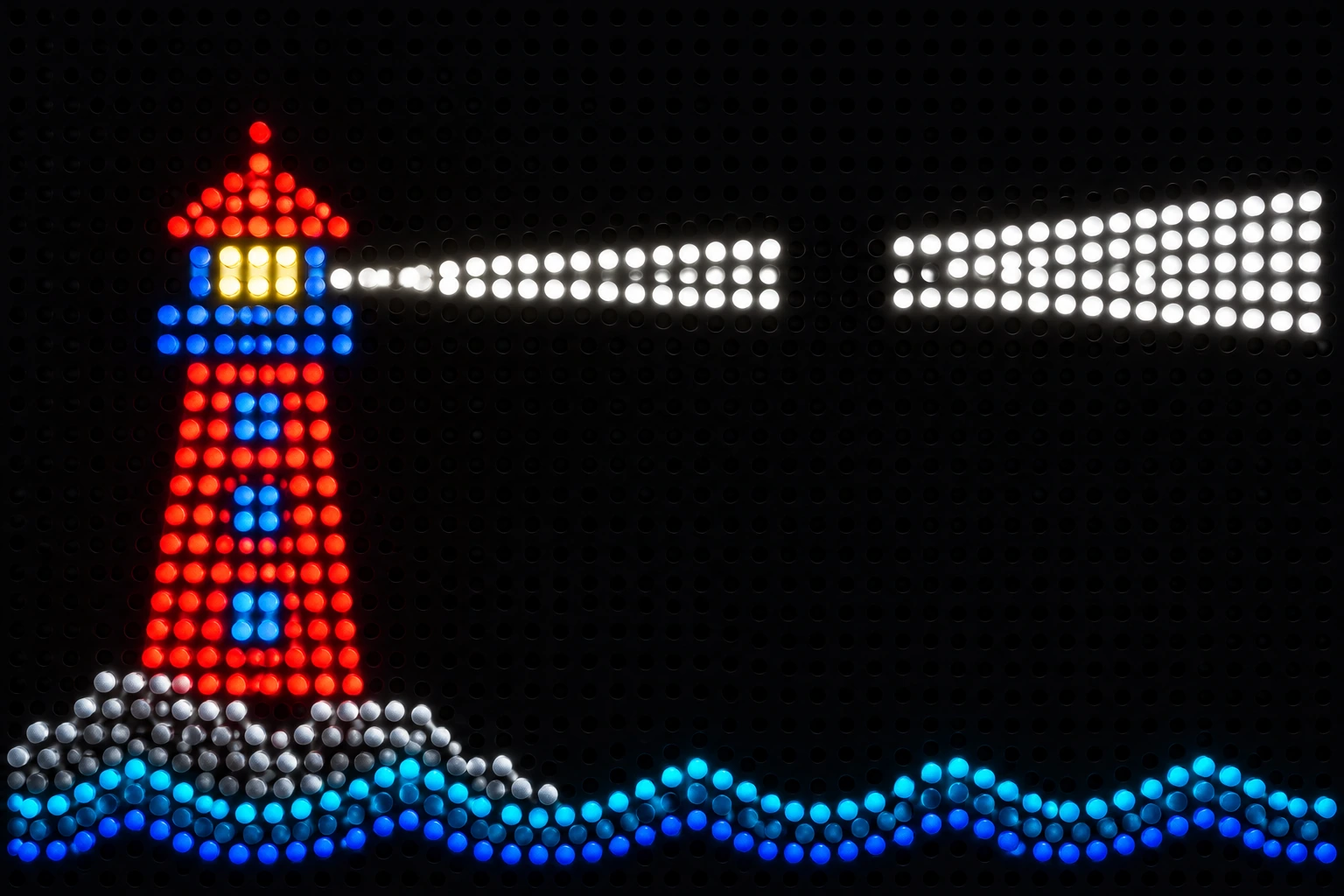
A lighthouse on a peg board needs a tower, a lamp and enough darkness for the beam to travel through. A handful of empty holes can do more for the picture than another handful of glowing pegs.
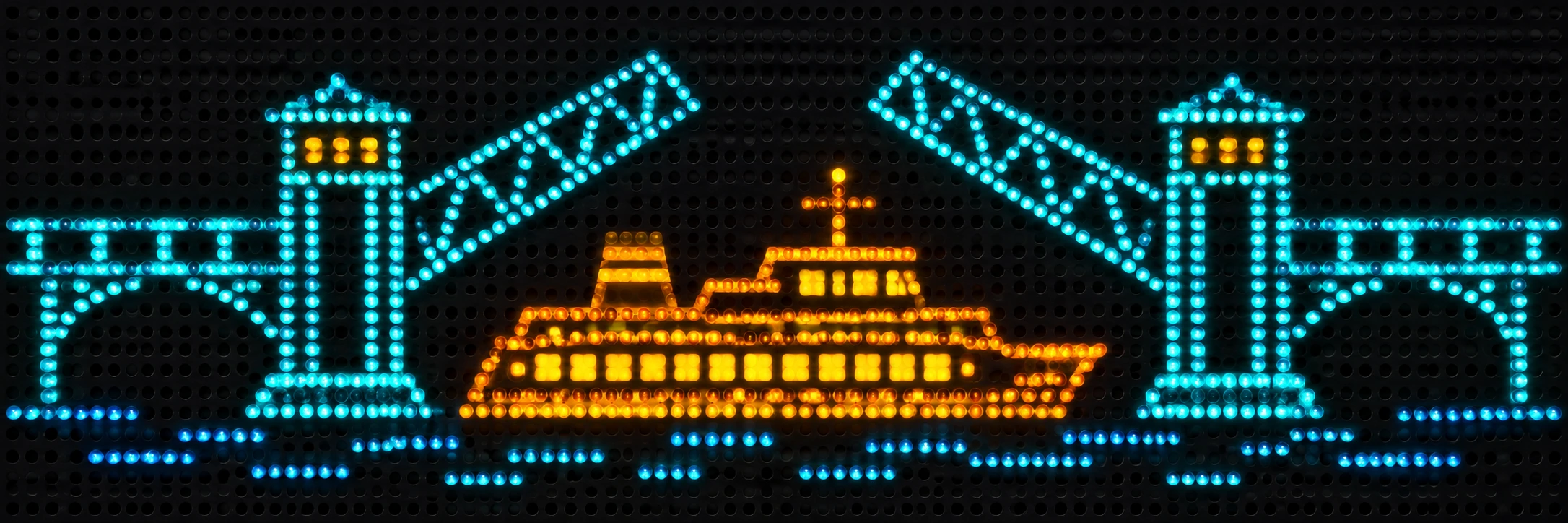
A visual introduction
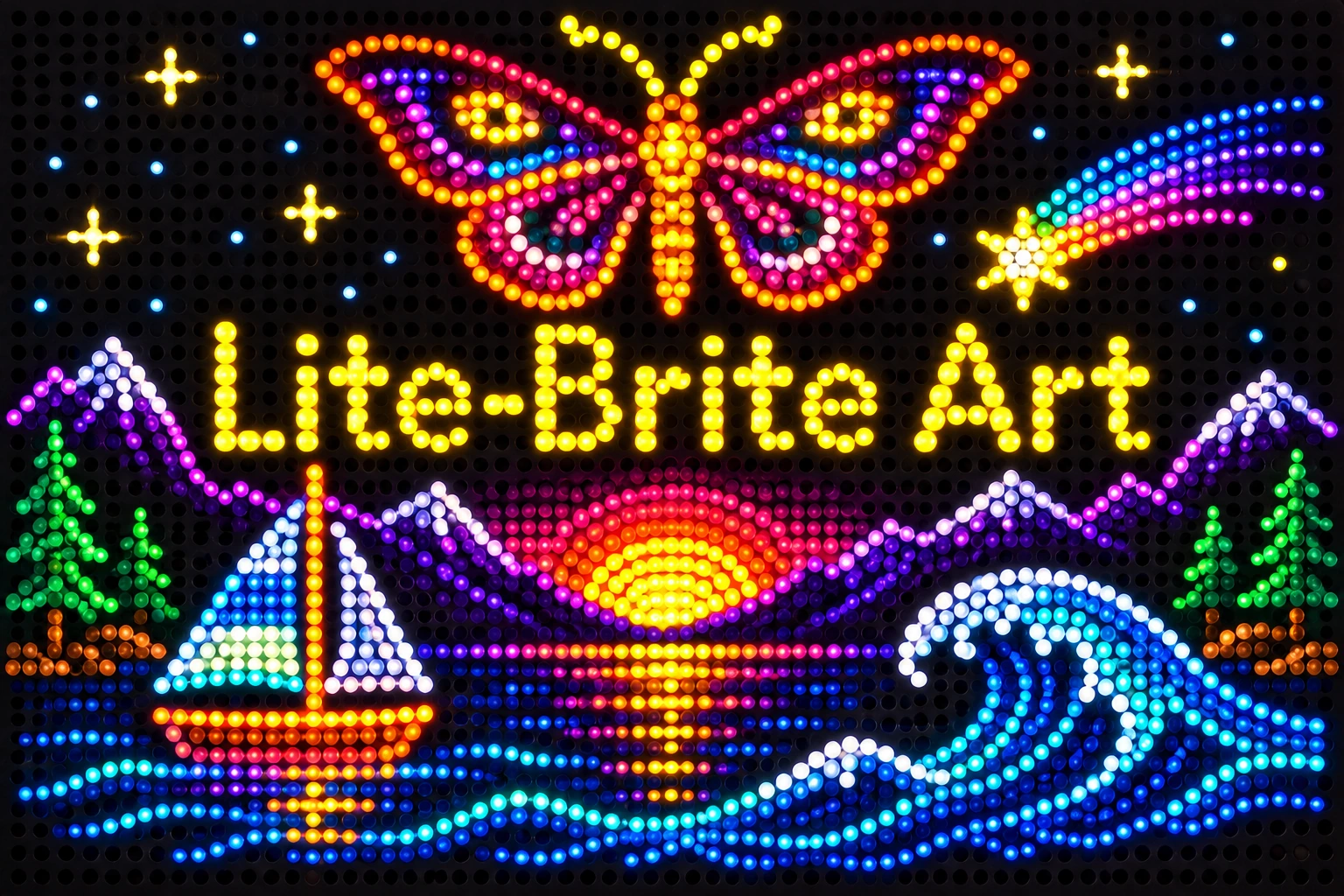
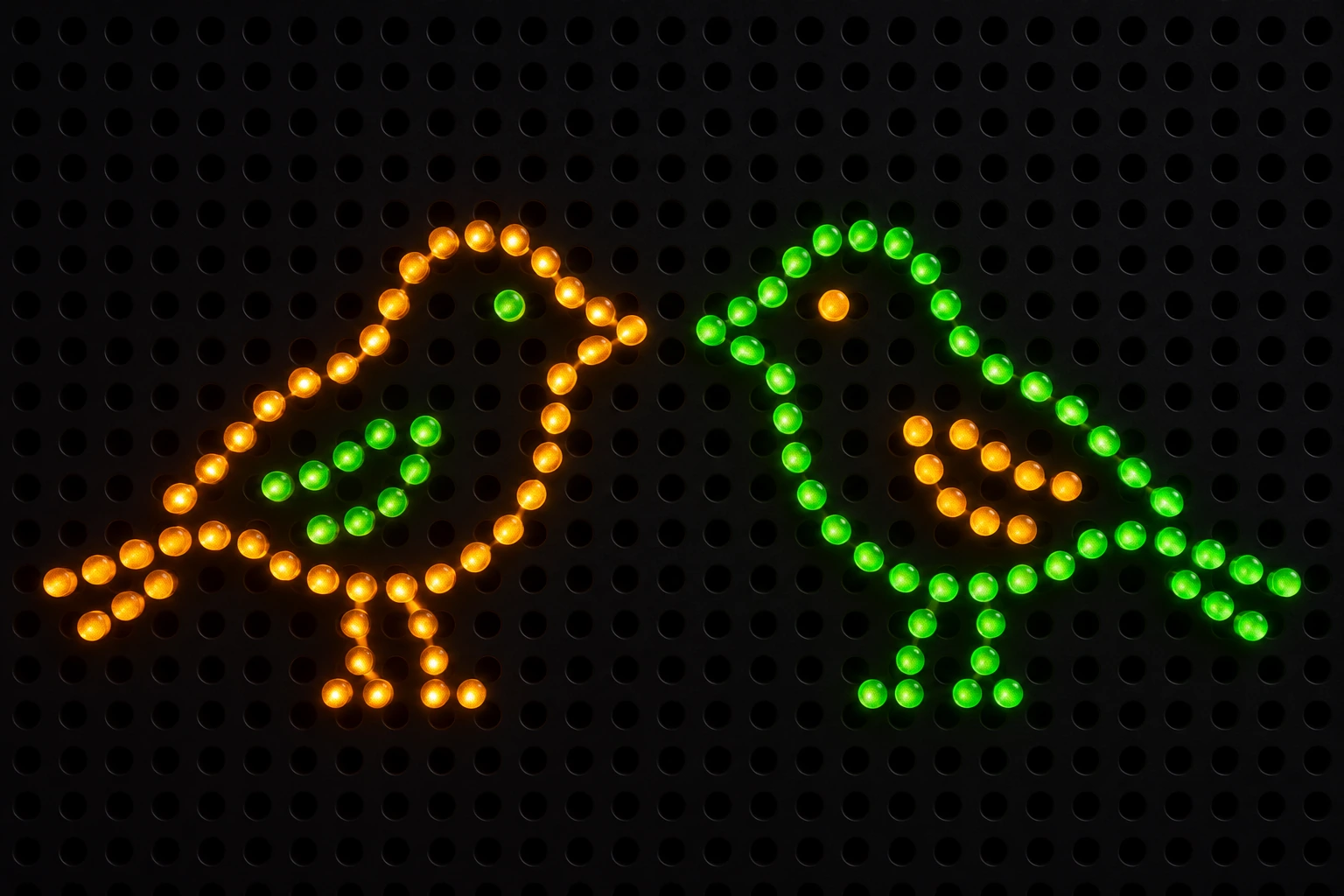
The banner, collage and five studies are AOI interpretations. The linked sources document the works and practices discussed in the article.
Select an image for a closer look. Use the thumbnails, arrow keys or a swipe to compare examples. Zoom in to inspect details, or share the image that inspires you.
Creative toolbox · take this style further
Choose an input and a destination. Search sends your words to the chosen site; Copy & open puts them on your clipboard to paste there.
Create with AI
Turn your chosen input into an image prompt or a new creative direction.
ChatGPT
Copy your input and paste it into a ChatGPT conversation or image request.
Copy & open ChatGPT (new tab)Claude · Anthropic
Develop an image prompt or explore the style in a new Claude conversation.
Copy & open Claude · Anthropic (new tab)Midjourney
Paste your input into the Imagine bar on the Create page.
Copy & open Midjourney (new tab)Adobe Firefly
Copy your input, open Firefly, and paste it into the prompt field.
Copy & open Adobe Firefly (new tab)Leonardo.Ai
Copy your input, open Leonardo, and paste it into the generation field.
Copy & open Leonardo.Ai (new tab)Image search
Find visual references. Short, concrete keywords usually work best.
Lexica
Search AI images and prompts using your selected input.
Search with this input Lexica (new tab)Pexels
Search the photo and video library. Short keywords often work best.
Search with this input Pexels (new tab)Pixabay
Search photos, illustrations and other images.
Search with this input Pixabay (new tab)Unsplash
Search photographs using the style name or your own keywords.
Search with this input Unsplash (new tab)Wikimedia Commons
Search photographs, artworks and historical images. Check each file for its source and reuse terms.
Search with this input Wikimedia Commons (new tab)Art & research
Explore artists, collections and the ideas behind a style.
Wikipedia
Search for background reading. A style may not have its own article.
Search with this input Wikipedia (new tab)WikiArt
Copy your input into WikiArt’s search to explore artists and artworks.
Copy & open WikiArt (new tab)Europeana
Paste your keywords into the search to explore European museum, library and archive collections.
Copy & open Europeana (new tab)Inspiration
Discover portfolios and visual ideas from creative communities.
Instagram hashtags
Search a hashtag made from your input: spaces and punctuation are removed. Instagram may require sign-in.
Search with this input Instagram hashtags (new tab)ArtStation
Paste your input into artwork search for concept art, environments, characters and visual development.
Copy & open ArtStation (new tab)Behance
Paste your input into project search for illustration, design and visual storytelling.
Copy & open Behance (new tab)A closer look
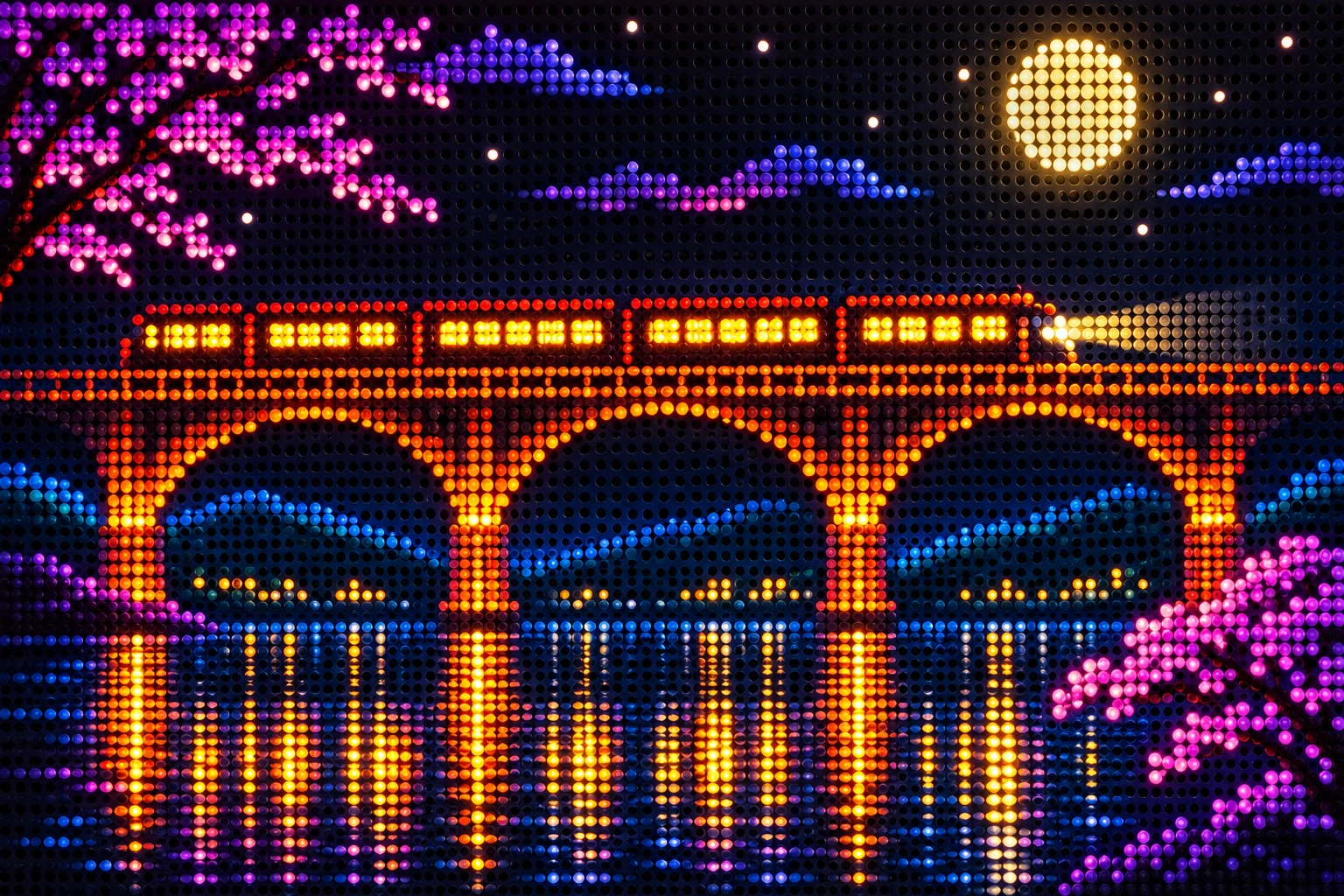
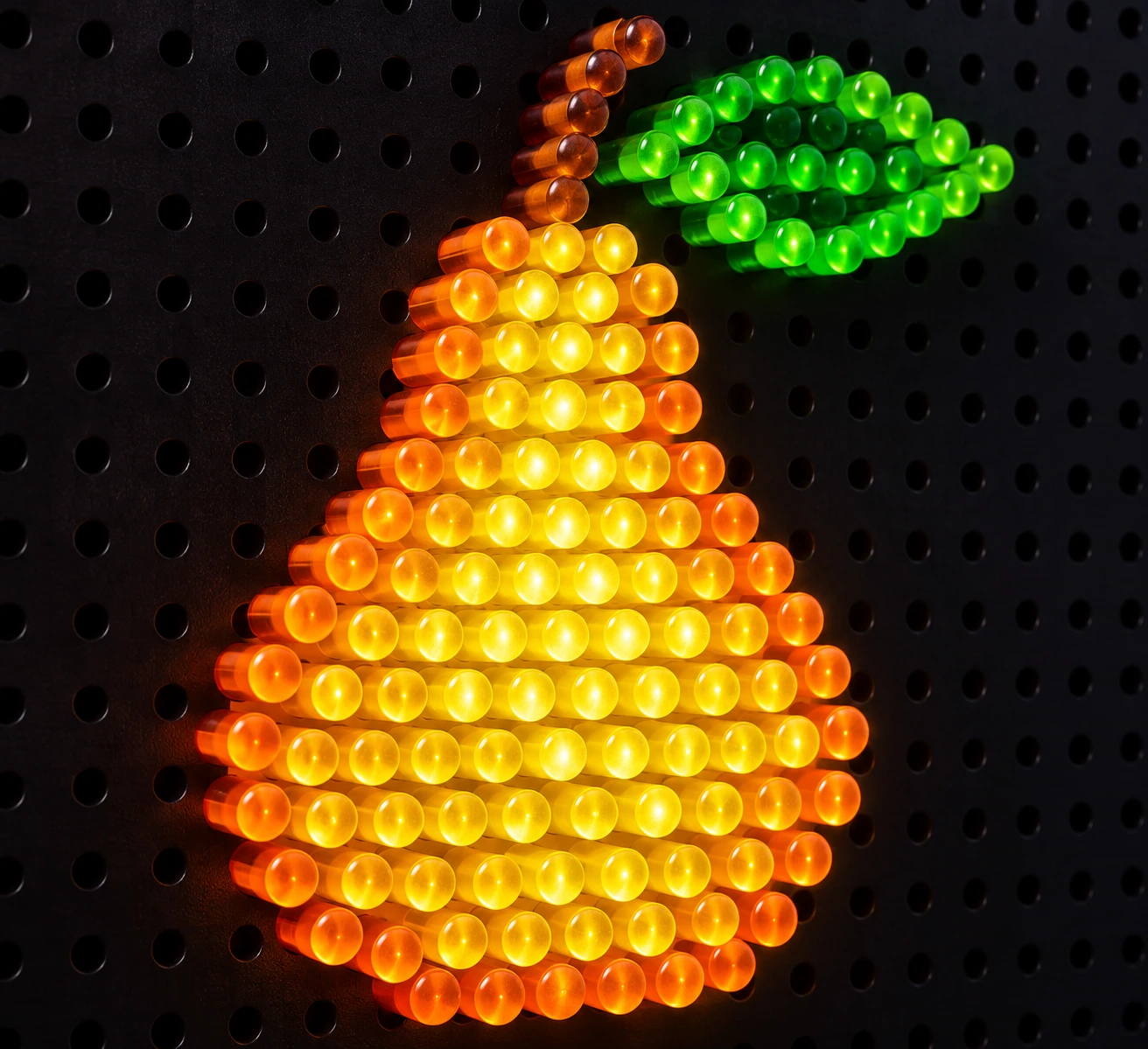
Look for regularly spaced points with rounded translucent heads. The dark face of the board separates each point from its neighbours. From across a room those intervals join into a contour. Up close each point becomes an object again.
The dark sheet made the toy work
The Strong National Museum of Play traces Lite-Brite to Marvin Glass, Henry Stan and Burt Meyer, inspired in 1966 by a New York window display. Their design placed a perforated panel and dark paper in front of a light bulb. Coloured pegs admitted light at selected points. That arrangement explains a characteristic of the pictures: a fresh black field gives every new insertion the visual force of a decision.
Basic Fun’s Classic model uses LEDs and offers templates as well as the opportunity to make original designs. The illuminating mechanism has changed across versions. The design question survives: which holes must stay dark for a viewer to understand what the bright ones depict? The gallery imagines original peg compositions. It documents neither a particular retail model nor an official pattern.
Draw the gap between the birds
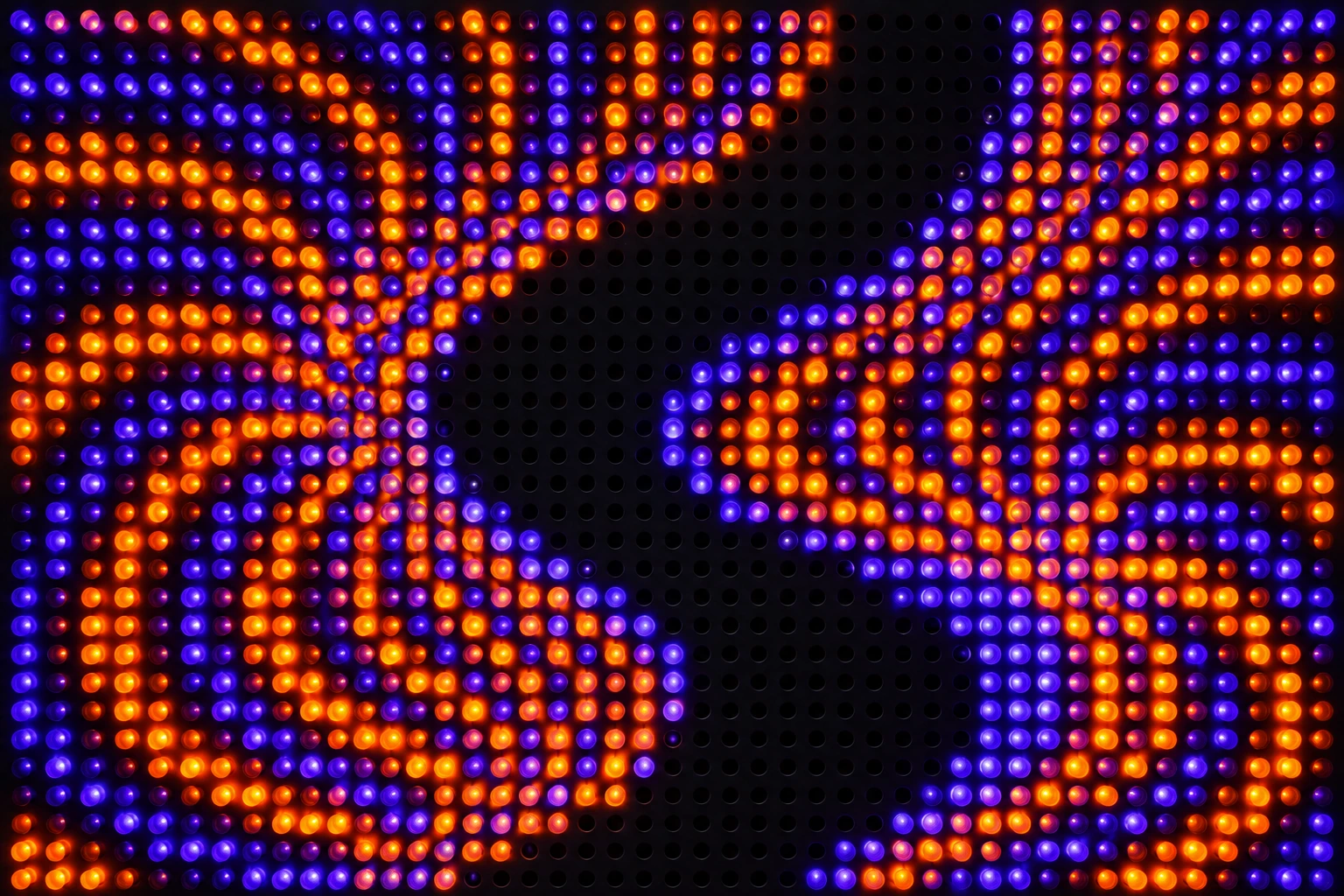
Place two bird profiles opposite each other. At small scale the gap between the beaks may be a single unused socket. Fill it and the birds can look like one awkward animal. Move one bird sideways and the same gap becomes a pause. A square image on a screen can hide this distinction with anti-aliasing. A physical board makes you settle it with a whole peg.
Brightness, density and distance
A row of tightly spaced luminous points can become a continuous line when seen from across a room. A single amber peg beside an area of black can pull attention away from ten cool pegs arranged in a block. Try a boat hull first as an outline and then as a solid field. Keep both versions under the same lighting. The solid hull usually claims more weight and may leave too little contrast for its reflection.
Photographing a board
Expose for the heads of the pegs so that neighboring colours stay separate. A little side light can reveal the physical sockets and the curved plastic; too much can wash out the dark ground. Make one frontal photograph for the design and a second, oblique one for the object. In a digital interpretation, keeping a consistent grid, dark gaps and a plausible falloff of light does more to convey peg art than covering the whole frame with a glow filter.
Positive review · AI-authored editorial assessment
The black field makes a modest number of lights remarkably articulate. An interruption of a single socket can separate two silhouettes more cleanly than an outline.
Negative review · AI-authored editorial assessment
Blown highlights make expensive-looking mush of careful peg placement. Reduce exposure before blaming the limited palette or adding more lights.
Neutral review · AI-authored editorial assessment
A peg board suits emblems, rhythm studies and pictures that can survive a coarse grid. The physical pegs and light transmission add information a static pixel mosaic does not carry.
A small poetic detour
Original words from the AOI studio.
Poetry
One lamp on the headland.
One dark hole for the sea.
The boat gets four blue windows.
Someone has left the last one on.
The prompt workshop
Original creative exercises. These prompts create new illustrations, not documentary evidence.
Starting point
Build a lighthouse from a few rows of red and ivory translucent pegs. Let a diagonal interruption in the beam carry the eye into the dark field.
Richer composition
Arrange a bridge, a ferry and broken reflections on a strict peg grid. Separate the hull from the water with one empty row. Keep saturated pegs distinct in the photograph.
Experiment
Construct two facing birds using only cool and warm pegs. Remove one point at a time until another removal would erase the expression. Show the surviving empty space clearly.
A smile from the studio
Jokes
The harbour master requested a longer pier. The artist checked the available holes and offered a shorter boat.