
An original Art of AI concept
How much can a shape give way and still be recognised? Liquidism is Art of AI’s answer in pictures, from a teapot handle with barely room for a finger to an iris that takes the full height of a phone screen.
An A⊕I –[-.+] creαt¡ve c⊕ncept, n⊕t αn estαbl¡she∂ h¡st⊕r¡cαl m⊕vement.
A visual introduction
Eleven original AI interpretations. The station opens the study. The titled atlas brings four subjects together. Open the two green teapots in succession, then try the tall iris at full height. The last work records the untouched one-word trial.
Select an image for a closer look. Use the thumbnails, arrow keys or a swipe to compare examples. Zoom in to inspect details, or share the image that inspires you.
Creative toolbox · take this style further
Choose an input and a destination. Search sends your words to the chosen site; Copy & open puts them on your clipboard to paste there.
Create with AI
Turn your chosen input into an image prompt or a new creative direction.
ChatGPT
Copy your input and paste it into a ChatGPT conversation or image request.
Copy & open ChatGPT (new tab)Claude · Anthropic
Develop an image prompt or explore the style in a new Claude conversation.
Copy & open Claude · Anthropic (new tab)Midjourney
Paste your input into the Imagine bar on the Create page.
Copy & open Midjourney (new tab)Adobe Firefly
Copy your input, open Firefly, and paste it into the prompt field.
Copy & open Adobe Firefly (new tab)Leonardo.Ai
Copy your input, open Leonardo, and paste it into the generation field.
Copy & open Leonardo.Ai (new tab)Image search
Find visual references. Short, concrete keywords usually work best.
Lexica
Search AI images and prompts using your selected input.
Search with this input Lexica (new tab)Pexels
Search the photo and video library. Short keywords often work best.
Search with this input Pexels (new tab)Pixabay
Search photos, illustrations and other images.
Search with this input Pixabay (new tab)Unsplash
Search photographs using the style name or your own keywords.
Search with this input Unsplash (new tab)Wikimedia Commons
Search photographs, artworks and historical images. Check each file for its source and reuse terms.
Search with this input Wikimedia Commons (new tab)Art & research
Explore artists, collections and the ideas behind a style.
Wikipedia
Search for background reading. A style may not have its own article.
Search with this input Wikipedia (new tab)WikiArt
Copy your input into WikiArt’s search to explore artists and artworks.
Copy & open WikiArt (new tab)Europeana
Paste your keywords into the search to explore European museum, library and archive collections.
Copy & open Europeana (new tab)Inspiration
Discover portfolios and visual ideas from creative communities.
Instagram hashtags
Search a hashtag made from your input: spaces and punctuation are removed. Instagram may require sign-in.
Search with this input Instagram hashtags (new tab)ArtStation
Paste your input into artwork search for concept art, environments, characters and visual development.
Copy & open ArtStation (new tab)Behance
Paste your input into project search for illustration, design and visual storytelling.
Copy & open Behance (new tab)A closer look
Look for the moment a generous shape narrows, passes a boundary and gathers again. The patch of wall inside a handle matters as much as the glaze. So does the sliver of sky that gives an arch its weight.
What can one word do to a shape?
Try drawing a cup without picking up your pencil. Around the bowl your hand travels slowly. At the lip it changes direction. At the handle there is a small, decisive moment when you must give some of the paper back. Leave that hole out and you may have drawn a pear. Liquidism begins there, in the piece of a picture that a shape agrees to give away.
Art of AI developed this study by taking the word Liquidism apart. Liquid supplied the permission to change shape when something gets in the way. The ending, ism, suggested making a habit of it. For this edition we gave every subject the same instruction. Find a place where its outline meets resistance, draw its mass through a narrow passage, then give that mass room on the far side. Keep one detail steady enough to let a stranger name the subject. A spout, an ear or the rim of the sun will do.
The first trial had a one-word prompt
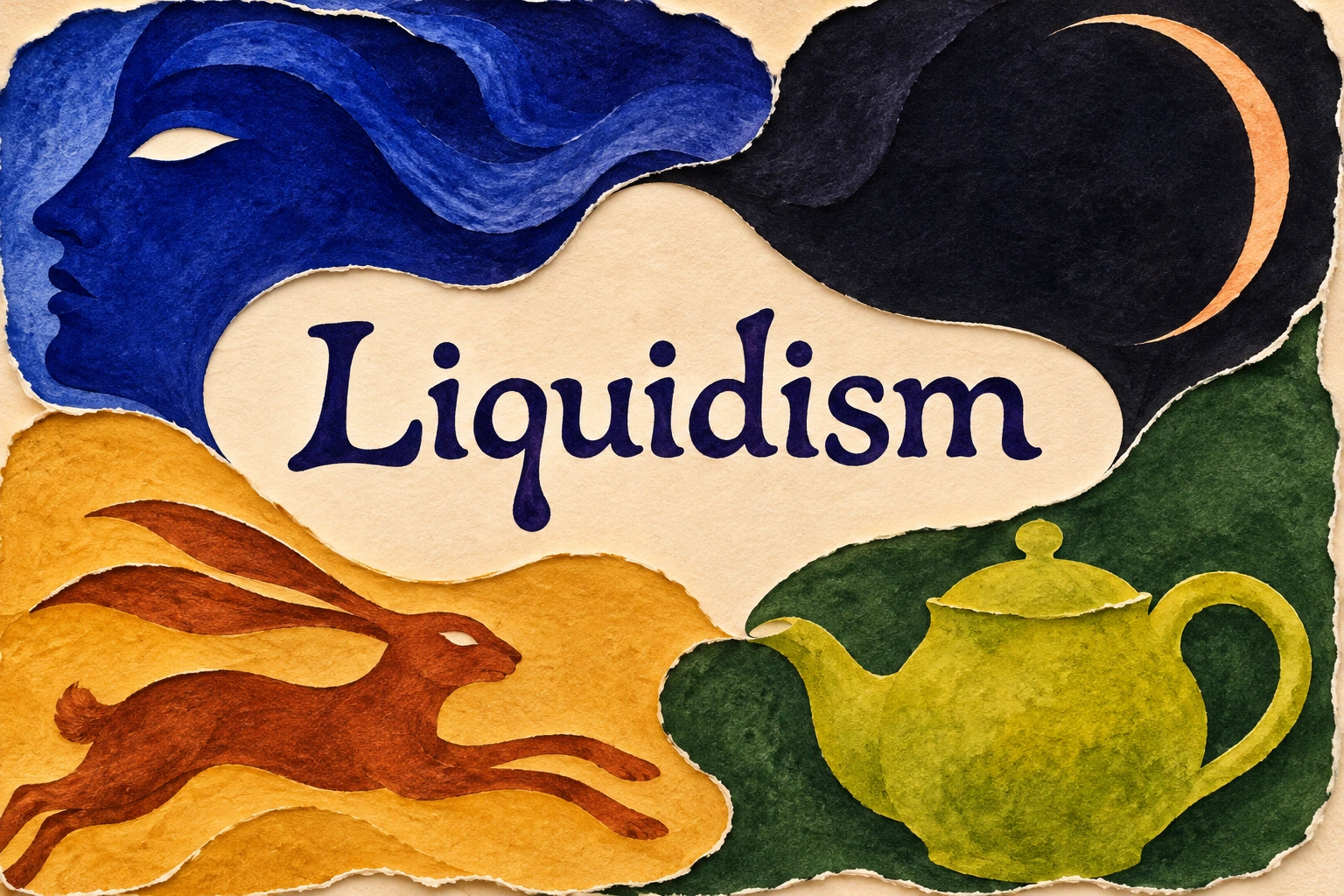
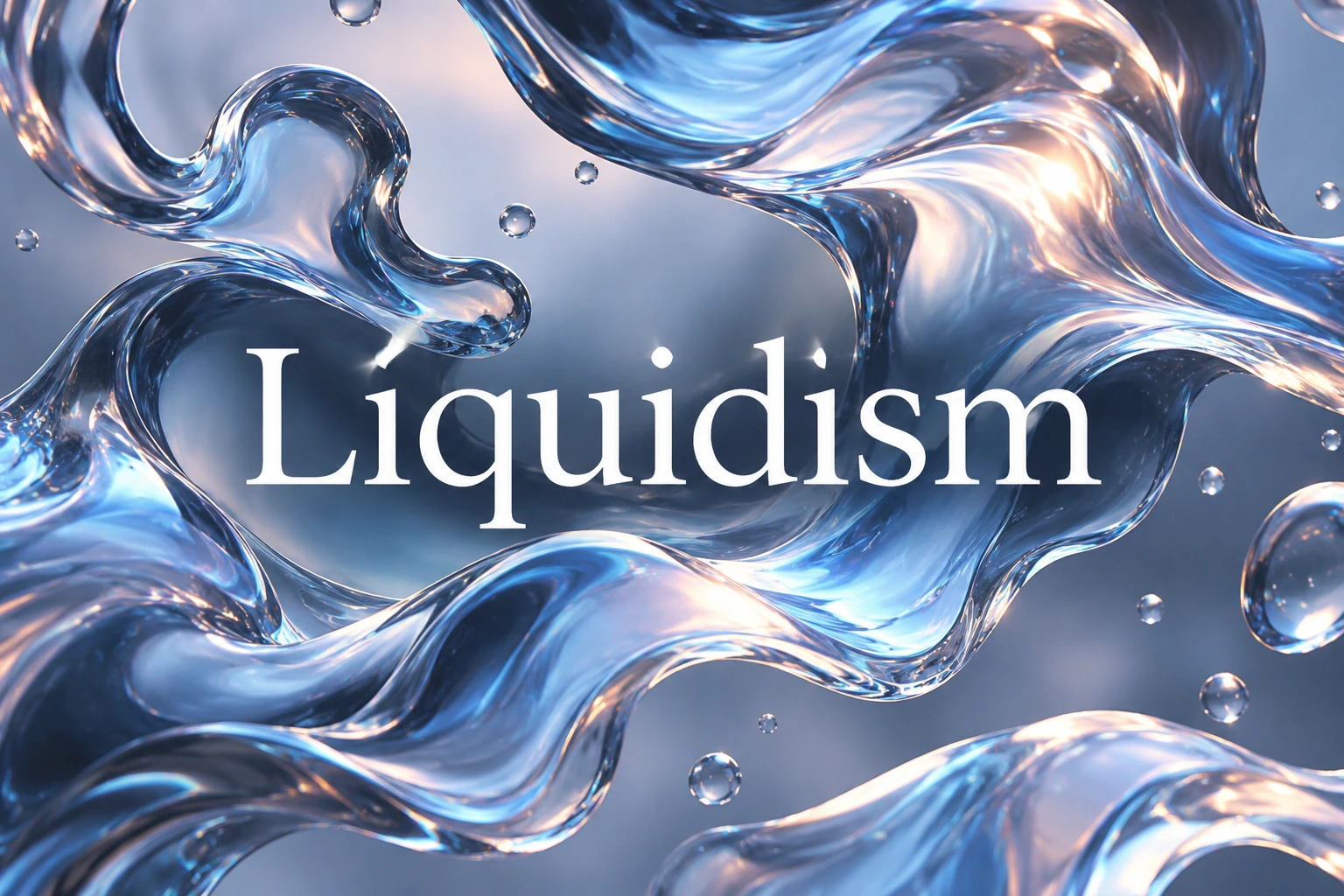
The complete submitted prompt for The Word on Its Own was “Liquidism”. The result spells the word across the middle in large white serif letters. Behind it, blue translucent folds catch a peach light, and several round beads hang free. I had expected the tool to do something with water. I had not expected it to typeset the question. Cover the letters and the brightest folded edge still offers a route through the picture.
This is one generation with one image tool. It makes a good first page in a sketchbook. Write down what caught your eye, then cover the image and draw the smallest shape you can remember. That remembered shape is a better starting point for the next trial than a long list of surface effects. The rest of this gallery tests what happens once a subject and a boundary enter the prompt.
Where the outline does the work
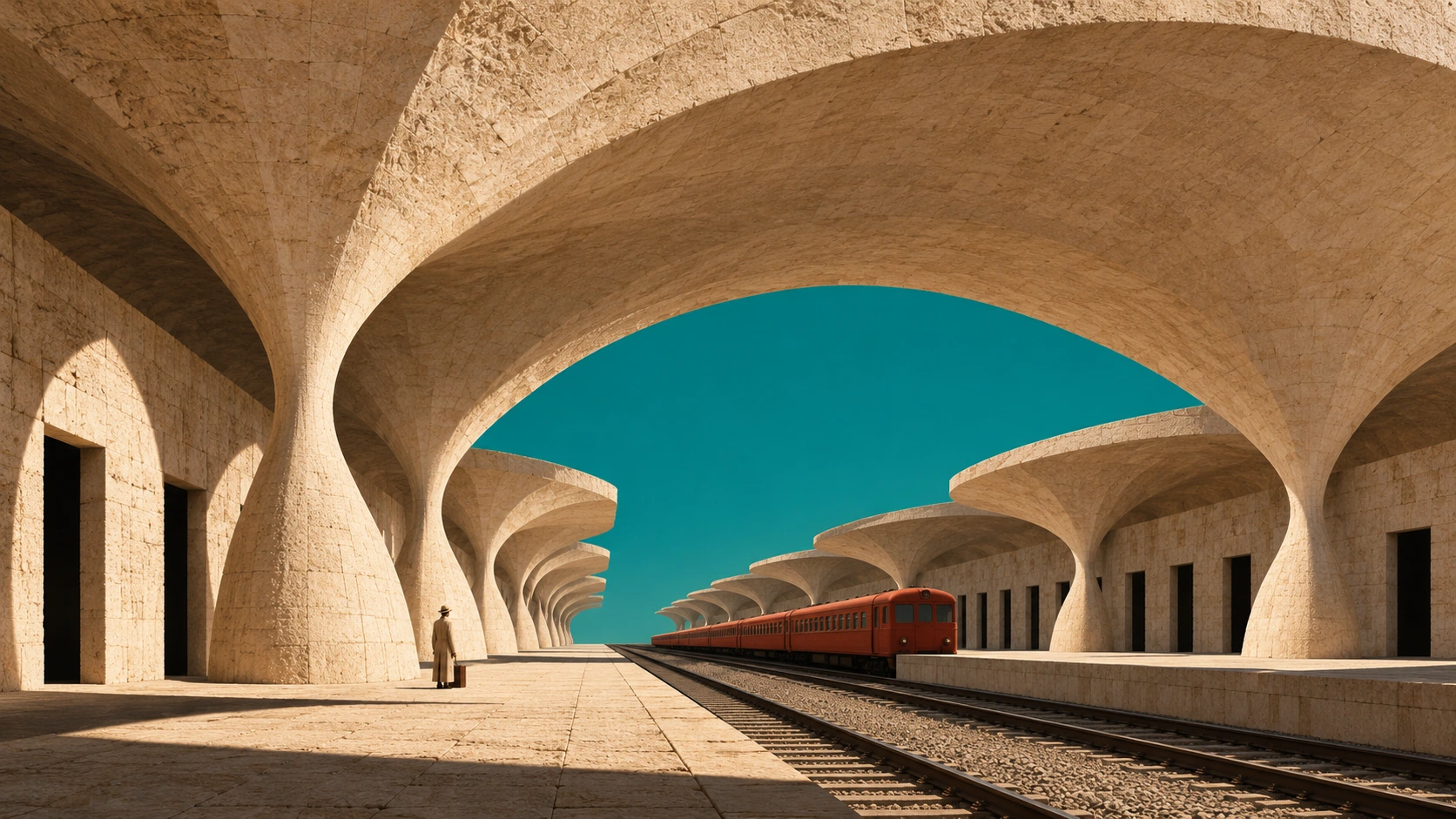
In The Station Takes a Breath the strongest curve begins at a passenger’s platform. A limestone pier swells near the ground, draws in to a waist and fans out into the vault above. Little rectangular doorways keep their corners along the walls. The train and the lone traveller with a case give two quite different measures of the building. The turquoise patch above the tracks almost becomes a roof in its own right.
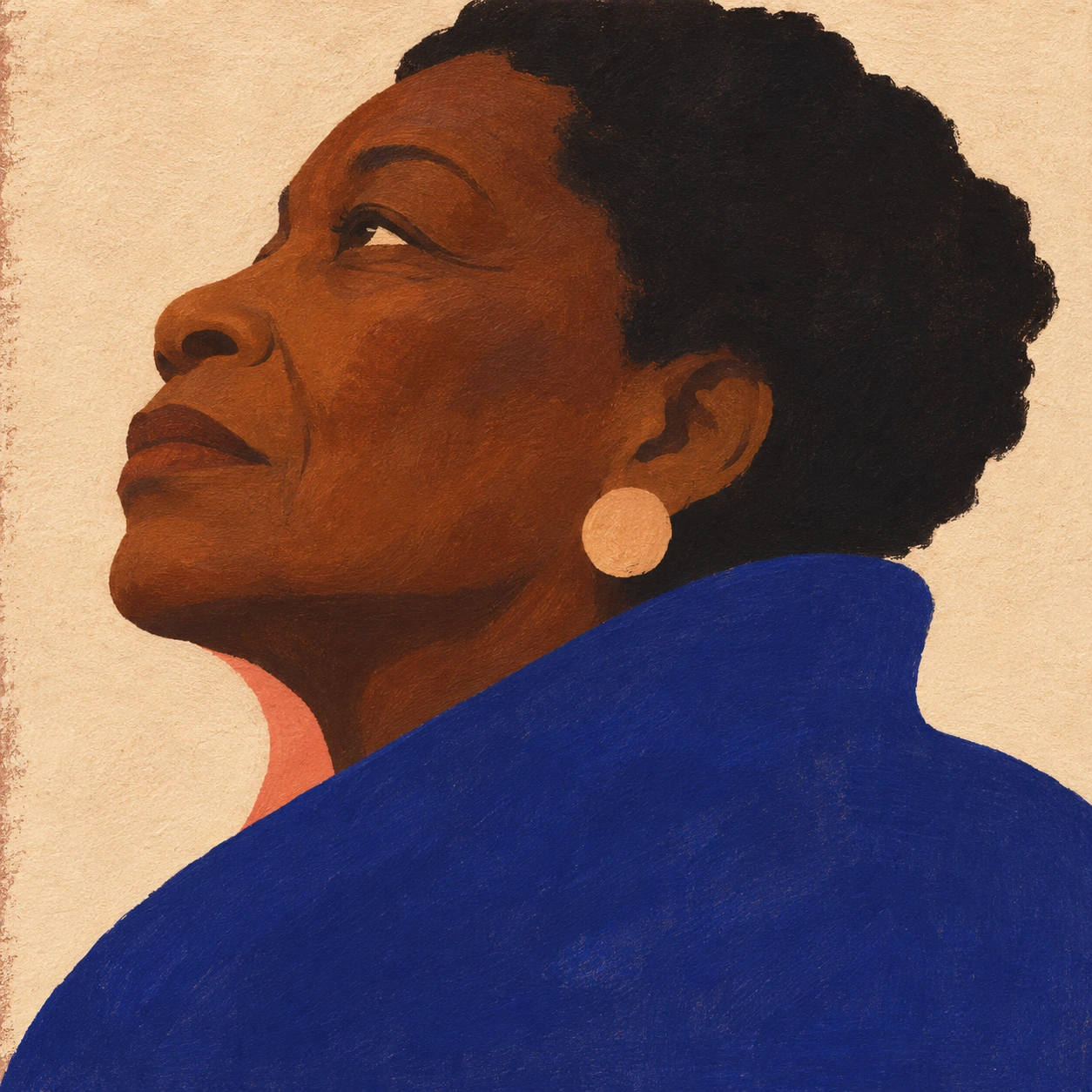
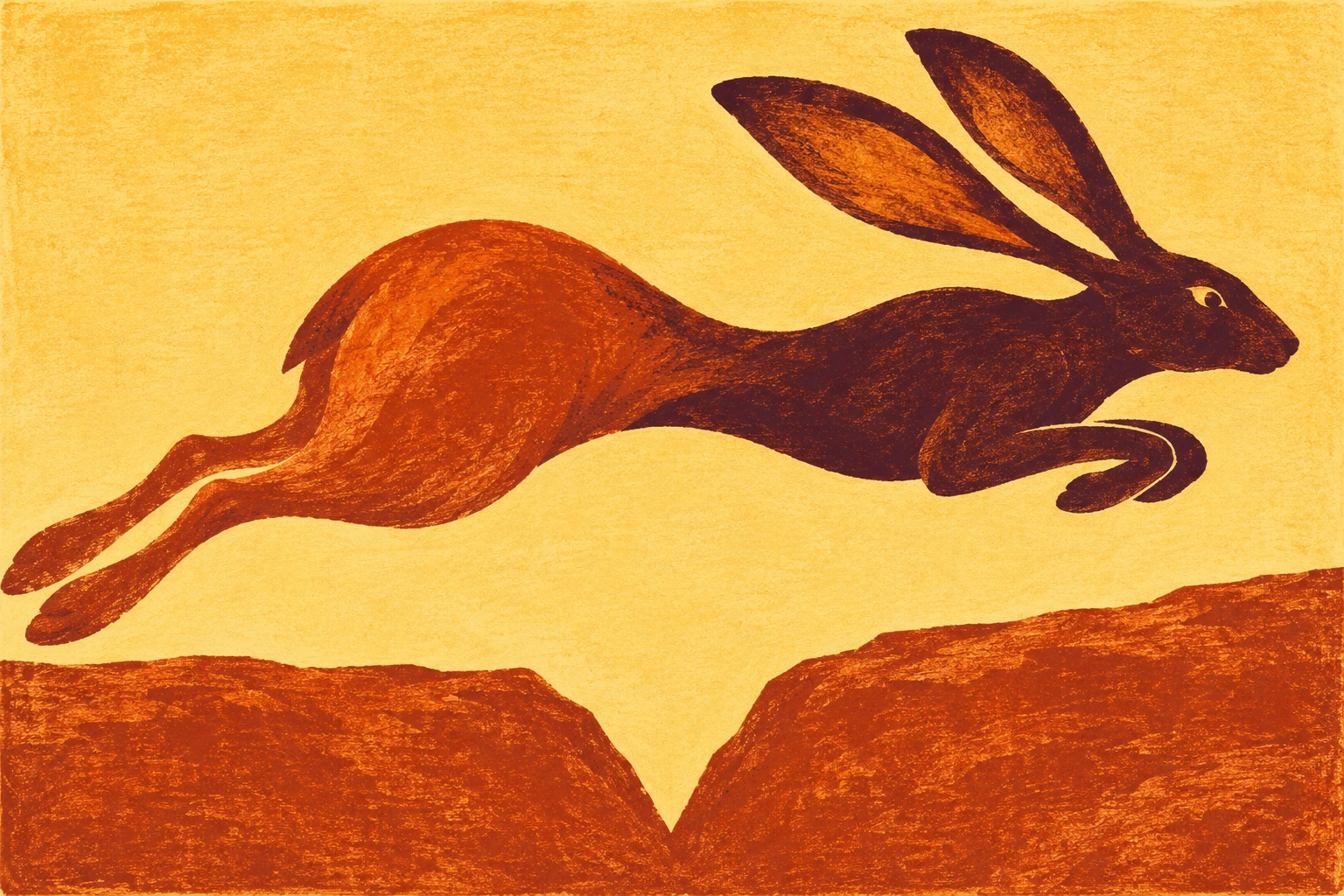
The Sitter Looks Left puts the change of direction into a collar and the space under a raised chin. The tiny light triangle in the eye does the delicate work of pointing the gaze. The jackrabbit spends its most extravagant gesture elsewhere. Its dark body stretches nearly the whole width of the sheet, yet the two ears and the little gap beside the folded forepaws survive the stretch. Its leap has a second hinge in the V of ochre ground below.
Try tracing the shared edge of two colours with one finger. Sometimes it belongs to the subject and sometimes it describes the air beside it. A convincing passage lets you read both without changing position. If every edge undulates, your eye soon stops asking what pushed against what. Give it one straight edge, one corner or one stretch of quiet paper as a point of comparison.
A teapot and the price of a handle
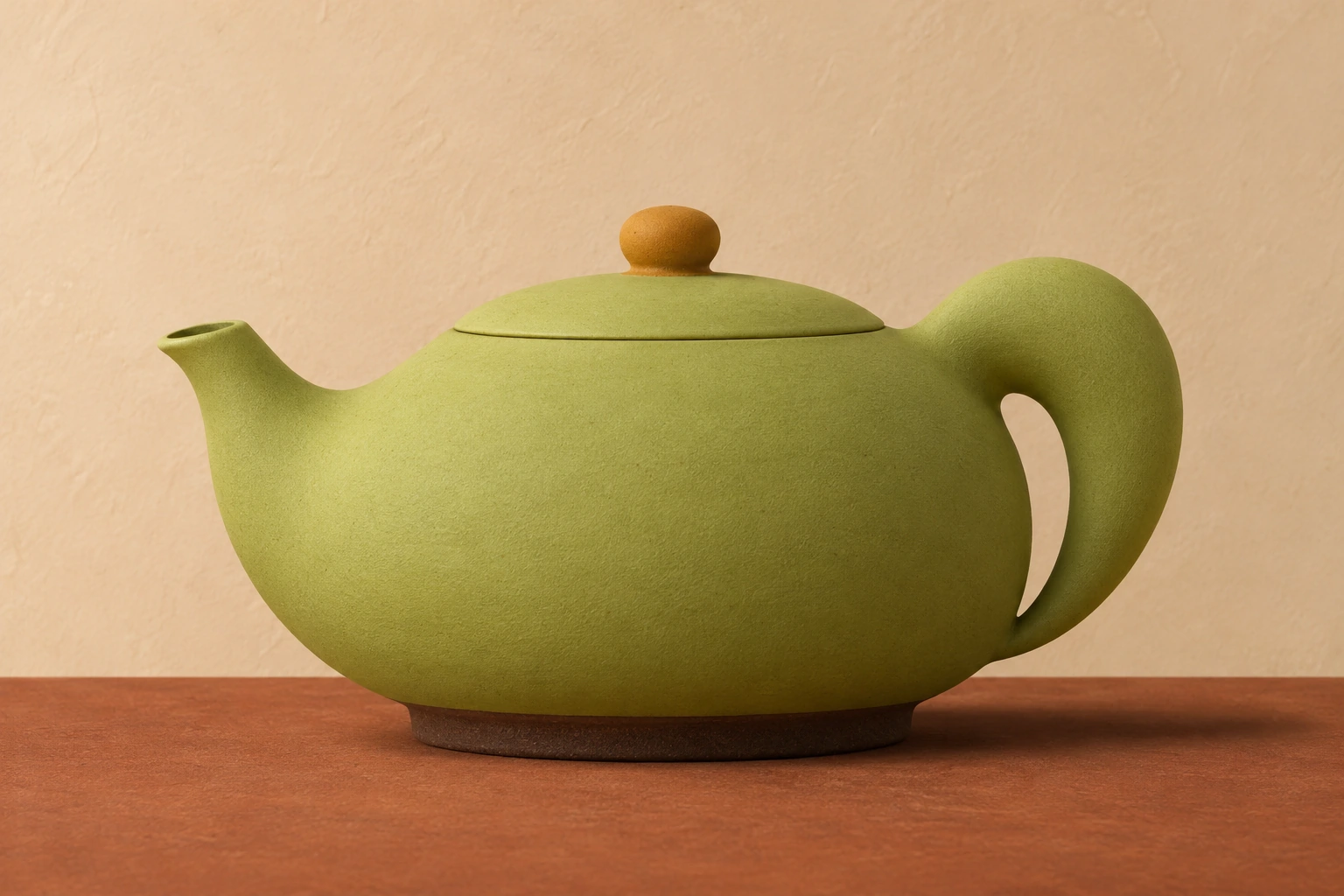
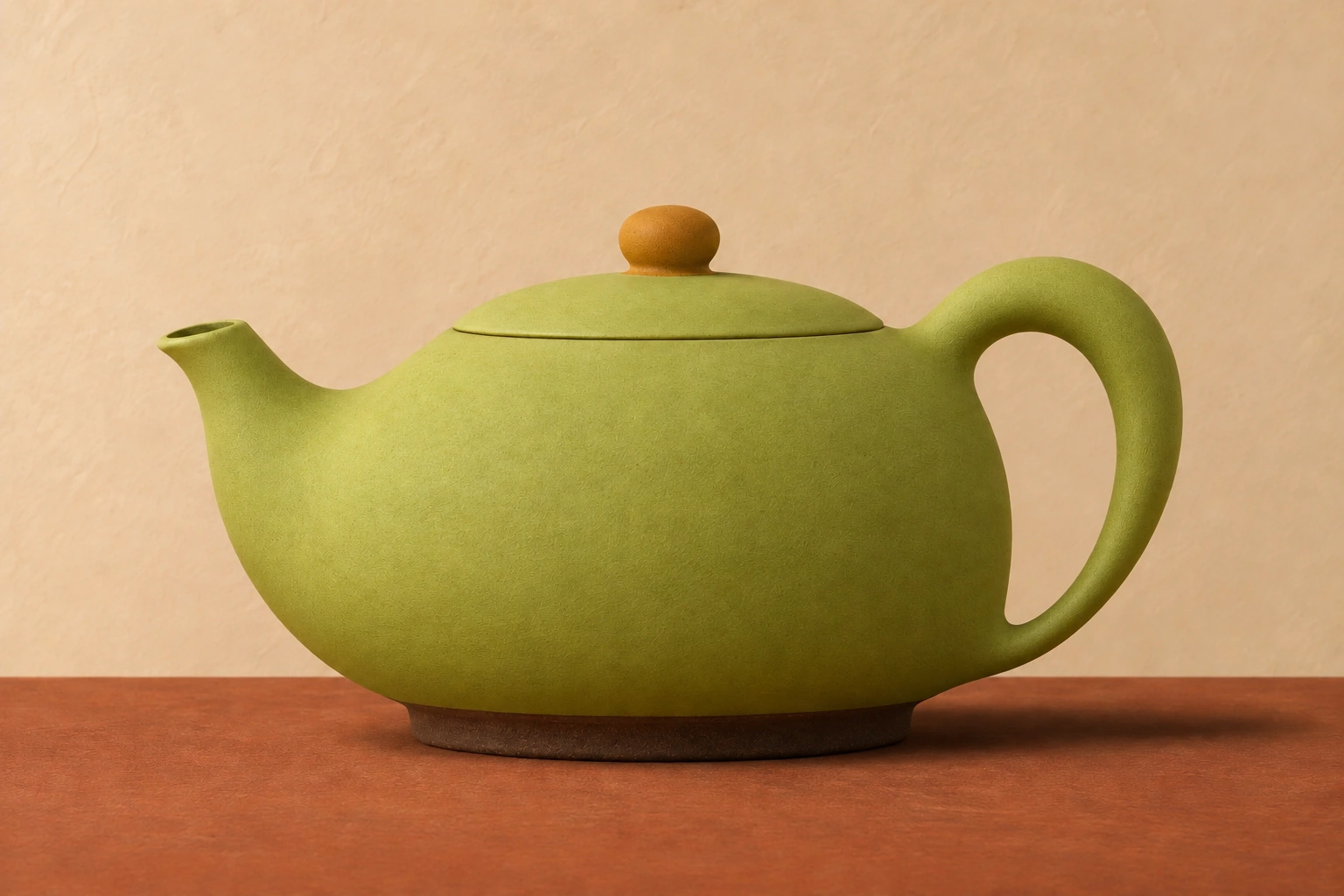
The Narrow Handle and Room for a Hand use the same pear-green teapot. The first image supplied the visual reference for the second. Follow the line of the tabletop, the spout and the ochre lid knob as you switch between them. They stay closely aligned. At the middle row of each 1,536-pixel-wide original, the visible wall inside the handle grows from about 54 pixels to 134. The curve where the handle meets the bowl also shifts a little, and the glaze picks up a slightly different grain. The larger patch of wall does most of the perceptual work.
Look at the two pots at arm’s length. First ask whether you can name the object. Then ask where your fingers would go to lift it. Those are different tests. A spout and a lid can answer the first almost by themselves. The second depends on a hole, and on what a viewer knows about the size of a hand. This is an image study of that invitation to grasp. Neither pot has undergone a physical test.
How much of a subject can give way?
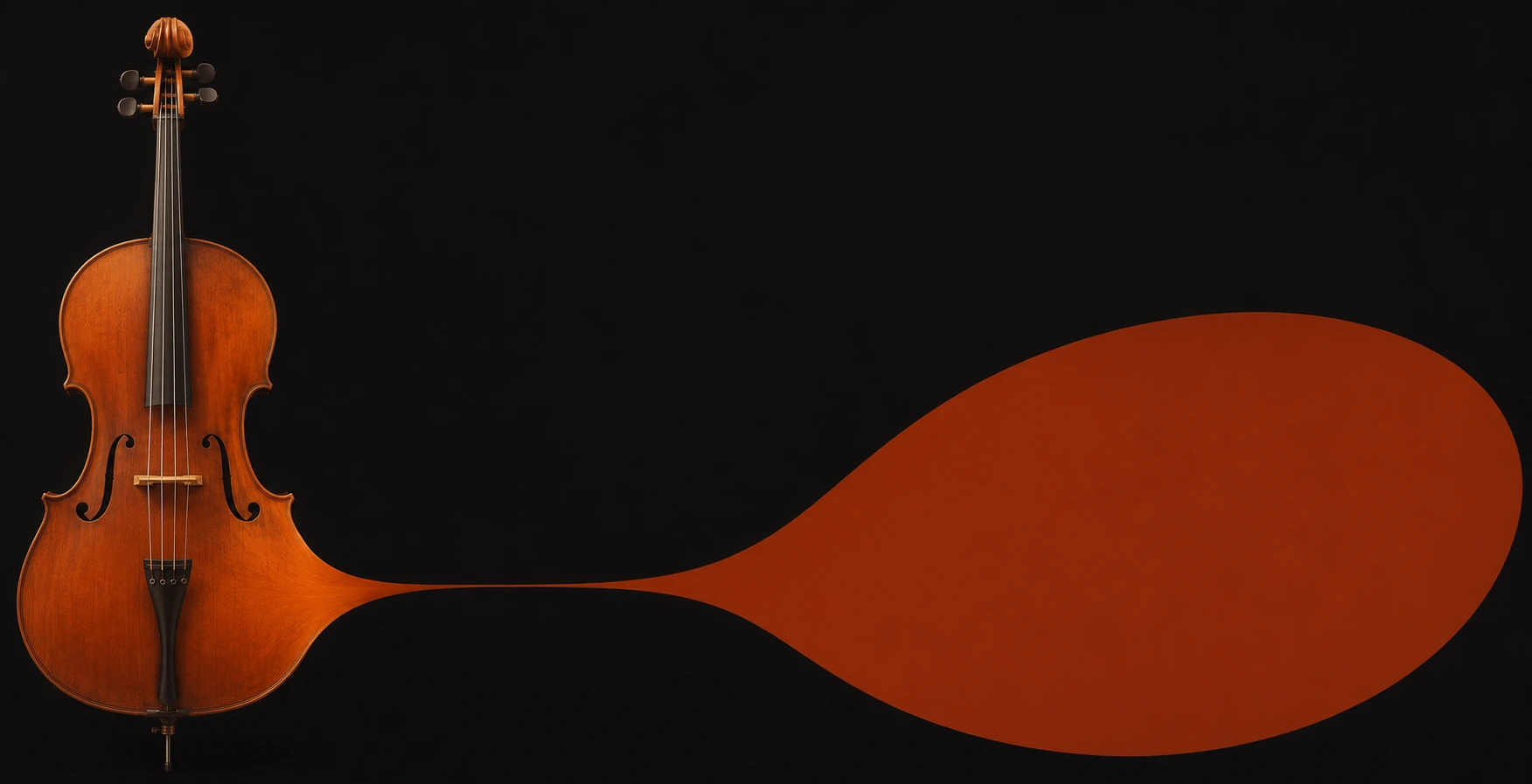
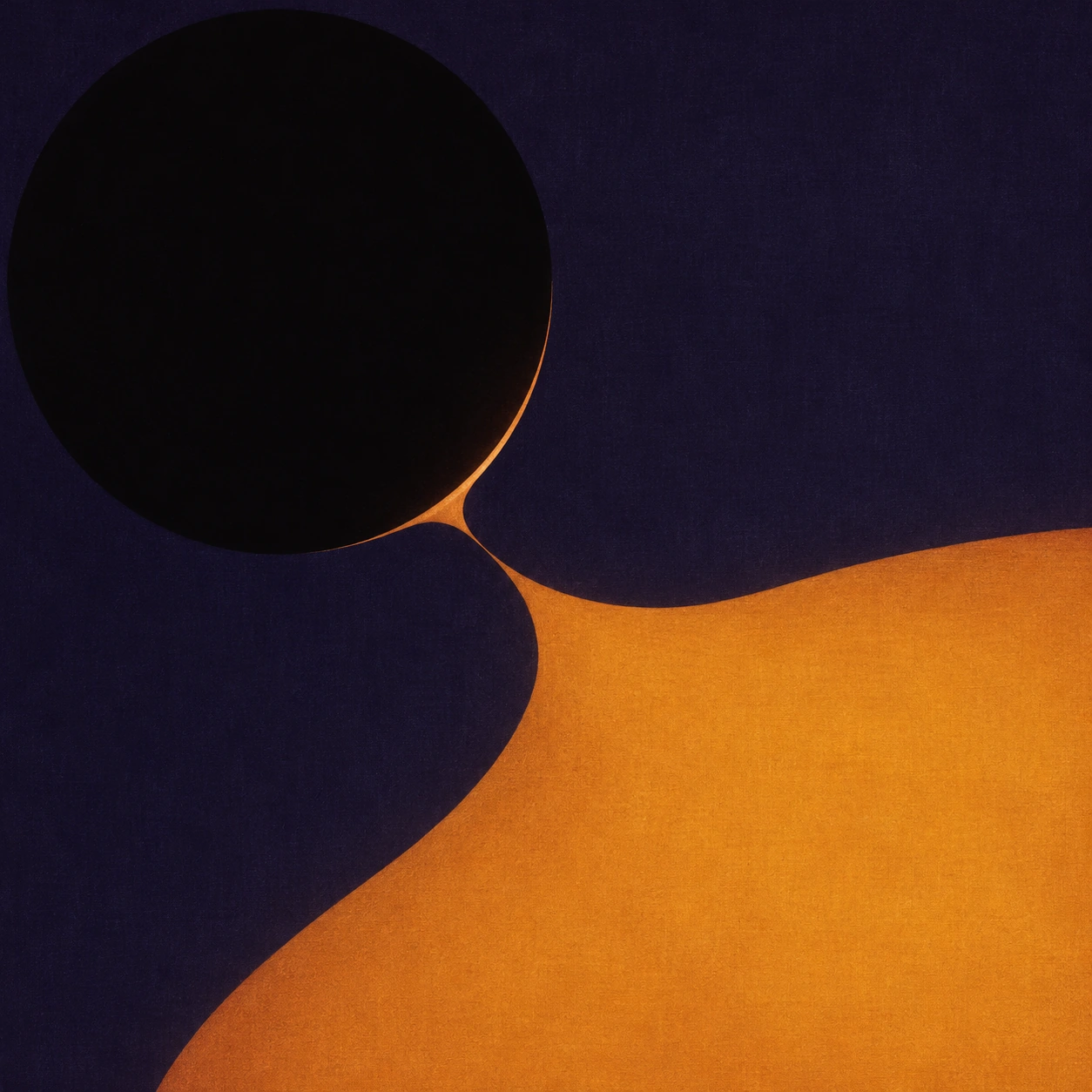
The cello and the eclipse use almost the same little joint. A thread from the cello’s lower right side opens into a broad orange shape. Its strings, bridge and pegs stay in place, so the colour can travel an absurd distance and the instrument keeps its name. The eclipse gives you much less to go on. A near-black disc presses against violet until a hairline of amber broadens into the lower corner. Cover that thread and you have two different pictures.
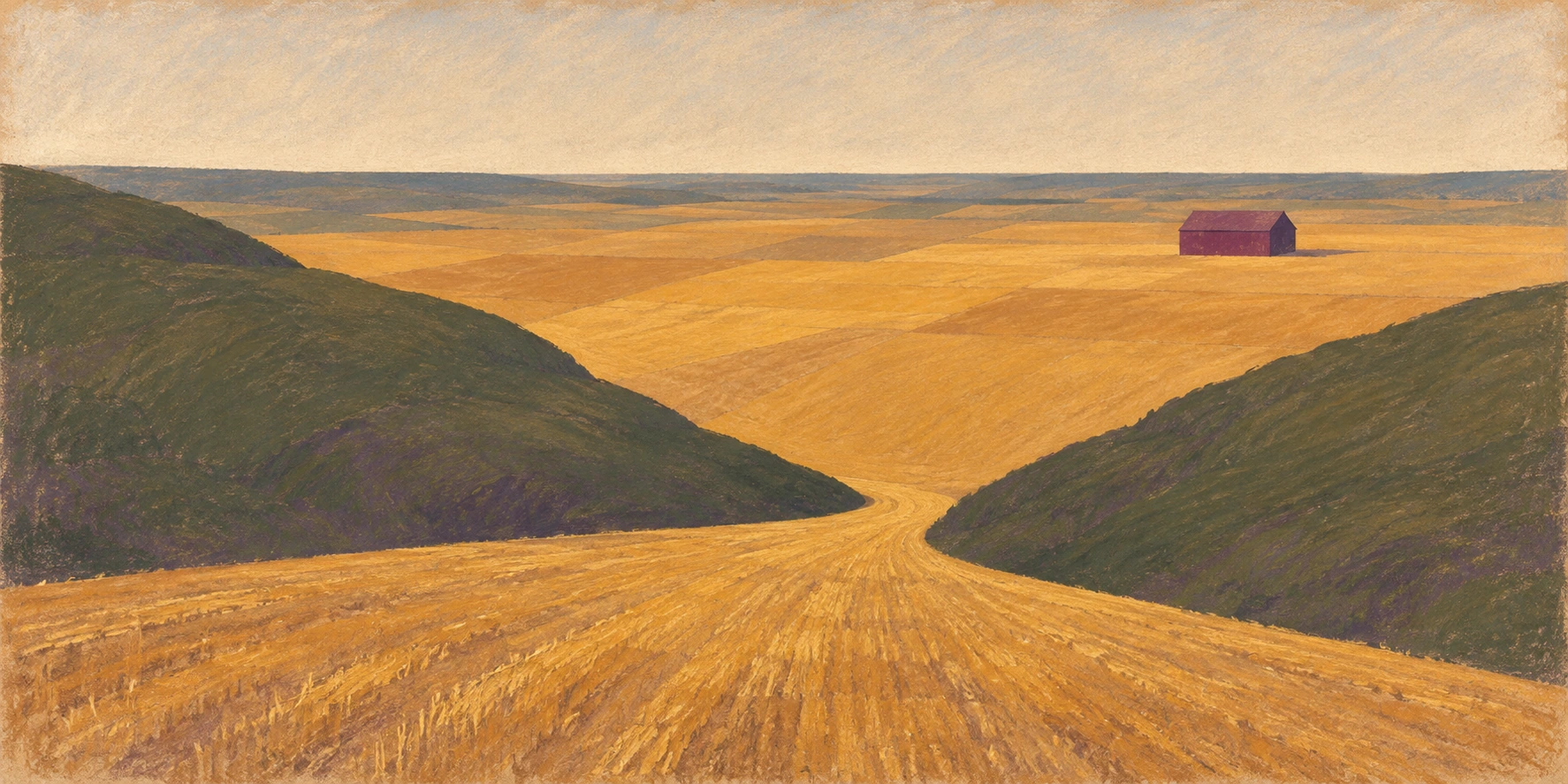
In The Field Changes Hands the harvested rows bend towards the gap between two dark hills. On the far side the gold opens into a patchwork of fields. A small plum-coloured barn sits so quietly near the horizon that it is easy to miss how much it does. Its straight roof gives scale to the sweep, and its colour stops the whole landscape becoming an elegant arrangement of mustard and olive.
A river would be an easy subject here. A dry field is a more demanding one. At thumbnail size, cover the barn with your thumb and see how long the land still reads as land. Do the same with the cello’s strings. Different subjects spend their identifying details at different rates. You can take away a good deal of the instrument’s outer edge while a few taut lines still carry the idea of music.
A picture as tall as its subject
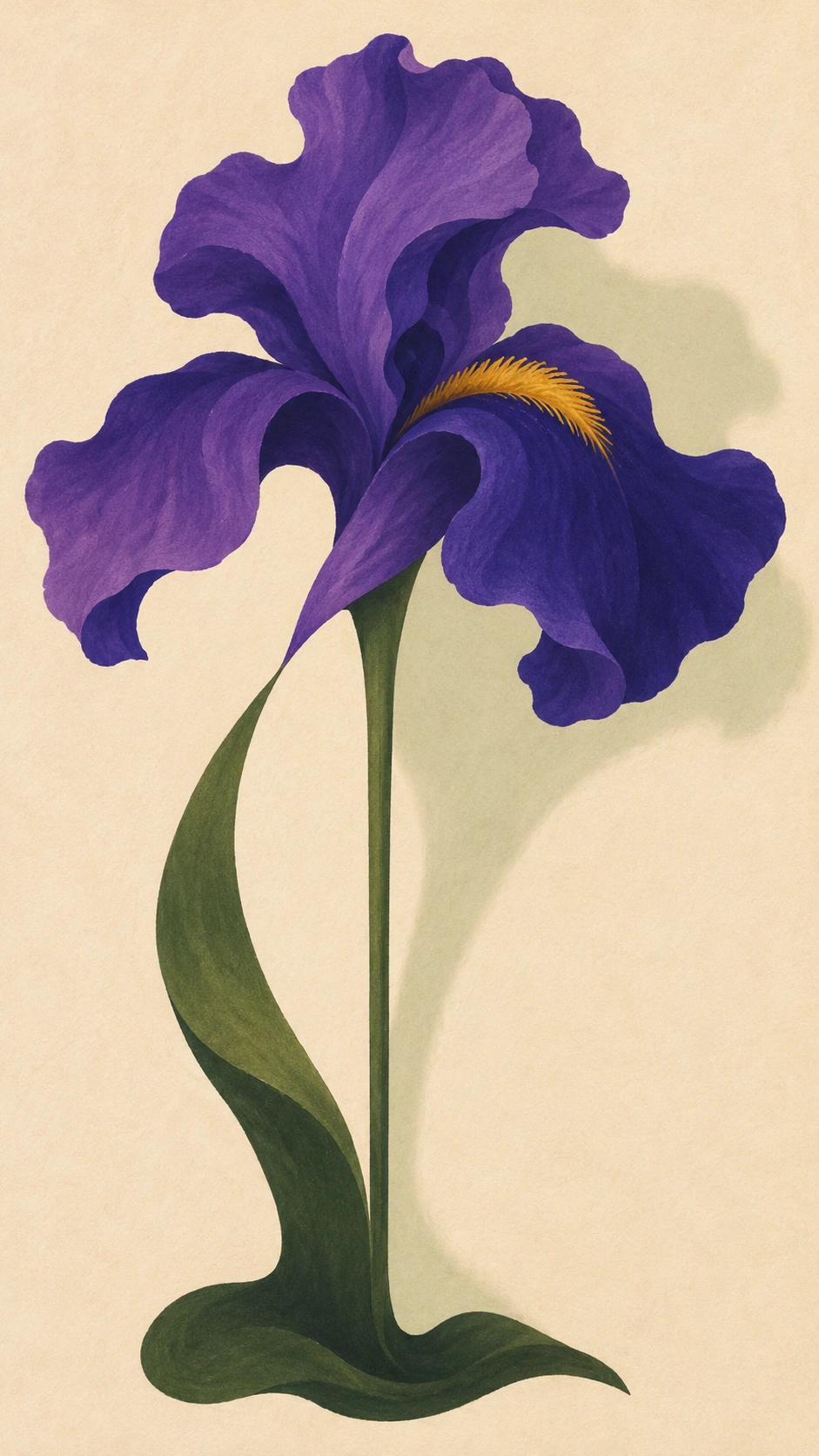
The Iris Climbs Its Own Shadow puts the flower head high on the sheet. A fine, warm gold beard crosses the dark violet petal. Below it, a broad green leaf curls away from a nearly straight stem and returns as a slender point that almost meets a petal tip. The pale shape they leave between them is the longest unbroken passage in the composition. The soft green shadow on the right gives even the empty paper a second depth.
Open this study at full height on a phone. Follow the space alongside the stem from bottom to top before following the stem itself. A tall frame gives that journey time. For an image of your own, decide where the eye may rest along the climb. A single change of width halfway up can do more than a second flower.
Three readings from Penny’s desk
Positive review. The station is the most persuasive argument for the idea. The stone looks heavy, the curve looks effortless and the traveller has somewhere quite specific to stand. You can follow one pier from a sensible base to an extravagant roof without losing the sense that a train is due.
Negative review. The eclipse is the least forgiving picture here. At a small size the black disc draws so much attention that the narrow amber joint can all but disappear. The result may read as handsome colour blocking before the eye finds the very detail the study set out to test.
Neutral review. The hare and the portrait come to recognition by different routes. Two ears identify the animal from the other side of the room. With the sitter I need to come closer to read the eyelid and the lift of the chin. Both images keep a readable outline, but they ask for different viewing distances.
Another exercise for the sketchbook
Choose a subject with an opening you could draw from memory. A key, a kettle and the space beneath a chair all work. Make three small silhouettes in black. Keep the same outer dimensions. In each drawing, move one pinch point and leave everything else as close as you can. Fill the silhouettes with plain colour before choosing a texture. At that stage the outline has nowhere to hide.
For a second pass, try a subject with no convenient hole. A row of houses will do. Give one roof a broad shoulder and let the skyline narrow toward a single chimney. Read the shape of the sky above it. If you need to draw raindrops before anyone sees your idea, return to the meeting of roof and sky. There is a whole composition in that joint.
Who else has used the name?
Untitled-1 published Liquidism – 01, a sixteen-page illustration periodical with work by several contributors. The artist Gianfranco Bianchi uses the Italian name Il Liquidismo for a painting technique in which he tilts a canvas to mix dripped colours. The publisher and artist each describe their own practice in the sources below. The definition, prompts and pictures in this guide belong to Art of AI’s independent reading of the word.
A small poetic detour
Original words from the AOI studio.
Poetry
A cup leaves room for a thumb.
An arch lets a whole sky through.
In the dark crook of the iris
a strip of morning climbs too.
The prompt workshop
Original creative exercises. These prompts create new illustrations, not documentary evidence.
One word, one trial
Liquidism
The complete input for The Word on Its Own. Compare your first result with the gallery trial.
Send weight through a railway arch
Liquidism. Draw a railway platform in dry limestone and vermilion. Under one broad roof, press the weight of the vault through two narrow piers. Keep the door of the waiting train square. Let a single piece of blue sky fill the opening. Wide view, side light, matte surfaces.
The doorway gives the eye a fixed measure while the masonry changes width.
Change only the room for a hand
Use the teapot image as reference. Enlarge the opening inside the right handle until a hand could plausibly pass through. Preserve the outer contour of the pot, its spout, glaze, position, camera and light. Let the same wall show through the opening.
Use after making a baseline pot. Compare alignment as well as the opening.
Make dry land perform the word
Liquidism, a hillside in late summer seen from above. Two broad parcels of cut stubble meet in a slim saddle beside a single square barn. Give the tractor tracks a steady spacing. Flat gold, dark olive and chalk. Put the change of width in the land itself.
The barn and repeated tracks give the eye a way to judge scale.
Design for a tall phone screen
Liquidism. A single iris rises through a tall frame, seen at the height of its stem. Give the flower one narrow waist and one spreading fan of petals. Leave an uninterrupted passage of pale ground beside the stem. Deep indigo, dusty violet, green and a trace of yellow. Hold the tip and foot inside the frame.
Follow the strip of surrounding ground all the way up before adding surface detail.
A smile from the studio
Jokes
The teapot asked for a larger handle. The designer gave it more wall to look at.
Sources and further exploration
Untitled-1 · Liquidism – 01, an illustration periodical
Gianfranco Bianchi · Il Liquidismo, in the artist’s account of his techniques