
Drawing medium
Ink drawing uses liquid colour with pens, brushes or other tools to create lines, tonal areas and expressive marks. Its identity comes from the interaction between fluid material, tool and receptive surface.
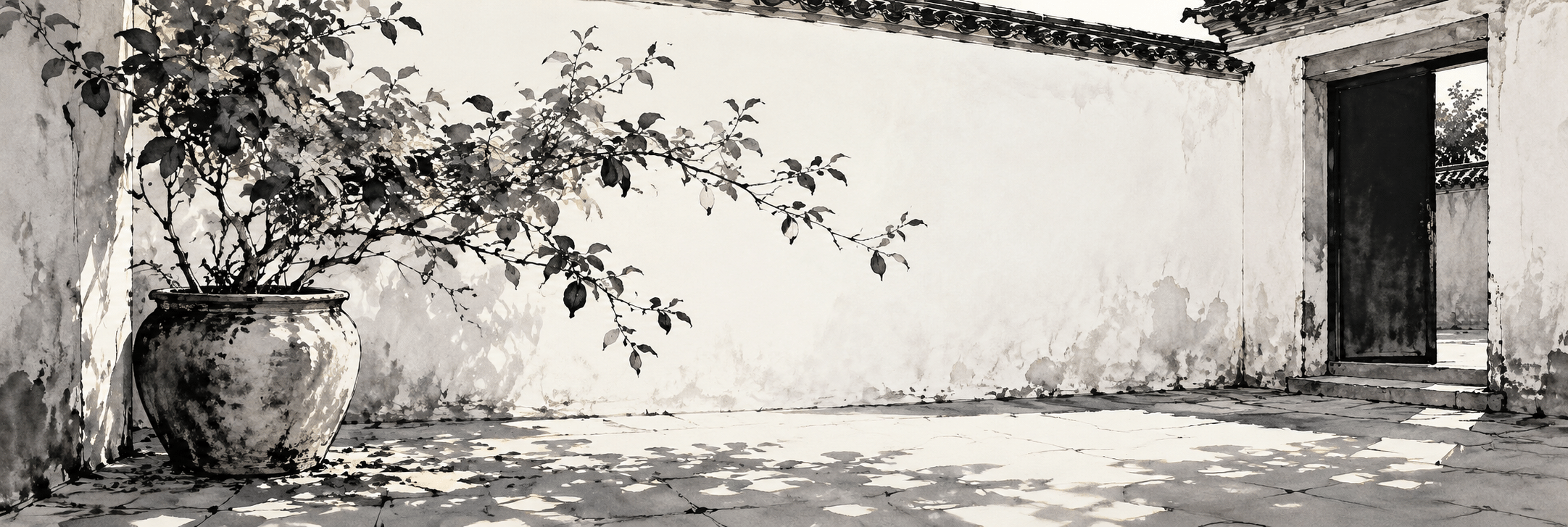
A visual introduction
Select an image for a closer look. Use the thumbnails, arrow keys or a swipe to compare examples. Zoom in to inspect details, or share the image that inspires you.


Creative toolbox · take this style further
Choose an input and a destination. Search sends your words to the chosen site; Copy & open puts them on your clipboard to paste there.
Create with AI
Turn your chosen input into an image prompt or a new creative direction.
ChatGPT
Copy your input and paste it into a ChatGPT conversation or image request.
Copy & open ChatGPT (new tab)Claude · Anthropic
Develop an image prompt or explore the style in a new Claude conversation.
Copy & open Claude · Anthropic (new tab)Midjourney
Paste your input into the Imagine bar on the Create page.
Copy & open Midjourney (new tab)Adobe Firefly
Copy your input, open Firefly, and paste it into the prompt field.
Copy & open Adobe Firefly (new tab)Leonardo.Ai
Copy your input, open Leonardo, and paste it into the generation field.
Copy & open Leonardo.Ai (new tab)Image search
Find visual references. Short, concrete keywords usually work best.
Lexica
Search AI images and prompts using your selected input.
Search with this input Lexica (new tab)Pexels
Search the photo and video library. Short keywords often work best.
Search with this input Pexels (new tab)Pixabay
Search photos, illustrations and other images.
Search with this input Pixabay (new tab)Unsplash
Search photographs using the style name or your own keywords.
Search with this input Unsplash (new tab)Wikimedia Commons
Search photographs, artworks and historical images. Check each file for its source and reuse terms.
Search with this input Wikimedia Commons (new tab)Art & research
Explore artists, collections and the ideas behind a style.
Wikipedia
Search for background reading. A style may not have its own article.
Search with this input Wikipedia (new tab)WikiArt
Copy your input into WikiArt’s search to explore artists and artworks.
Copy & open WikiArt (new tab)Europeana
Paste your keywords into the search to explore European museum, library and archive collections.
Copy & open Europeana (new tab)Inspiration
Discover portfolios and visual ideas from creative communities.
Instagram hashtags
Search a hashtag made from your input: spaces and punctuation are removed. Instagram may require sign-in.
Search with this input Instagram hashtags (new tab)ArtStation
Paste your input into artwork search for concept art, environments, characters and visual development.
Copy & open ArtStation (new tab)Behance
Paste your input into project search for illustration, design and visual storytelling.
Copy & open Behance (new tab)A closer look
Sharp contours, pooled darks, diluted washes and untouched paper can coexist in one image, each carrying a different kind of information.
One medium, many kinds of mark
The Metropolitan Museum of Art’s materials guide describes ink applied with both pen and brush for linear and tonal effects. It also distinguishes several traditional ink types. The practical consequence is simple: ink is not a single uniform black substance, and different formulations and tools can behave differently.
A fine nib can articulate a small edge, while a loaded brush can establish a broad mass quickly. A dry brush may break across the paper texture. Choose the tool for the mark you need instead of assuming that precision always requires a pen and expression always requires a brush.
Plan the light as carefully as the dark
Untouched paper is often the brightest part of the drawing. Establish where it needs to remain before covering the surface with wash. A bright window, reflected edge or gap between leaves can organize an otherwise complex image. Treat those light shapes as positive decisions, not as areas you forgot to finish.
Try a small composition using only white paper, a middle wash and a dark accent. If those three values explain the subject, extra gradations can be added selectively. A drawing with many attractive marks but no clear value hierarchy may become difficult to read at a distance.
Separate line from wash without isolating them
Line can describe a boundary or texture while wash gathers a larger shadow. They need not repeat exactly the same information. A wash may pass behind several objects, with a few lines clarifying the overlaps. Conversely, an open contour can carry a subject without any wash at all.
Test whether the ink remains stable when another wet layer is applied. Paper absorbency also changes the edge of a wash. The British Museum’s materials account notes the relationship between dilution and intensity in ink drawing. Make a small test with the actual materials before relying on a clean edge or transparent overlay.
Let variation serve the subject
For architecture, repeated verticals can establish rhythm while a few broken strokes suggest weathered surfaces. For a plant, changes in pressure can distinguish a slender stem from a broad leaf. For a moving figure, a small number of directional marks may be more convincing than an evenly detailed outline.
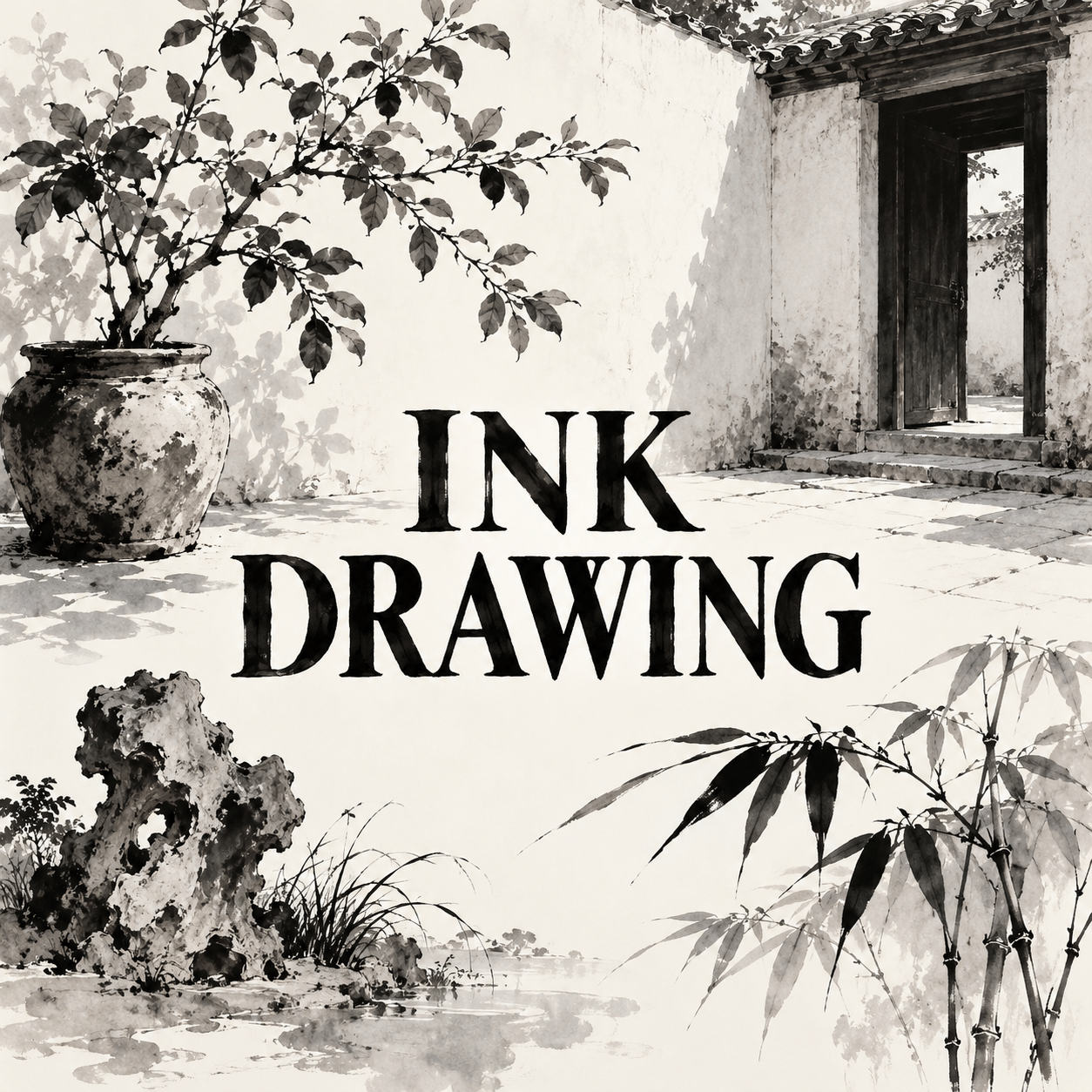
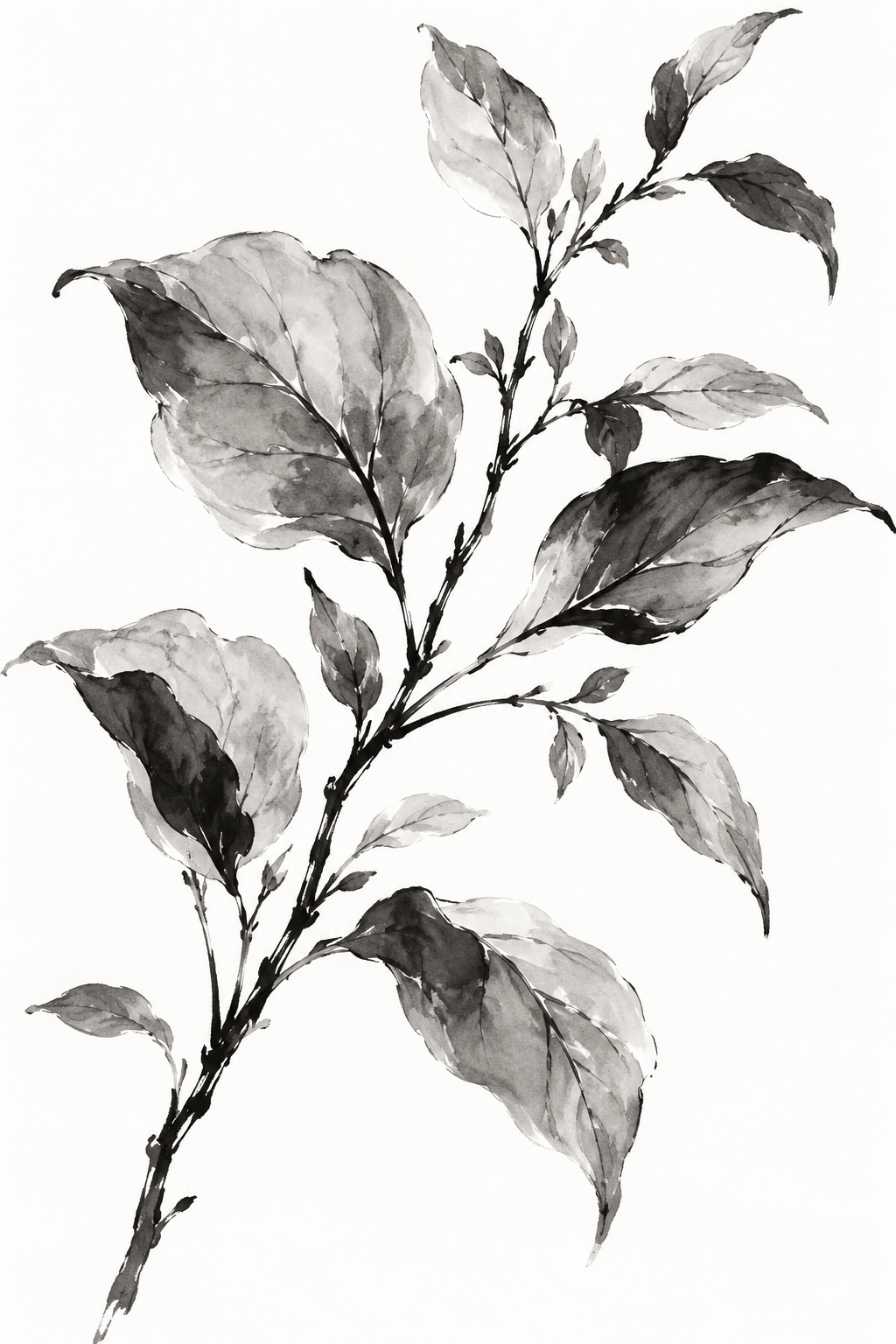
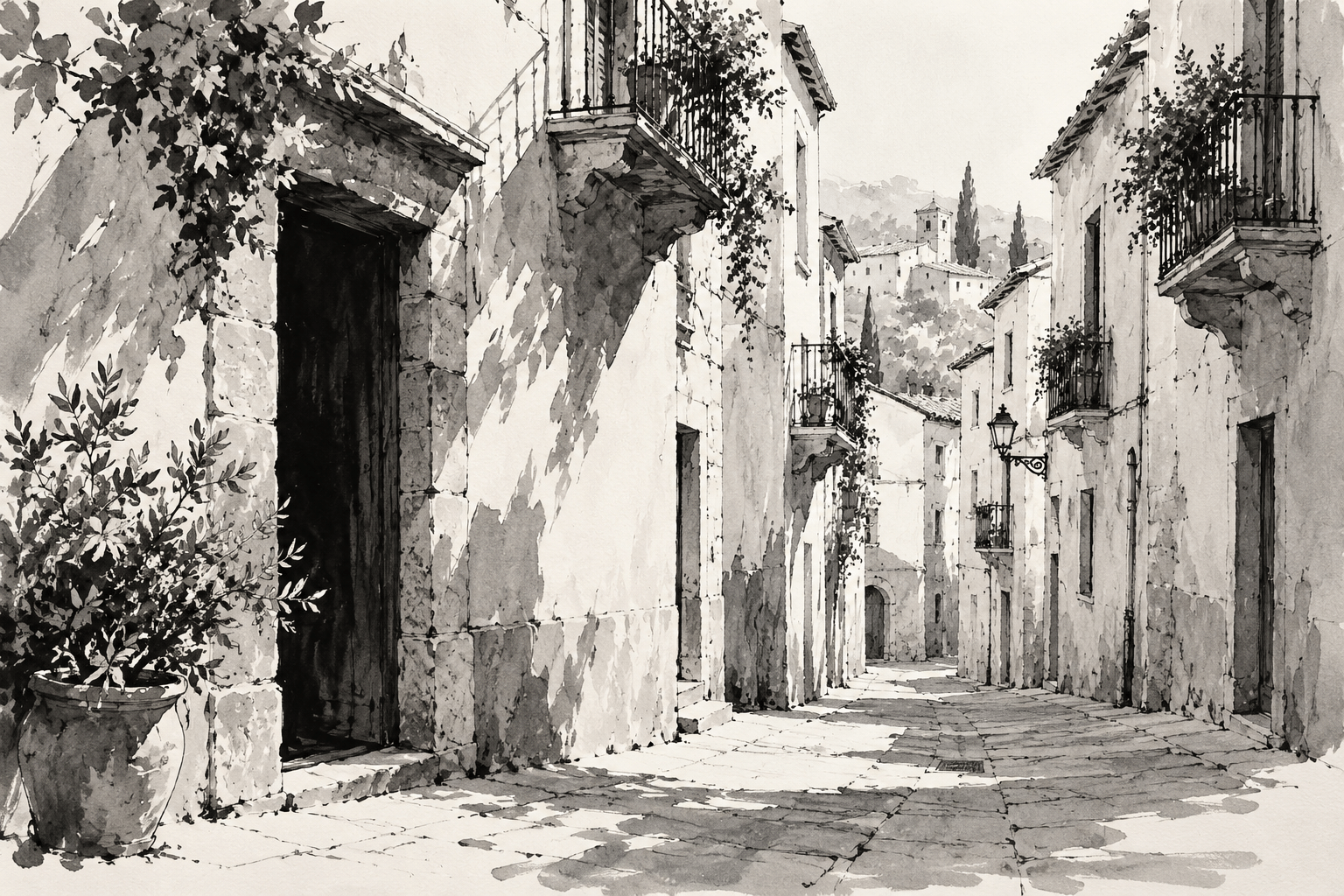
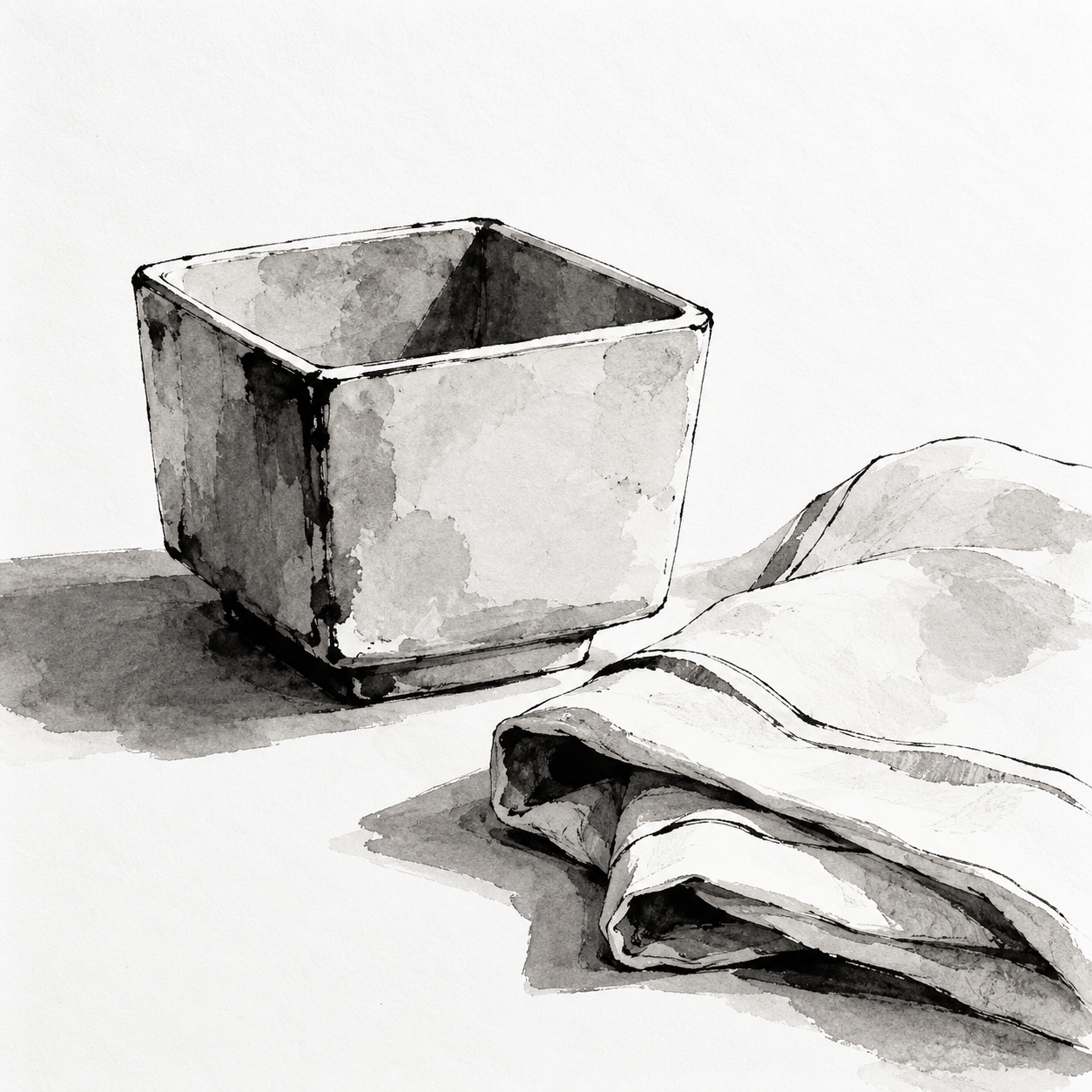
The new gallery contrasts a botanical branch, a quiet street and a still life. These are AI-generated interpretations of ink appearances, not records of particular nibs, recipes or drawing sessions. Their purpose is to demonstrate line-and-wash relationships that a reader can examine and adapt.
Work with commitment and revision
Ink encourages decisive marks, but decisive does not mean hurried. Prepare a light structure when needed, and leave room for a mark to remain slightly irregular. Repeatedly tracing a hesitant contour can make it heavier without making it clearer. A few confidently placed interruptions often describe more than an unbroken fence around every object.
For practice, draw the same cup three times: line only, wash only, then a combination. Compare which information each version carries. Keep the strongest relationship from each rather than combining every detail. Ink drawing becomes richer when its different kinds of mark have distinct jobs.
A small poetic detour
Original words from the AOI studio.
Poetry
What the Ink Leaves
A brush arrives with more than black;
it brings a pause, a weight, a turn.
The page keeps light between the marks,
where quieter edges wait to learn.
One drop becomes a doorway’s shade;
one untouched space lets daylight in.
The prompt workshop
Original creative exercises. These prompts create new illustrations, not documentary evidence.
A branch in ink
Create an original ink-drawing interpretation of a leafy branch, pressure-sensitive strokes, a few diluted grey washes and generous white paper. No invented calligraphy or seal.
Street in line and wash
Create a quiet architectural ink study with clear overlaps, selective fine lines, broad transparent shadow washes and one strong dark doorway. No text or false location claim.
Three values
Create an ink still life of a cup and folded cloth using unmarked paper, one middle wash and a few deep dark accents. Let lines and washes carry different information.
A smile from the studio
Jokes
The ink made a bold statement. The blank paper supplied the necessary pause.