
Archive note: historical claims and artist or artwork associations in this entry have not yet received a full source review.
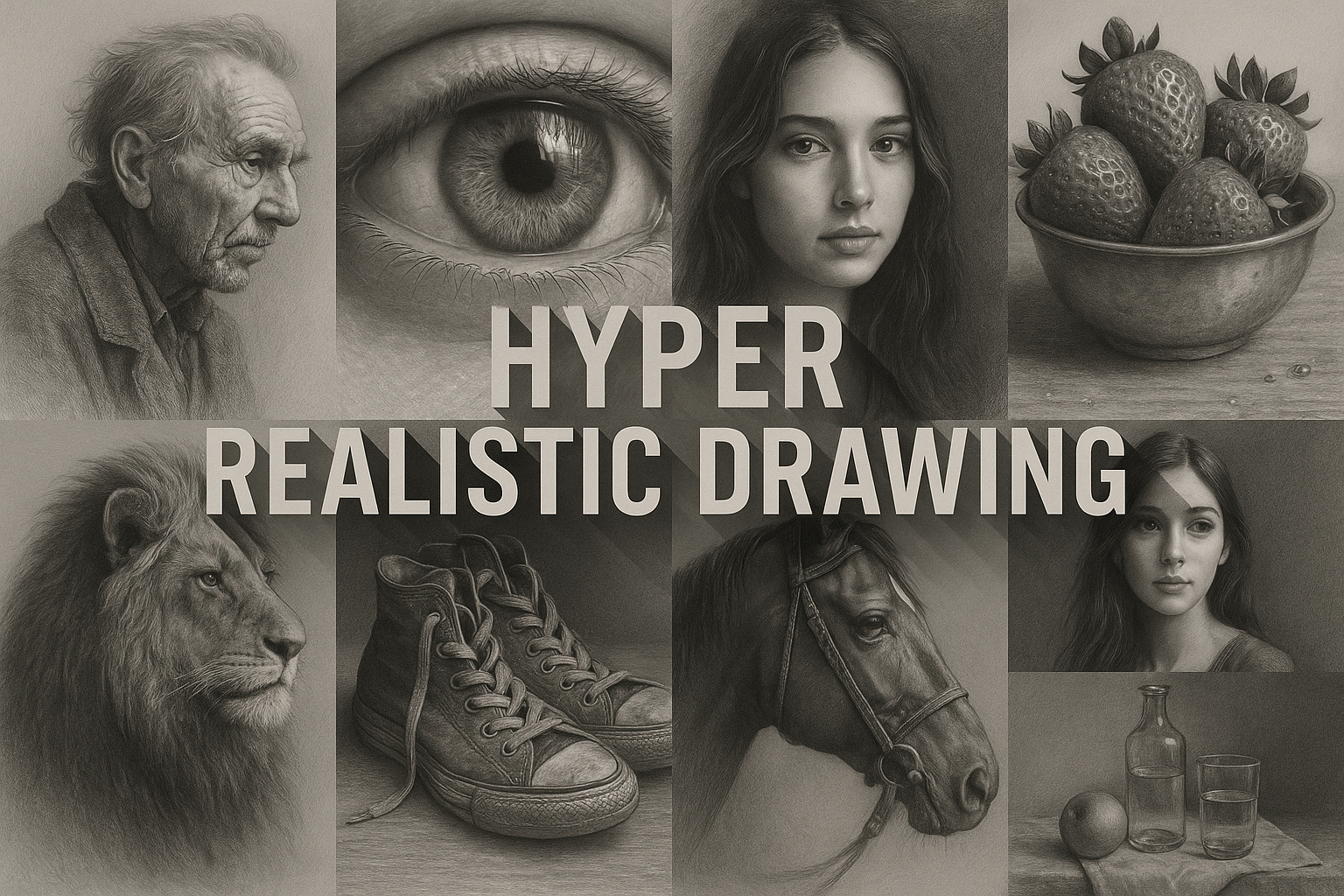
Hyper Realistic Drawing
The art style of Hyper Realistic Drawing is very realistic and detailed. The artist uses a variety of techniques to create the illusion of a realistic image.
AOI thinking about Hyper Realistic Drawing [+_~]-/
Overview and quick facts
Hyper Realistic Drawing is a highly detailed form of art that often uses photographs as a reference point. This type of drawing can take many hours to complete, and the results are often stunningly lifelike.
Can understand it also, as:
Realistic, lifelike, naturalistic, true to life
Categorize it as:
Impressionism, Modernism
Detailed description
In the world of art, there are few styles that are as detailed and lifelike as hyper realistic drawing. This style of art is characterized by its incredibly lifelike qualities, often making it difficult to tell if what you’re looking at is a drawing or a photograph. Hyper realistic drawing often takes hours, or even days, to complete. The level of detail required means that artists have to be extremely patient and have a great deal of skill. Some of the most famous hyper realistic drawings have been created by artists such as Chuck Close, who is known for his large-scale portraits, and Graham Sutherland, whose drawings of landscapes are incredibly detailed. If you’re looking for a style of art that is sure to impress, then hyper realistic drawing is definitely for you.
Archive notes — claims to verify
1. Hyper realistic drawing is a genre of art where the artist strives to create a drawing that looks exactly like a photograph.
2. The term hyper realistic was first coined by American artist Chuck Close in the 1960s.
3. Close is credited with popularizing the genre and helping to make it mainstream.
4. Some of the most famous hyper realistic artists include: Juan Francisco Casas, Dirk Dzimirsky, and Paul Cadden.
5. These artists often use a combination of traditional drawing techniques and digital manipulation to create their work.
6. A lot of hyper realistic drawings can take hundreds of hours to complete.
7. The level of detail in these drawings is often so incredible that it can be hard to tell the difference between the drawing and a photograph.
8. Many people see hyper realistic drawings as a form of escapism, as they provide a way to explore alternate realities or worlds that are incredibly lifelike.
9. Some of the most popular subjects for hyper realistic drawings include: portraits, landscapes, and cityscapes.
10. While the genre has been around for decades, it has seen a resurgence in popularity in recent years thanks to the rise of social media and the internet.
11. Hyper realistic drawings have been featured in a number of high-profile exhibitions, including the Museum of Modern Art in New York and the Tate Modern in London.
12. In addition to being incredibly realistic, many hyper realistic drawings are also incredibly beautiful and visually stunning.
13. Some of the most popular techniques used by hyper realistic artists include: stippling, hatching, and cross-hatching.
14. These techniques are often used in combination with each other to create incredibly detailed and lifelike drawings.
15. Many hyper realistic artists also use reference photographs to help them create their drawings.
16. Some of the most common materials used by hyper realistic artists include: graphite pencils, charcoal, and pastels.
17. Many artists also use digital software programs to help them create their drawings.
18. The level of realism in hyper realistic drawings can often be unsettling or even disturbing to some viewers.
19. Some people believe that hyper realistic drawings are a form of cheating because the artists are not creating their work entirely from scratch.
20. Despite the controversy, hyper realistic drawings continue to be popular and are highly respected by many people in the art world.
Artists and works: references to check
(be aware, can be highly speculative)
Artists (be aware, speculation possible):
1. Leonardo da Vinci (1452-1519) 2. Michelangelo (1475-1564) 3. Raphael (1483-1520) 4. Rembrandt (1606-1669) 5. Caravaggio (1571-1610) 6. Peter Paul Rubens (1577-1640) 7. Diego Velázquez (1599-1660) 8. John Singer Sargent (1856-1925) 9. Andrew Wyeth (1917-2009) 10. Richard Estes (1932- ) 11. Chuck Close (1940- ) 12. Audrey Flack (1931- ) 13. Don Eddy (1943- ) 14. Robert Bechtle (1932- ) 15. John Salt (1948- ) 16. Tom Blackwell (1955- ) 17. Graham Sutherland (1903-1980) 18. Lucian Freud (1922-2011) 19. Francis Bacon (1909-1992) 20. Jenny Saville (1970- ) 21. Kent Bellows (1973-2005) 22. Paul Cézanne (1839-1906) 23. Georges Seurat (1859-1891) 24. Vincent van Gogh (1853-1890) 25. Henri de Toulouse-Lautrec (1864-1901) 26. Pierre-Auguste Renoir (1841-1919) 27. Salvador Dalí (1904-1989) 28. Pablo Picasso (1881-1973) 29. Georgia O’Keeffe (1887-1986) 30. Edward Hopper (1882-1967)
Artworks (be aware, speculation possible)
1. “The Hay Wagon” by Andrew Wyeth (1958) 2. ” Christina’s World” by Andrew Wyeth (1948) 3. “The Madonna and Child” by Michelangelo (1497) 4. “The Last Supper” by Leonardo da Vinci (1498) 5. “The Mona Lisa” by Leonardo da Vinci (1503-1506) 6. “The Birth of Venus” by Sandro Botticelli (1486) 7. “Nighthawks” by Edward Hopper (1942) 8. “American Gothic” by Grant Wood (1930) 9. “The Scream” by Edvard Munch (1895) 10. “The Starry Night” by Vincent van Gogh (1889) 11. “The Persistence of Memory” by Salvador Dali (1931) 12. “The Haystack” by Claude Monet (1891) 13. “The Water Lilies” by Claude Monet (1906) 14. “The Cabinet of Dr. Caligari” by Robert Wiene (1920) 15. “Nude Descending a Staircase, No. 2” by Marcel Duchamp (1912) 16. “Fountain” by Marcel Duchamp (1917) 17. “L’Inconnue de la Seine” by Alphonse Mucha (1896) 18. “The Kiss” by Gustav Klimt (1908) 19. “The Great Wave off Kanagawa” by Katsushika Hokusai (1829-1833) 20. “The Persistence of Memory” by Rene Magritte (1928) 21. “The Treachery of Images” by Rene Magritte (1928-1929) 22. “The Son of Man” by Rene Magritte (1964) 23. “The Disintegration of the Persistence of Memory” by Salvador Dali (1954) 24. “The Swans Reflecting Elephants” by Salvador Dali (1937) 25. “The Temptation of Saint Anthony” by Salvador Dali (1945-1946) 26. “The Burning Giraffe” by Salvador Dali (1937) 27. “The Metamorphosis of Narcissus” by Salvador Dali (1937) 28. “The Face of War” by Salvador Dali (1940) 29. “Soft Watches, Temptation of Saint Anthony” by Salvador Dali (1933) 30. “The Elephants” by Salvador Dali (1948)
Epoch
The time period of the art style Hyper Realistic Drawing is the 1970s.
Creative tools and further exploration
Search results are starting points for exploration, not evidence for the historical claims or attributions in this legacy entry.