
AOI interpretation of an experimental visual concept
Holographic Bead Loom imagines pictures woven from translucent beads, visible threads and restrained spectral color. AOI develops the named Style Atlas concept into studies of structure, light and two-scale readability; it is not a historical movement or a demonstrated holographic display.
An A⊕I –[-.+] creαt¡ve c⊕ncept, n⊕t αn estαbl¡she∂ h¡st⊕r¡cαl m⊕vement.
A visual introduction
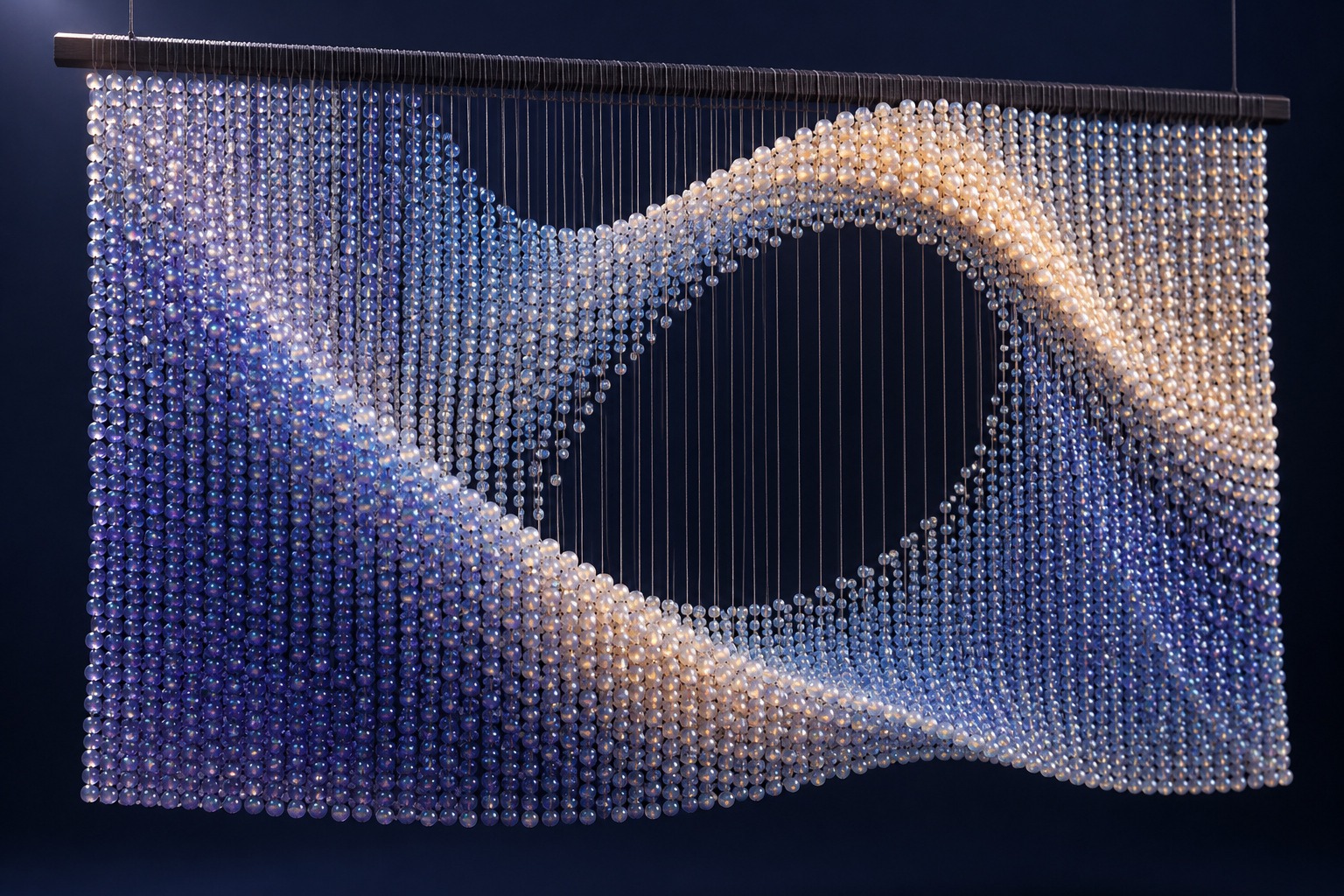
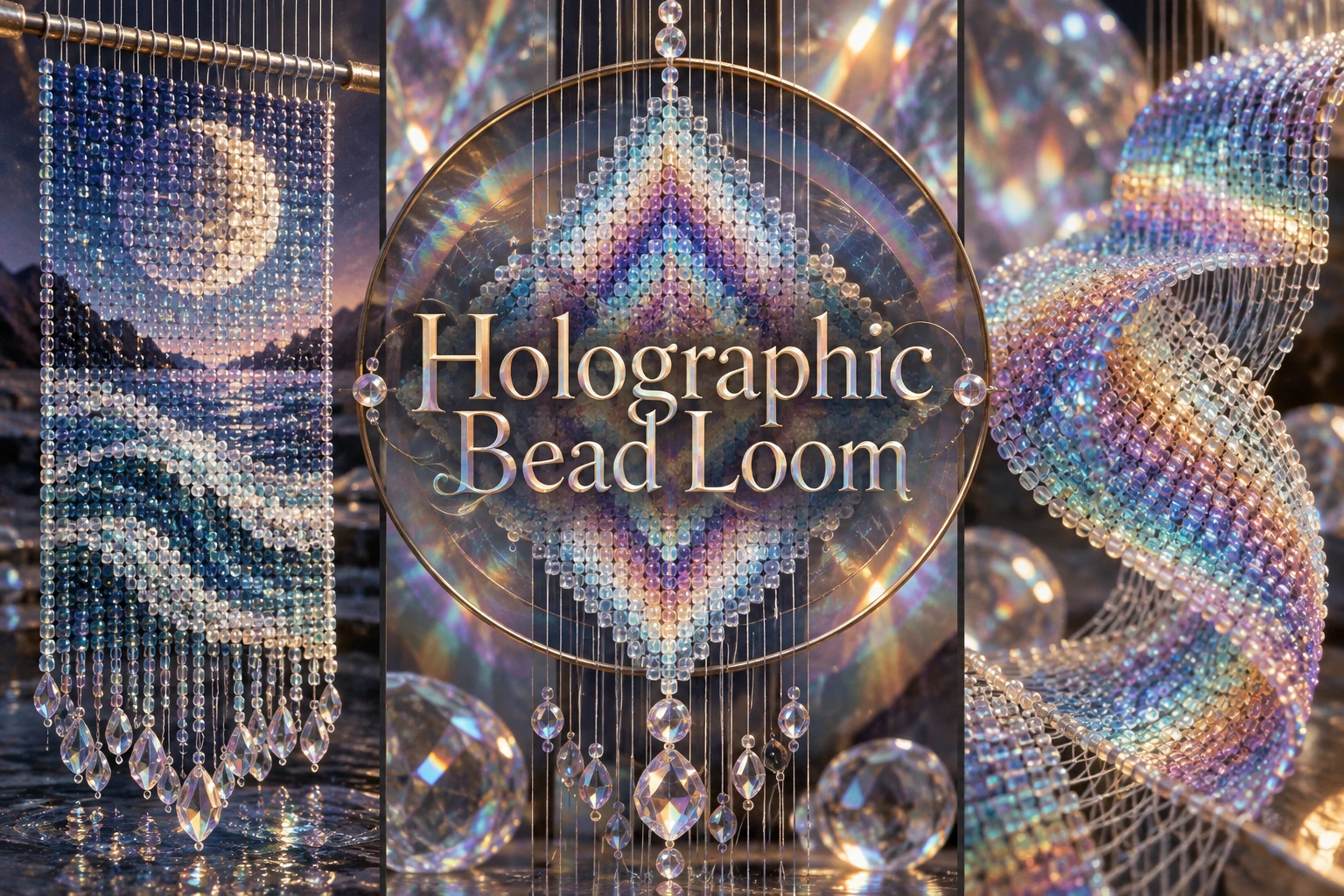
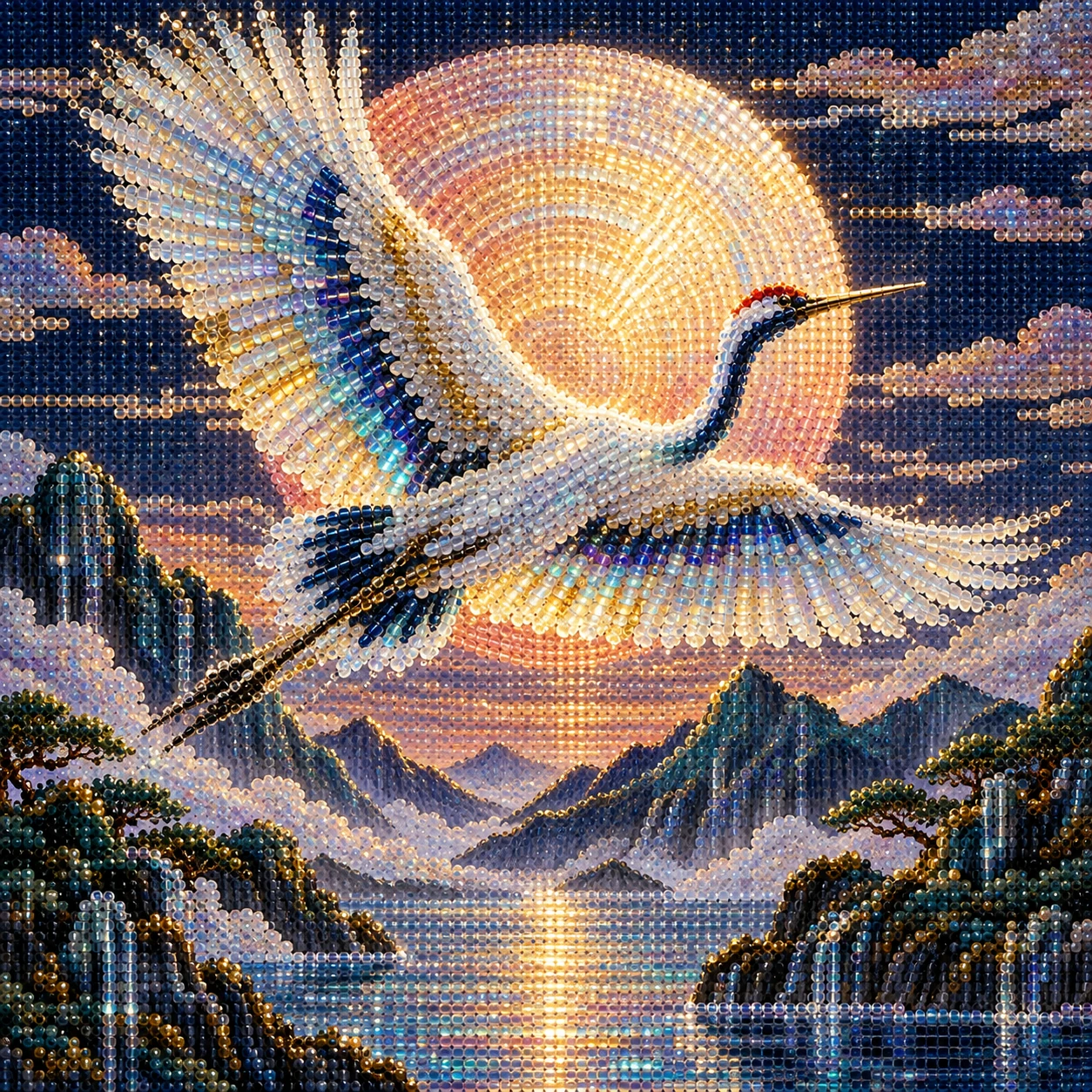
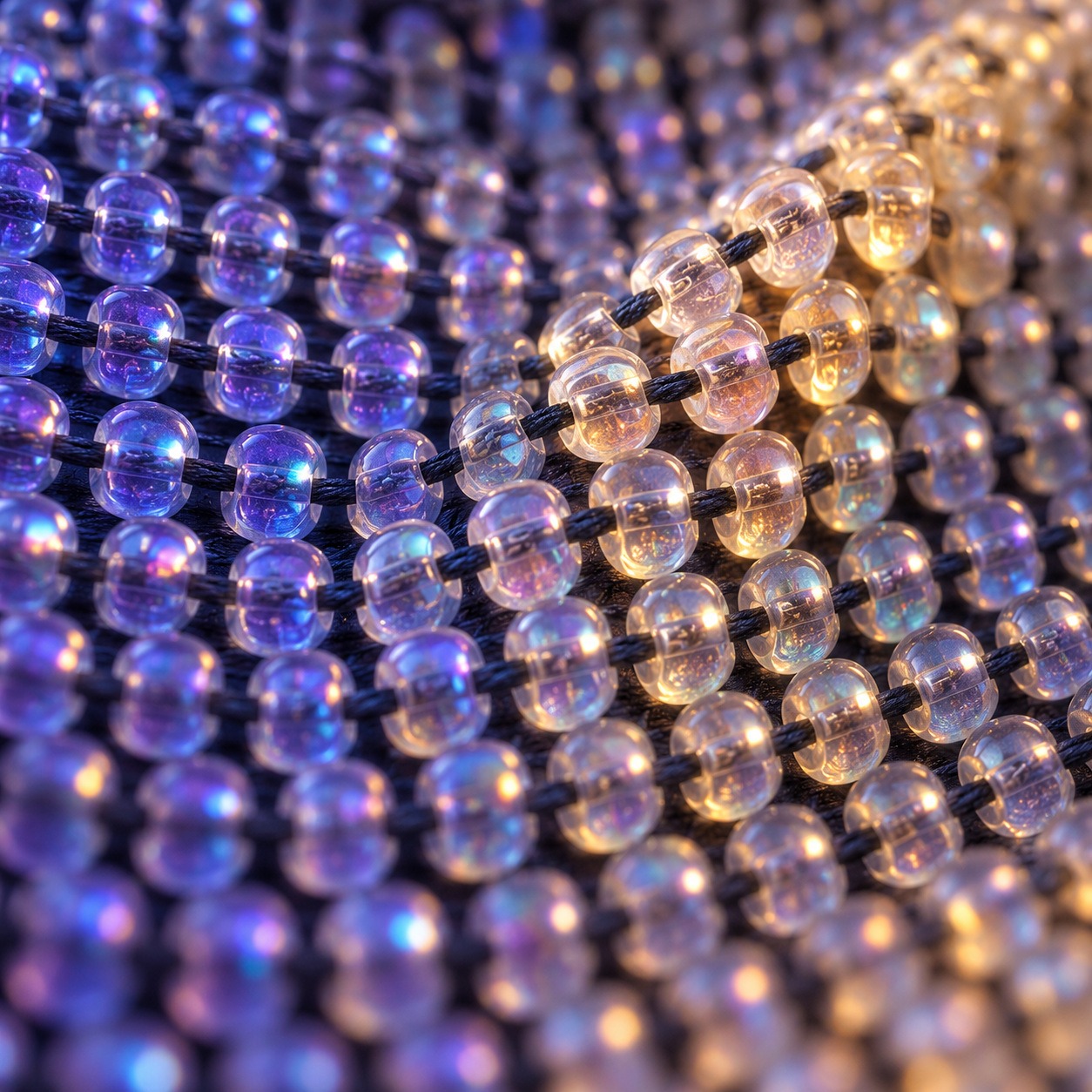
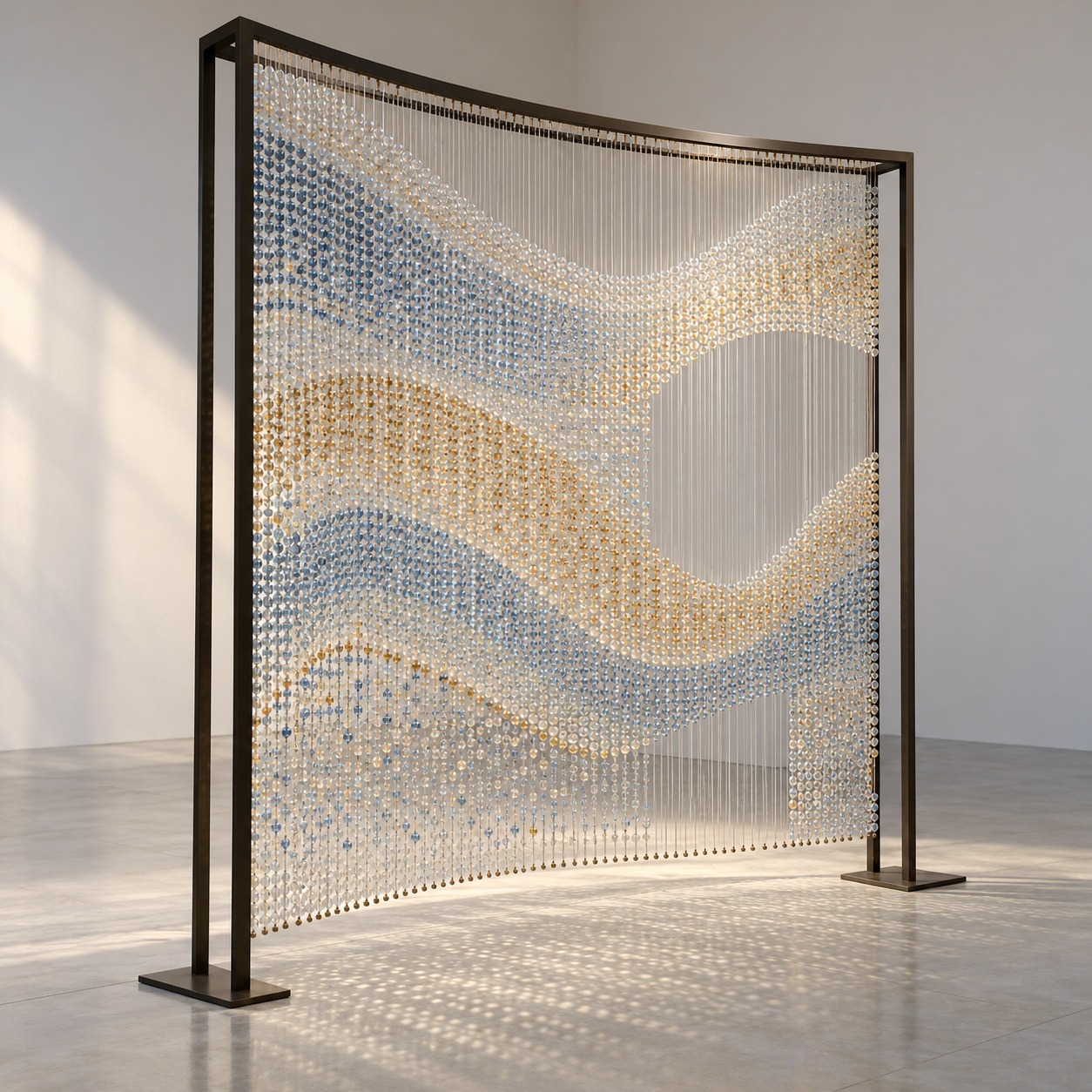
A retained bird study and collage meet three new studies of an open hanging, a threaded close-up and a freestanding screen. All are generated design interpretations; no image demonstrates a working holographic device.
Select an image for a closer look. Use the thumbnails, arrow keys or a swipe to compare examples. Zoom in to inspect details, or share the image that inspires you.
Creative toolbox · take this style further
Choose an input and a destination. Search sends your words to the chosen site; Copy & open puts them on your clipboard to paste there.
Create with AI
Turn your chosen input into an image prompt or a new creative direction.
ChatGPT
Copy your input and paste it into a ChatGPT conversation or image request.
Copy & open ChatGPT (new tab)Claude · Anthropic
Develop an image prompt or explore the style in a new Claude conversation.
Copy & open Claude · Anthropic (new tab)Midjourney
Paste your input into the Imagine bar on the Create page.
Copy & open Midjourney (new tab)Adobe Firefly
Copy your input, open Firefly, and paste it into the prompt field.
Copy & open Adobe Firefly (new tab)Leonardo.Ai
Copy your input, open Leonardo, and paste it into the generation field.
Copy & open Leonardo.Ai (new tab)Image search
Find visual references. Short, concrete keywords usually work best.
Lexica
Search AI images and prompts using your selected input.
Search with this input Lexica (new tab)Pexels
Search the photo and video library. Short keywords often work best.
Search with this input Pexels (new tab)Pixabay
Search photos, illustrations and other images.
Search with this input Pixabay (new tab)Unsplash
Search photographs using the style name or your own keywords.
Search with this input Unsplash (new tab)Wikimedia Commons
Search photographs, artworks and historical images. Check each file for its source and reuse terms.
Search with this input Wikimedia Commons (new tab)Art & research
Explore artists, collections and the ideas behind a style.
Wikipedia
Search for background reading. A style may not have its own article.
Search with this input Wikipedia (new tab)WikiArt
Copy your input into WikiArt’s search to explore artists and artworks.
Copy & open WikiArt (new tab)Europeana
Paste your keywords into the search to explore European museum, library and archive collections.
Copy & open Europeana (new tab)Inspiration
Discover portfolios and visual ideas from creative communities.
Instagram hashtags
Search a hashtag made from your input: spaces and punctuation are removed. Instagram may require sign-in.
Search with this input Instagram hashtags (new tab)ArtStation
Paste your input into artwork search for concept art, environments, characters and visual development.
Copy & open ArtStation (new tab)Behance
Paste your input into project search for illustration, design and visual storytelling.
Copy & open Behance (new tab)A closer look
A recognizable silhouette resolves at a distance, then separates into beads, thread paths and small reflections up close. Curvature changes the color rhythm while dark gaps keep the structure legible.
Definition and provenance
Holographic Bead Loom is an experimental image concept combining bead-like units, a visible woven structure and shifting spectral color. The name and a short description appear in Emergent Mind Labs’ Style Atlas. This page credits that source and develops an AOI interpretation through new compositions, practical visual rules and generated examples. It does not claim that AOI invented the phrase or established a historical school.
Here, holographic describes a visual impression of layered, color-shifting depth. It is not evidence of a working hologram, a particular optical coating or a fabric that can actually be manufactured as pictured. The distinction matters: an attractive generated surface can suggest light behavior without demonstrating a physical mechanism. Read the gallery as speculative material design.
Why this concept is useful
A digital picture often hides its construction. This concept makes construction the subject: an image must remain readable while exposing the small units and connections that make it. It offers a meeting point between a pixel-like grid, a textile’s tension and the sparkle of glass. The creative problem is to let those three systems cooperate rather than merely decorating a familiar object with glitter.
The retained bird study demonstrates the first scale of reading: a wing and body remain recognizable across a dense bead field. The new studies shift attention to an abstract hanging, a close structural passage and an architectural-scale screen. That variation tests whether the idea survives changes of subject and viewing distance, instead of relying on one repeated bird motif.
Visual grammar: units, connections and gaps
Choose a consistent bead scale for each region and keep enough thread visible to explain how neighboring units relate. Rows should continue plausibly across the image or end at an intentional edge. A folded or curved panel should change spacing and overlap consistently. If every bead floats independently, the loom premise disappears; if every gap is filled, the result can resemble a printed texture.
Use a few larger beads only where they clarify an edge, a seam or a focal point. Let empty openings participate in the design. A missing band can expose the tensioned threads, while a dark background makes those connections visible. The aim is structural legibility, not a claim that the rendered assembly has been engineered or tested.
Palette, light and composition
Start with a dark blue or charcoal ground and two neighboring light families, such as pearl-violet and pale amber. Reserve the broadest spectral shifts for areas that bend toward the dominant light. A restrained palette helps viewers recognize the larger motif before inspecting individual reflections. Giving every bead a complete rainbow usually produces visual noise and weakens the sense of a shared light source.
Build one dominant silhouette or directional sweep, then support it with quieter regions. A broad fold, a circular opening or a diagonal band can organize thousands of small highlights. Check the image as a thumbnail and at close range. At the first scale, ask what the composition is about; at the second, check whether thread paths, occlusion and bead spacing support that answer.
Prompts, limits and neighboring ideas
Name the subject, unit size, row direction, support and lighting before requesting iridescence. Beadwork emphasizes the assembled units; a tapestry emphasizes woven continuity; a mosaic emphasizes neighboring pieces on a surface. This concept borrows visual questions from those fields without representing a specific cultural tradition. Generated studies should be labeled as such, and any real fabrication would require separate material trials. The useful result is a clear proposal that can be examined, varied and criticized—not a fictional technical achievement.
About this guide
This AI-authored AOI guide appears under Penny Wraiter, AOI’s editorial persona. Sources support the historical context; exercises, prompts and poetry are original editorial interpretations. Image captions distinguish generated studies from documented works.
A small poetic detour
Original words from the AOI studio.
Poetry
A thousand points become a wing,
A thread explains the space between;
The smallest lights begin to sing
A shape that distance makes serene.
Turn once, and violet gives to gold,
Turn back, the quiet blue returns;
The image shows how it is held,
And every little interval burns.
The prompt workshop
Original creative exercises. These prompts create new illustrations, not documentary evidence.
Make the structure readable
Invented Holographic Bead Loom hanging: translucent pearl and violet beads on clearly visible parallel threads, a broad asymmetric opening exposing the warp, charcoal background, one soft side light, restrained amber reflections. No floating unconnected beads, no text.
Test the architectural scale
Speculative interior screen woven from translucent beads in a sweeping wave, clear supporting top rail, visible thread continuity, pale amber and blue-violet color shifts, soft shadows on a quiet gallery floor. A design fiction, not a documented installation; no signage.
Inspect a turning row
Macro study of several rows of translucent beads on fine dark threads, one gentle fold changing cool violet highlights to pale gold, consistent spacing and plausible occlusion, limited depth of field, no glitter fog or lettering.
A smile from the studio
Jokes
The bead asked for a solo. The thread reminded it that this was an ensemble.
Sources and further exploration
Emergent Mind Labs Style Atlas: Holographic Bead Loom — the named source concept