
AOI creative concept · Botanical structures
Join two invented plant textures along a single exposed seam, treating that seam as a contour through a landscape.
An AOI creative concept, not an established historical movement.
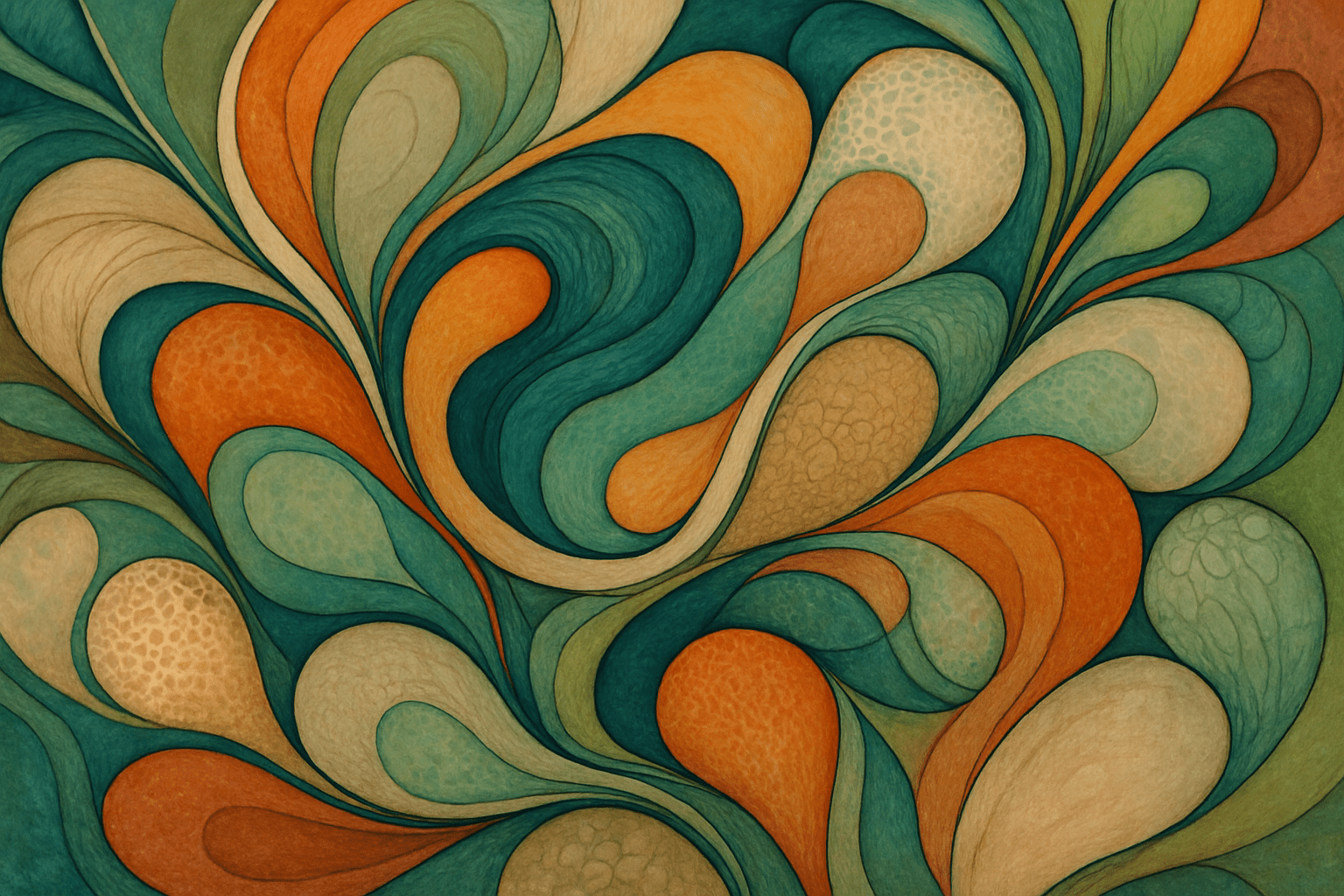
A closer look
Bark umber, pale sage and clay pink; rough and smooth organic surfaces. The focal scene: two contrasting plant-like surfaces joined along an exposed seam.
A constructed organic language
Join two invented plant textures along a single exposed seam, treating that seam as a contour through a landscape. Smooth bark may meet broad leaf surface, but the join must remain visibly constructed rather than presented as a real botanical specimen.
Compose the main relationship
Place a rounded bark-like mass against a pale veined surface. Run the join diagonally upward and let small stitch-like marks follow it at irregular intervals. Keep a shallow depth of field near the seam and simplify the outer areas. A tiny detached fragment nearby can reveal the model's scale without becoming a second focal point.
Keep the structure legible
If the two textures blend seamlessly, the central decision disappears. Preserve the contrast and make the join explicit. Do not attach species names or imply that this imaginary graft would function biologically; its interest is the negotiated boundary.
Technique notes
Stretch the seam into a winding river through a tabletop terrain, with the two textures remaining distinct on either bank.
When prompting an image model, spell out the rule and visible relationships. The invented style name alone is not a reliable instruction. Compare outputs against the critique above and revise the specific failed relationship.
The prompt workshop
Original creative exercises. These prompts create new illustrations, not documentary evidence.
Start with the defining rule
Create an original illustration of two contrasting plant-like surfaces joined along an exposed seam. Join two invented plant textures along a single exposed seam, treating that seam as a contour through a landscape. Smooth bark may meet broad leaf surface, but the join must remain visibly constructed rather than presented as a real botanical specimen. Use bark umber, pale sage and clay pink; rough and smooth organic surfaces. Keep the composition readable, with a clear focal area and quiet surrounding space. No lettering, signatures or watermark.
Build the fuller composition
Create an original Graftline Topographies composition. Place a rounded bark-like mass against a pale veined surface. Run the join diagonally upward and let small stitch-like marks follow it at irregular intervals. Keep a shallow depth of field near the seam and simplify the outer areas. A tiny detached fragment nearby can reveal the model's scale without becoming a second focal point. Use bark umber, pale sage and clay pink; rough and smooth organic surfaces. Preserve the defining constraint: Join two invented plant textures along a single exposed seam, treating that seam as a contour through a landscape. Avoid decorative clutter, readable text and watermarks.
Try a deliberate variation
Create an experimental illustration based on this rule: Join two invented plant textures along a single exposed seam, treating that seam as a contour through a landscape. Smooth bark may meet broad leaf surface, but the join must remain visibly constructed rather than presented as a real botanical specimen. Variation: Stretch the seam into a winding river through a tabletop terrain, with the two textures remaining distinct on either bank. Use bark umber, pale sage and clay pink; rough and smooth organic surfaces. Make the changed relationship unmistakable while keeping supporting details restrained. No captions, signatures or watermark.
Look closer
Explore the image gallery
Select an image to enlarge it. Browse with the arrows, and press Escape to return.
Your next inspiration
Discover another art style
Follow a visual thread to the next subject.