
Drawing subject and practice
Learn to draw flowers through their growth, overlapping forms and changing gestures. Explore line, value, colour and composition while distinguishing expressive flower studies from scientific botanical illustration.
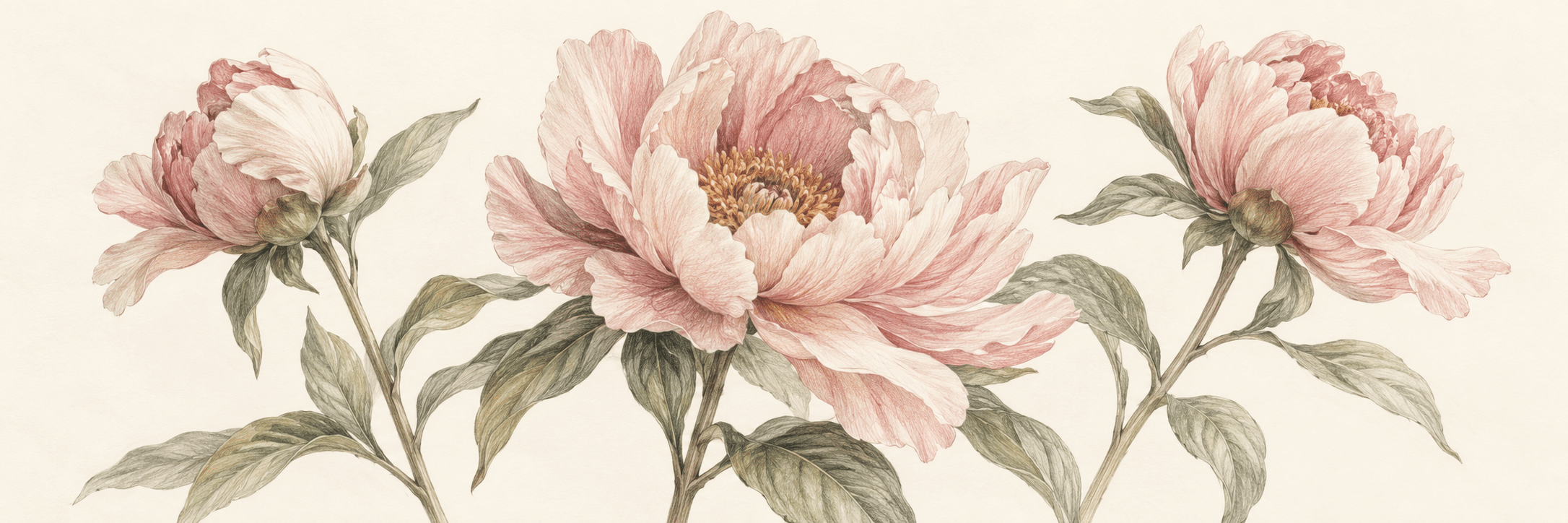
A visual introduction
Select an image for a closer look. Use the thumbnails, arrow keys or a swipe to compare examples. Zoom in to inspect details, or share the image that inspires you.
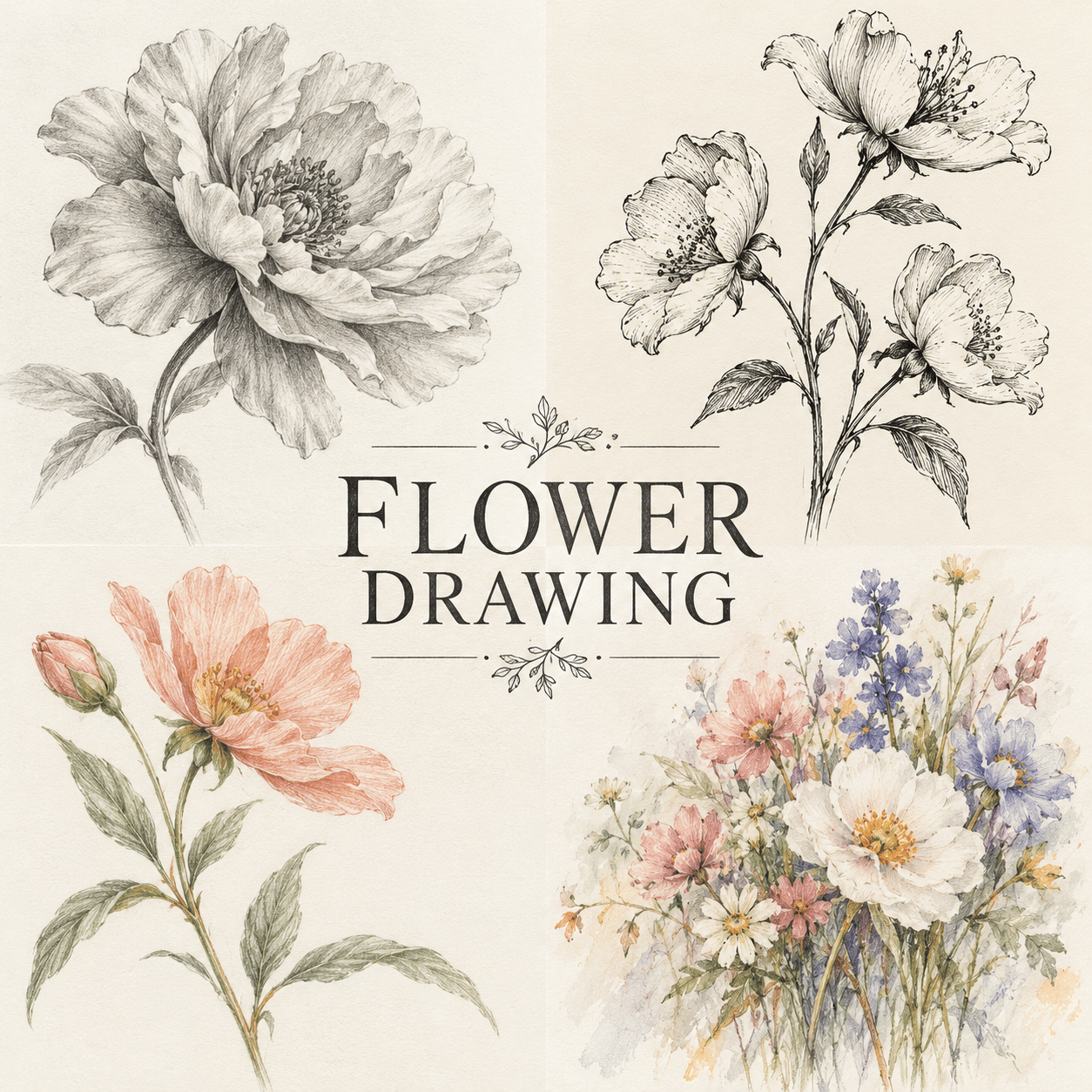
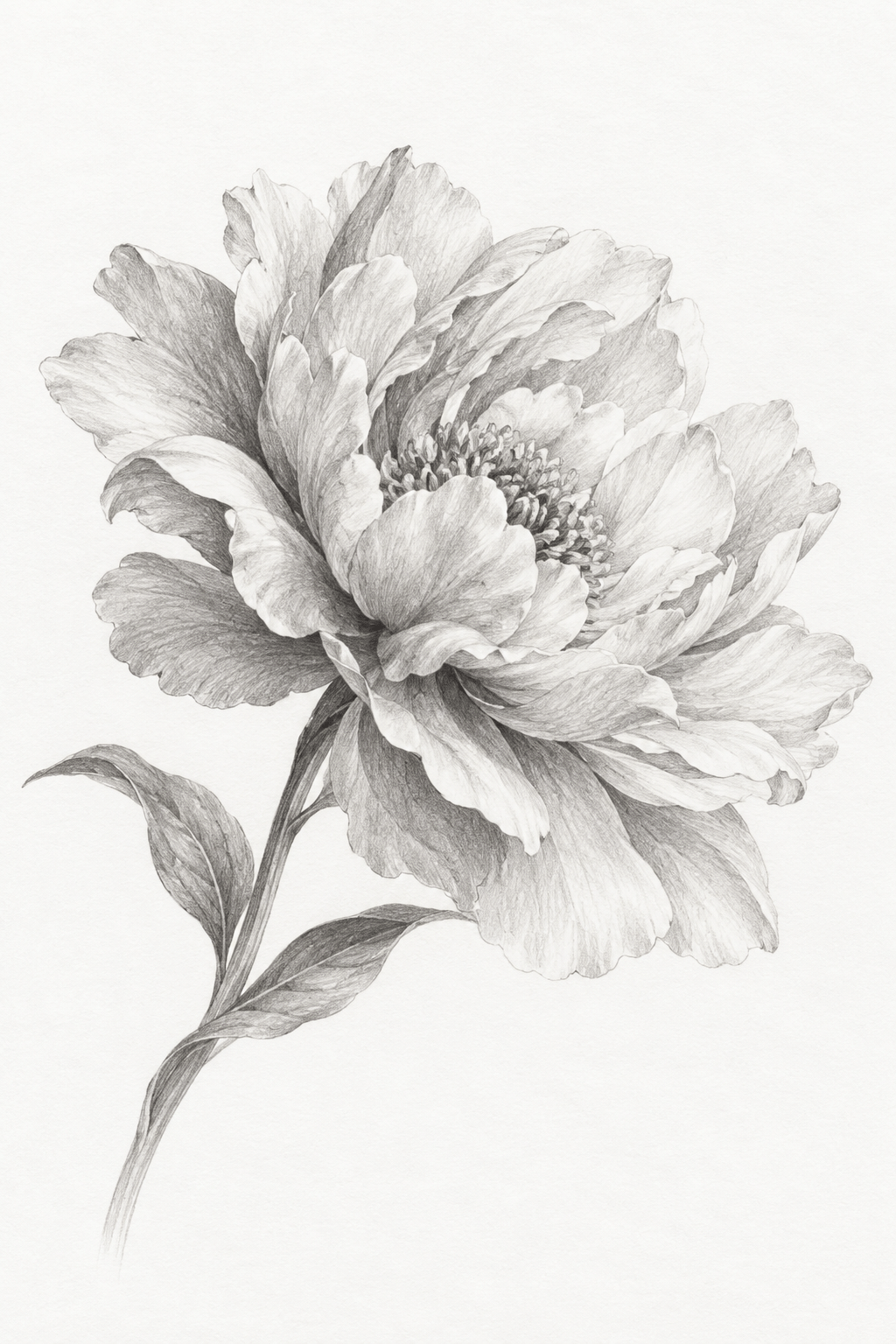
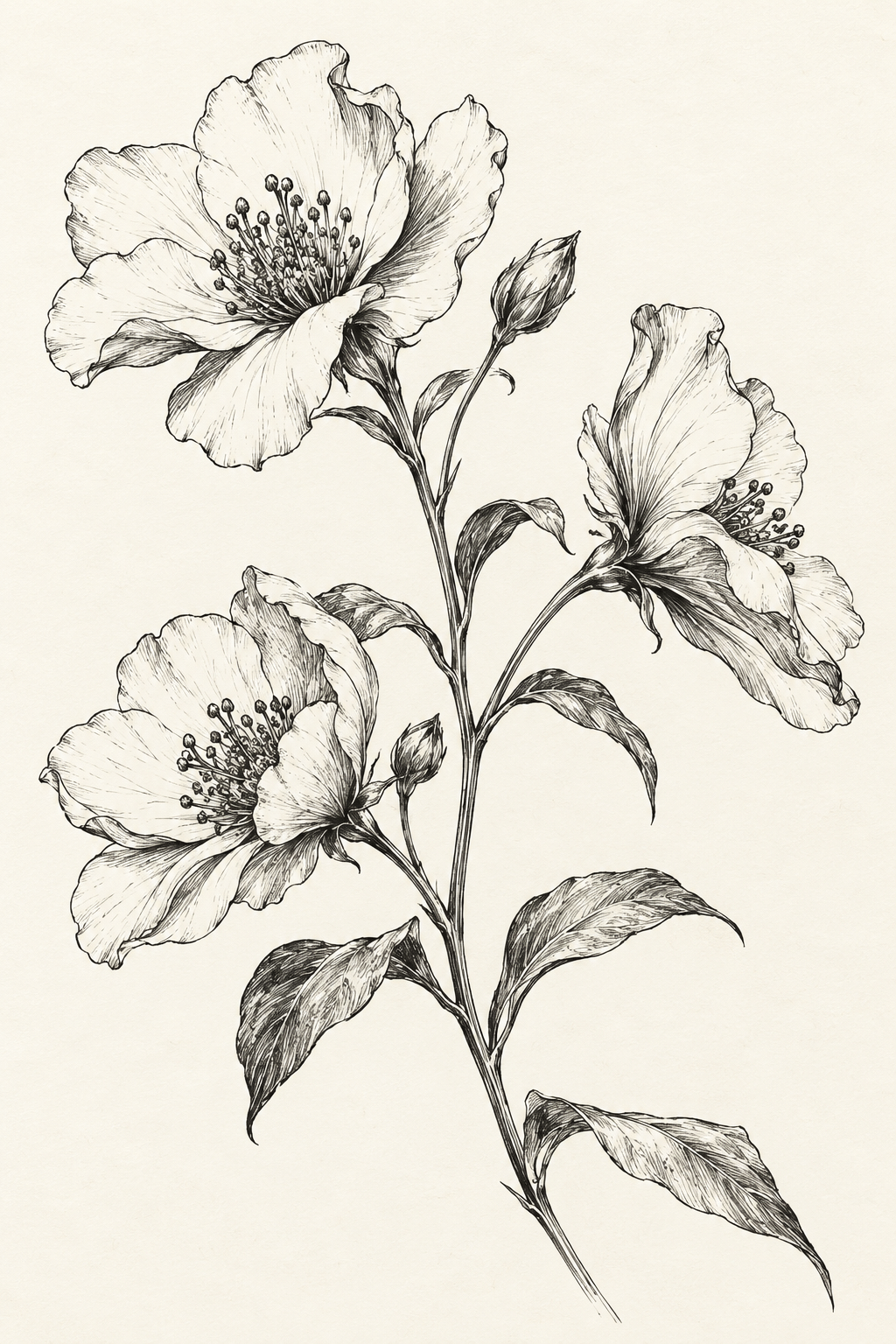
Creative toolbox · take this style further
Choose an input and a destination. Search sends your words to the chosen site; Copy & open puts them on your clipboard to paste there.
Create with AI
Turn your chosen input into an image prompt or a new creative direction.
ChatGPT
Copy your input and paste it into a ChatGPT conversation or image request.
Copy & open ChatGPT (new tab)Claude · Anthropic
Develop an image prompt or explore the style in a new Claude conversation.
Copy & open Claude · Anthropic (new tab)Midjourney
Paste your input into the Imagine bar on the Create page.
Copy & open Midjourney (new tab)Adobe Firefly
Copy your input, open Firefly, and paste it into the prompt field.
Copy & open Adobe Firefly (new tab)Leonardo.Ai
Copy your input, open Leonardo, and paste it into the generation field.
Copy & open Leonardo.Ai (new tab)Image search
Find visual references. Short, concrete keywords usually work best.
Lexica
Search AI images and prompts using your selected input.
Search with this input Lexica (new tab)Pexels
Search the photo and video library. Short keywords often work best.
Search with this input Pexels (new tab)Pixabay
Search photos, illustrations and other images.
Search with this input Pixabay (new tab)Unsplash
Search photographs using the style name or your own keywords.
Search with this input Unsplash (new tab)Wikimedia Commons
Search photographs, artworks and historical images. Check each file for its source and reuse terms.
Search with this input Wikimedia Commons (new tab)Art & research
Explore artists, collections and the ideas behind a style.
Wikipedia
Search for background reading. A style may not have its own article.
Search with this input Wikipedia (new tab)WikiArt
Copy your input into WikiArt’s search to explore artists and artworks.
Copy & open WikiArt (new tab)Europeana
Paste your keywords into the search to explore European museum, library and archive collections.
Copy & open Europeana (new tab)Inspiration
Discover portfolios and visual ideas from creative communities.
Instagram hashtags
Search a hashtag made from your input: spaces and punctuation are removed. Instagram may require sign-in.
Search with this input Instagram hashtags (new tab)ArtStation
Paste your input into artwork search for concept art, environments, characters and visual development.
Copy & open ArtStation (new tab)Behance
Paste your input into project search for illustration, design and visual storytelling.
Copy & open Behance (new tab)A closer look
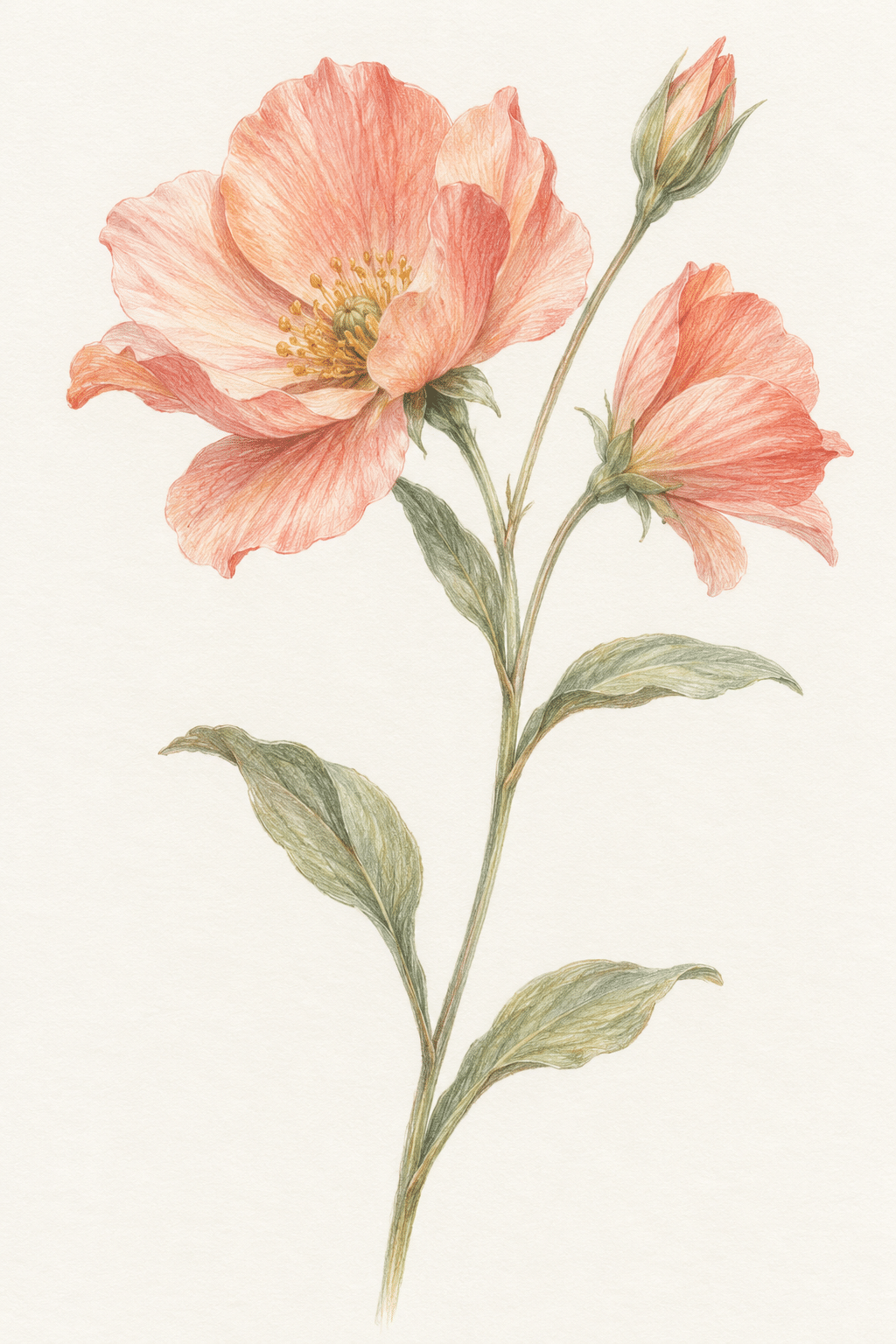
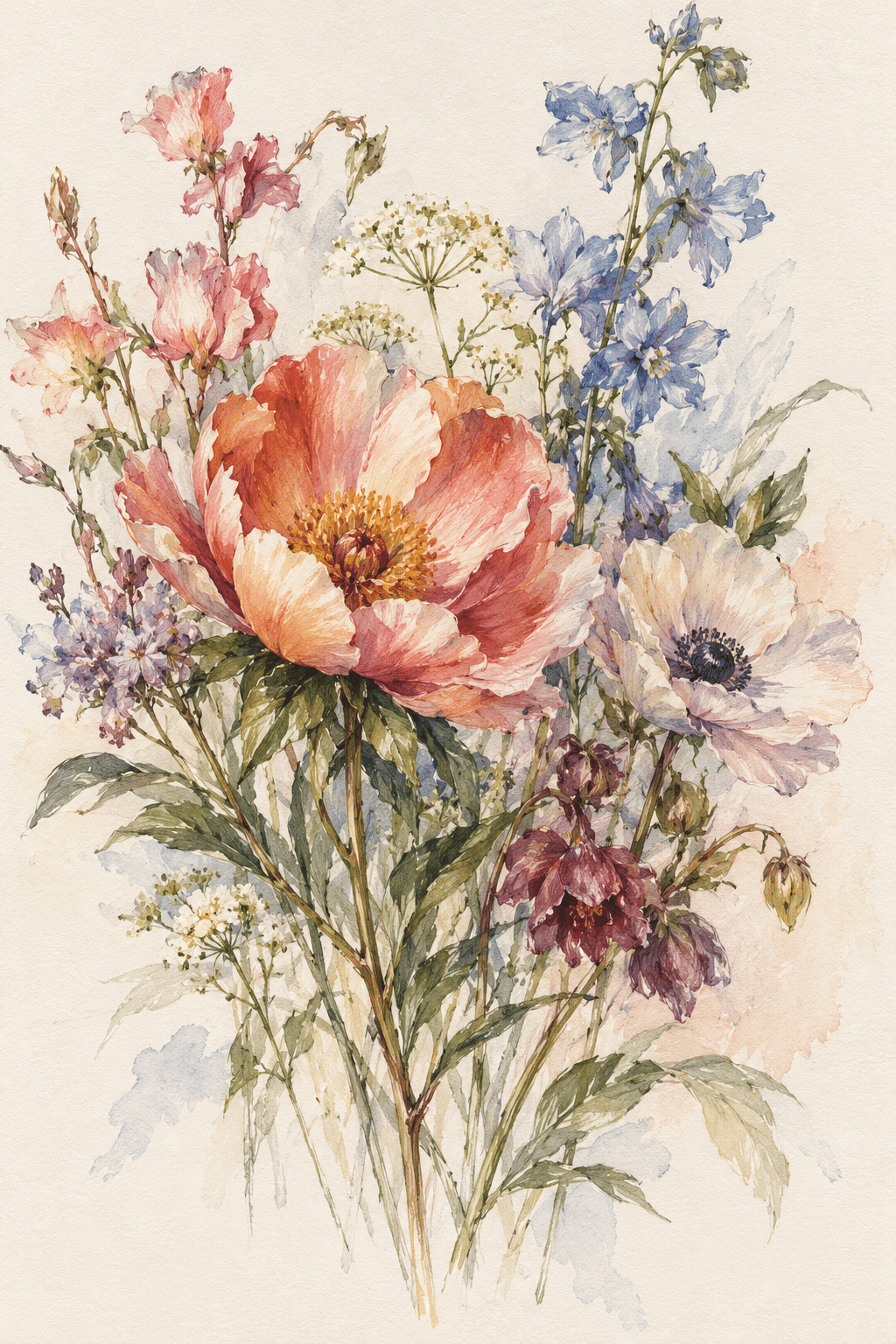
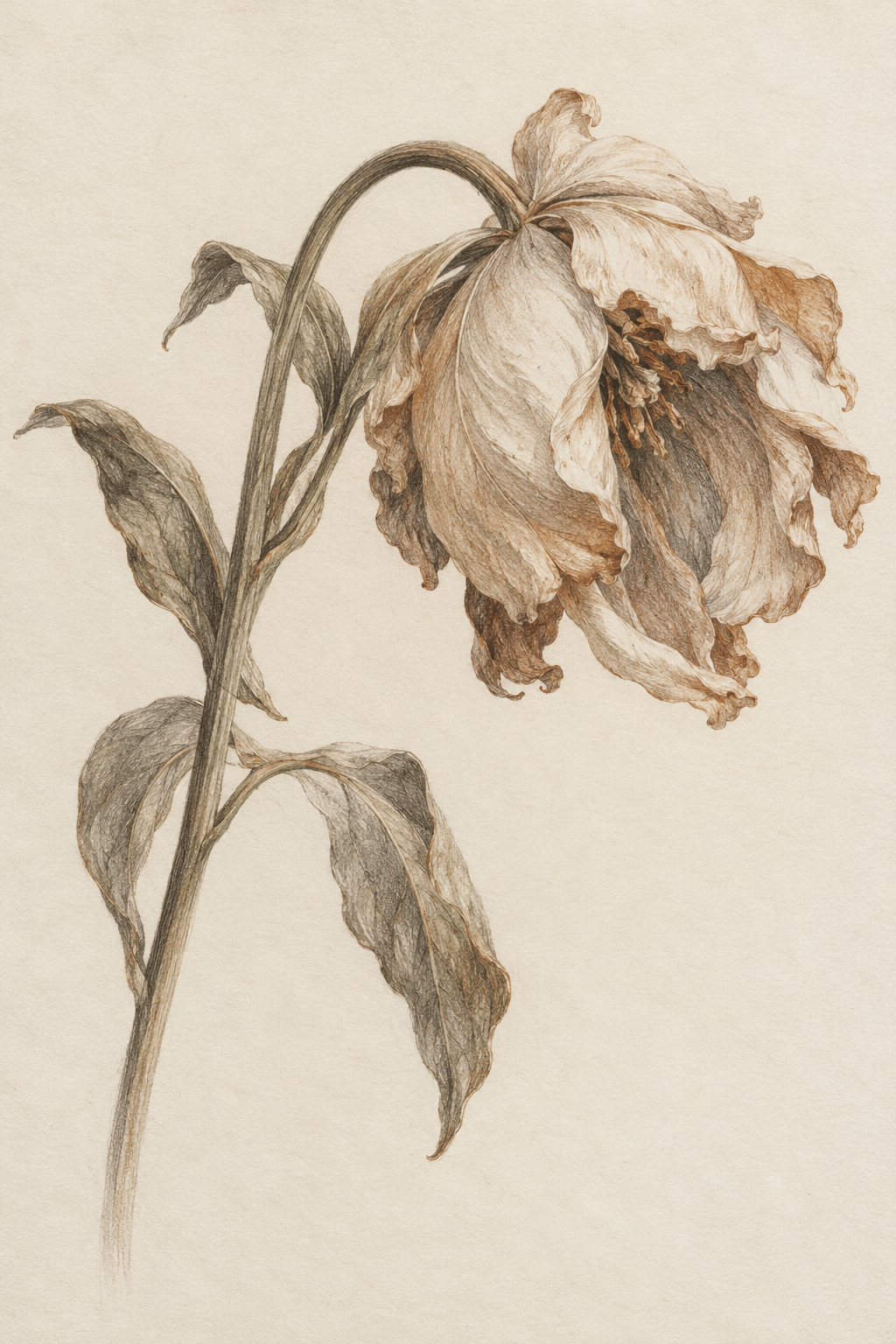
Stems establish movement; blossoms turn in space; petals overlap around a centre; leaves attach with purpose; selective edges and values describe delicate surfaces; negative spaces keep the arrangement readable.
A subject with many possible purposes
Flower drawing includes quick observations, decorative designs, expressive studies and carefully researched botanical illustration. These purposes overlap but are not identical. A drawing can be beautiful and useful without claiming to identify a species, while a scientific plate must meet standards that go beyond an appealing resemblance.
Kew describes botanical illustration as a collaboration between artist and scientist, involving close examination, measurement and choices about the details needed for a reliable record. This article uses that respect for observation while offering broader artistic exercises. The AI-generated gallery is illustrative; it is not a set of verified botanical plates or a guide to plant identification.
Begin with growth and direction
Before drawing individual petals, find the main stem’s movement and the angle of each flower head. Think of a blossom as a form turning toward or away from you. A simple oval can locate its plane, while a central axis helps establish depth. This avoids the common habit of drawing every flower as a flat circle facing the viewer.
Look at where leaves join the stem and how smaller branches divide. Those relationships give a plant its character. The Royal Horticultural Society recommends observing open flowers whose parts can be seen clearly when learning their structure. For an artistic study, choose a specimen that lets you understand one relationship well rather than trying to include every possible detail.
Petals are overlapping surfaces
Petals have edges, folds, thickness and changing orientation. Draw the near and far sides differently. A broad visible petal may become a narrow sliver when it turns away, and an overlapping edge can communicate depth more efficiently than extensive shading. Let the centre remain structurally connected to the surrounding forms.
Avoid making every petal identical. Natural variation is useful, but it should follow the flower’s overall organization. Begin with a few larger groupings, then refine the individual shapes. If the drawing becomes confusing, remove minor lines and restore the main overlaps before adding texture. Detail should clarify structure rather than conceal uncertainty.
Choose a mark language
Graphite offers gradual value and delicate edge control. Pen can make a flower compelling through selective contour and varied line density. Coloured pencil or light washes can describe colour relationships while leaving the paper luminous. The Getty’s account of drawing emphasizes its range from exploratory studies to independent finished works; neither looseness nor polish is automatically superior.
Use a limited value range for pale petals and reserve strong darks for selected creases or the centre. In a coloured study, compare warm and cool areas rather than filling each petal with one uniform colour. A darker background can reveal a light blossom, but it should support the drawing’s focus instead of overwhelming the fragile edges.
Compose the spaces between flowers
A single stem can create an elegant asymmetrical composition. A bouquet needs a hierarchy of large and small forms, varied heights and breathing room. Examine the gaps between stems and leaves as carefully as the flowers themselves. Those negative spaces prevent an arrangement from collapsing into an undifferentiated mass.
The new gallery includes a graphite blossom, a pen study, a restrained coloured-pencil stem, a loose bouquet and a fading flower. These original AI interpretations demonstrate different visual decisions rather than scientific accuracy. When prompting, specify the viewpoint, mark quality, paper, focal area and degree of finish. A fading bloom can be as instructive as a perfect one because its changing structure makes gravity and time visible.
Positive editorial assessment — AI-authored
Flower drawing rewards sustained attention to small differences. A few accurate overlaps and a responsive stem can make a simple page feel alive. Its strongest examples combine structural understanding with selective marks, allowing the viewer to sense growth rather than merely recognize a floral symbol.
Critical editorial assessment — AI-authored
Common failures include identical petals, disconnected leaves and excessive outlining that makes soft forms look cut from metal. Improve the study by checking attachment points, varying edges and simplifying the value structure. Decorative invention is valid, but it should not be presented as botanical evidence.
Neutral editorial assessment — AI-authored
Flower drawing is a broad subject practiced through many media and traditions. It serves observation, design, expression and scientific communication under different standards. The appropriate degree of accuracy and finish depends on the drawing’s purpose, which should be clear to its audience.
A small poetic detour
Original words from the AOI studio.
Poetry
The stem remembers how to lean;
a folded petal catches light.
Between two leaves a space is seen
that makes the smallest curve feel right.
One bloom is open, one has turned,
one loosens slowly into air.
The page keeps only what was learned
by staying long enough to care.
The prompt workshop
Original creative exercises. These prompts create new illustrations, not documentary evidence.
One blossom in graphite
Original graphite drawing of one open flower viewed slightly from above, overlapping petals turning around a coherent centre, delicate value transitions and selective crisp edges, generous white paper. Artistic study, no botanical labels or scientific accuracy claim.
A stem in pen
Original pen drawing of a flowering stem with three blooms at different angles and clearly attached leaves, varied line weight and sparse hatching, asymmetrical composition on ivory paper. Prioritize growth and negative space, no text.
A bouquet with room to breathe
Original loose coloured-pencil and light-wash drawing of a modest bouquet, varied flower heights, one focal blossom, pale warm and cool petals and visible paper between stems. Deliberate unfinished edges, no signature or botanical-documentation claim.
Your next inspiration
Discover another art style
Follow a visual thread to the next subject.
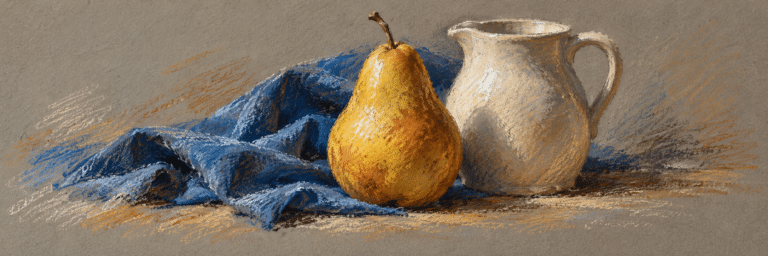
Colored Chalk Drawing: Line, Powder and the Colour of Paper
Explore colored chalk as a botanical drawing medium.
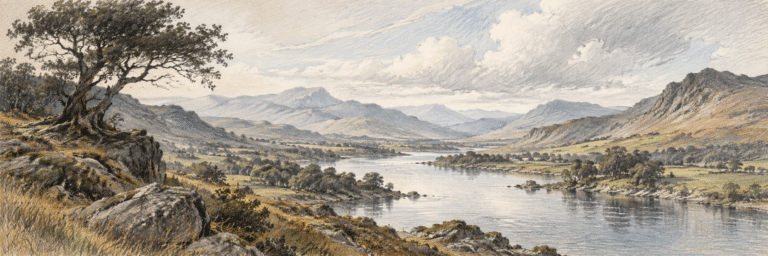
Landscape Drawing: Framing Space with Line and Tone
Move from individual plants to a larger environment.
A smile from the studio
Jokes
The flower asked for a flattering angle. The sketchbook suggested that turning slightly would also make the petals easier to understand.
Sources and further exploration
Kew: What Is Botanical Art? — observation, measurement and scientific collaboration
Kew: The Botanical Eye — why illustrations select and clarify plant structures
RHS: Draw Parts of a Flower — a practical observational starting point
Getty: Drawings — exploratory and finished uses of marks on paper