
Historical artist and literary group
Dau al Set brought poetry, painting and experimental publishing together in postwar Barcelona. Explore the group, its magazine and the imaginative visual language that cannot be reduced to a generic surrealist filter.
A visual introduction
Select an image for a closer look. Use the thumbnails, arrow keys or a swipe to compare examples. Zoom in to inspect details, or share the image that inspires you.


Creative toolbox · take this style further
Choose an input and a destination. Search sends your words to the chosen site; Copy & open puts them on your clipboard to paste there.
Create with AI
Turn your chosen input into an image prompt or a new creative direction.
ChatGPT
Copy your input and paste it into a ChatGPT conversation or image request.
Copy & open ChatGPT (new tab)Claude · Anthropic
Develop an image prompt or explore the style in a new Claude conversation.
Copy & open Claude · Anthropic (new tab)Midjourney
Paste your input into the Imagine bar on the Create page.
Copy & open Midjourney (new tab)Adobe Firefly
Copy your input, open Firefly, and paste it into the prompt field.
Copy & open Adobe Firefly (new tab)Leonardo.Ai
Copy your input, open Leonardo, and paste it into the generation field.
Copy & open Leonardo.Ai (new tab)Image search
Find visual references. Short, concrete keywords usually work best.
Lexica
Search AI images and prompts using your selected input.
Search with this input Lexica (new tab)Pexels
Search the photo and video library. Short keywords often work best.
Search with this input Pexels (new tab)Pixabay
Search photos, illustrations and other images.
Search with this input Pixabay (new tab)Unsplash
Search photographs using the style name or your own keywords.
Search with this input Unsplash (new tab)Wikimedia Commons
Search photographs, artworks and historical images. Check each file for its source and reuse terms.
Search with this input Wikimedia Commons (new tab)Art & research
Explore artists, collections and the ideas behind a style.
Wikipedia
Search for background reading. A style may not have its own article.
Search with this input Wikipedia (new tab)WikiArt
Copy your input into WikiArt’s search to explore artists and artworks.
Copy & open WikiArt (new tab)Europeana
Paste your keywords into the search to explore European museum, library and archive collections.
Copy & open Europeana (new tab)Inspiration
Discover portfolios and visual ideas from creative communities.
Instagram hashtags
Search a hashtag made from your input: spaces and punctuation are removed. Instagram may require sign-in.
Search with this input Instagram hashtags (new tab)ArtStation
Paste your input into artwork search for concept art, environments, characters and visual development.
Copy & open ArtStation (new tab)Behance
Paste your input into project search for illustration, design and visual storytelling.
Copy & open Behance (new tab)A closer look
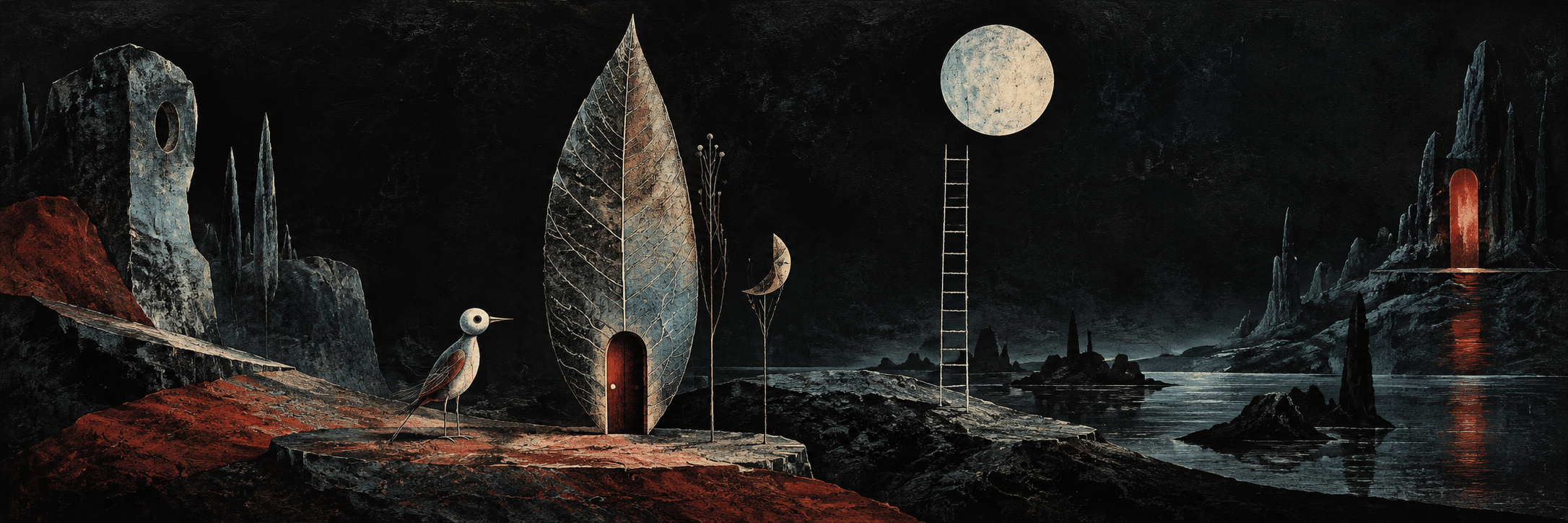
Charged signs and hybrid figures; nocturnal or theatrical spaces; fine linear networks; unexpected scale relationships; dialogue between image and poetic language; varied individual approaches.
A group and a magazine
Dau al Set was a Barcelona-based artistic and literary group associated with the magazine of the same name, whose first issue appeared in September 1948. The Biblioteca de Catalunya identifies the painters Antoni Tàpies, Modest Cuixart, Joan Ponç and Joan-Josep Tharrats alongside writer Joan Brossa and philosopher Arnau Puig. Tharrats played a central role in composition, printing and distribution.
The Generalitat de Catalunya’s heritage account places their activity within the restricted cultural climate of the postwar period. The name evokes an impossible seventh face of a die and connects the group’s imaginative stance with Dada and Surrealism. That context matters: the project was an effort to reopen creative possibilities, not merely an appetite for eccentric decoration.
Do not confuse the group with a uniform style
Members developed different practices, and their later careers should not be collapsed into one early collective appearance. Nor did the group and magazine have exactly the same lifespan. The Reina Sofía library records the periodical from 1948 to 1956; the Biblioteca de Catalunya explains how Tharrats continued publishing after the group’s cohesion had weakened.
Brossa’s foundation emphasizes his literary contribution, including poetry, prose and theatre. This makes the printed page important in its own right. Text and image can challenge or redirect one another rather than illustrate the same message. A contemporary interpretation should preserve that openness instead of inventing a single official set of symbols.
A visual grammar of uncertainty
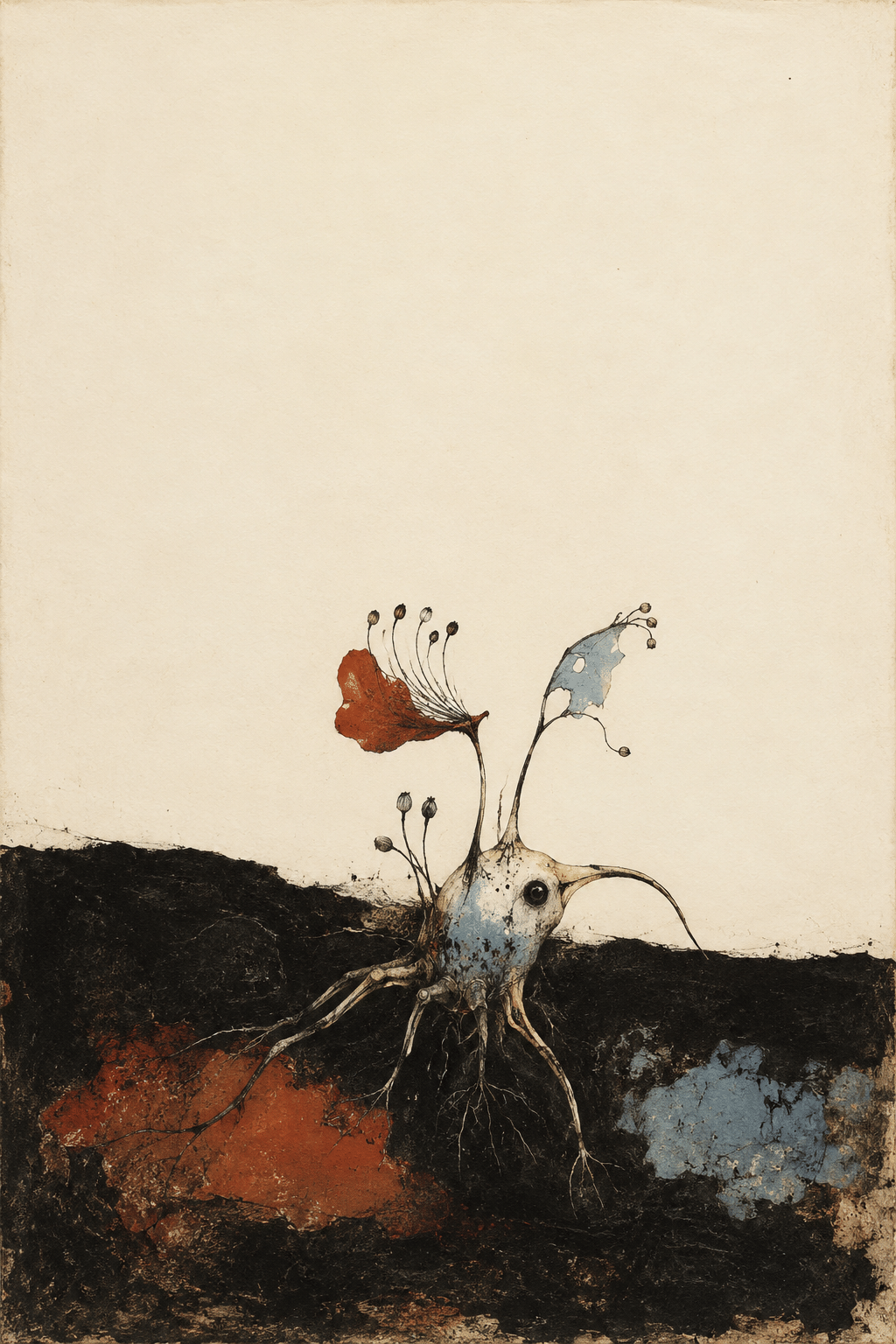
For an interpretive study, create a few signs whose relationships remain suggestive. A bird-like form might share a contour with a branch; a small stage might open onto an impossible landscape. The interest lies in the controlled ambiguity between recognizable things. Filling every corner with unrelated eyes, moons and masks usually weakens that tension.
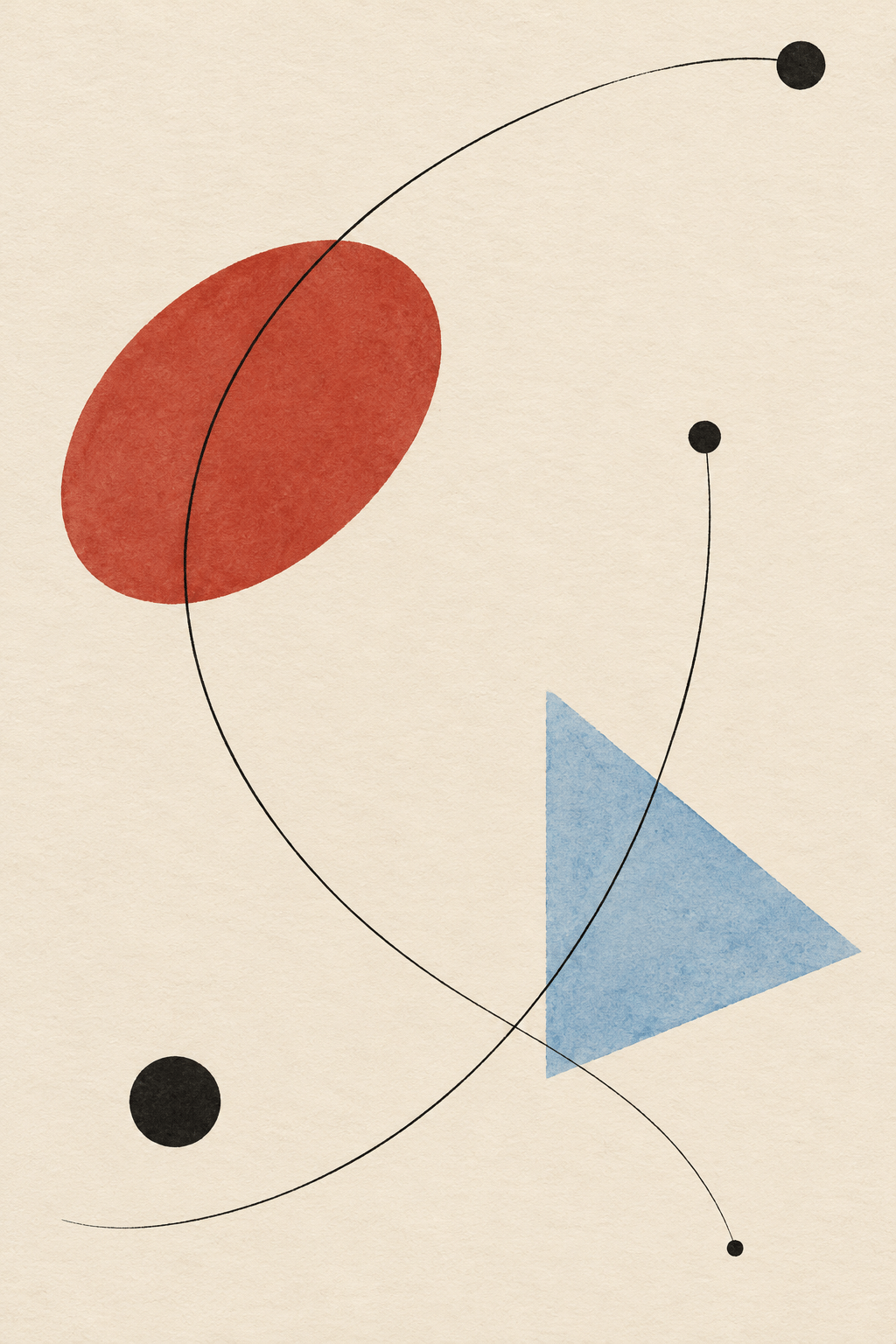
Line can act as a wandering connection between objects, while a dark field gives small coloured forms unusual weight. Shifts in scale can make an ordinary motif feel uncanny. Keep a deliberate hierarchy: one strange encounter should lead the image, with secondary marks supporting its atmosphere. Mystery benefits from precision in placement even when the subject remains unresolved.
Surface, colour and the printed page
A restricted nocturnal palette can make an isolated red or ochre sign feel urgent. A pale paper ground supports a different effect: fine ink marks and open margins invite close reading. Neither palette is a universal rule for the group. Study particular works and publications before assigning a material or technique to a named artist.
The magazine also suggests compositional exercises involving sequence, facing pages and the interval between words and images. In the new visual studies, lettering is omitted except for the collage title. This avoids presenting invented Catalan or fake archival typography as historical material. The images are original AI interpretations, not recovered issues or unattributed reproductions.
How to use the reference thoughtfully
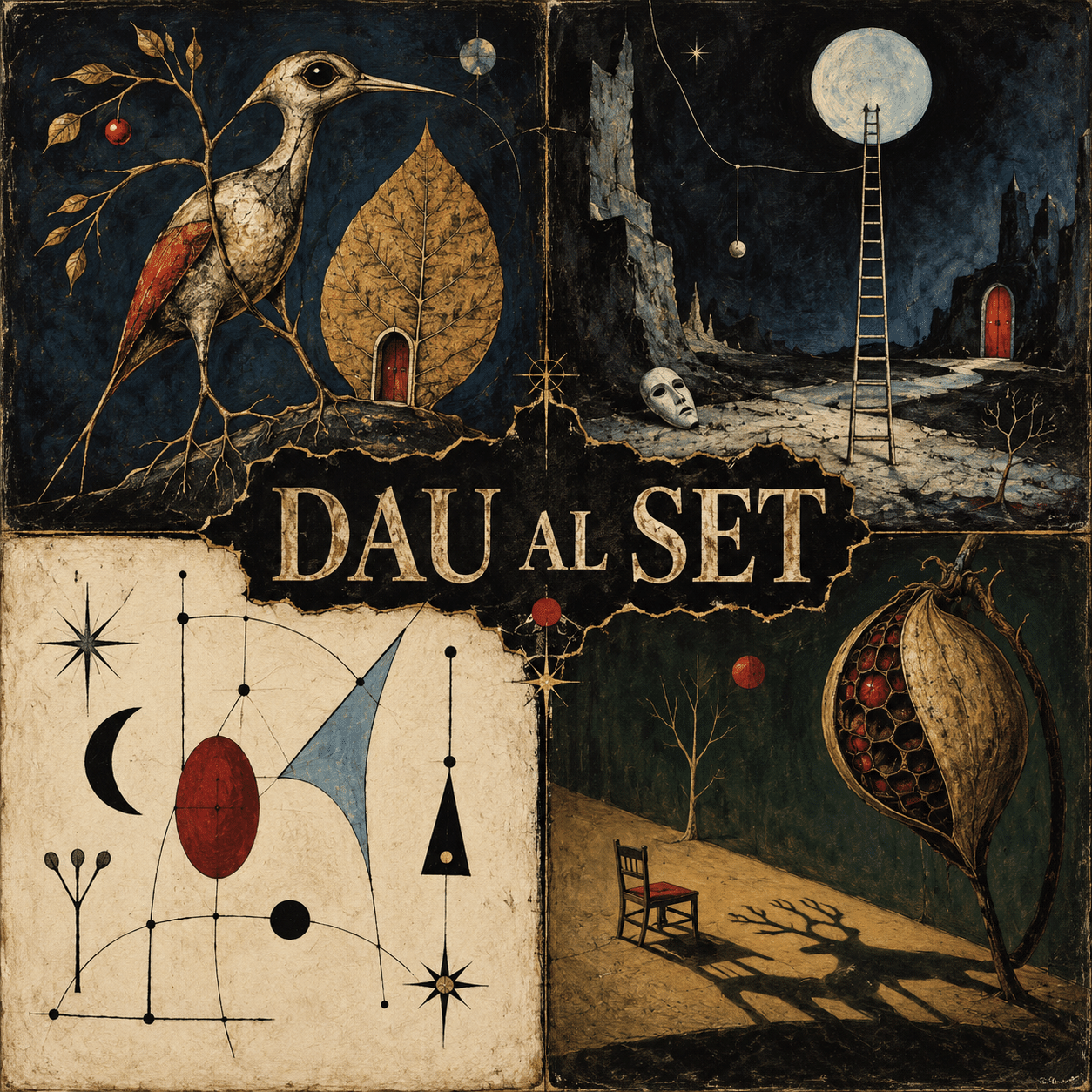
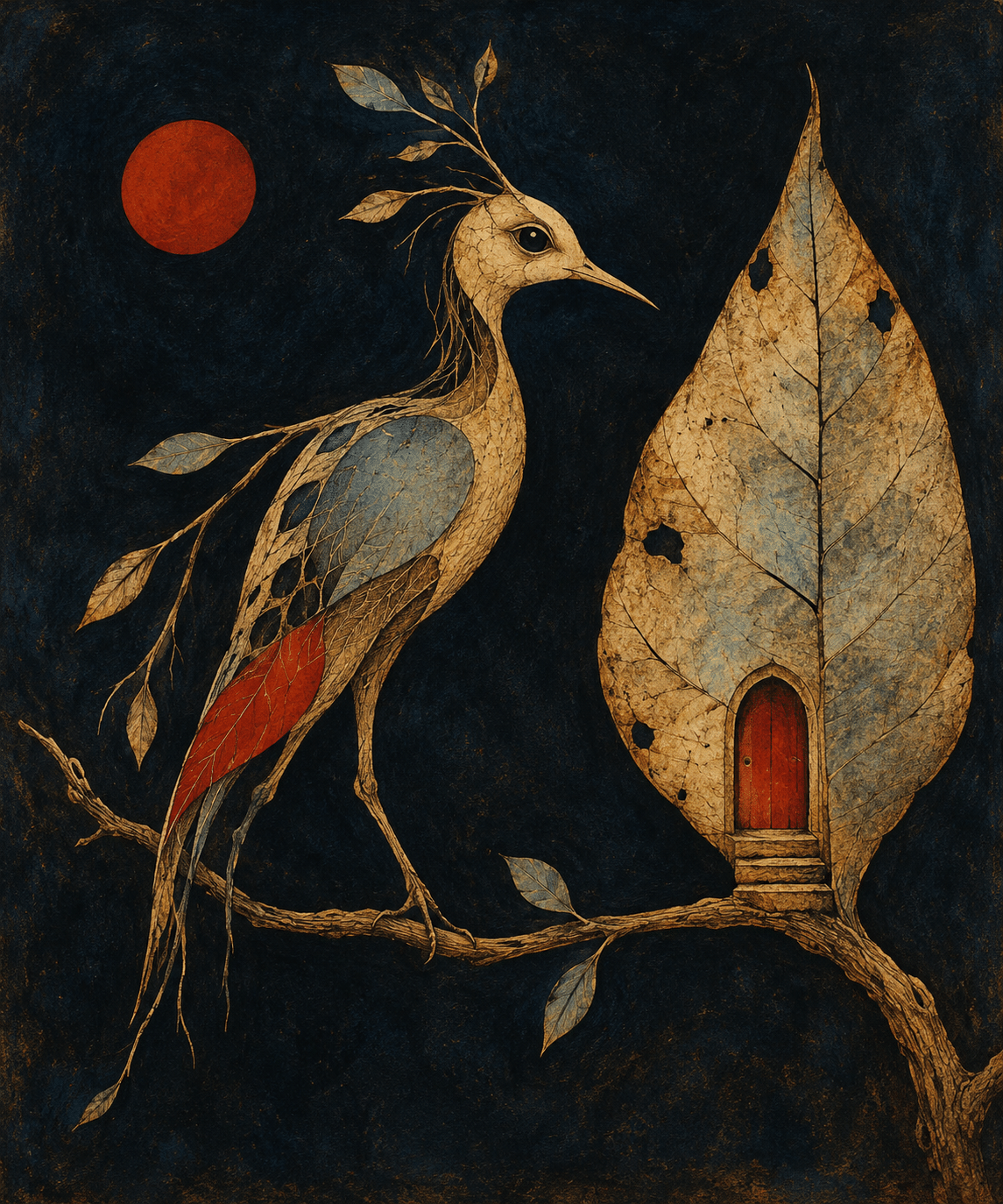
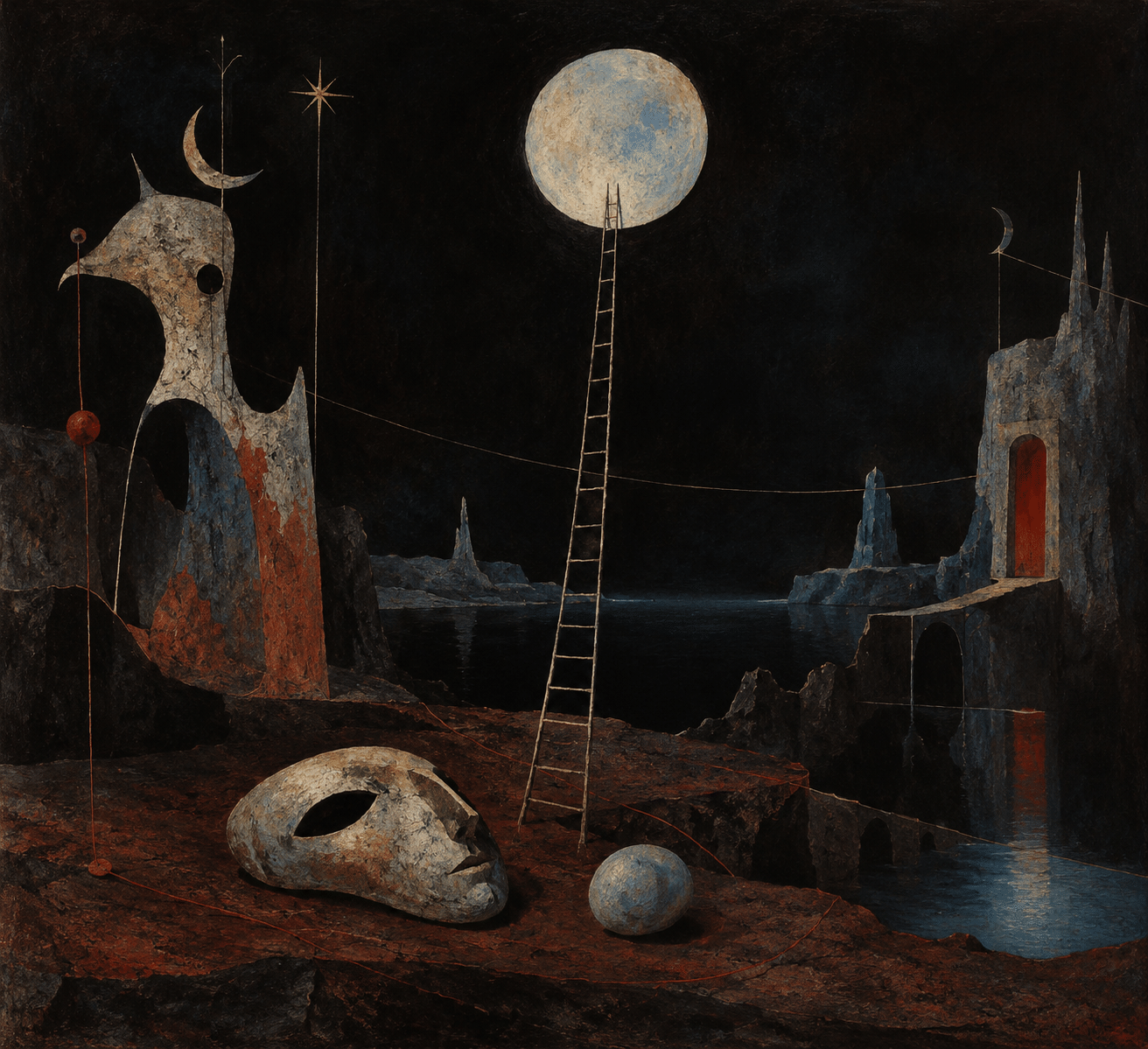
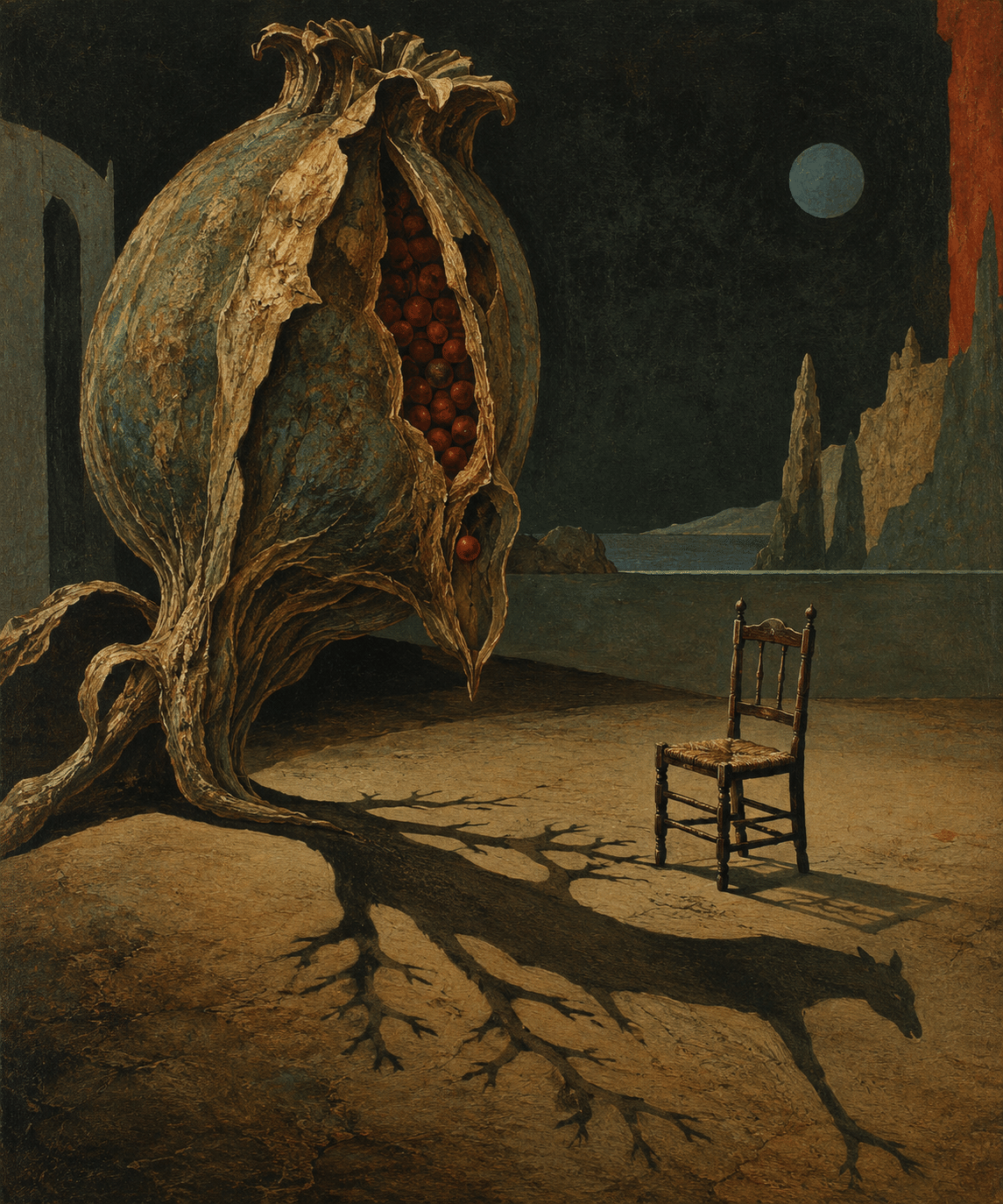
The five examples explore a hybrid figure, a theatrical landscape, a linear constellation, an invented object encounter and an image-led page composition. They draw on broad questions of poetic association and unsettling space. They do not claim to reconstruct a particular member’s work or summarize the entire group.
When prompting, describe the relationship that makes the scene strange: a tiny door inside a large leaf, a ladder that stops before reaching a moon-like disc, or a figure whose shadow becomes a branching sign. Then specify line, ground and colour. Naming Dau al Set alone leaves too much unresolved and encourages a generic collage of surrealist clichés.
Positive editorial assessment — AI-authored
Dau al Set’s significance includes the meeting of different creative disciplines under difficult conditions. Its example encourages images that behave like questions rather than illustrations of a settled answer. The exchange between poetry, visual form and publication remains a productive model for small collaborative projects.
Critical editorial assessment — AI-authored
A contemporary imitation can easily turn historical resistance and individual experimentation into a catalogue of mysterious symbols. That approach loses both context and specificity. Improve the work by studying an actual publication or artist, choosing a limited visual problem and distinguishing historical evidence from new invention.
Neutral editorial assessment — AI-authored
Dau al Set names a particular group and publishing history, not a universal synonym for surreal imagery. It is useful as a reference for poetic association and interdisciplinary exchange. Any visual summary should acknowledge differences among members and changes over time.
A small poetic detour
Original words from the AOI studio.
Poetry
The seventh face refused the die,
the little door outgrew the wall.
A branch rehearsed a bird-shaped cry;
a ladder heard the silence call.
We set a sign beside a sign
and left their meaning room to move.
The page became a crooked line
that certainty could not improve.
The prompt workshop
Original creative exercises. These prompts create new illustrations, not documentary evidence.
One poetic encounter
Original contemporary image informed by poetic surrealism: a small bird-like figure beside a tall leaf containing a tiny closed door, fine black contours over a deep indigo field, restrained ochre and red accents. No copied artist motif, text or archival claim.
A theatrical space
An original dreamlike stage with one narrow ladder stopping below a pale moon-like disc, a small mask-shaped form on the floor and a distant red opening. Deliberate scale shifts, thin linear connections and generous darkness. AI interpretation, not a historical reproduction.
An image-led page
Original experimental page composition on warm ivory paper: a sparse constellation of invented black signs, one red oval and a small hybrid botanical figure. Asymmetric balance and large margins, no pseudo-writing, signature or fake magazine title.
Your next inspiration
Discover another art style
Follow a visual thread to the next subject.
Figuration Libre: Figures, Popular Culture and Unruly Painting
Compare distinct groups and approaches to imaginative figuration.
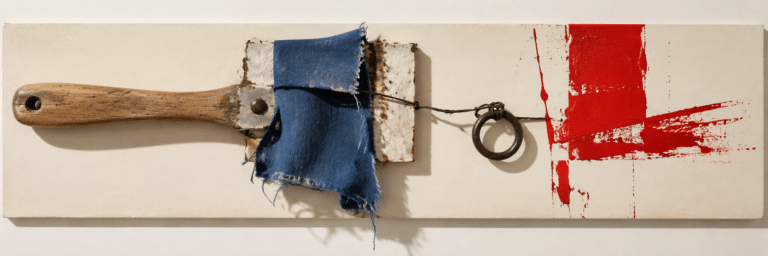
Neo-Dada: Ordinary Things in Unsettled Relationships
Explore another challenge to conventional artistic categories.
A smile from the studio
Jokes
The seventh face of the die applied for a number. The other six requested a meeting about the rules.
Sources and further exploration
Biblioteca de Catalunya: Dau al Set, la revista — members, printing and publication history
Generalitat de Catalunya: Dau al Set i la represa de l’avantguarda — postwar context and the name
Fundació Joan Brossa: Dau al Set — Brossa’s literary role
Museo Reina Sofía: Dau al set — digitized periodical and bibliographic record