
Drawing medium and technique
Colored chalk drawing builds an image from dry marks, selective blending and the paper itself. Explore its material range, the distinction from pastel and ways to keep colour fresh and structure clear.
A visual introduction
Select an image for a closer look. Use the thumbnails, arrow keys or a swipe to compare examples. Zoom in to inspect details, or share the image that inspires you.

Creative toolbox · take this style further
Choose an input and a destination. Search sends your words to the chosen site; Copy & open puts them on your clipboard to paste there.
Create with AI
Turn your chosen input into an image prompt or a new creative direction.
ChatGPT
Copy your input and paste it into a ChatGPT conversation or image request.
Copy & open ChatGPT (new tab)Claude · Anthropic
Develop an image prompt or explore the style in a new Claude conversation.
Copy & open Claude · Anthropic (new tab)Midjourney
Paste your input into the Imagine bar on the Create page.
Copy & open Midjourney (new tab)Adobe Firefly
Copy your input, open Firefly, and paste it into the prompt field.
Copy & open Adobe Firefly (new tab)Leonardo.Ai
Copy your input, open Leonardo, and paste it into the generation field.
Copy & open Leonardo.Ai (new tab)Image search
Find visual references. Short, concrete keywords usually work best.
Lexica
Search AI images and prompts using your selected input.
Search with this input Lexica (new tab)Pexels
Search the photo and video library. Short keywords often work best.
Search with this input Pexels (new tab)Pixabay
Search photos, illustrations and other images.
Search with this input Pixabay (new tab)Unsplash
Search photographs using the style name or your own keywords.
Search with this input Unsplash (new tab)Wikimedia Commons
Search photographs, artworks and historical images. Check each file for its source and reuse terms.
Search with this input Wikimedia Commons (new tab)Art & research
Explore artists, collections and the ideas behind a style.
Wikipedia
Search for background reading. A style may not have its own article.
Search with this input Wikipedia (new tab)WikiArt
Copy your input into WikiArt’s search to explore artists and artworks.
Copy & open WikiArt (new tab)Europeana
Paste your keywords into the search to explore European museum, library and archive collections.
Copy & open Europeana (new tab)Inspiration
Discover portfolios and visual ideas from creative communities.
Instagram hashtags
Search a hashtag made from your input: spaces and punctuation are removed. Instagram may require sign-in.
Search with this input Instagram hashtags (new tab)ArtStation
Paste your input into artwork search for concept art, environments, characters and visual development.
Copy & open ArtStation (new tab)Behance
Paste your input into project search for illustration, design and visual storytelling.
Copy & open Behance (new tab)A closer look
Dry granular marks; broken edges that reveal paper grain; selective soft blending; firm accents; coloured or neutral supports acting as midtones; light added as well as reserved.
A useful name with a material caveat
Colored chalk drawing describes a family of dry drawing practices rather than a historical movement. “Chalk” can refer to naturally occurring drawing materials or to manufactured sticks. The Metropolitan Museum discusses natural red, black and white chalk alongside fabricated alternatives. The name alone does not identify every ingredient in a modern product.
Pastel overlaps visually with coloured chalk, but the terms should not be treated as interchangeable labels for any powdery picture. The Philadelphia Museum of Art’s conservation terminology describes pastel as a fabricated medium with a broad palette and explains how its softness can differ from fabricated chalk. A photograph may not settle that identification. Use the known material name when it is documented; otherwise describe the visible effect without pretending to have analysed the object.
The paper is part of the palette
A middle-value support can supply a large part of the drawing’s colour. On warm grey paper, a few pale strokes establish light while dark marks turn a form away from it. Covering every area with pigment removes this advantage. Leave purposeful gaps so the support connects separate objects and gives the surface breathing room.
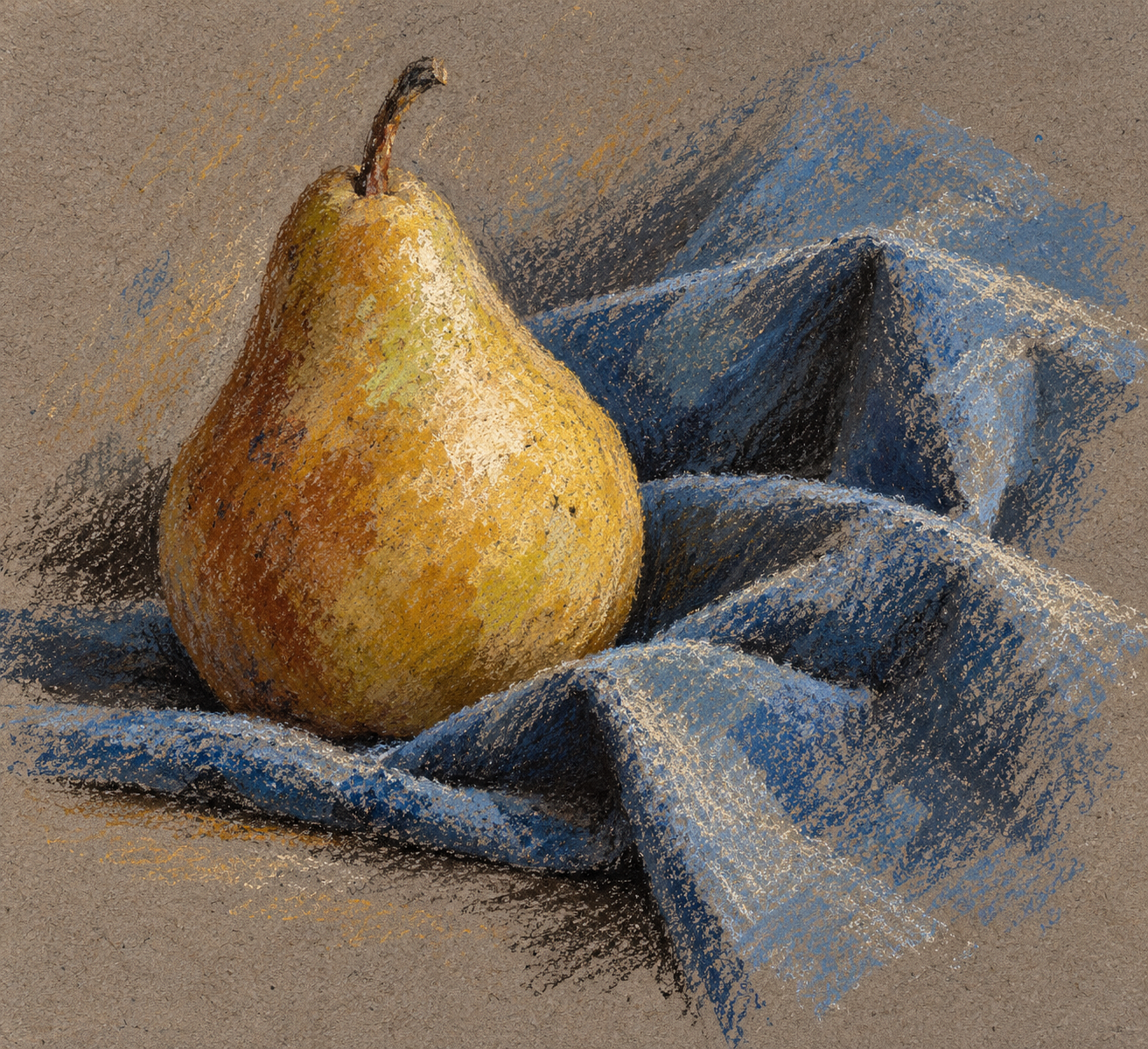
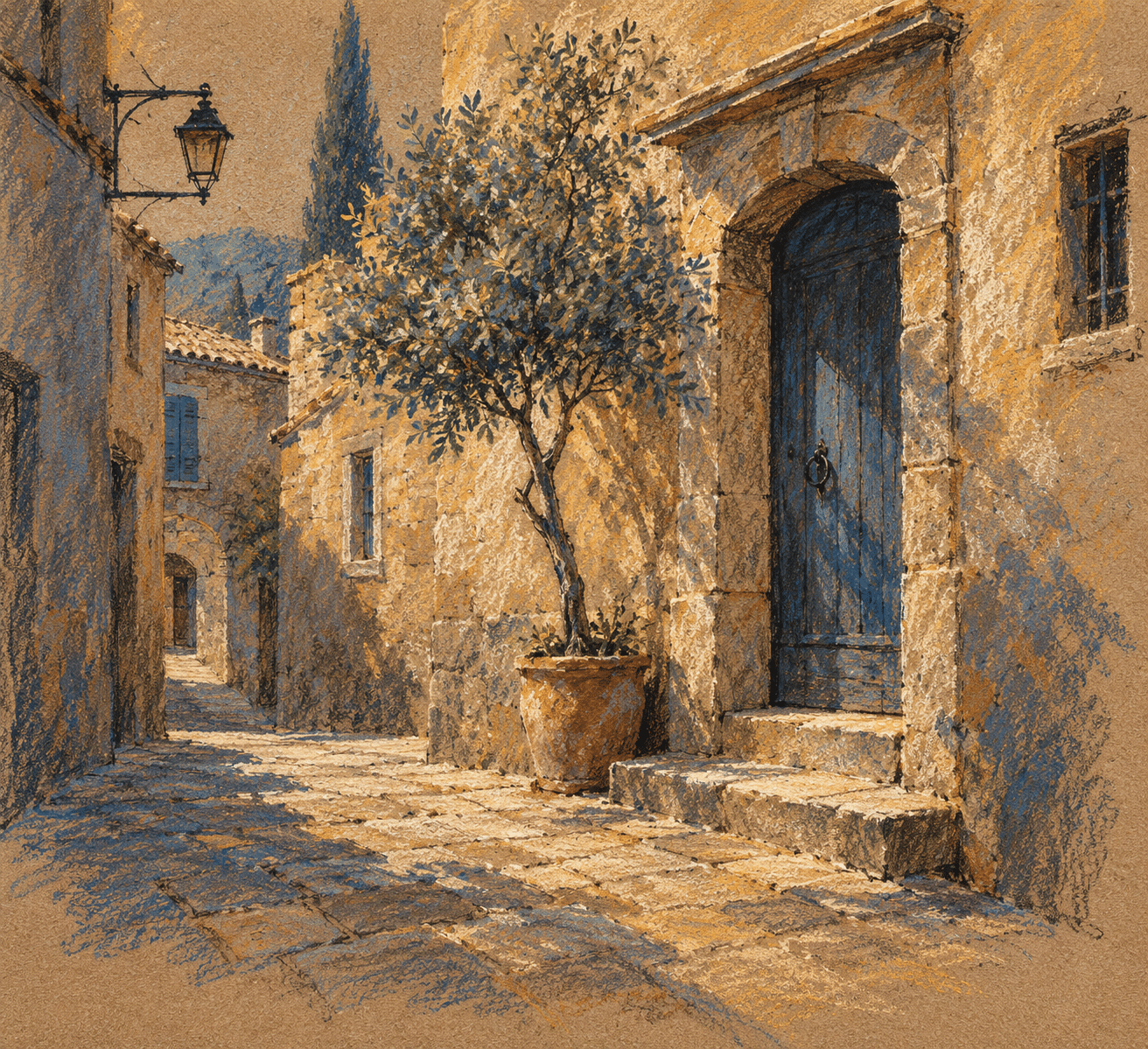
Texture affects both appearance and control. A broken stroke crossing the grain reads differently from a densely worked patch. In an original study, choose where that contrast matters: the edge of a pear, a rough wall or a lit cheek. Uniform grain pasted over a smooth image is less convincing than marks whose gaps follow their direction and pressure.
Line and mass need different jobs
Use a relatively firm edge for a structural decision and a broad side stroke for a plane of tone. Hatching can describe direction without blending everything together. A softened transition can turn a rounded form, while an untouched sharp accent can bring a nearer edge forward. These are compositional choices, not a demand that every drawing look highly finished.
Blending is most useful when it has a purpose. If all edges dissolve equally, objects lose weight and the drawing becomes a cloud of colour. Establish the largest light and dark relationships first, then select a few places for precision. A small bright highlight often works better after the surrounding midtones have been organized.
Colour can model, separate or interrupt
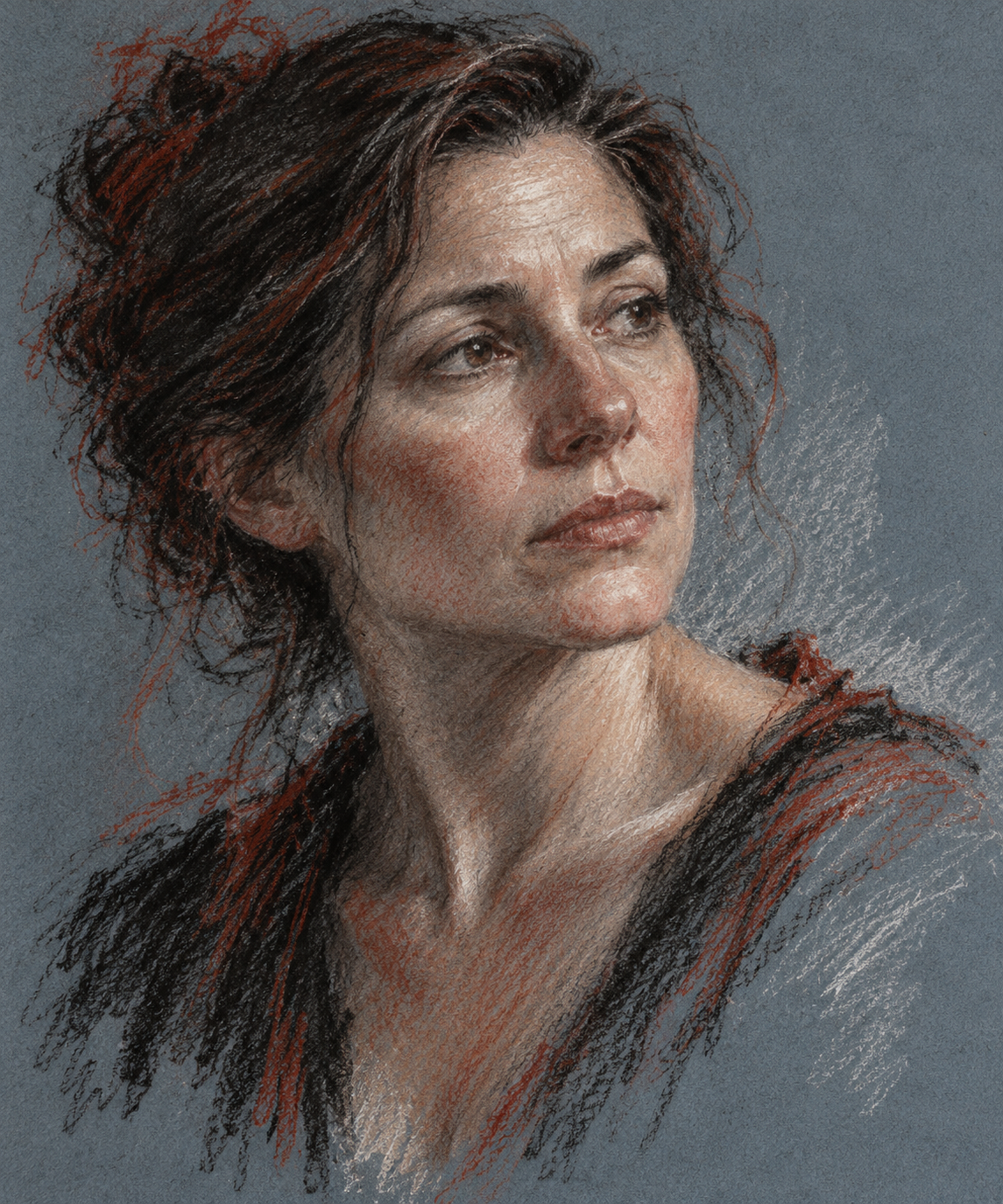
A restricted palette makes relationships easier to judge. Red, black and white on a toned sheet offer one coherent study; ochre, blue and cream offer another. Keep lightness distinct from saturation: a vivid red is not necessarily a light value. Compare neighbouring marks rather than assuming the brightest hue belongs in every highlight.
Getty’s account of early coloured drawing media describes Jacopo Bassano using several chalk colours on blue paper to explore a composition. This is a useful reminder that coloured dry media can serve planning and investigation as well as polished presentation. It does not mean every modern chalk drawing belongs to a single Renaissance lineage or recipe.
Five problems to explore
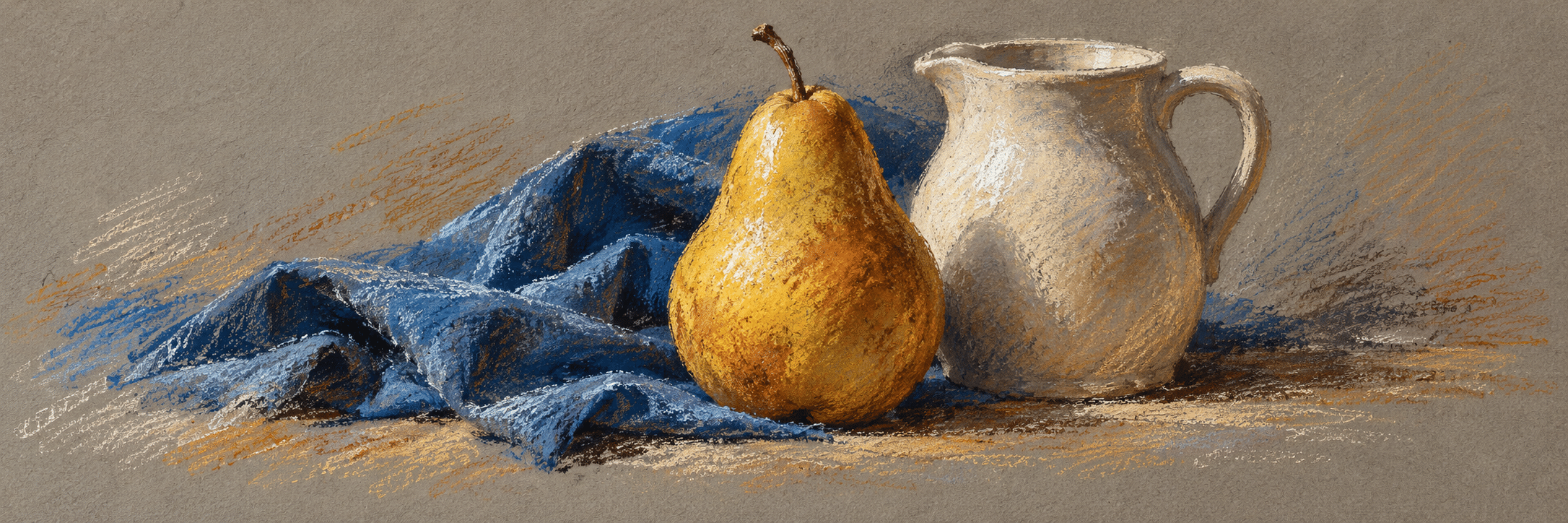
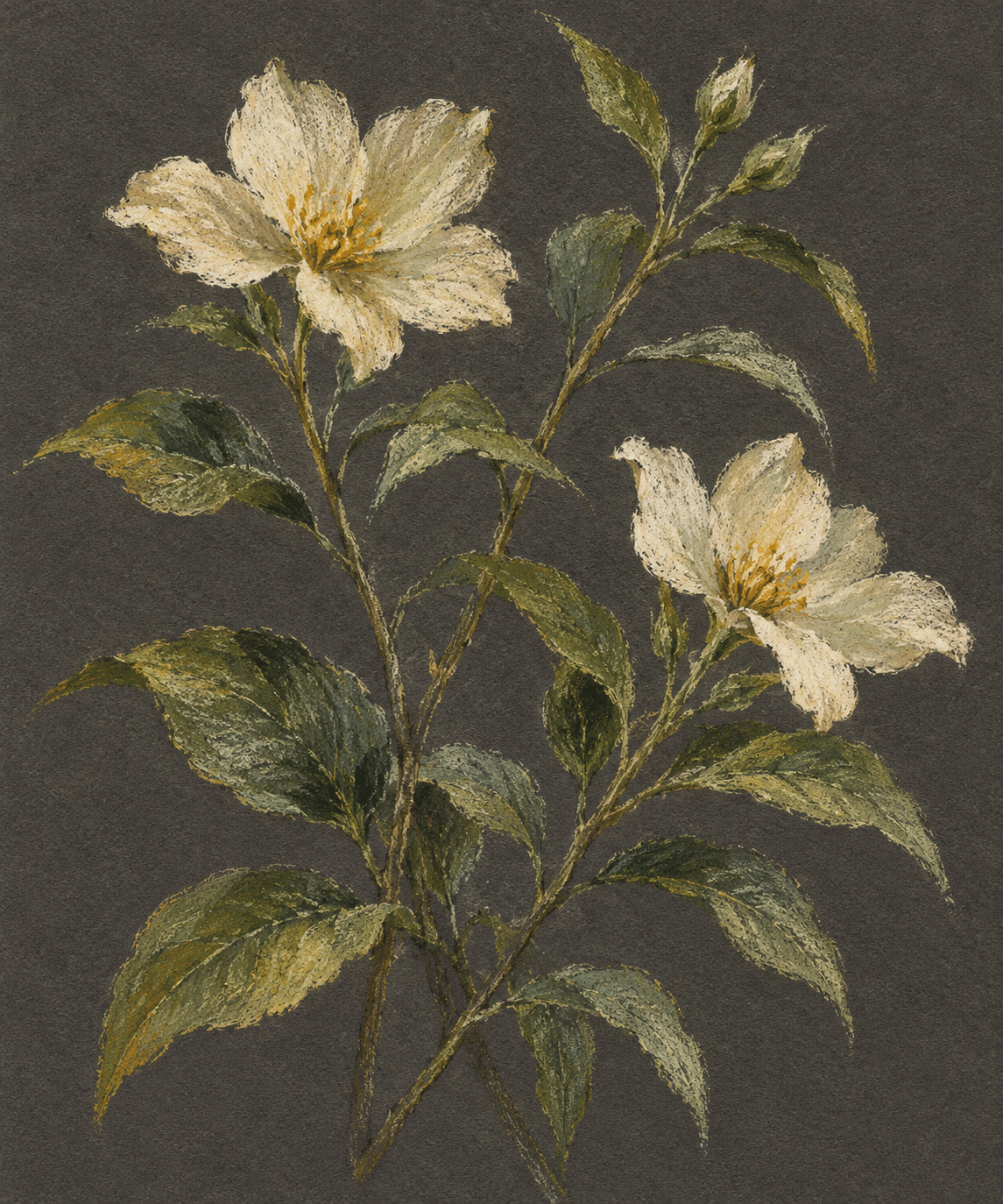
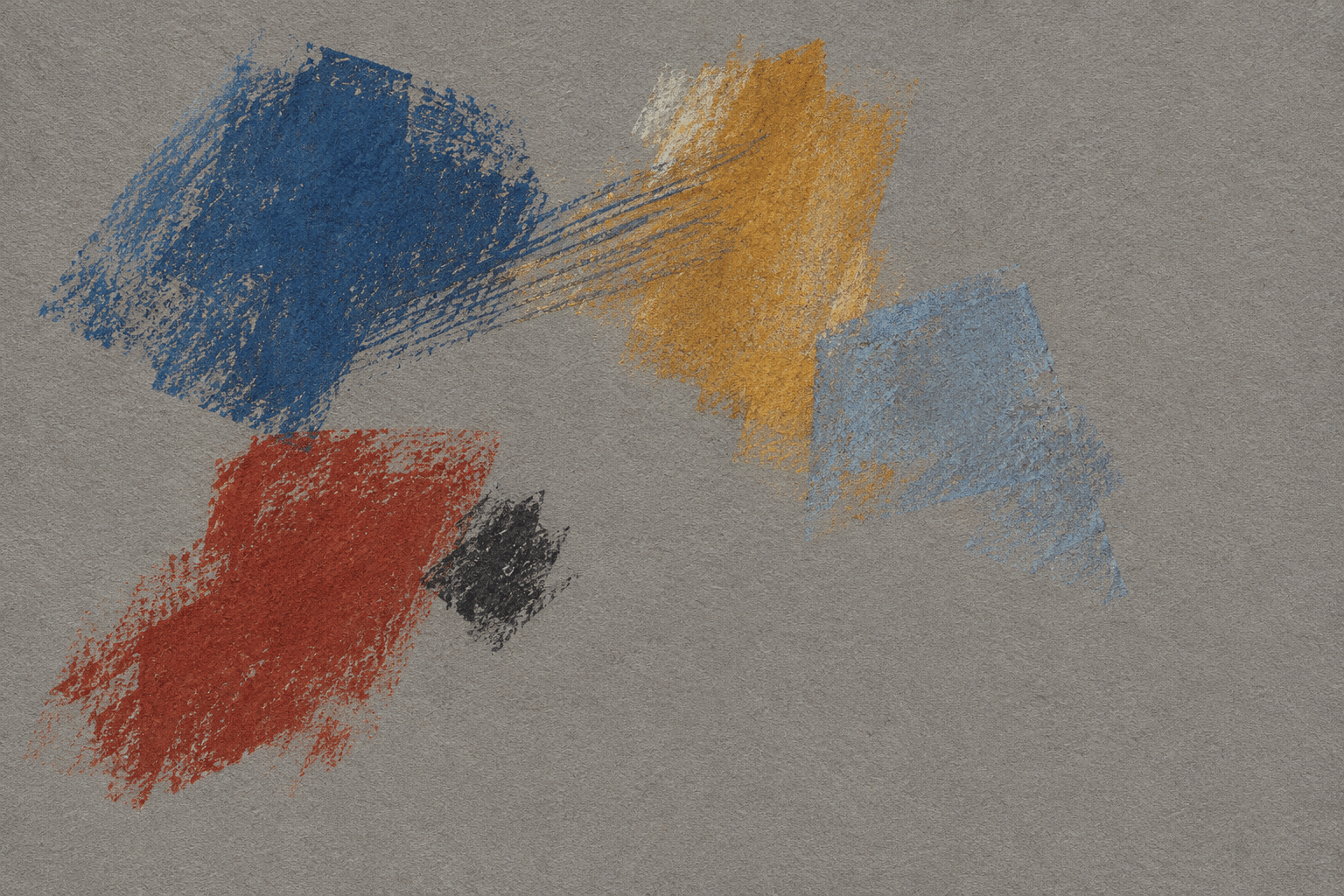
The new AI-generated studies address fruit and cloth, a portrait, a street corner, botanical forms and an abstract colour arrangement. They interpret dry chalk-like marks; they are not photographs of handmade sheets. Each image varies the balance of exposed paper, linear accents and broader colour masses.
For practical work, test the chosen sticks and paper together before committing to a final sheet. For prompting, name the support colour, mark character, palette and focal edge. “Broken ochre and blue strokes on grey paper, with unblended accents around the jug” gives useful direction. Avoid requesting glossy oil-like impasto when the intended subject is a dry drawing surface.
Positive editorial assessment — AI-authored
Colored chalk drawing can combine directness with considerable subtlety. The same small set of marks can describe structure, light and the movement of a hand. When exposed paper remains active, the image feels economical without becoming empty, and colour gains strength through its relationship to the ground.
Critical editorial assessment — AI-authored
Indiscriminate smudging and bright colour everywhere are common weaknesses. They can hide uncertain drawing while making the surface monotonous. Improve a study by restoring a clear value structure, preserving selected crisp edges and allowing some passages to remain incomplete rather than polishing every area equally.
Neutral editorial assessment — AI-authored
This is a flexible dry-media approach for studies and independent works. Its appearance depends on the particular stick, support and handling. Material terminology should remain precise: an attractive chalk-like digital image does not establish the composition or conservation needs of a physical drawing.
A small poetic detour
Original words from the AOI studio.
Poetry
The paper keeps a little sky
between the strokes that cross its grain.
A broken blue goes drifting by,
a red returns to earth again.
We leave a light we did not draw,
then place a darker note beside;
the smallest mark becomes a law
by which the larger shapes decide.
The prompt workshop
Original creative exercises. These prompts create new illustrations, not documentary evidence.
A limited palette
Original dry coloured-chalk interpretation of a pear beside a folded blue cloth on warm grey paper. Ochre, blue, cream and charcoal accents; broken strokes, visible paper grain and one crisp focal edge. No glossy paint, signature or text.
Portrait and ground
An original three-quarter portrait of an adult with a thoughtful expression, red black and white chalk-like marks on muted blue-grey paper. Coherent anatomy, restrained blending, exposed support around the head and selective white highlights. AI-generated interpretation.
Colour without an object
Original abstract drawing using five irregular colour masses in dusty blue, ochre and warm red on grey paper. Let dry hatching connect two forms, keep a large untouched area, and use one sharp dark accent. Avoid a smooth digital gradient.
Your next inspiration
Discover another art style
Follow a visual thread to the next subject.
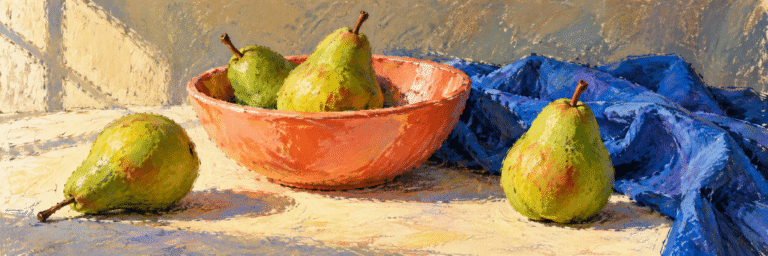
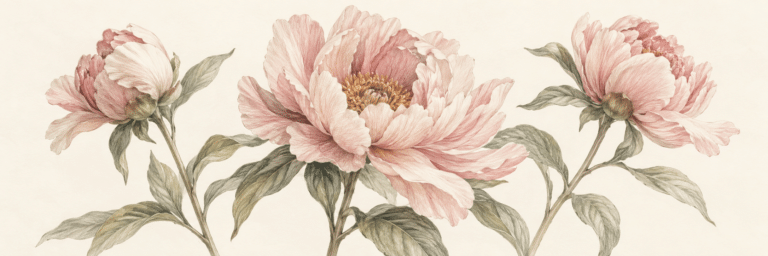
Flower Drawing: Structure, Rhythm and Close Observation
Apply colored drawing to botanical subjects.
A smile from the studio
Jokes
The paper asked why it had been left unfinished. The artist explained that it had been promoted to a colour.