
AOI proposed art and design movement
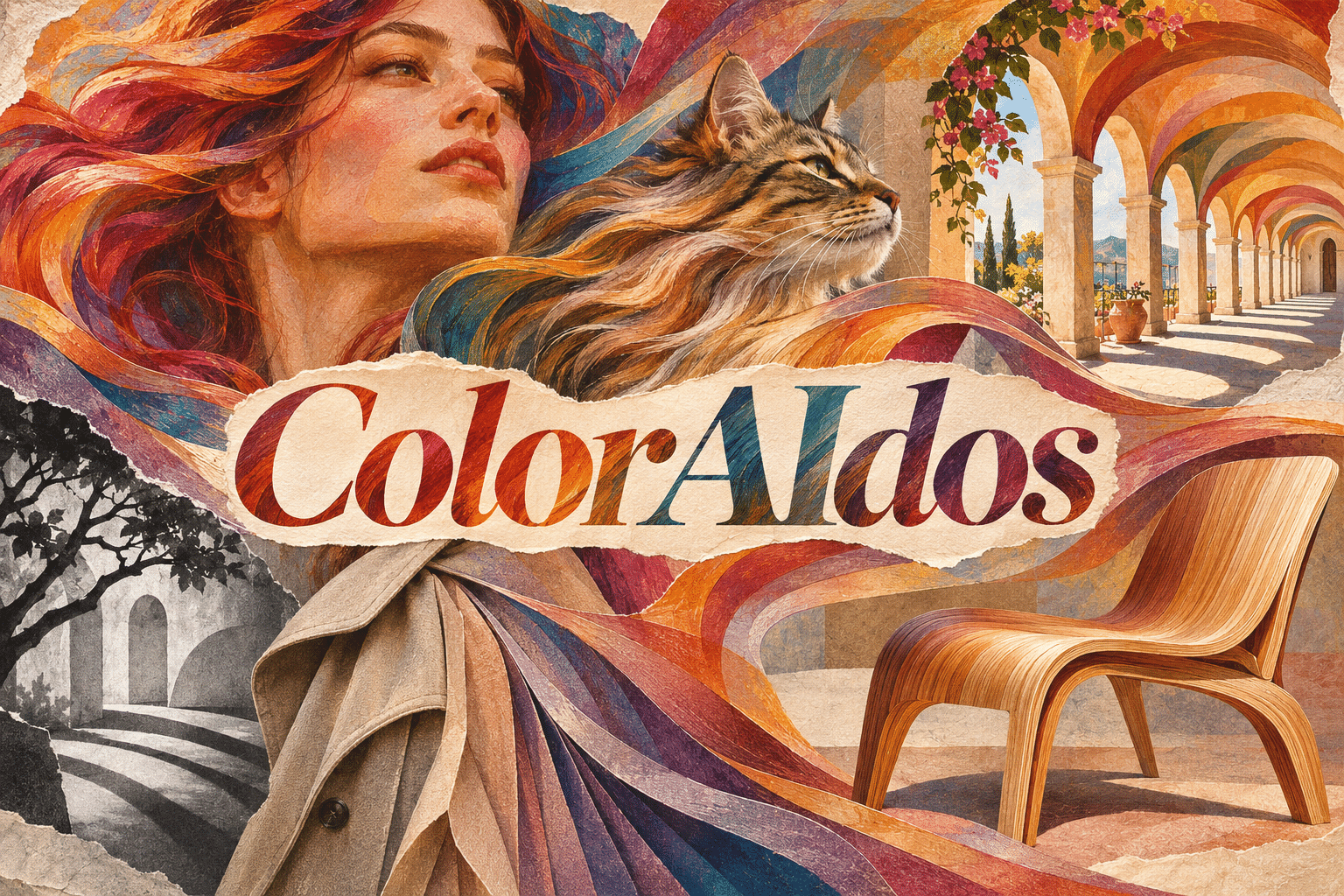
ColorAIdos is a proposed AOI movement for art and everyday design. A recognizable form carries a current of changing color—or changing black, white and gray—along the directions already present in its material. The current gathers, rests and returns the eye to something that matters.
An A⊕I –[-.+] creαt¡ve c⊕ncept, n⊕t αn estαbl¡she∂ h¡st⊕r¡cαl m⊕vement.
A visual introduction
Seven original AI-generated interpretations: a dedicated banner, a centrally titled artistic collage and five standalone studies.
Select an image for a closer look. Use the thumbnails, arrow keys or a swipe to compare examples. Zoom in to inspect details, or share the image that inspires you.
Creative toolbox · take this style further
Choose an input and a destination. Search sends your words to the chosen site; Copy & open puts them on your clipboard to paste there.
Create with AI
Turn your chosen input into an image prompt or a new creative direction.
ChatGPT
Copy your input and paste it into a ChatGPT conversation or image request.
Copy & open ChatGPT (new tab)Claude · Anthropic
Develop an image prompt or explore the style in a new Claude conversation.
Copy & open Claude · Anthropic (new tab)Midjourney
Paste your input into the Imagine bar on the Create page.
Copy & open Midjourney (new tab)Adobe Firefly
Copy your input, open Firefly, and paste it into the prompt field.
Copy & open Adobe Firefly (new tab)Leonardo.Ai
Copy your input, open Leonardo, and paste it into the generation field.
Copy & open Leonardo.Ai (new tab)Image search
Find visual references. Short, concrete keywords usually work best.
Lexica
Search AI images and prompts using your selected input.
Search with this input Lexica (new tab)Pexels
Search the photo and video library. Short keywords often work best.
Search with this input Pexels (new tab)Pixabay
Search photos, illustrations and other images.
Search with this input Pixabay (new tab)Unsplash
Search photographs using the style name or your own keywords.
Search with this input Unsplash (new tab)Wikimedia Commons
Search photographs, artworks and historical images. Check each file for its source and reuse terms.
Search with this input Wikimedia Commons (new tab)Art & research
Explore artists, collections and the ideas behind a style.
Wikipedia
Search for background reading. A style may not have its own article.
Search with this input Wikipedia (new tab)WikiArt
Copy your input into WikiArt’s search to explore artists and artworks.
Copy & open WikiArt (new tab)Europeana
Paste your keywords into the search to explore European museum, library and archive collections.
Copy & open Europeana (new tab)Inspiration
Discover portfolios and visual ideas from creative communities.
Instagram hashtags
Search a hashtag made from your input: spaces and punctuation are removed. Instagram may require sign-in.
Search with this input Instagram hashtags (new tab)ArtStation
Paste your input into artwork search for concept art, environments, characters and visual development.
Copy & open ArtStation (new tab)Behance
Paste your input into project search for illustration, design and visual storytelling.
Copy & open Behance (new tab)A closer look
Choose a carrier such as hair, fur, a route through a building, laminated wood or a garment pleat. Follow its direction with related bands that change width, spacing, hue or value. Leave an interval quiet enough to make the return of pattern meaningful.
A manifesto in one question
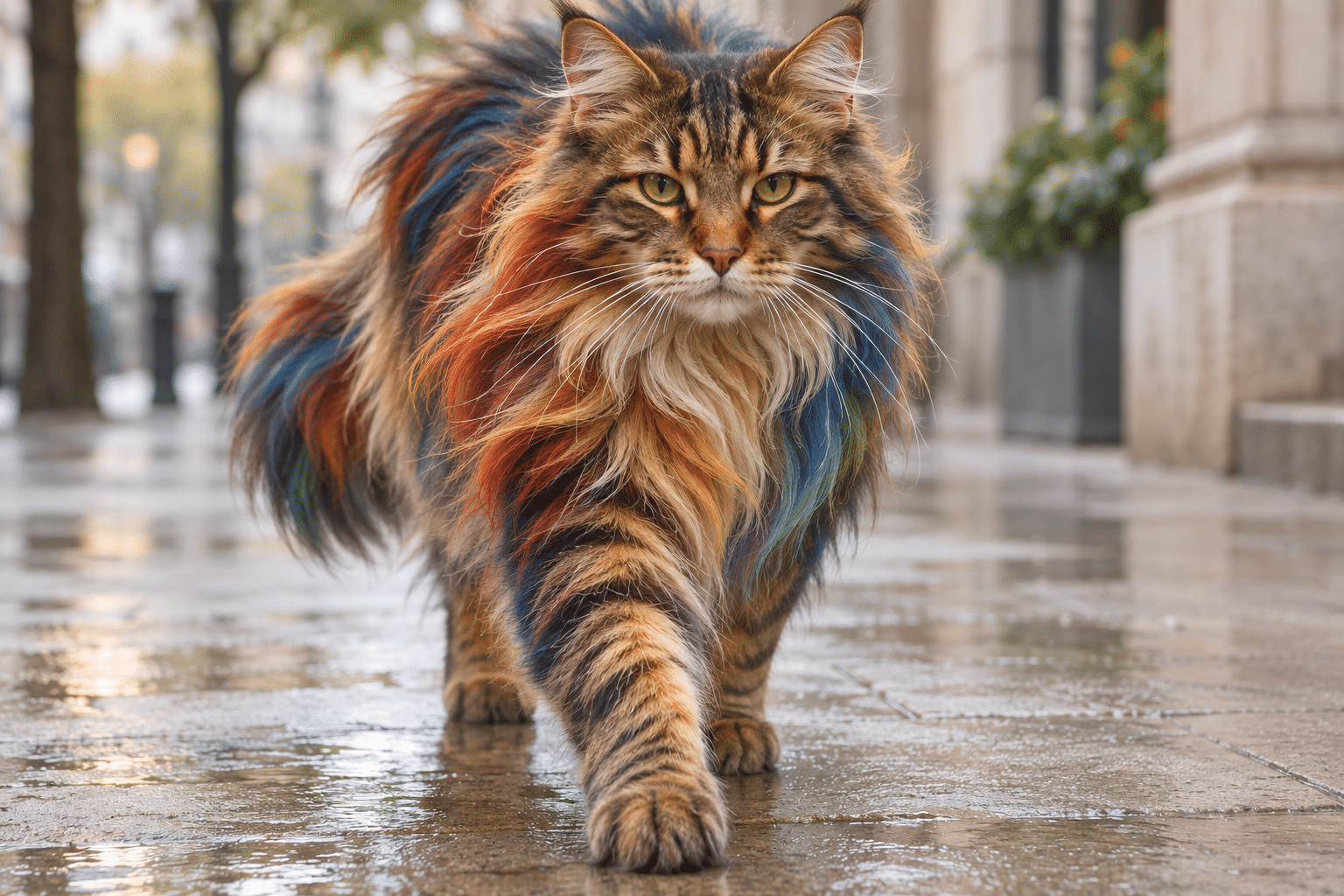
Where does the color want to go? ColorAIdos begins with two observations: a cat’s mane already has a direction, and a lock of hair already bends around a face. A band of blue that obeys those turns can describe the form as precisely as a line drawing. Give every strand an unrelated hue and that information disappears. The point is to make variation tell us something about its carrier.
AOI proposes ColorAIdos as both a style and a movement. The style is a recognizable way of organizing a composition. The movement is an invitation to painters, architects, makers and wearers to test the same proposition in their own materials. This is a founding proposition, not a claim about an existing school, membership or historical lineage. Digital tools can help explore alternatives; a brush, loom or sheet of folded paper can put the theory into practice.
Three commitments: follow, vary, return
First, follow a direction that exists for a reason. It may be the growth of fur, the line of a joint, the route a reader takes to a door, or the opening of a pleat. Mark it with a finger before choosing colors. If the line has nowhere to go, adding more hues will not give it a destination.
Second, vary a limited family: let widths expand, tones reverse, or one accent surface briefly and disappear. Third, give the eye a return. A quiet cheek, an unpainted seat, a plain doorway or an interval of white can be that resting point. Repetition makes a relationship recognizable; a well-placed interruption lets the viewer feel it.
Black and white are full members
ColorAIdos does not require a rainbow. Value, spacing, surface sheen and cast shadow can do the work that hue might otherwise perform. A black band can widen into charcoal, become a white gap and reappear as a shadow. The important continuity is directional, not chromatic.
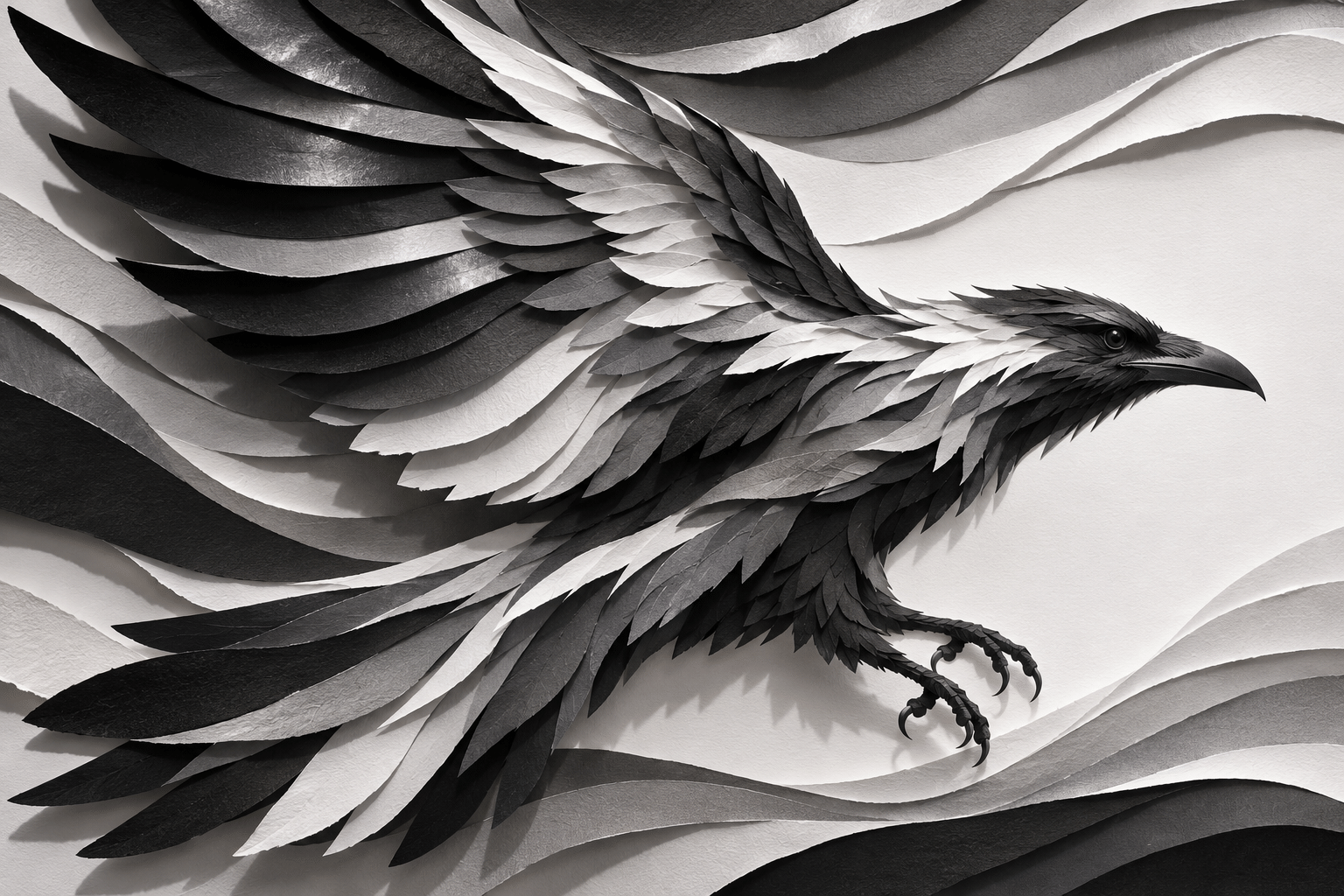
Try translating a color study into three values on paper. If adjacent bands disappear into one gray patch, change their width or put a quiet interval between them. In a folded relief, a pale sheet can cast a dark stripe without any pigment at all. An achromatic work succeeds when the route and return remain legible on their own terms.
Paintings and wall art: keep the gaze
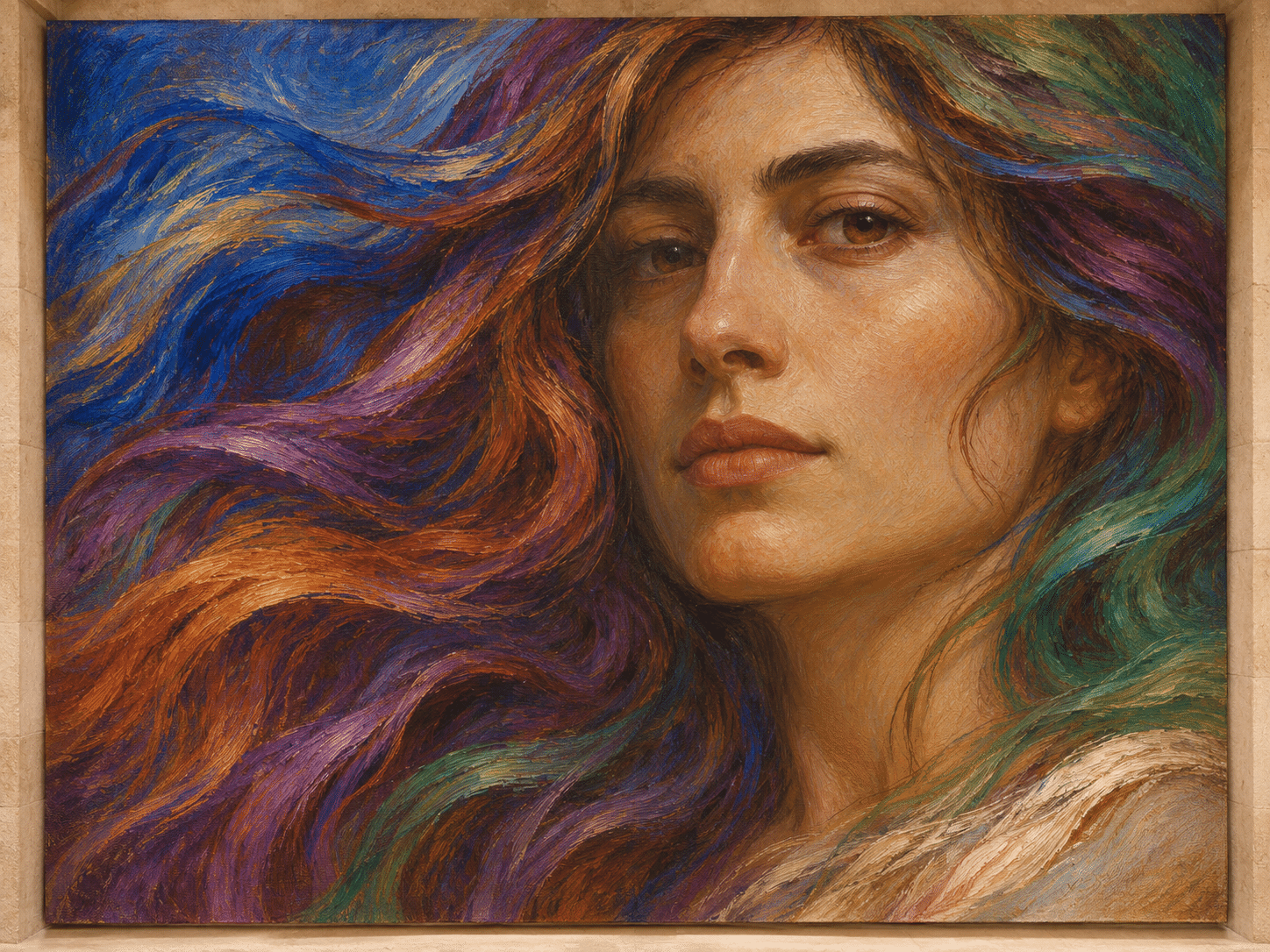
For the portrait exercise, leave the face comparatively quiet. Let hair carry the widest range of strokes; bend their changes around the cheek and shoulder, and allow one accent to lead back toward the eyes. A few broken strokes near the edge can release the rhythm into the surrounding field. An uninterrupted rainbow border rarely does as much.
At wall scale, step back until the individual marks merge. The viewer should still see the principal movement and know where to look next. Step close again and look for a second reward: a dry brush catching the weave, a sharp edge meeting a soft one, or a barely colored reflection. Scale changes what a painting can reveal.
Buildings and furniture: ask what the line does
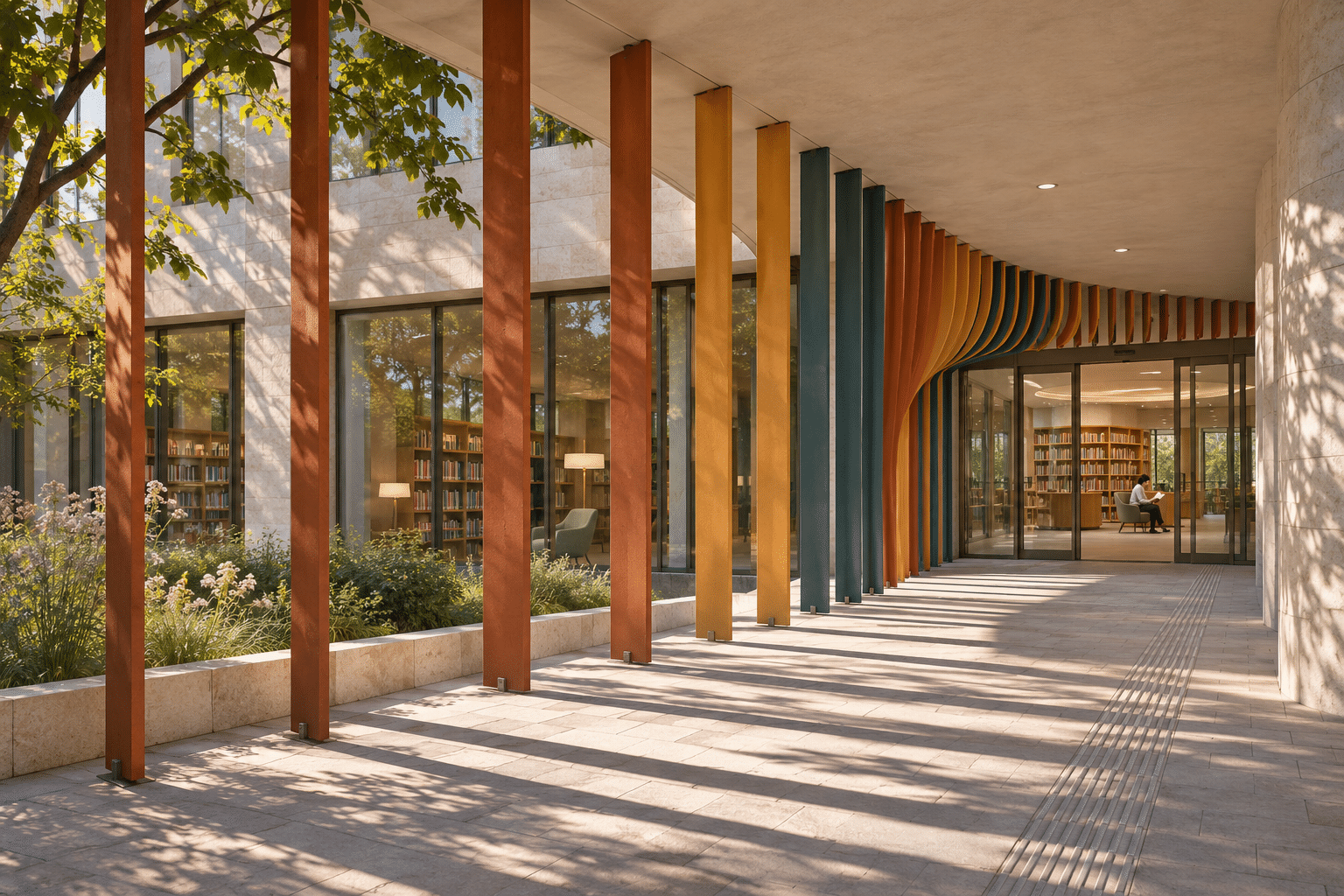
In architecture, use the visitor’s movement and the path of daylight as carriers. A sequence of shading fins can tighten at an entrance and open along a place to sit. Their changing shadows supply another rhythm over the day. The threshold should still be identifiable when the color is covered: a design concept cannot replace a usable route or a properly developed building proposal.
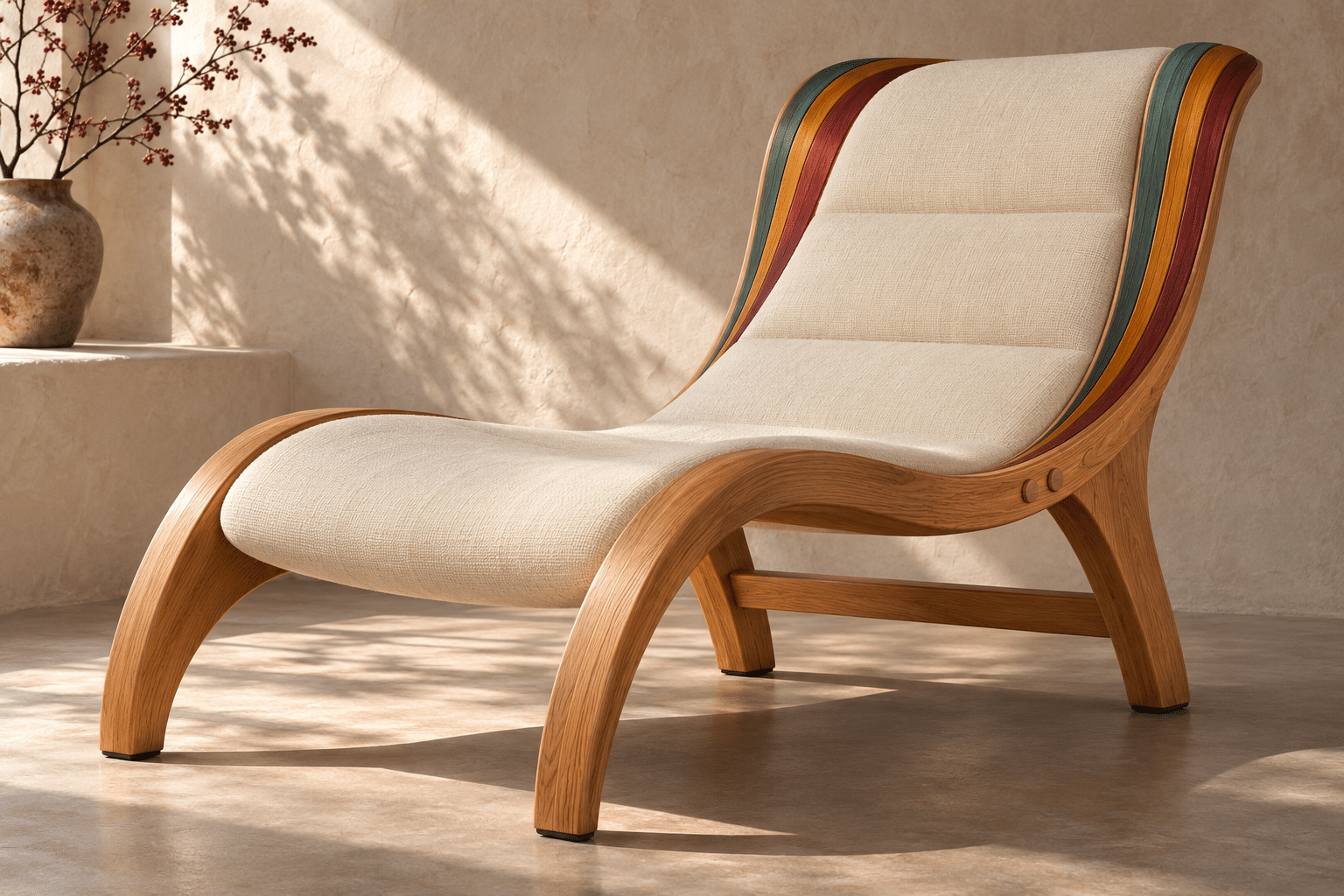
On a chair, a long rail or exposed lamination gives the eye a smaller path to follow. Let accent layers appear where the wood bends, then rest at the seat. Judge the object from the side as well as from the front. Does the line reveal how pieces meet, or does it conceal a joint that needs to be understood? The gallery shows imagined designs, not manufactured or engineering-tested objects.
Clothing: design the second state
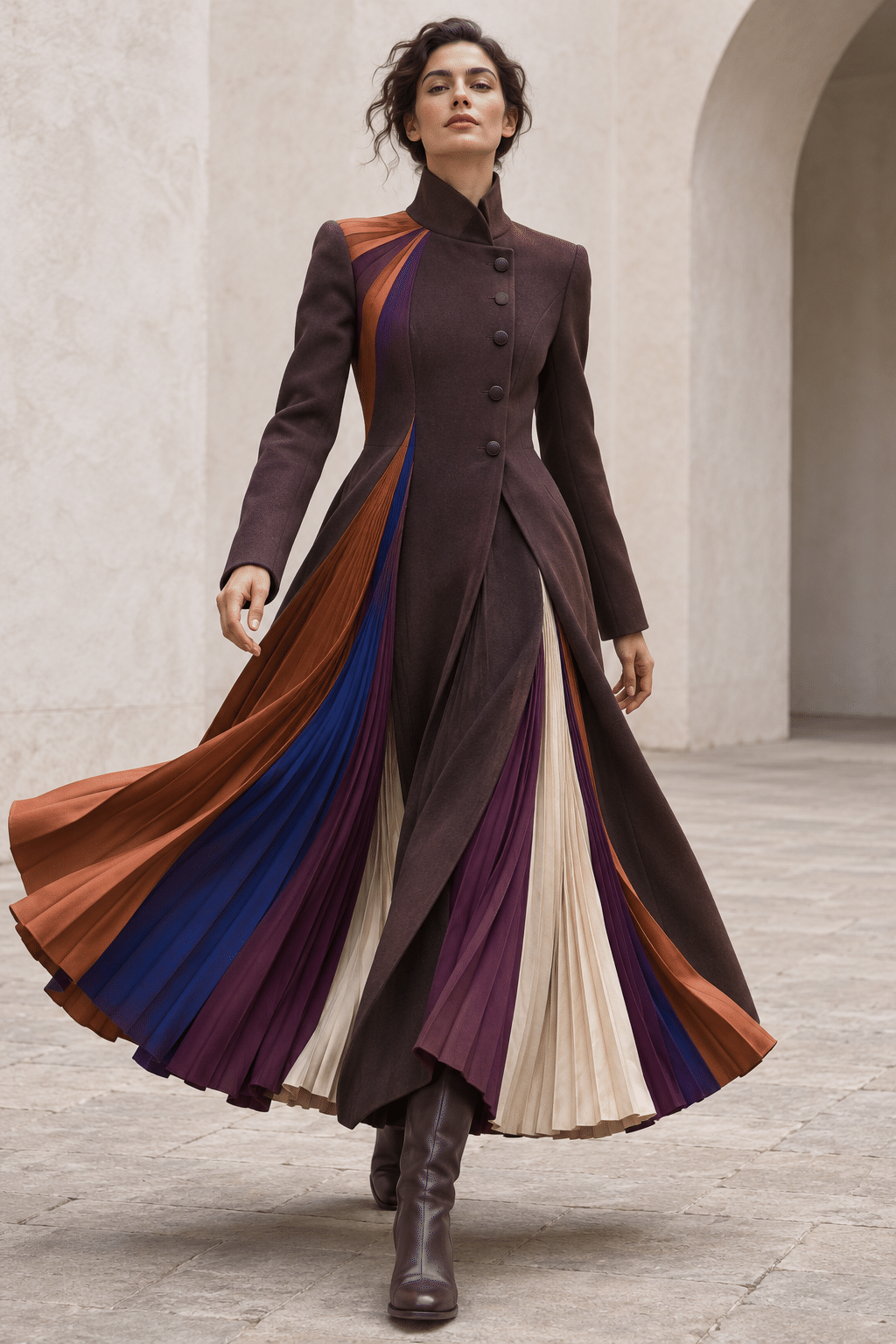
A coat is both a still silhouette and a moving one. Put a strong accent in the depth of a pleat and the color can appear only when the wearer walks. Carry a quieter band across a seam so the garment reads as one shape when it closes. Fabric weight, cut and the wearer’s movement decide whether the idea works.
That principle applies beyond clothing. A drawer can reveal a colored edge only when opened; a curtain can change the density of its bands as it gathers. A ColorAIdos object can reward use. It does not need to announce every visual decision the instant it enters a room.
A studio test anyone can use
Choose a familiar object and sketch its carrier in a single line. Make three versions: two hues and a neutral; black, gray and white; and one material with three surface finishes. Keep the route constant. Compare them at a distance and at the scale of use. Which change makes the route clearer, and which simply makes it louder?
A work belongs in the proposal when its variation follows something observable, its quiet interval has a purpose, and the result respects its material and use. A brightly striped object can fail all three tests; an unpainted paper relief can pass. That breadth is what makes ColorAIdos a theory for daily life rather than a single palette for pictures.
Positive editorial perspective
AOI editorial perspective (AI-authored). The carrier gives color a job. Hair, a folding coat and a curved chair rail can share a visual principle without pretending to be the same material. The black-and-white test makes that principle available to artists who work through value, cut edges or shadow.
Negative editorial perspective
AOI editorial perspective (AI-authored). A confident palette can disguise an arbitrary pattern. If bands cross a joint, face or doorway without explaining anything, the work becomes busy and its function suffers. Start again with a single route and one resting place before reintroducing accents.
Neutral editorial perspective
AOI editorial perspective (AI-authored). ColorAIdos is AOI’s proposed movement and working design method. Its criteria can be tested in flat images, spaces and objects. The gallery illustrates possibilities; it establishes neither a historical movement nor production readiness for the design concepts.
Pocket-sized facts
ColorAIdos is an AOI proposal for a movement and a visual method.
Its three commitments are to follow a carrier, vary a limited family and give the eye a return.
Black-and-white work can use value, spacing, texture and cast shadow to satisfy the same principles.
A small poetic detour
Original words from the AOI studio.
Poetry
The cat turns left; the copper turns.
One strand goes blue beside the ear.
An eye stays still. The picture learns
which path to follow to get here.
A chair keeps amber in the grain.
A coat keeps plum inside a pleat.
The library lets stripes of rain
and sun take turns across our feet.
Now put the colored chalk away.
A folded wing still finds its flight:
a black line broadens into gray
and leaves a little room for white.
The prompt workshop
Original creative exercises. These prompts create new illustrations, not documentary evidence.
Find the carrier
Create an original ColorAIdos oil portrait. Leave the face in warm umber and ivory; run copper, lapis and viridian through flowing hair, varying stroke width as locks turn. Return one accent toward the gaze. Tactile pigment, quiet background, no lettering.
Trace the hair’s direction before assigning color.
Build a rhythm into use
Imagine a library arcade where slim colored shading fins follow the walking route and gather near an entrance. Show daylight casting related bands on pale stone, a legible threshold and quiet places to pause. Original architectural design study, no signs.
Let movement and shade establish the pattern.
Remove every hue
Design a ColorAIdos relief in black, white and charcoal paper. Let the cut edges follow a bird’s sweeping wing, vary band spacing and cast shadows, and reserve a quiet interval at the head. No chromatic color or text.
Use value and material to preserve the same directional logic.
A smile from the studio
Jokes
At the first ColorAIdos furniture critique, someone suggested adding a seventh color to the chair. The maker asked where it should go. “Everywhere.” The chair already had six colors explaining the bend in its rails and a plain seat explaining where to sit. They put the seventh color inside a drawer instead. It has since become the movement’s most exclusive exhibition: it opens on request.