
Modern representational movement
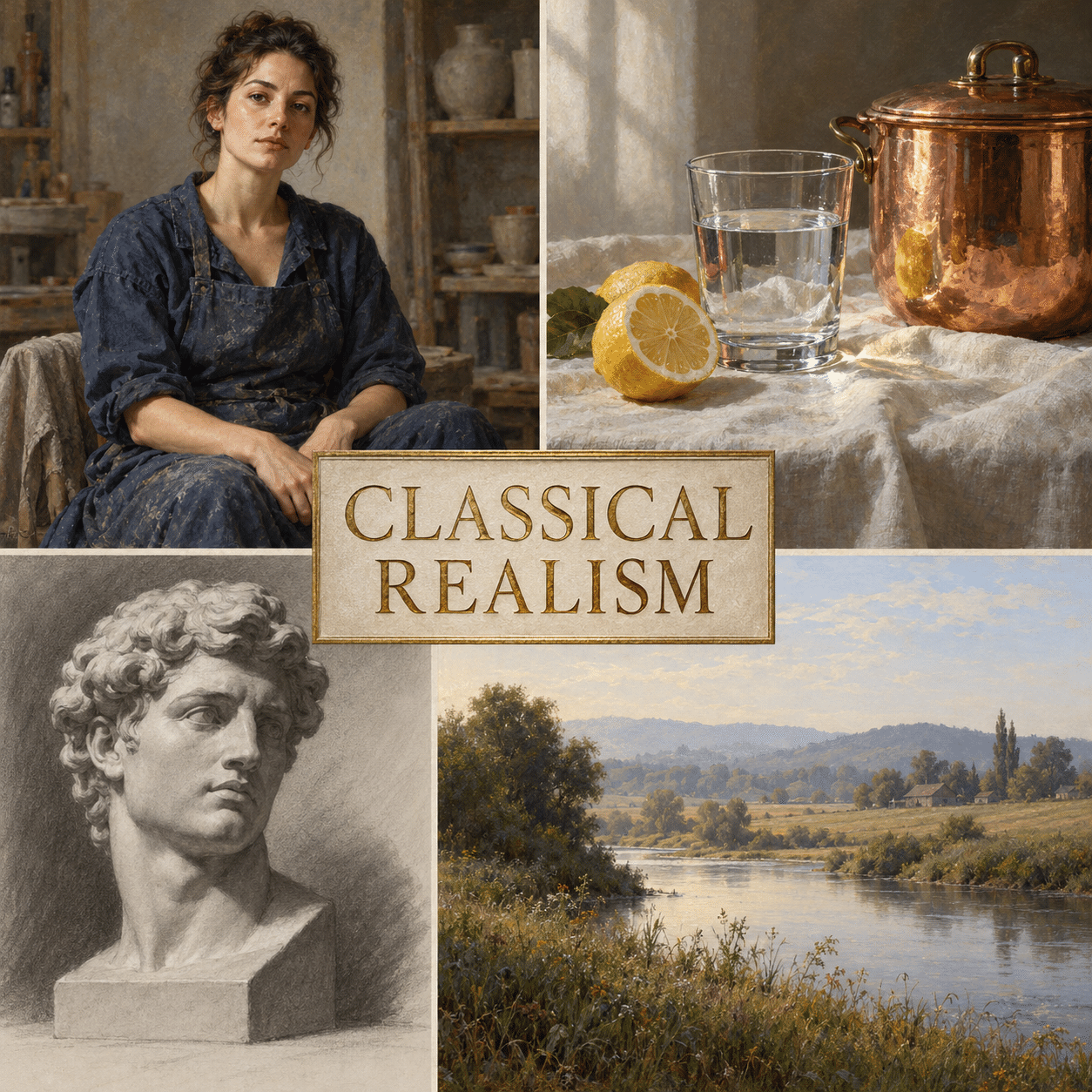
Classical Realism combines disciplined observation with deliberate pictorial design. Explore its modern atelier context, drawing and painting methods, and the difference between convincing form and merely accumulating detail.

A visual introduction
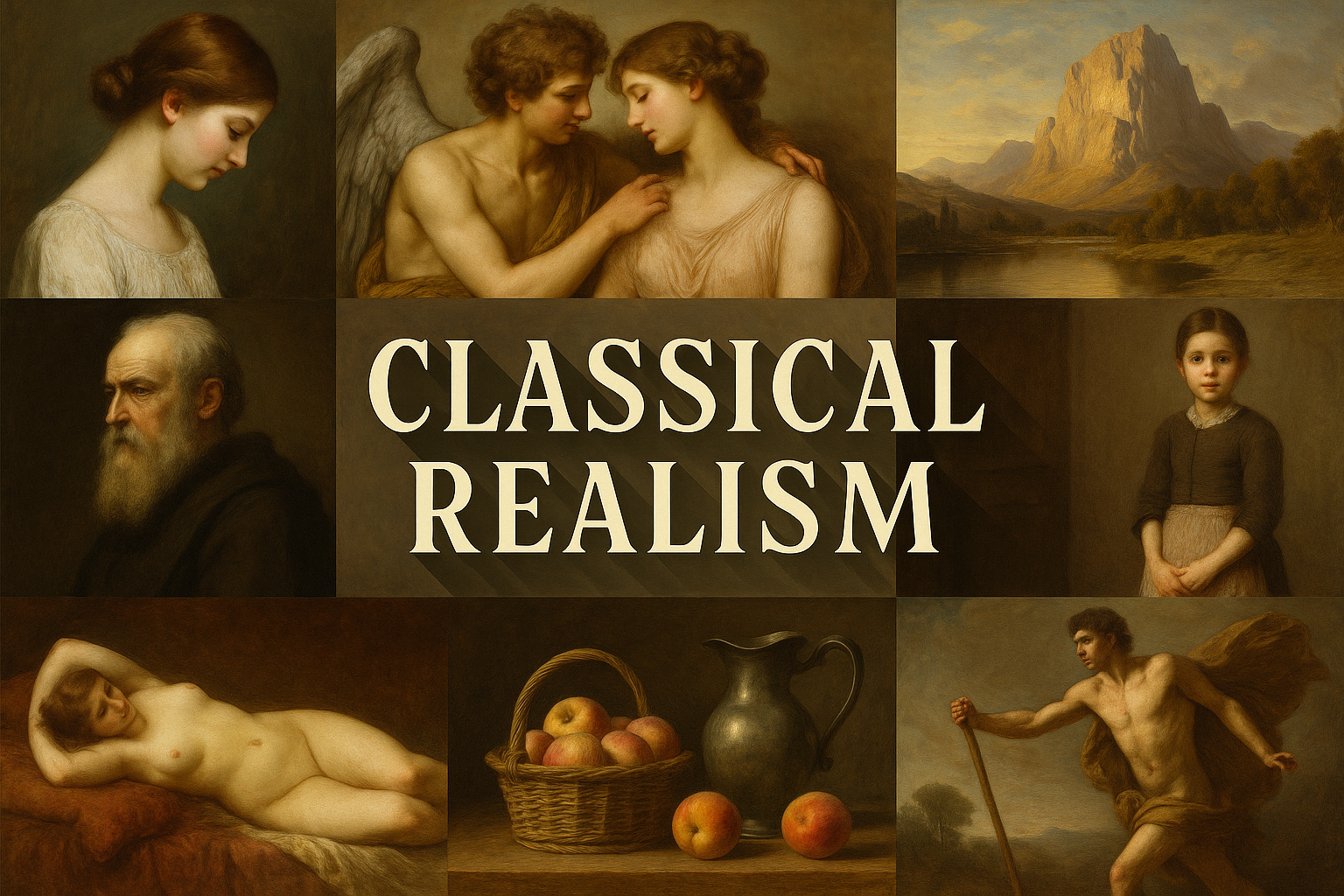
Select an image for a closer look. Use the thumbnails, arrow keys or a swipe to compare examples. Zoom in to inspect details, or share the image that inspires you.




Creative toolbox · take this style further
Choose an input and a destination. Search sends your words to the chosen site; Copy & open puts them on your clipboard to paste there.
Create with AI
Turn your chosen input into an image prompt or a new creative direction.
ChatGPT
Copy your input and paste it into a ChatGPT conversation or image request.
Copy & open ChatGPT (new tab)Claude · Anthropic
Develop an image prompt or explore the style in a new Claude conversation.
Copy & open Claude · Anthropic (new tab)Midjourney
Paste your input into the Imagine bar on the Create page.
Copy & open Midjourney (new tab)Adobe Firefly
Copy your input, open Firefly, and paste it into the prompt field.
Copy & open Adobe Firefly (new tab)Leonardo.Ai
Copy your input, open Leonardo, and paste it into the generation field.
Copy & open Leonardo.Ai (new tab)Image search
Find visual references. Short, concrete keywords usually work best.
Lexica
Search AI images and prompts using your selected input.
Search with this input Lexica (new tab)Pexels
Search the photo and video library. Short keywords often work best.
Search with this input Pexels (new tab)Pixabay
Search photos, illustrations and other images.
Search with this input Pixabay (new tab)Unsplash
Search photographs using the style name or your own keywords.
Search with this input Unsplash (new tab)Wikimedia Commons
Search photographs, artworks and historical images. Check each file for its source and reuse terms.
Search with this input Wikimedia Commons (new tab)Art & research
Explore artists, collections and the ideas behind a style.
Wikipedia
Search for background reading. A style may not have its own article.
Search with this input Wikipedia (new tab)WikiArt
Copy your input into WikiArt’s search to explore artists and artworks.
Copy & open WikiArt (new tab)Europeana
Paste your keywords into the search to explore European museum, library and archive collections.
Copy & open Europeana (new tab)Inspiration
Discover portfolios and visual ideas from creative communities.
Instagram hashtags
Search a hashtag made from your input: spaces and punctuation are removed. Instagram may require sign-in.
Search with this input Instagram hashtags (new tab)ArtStation
Paste your input into artwork search for concept art, environments, characters and visual development.
Copy & open ArtStation (new tab)Behance
Paste your input into project search for illustration, design and visual storytelling.
Copy & open Behance (new tab)A closer look
Coherent illumination; convincing proportion and weight; a hierarchy of sharp, soft and lost edges; carefully related color notes; composed figures, still lifes and landscapes whose details support a larger visual order.
A modern name with older foundations
Classical Realism, in its modern art context, describes a strand of representational painting and drawing associated with the atelier revival and Richard Lack. It is not another name for Renaissance art or eighteenth-century Neoclassicism. Its practitioners draw on older teaching traditions while making work in their own time.
Artist and teacher Stephen Gjertson traces the designation to the 1982 exhibition Classical Realism: The Other Twentieth Century. His account connects Lack with R. H. Ives Gammell and the Boston painting tradition. This is a participant’s account, useful for understanding the movement’s self-definition; its advocacy for traditional art should not be mistaken for a neutral verdict on every other form of art.
Observation becomes a composition
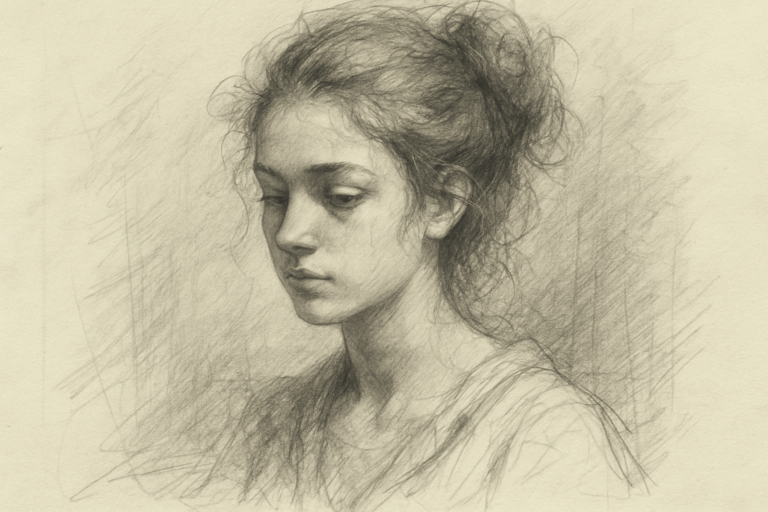
A convincing painting does more than inventory visible objects. Proportion, gesture, placement and intervals establish the structure before surface detail becomes persuasive. In a portrait, the angle of a shoulder and the space beside a head can carry more expression than another meticulously painted eyelash.
Light provides a second organizing system. Separate the principal light and shadow masses, then judge smaller changes inside them. A reflected light can explain a turning form without becoming as emphatic as the main illumination. The aim is an intelligible relation among values, not a compulsory dark background or a theatrical spotlight.
The atelier is a method of study, not one universal recipe
Contemporary studio schools illustrate the continuing importance of sustained observation. Grand Central Atelier describes a sequence involving cast drawing, structural study of the model, grisaille and color painting. Its FAQ specifies comparative measurement rather than sight-size. The school is an example of current observational training, not evidence that every Classical Realist follows an identical curriculum.
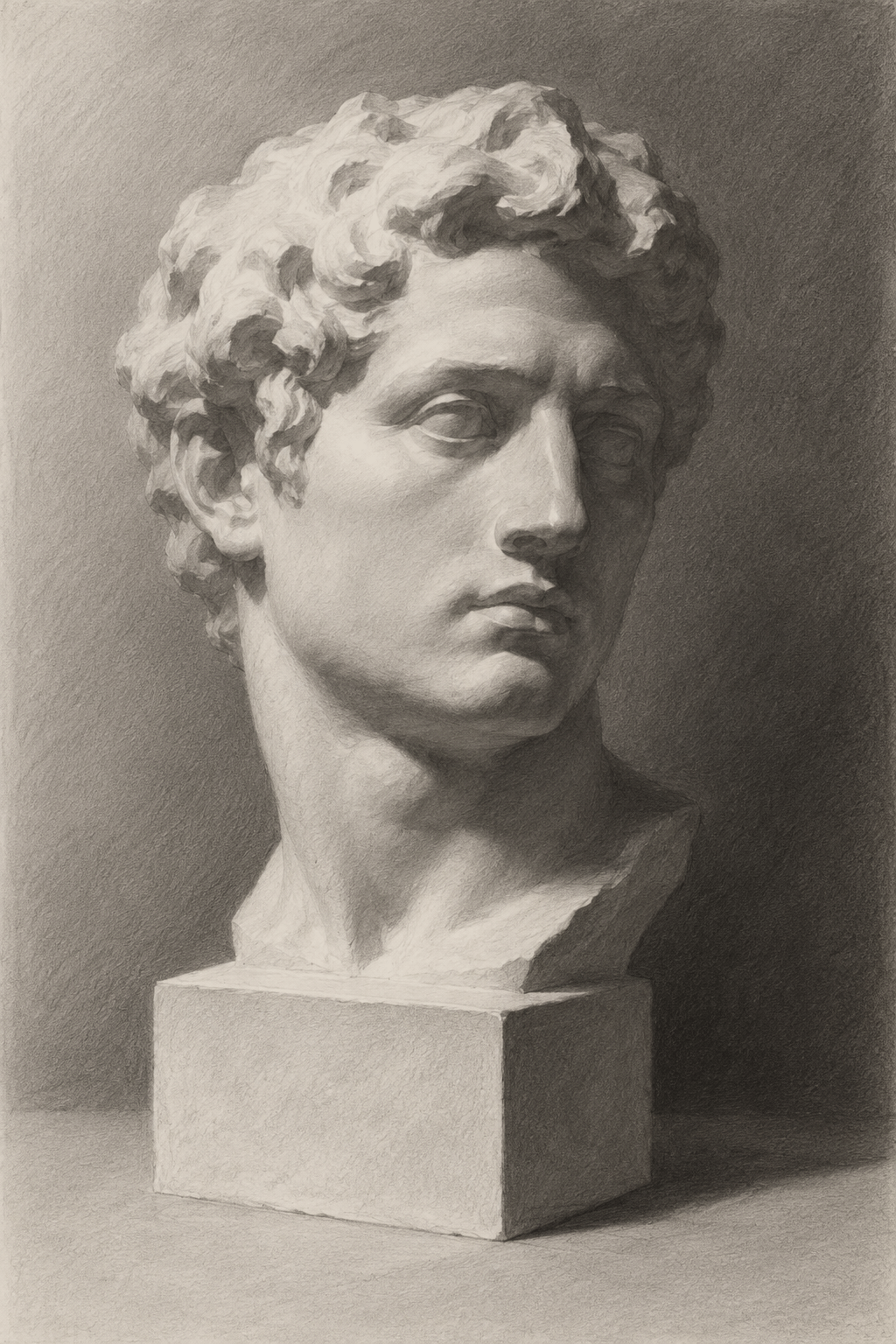
For a practical study, first choose a stable viewpoint and light source. Establish the largest proportions, compare negative spaces, and simplify the subject into a few value groups. Recheck those relationships throughout the work. Elaborate rendering cannot reliably rescue a misplaced feature or a cast shadow whose direction contradicts the light.
Color, edges and material
A restrained palette can make relationships easier to judge, but Classical Realism does not require everything to be brown. A cool ceramic bowl, warm skin or a brilliant flower can remain convincing when its saturation and value fit the surrounding light. Reserve the most insistent accents for places that deserve attention.
Edges describe both form and emphasis. A crisp overlap may clarify the meeting of two objects; a softened transition may suggest a curved surface turning away. Lost edges can connect a subject to its surroundings. If every boundary is equally sharp, the painting becomes a catalogue of cutouts. If every boundary is blurred, structure and material disappear.
What belongs beside it—and what remains distinct
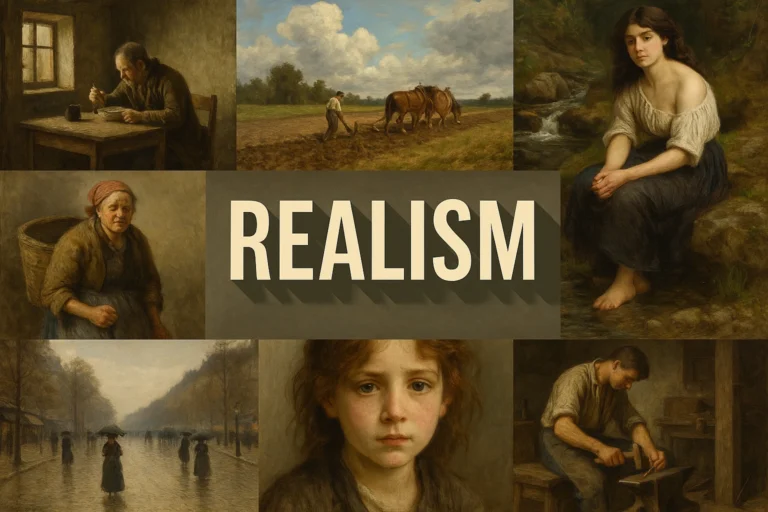
Academicism is a broader historical and institutional subject. Neoclassicism has its own historical context and engagement with antiquity. Nineteenth-century Realism also carries particular social and artistic histories. Classical Realism can borrow from earlier painters without enrolling all of those painters retrospectively in a movement named much later.
Nor is a photographically detailed finish a sufficient definition. A quick observational study may show stronger design and more convincing color relationships than a laboriously polished image. Contemporary clothing, domestic objects and ordinary workplaces can sustain this approach; invented antique costumes are optional, not admission requirements.
Using this visual language today
For an original artwork, select one problem: the weight of a seated figure, the transparency of glass, or the transition from a sunlit field into distant atmosphere. Arrange the composition around that problem. Reduce competing details and let the subject retain its individual irregularities rather than smoothing every person or object into a generic ideal.
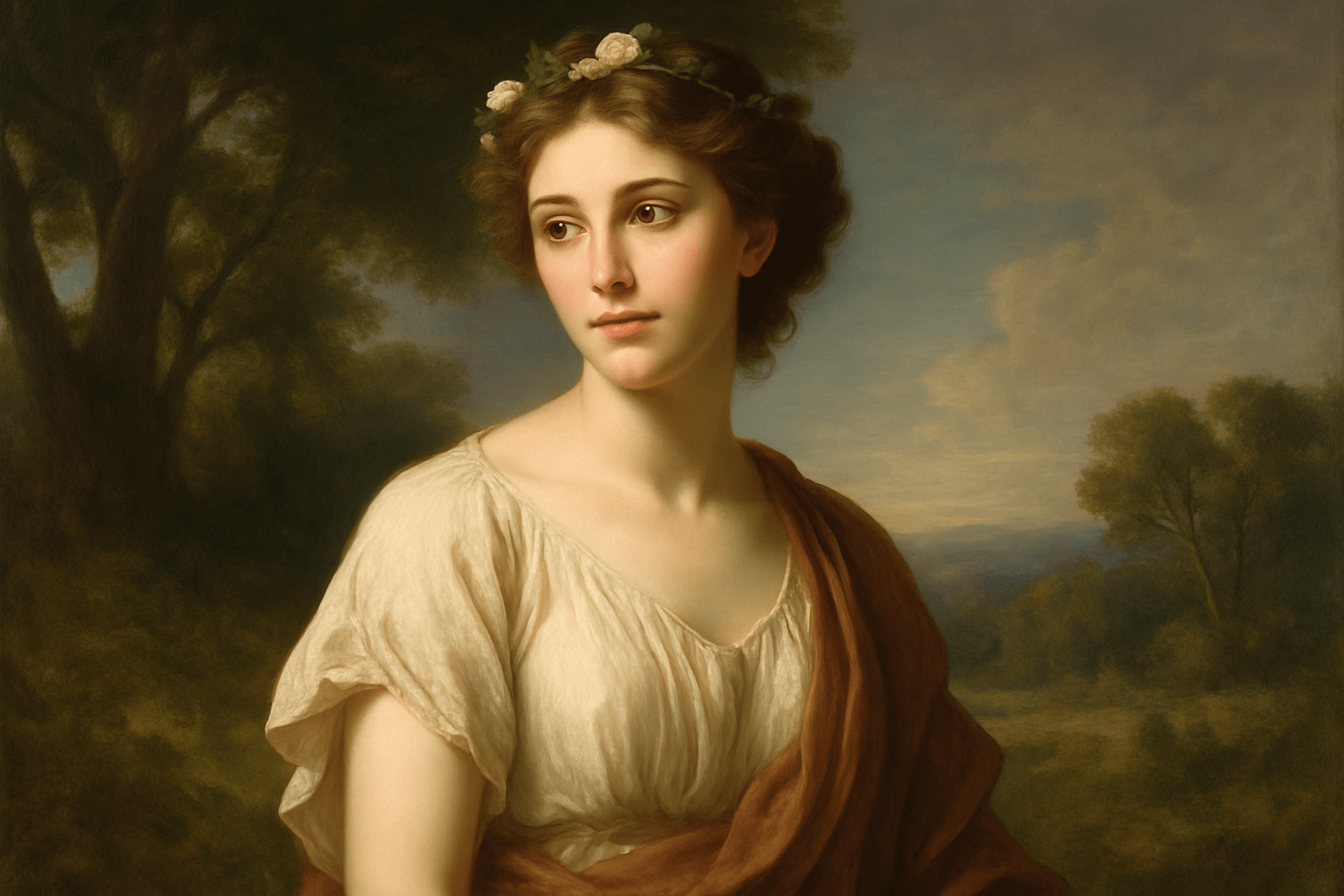
For image prompts, specify viewpoint, illumination, large value masses, edge hierarchy and material differences. A request for “masterpiece realism” alone says very little. The gallery here contains AI-generated interpretations of those visual principles, not paintings by Lack or evidence of years of physical studio training. Inspect the hands, object geometry and lighting before treating any generated detail as a useful drawing reference.
Positive editorial assessment — AI-authored
The strongest achievement is coordinated attention: drawing, color and composition reinforce one another. A plain pear or a familiar face can gain presence through the accuracy of its relationships. Patient observation also leaves room for decisions about intimacy, dignity and the viewer’s distance from the subject.
Critical editorial assessment — AI-authored
Technical accomplishment can become an end in itself. Recycled props, standardized beauty and imitation old-master lighting may produce impressive surfaces with little individual necessity. Improvement begins by choosing a particular subject and expressive problem, then allowing the formal decisions to serve that problem rather than a prestige vocabulary.
Neutral editorial assessment — AI-authored
Classical Realism offers a framework for representational work grounded in observation and craft. It is useful for portraits, still lifes, figures and other subjects requiring coherent form. Its methods do not settle questions of meaning, originality or cultural value, and they need not be used to rank all art against one standard.
Pocket-sized facts
The modern designation is associated with Richard Lack and the 1982 exhibition Classical Realism: The Other Twentieth Century.
Earlier representational painters are influences and predecessors, not automatically members of the later movement.
Contemporary atelier methods vary; comparative measurement and sight-size are not interchangeable universal requirements.
A small poetic detour
Original words from the AOI studio.
Poetry
The pear holds still; the daylight moves.
A shadow gathers at its heel.
The painter weighs a patch of blue
against the warmth the eyes can feel.
No century can own this pause,
no borrowed robe can make it true:
attention finds a shape to keep,
and leaves the rest of daylight through.
The prompt workshop
Original creative exercises. These prompts create new illustrations, not documentary evidence.
Begin with three objects
Create an original Classical Realist oil-painting interpretation of one pear, an ivory ceramic cup and a folded blue cloth on a wooden table. One soft window light, carefully measured proportions, grouped shadows, restrained color relationships, selective crisp edges and a quiet background. No lettering, signature or antique props added for effect.
A portrait with presence
Create an original Classical Realist portrait interpretation of a fictional adult craftsperson in contemporary work clothes, seated beside a studio window. Build expression through posture and a natural gaze; coherent anatomy and hands, warm skin against cool reflected light, a clear silhouette, selective detail around the face and softly subordinated surroundings. Visible painterly surface, no photographic skin smoothing.
Observation in a contemporary setting
Create an original Classical Realist painting interpretation of a bicycle repair workbench beside an open doorway. Compose a triangular relationship between a wheel, a small metal tool tray and a folded cloth. Separate warm interior shadows from cool daylight, distinguish rubber metal and fabric through edges and reflected light, keep the background economical. No readable brand names or decorative pseudo-signatures.
Your next inspiration
Discover another art style
Follow a visual thread to the next subject.
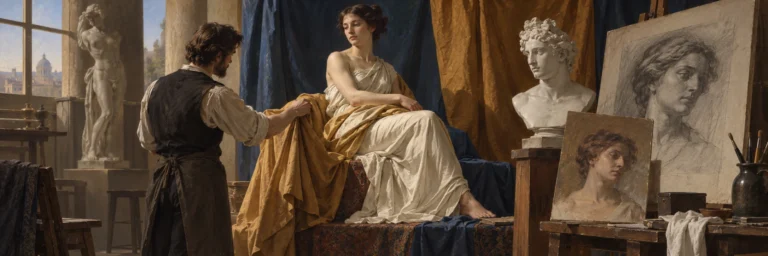
Academicism: Institutions, Ideals and the Art of Finish
Distinguish historical academic institutions from the modern atelier movement.
A smile from the studio
Jokes
The still life asked whether it could take a break. The pear pointed out that it had been doing nothing exceptionally well for three hours.
Sources and further exploration
Grand Central Atelier: Core FAQ — clarifies its comparative measurement and life-study approach