Plural cultural histories
Chinese art includes many media, periods and individual practices. The handscroll offers one useful way to study how viewing can unfold over time.
A closer look
For an original horizontal composition, plan a sequence of visual pauses rather than one central spectacle.
Understanding the subject
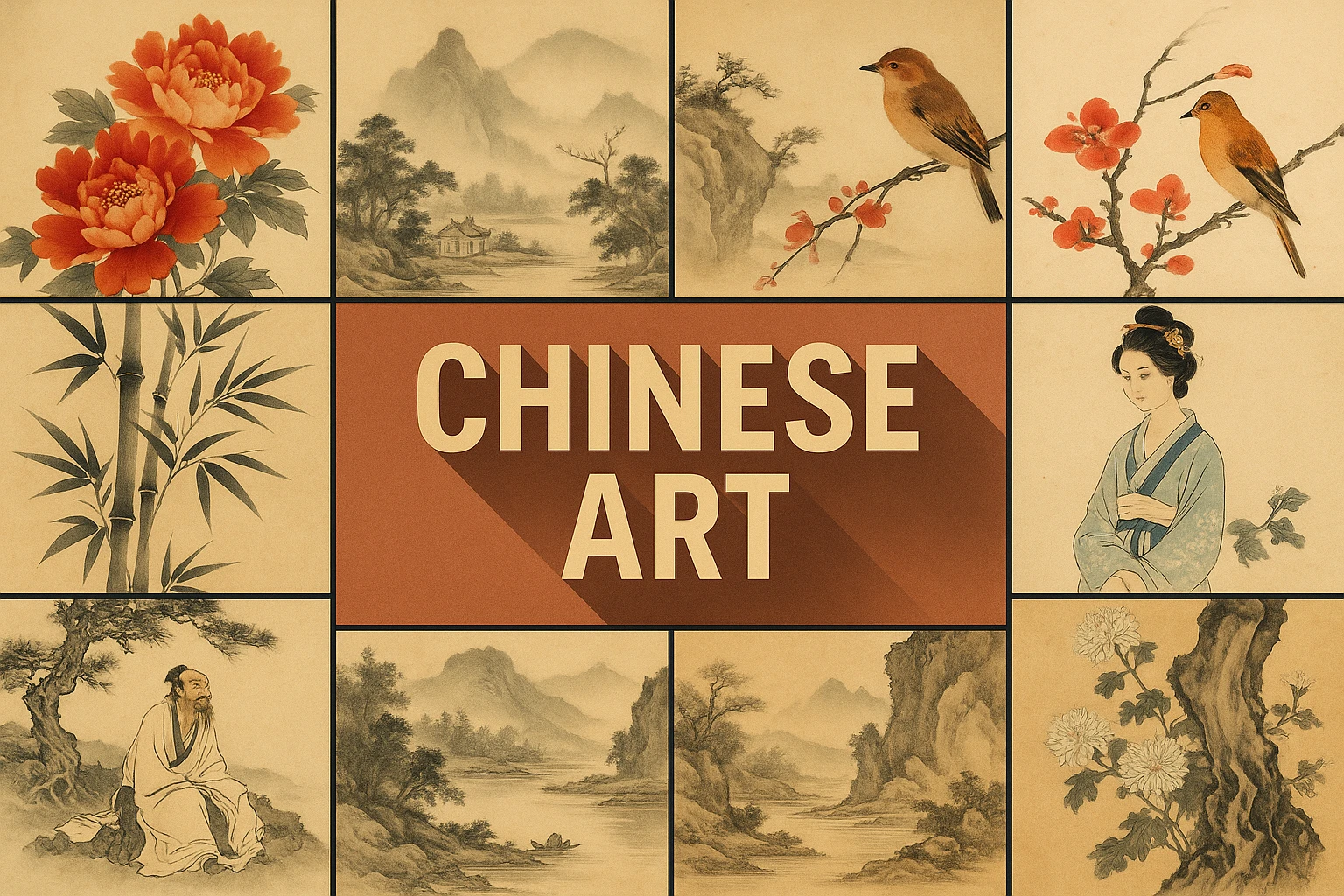
Chinese art is not one homogeneous visual style. Painting, calligraphy, ceramics, sculpture and other forms have varied across periods and settings. A handscroll is one specific format in which the experience of an image can unfold section by section. It should not be used to define all Chinese art, and an invented scroll-like panorama is not evidence of historical technique, authorship or cultural authority.
AOI looking and making workshop
For an original horizontal composition, plan a sequence of visual pauses rather than one central spectacle. Let a path, river or changing density connect the sections, and use open areas to alter pace. Consider how the scene would read if only part were visible at a time. Avoid invented calligraphy and seals that imply a signature or authentication. A contemporary subject, such as a riverside cycle route, can make the formal experiment clear while respecting the difference between a borrowed viewing format and a claim of traditional authorship.
The prompt workshop
Original creative exercises. These prompts create new illustrations, not documentary evidence.
A view that unfolds
Create an original long horizontal illustration of a riverside path, alternating clusters of trees, open water and small bridges. Use pauses and changing density to guide sequential viewing, without seals or calligraphy.
Contemporary panorama
Create a contemporary scroll-format scene of a city park along a canal, quiet intervals and small everyday activities connected by a winding route. Keep the invented setting coherent and avoid cultural stereotypes.
Rhythm without a story
Create an original abstract horizontal composition of ink-like washes and open paper, varying density gradually from left to right. Explore sequential viewing without imitating a named artist or historical work.
Your next inspiration
Discover another art style
Follow a visual thread to the next subject.