
Painting approach
Expressive oil painting uses the direction, thickness and rhythm of paint to make the act of painting part of the image.
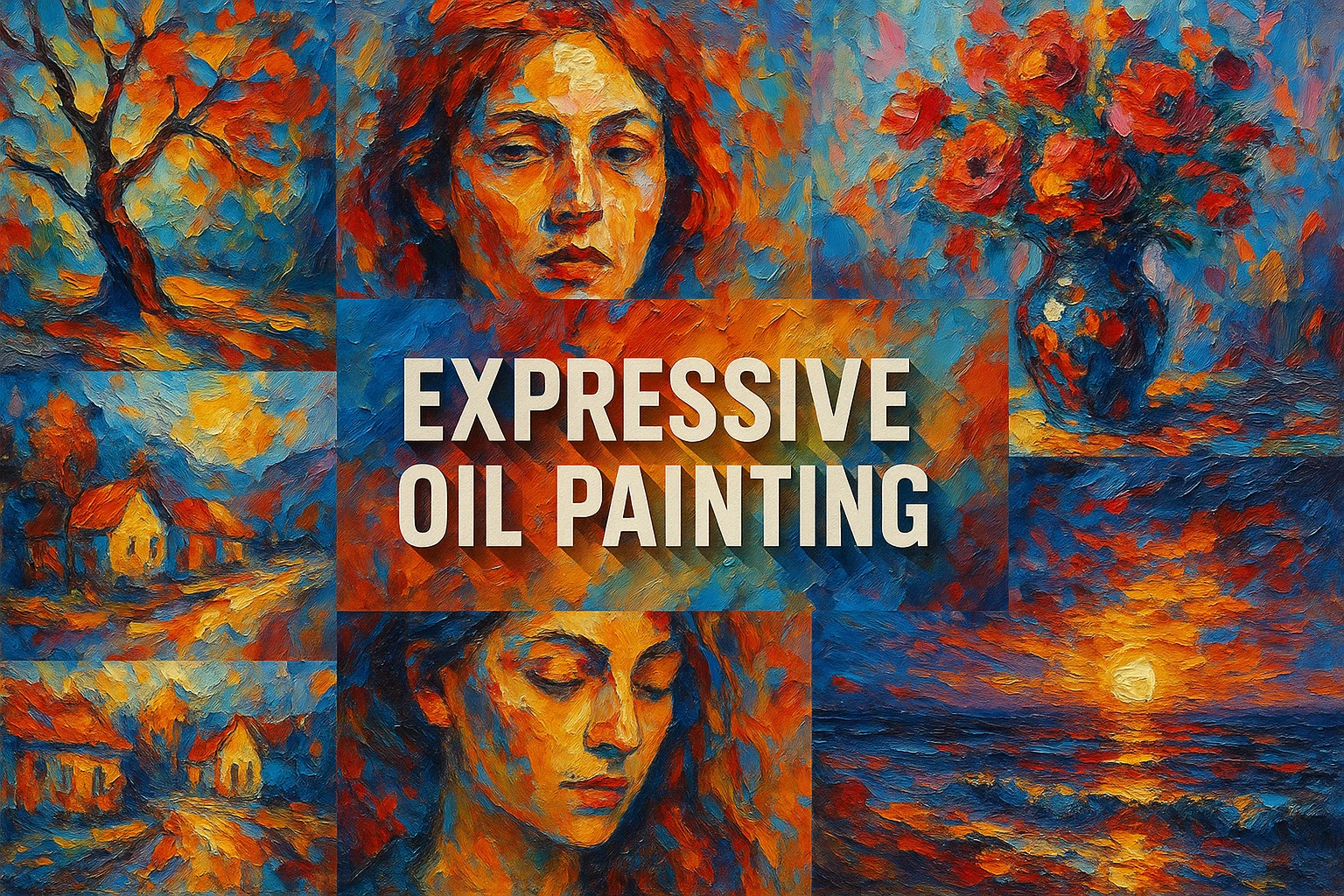
A closer look
Choose a simple subject and identify its main directional forces.
Understanding the subject
Expressive oil painting is a practical description, not the name of one historical school. Oil paint can support thin passages, opaque strokes and raised texture, but artists combine these possibilities in very different ways. Impasto describes thick application; it does not automatically make a work emotionally expressive. The subject, composition and contrast between kinds of handling help determine what the surface communicates.
AOI looking and making workshop
Choose a simple subject and identify its main directional forces. In a vase of flowers, stems may pull upward while the table steadies the arrangement. Let brush direction reinforce those forces, and reserve thicker paint for a few areas that deserve attention. Thin, quiet passages give active marks something to contrast with. Keep the largest value shapes readable before adding texture. In a digital interpretation, avoid a uniform embossed finish: variation in edge, density and mark scale makes the simulated surface more convincing and more useful compositionally.
The prompt workshop
Original creative exercises. These prompts create new illustrations, not documentary evidence.
A lively still life
Create an original expressive oil-painting interpretation of sunflowers in a blue jug, upward brush rhythms and a stable dark tabletop. Reserve thick paint for selected petals and keep the background quieter.
Weather in paint
Create an original coastal painting with broad wind-driven strokes, thin gray sky passages and a few thick white wave accents. Let paint direction follow the movement of weather and water.
One object, two surfaces
Create an original oil-painting-style study of a red pear, half described with thin translucent passages and half with deliberate thick marks. Keep the form coherent and the contrast purposeful.
Your next inspiration
Discover another art style
Follow a visual thread to the next subject.


Sources and further exploration
Impasto | Glossary | National Gallery, London
Vincent van Gogh | Sunflowers | NG3863 | National Gallery, London