
Painting approach associated with Impressionism
An Impressionist approach can emphasize changing light and the relationships between neighboring colors, while leaving individual marks visible.
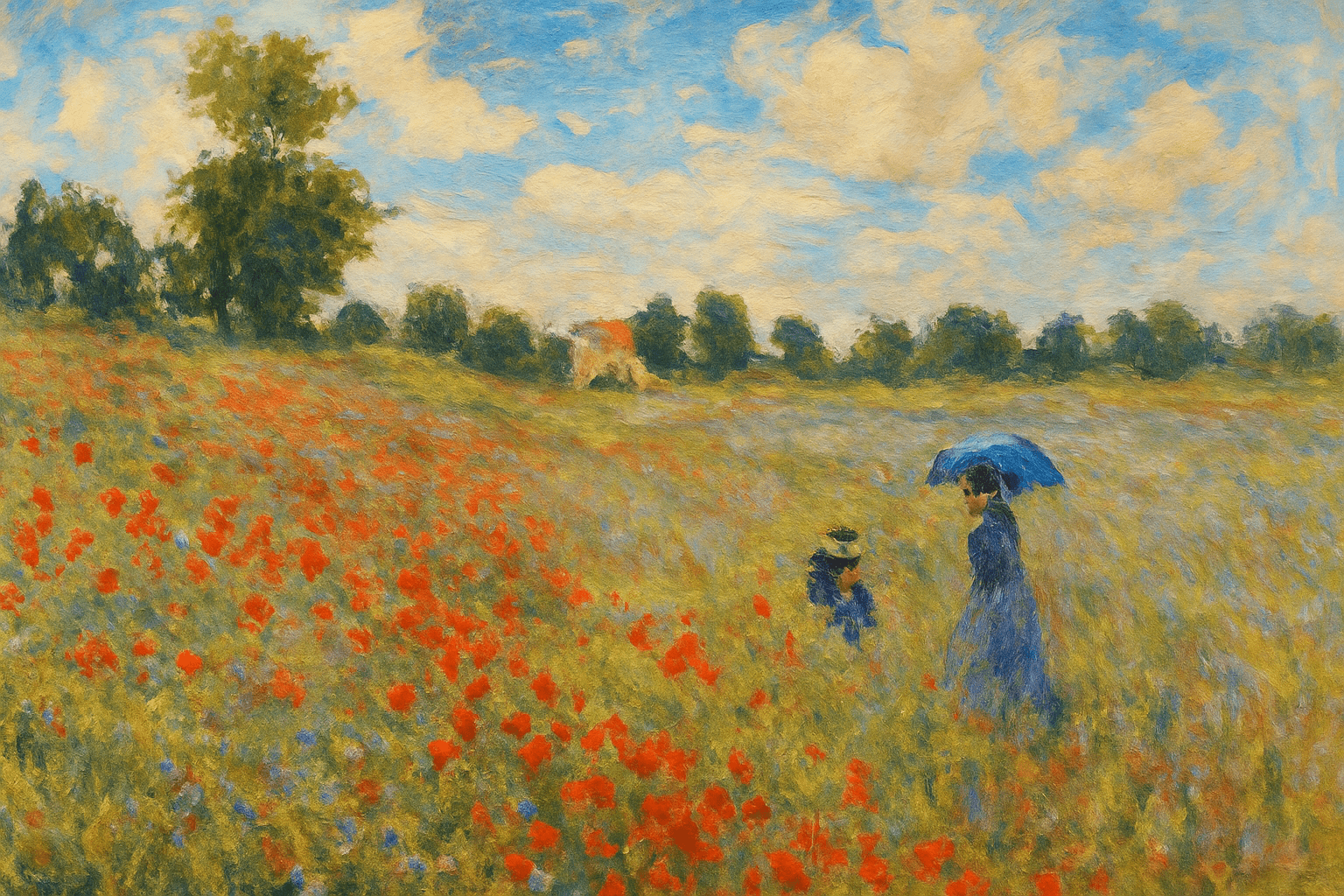
A closer look
Begin with the broad light condition: cool overcast weather, warm late sun or reflected shade.
Understanding the subject
Impressionism is a historical movement associated with particular artists and exhibitions; “impressionist” is also used more loosely for an appearance. Broken color, visible brushwork and attention to light are useful observations, but not every loosely painted landscape belongs to the movement. A scene’s changing conditions can matter more than a finished inventory of every object. Individual works remain more precise references than a generic soft-focus effect.
AOI looking and making workshop
Begin with the broad light condition: cool overcast weather, warm late sun or reflected shade. Compare adjacent colors rather than naming each object’s expected color in isolation. A white wall may contain cool shadow and warm reflection without ceasing to read as white. Keep strokes large enough to serve the viewing distance. Avoid equal detail everywhere and let edges soften where light joins forms. For an original exercise, paint the same simple scene under two imagined conditions and compare what changes in the whole arrangement.
The prompt workshop
Original creative exercises. These prompts create new illustrations, not documentary evidence.
A changing garden
Create an original Impressionist-inspired garden painting in cool morning light, broken color, visible brush marks and a few warm flower accents. Keep the large light relationships clearer than individual petals.
Light across water
Create an original riverside painting with a pale bridge, reflected afternoon light and varied short strokes across the water. Use color relationships rather than black outlines to separate forms.
Two hours
Create an original diptych of the same small café terrace in overcast morning and warm evening light. Keep the viewpoint constant while changing the overall color relationships and edge emphasis.
Your next inspiration
Discover another art style
Follow a visual thread to the next subject.

