
Fictional
Chemicalism is an AOI artistic interpretation that makes transformation the subject: colors meet, boundaries advance, crystals gather and surfaces record what has changed. Its visual logic comes from relationships between materials rather than decorative laboratory symbols.
An A⊕I –[-.+] creαt¡ve c⊕ncept, n⊕t αn estαbl¡she∂ h¡st⊕r¡cαl m⊕vement.
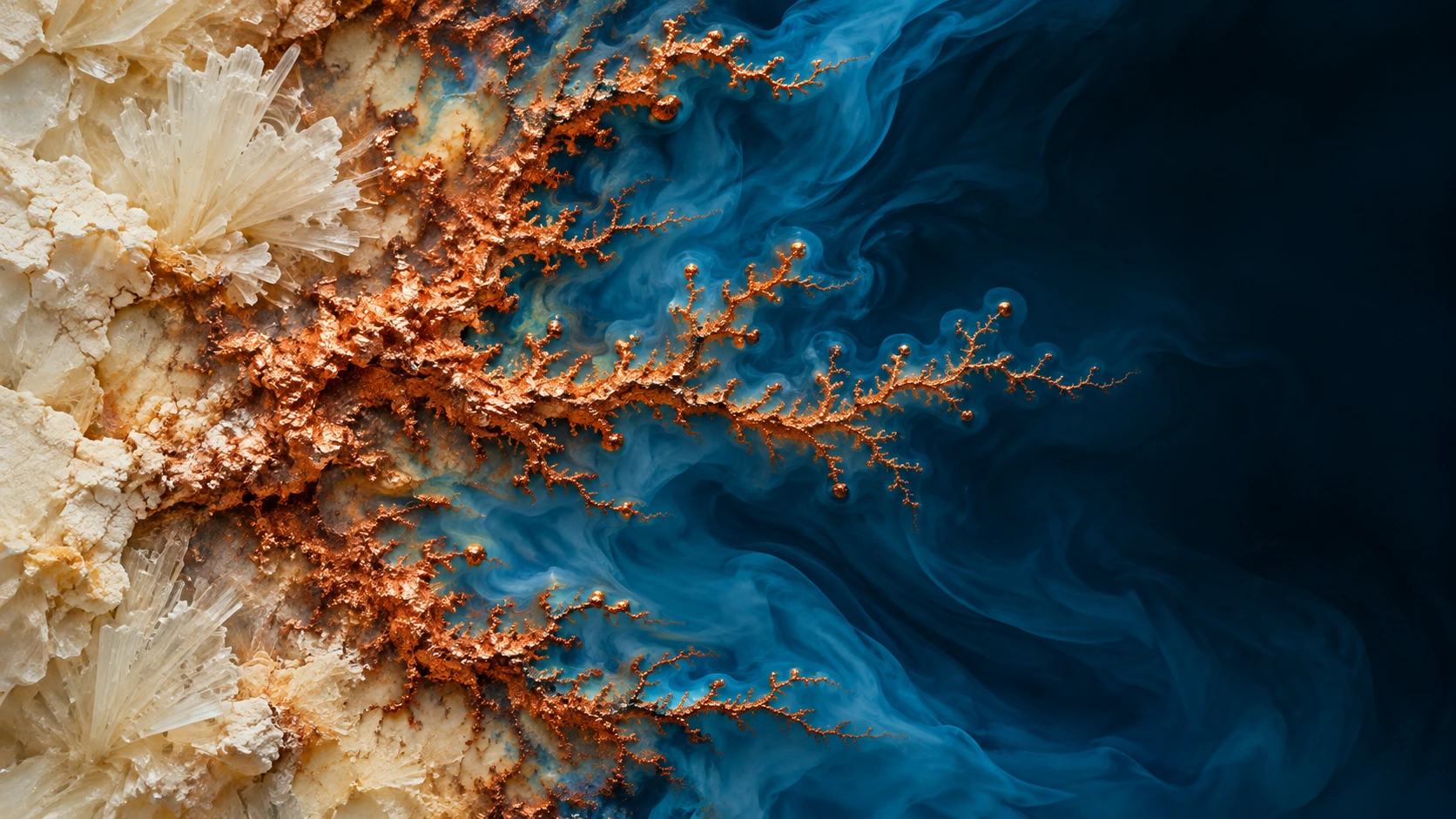
A visual introduction
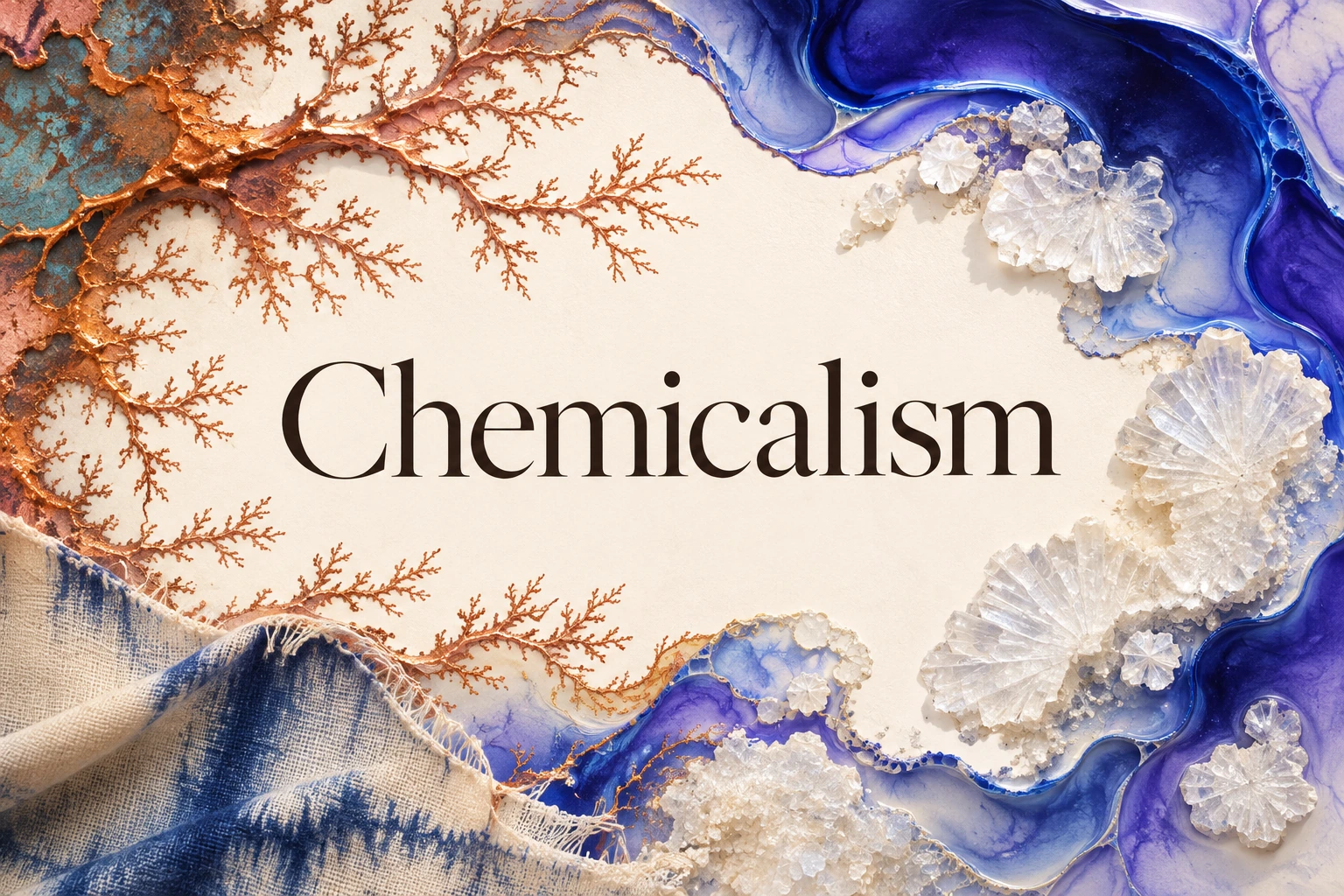
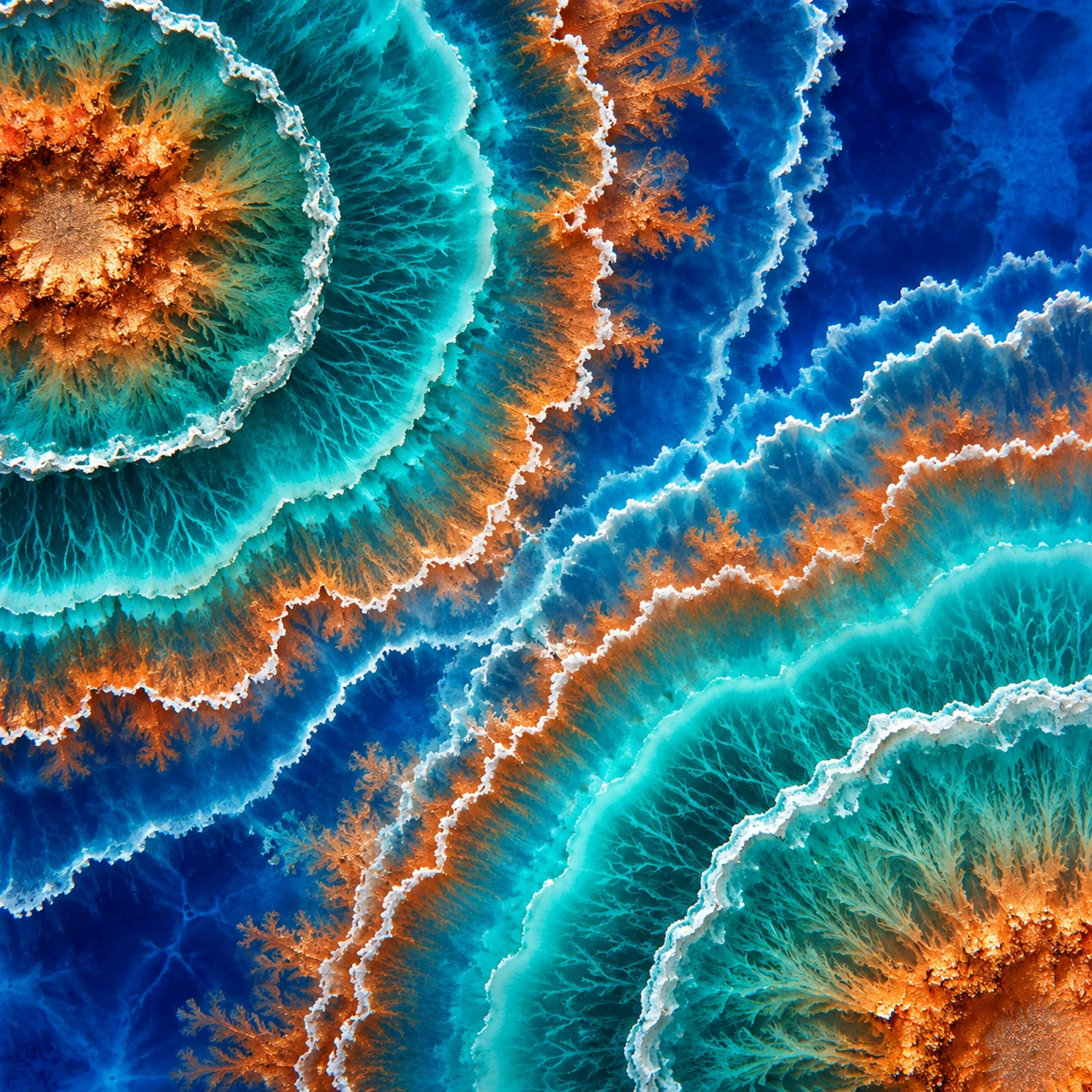
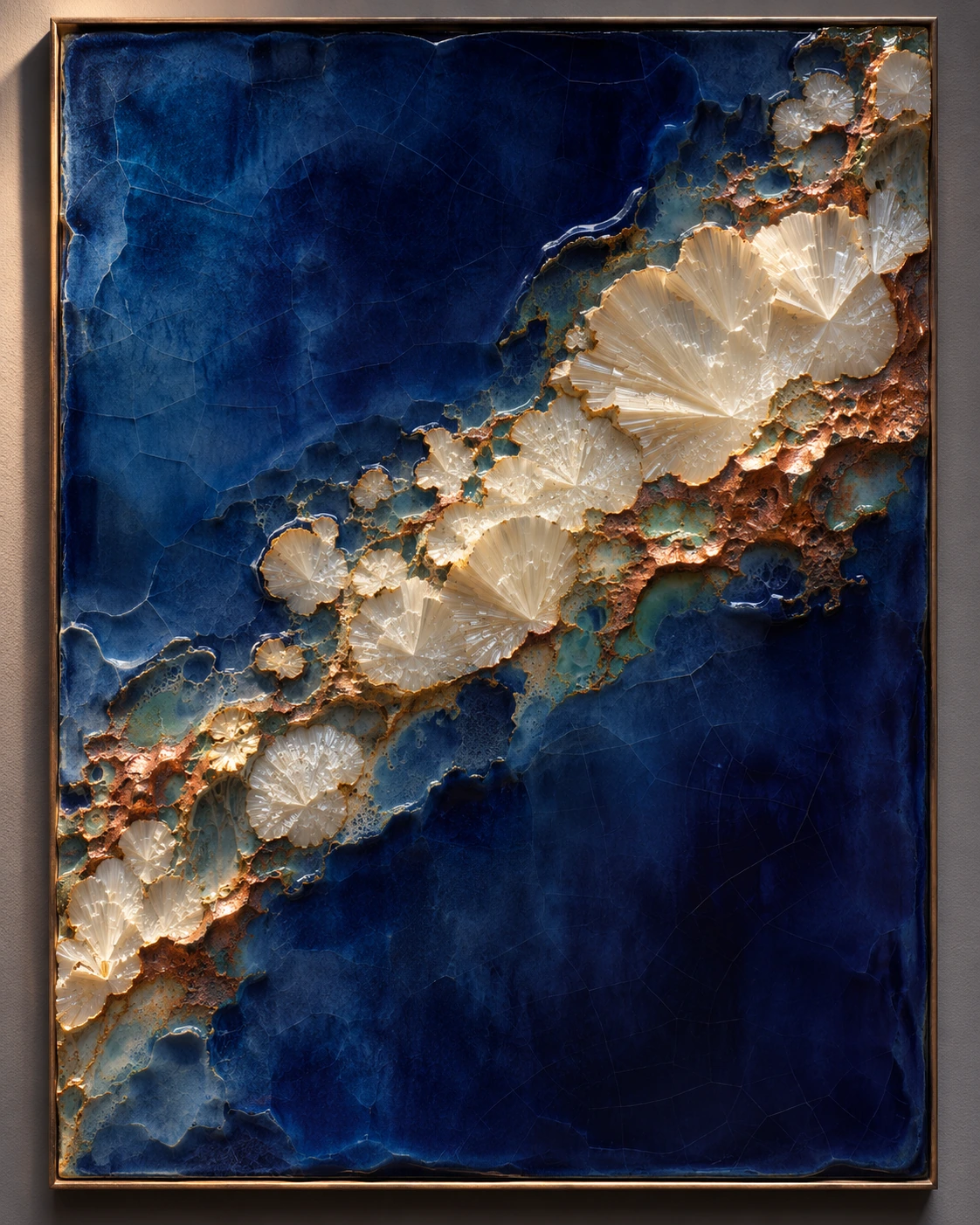
Five original AI-generated studies explore this subject through a banner, a titled collage and three standalone examples.
Select an image for a closer look. Use the thumbnails, arrow keys or a swipe to compare examples. Zoom in to inspect details, or share the image that inspires you.
Creative toolbox · take this style further
Choose an input and a destination. Search sends your words to the chosen site; Copy & open puts them on your clipboard to paste there.
Create with AI
Turn your chosen input into an image prompt or a new creative direction.
ChatGPT
Copy your input and paste it into a ChatGPT conversation or image request.
Copy & open ChatGPT (new tab)Claude · Anthropic
Develop an image prompt or explore the style in a new Claude conversation.
Copy & open Claude · Anthropic (new tab)Midjourney
Paste your input into the Imagine bar on the Create page.
Copy & open Midjourney (new tab)Adobe Firefly
Copy your input, open Firefly, and paste it into the prompt field.
Copy & open Adobe Firefly (new tab)Leonardo.Ai
Copy your input, open Leonardo, and paste it into the generation field.
Copy & open Leonardo.Ai (new tab)Image search
Find visual references. Short, concrete keywords usually work best.
Lexica
Search AI images and prompts using your selected input.
Search with this input Lexica (new tab)Pexels
Search the photo and video library. Short keywords often work best.
Search with this input Pexels (new tab)Pixabay
Search photos, illustrations and other images.
Search with this input Pixabay (new tab)Unsplash
Search photographs using the style name or your own keywords.
Search with this input Unsplash (new tab)Wikimedia Commons
Search photographs, artworks and historical images. Check each file for its source and reuse terms.
Search with this input Wikimedia Commons (new tab)Art & research
Explore artists, collections and the ideas behind a style.
Wikipedia
Search for background reading. A style may not have its own article.
Search with this input Wikipedia (new tab)WikiArt
Copy your input into WikiArt’s search to explore artists and artworks.
Copy & open WikiArt (new tab)Europeana
Paste your keywords into the search to explore European museum, library and archive collections.
Copy & open Europeana (new tab)Inspiration
Discover portfolios and visual ideas from creative communities.
Instagram hashtags
Search a hashtag made from your input: spaces and punctuation are removed. Instagram may require sign-in.
Search with this input Instagram hashtags (new tab)ArtStation
Paste your input into artwork search for concept art, environments, characters and visual development.
Copy & open ArtStation (new tab)Behance
Paste your input into project search for illustration, design and visual storytelling.
Copy & open Behance (new tab)A closer look
Look for a legible transition between two or more material states, with fronts, deposits, branching structures or concentration-like gradients. The image should suggest a process with a direction, a rhythm and a consequence.
An image of becoming
Here Chemicalism names a proposed artistic framework developed for AOI from the requested term. It is not presented as an established historical art movement. The word has unrelated uses elsewhere; this entry defines its own artistic meaning through visible material transformation.
Begin with a change that a viewer can follow. A clear region becomes densely patterned; a smooth film develops a crystalline edge; two colored fields meet along a moving boundary. Give the composition an earlier-looking area, a zone of activity and an area that appears altered. These relationships supply narrative without requiring a human figure.
Borrow questions from science
Research on reaction–diffusion systems provides a useful reference for thinking about pattern formation. Subramanian and Murray study how patterns are selected in such systems, while Menou, Luo and Zwicker examine how physical interactions affect Turing patterns. These are scientific models with stated assumptions, not universal explanations for every branching or striped image.
The artistic translation is to ask what interacts, where it moves and what persists. A painted band can suggest an advancing front. A field of repeated marks can suggest a local rule. Neither becomes a measured chemical observation merely because it resembles one. The gallery uses invented compositions and claims no experimental results.
Give each material a distinct role
Choose a small visual cast. One region might be transparent and slow, another opaque and granular, and a narrow boundary sharply luminous. Differences in edge behavior help the viewer understand the encounter. If every region has the same gloss, color intensity and detail, the apparent reaction loses its hierarchy.
Work with a restrained palette before adding spectral effects. Copper, ink blue and pale mineral white can carry a strong transformation. Color may be symbolic or compositional; it need not imply that a named substance has that exact appearance. Keep chemical labels and molecular diagrams out unless their structures are deliberately verified.
Compose the front and the residue
A reaction-like front can sweep diagonally, branch toward an empty area or form concentric bands around a focal point. Leave some quiet surface ahead of it. That unoccupied space gives the pattern somewhere to go and makes the active boundary feel consequential.
Residue can be equally expressive. A dry granular rim, a thin translucent veil or a cluster of faceted forms can suggest that an event has already passed. For a still image, these traces help establish time. In an animation concept, vary the boundary coherently instead of simply making the entire picture pulse.
From wall art to designed surfaces
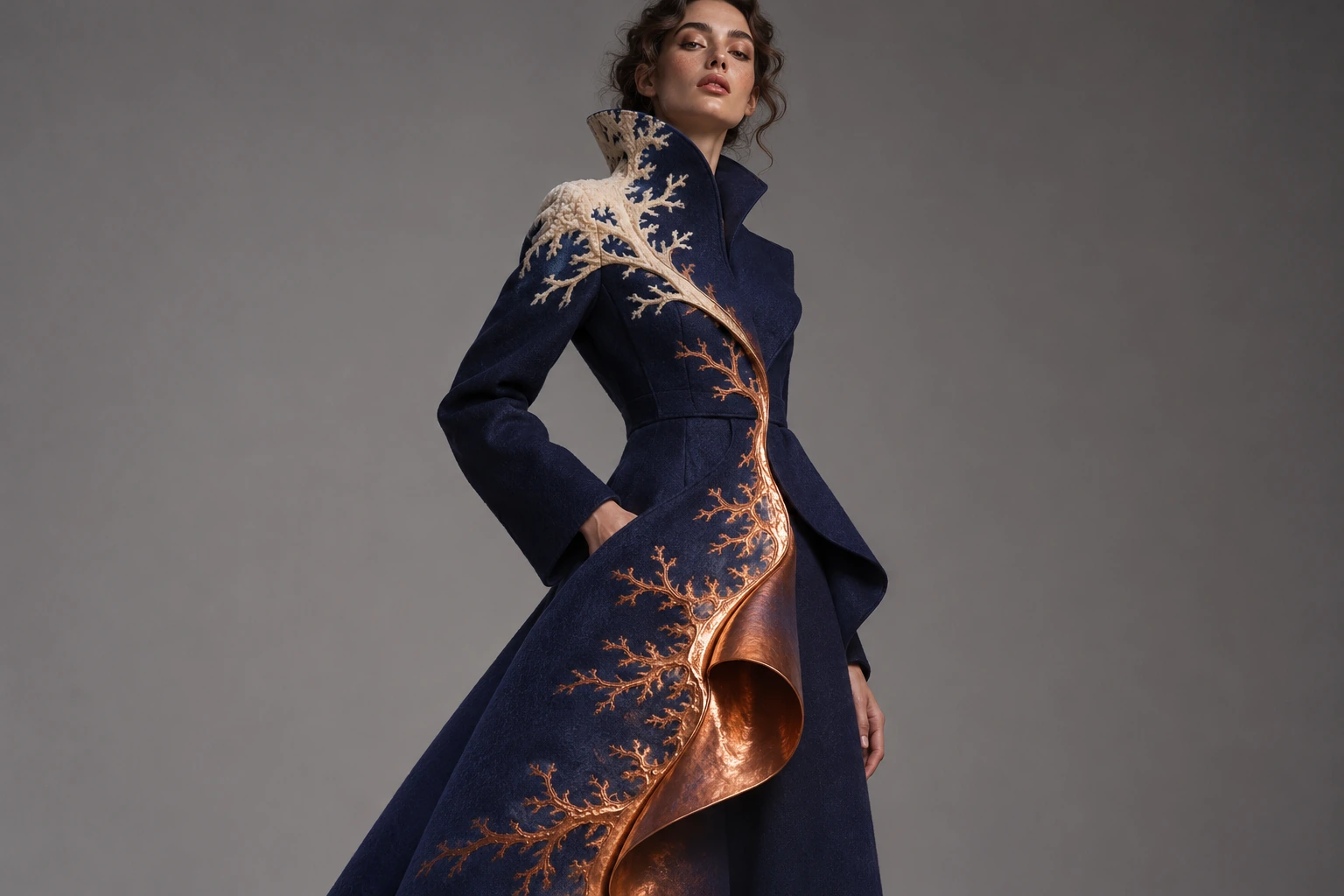
Chemicalism can guide abstract paintings, textile repeats, ceramic-surface concepts, album artwork and speculative interiors. A wall composition might expand one reaction-like boundary to architectural scale. A garment can place the most active region at a seam and let quieter fabric carry the rest.
The approach fails when chemical appearance becomes a pile of bubbles, neon colors and floating formulas with no relationship. Reduce the scene to two materials and one transformation, then rebuild only what helps it read. These are digital visual studies; a physical material process requires its own tested method. This article supplies artistic direction rather than a chemical recipe.
A small poetic detour
Original words from the AOI studio.
Poetry
Two colors meet along a seam;
a pale rim gathers where they pass.
The stillness keeps a moving dream,
a tide remembered under glass.
What changed has left a little shore.
The surface is itself, and more.
The prompt workshop
Original creative exercises. These prompts create new illustrations, not documentary evidence.
One advancing boundary
Create an abstract Chemicalism artwork with a copper-colored granular front advancing into a quiet ink-blue translucent field. Make the boundary, altered region and untouched region legible. Macro material detail, restrained light, no formulas.
A surface remembers
Imagine a ceramic wall panel with pale crystalline islands, a thin mineral rim and a broad calm dark glaze. Suggest a transformation through residue and edge behavior. Original digital material study, no claim of a tested chemical process.
Material becomes clothing
Design a speculative garment whose indigo textile is crossed by one coherent cream-and-copper reaction-like pattern along a seam. Keep the silhouette simple and vary pattern density with clear direction. No molecular diagrams or labels.
Your next inspiration
Discover another art style
Follow a visual thread to the next subject.

A smile from the studio
Jokes
The painting said it was going through a phase. I offered encouragement. It formed three new boundaries and informed me that encouragement was not one of the controlled variables.