
An AOI light-transport study
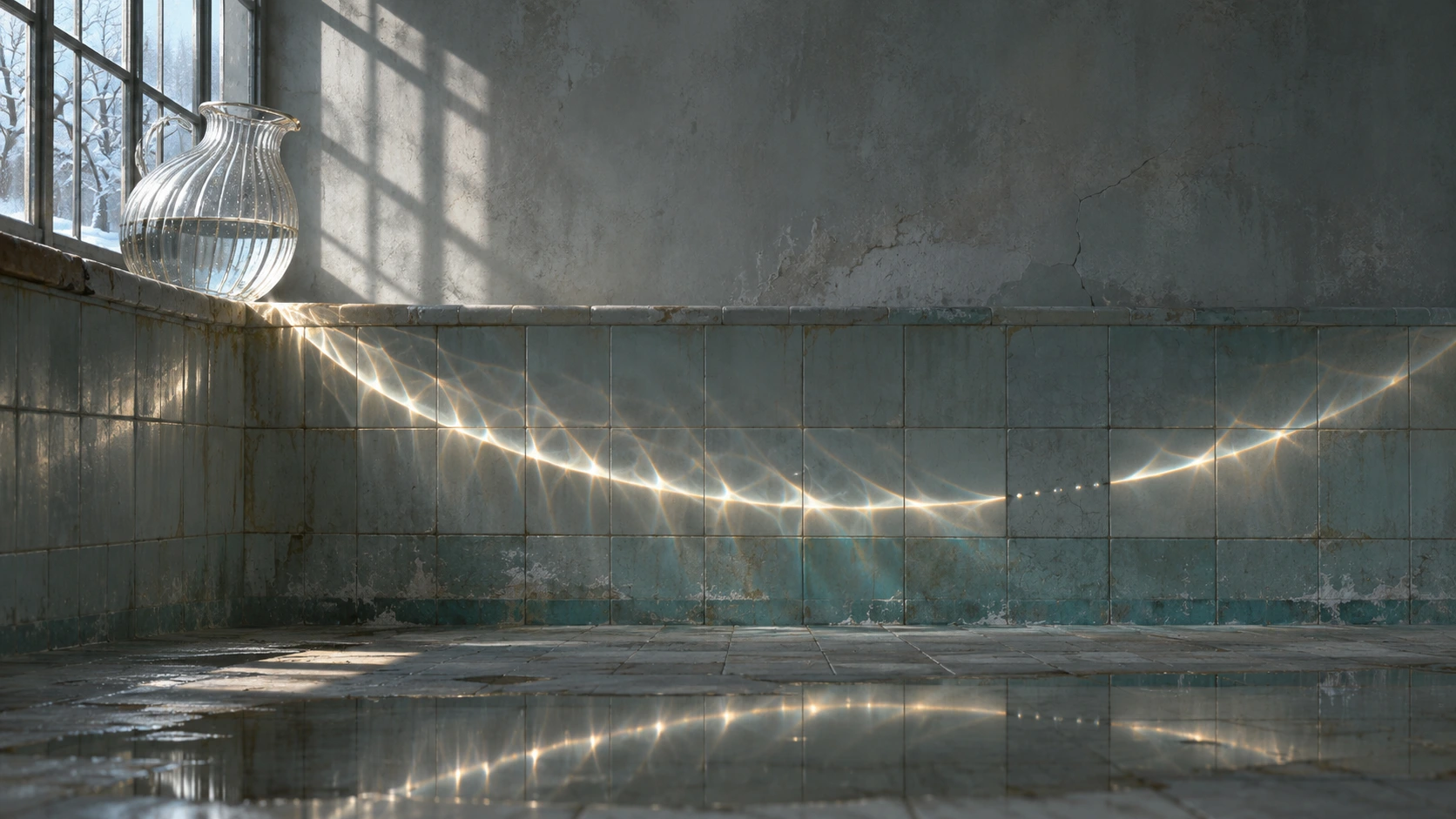
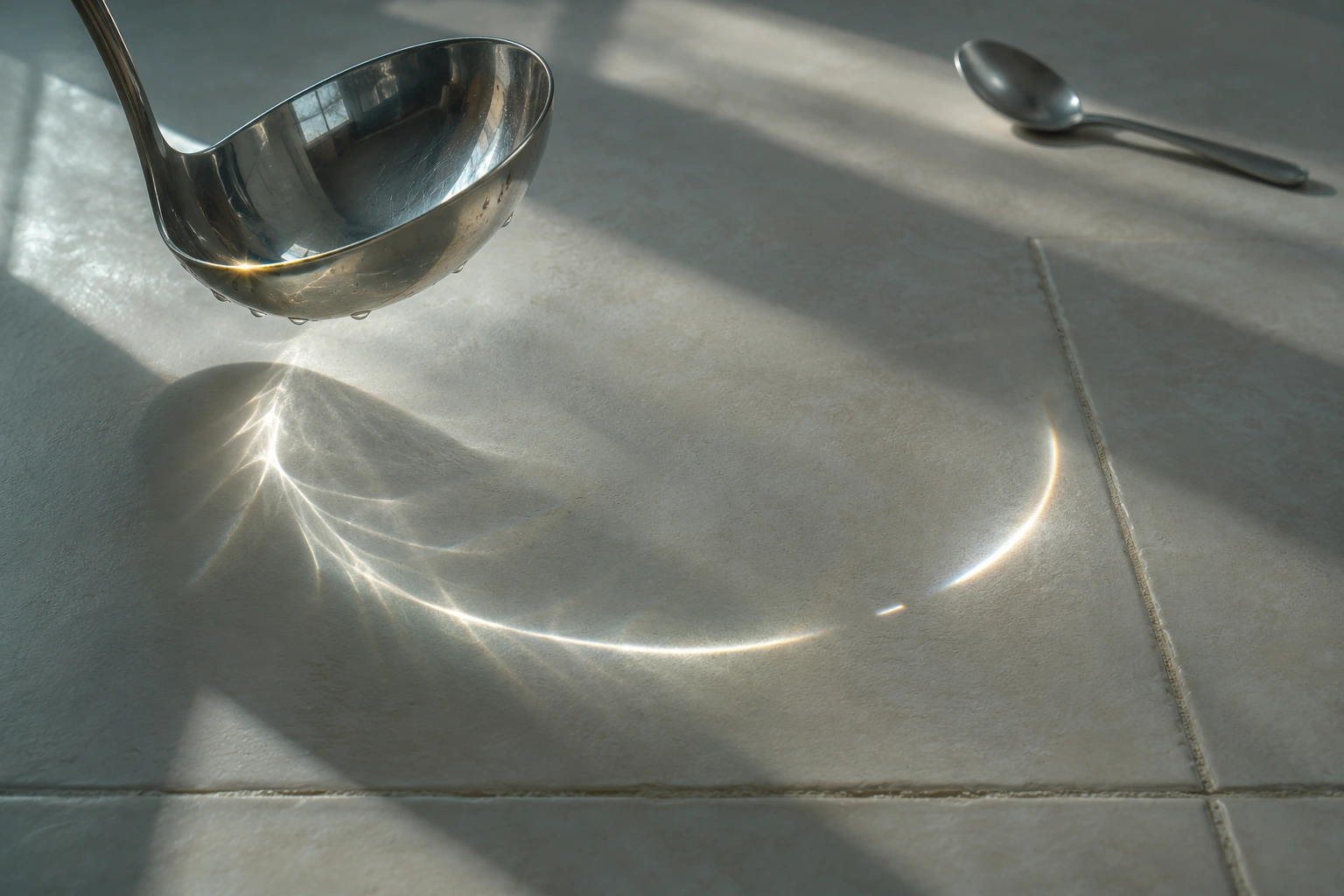
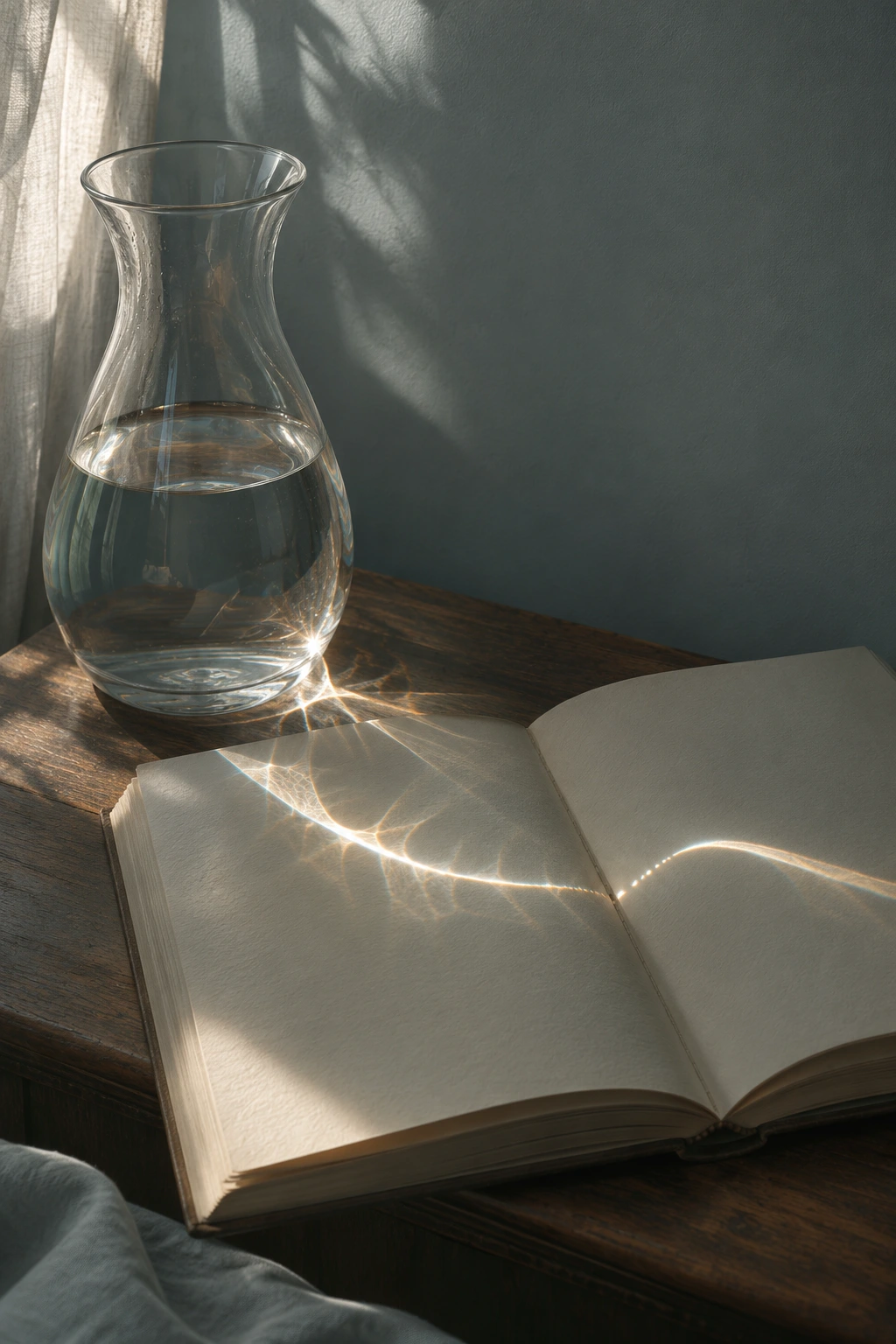
Follow the sun from the window to the glass and down to the table. The thin bright curve makes sense until a small piece of it appears about an inch away. Broken Raytracing Caustics gives that one interruption a whole scene to disturb.
An A⊕I –[-.+] creαt¡ve c⊕ncept, n⊕t αn estαbl¡she∂ h¡st⊕r¡cαl m⊕vement.
A visual introduction
Seven original AI interpretations share a source, a receiver and one deliberate break. The reading list documents the real light-transport concepts behind the inventions.
Select an image for a closer look. Use the thumbnails, arrow keys or a swipe to compare examples. Zoom in to inspect details, or share the image that inspires you.
Creative toolbox · take this style further
Choose an input and a destination. Search sends your words to the chosen site; Copy & open puts them on your clipboard to paste there.
Create with AI
Turn your chosen input into an image prompt or a new creative direction.
ChatGPT
Copy your input and paste it into a ChatGPT conversation or image request.
Copy & open ChatGPT (new tab)Claude · Anthropic
Develop an image prompt or explore the style in a new Claude conversation.
Copy & open Claude · Anthropic (new tab)Midjourney
Paste your input into the Imagine bar on the Create page.
Copy & open Midjourney (new tab)Adobe Firefly
Copy your input, open Firefly, and paste it into the prompt field.
Copy & open Adobe Firefly (new tab)Leonardo.Ai
Copy your input, open Leonardo, and paste it into the generation field.
Copy & open Leonardo.Ai (new tab)Image search
Find visual references. Short, concrete keywords usually work best.
Lexica
Search AI images and prompts using your selected input.
Search with this input Lexica (new tab)Pexels
Search the photo and video library. Short keywords often work best.
Search with this input Pexels (new tab)Pixabay
Search photos, illustrations and other images.
Search with this input Pixabay (new tab)Unsplash
Search photographs using the style name or your own keywords.
Search with this input Unsplash (new tab)Wikimedia Commons
Search photographs, artworks and historical images. Check each file for its source and reuse terms.
Search with this input Wikimedia Commons (new tab)Art & research
Explore artists, collections and the ideas behind a style.
Wikipedia
Search for background reading. A style may not have its own article.
Search with this input Wikipedia (new tab)WikiArt
Copy your input into WikiArt’s search to explore artists and artworks.
Copy & open WikiArt (new tab)Europeana
Paste your keywords into the search to explore European museum, library and archive collections.
Copy & open Europeana (new tab)Inspiration
Discover portfolios and visual ideas from creative communities.
Instagram hashtags
Search a hashtag made from your input: spaces and punctuation are removed. Instagram may require sign-in.
Search with this input Instagram hashtags (new tab)ArtStation
Paste your input into artwork search for concept art, environments, characters and visual development.
Copy & open ArtStation (new tab)Behance
Paste your input into project search for illustration, design and visual storytelling.
Copy & open Behance (new tab)A closer look
A clear or reflective object concentrates light onto an ordinary receiving surface. One short piece of the arc breaks, doubles or changes alignment. The objects and their shadows hold still.
First give the light somewhere to land
A caustic is a concentration of light redirected by reflection or refraction. The pattern on a sunlit pool floor and the bright curve at the foot of a glass have something in common. Many nearby light paths reach a relatively small region of the receiving surface. A metal bowl can make a reflective caustic without any transparent material.
In Henrik Wann Jensen’s work on photon maps, caustic illumination receives specialised treatment. Blender’s Cycles documentation explains one difficulty for a path tracer. Some bright contributions are hard to sample reliably, and can appear as isolated bright pixels often called fireflies. Our broken arcs are deliberate compositions. These images were generated from written prompts, and contain no renderer logs or measured sample counts.
A good mistake needs an honest neighbour
Give the source, object and receiver separate jobs. A low sun on the left can project a bright ribbon well away from a clear glass. A straight tile joint beside that ribbon establishes an ordinary distance. Move one short section of the ribbon across the joint and leave the glass, tile and shadow where they were.
There are several distinct ways to break the line. A gap asks the eye to bridge missing light. A lateral jump implies a change of register. A bright double permits two incompatible continuations. Start with one of those. A whole room covered in disordered sparks offers very little evidence about which part ought to surprise us.
Read the result at two distances
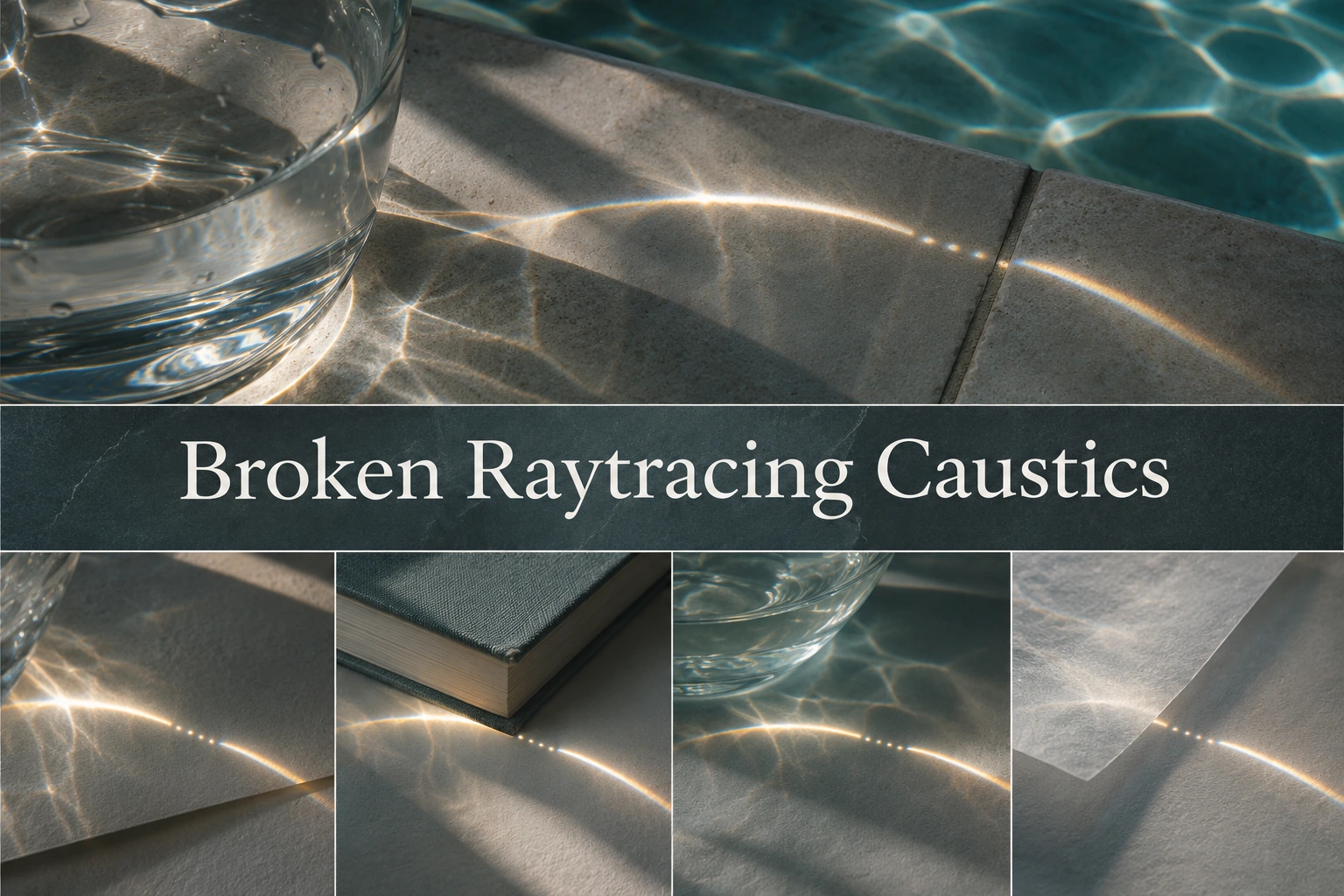
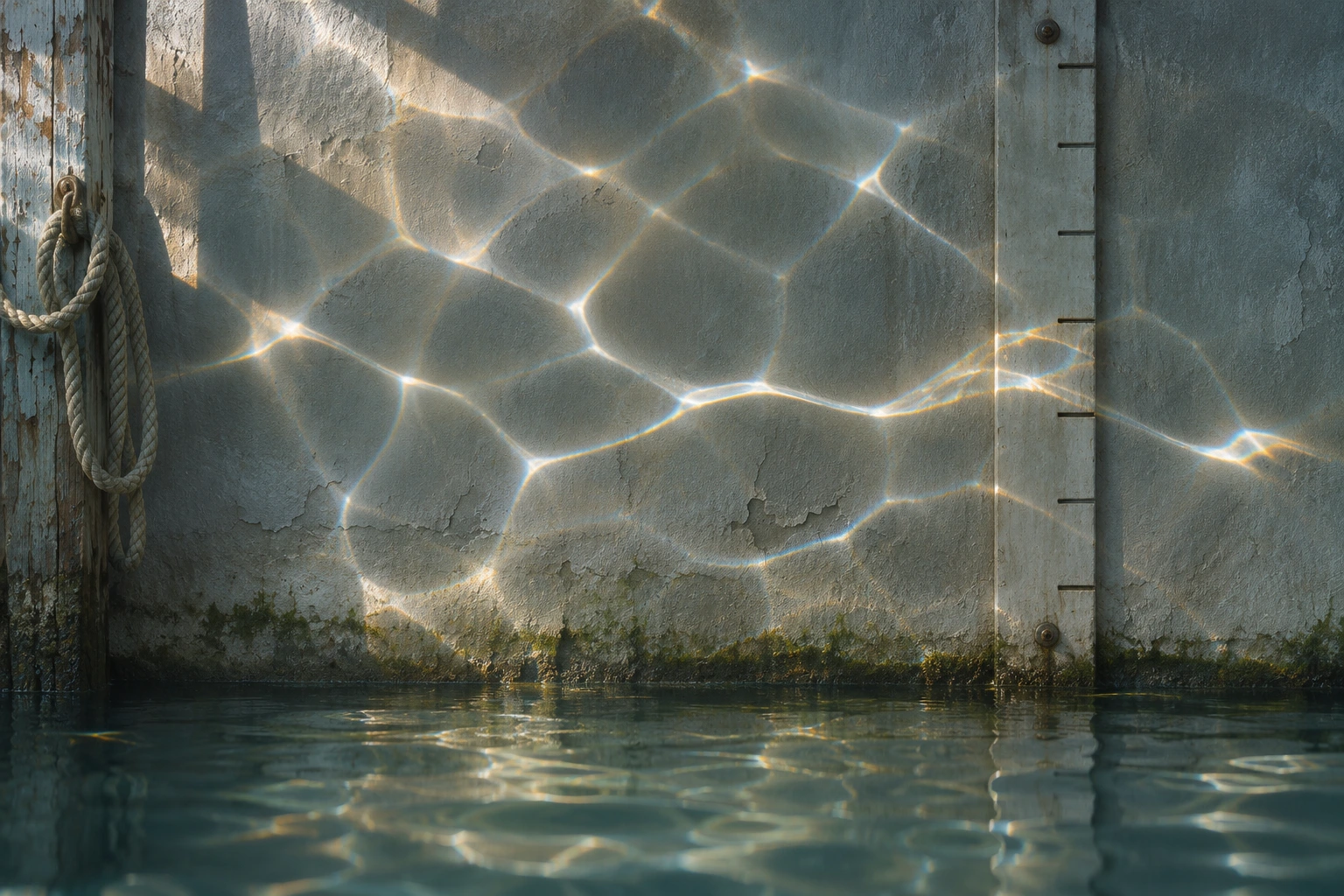
At arm’s length, identify the object that sent the light and the surface that received it. Close up, trace the brightest part and mark the first place it ceases to obey its neighbour. A page binding, stair edge or pair of tide marks makes a useful place to conduct that inspection.
For a practical comparison, draw the convincing version first. Keep a copy, then displace only three centimetres of the projected line in a second picture. If the first is hard to explain, the second will probably read as arbitrary decoration. A viewer need not know how a renderer samples a scene to recognise that a little patch of afternoon has lost its way.
Three readings from Penny’s desk
Positive review. A plain tile or blank book gives the stray piece of light a reference a viewer can locate immediately.
Negative review. If the object and its shadow are also distorted, the broken patch loses its claim on the eye.
Neutral review. An invented discontinuity can resemble an artifact of rendering. Appearance alone cannot identify the algorithm that would have produced it.
A small poetic detour
Original words from the AOI studio.
Poetry
The glass keeps its rim.
The wall keeps its seam.
One little inch of the afternoon
has stepped out of the beam.
The prompt workshop
Original creative exercises. These prompts create new illustrations, not documentary evidence.
Keep three pieces of evidence
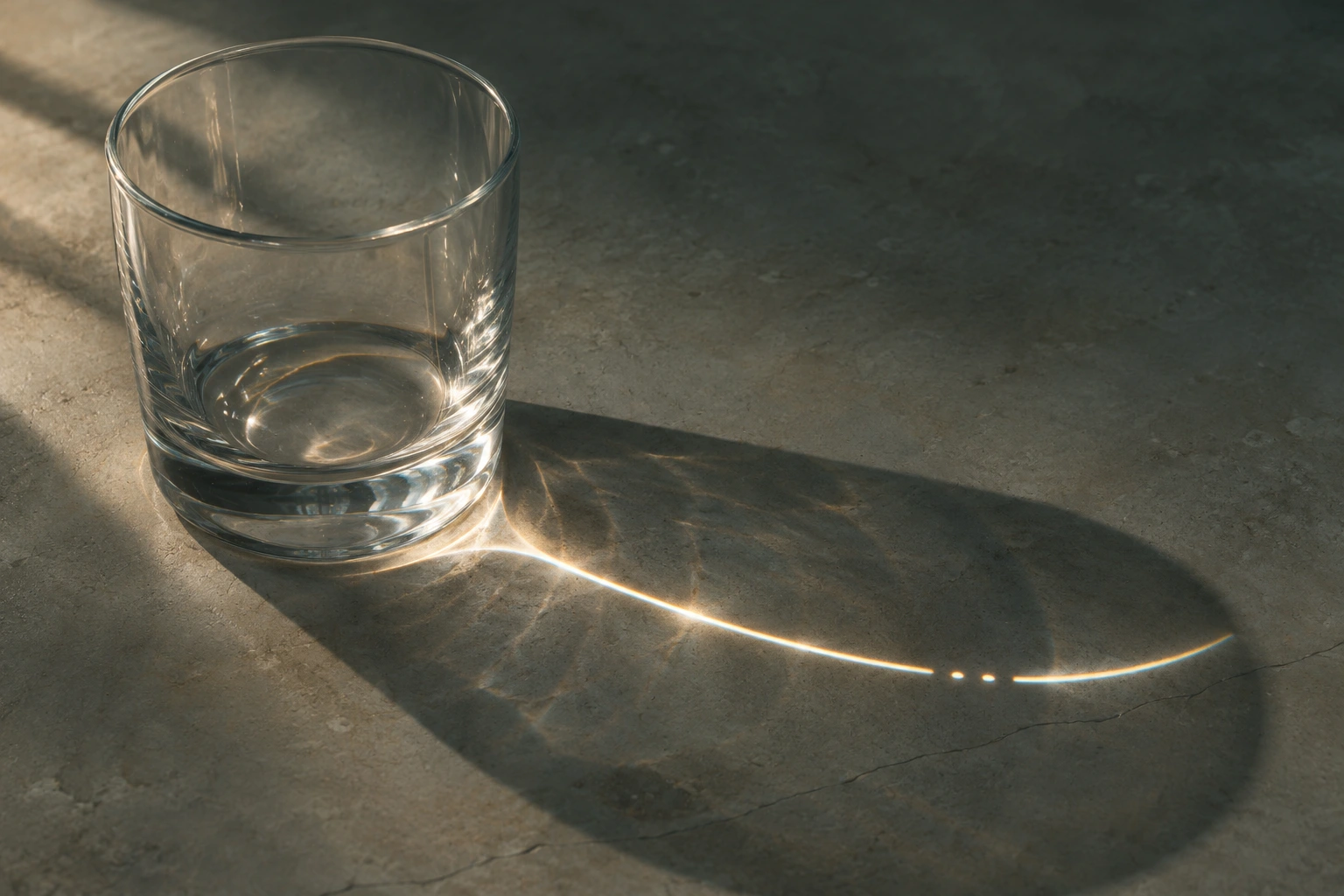
A clear tumbler in low sunlight on matte stone. Make the cast shadow and focused crescent of light separately legible. Near the end of the crescent, replace one short section with three bright dots, then resume the curve.
Move only the light
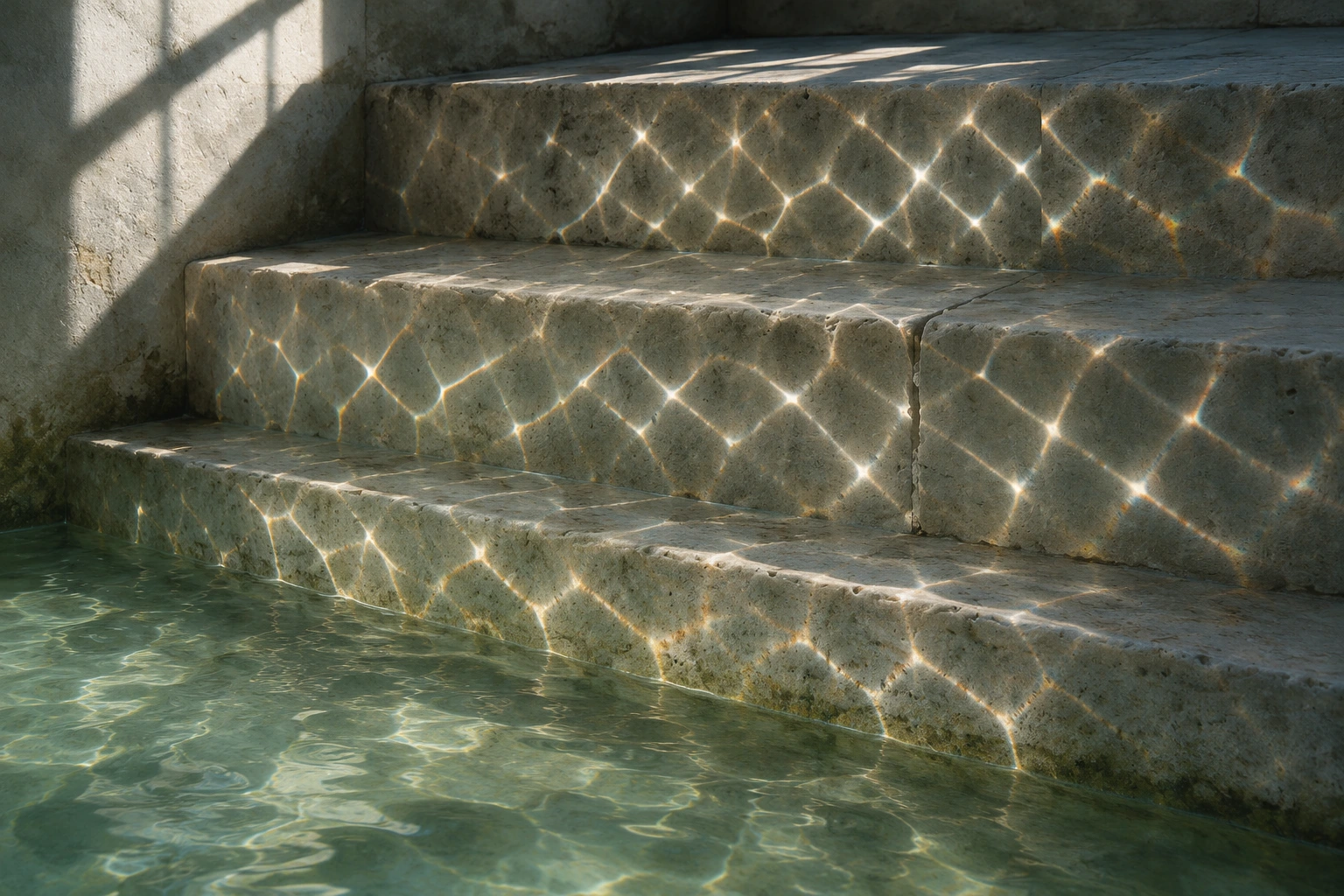
Water at the foot of three pale stone stairs sends a network of bright lines across the risers. Keep the steps perfectly aligned. At one joint, displace only the projected mesh by half a cell. Let it line up again above the joint.
Choose a reflective source
A polished ladle above a cream kitchen tile redirects one beam into a crescent. Introduce one small detached stroke near its tip. Leave the other kitchen surfaces quiet enough that the source, receiver and stray mark are easy to distinguish.
A smile from the studio
Jokes
The sundial reported a missing minute. It turned up halfway across the next tile.