
An AOI direction-colour study
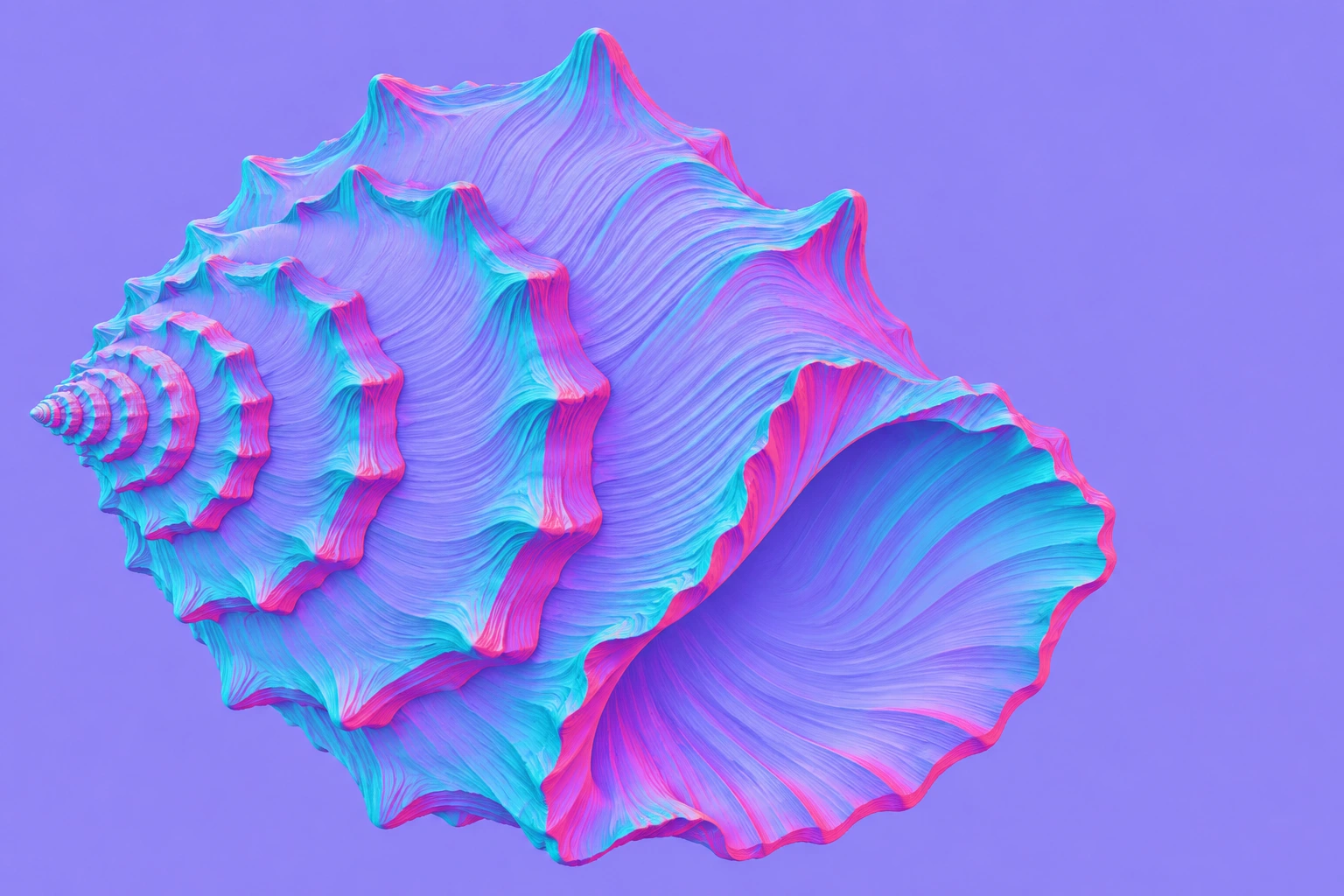
Give a shell no lamp at all. Its ridges can still turn toward you if a strip of cyan passes consistently into violet and raspberry. Normal-Map Rainbow builds pictures out of the colour of a direction.
An A⊕I –[-.+] creαt¡ve c⊕ncept, n⊕t αn estαbl¡she∂ h¡st⊕r¡cαl m⊕vement.
A visual introduction
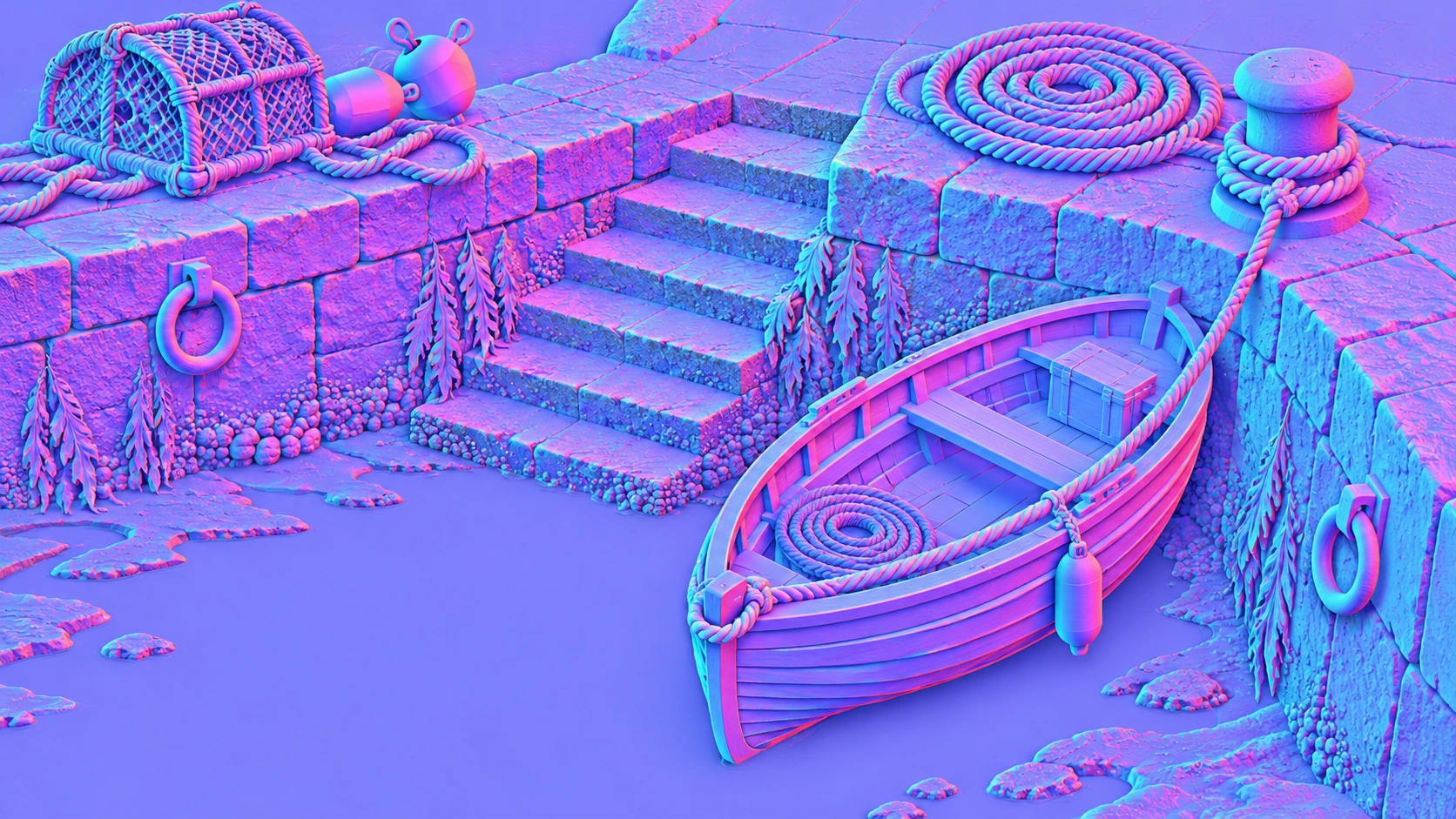
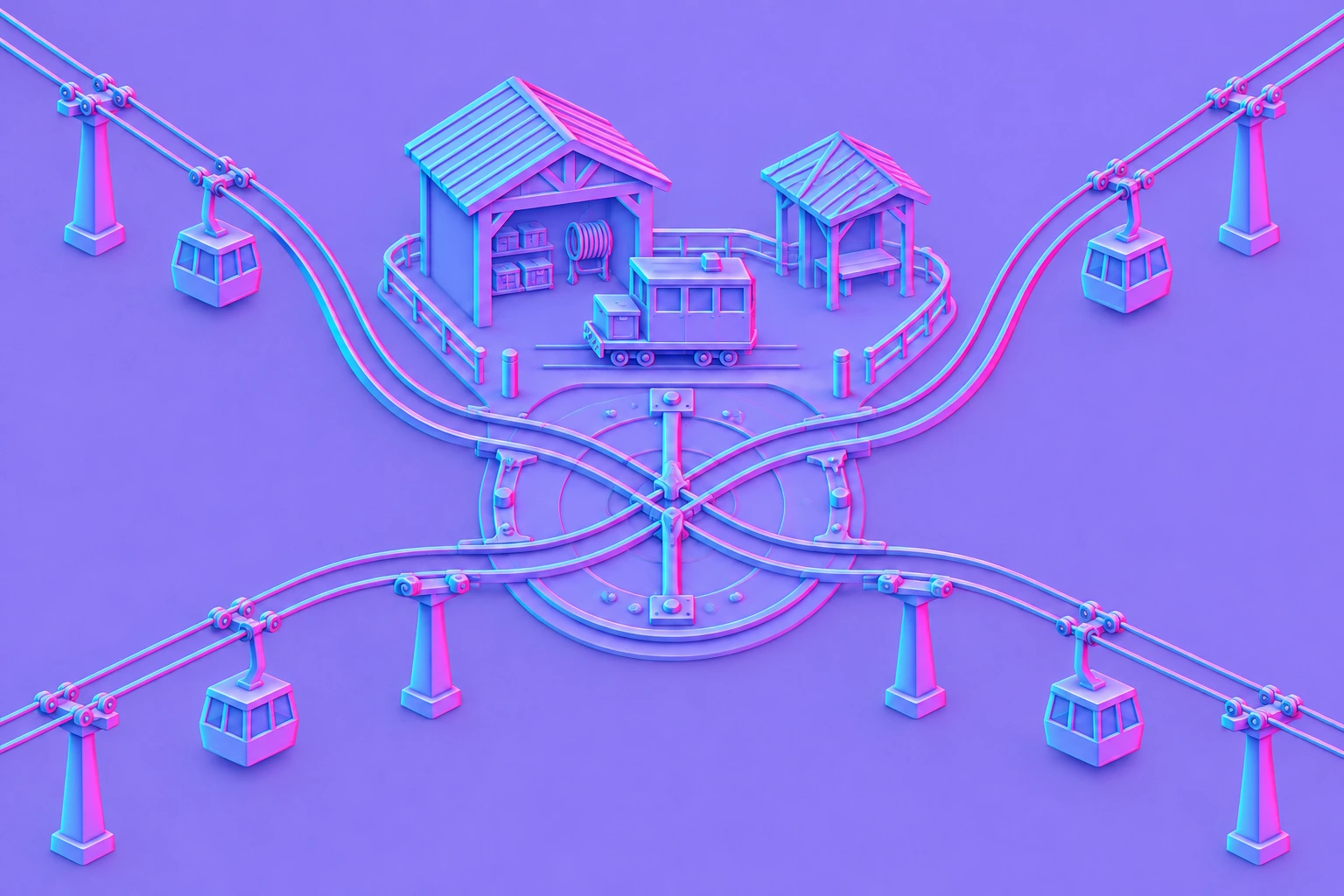
Seven AI illustrations apply a direction-colour rule at different scales. Compare the flat bars with the turns of the shell before tracing the larger routes.
Select an image for a closer look. Use the thumbnails, arrow keys or a swipe to compare examples. Zoom in to inspect details, or share the image that inspires you.
Creative toolbox · take this style further
Choose an input and a destination. Search sends your words to the chosen site; Copy & open puts them on your clipboard to paste there.
Create with AI
Turn your chosen input into an image prompt or a new creative direction.
ChatGPT
Copy your input and paste it into a ChatGPT conversation or image request.
Copy & open ChatGPT (new tab)Claude · Anthropic
Develop an image prompt or explore the style in a new Claude conversation.
Copy & open Claude · Anthropic (new tab)Midjourney
Paste your input into the Imagine bar on the Create page.
Copy & open Midjourney (new tab)Adobe Firefly
Copy your input, open Firefly, and paste it into the prompt field.
Copy & open Adobe Firefly (new tab)Leonardo.Ai
Copy your input, open Leonardo, and paste it into the generation field.
Copy & open Leonardo.Ai (new tab)Image search
Find visual references. Short, concrete keywords usually work best.
Lexica
Search AI images and prompts using your selected input.
Search with this input Lexica (new tab)Pexels
Search the photo and video library. Short keywords often work best.
Search with this input Pexels (new tab)Pixabay
Search photos, illustrations and other images.
Search with this input Pixabay (new tab)Unsplash
Search photographs using the style name or your own keywords.
Search with this input Unsplash (new tab)Wikimedia Commons
Search photographs, artworks and historical images. Check each file for its source and reuse terms.
Search with this input Wikimedia Commons (new tab)Art & research
Explore artists, collections and the ideas behind a style.
Wikipedia
Search for background reading. A style may not have its own article.
Search with this input Wikipedia (new tab)WikiArt
Copy your input into WikiArt’s search to explore artists and artworks.
Copy & open WikiArt (new tab)Europeana
Paste your keywords into the search to explore European museum, library and archive collections.
Copy & open Europeana (new tab)Inspiration
Discover portfolios and visual ideas from creative communities.
Instagram hashtags
Search a hashtag made from your input: spaces and punctuation are removed. Instagram may require sign-in.
Search with this input Instagram hashtags (new tab)ArtStation
Paste your input into artwork search for concept art, environments, characters and visual development.
Copy & open ArtStation (new tab)Behance
Paste your input into project search for illustration, design and visual storytelling.
Copy & open Behance (new tab)A closer look
Front-facing areas return to a largely blue-violet field. Opposed slopes carry different edge colours. A repeated ridge acts as a small key that lets the eye learn the rule.
Why does the flat area look periwinkle?
In a tangent-space normal texture, each texel encodes the direction used for shading relative to a local surface frame. In the glTF convention, red carries X, green carries Y and blue carries Z. An unperturbed normal along positive Z encodes to approximately half red, half green and full blue. This familiar periwinkle has a job before anyone chooses it as a colour.
The reference frame matters. Right and up refer to local texture directions. Turn a model, change its UV layout or switch a channel convention and the relationship to the screen can change. For the illustrations in this study we deliberately hold one reading convention across a composition. A reader learns it from the first few edges.
Give the eye a test piece
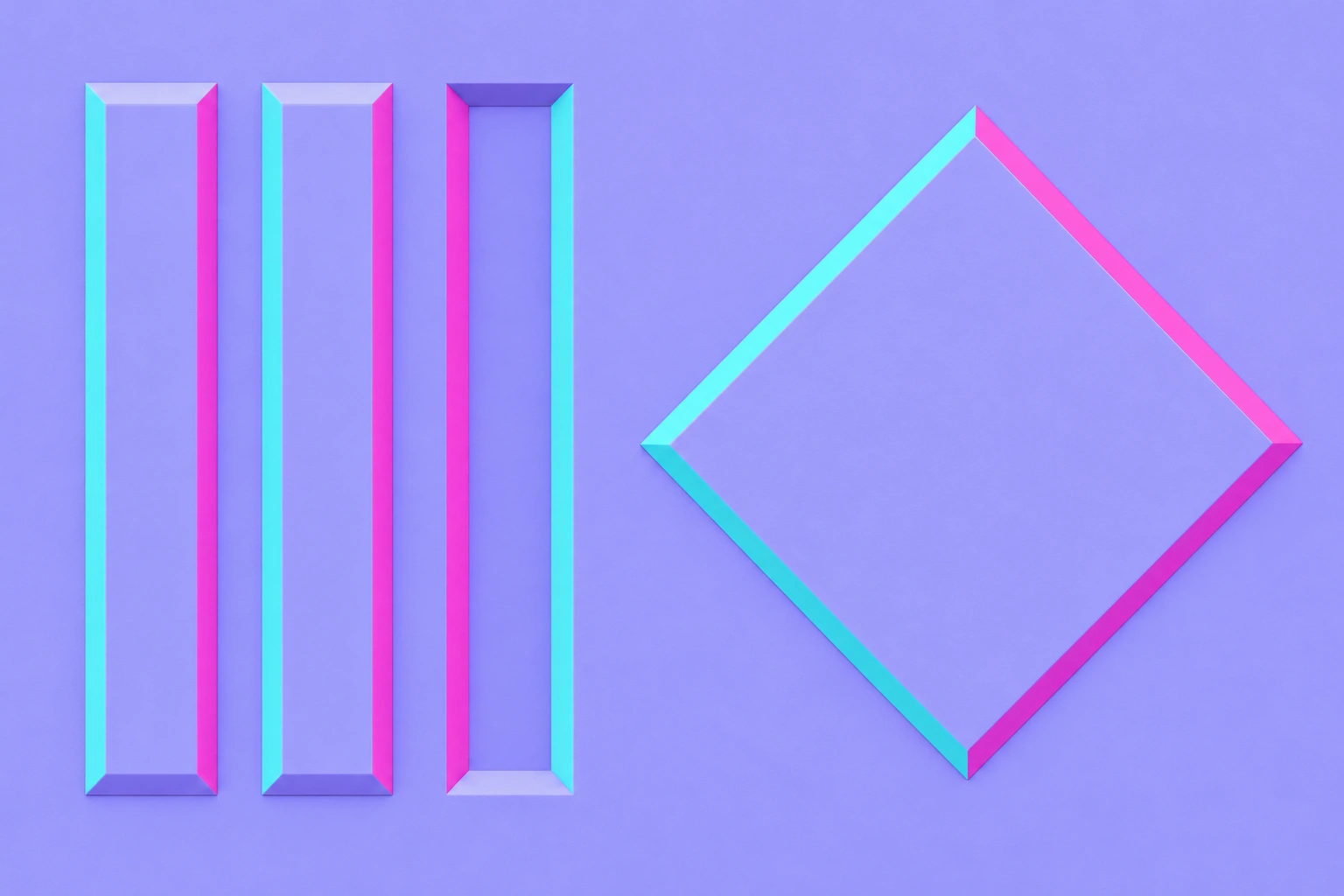
Draw two raised parallel bars on a broad violet ground. Then add a groove of the same width. Going across a ridge, the two sloping sides appear in one colour order. Across the groove, the order reverses. A thin neutral strip at the bottom or top helps the eye distinguish a flat seat from another slope.
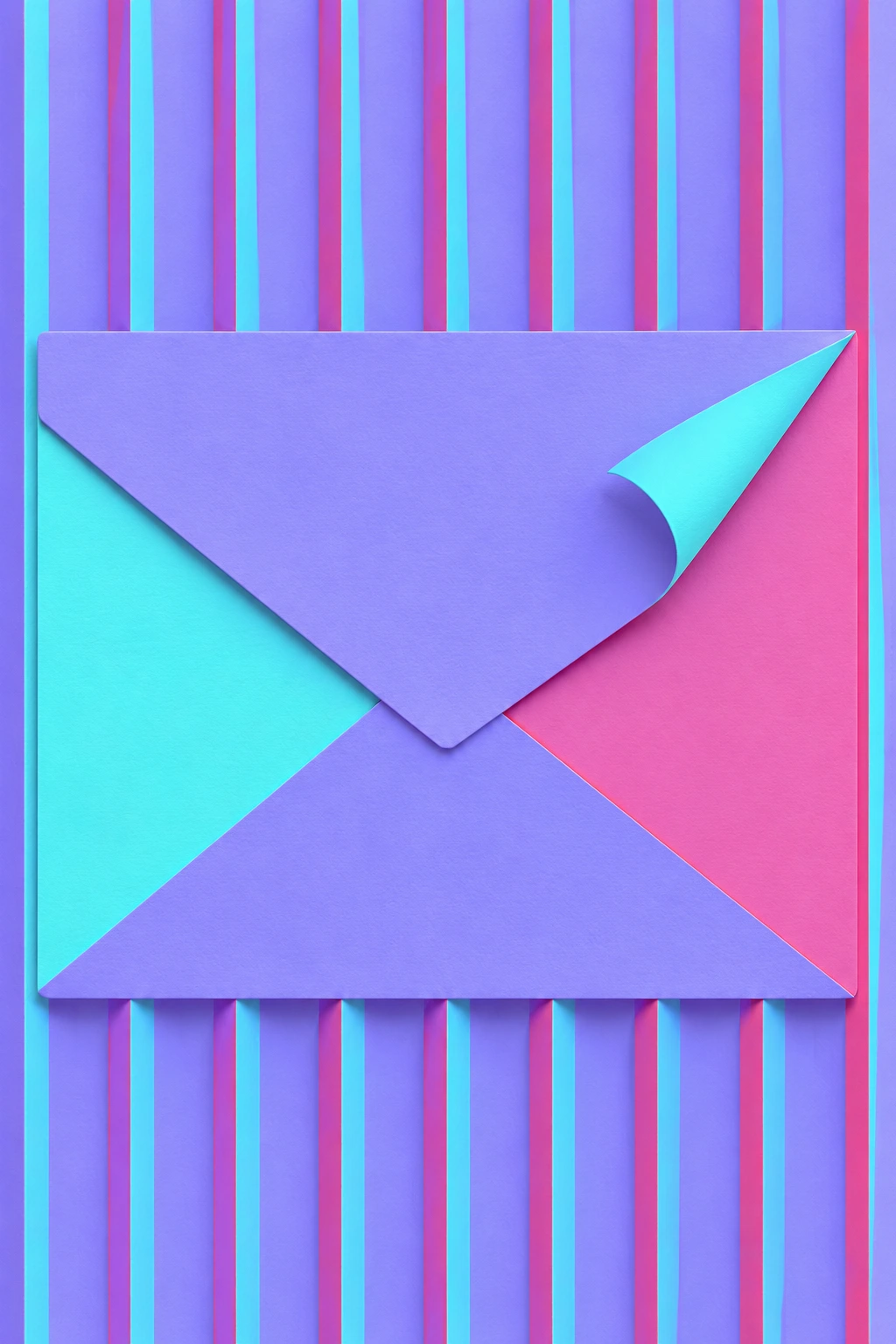
Once the comparison works, take away the test bars and try a whelk shell or a folded envelope. A bevel can turn through several colours while the broad face of a paper flap stays comparatively even. If a rainbow stripe travels straight across every flap, it describes the page of the picture and tells us very little about the paper folded inside it.
A finished print and a usable texture have different tests
A real normal map is sampled as data. The Khronos specification describes linear values and normalization for shading. Blender’s Normal Map node calls for the proper coordinate space, corresponding UVs and a non-colour texture setting. Changing the green channel convention can reverse the apparent tilt along one axis.
These finished AI pictures borrow that visual language. They include composition, borders and editorial choices that a production texture would need you to evaluate or remove. To test a real map, apply it to matching geometry and move a light across it. To test this picture, cover the familiar object and ask whether the remaining edges still tell you which way a surface turns.
Three readings from Penny’s desk
Positive review. The repeated edges give a viewer enough evidence to learn the colour convention without a legend.
Negative review. A familiar object can make an inconsistent ridge seem plausible. The simple bars reveal those errors more readily.
Neutral review. The images demonstrate a visual grammar inspired by direction data. A renderer would need a validated texture and the correct tangent frame.
A small poetic detour
Original words from the AOI studio.
Poetry
The shell turns without a lamp.
A cyan lip goes round the bend.
Across the groove the colours swap.
My thumb can read it from the end.
The prompt workshop
Original creative exercises. These prompts create new illustrations, not documentary evidence.
Draw a ridge and a groove
On a flat periwinkle panel make two raised parallel bars and one matching groove. Give equivalent slopes the same cyan and raspberry colours, repeat the colours in reverse order across the groove and suppress conventional cast shadows.
Fold a direction into paper
Draw an unmarked envelope as broad planar facets in a normal-map-inspired palette. Use one even colour for each flap, a warm edge on one side of each fold and a cyan edge on the other. Let one turned corner reveal the change of direction.
Test the rule on a landscape
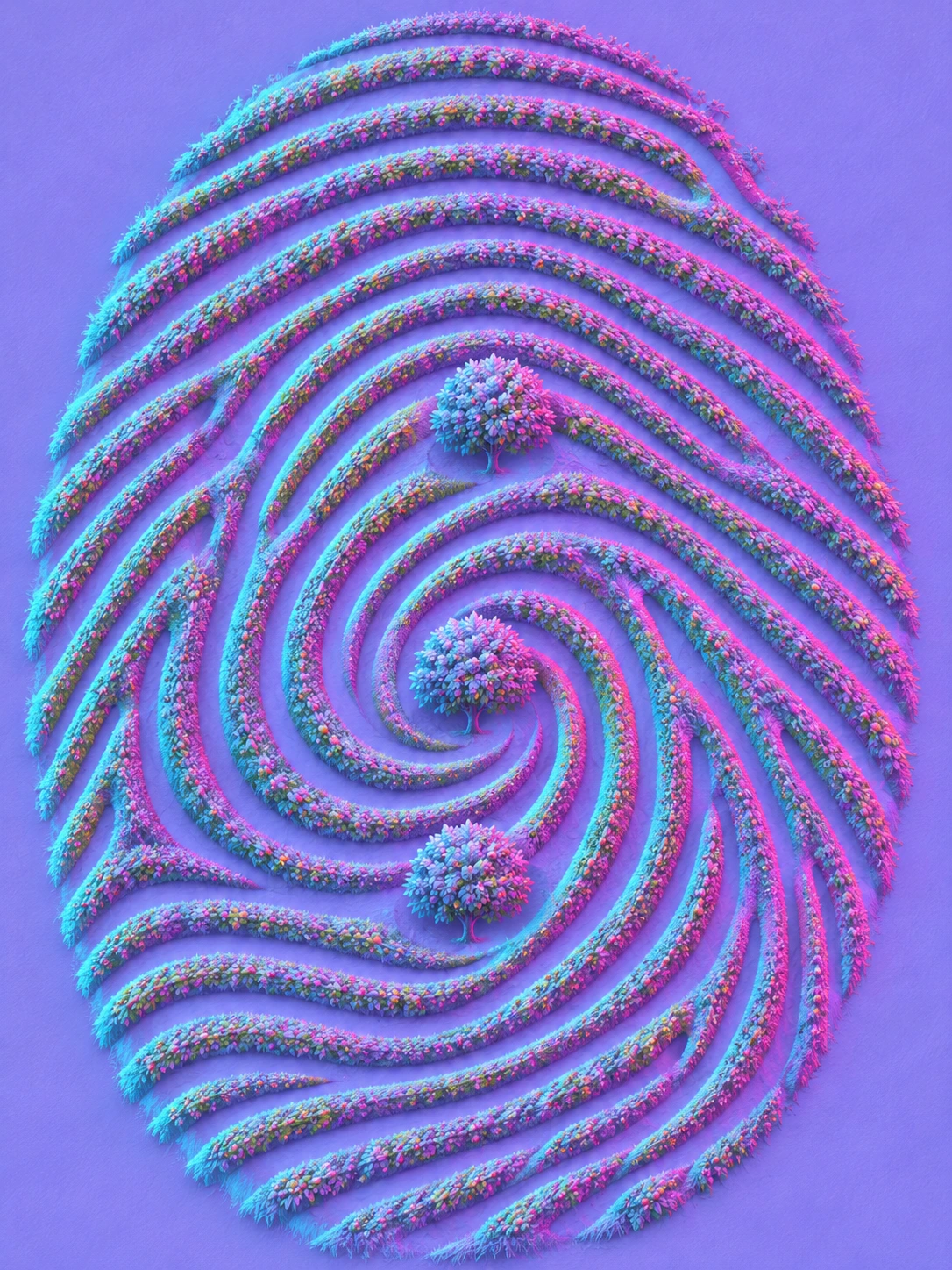
Make fingerprint ridges into the terraced rows of a tiny orchard viewed from above. Keep the field blue-violet and map slope direction consistently around each bend. Give the viewer three tree crowns to establish scale.
A smile from the studio
Jokes
The harbour master asked which way the quay faced. The painter pointed to the green channel.