
A prompt-history experiment
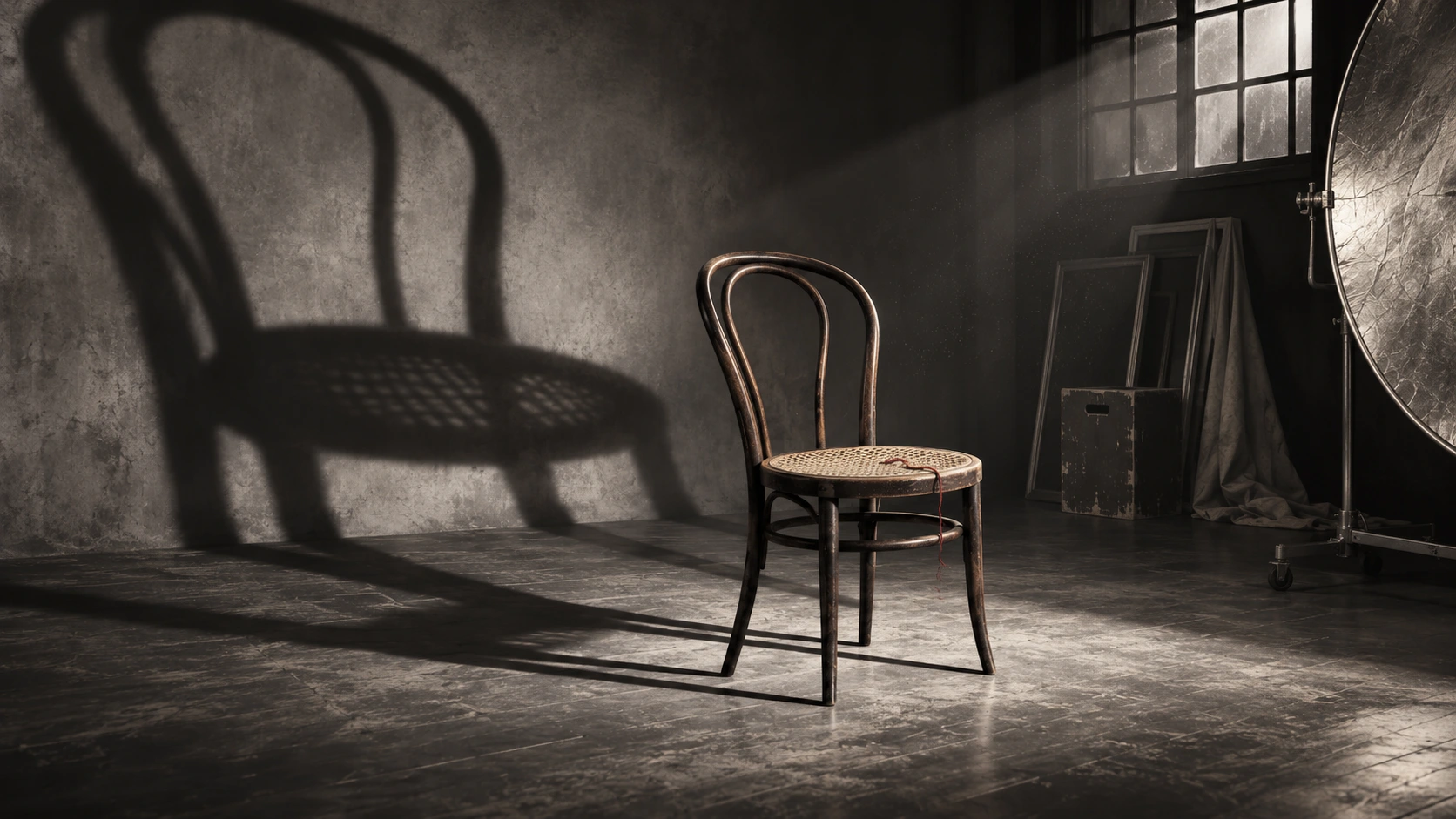
A cane chair catches a spotlight. Its shadow gets the leading part. Brando::-1 follows a peculiar piece of prompt history into an original study of how a picture makes room for someone who never arrives.
A visual introduction
Seven original AI interpretations stage the absence of a performer. The historical skyline and Loab are discussed through the artist’s own evidence.
Select an image for a closer look. Use the thumbnails, arrow keys or a swipe to compare examples. Zoom in to inspect details, or share the image that inspires you.
Creative toolbox · take this style further
Choose an input and a destination. Search sends your words to the chosen site; Copy & open puts them on your clipboard to paste there.
Create with AI
Turn your chosen input into an image prompt or a new creative direction.
ChatGPT
Copy your input and paste it into a ChatGPT conversation or image request.
Copy & open ChatGPT (new tab)Claude · Anthropic
Develop an image prompt or explore the style in a new Claude conversation.
Copy & open Claude · Anthropic (new tab)Midjourney
Paste your input into the Imagine bar on the Create page.
Copy & open Midjourney (new tab)Adobe Firefly
Copy your input, open Firefly, and paste it into the prompt field.
Copy & open Adobe Firefly (new tab)Leonardo.Ai
Copy your input, open Leonardo, and paste it into the generation field.
Copy & open Leonardo.Ai (new tab)Image search
Find visual references. Short, concrete keywords usually work best.
Lexica
Search AI images and prompts using your selected input.
Search with this input Lexica (new tab)Pexels
Search the photo and video library. Short keywords often work best.
Search with this input Pexels (new tab)Pixabay
Search photos, illustrations and other images.
Search with this input Pixabay (new tab)Unsplash
Search photographs using the style name or your own keywords.
Search with this input Unsplash (new tab)Wikimedia Commons
Search photographs, artworks and historical images. Check each file for its source and reuse terms.
Search with this input Wikimedia Commons (new tab)Art & research
Explore artists, collections and the ideas behind a style.
Wikipedia
Search for background reading. A style may not have its own article.
Search with this input Wikipedia (new tab)WikiArt
Copy your input into WikiArt’s search to explore artists and artworks.
Copy & open WikiArt (new tab)Europeana
Paste your keywords into the search to explore European museum, library and archive collections.
Copy & open Europeana (new tab)Inspiration
Discover portfolios and visual ideas from creative communities.
Instagram hashtags
Search a hashtag made from your input: spaces and punctuation are removed. Instagram may require sign-in.
Search with this input Instagram hashtags (new tab)ArtStation
Paste your input into artwork search for concept art, environments, characters and visual development.
Copy & open ArtStation (new tab)Behance
Paste your input into project search for illustration, design and visual storytelling.
Copy & open Behance (new tab)A closer look
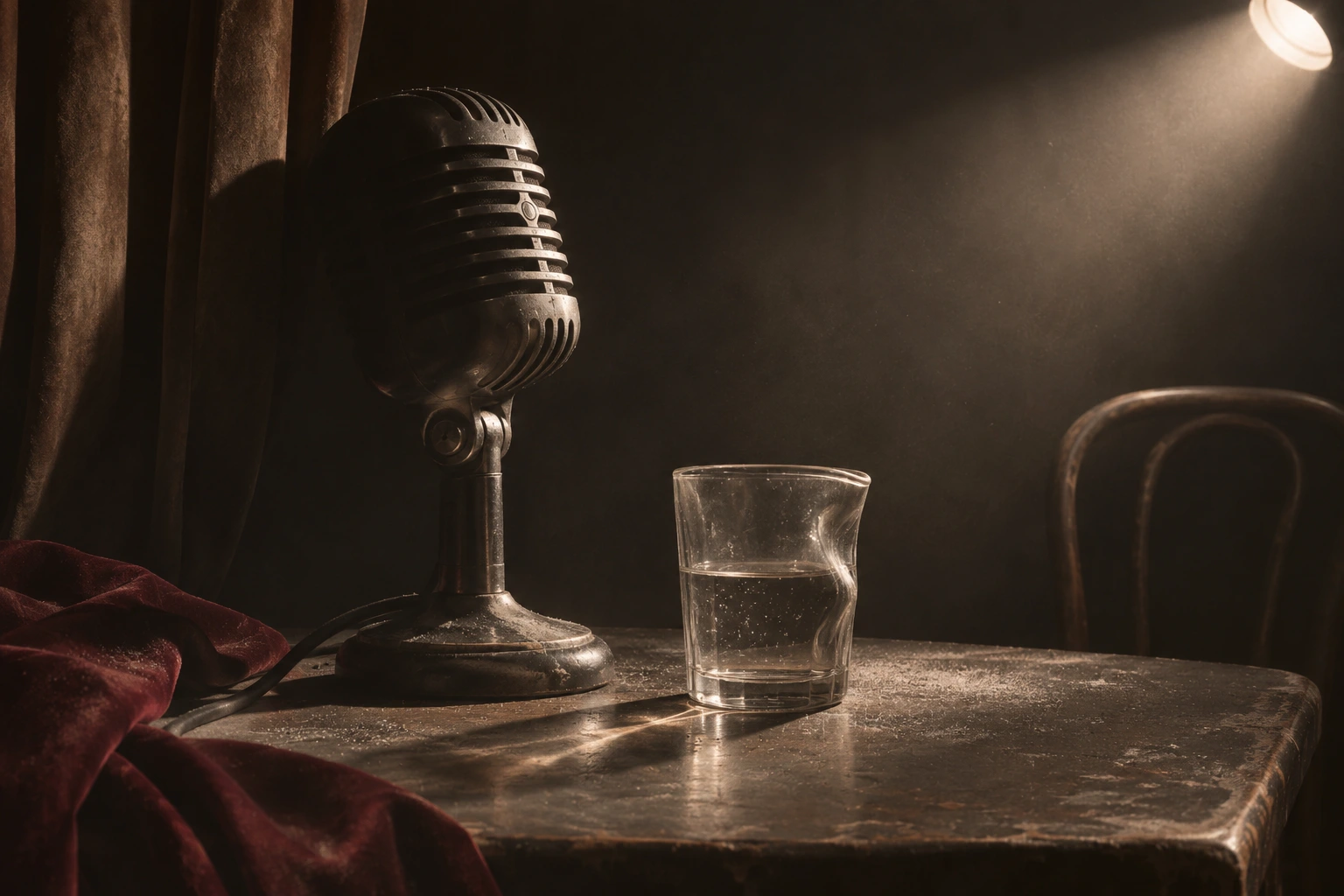
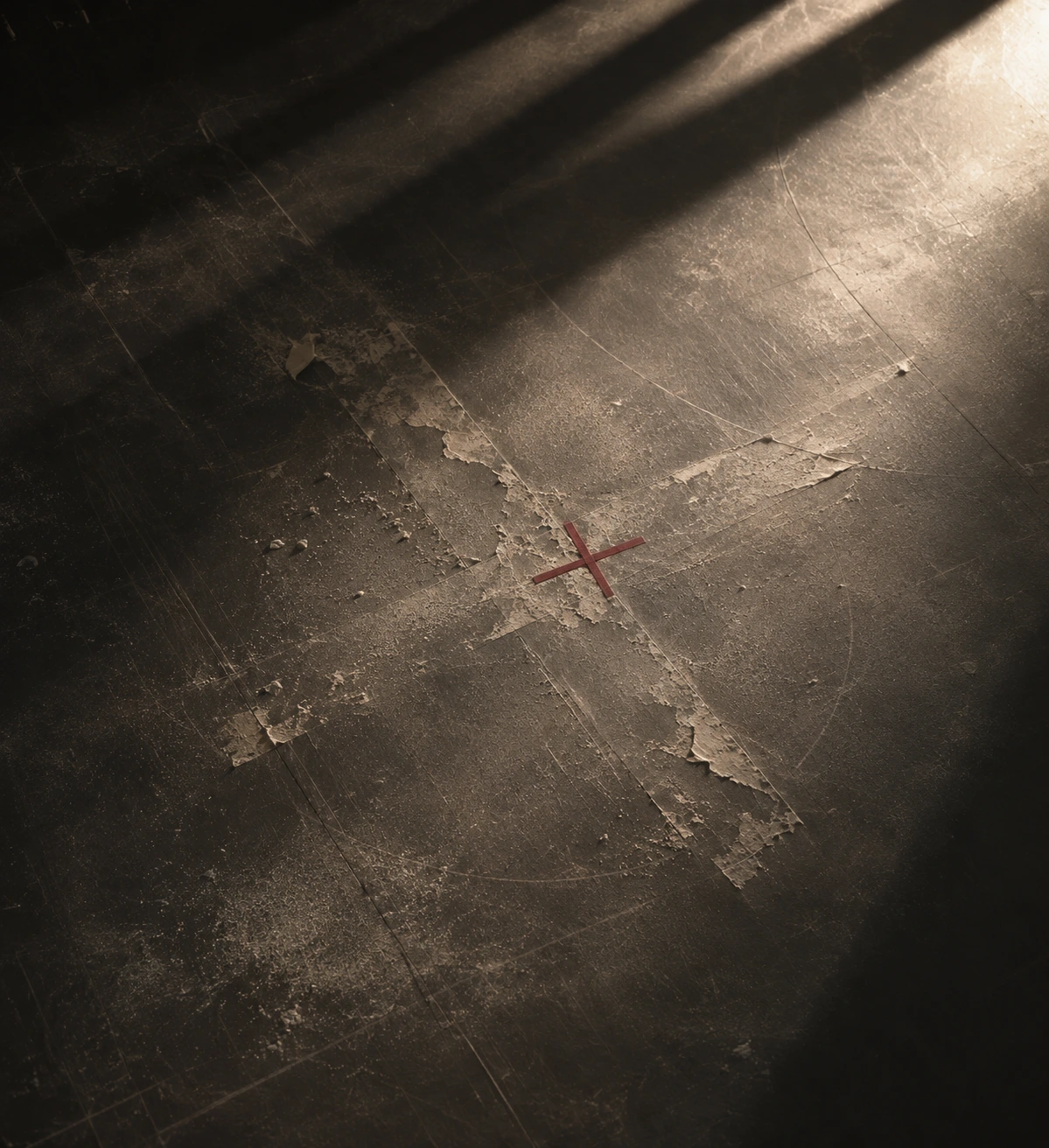
Every set contains a position somebody could occupy. A dark coat, a microphone, a floor mark or a pear inherits the light reserved for the actor.
What did the artist actually type?
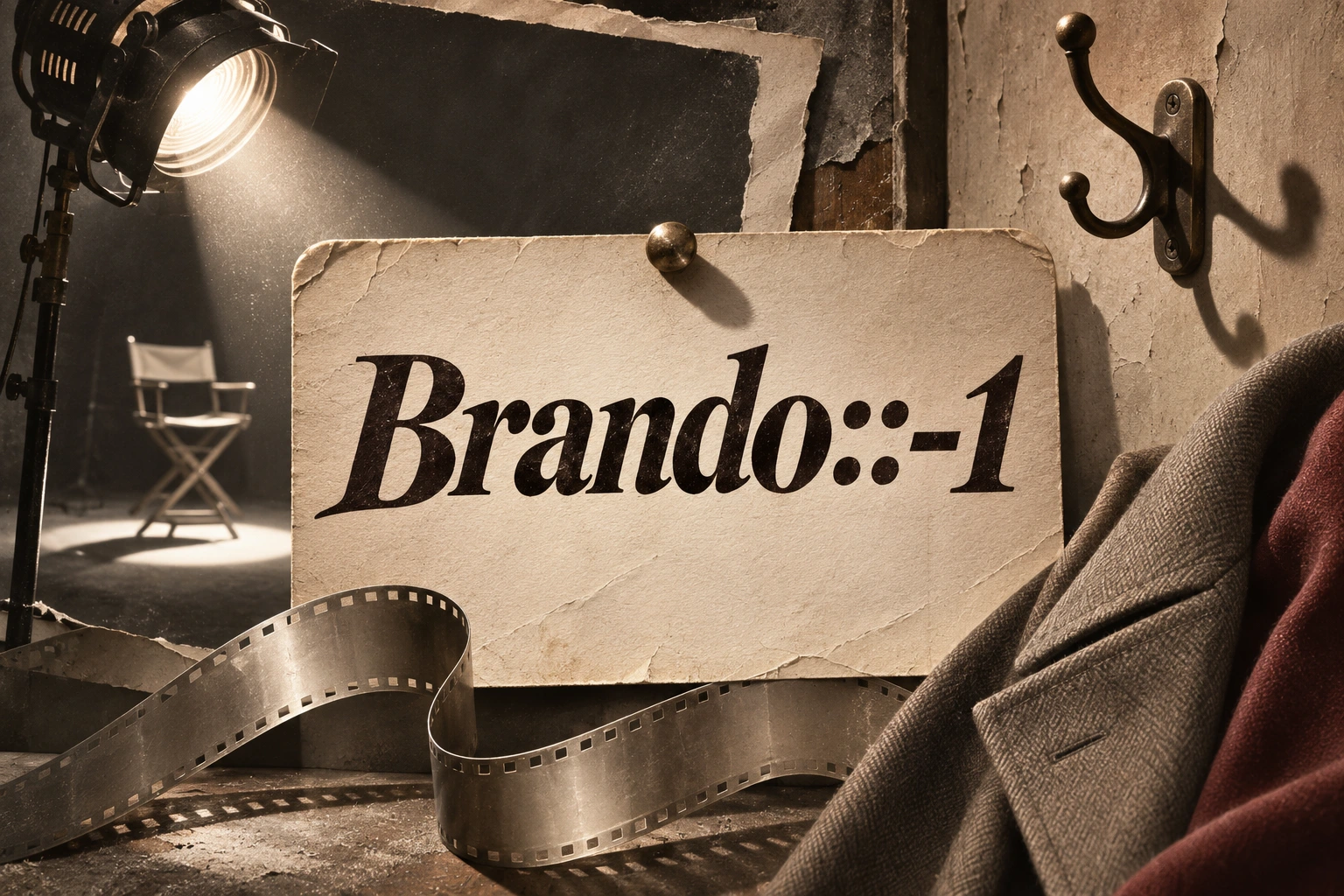
In a 2022 account, the artist Steph Maj Swanson, known as Supercomposite, described asking an image model for a negative weight on Brando. The artist showed a graphic resembling a skyline logo with text. Swanson then used a description of that result, DIGITA PNTICS skyline logo::-1, in a second negative prompt. That later experiment produced the figure the artist called Loab. The extra step matters when telling the story.
Swanson’s thread records an artist working with a particular system. It leaves a richer question for a studio exercise than a hunt for the same face. If a portrait loses its sitter, what else can carry the emotional weight of the composition? The seven new images here take that question into a rehearsal room.
Two colons in one system
Midjourney documents double colons as separators for weighted prompt segments in particular model versions, including V6.1. In those versions the sum of the weights must be positive. With V6.1 selected in the model settings, enter empty rehearsal room::2 Brando::-1 as the whole prompt. The first segment supplies positive weight. Check the receiving tool’s syntax before interpreting punctuation as an instruction.
AOI made this gallery in a natural-language image tool. We described the stage, the light and what should occupy it. We did not run the illustrated Midjourney command or reproduce Swanson’s original model conditions. Each of the actual image requests is recorded in the archive.
Where would the actor stand?
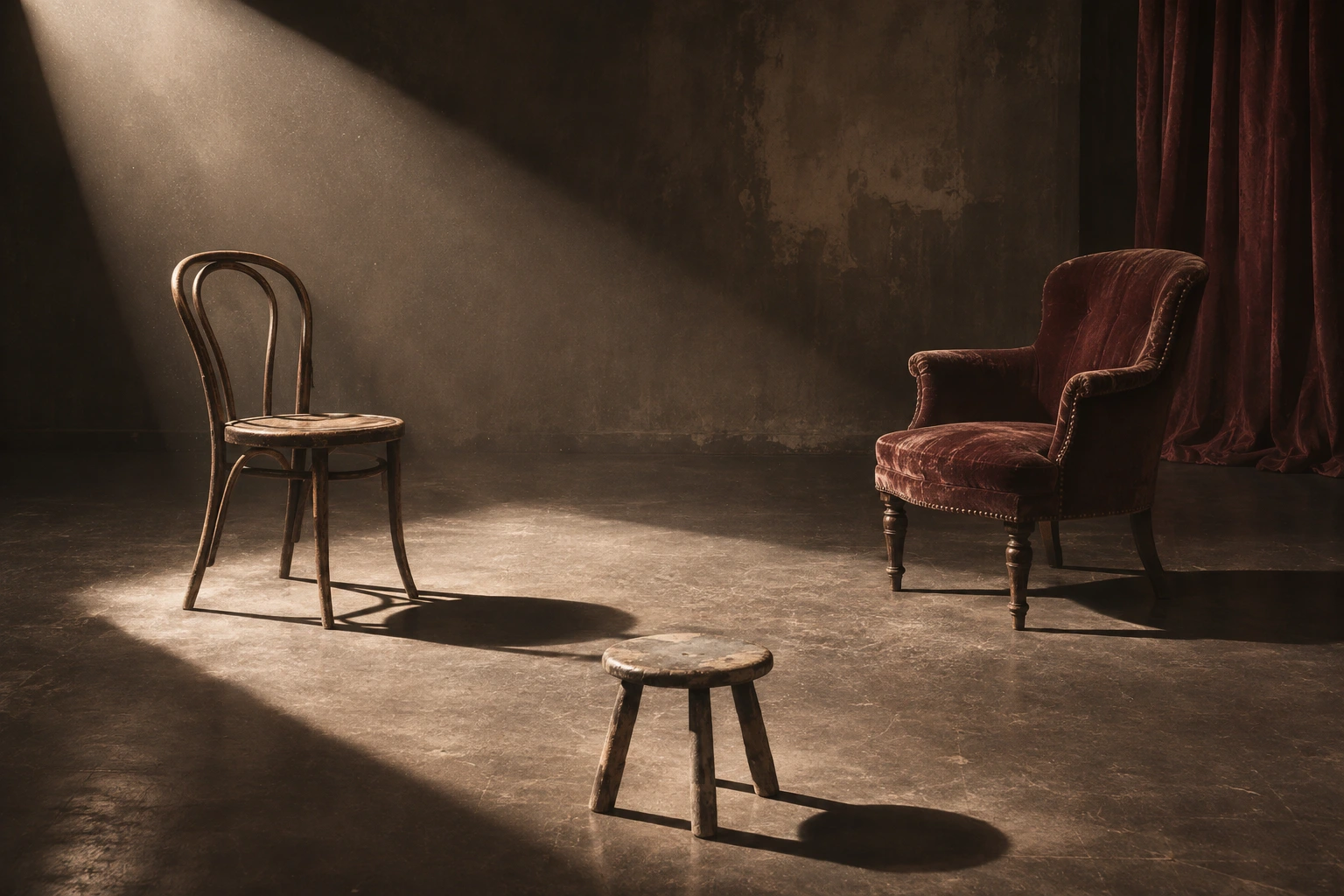
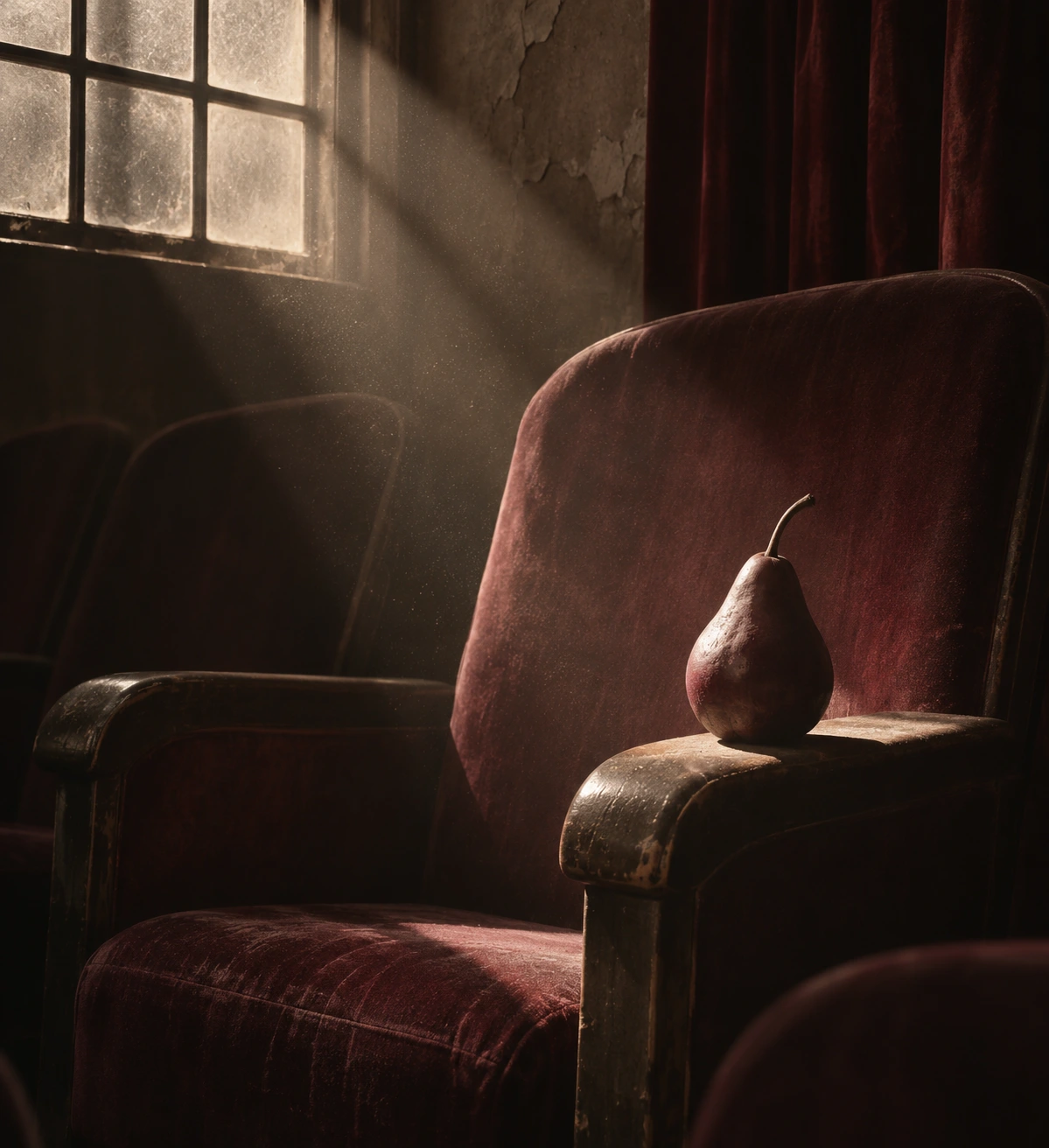
Look at the three seats. A bentwood chair has an upright back, a stool is all knees and a velvet armchair seems to expect someone prepared to stay. Place them under one lamp and their relative sizes do some casting. Cover the biggest seat and see how quickly your eye promotes another.
The smallest joke is the pear. It rests on the arm, leaving a perfectly serviceable seat unoccupied. Try the exercise with an object too small to fill the space intended for it. Light its shoulder, leave a gap on either side and see how long a viewer is willing to wait for the person.
Three readings from Penny’s desk
Positive review. The floor mark asks the eye to supply a whole body with two short strokes of red.
Negative review. The microphone and velvet make an attractive still life even if a viewer misses the absent performer.
Neutral review. The trial makes compositional absence visible. It provides no numerical measurement of negative weighting.
A small poetic detour
Original words from the AOI studio.
Poetry
The chair learns its cue.
A pear takes the light.
Someone in the wings
holds a perfectly good breath.
The prompt workshop
Original creative exercises. These prompts create new illustrations, not documentary evidence.
Cast a garment
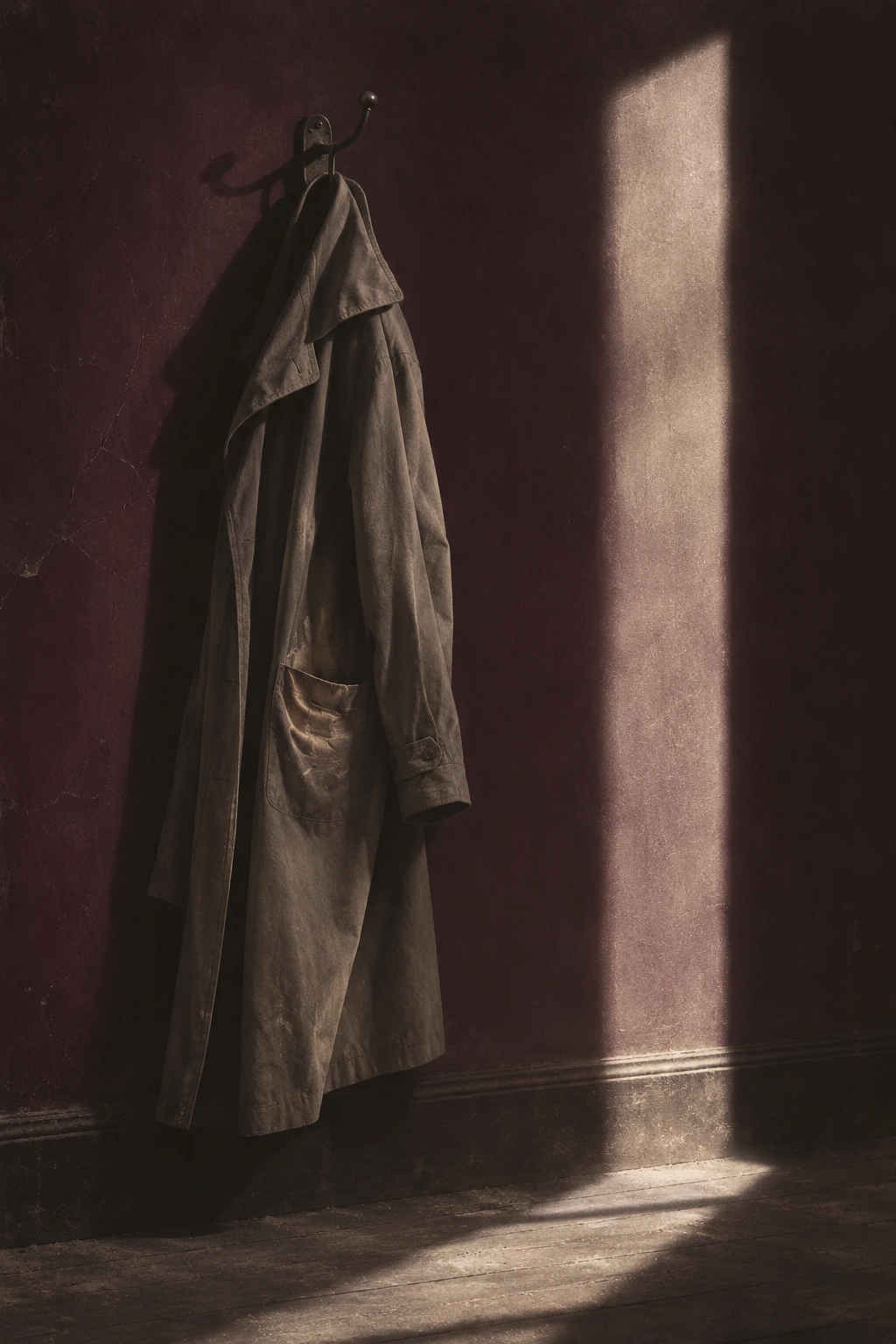
An empty rehearsal studio in charcoal and warm putty. Hang one creased coat on a hook, light one pocket as carefully as an actor’s hands, and leave the floor beneath it wide and empty.
Direct three chairs
Place a bentwood chair, low stool and worn armchair in one beam on a bare stage. Give each a different distance from the light. Frame the conversation the furniture seems ready to have.
Change the stand-in
Make the red velvet seat vacant. Put a single pear on its arm and aim a rehearsal light at the stem. Keep the curtain and window faintly legible.
A smile from the studio
Jokes
The understudy arrived right on cue. The director asked who had cast a pear.