
Contemporary portrait and makeup study
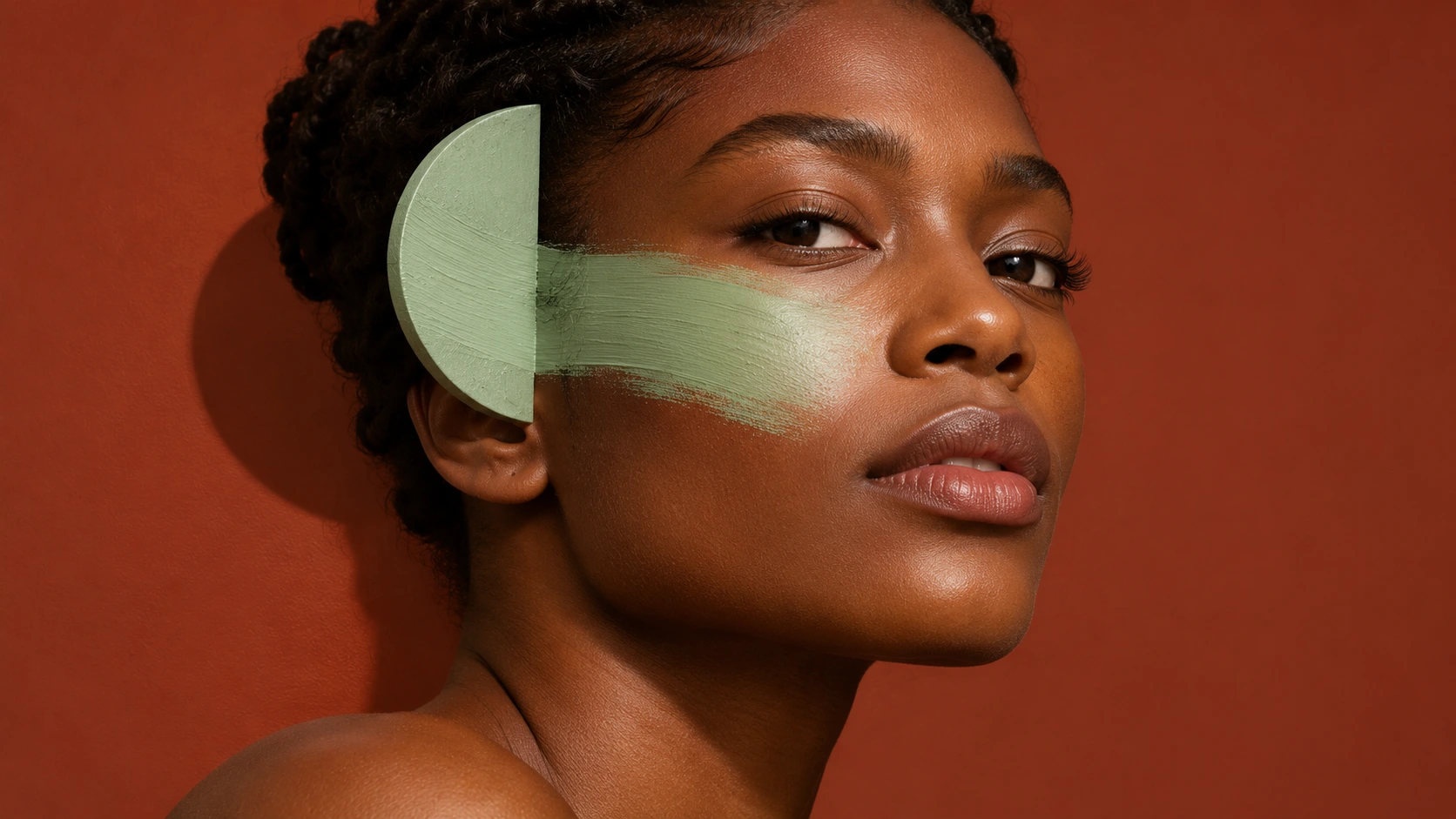
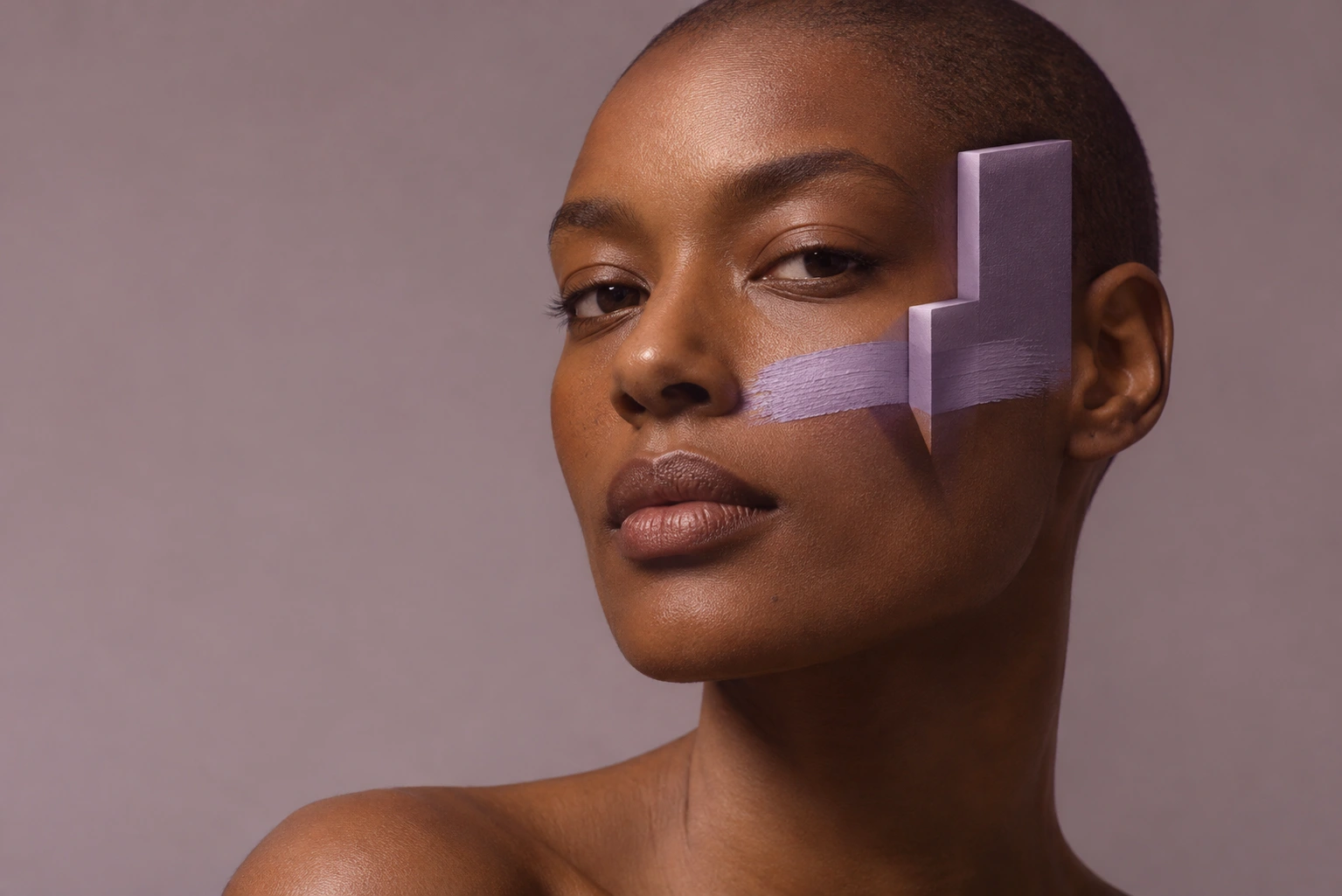
A stripe crosses a cheek and appears to lift into the air. The decisive mark belongs to the lamp. One small cast shadow can show exactly where paint stops following the skin and a new plane begins.
A visual introduction
Each portrait is an original AI interpretation. Follow a colored edge until it becomes a shadow and notice how much of the face remains free to move.
Select an image for a closer look. Use the thumbnails, arrow keys or a swipe to compare examples. Zoom in to inspect details, or share the image that inspires you.
Creative toolbox · take this style further
Choose an input and a destination. Search sends your words to the chosen site; Copy & open puts them on your clipboard to paste there.
Create with AI
Turn your chosen input into an image prompt or a new creative direction.
ChatGPT
Copy your input and paste it into a ChatGPT conversation or image request.
Copy & open ChatGPT (new tab)Claude · Anthropic
Develop an image prompt or explore the style in a new Claude conversation.
Copy & open Claude · Anthropic (new tab)Midjourney
Paste your input into the Imagine bar on the Create page.
Copy & open Midjourney (new tab)Adobe Firefly
Copy your input, open Firefly, and paste it into the prompt field.
Copy & open Adobe Firefly (new tab)Leonardo.Ai
Copy your input, open Leonardo, and paste it into the generation field.
Copy & open Leonardo.Ai (new tab)Image search
Find visual references. Short, concrete keywords usually work best.
Lexica
Search AI images and prompts using your selected input.
Search with this input Lexica (new tab)Pexels
Search the photo and video library. Short keywords often work best.
Search with this input Pexels (new tab)Pixabay
Search photos, illustrations and other images.
Search with this input Pixabay (new tab)Unsplash
Search photographs using the style name or your own keywords.
Search with this input Unsplash (new tab)Wikimedia Commons
Search photographs, artworks and historical images. Check each file for its source and reuse terms.
Search with this input Wikimedia Commons (new tab)Art & research
Explore artists, collections and the ideas behind a style.
Wikipedia
Search for background reading. A style may not have its own article.
Search with this input Wikipedia (new tab)WikiArt
Copy your input into WikiArt’s search to explore artists and artworks.
Copy & open WikiArt (new tab)Europeana
Paste your keywords into the search to explore European museum, library and archive collections.
Copy & open Europeana (new tab)Inspiration
Discover portfolios and visual ideas from creative communities.
Instagram hashtags
Search a hashtag made from your input: spaces and punctuation are removed. Instagram may require sign-in.
Search with this input Instagram hashtags (new tab)ArtStation
Paste your input into artwork search for concept art, environments, characters and visual development.
Copy & open ArtStation (new tab)Behance
Paste your input into project search for illustration, design and visual storytelling.
Copy & open Behance (new tab)A closer look
Matte painted geometry travels over the face and meets a visibly raised shape. Bare skin, a controlled light direction and the sitter’s expression allow a viewer to distinguish colored surface, physical edge and projected shadow.
Draw the surface twice
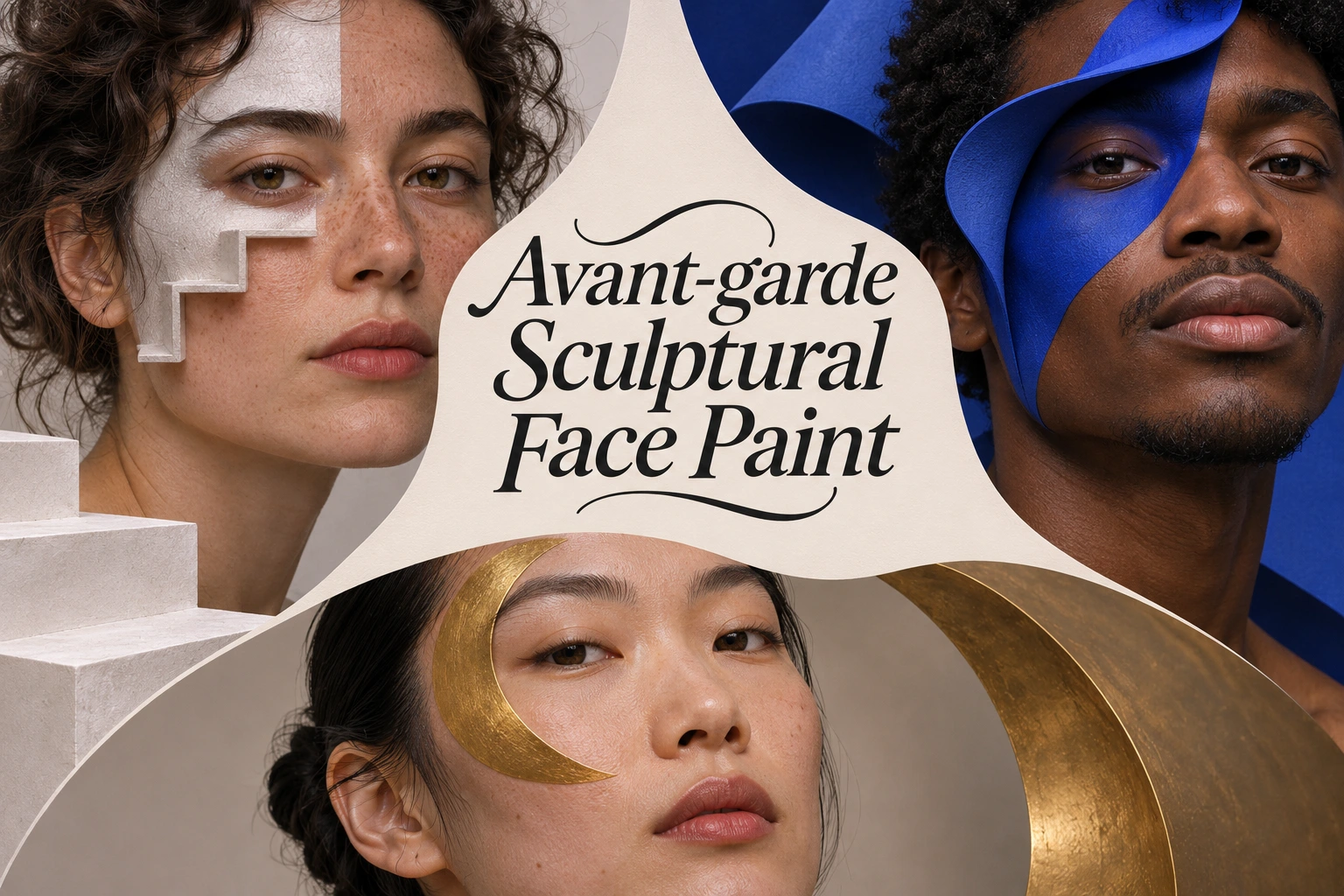
A painted crescent follows the cheek. A raised crescent can project a second curve onto it. These marks respond differently when the head turns, which makes the turn a better design test than a front-facing beauty shot. Block the face in three values first. Leave some skin visible so the viewer has a surface against which to judge the invention.
Makeup artist Phyllis Cohen describes developing handmade makeup stickers for Zandra Rhodes shows, translating the patterns of fabric to faces. Ana Rajčević’s wearable work offers another point of comparison, where a freestanding contour changes the human profile. The portraits here explore the interval between those practices. They are imagined studio sittings.
One edge, one shadow, one sitter
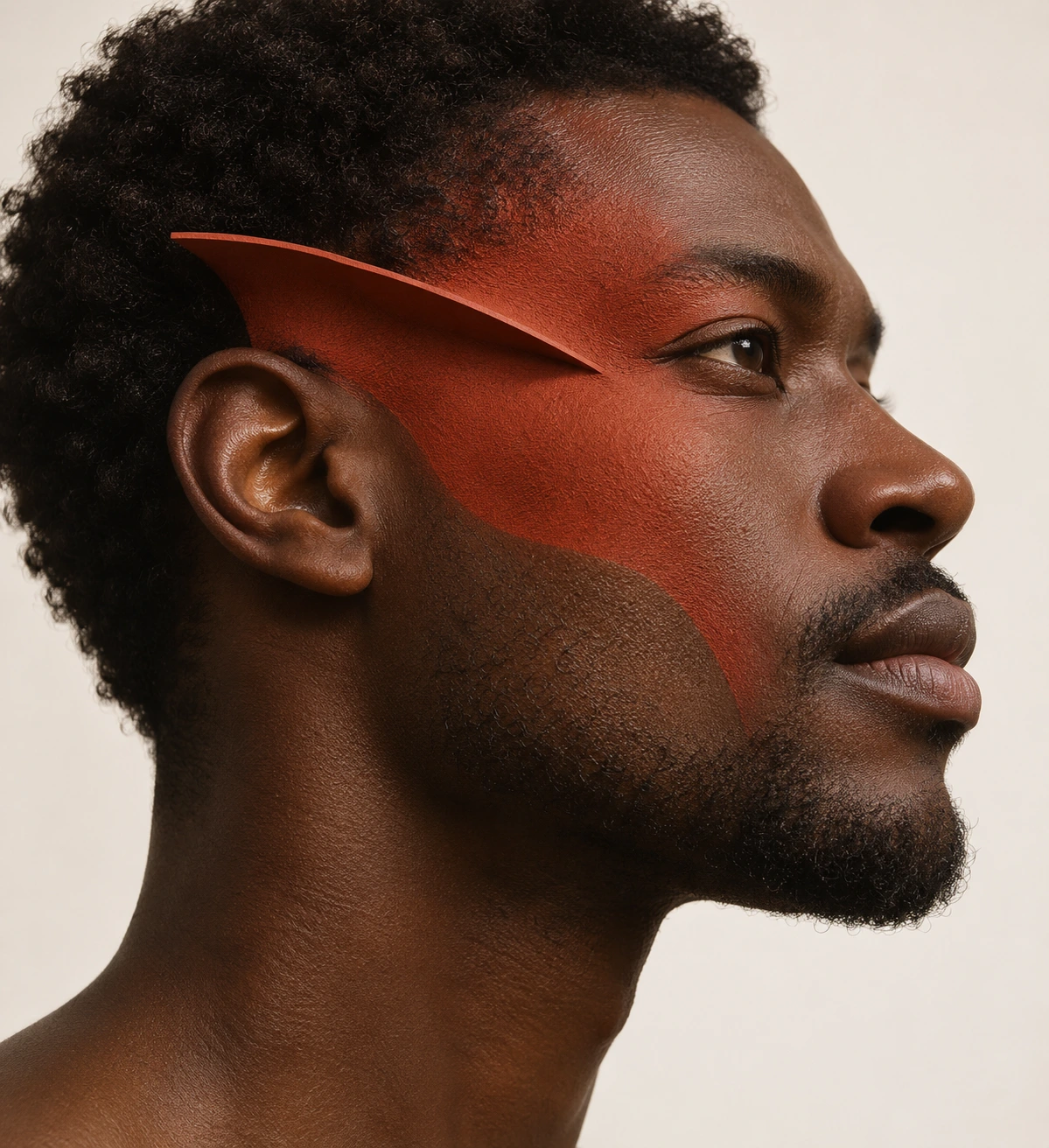
Place one substantial accent above the outer brow or beside the cheekbone. Trace the outside of the raised plane and the inside edge of its shadow. Their distance signals depth. A small, hard light makes the separation easy to see. A broad source can hide it until a fine rim catches light.
A face is an active part of the composition. Check the expression at ordinary viewing size. A comfortable jaw, an unobstructed eye or the crease around a smile can pull an otherwise chilly construction back toward portraiture. A viewer should be able to say something about the sitter as well as the color.
Two frames for an art director
Plan an oblique portrait to establish the extension, then a frontal view in which its painted continuation comes close to alignment. Preserve the direction of the key light between the two. The discrepancy tells you which effect belongs to geometry and which belongs to illumination.
In an image generator, describe separately what receives pigment, what stands up from the surface and where the shadow falls. A request for elaborate futuristic makeup often produces jewelry at every edge. Give the eye one difficult transition to solve and room to solve it.
Three readings from Penny’s desk
Positive review. A modest plane beside a real-looking cheek can generate two entirely different profiles. The strong images let a sitter turn the device into an expression.
Negative review. A mass of ornaments can turn the sitter into a display stand. Take away the least informative plane and check whether the gaze returns to the portrait.
Neutral review. The setup serves beauty editorials, theatrical concept work and studies of light. A frontal diagram would teach the arrangement, while an oblique portrait makes its depth felt.
A small poetic detour
Original words from the AOI studio.
Poetry
The lamp draws a second cheek.
It signs the skin in borrowed grey.
The sitter turns a little left.
The shadow takes its leave.
The prompt workshop
Original creative exercises. These prompts create new illustrations, not documentary evidence.
Let a band lift
A fictional adult sitter in three-quarter view, celadon paint crosses one cheek onto a single thin raised disc beside the temple. Show the cast shadow returning onto skin. Warm ground and one side light.
Change the key light
Design an ochre crescent joining skin to an outer crescent. Place a large soft light in front of the sitter. Let only the outer rim and a small contact shadow reveal its depth.
Give the expression equal weight
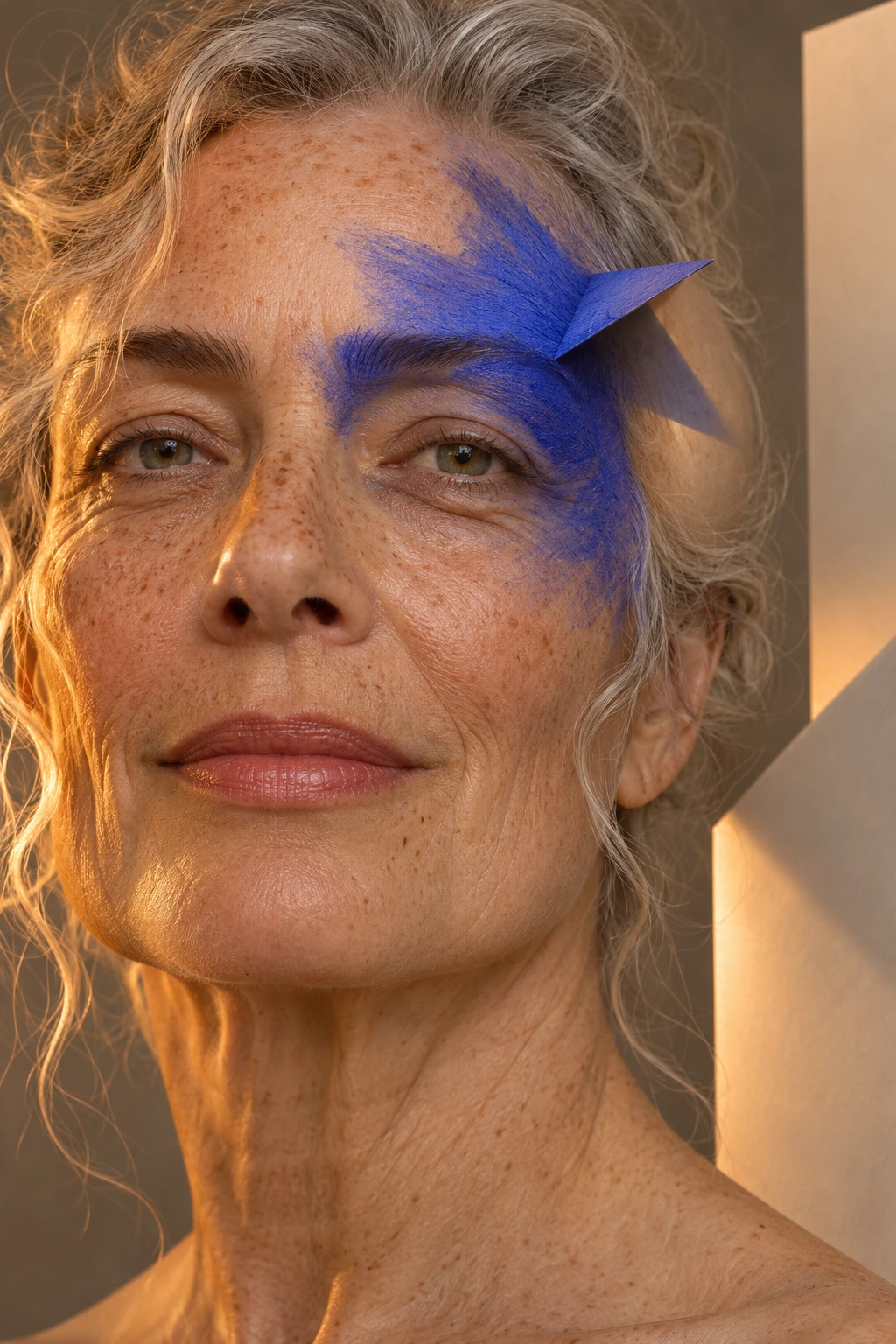
Portrait of an older woman half smiling, a cobalt painted fold beside the outer brow. Retain bare skin and the crease of the smile. Make the turn of her head carry the composition.
A smile from the studio
Jokes
The shadow asked for its own makeup chair. It already had excellent coverage.