
Art practice and historical tendency
Auto-destructive art makes destruction or disintegration part of a work’s unfolding process. Explore Gustav Metzger’s political context, time-based structure and the difference between material change and a decorative ruin.
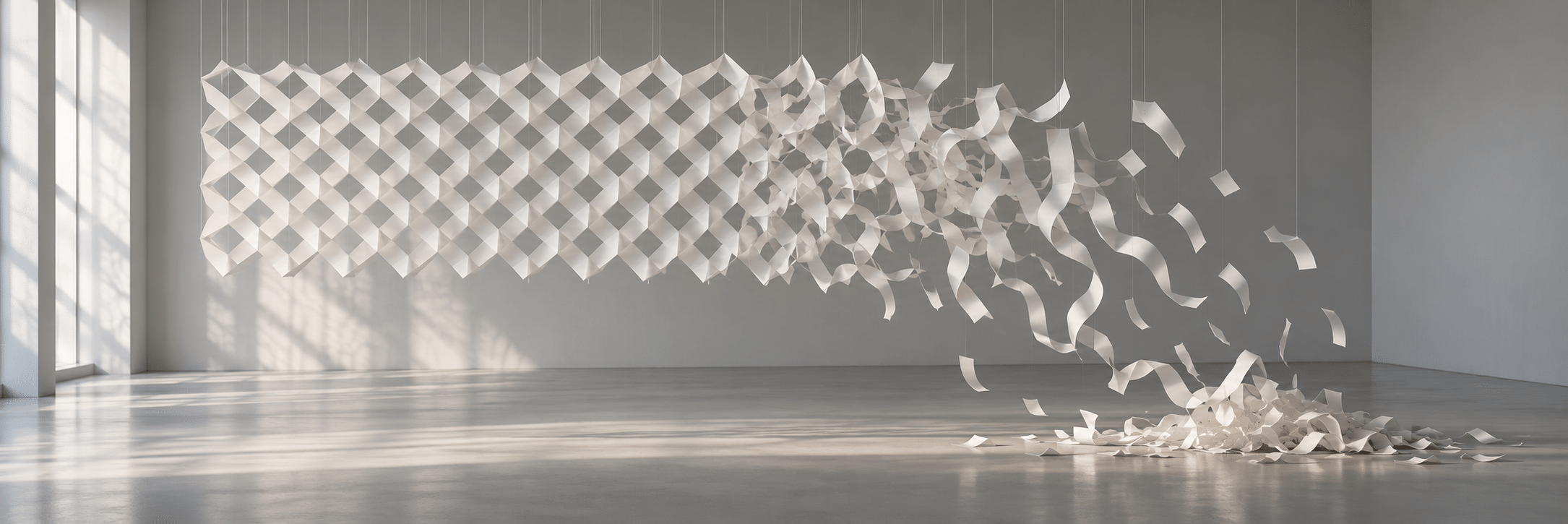
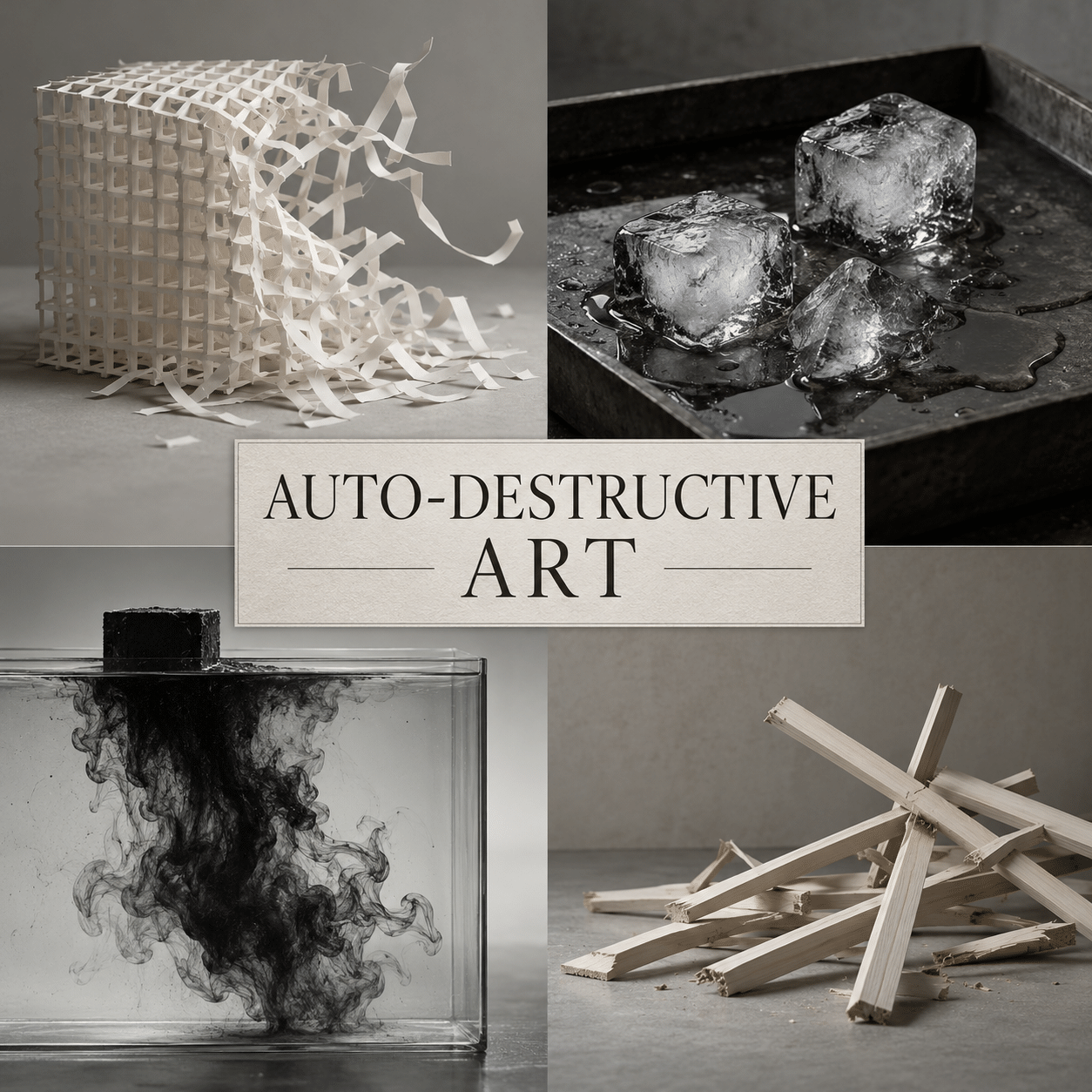
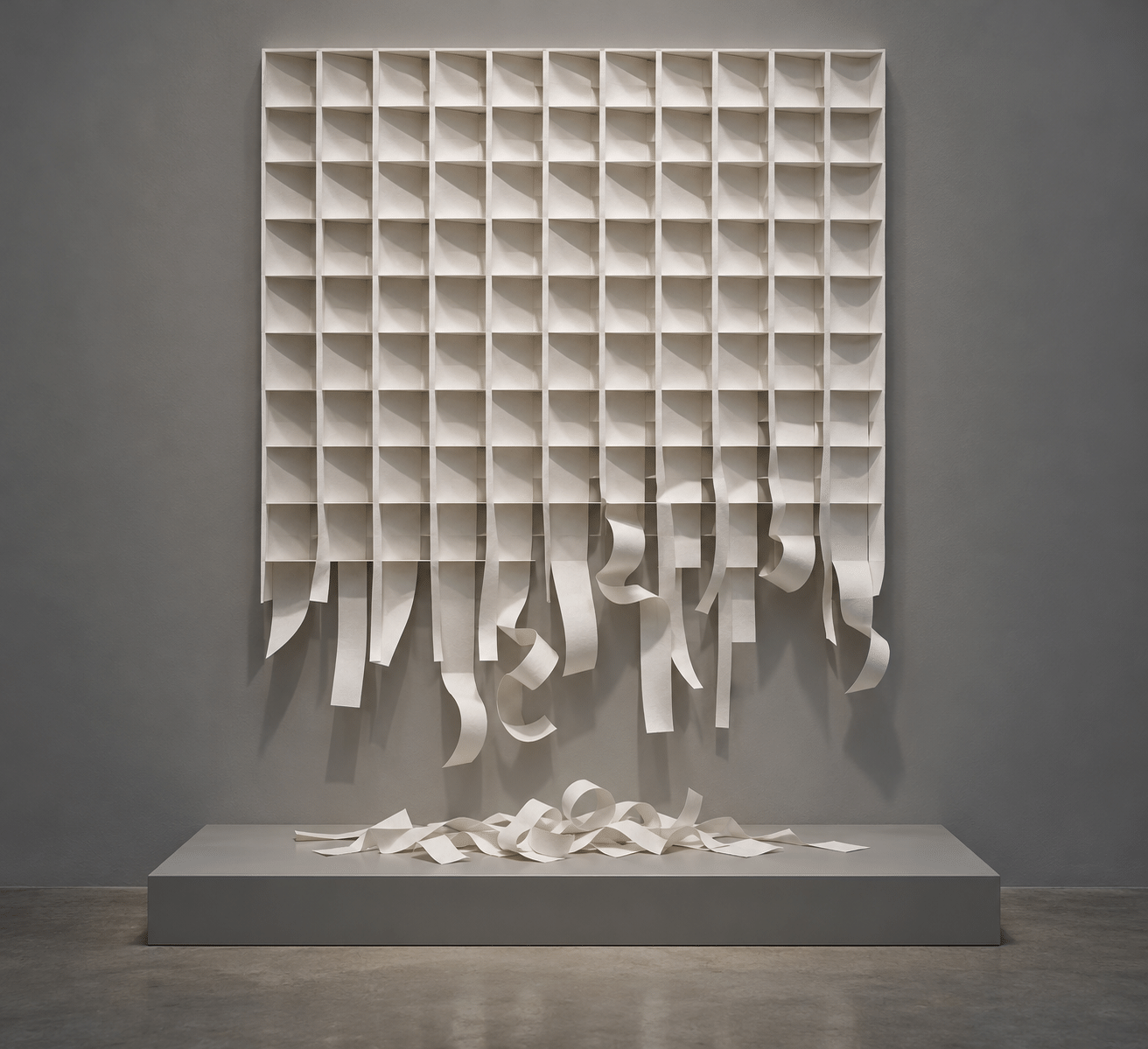
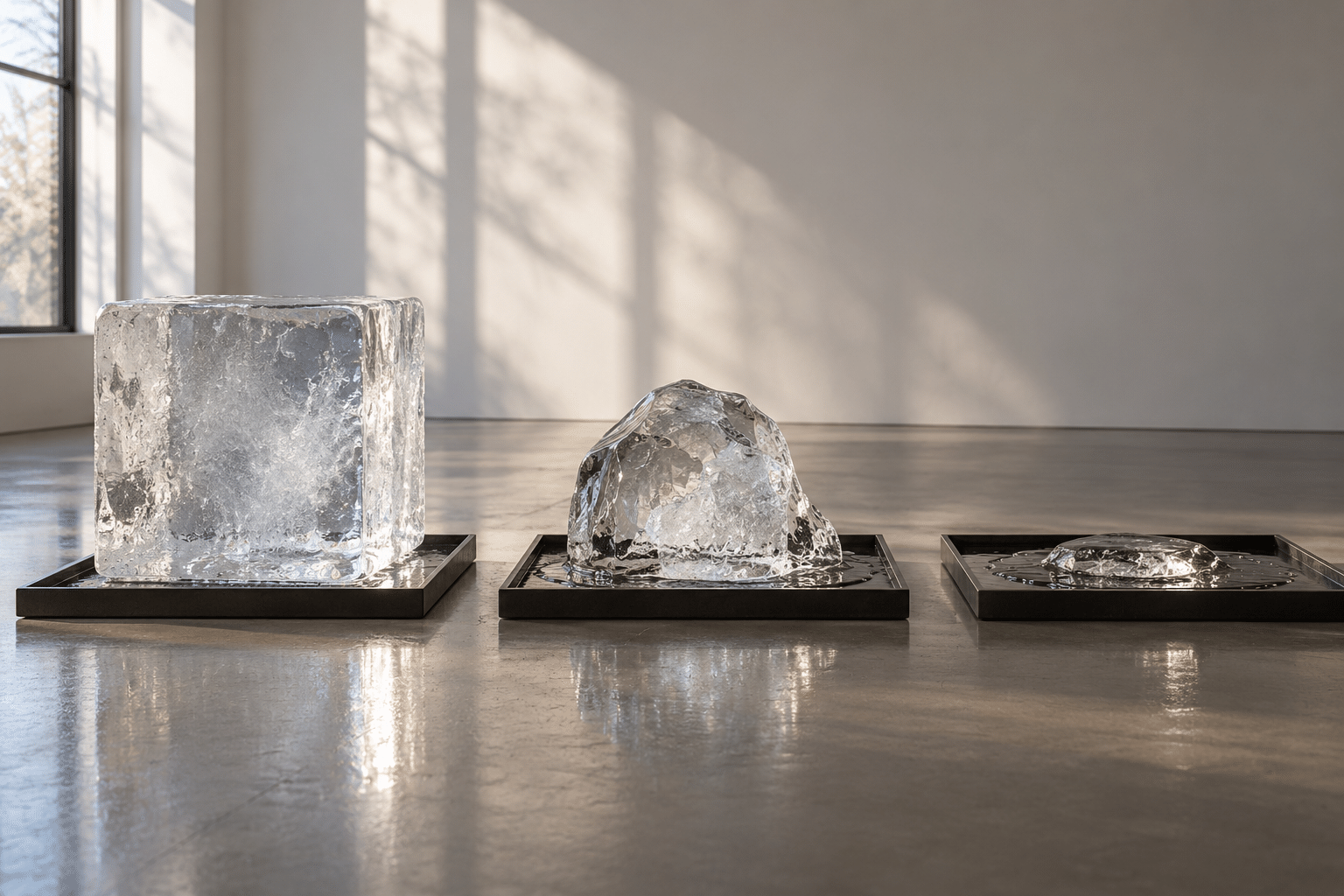
A visual introduction
Select an image for a closer look. Use the thumbnails, arrow keys or a swipe to compare examples. Zoom in to inspect details, or share the image that inspires you.


Creative toolbox · take this style further
Choose an input and a destination. Search sends your words to the chosen site; Copy & open puts them on your clipboard to paste there.
Create with AI
Turn your chosen input into an image prompt or a new creative direction.
ChatGPT
Copy your input and paste it into a ChatGPT conversation or image request.
Copy & open ChatGPT (new tab)Claude · Anthropic
Develop an image prompt or explore the style in a new Claude conversation.
Copy & open Claude · Anthropic (new tab)Midjourney
Paste your input into the Imagine bar on the Create page.
Copy & open Midjourney (new tab)Adobe Firefly
Copy your input, open Firefly, and paste it into the prompt field.
Copy & open Adobe Firefly (new tab)Leonardo.Ai
Copy your input, open Leonardo, and paste it into the generation field.
Copy & open Leonardo.Ai (new tab)Image search
Find visual references. Short, concrete keywords usually work best.
Lexica
Search AI images and prompts using your selected input.
Search with this input Lexica (new tab)Pexels
Search the photo and video library. Short keywords often work best.
Search with this input Pexels (new tab)Pixabay
Search photos, illustrations and other images.
Search with this input Pixabay (new tab)Unsplash
Search photographs using the style name or your own keywords.
Search with this input Unsplash (new tab)Wikimedia Commons
Search photographs, artworks and historical images. Check each file for its source and reuse terms.
Search with this input Wikimedia Commons (new tab)Art & research
Explore artists, collections and the ideas behind a style.
Wikipedia
Search for background reading. A style may not have its own article.
Search with this input Wikipedia (new tab)WikiArt
Copy your input into WikiArt’s search to explore artists and artworks.
Copy & open WikiArt (new tab)Europeana
Paste your keywords into the search to explore European museum, library and archive collections.
Copy & open Europeana (new tab)Inspiration
Discover portfolios and visual ideas from creative communities.
Instagram hashtags
Search a hashtag made from your input: spaces and punctuation are removed. Instagram may require sign-in.
Search with this input Instagram hashtags (new tab)ArtStation
Paste your input into artwork search for concept art, environments, characters and visual development.
Copy & open ArtStation (new tab)Behance
Paste your input into project search for illustration, design and visual storytelling.
Copy & open Behance (new tab)A closer look
A changing material system; visible stages of loss or transformation; traces and residue; contrast between an initial structure and its altered state; documentation that acknowledges time.
A process with consequences
Auto-destructive art treats the destruction, decay or dismantling of an artwork as part of the work itself. The term is closely associated with Gustav Metzger, whose foundation dates its first articulation to 1959. It should not be reduced to an image of something broken. Time, material behaviour and the decision to initiate a process matter as much as the resulting appearance.
Metzger’s foundation places the practice within his anti-nuclear, anti-capitalist and environmental commitments. Destruction was a way to confront social conditions and systems of power, rather than simply an entertaining spectacle. Getty’s Art and Architecture Thesaurus likewise identifies destruction within the work as central to the term. These historical contexts distinguish the practice from a general taste for distressed surfaces.
What a still image cannot tell you
A photograph of torn material can show a state but not necessarily the rule, duration or circumstances that produced it. A clear account should distinguish the event, its documentation, the remains and any later reconstruction. The same damaged surface might result from a deliberate time-based work, ordinary weathering or a staged studio arrangement.
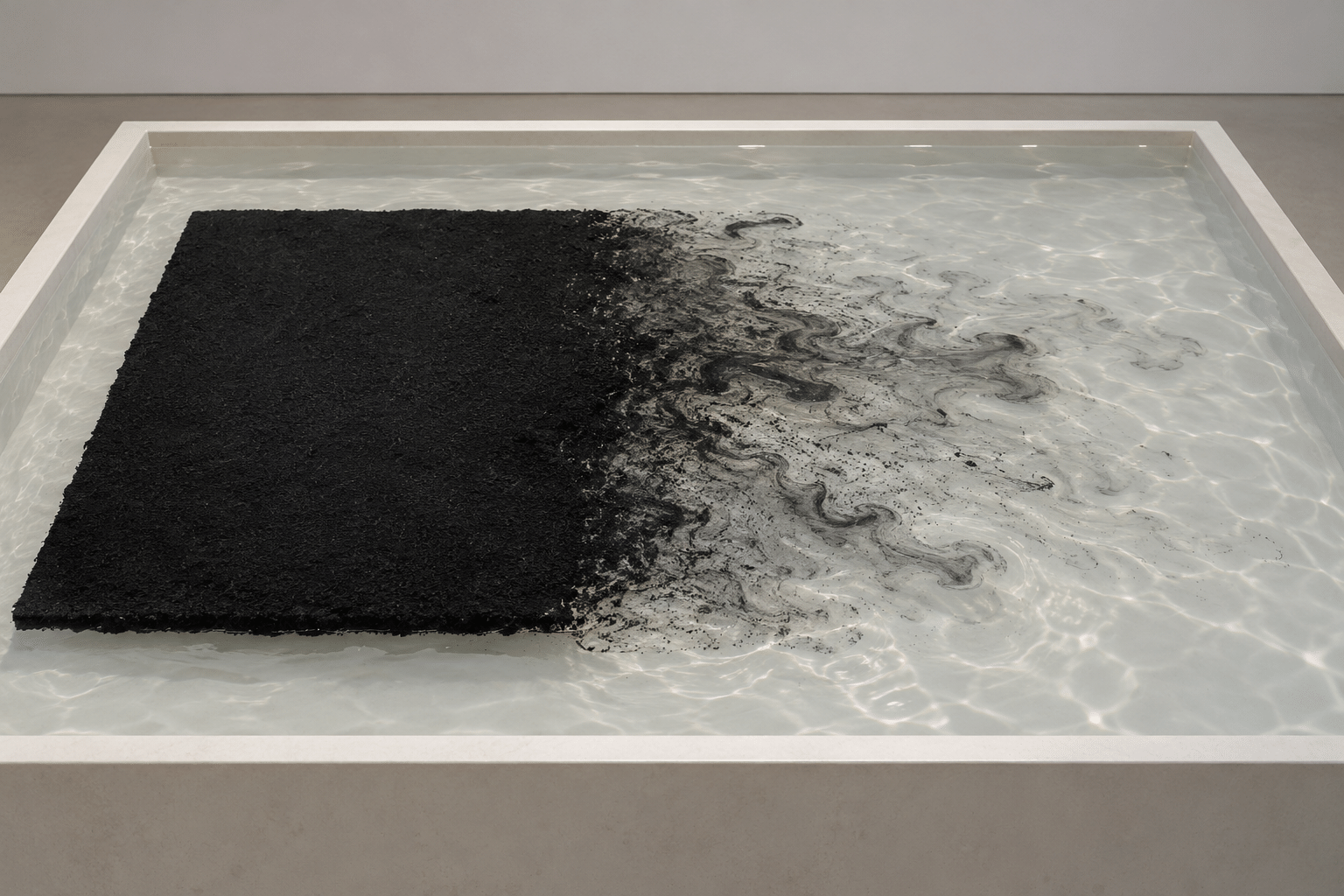
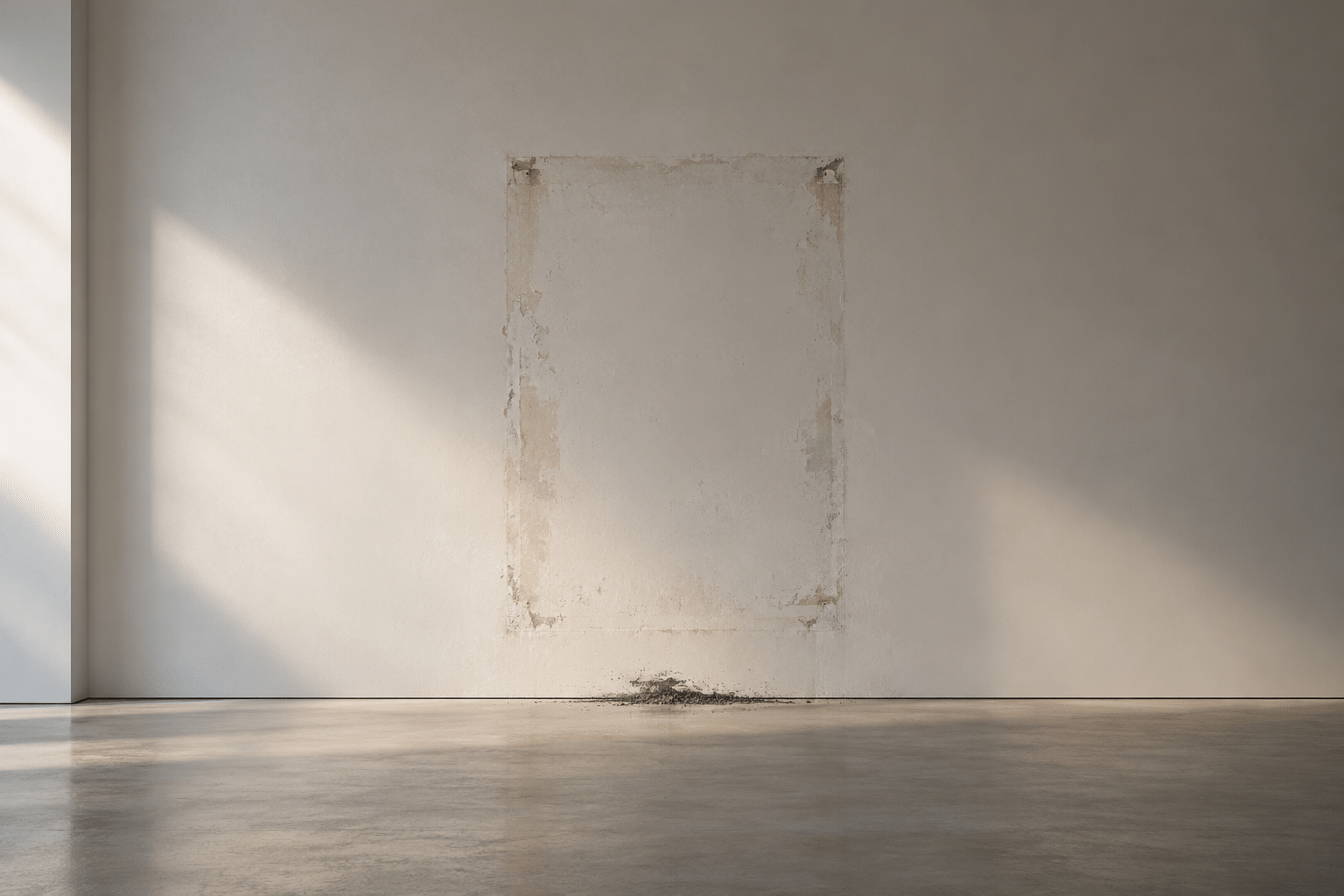
For visual interpretation, show a relationship between structure and change. An intact region beside a dissolving one makes the process easier to read than rubble alone. Repetition can establish a baseline: a row of similar elements becomes expressive when their changes occur unevenly. An empty support or a trace may become more significant than the object that once occupied it.
Composition through duration
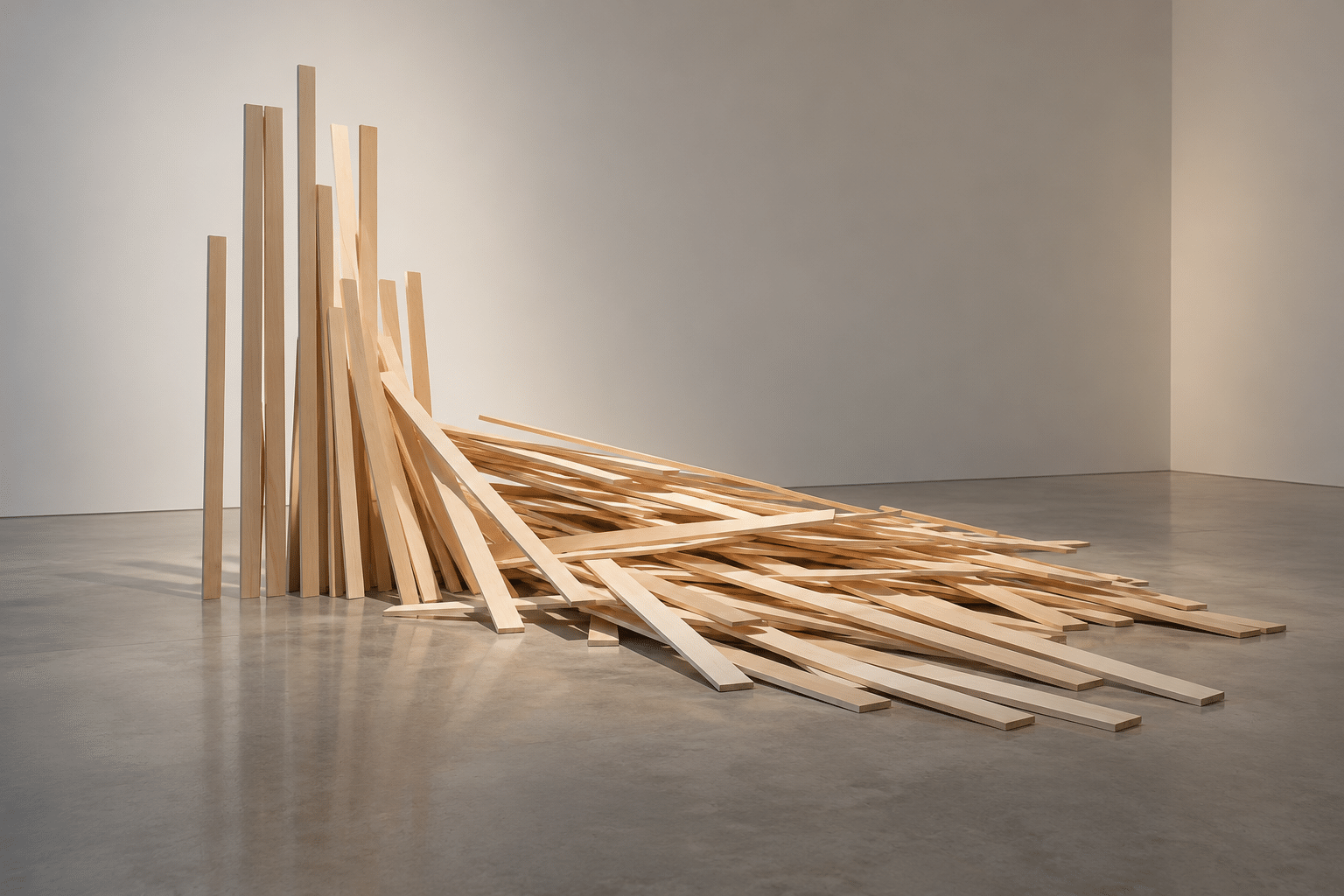
Think in stages: an initial arrangement, a turning point and a residue. The work may direct attention toward an absence rather than a climax. Light, distance and scale affect how that absence is understood. A close view emphasizes a fragile edge; a room view reveals what has disappeared from a larger structure.
Palette should follow the material proposal. Pale paper and grey residue suggest one kind of transformation; transparent ice and reflected light suggest another. These are AOI interpretive exercises, not reconstructions of Metzger’s works. In a digital simulation, specify the temporal logic and label the result as imagined. Avoid fake archival dates, documentary captions or invented exhibition histories.
Material responsibility and critical questions
The ethical question is part of the subject: what is being consumed, who bears the consequences and what does the transformation reveal? Wasteful spectacle can contradict an ecological claim. A modest reversible arrangement or digital simulation may communicate an idea more clearly than an elaborate destructive event. This article offers no hazardous chemical or mechanical instructions.
The new gallery uses imagined paper structures, melting ice, dissolving pigment, reversible stacked forms and a nearly empty support to examine transformation. Their role is explanatory and speculative. They are not documentation of performances, practical fabrication specifications or proof that a physical process has occurred.
Related approaches and useful distinctions
Process art also foregrounds making and material behaviour, but need not involve destruction. Ephemeral art is temporary without necessarily arranging its own disappearance. Conservation damage is not automatically art, and a broken object is not automatically an auto-destructive work. Ask what process was intended and how its consequences shape the meaning.
The most useful prompt vocabulary names the initial system, the specific change, the visible interval and the context. “An imagined paper lattice shown halfway through loosening, with intact cells above and a quiet accumulation below” is more precise than “chaotic destroyed art.” A convincing image leaves enough structure for the viewer to understand what is changing.
Positive editorial assessment — AI-authored
Auto-destructive art can make time and responsibility impossible to ignore. A work that changes beyond the maker’s immediate control challenges the expectation of a stable collectible object. Its strongest examples connect the material event to a serious question rather than asking viewers merely to admire a dramatic collapse.
Critical editorial assessment — AI-authored
Destruction can become a reliable spectacle whose political language adds little. Documentation may aestheticize the remains and conceal the consequences of producing them. A stronger proposal states what the process reveals, why destruction is necessary to that meaning and how the work handles its material and social costs.
Neutral editorial assessment — AI-authored
This practice is best understood through events, instructions, material systems and their documentation together. A still image can introduce its visual questions but cannot substitute for the temporal work. The term has a specific historical association with Metzger while also describing a wider set of destruction-led artistic processes.
A small poetic detour
Original words from the AOI studio.
Poetry
The shape was here; its outline stays
where light remembers how to fall.
A small remainder measures days,
a silence lengthens on the wall.
We watched the promise come apart,
then asked what promise it had made.
The ending did not finish art;
it left a question in the shade.
The prompt workshop
Original creative exercises. These prompts create new illustrations, not documentary evidence.
An imagined transformation
Create an original conceptual illustration of a delicate white paper lattice halfway through loosening: intact cells above, irregular falling strips below, a small quiet accumulation on a grey floor. No people, fire, chemicals, text or archival claims.
A sequence in one space
An imagined gallery with three simple ice forms at different stages of melting on separate shallow dark trays. Consistent light, believable translucent edges, increasing water reflections. Present as a digital study of duration, not documentary photography.
The remaining trace
An original conceptual image of a nearly empty pale support with faint rectangular contact traces and a small residue of dark pigment at its base. Restrained composition, large negative space and no dramatic explosion. AI-generated interpretation of absence and transformation.
A smile from the studio
Jokes
The conservator asked for a stable condition report. The artwork replied that instability was in the brief.