
Cultural and historical overview
Ancient Maya art joins image, writing, architecture and finely worked materials across many places and periods in Mesoamerica. This overview focuses on how to read objects and their contexts without reducing a living cultural inheritance to a decorative style.
A visual introduction
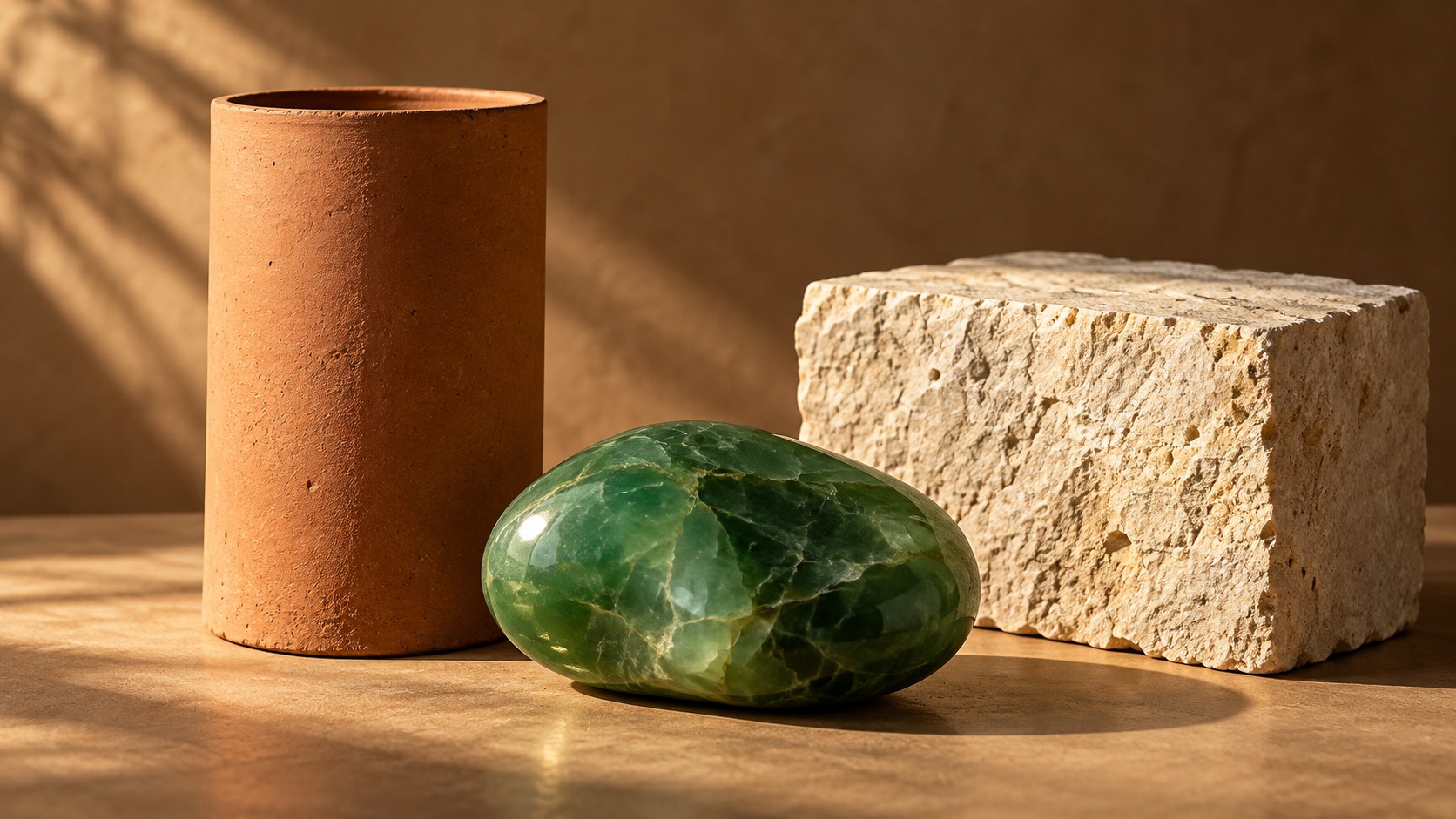
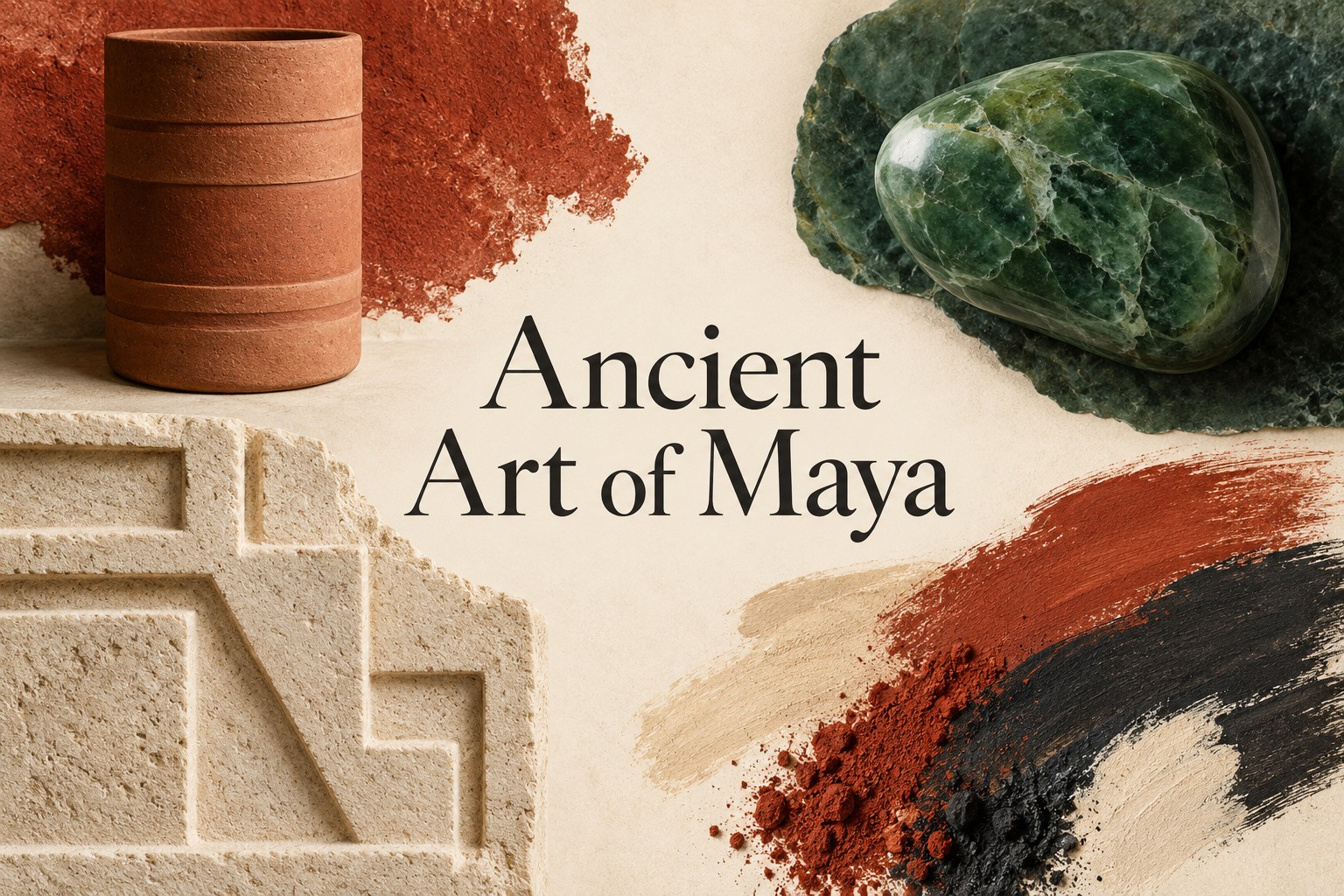
Three credited Met collection photographs show documented Maya objects. The new banner and central-title collage are contemporary AI-generated material studies, not ancient artifacts or archaeological reconstructions.
Select an image for a closer look. Use the thumbnails, arrow keys or a swipe to compare examples. Zoom in to inspect details, or share the image that inspires you.
Creative toolbox · take this style further
Choose an input and a destination. Search sends your words to the chosen site; Copy & open puts them on your clipboard to paste there.
Create with AI
Turn your chosen input into an image prompt or a new creative direction.
ChatGPT
Copy your input and paste it into a ChatGPT conversation or image request.
Copy & open ChatGPT (new tab)Claude · Anthropic
Develop an image prompt or explore the style in a new Claude conversation.
Copy & open Claude · Anthropic (new tab)Midjourney
Paste your input into the Imagine bar on the Create page.
Copy & open Midjourney (new tab)Adobe Firefly
Copy your input, open Firefly, and paste it into the prompt field.
Copy & open Adobe Firefly (new tab)Leonardo.Ai
Copy your input, open Leonardo, and paste it into the generation field.
Copy & open Leonardo.Ai (new tab)Image search
Find visual references. Short, concrete keywords usually work best.
Lexica
Search AI images and prompts using your selected input.
Search with this input Lexica (new tab)Pexels
Search the photo and video library. Short keywords often work best.
Search with this input Pexels (new tab)Pixabay
Search photos, illustrations and other images.
Search with this input Pixabay (new tab)Unsplash
Search photographs using the style name or your own keywords.
Search with this input Unsplash (new tab)Wikimedia Commons
Search photographs, artworks and historical images. Check each file for its source and reuse terms.
Search with this input Wikimedia Commons (new tab)Art & research
Explore artists, collections and the ideas behind a style.
Wikipedia
Search for background reading. A style may not have its own article.
Search with this input Wikipedia (new tab)WikiArt
Copy your input into WikiArt’s search to explore artists and artworks.
Copy & open WikiArt (new tab)Europeana
Paste your keywords into the search to explore European museum, library and archive collections.
Copy & open Europeana (new tab)Inspiration
Discover portfolios and visual ideas from creative communities.
Instagram hashtags
Search a hashtag made from your input: spaces and punctuation are removed. Instagram may require sign-in.
Search with this input Instagram hashtags (new tab)ArtStation
Paste your input into artwork search for concept art, environments, characters and visual development.
Copy & open ArtStation (new tab)Behance
Paste your input into project search for illustration, design and visual storytelling.
Copy & open Behance (new tab)A closer look
Carved relief, painted ceramics, architectural surfaces and jade ornaments organize figures, signs, gestures and material effects differently. Identify medium, region and period before drawing visual comparisons.
Begin with a particular object
Ancient Maya art is a broad historical subject, not a recipe of pyramids, jungle and elaborate headgear. The Met’s Lives of the Gods exhibition focuses on the Classic period, approximately 250–900 CE, while Maya histories extend beyond that frame. A label should identify the particular object’s date, material and context where known. Modern Maya peoples are not remnants of a vanished civilization; contemporary communities also contribute to the interpretation of the past.
The surviving record includes monuments and small objects, painted vessels and ornaments. These were made for different situations and viewers. A monument encountered outdoors, a ceramic vessel turned in the hand and an ornament worn on the body organize attention differently. A photograph flattens those experiences; a rollout photograph of vessel painting also changes its curved surface into a continuous strip. Read the display format alongside the object.
Image and writing belong together
Maya writing records meaningful language, names and events; it is not a generic ornamental alphabet. Some artists signed their work. The Met’s exhibition guide connects decipherment with new understandings of divine narratives and royal authority. Identifications and readings can remain uncertain, and museum descriptions sometimes mark that uncertainty explicitly. Preserve those qualifications rather than filling a gap with a plausible story.
For a visual study, notice how a band of writing can frame a scene or interact with figures. Do not invent a translation for generated marks. An AI picture that imitates glyph-like shapes is neither a readable inscription nor an archaeological discovery. When designing an original nonhistorical composition, plain divisions or abstract marks are preferable to pretending to reproduce an authentic sacred or historical text.
Materials make different demands
Carved stone emphasizes the relationship between surface and relief: incised lines, raised forms and shadows can work together. Painted ceramics depend on contour, color areas and the vessel’s turning surface. Jade ornaments use compact form, polish, translucency or opacity, and the relation of an object to the body. These are useful observational categories, not claims that all Maya makers followed one set of rules.
Look at scale before detail. A small face on a pendant has different carving limits from a monumental figure. In a photograph, examine edges and lighting before deciding which marks are original, damaged, restored or simply shadow. For historical identification, use the collection record and specialist discussion. Surface appearance alone cannot date an object or establish provenance.
Three documented objects to compare
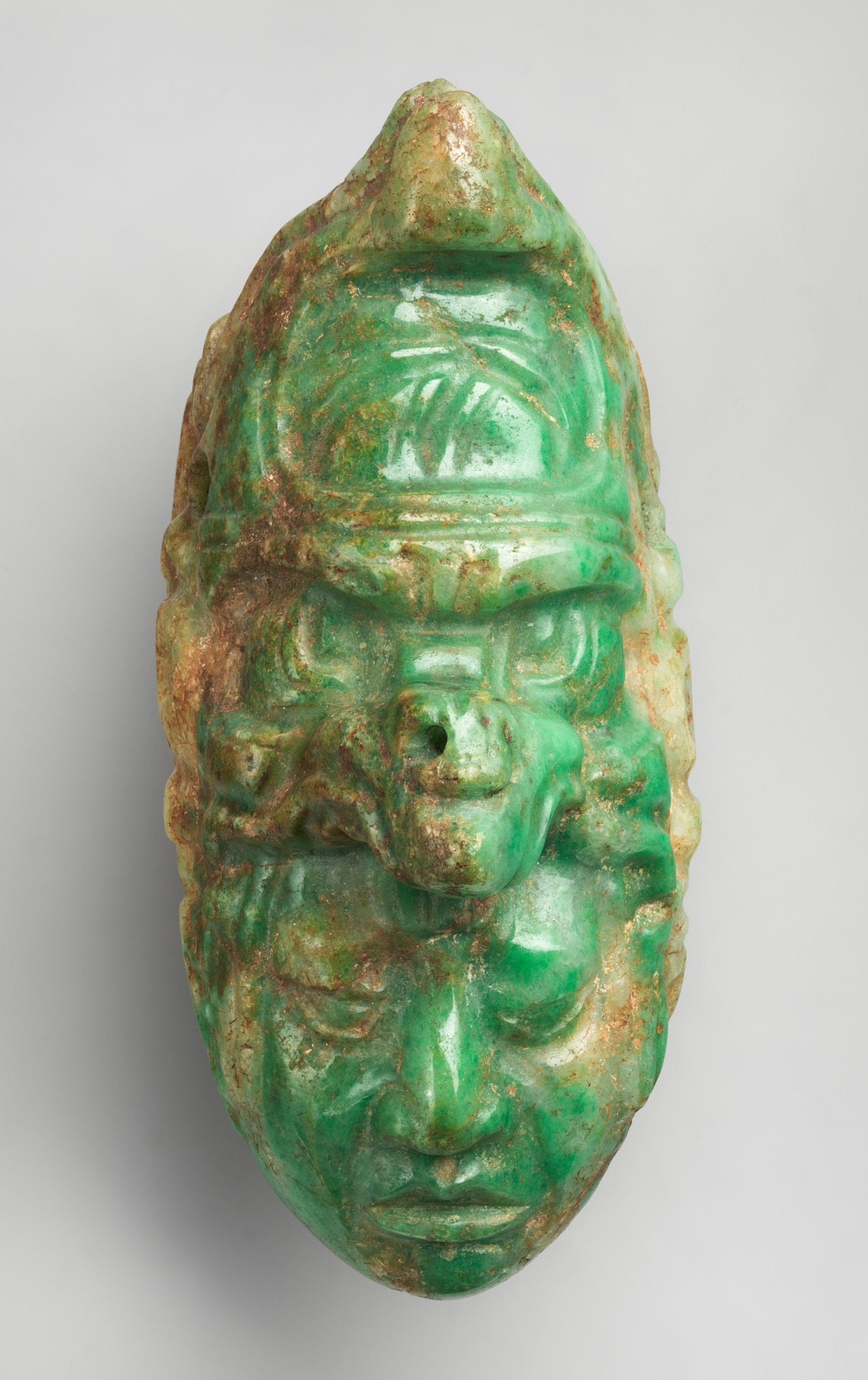
The jadeite Pendant (Met accession 2015.677, 600–700 CE) concentrates a face and elaborate headdress into a compact vertical shape. In the photograph, polished green passages alternate with rougher, earth-colored areas. Look at how the enclosing silhouette unifies the smaller carved forms. Its material and scale offer a different viewing problem from a large architectural relief.
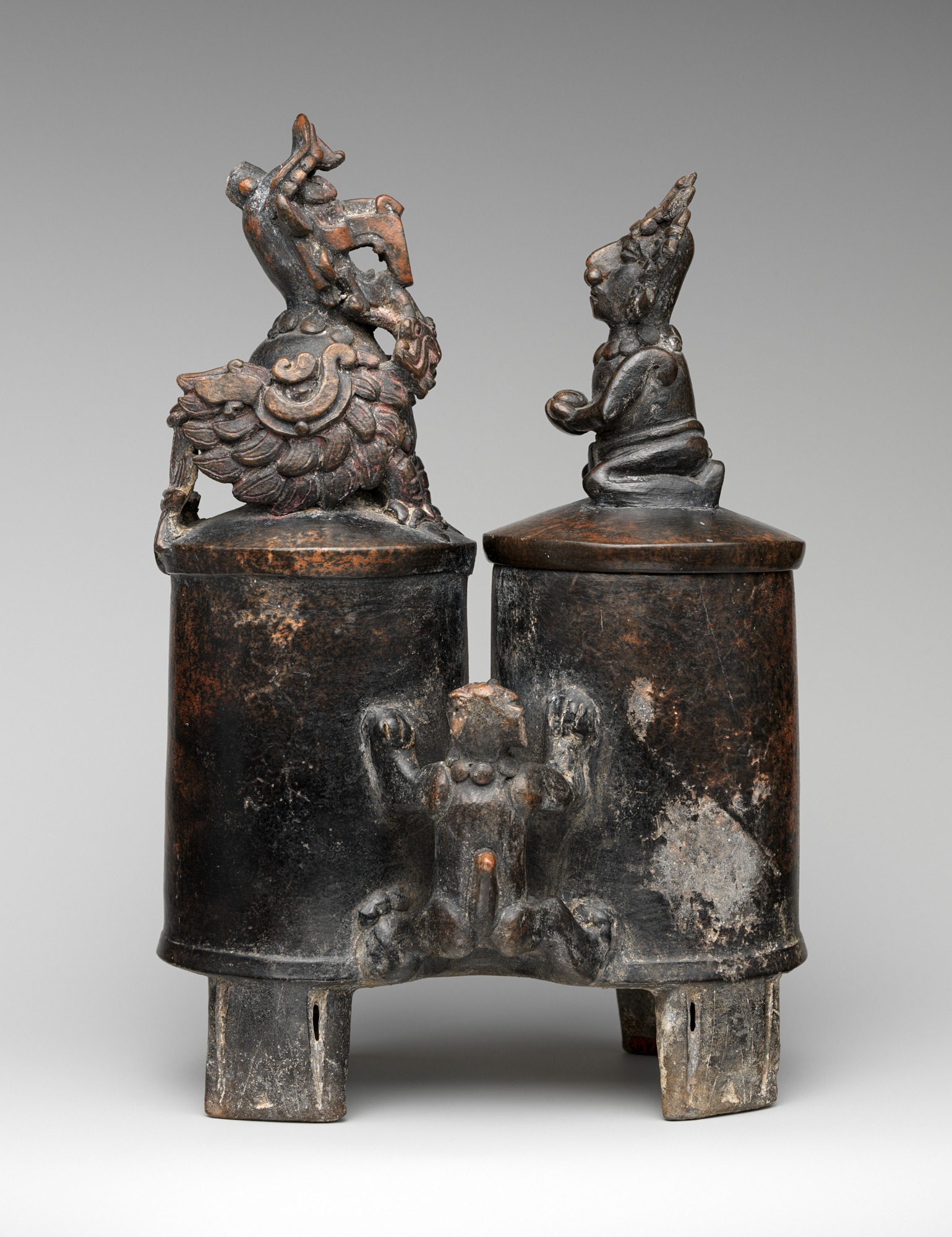
The Whistling vessel (1978.412.90a, b, 400–500 CE) combines two ceramic chambers with modeled figures, including a bird. Its three-dimensional construction asks the viewer to look around the object. The photograph records the arrangement and surface, but cannot demonstrate its sound. Do not infer an exact historical acoustic performance from the object’s title or a still image.
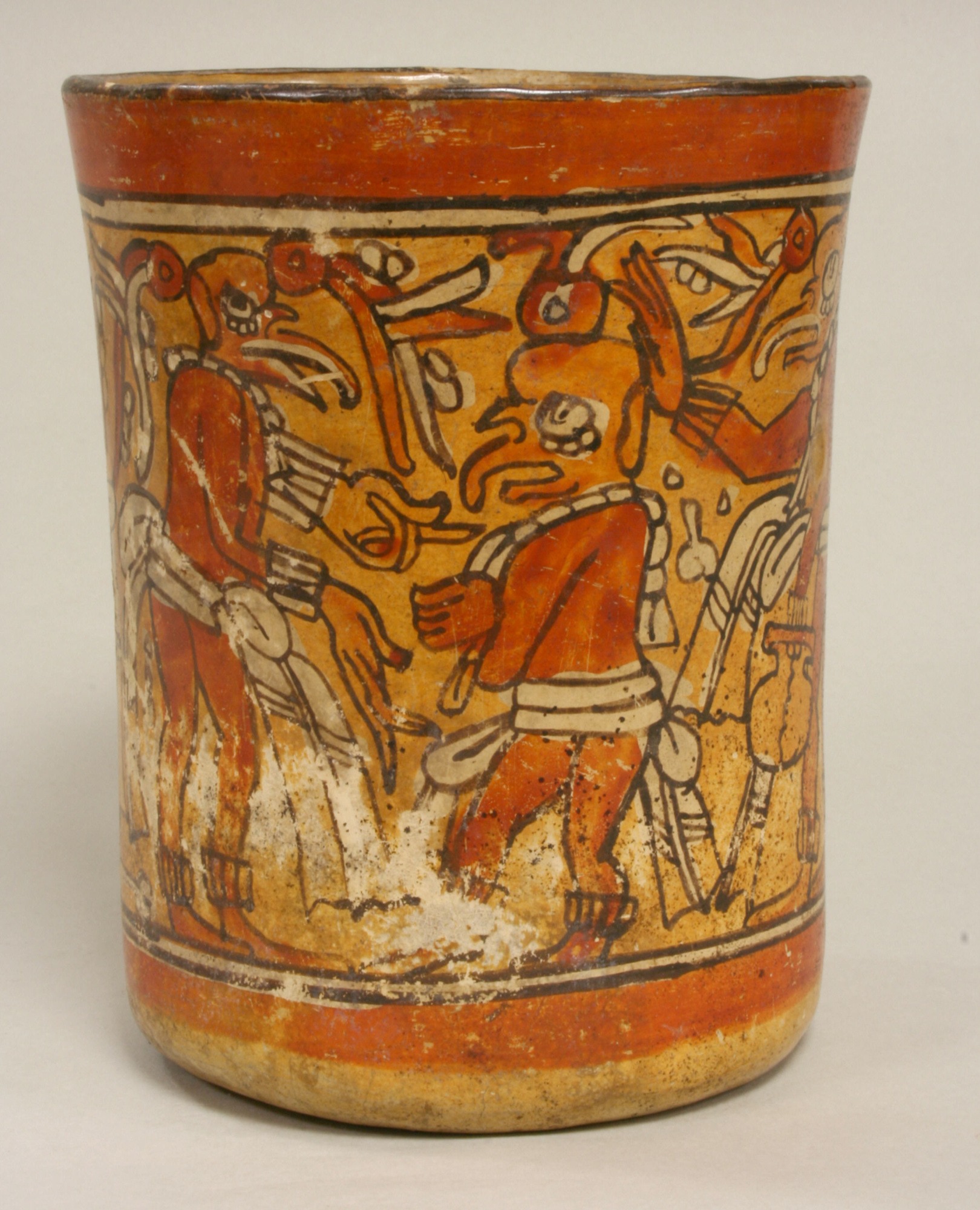
Vessel with Deity Figures (1979.206.1122, seventh–eighth century) presents outlined figures across a cylindrical painted surface. Red and cream areas work with dark contours; the image continues beyond what one photograph can show. Compare that moving, curved field with the pendant’s frontal concentration. These three collection objects illustrate different material decisions, not a comprehensive sample of every Maya period or region.
Narrative, divinity and power
The Met’s exhibition traces images of gods, creation and royal connections to sacred authority. Maize, celestial cycles and animal beings can carry specific meanings, but a motif’s meaning depends on its context. Resist treating every bird, serpent or jaguar as an interchangeable symbol. Likewise, a richly dressed figure is not automatically a named ruler. A careful account separates visible features from a scholarly identification and from an interpretation.
Compare two documented objects by asking who commissioned them, how they were used and who could see them. If those answers are unknown, say so. The comparison can still be valuable: a change in scale, surface or arrangement may explain how different works address their viewers. An attractive collection of motifs is not a substitute for that inquiry.
A responsible visual workshop
Use museum records as research references and reproduce photographs only under their stated terms. For an original design exercise, study one formal relationship at a time: profile and surrounding space, a continuous band on a cylinder, or contrast between polished and matte surfaces. Describe the result as a contemporary exercise. Avoid fabricating an excavated object, museum accession number, deity identification or archaeological location.
This page is an entry point to a large and changing field. Its practical prompts teach observation and composition; they do not confer cultural authority or reconstruct lost practices. If a generated material study is included, it should be visibly and verbally distinguished from a documented museum object. The difference is part of the article’s usefulness, not a footnote to hide below the images.
About this guide
This AI-authored AOI guide appears under Penny Wraiter, AOI’s editorial persona. Sources support the historical context; exercises, prompts and poetry are original editorial interpretations. Image captions distinguish generated studies from documented works.
Follow the surface around the object
A vessel's image may change as the object turns; a pendant may depend on the relationship between its front, edge and suspension point. Look for multiple views where available. The isolated frontal image is a useful record, but it may not show how the work was handled, worn or encountered.
Keep the actual size visible in your notes. A closely photographed carved detail can appear monumental on a screen. Recording scale prevents a creative exercise from confusing the technical demands of a small worked object with those of an architectural relief.
Treat writing as language
When an object contains inscriptions, distinguish a visual observation about placement from a claim about what the text says. Use a reliable reading for the latter. For a new illustration, blank bands or an original non-writing pattern are preferable to invented glyphs presented as meaningful Maya text. The image can remain visually rich without manufacturing historical testimony.
A small poetic detour
Original words from the AOI studio.
Poetry
The vessel turns; the line returns.
A hand once chose this curve of clay.
We read the names we know to read
and leave the doubtful signs their say.
A polished edge receives the light.
The larger story is not ours.
We learn by naming what we know,
then listening beyond the hours.
The prompt workshop
Original creative exercises. These prompts create new illustrations, not documentary evidence.
Observe a documented object
Choose one museum-documented Maya object whose image reuse terms permit your intended use. Write its institution, accession, date range and medium, then describe three visible relationships between contour, surface and scale. Separate observation from the museum’s interpretation. Do not invent a name or translation.
A contemporary material study
Create an original, clearly contemporary still life of a plain clay cylinder, an uncarved green stone and a limestone block. Use side lighting to distinguish matte, polished and granular surfaces. No glyphs, deity faces, archaeological setting or fake labels. The image studies materials and does not depict authenticated Maya artifacts.
Think around a curved surface
Design a nonhistorical abstract band of alternating broad and narrow forms around a plain ceramic cylinder. Show how the pattern changes as the vessel turns. Restrained cream, terracotta and charcoal colors; no pseudo-writing or sacred motifs. Label the result as a contemporary composition exercise, not ancient Maya art.
A smile from the studio
Jokes
A useful museum habit: when a label says “possibly,” let the word keep its job.
Sources and further exploration
The Met: Pendant — object date, material, accession and public-domain photograph
The Met: Whistling vessel — object date, material, accession and public-domain photograph
The Met: Vessel with Deity Figures — object date, material, accession and public-domain photograph