
Pixel-art approach · 8-Bit Lo-Fi Pixel Art
A small lamp can make a whole pixel city feel inhabited. This lo-fi variant pairs visible clusters with unhurried scenes, subdued colour and selective warmth. The label describes a contemporary mood and working approach, not one historical movement or console specification.
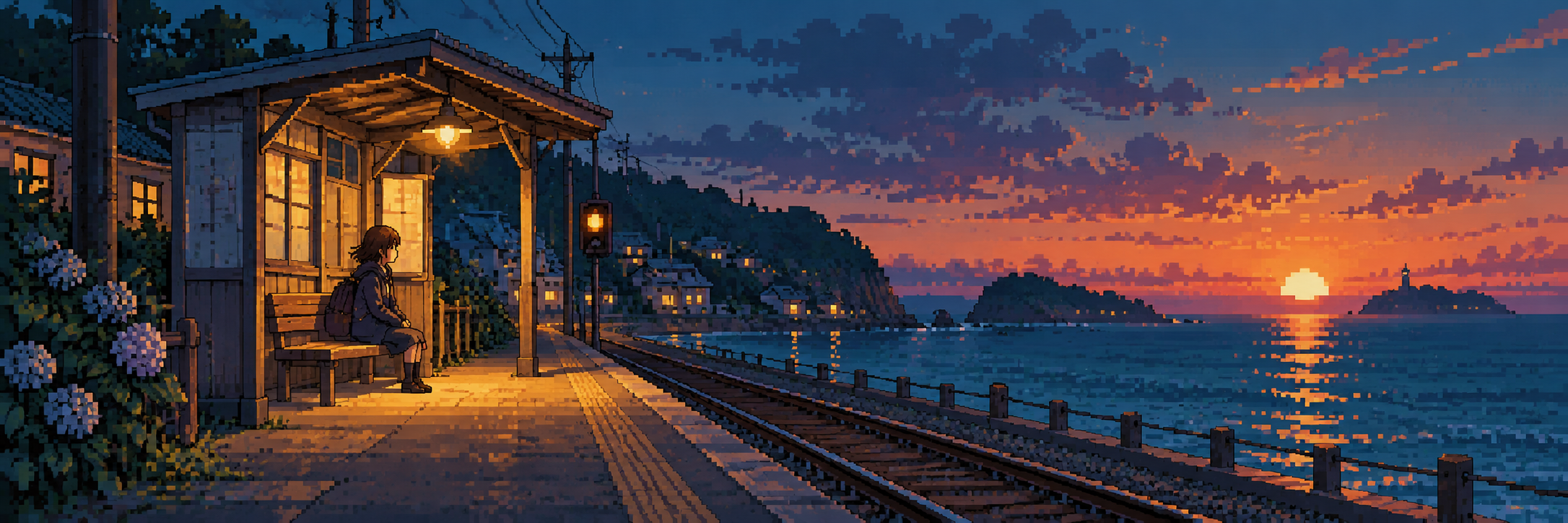
A visual introduction
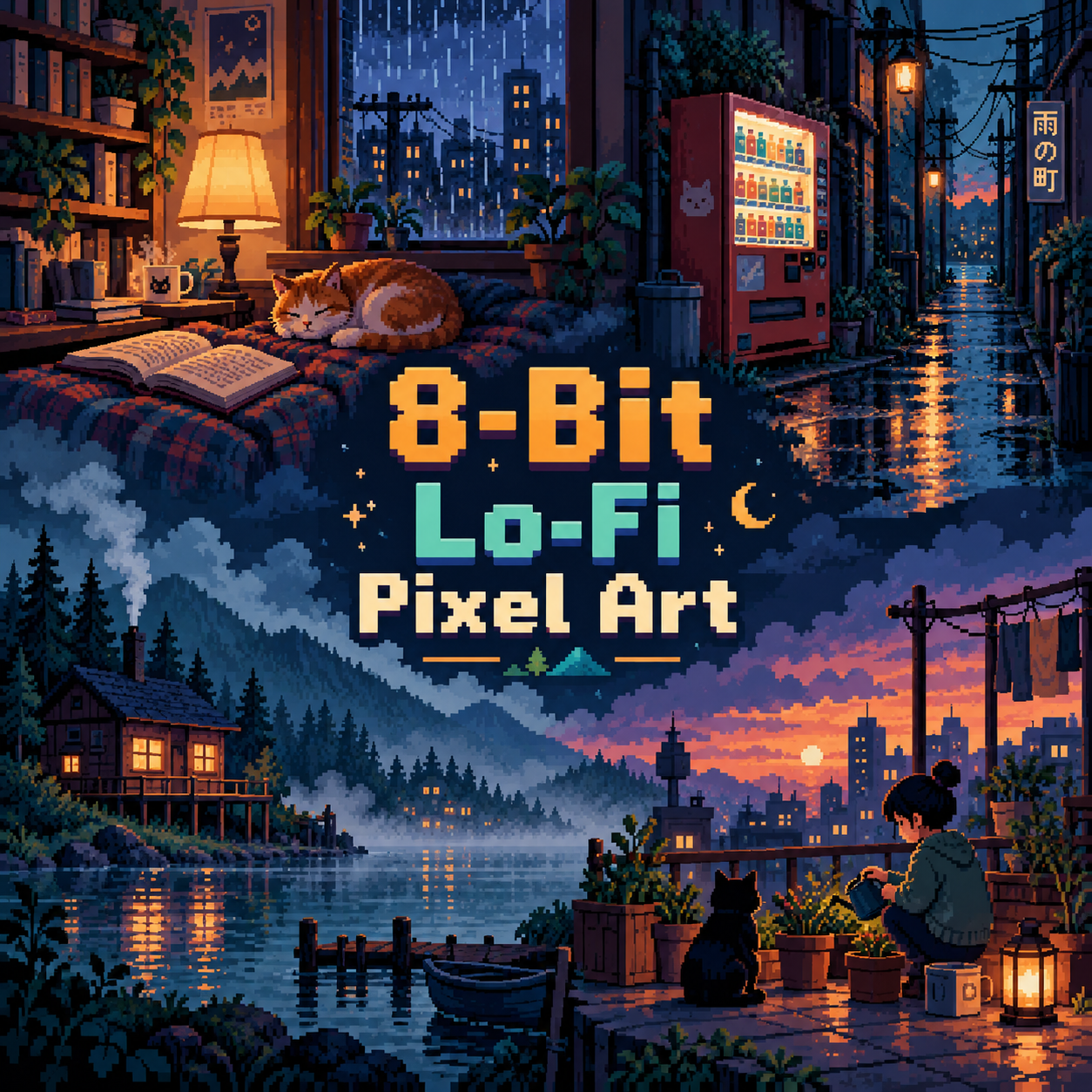
Seven original AI-generated interpretations: a dedicated banner, a centrally titled collage and five visual studies. These are contemporary illustrations, not historical game screenshots or certified hardware-ready assets.
Select an image for a closer look. Use the thumbnails, arrow keys or a swipe to compare examples. Zoom in to inspect details, or share the image that inspires you.
Creative toolbox · take this style further
Choose an input and a destination. Search sends your words to the chosen site; Copy & open puts them on your clipboard to paste there.
Create with AI
Turn your chosen input into an image prompt or a new creative direction.
ChatGPT
Copy your input and paste it into a ChatGPT conversation or image request.
Copy & open ChatGPT (new tab)Claude · Anthropic
Develop an image prompt or explore the style in a new Claude conversation.
Copy & open Claude · Anthropic (new tab)Midjourney
Paste your input into the Imagine bar on the Create page.
Copy & open Midjourney (new tab)Adobe Firefly
Copy your input, open Firefly, and paste it into the prompt field.
Copy & open Adobe Firefly (new tab)Leonardo.Ai
Copy your input, open Leonardo, and paste it into the generation field.
Copy & open Leonardo.Ai (new tab)Image search
Find visual references. Short, concrete keywords usually work best.
Lexica
Search AI images and prompts using your selected input.
Search with this input Lexica (new tab)Pexels
Search the photo and video library. Short keywords often work best.
Search with this input Pexels (new tab)Pixabay
Search photos, illustrations and other images.
Search with this input Pixabay (new tab)Unsplash
Search photographs using the style name or your own keywords.
Search with this input Unsplash (new tab)Wikimedia Commons
Search photographs, artworks and historical images. Check each file for its source and reuse terms.
Search with this input Wikimedia Commons (new tab)Art & research
Explore artists, collections and the ideas behind a style.
Wikipedia
Search for background reading. A style may not have its own article.
Search with this input Wikipedia (new tab)WikiArt
Copy your input into WikiArt’s search to explore artists and artworks.
Copy & open WikiArt (new tab)Europeana
Paste your keywords into the search to explore European museum, library and archive collections.
Copy & open Europeana (new tab)Inspiration
Discover portfolios and visual ideas from creative communities.
Instagram hashtags
Search a hashtag made from your input: spaces and punctuation are removed. Instagram may require sign-in.
Search with this input Instagram hashtags (new tab)ArtStation
Paste your input into artwork search for concept art, environments, characters and visual development.
Copy & open ArtStation (new tab)Behance
Paste your input into project search for illustration, design and visual storytelling.
Copy & open Behance (new tab)A closer look
Quiet compositions, readable dark masses, amber lights against cooler colours, stepped silhouettes and lower-contrast distant clusters.
What changes from the 8-bit guide
Keep the base guide’s attention to clusters and restricted colour, then change the emphasis: give the viewer somewhere to rest. A quiet platform, reading chair or unattended machine can carry a scene without an elaborate event. The gallery uses familiar objects as anchors rather than treating every illuminated window as an equal focal point. “8-bit” here is an aesthetic reference; these generated illustrations are not certified files for vintage hardware.
Hard edges, gentle atmosphere
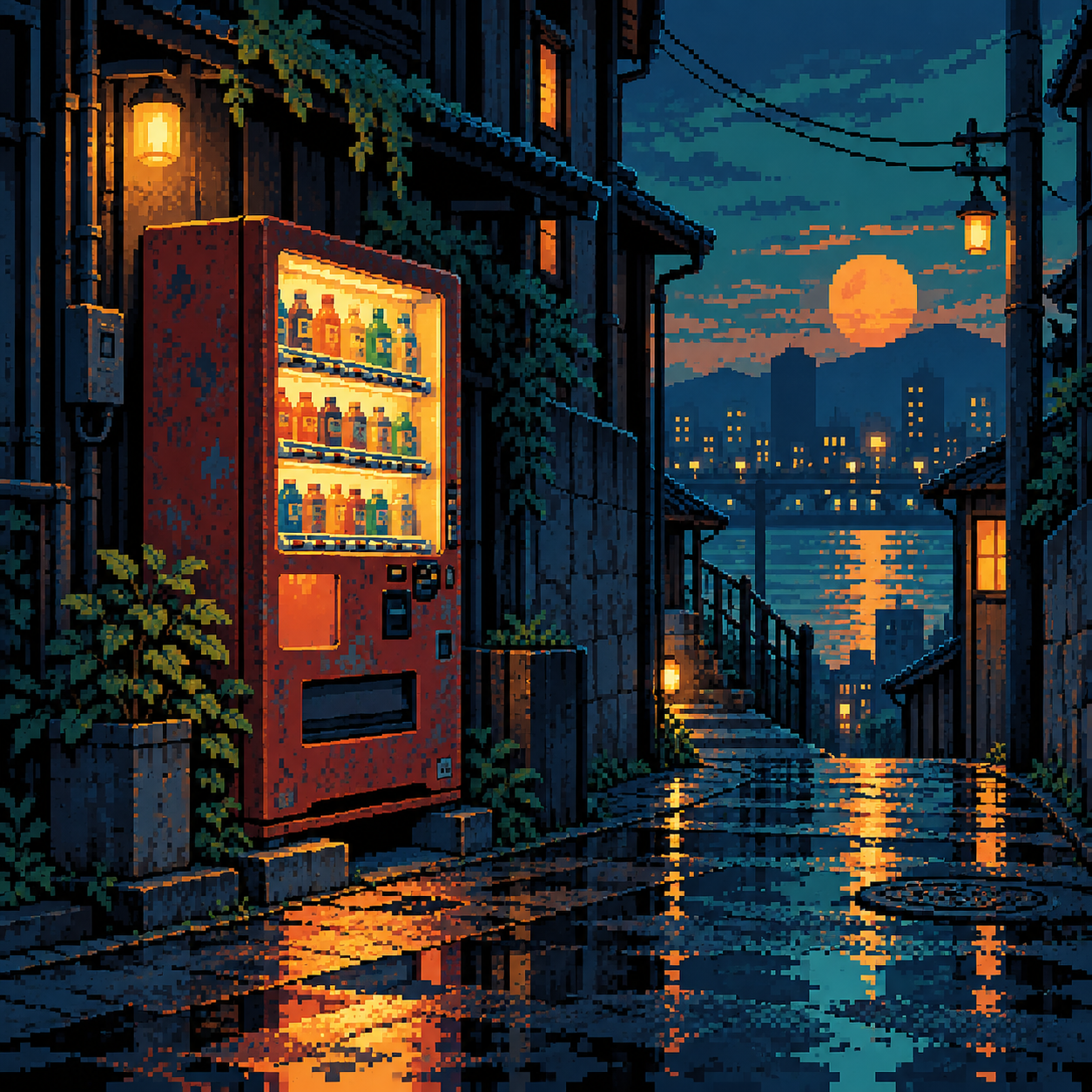
A vending machine benefits from a clear rectangular edge: it stays readable against a busy alley. Distant trees feel softer when adjacent values are closer and contours less emphatic. Individual pixels can remain crisp in both cases. Selective intermediate edge colours are different from applying blur across the entire picture. Preserve decisive edges near the focal object and spend softer transitions on distance, mist or reflected light.
Build one small moment
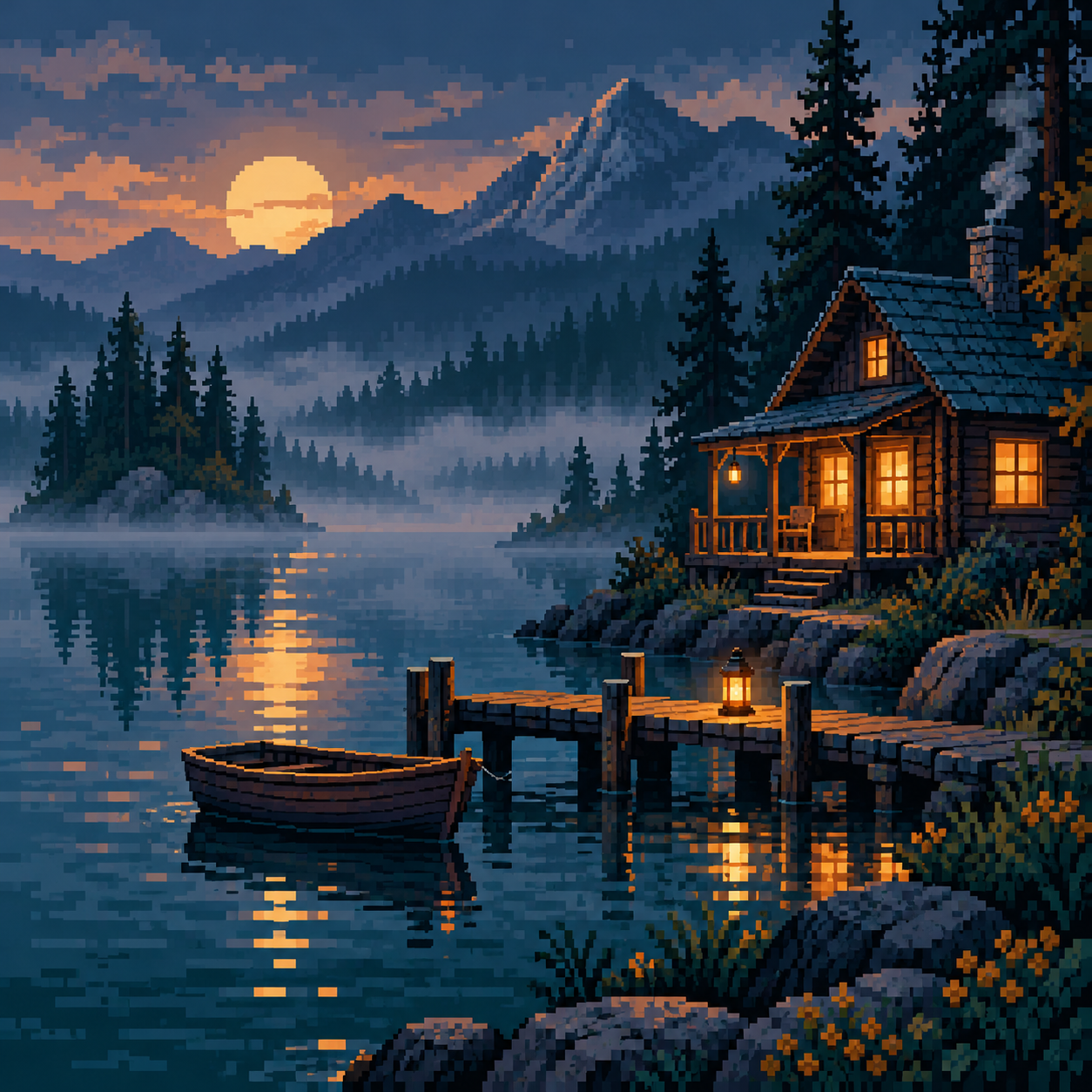
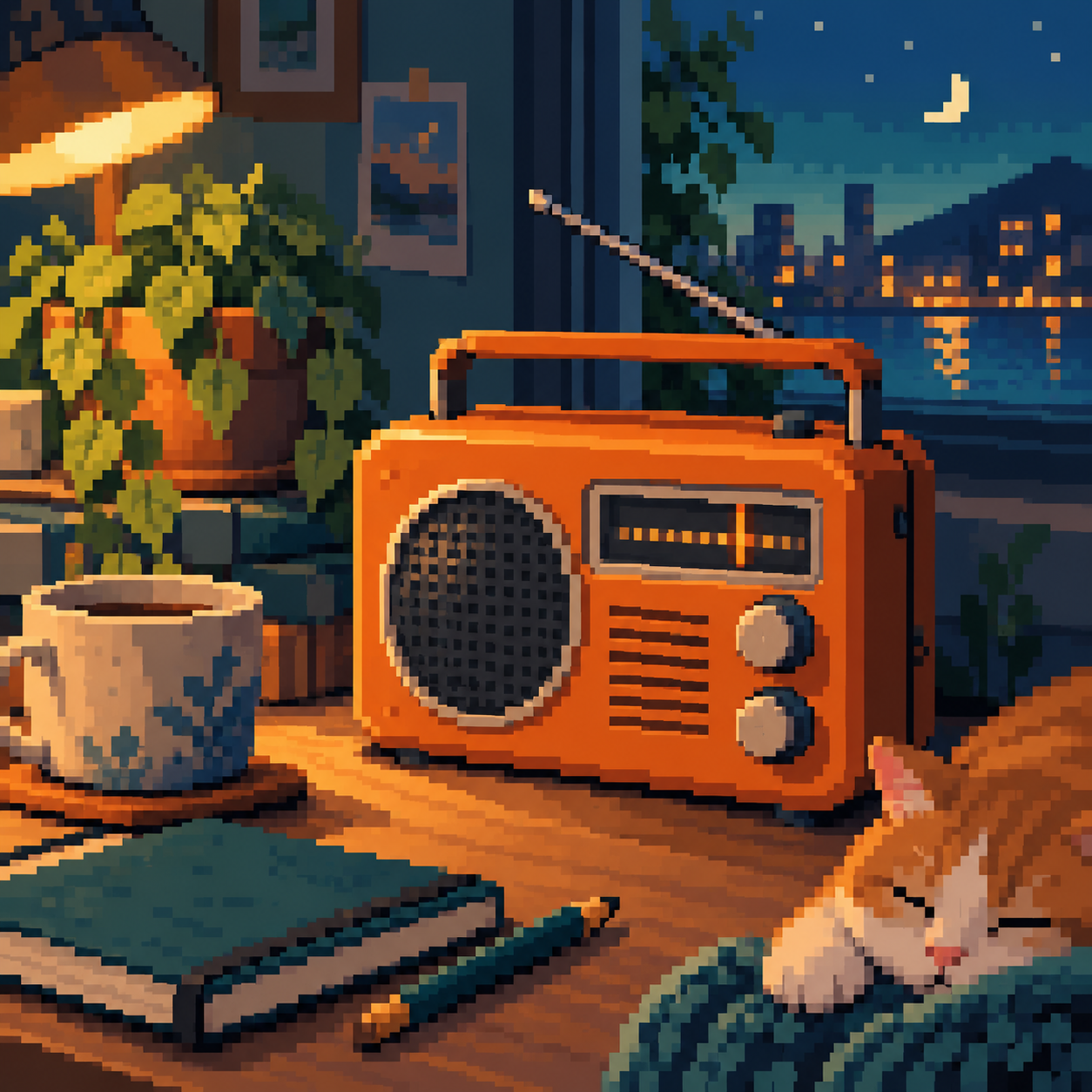
Choose a focal light, two large shadow shapes and one secondary story detail. Establish the silhouette first; add only rain marks, plant clusters or reflections that clarify the space. Compare the radio’s warm casing with the lake’s quiet distance. One is intimate through a close object; the other through room around a shelter. Lo-fi need not mean accidental noise, careless perspective or uniformly desaturated colour. If every surface sparkles, remove highlights before adding another filter.
Positive editorial assessment · AI-authored
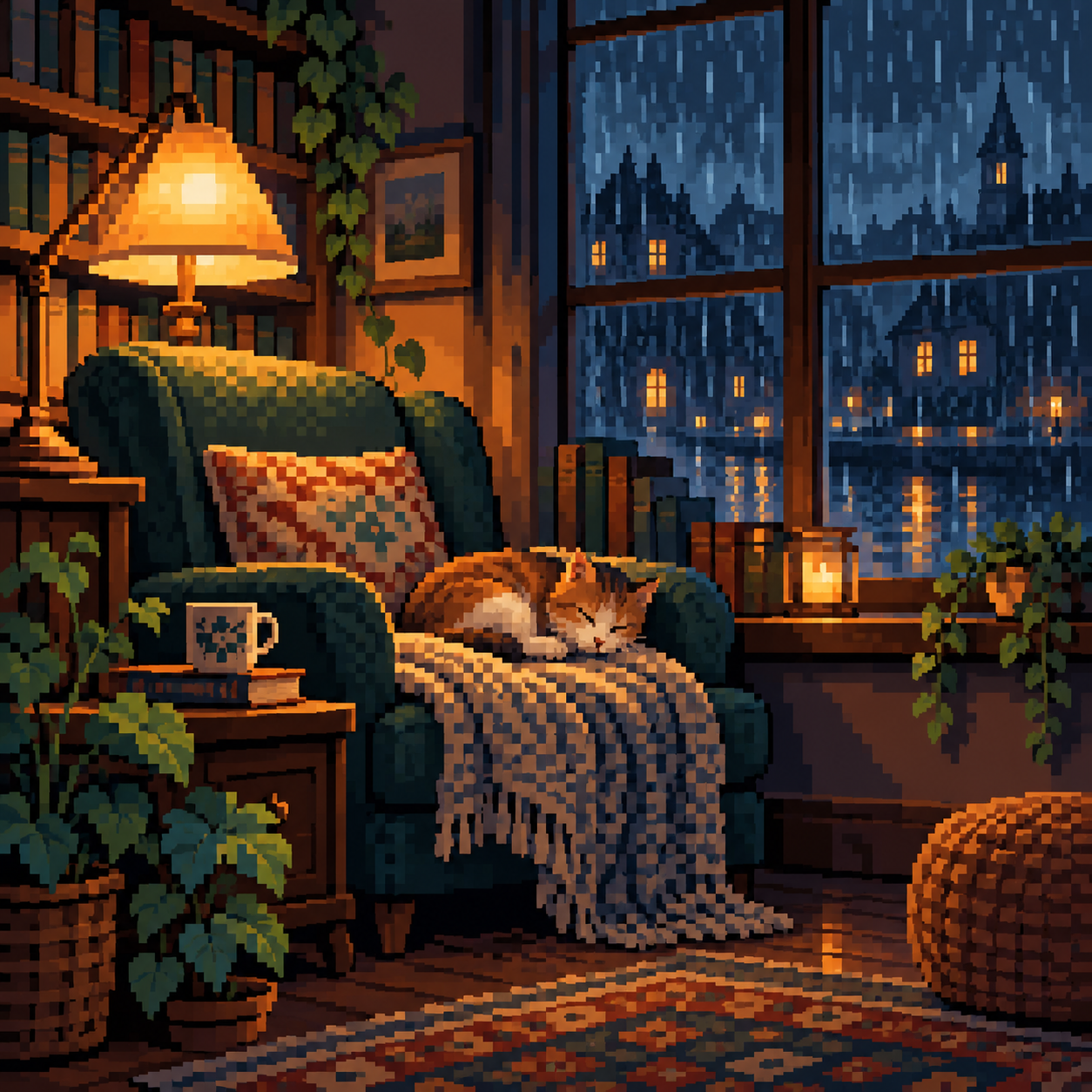
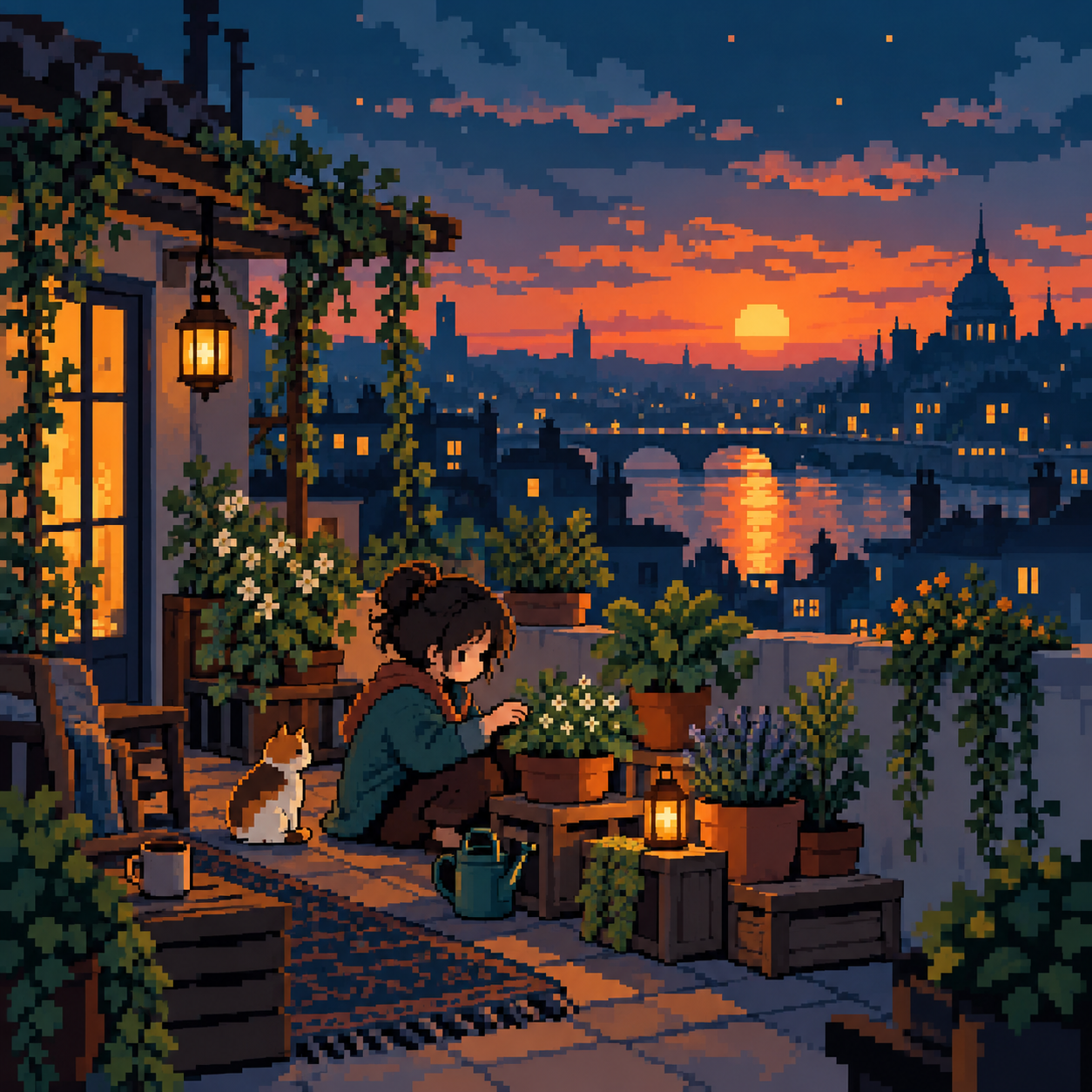
Warm focal lights make small, ordinary spaces feel specific. The radio and reading nook offer two scales of intimacy, while the lake gives darkness enough room to become part of the composition.
Negative editorial assessment · AI-authored
Rain, orange windows and sleepy cats can become a preset. Change the viewpoint, weather or central object, and reduce decorative highlights until the scene has a clear visual priority.
Neutral editorial assessment · AI-authored
This atmospheric approach suits quiet illustration and game environments. It overlaps with richer contemporary pixel art; the lo-fi label alone does not specify resolution, palette size or hardware compatibility.
A small poetic detour
Original words from the AOI studio.
Poetry
Room for the evening
A lamp makes amber steps across the chair;
the rain counts squares against the windowpane.
A sleeping cat has nothing to declare,
and all the distant roofs forget the train.
The radio keeps company with night.
One orange dial, one cup, one patch of blue:
I leave the farthest buildings short of light
so there is somewhere quiet to look through.
The prompt workshop
Original creative exercises. These prompts create new illustrations, not documentary evidence.
Start with one light
Create an original lo-fi pixel scene of a small orange radio on a dark desk. Use large readable clusters, a quiet blue background and one warm light. Keep the radio silhouette crisp. No text.
Judge the object at small display size before adding texture.
Build a quiet distance
Create a pixel-art lakeside cabin at dusk. Keep the foreground boat and cabin edges crisp; use closer values and fewer isolated pixels in distant trees. Warm windows should remain the focal point. No blur filter, text or game logos.
Perceived softness can come from lower contrast while pixels remain sharp.
Compare two edge treatments
Make two original pixel studies of the same small railway shelter. First use hard high-contrast contours throughout. Then keep the shelter crisp but reduce distant contour contrast. Preserve the viewpoint and lighting.
Compare clarity and atmosphere rather than treating either version as universally better.
Your next inspiration
Discover another art style
Follow a visual thread to the next subject.
A smile from the studio
Jokes
The art director requested a quieter pixel scene. The artist removed three flashing signs, softened the distant skyline and left one warm window. “Perfect,” said the director. “Now make that window pop, add a spectacular sunset, brighten every reflection, and give the cat a dramatic rim light.” The artist renamed the file Quiet_Final_Really_Final. The cat requested a different client.