
AOI creative concept · Light and photographic experiments
Combine two invented views of an orchard through a clean aperture-shaped mask, keeping one view sharp and the other softly displaced.
An AOI creative concept, not an established historical movement.
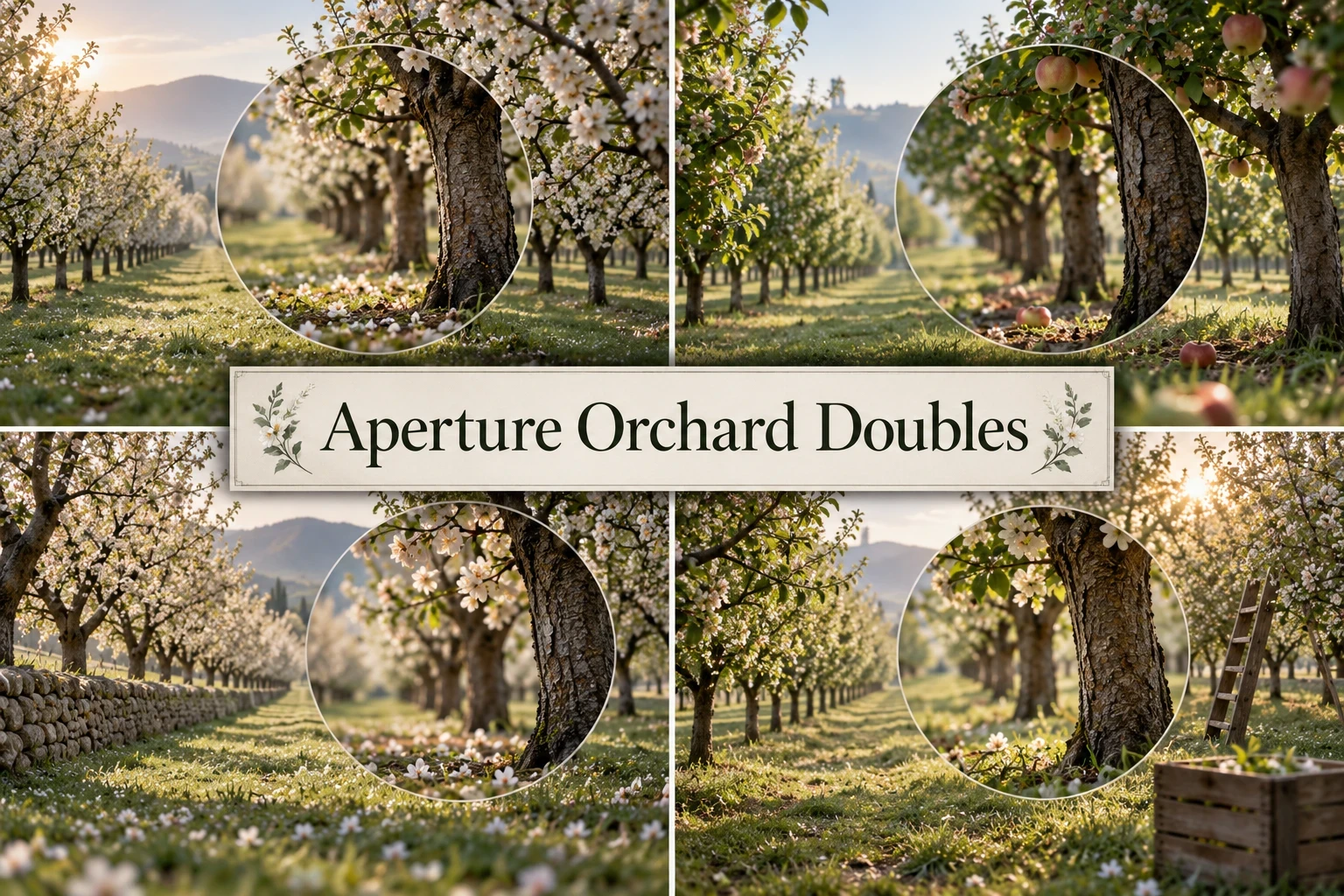
A closer look
Soft green, warm bark and pale morning light; photographic-looking composite. The focal scene: two orchard viewpoints compared through one circular aperture.
Choose the intervention
Combine two invented views of an orchard through a clean aperture-shaped mask, keeping one view sharp and the other softly displaced. The mask should reveal a deliberate comparison of space rather than an indiscriminate double-exposure overlay.
Construct the image
Use a straight row of trees as the base image. Inside a broad circular opening near the center, show the same row from slightly lower and closer, with one trunk shifted against its counterpart. Keep the mask edge subtle but visible. Use a consistent season and light direction so viewpoint is the main variable.
Keep the comparison clear
Different weather, color and viewpoint at once make the comparison muddy. Hold most conditions steady and change the camera position clearly. Do not present the composite as an untouched photograph; its constructed relationship is the point of the exercise.
Technique notes
Use a narrow vertical aperture instead of a circle and let it reveal only the orchard's ground path from the second viewpoint.
When prompting an image model, spell out the rule and visible relationships. The invented style name alone is not a reliable instruction. Compare outputs against the critique above and revise the specific failed relationship.
The prompt workshop
Original creative exercises. These prompts create new illustrations, not documentary evidence.
Start with the defining rule
Create an original illustration of two orchard viewpoints compared through one circular aperture. Combine two invented views of an orchard through a clean aperture-shaped mask, keeping one view sharp and the other softly displaced. The mask should reveal a deliberate comparison of space rather than an indiscriminate double-exposure overlay. Use soft green, warm bark and pale morning light; photographic-looking composite. Keep the composition readable, with a clear focal area and quiet surrounding space. No lettering, signatures or watermark.
Build the fuller composition
Create an original Aperture Orchard Doubles composition. Use a straight row of trees as the base image. Inside a broad circular opening near the center, show the same row from slightly lower and closer, with one trunk shifted against its counterpart. Keep the mask edge subtle but visible. Use a consistent season and light direction so viewpoint is the main variable. Use soft green, warm bark and pale morning light; photographic-looking composite. Preserve the defining constraint: Combine two invented views of an orchard through a clean aperture-shaped mask, keeping one view sharp and the other softly displaced. Avoid decorative clutter, readable text and watermarks.
Try a deliberate variation
Create an experimental illustration based on this rule: Combine two invented views of an orchard through a clean aperture-shaped mask, keeping one view sharp and the other softly displaced. The mask should reveal a deliberate comparison of space rather than an indiscriminate double-exposure overlay. Variation: Use a narrow vertical aperture instead of a circle and let it reveal only the orchard's ground path from the second viewpoint. Use soft green, warm bark and pale morning light; photographic-looking composite. Make the changed relationship unmistakable while keeping supporting details restrained. No captions, signatures or watermark.
Look closer
Explore the image gallery
Select an image to enlarge it. Browse with the arrows, and press Escape to return.

Your next inspiration
Discover another art style
Follow a visual thread to the next subject.