
Artist reference · Chinese ink painting and splashed color
Zhang Daqian's work invites a productive tension between disciplined drawing and expansive ink or color washes. A few precise details can turn an apparently abstract field into mountains, mist or lotus leaves.
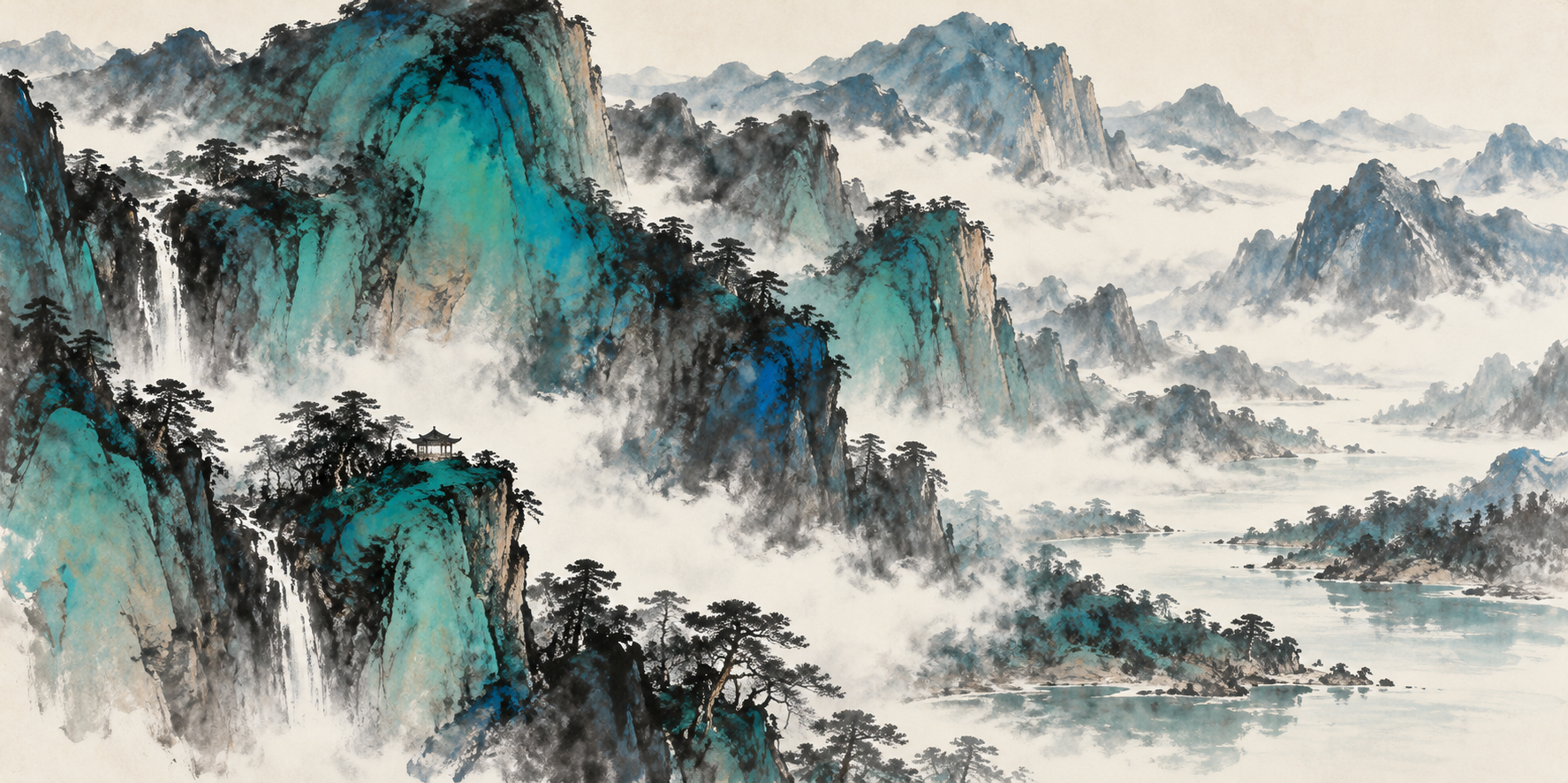
A visual introduction
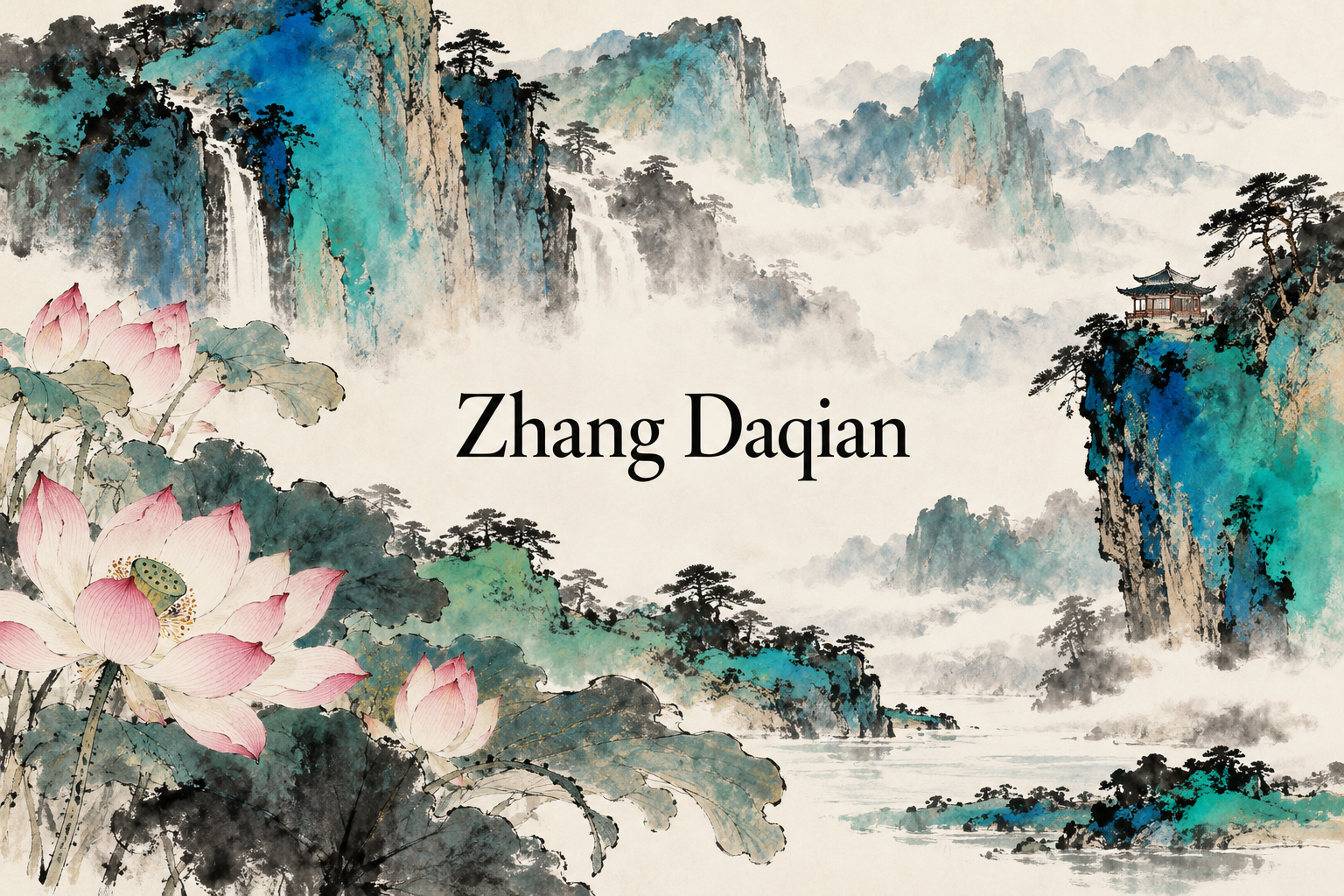
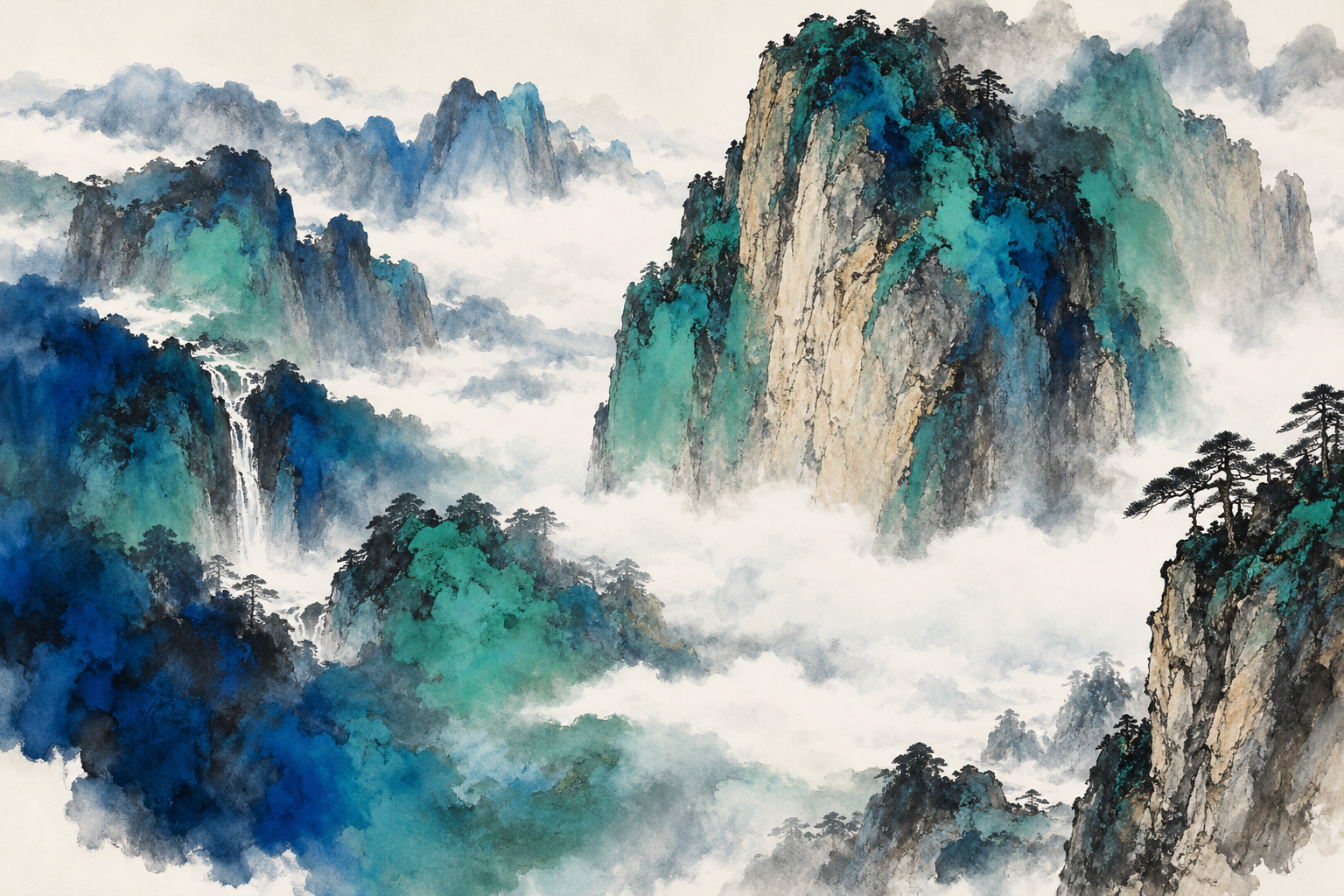
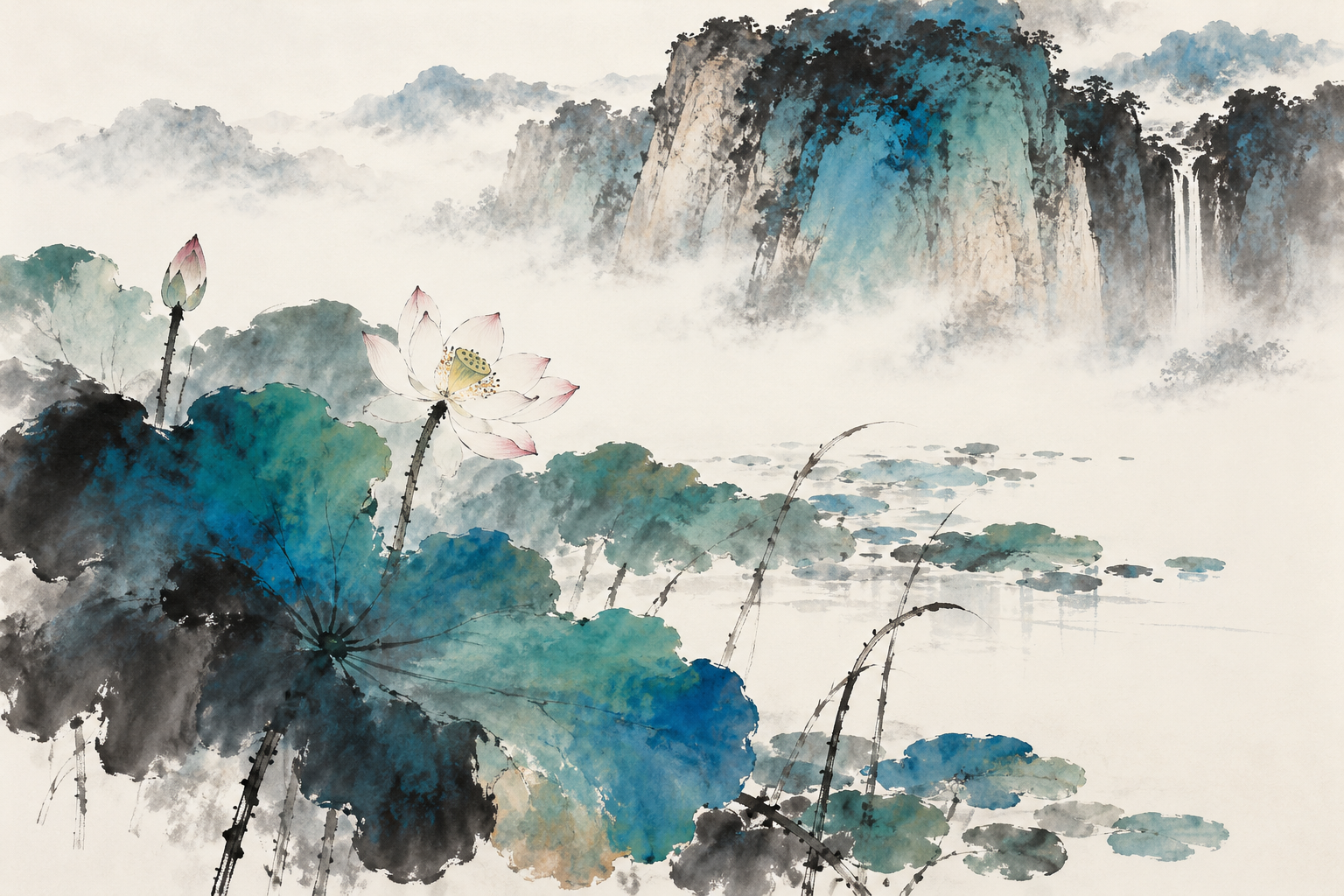
Five original AI-generated AOI interpretations: a dedicated banner, a centrally titled collage and three standalone studies. These are new illustrations, not historical objects or works by the referenced artist.
Select an image for a closer look. Use the thumbnails, arrow keys or a swipe to compare examples. Zoom in to inspect details, or share the image that inspires you.
Creative toolbox · take this style further
Choose an input and a destination. Search sends your words to the chosen site; Copy & open puts them on your clipboard to paste there.
Create with AI
Turn your chosen input into an image prompt or a new creative direction.
ChatGPT
Copy your input and paste it into a ChatGPT conversation or image request.
Copy & open ChatGPT (new tab)Claude · Anthropic
Develop an image prompt or explore the style in a new Claude conversation.
Copy & open Claude · Anthropic (new tab)Midjourney
Paste your input into the Imagine bar on the Create page.
Copy & open Midjourney (new tab)Adobe Firefly
Copy your input, open Firefly, and paste it into the prompt field.
Copy & open Adobe Firefly (new tab)Leonardo.Ai
Copy your input, open Leonardo, and paste it into the generation field.
Copy & open Leonardo.Ai (new tab)Image search
Find visual references. Short, concrete keywords usually work best.
Lexica
Search AI images and prompts using your selected input.
Search with this input Lexica (new tab)Pexels
Search the photo and video library. Short keywords often work best.
Search with this input Pexels (new tab)Pixabay
Search photos, illustrations and other images.
Search with this input Pixabay (new tab)Unsplash
Search photographs using the style name or your own keywords.
Search with this input Unsplash (new tab)Wikimedia Commons
Search photographs, artworks and historical images. Check each file for its source and reuse terms.
Search with this input Wikimedia Commons (new tab)Art & research
Explore artists, collections and the ideas behind a style.
Wikipedia
Search for background reading. A style may not have its own article.
Search with this input Wikipedia (new tab)WikiArt
Copy your input into WikiArt’s search to explore artists and artworks.
Copy & open WikiArt (new tab)Europeana
Paste your keywords into the search to explore European museum, library and archive collections.
Copy & open Europeana (new tab)Inspiration
Discover portfolios and visual ideas from creative communities.
Instagram hashtags
Search a hashtag made from your input: spaces and punctuation are removed. Instagram may require sign-in.
Search with this input Instagram hashtags (new tab)ArtStation
Paste your input into artwork search for concept art, environments, characters and visual development.
Copy & open ArtStation (new tab)Behance
Paste your input into project search for illustration, design and visual storytelling.
Copy & open Behance (new tab)A closer look
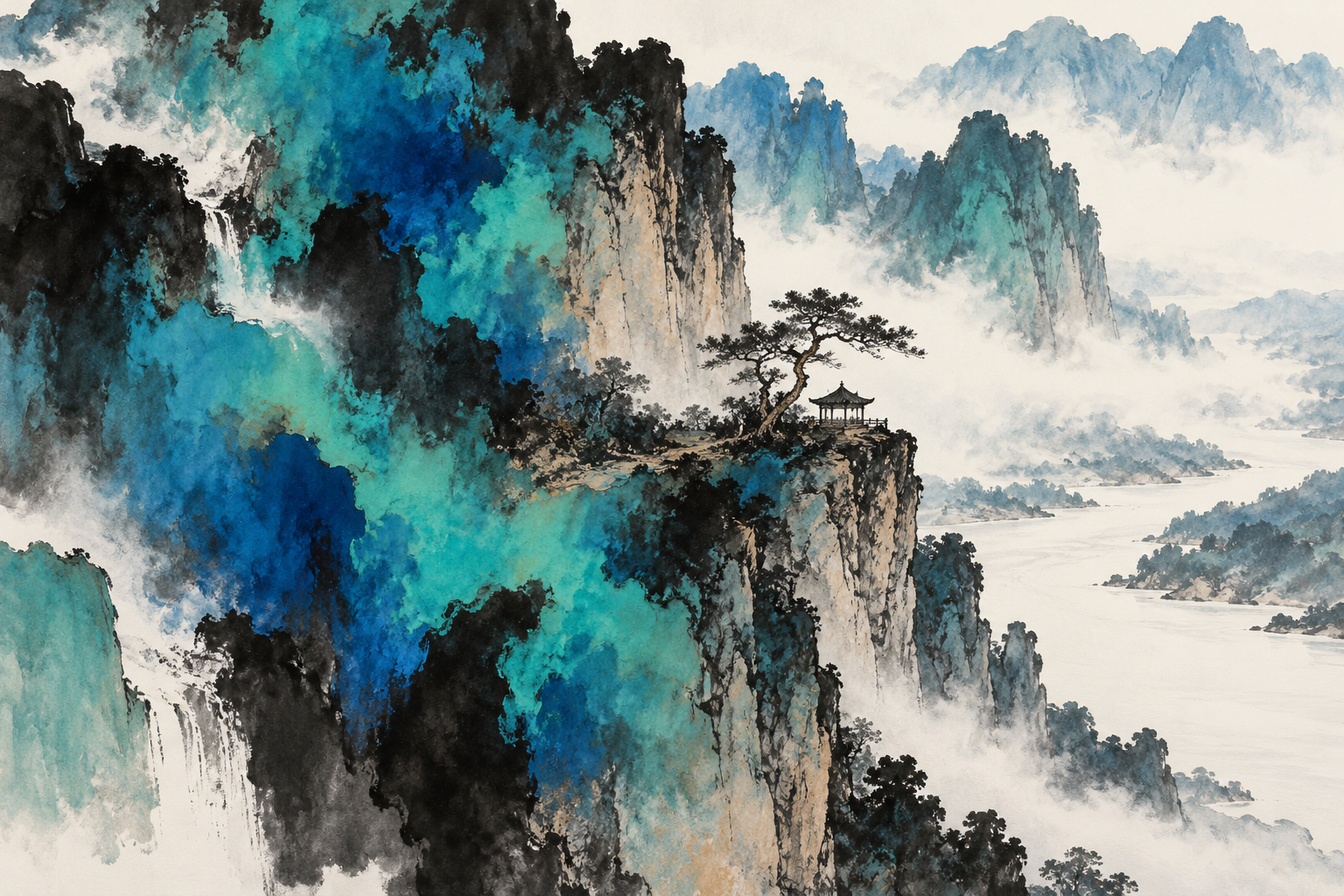
Blue-green color pools and dark ink masses meet controlled contours and open paper. Small trees, pavilions or petals establish scale within forms that remain partly unresolved.
A broad practice, not only a splash effect
Zhang Daqian, also known as Chang Dai-chien, worked across traditional and experimental approaches to Chinese painting. The Norton Museum describes both his command of inherited traditions and his later expressive splashed-ink and splashed-color landscapes. Reducing that career to a blue-green filter misses the relationship between knowledge, observation and invention.
The Met's collection and publications provide useful lotus and landscape references. They show how controlled descriptive marks can coexist with washes whose forms are less explicit. AOI's illustrations explore that relationship through new compositions; they are not reproductions, authenticated works or substitutes for studying the artist's paintings.
Let uncertainty and precision cooperate
Begin with two or three broad masses and an open passage between them. Decide which mass may become a mountain, which may remain atmosphere, and where a small precise detail could establish scale. Avoid outlining every wash after it appears. Some ambiguity gives the viewer room to complete the landscape.
A tiny tree or pavilion is most effective when it changes how the surrounding forms are read. It should not be sprinkled everywhere as decorative proof of landscape. Place it where the transition from dark mass to pale paper already suggests a ledge or clearing.
Control the color relationships
Indigo, blue-green and dark ink can create depth through overlapping values and varied edges. Preserve luminous paper or a pale reserve so that the saturated areas have something against which to resonate. If the entire surface is equally intense, the washes lose their sense of expansion.
In a digital interpretation, ask for both diffuse and controlled passages rather than indiscriminate blur. A broad color pool can have an irregular edge while a lotus petal remains delicately described. Physical ink and pigment have their own behaviors; a generated image does not document how a particular painting was made.
Study different kinds of emergence
Compare a mountain panorama, a lotus study and a small pavilion within a dark cliff. The panorama tests large-scale rhythm, the flower tests contour against wash, and the pavilion tests the power of a small descriptive cue. Keep each composition distinct instead of changing only the color of the same mountain.
Inspect the image for false calligraphy, seals and signatures, and remove them from original studies. Check whether the small architecture and trees are coherent enough to anchor the larger ambiguity. The aim is an intentional balance between suggestion and description, not an image that is simply unfinished everywhere.
A small poetic detour
Original words from the AOI studio.
Poetry
A mountain becomes possible
The blue arrives before the hill;
the ink has not decided stone.
A little pine, precise and still,
allows the cloud to stand alone.
The paper keeps a river clear
without a line along its shore.
A roof appears, and suddenly here
is somewhere we have been before.
The brush withdraws. The washes stay,
and make a distance out of gray.
The prompt workshop
Original creative exercises. These prompts create new illustrations, not documentary evidence.
Let one detail establish scale
Create an original ink-and-color mountain study with broad blue-green washes, white mist and one precisely drawn small pine.
Leave some forms unresolved.
Balance a petal with a wash
Paint an invented lotus composition with diffuse dark leaves and one delicately outlined pale flower, preserving generous open paper.
Do not imitate signatures or seals.
Make a pavilion change the reading
Place a tiny coherent pavilion on a ledge within abstract indigo and green masses, using a pale river opening for contrast.
Check that the detail anchors rather than crowds the scene.
Your next inspiration
Discover another art style
Follow a visual thread to the next subject.

A smile from the studio
Jokes
The wash looked like a mountain, then a cloud, then an unfortunate spill. The painter added one tiny pavilion. “A mountain,” everyone agreed. The pavilion declined to comment on how much structural responsibility had just been placed on its roof.