AOI creative concept · Night and luminous space
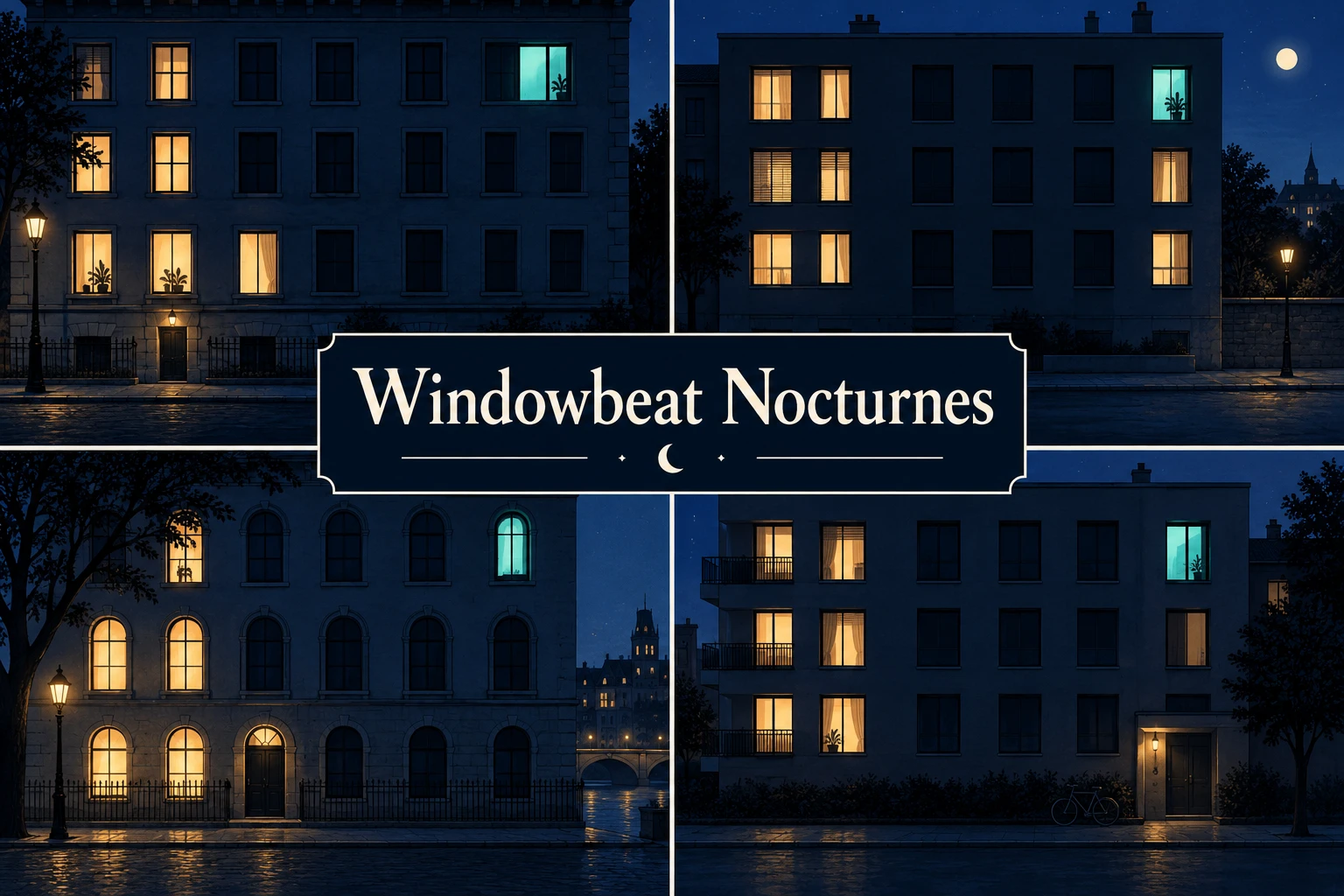
Compose a night facade as an uneven rhythm of lit windows, with one long dark interval functioning as the main event.
An AOI creative concept, not an established historical movement.
A closer look
Ink blue, warm cream and one cool turquoise window; flat painted facade. The focal scene: a night facade organized around a broad dark interval.
Concentrate the light
Compose a night facade as an uneven rhythm of lit windows, with one long dark interval functioning as the main event. The architecture supplies a grid, but occupancy is suggested through light distribution rather than detailed interior stories.
Build the quiet scene
Draw a simple building with four rows of windows. Cluster warm lights at the lower left, place one cool window high on the right and leave a broad central region dark. Let a curtain edge or plant silhouette appear in only one opening. Keep the street nearly empty so the rhythm belongs to the facade.
Resist the extra glow
A checkerboard pattern looks predetermined and loses the sense of selective attention. Break regular alternation and avoid inventing narratives about real residents. The dark interval should feel composed, not like an unfinished part of the picture.
Technique notes
Stretch the building into a narrow horizontal strip and use a single illuminated stairwell to connect two distant clusters of windows.
When prompting an image model, spell out the rule and visible relationships. The invented style name alone is not a reliable instruction. Compare outputs against the critique above and revise the specific failed relationship.
The prompt workshop
Original creative exercises. These prompts create new illustrations, not documentary evidence.
Start with the defining rule
Create an original illustration of a night facade organized around a broad dark interval. Compose a night facade as an uneven rhythm of lit windows, with one long dark interval functioning as the main event. The architecture supplies a grid, but occupancy is suggested through light distribution rather than detailed interior stories. Use ink blue, warm cream and one cool turquoise window; flat painted facade. Keep the composition readable, with a clear focal area and quiet surrounding space. No lettering, signatures or watermark.
Build the fuller composition
Create an original Windowbeat Nocturnes composition. Draw a simple building with four rows of windows. Cluster warm lights at the lower left, place one cool window high on the right and leave a broad central region dark. Let a curtain edge or plant silhouette appear in only one opening. Keep the street nearly empty so the rhythm belongs to the facade. Use ink blue, warm cream and one cool turquoise window; flat painted facade. Preserve the defining constraint: Compose a night facade as an uneven rhythm of lit windows, with one long dark interval functioning as the main event. Avoid decorative clutter, readable text and watermarks.
Try a deliberate variation
Create an experimental illustration based on this rule: Compose a night facade as an uneven rhythm of lit windows, with one long dark interval functioning as the main event. The architecture supplies a grid, but occupancy is suggested through light distribution rather than detailed interior stories. Variation: Stretch the building into a narrow horizontal strip and use a single illuminated stairwell to connect two distant clusters of windows. Use ink blue, warm cream and one cool turquoise window; flat painted facade. Make the changed relationship unmistakable while keeping supporting details restrained. No captions, signatures or watermark.
Look closer
Explore the image gallery
Select an image to enlarge it. Browse with the arrows, and press Escape to return.

Your next inspiration
Discover another art style
Follow a visual thread to the next subject.