
Historical movement and perceptual practice
Light and Space describes a Southern California artistic tendency associated with the 1960s and 1970s, in which light, material and the viewer’s position become central to the experience of an artwork.
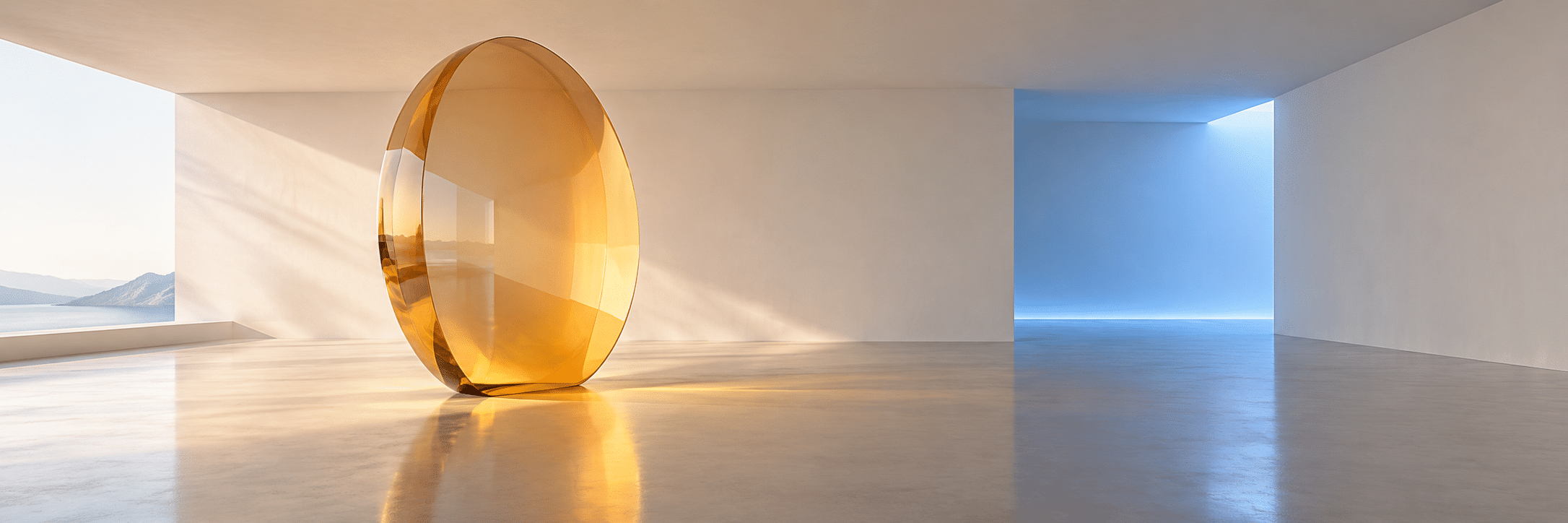
A visual introduction
Select an image for a closer look. Use the thumbnails, arrow keys or a swipe to compare examples. Zoom in to inspect details, or share the image that inspires you.
Creative toolbox · take this style further
Choose an input and a destination. Search sends your words to the chosen site; Copy & open puts them on your clipboard to paste there.
Create with AI
Turn your chosen input into an image prompt or a new creative direction.
ChatGPT
Copy your input and paste it into a ChatGPT conversation or image request.
Copy & open ChatGPT (new tab)Claude · Anthropic
Develop an image prompt or explore the style in a new Claude conversation.
Copy & open Claude · Anthropic (new tab)Midjourney
Paste your input into the Imagine bar on the Create page.
Copy & open Midjourney (new tab)Adobe Firefly
Copy your input, open Firefly, and paste it into the prompt field.
Copy & open Adobe Firefly (new tab)Leonardo.Ai
Copy your input, open Leonardo, and paste it into the generation field.
Copy & open Leonardo.Ai (new tab)Image search
Find visual references. Short, concrete keywords usually work best.
Lexica
Search AI images and prompts using your selected input.
Search with this input Lexica (new tab)Pexels
Search the photo and video library. Short keywords often work best.
Search with this input Pexels (new tab)Pixabay
Search photos, illustrations and other images.
Search with this input Pixabay (new tab)Unsplash
Search photographs using the style name or your own keywords.
Search with this input Unsplash (new tab)Wikimedia Commons
Search photographs, artworks and historical images. Check each file for its source and reuse terms.
Search with this input Wikimedia Commons (new tab)Art & research
Explore artists, collections and the ideas behind a style.
Wikipedia
Search for background reading. A style may not have its own article.
Search with this input Wikipedia (new tab)WikiArt
Copy your input into WikiArt’s search to explore artists and artworks.
Copy & open WikiArt (new tab)Europeana
Paste your keywords into the search to explore European museum, library and archive collections.
Copy & open Europeana (new tab)Inspiration
Discover portfolios and visual ideas from creative communities.
Instagram hashtags
Search a hashtag made from your input: spaces and punctuation are removed. Instagram may require sign-in.
Search with this input Instagram hashtags (new tab)ArtStation
Paste your input into artwork search for concept art, environments, characters and visual development.
Copy & open ArtStation (new tab)Behance
Paste your input into project search for illustration, design and visual storytelling.
Copy & open Behance (new tab)A closer look
Transparency, reflection, coloured light and uncertain boundaries can make an apparently simple object or room change as it is encountered.
More than attractive illumination
The Getty’s Art & Architecture Thesaurus identifies Light and Space with Southern California artists concerned with light, transparency, reflectivity and colour. It notes materials such as glass, resin and cast acrylic, often in site-specific work. The emphasis is not simply on putting a lamp inside an otherwise conventional sculpture.
The Primary Atmospheres exhibition account includes artists such as Larry Bell, Robert Irwin, Helen Pashgian, James Turrell, Mary Corse and De Wain Valentine, while emphasizing the diversity of their practices. The label gathers related questions about perception; it does not mean that all these artists used the same objects or techniques.
The viewer’s position matters
A transparent volume may appear solid from one angle and almost disappear from another. A reflection can include the surrounding room, while a softly lit edge may make it difficult to tell where a surface begins. These changes make looking an active part of the work rather than a fixed view of a self-contained object.
When planning a conceptual study, imagine a viewer approaching, pausing and moving sideways. What changes? If nothing changes except the camera angle, the proposal may be closer to a conventional product rendering. Consider how the material, light and surrounding architecture could alter the encounter.
Few elements can produce a complex experience
A simple slab, lens-like form or opening can concentrate attention on subtle colour and edge relationships. Adding many luminous objects may weaken that concentration. Choose one principal perceptual question: apparent depth, transparency, reflection or a boundary that becomes difficult to locate.
Keep the surrounding space deliberate. Floor colour, wall distance and ambient light affect the way an object is read. A floating glow on a black background can look striking but may say little about a viewer’s physical relationship to the work. Include enough context to make the spatial proposition understandable.
Images cannot replace the encounter
A photograph translates a spatial and time-dependent experience into one view. A generated rendering introduces a further distance: it proposes an appearance without proving that the materials or lighting could produce it. The gallery therefore presents AI-generated conceptual interpretations, not documentation of installed artworks.
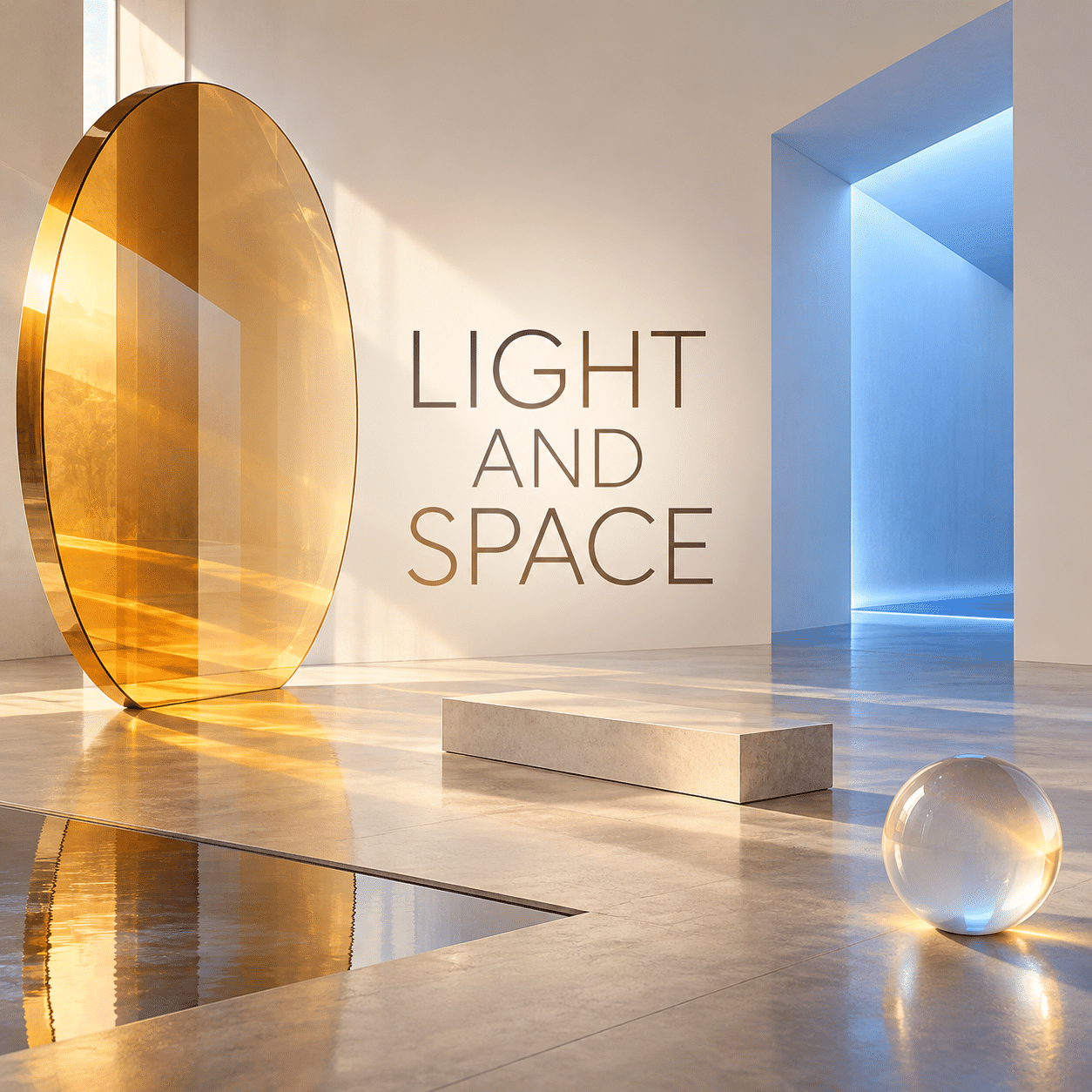
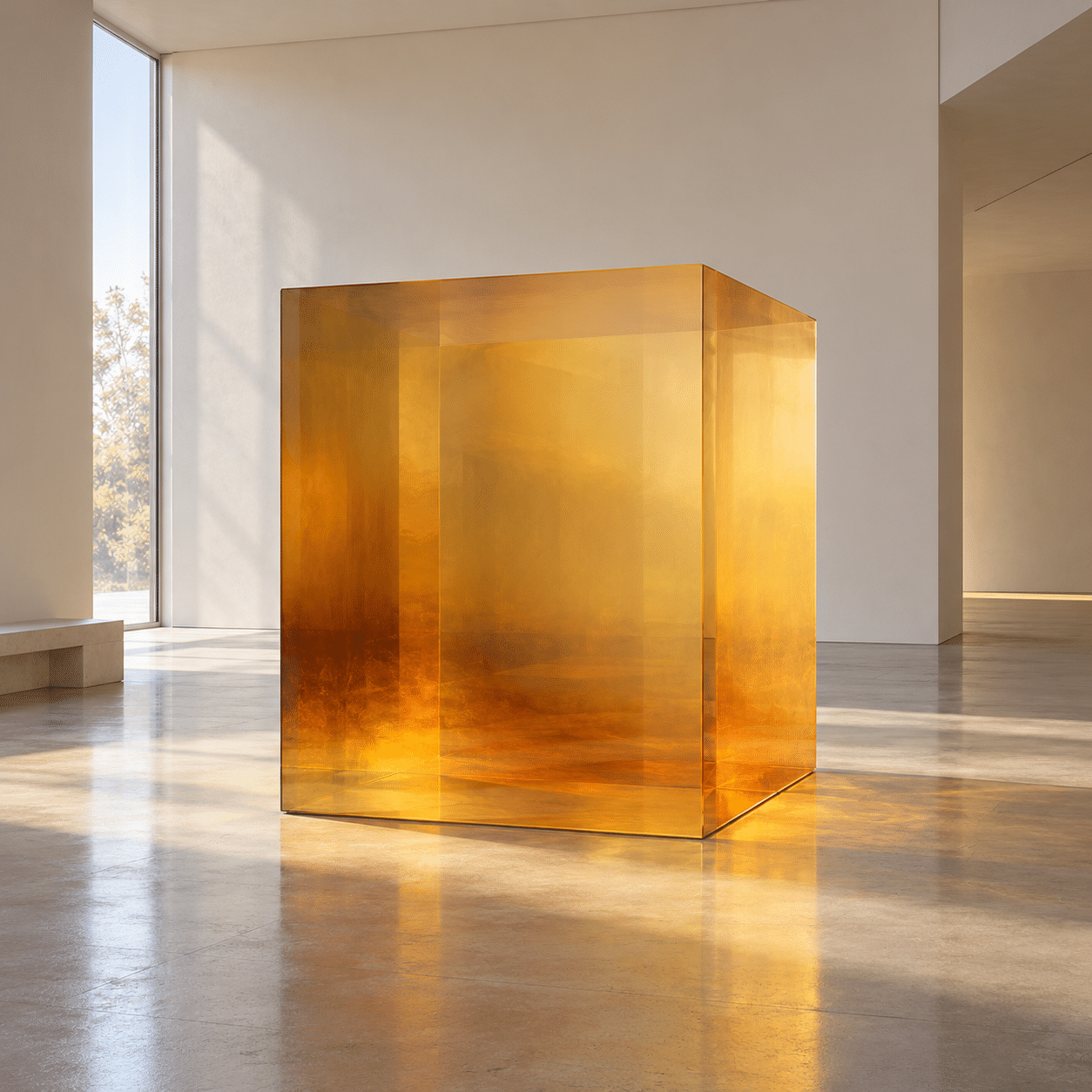
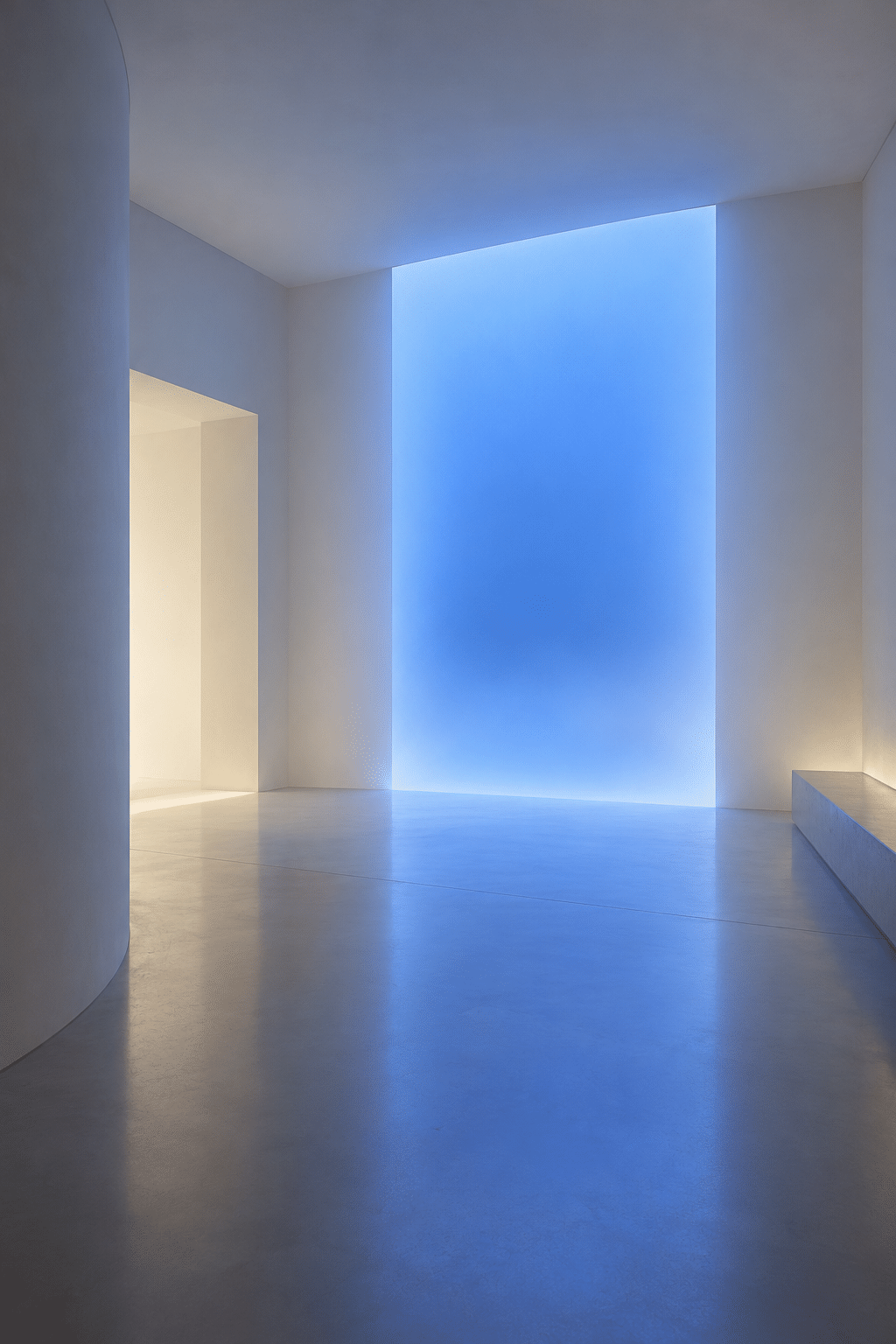
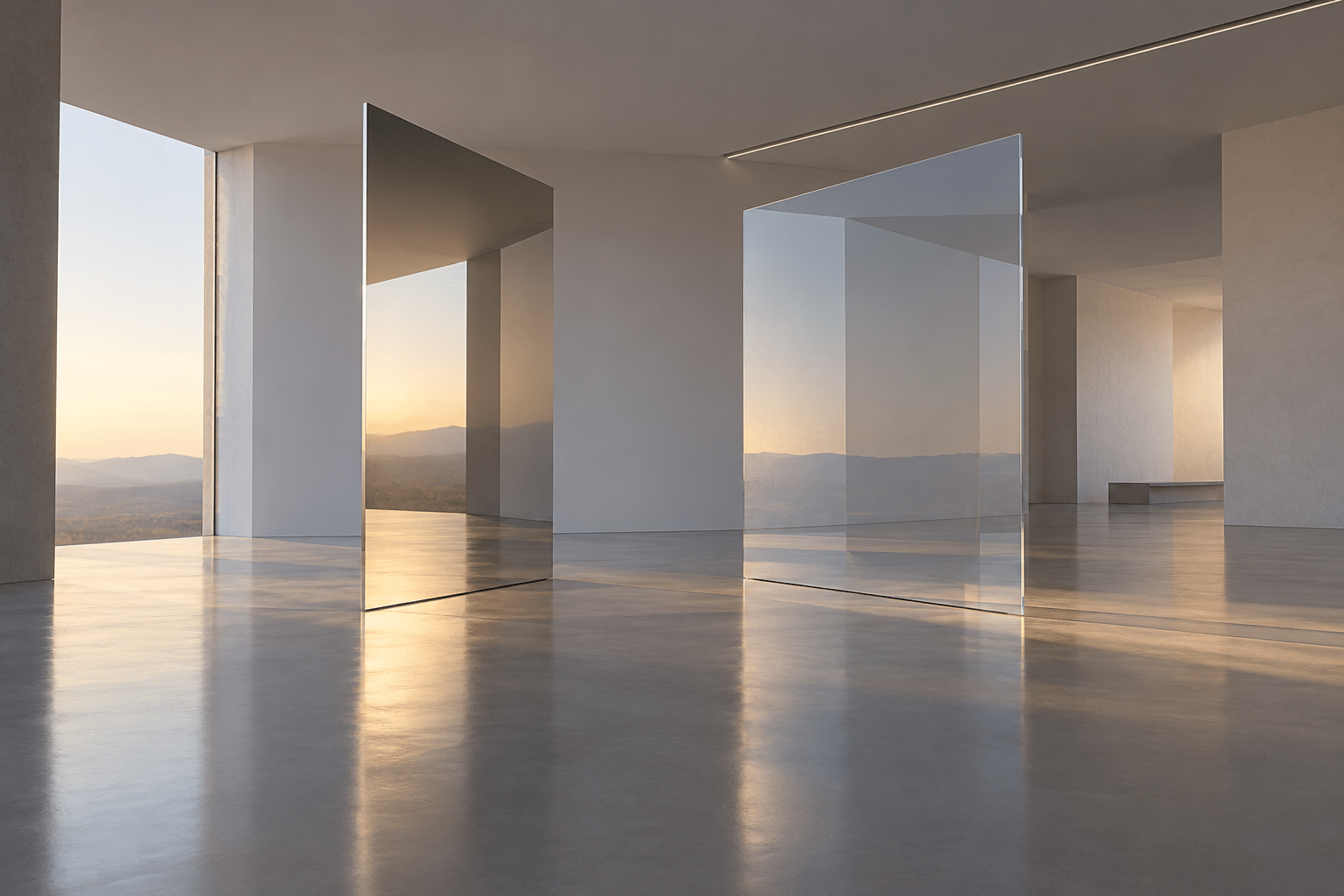
The three studies explore a translucent volume, a softly illuminated architectural opening and a reflective material arrangement. They are not replicas of works by the named artists. For actual fabrication, material samples, physical mock-ups and specialist design work are needed to test the proposed effects.
A practical way to think through a proposal
Draw a simple room plan and identify the viewing positions. Describe the light source, the material and the change a viewer should notice. Then make two or three views that test the same idea. Consistency between views matters more than adding spectacular colour to a single image.
Common misunderstandings include equating the movement with neon decoration or generic futuristic interiors. Light and Space can involve restraint, uncertainty and slow attention. A successful interpretation gives the viewer a specific reason to become aware of seeing, rather than merely presenting a beautifully illuminated surface.
A small poetic detour
Original words from the AOI studio.
Poetry
The Edge of the Room
I move; the colour moves with me.
The solid shape grows thin as air.
A wall becomes a question now:
what part is light, what part is there?
I stay a little longer, still—
the room has taught my eyes to wait.
The prompt workshop
Original creative exercises. These prompts create new illustrations, not documentary evidence.
A translucent volume
Create an original conceptual Light and Space installation rendering: one translucent amber volume in a quiet pale room, subtle internal depth, coherent soft daylight and clear floor contact. Not an actual installed artwork.
An uncertain opening
Create a conceptual architectural light study with one softly luminous blue opening whose boundary is perceptually ambiguous. Restrained room, coherent spatial cues and no copied installation.
Reflection and position
Create an original concept image of two simple reflective and transparent panels in a pale gallery, revealing different relationships to ambient light. Sparse composition and believable material interaction.
A smile from the studio
Jokes
The sculpture seemed to disappear. It was only changing its answer to the light.