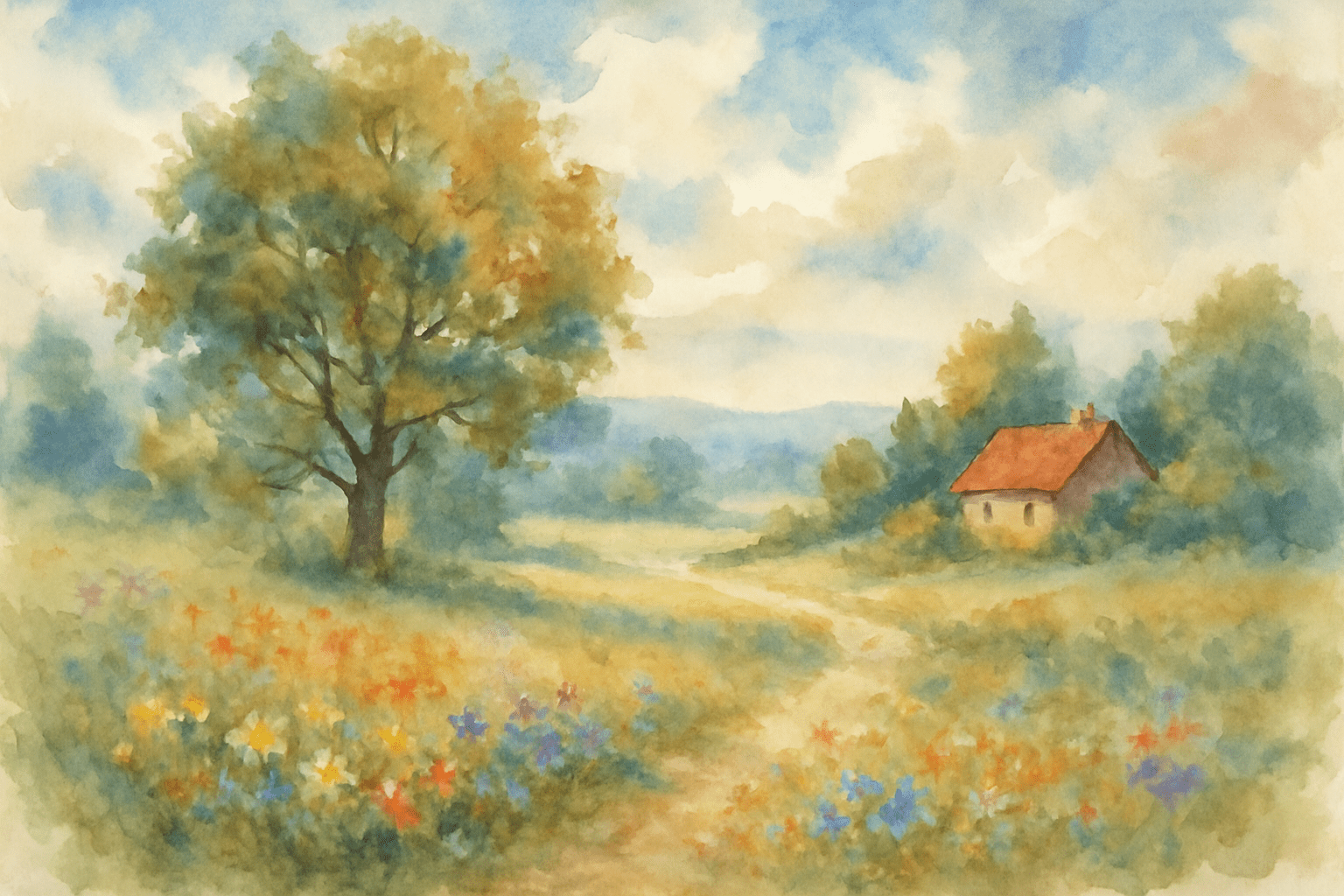
AOI creative concept · Paper and printed matter
Build an image from translucent correction slips laid over a simple drawing.
An AOI creative concept, not an established historical movement.
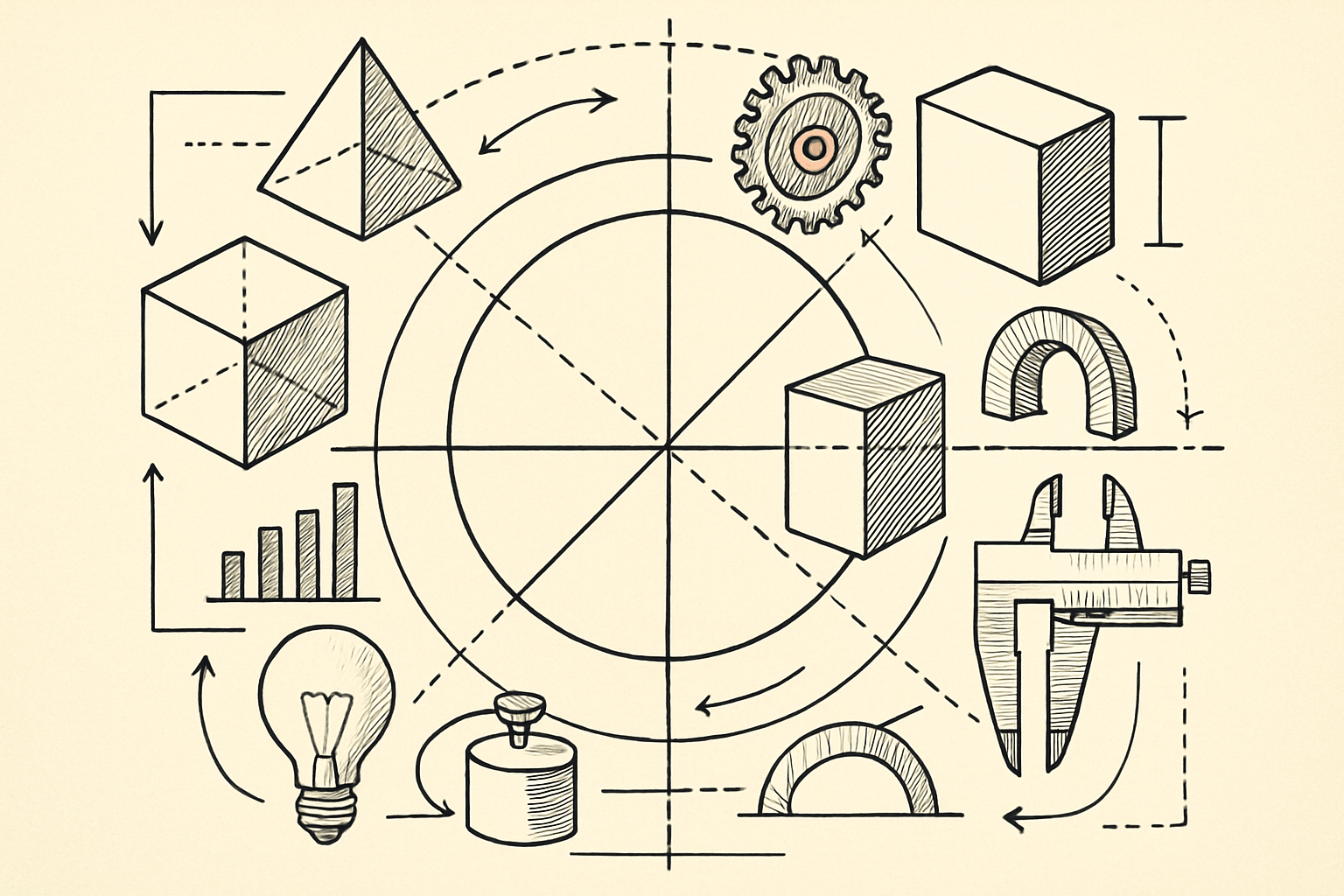
A closer look
Ink black, tracing-paper white and a restrained blue pencil; translucent layers. The focal scene: a chair drawing revised with three visible paper patches.
The edge sets the rule
Build an image from translucent correction slips laid over a simple drawing. Each slip repairs one part while revealing enough of the earlier mark to show the decision. Revision itself becomes the subject, without pretending to reproduce an authentic archival document.
Arrange the paper scene
Draw a modest chair in dark ink, then place three tracing-paper patches over its legs, back and shadow. Let one corrected leg shift the apparent balance of the chair. Keep the patch edges and tiny overlaps visible, using blank tabs instead of readable editorial notes. Light from the side should distinguish the layers without bleaching the original drawing.
Where the illusion weakens
Too many corrections make the object unreadable and turn the exercise into generalized clutter. Preserve one untouched structural element so the viewer can compare original and revised decisions. The strongest patch changes how the chair stands, not merely its ornament.
Technique notes
Apply the same method to a bridge whose corrected support moves off-center; retain the ghost of the first support beneath the paper.
When prompting an image model, spell out the rule and visible relationships. The invented style name alone is not a reliable instruction. Compare outputs against the critique above and revise the specific failed relationship.
The prompt workshop
Original creative exercises. These prompts create new illustrations, not documentary evidence.
Start with the defining rule
Create an original illustration of a chair drawing revised with three visible paper patches. Build an image from translucent correction slips laid over a simple drawing. Each slip repairs one part while revealing enough of the earlier mark to show the decision. Revision itself becomes the subject, without pretending to reproduce an authentic archival document. Use ink black, tracing-paper white and a restrained blue pencil; translucent layers. Keep the composition readable, with a clear focal area and quiet surrounding space. No lettering, signatures or watermark.
Build the fuller composition
Create an original Transparent Errata composition. Draw a modest chair in dark ink, then place three tracing-paper patches over its legs, back and shadow. Let one corrected leg shift the apparent balance of the chair. Keep the patch edges and tiny overlaps visible, using blank tabs instead of readable editorial notes. Light from the side should distinguish the layers without bleaching the original drawing. Use ink black, tracing-paper white and a restrained blue pencil; translucent layers. Preserve the defining constraint: Build an image from translucent correction slips laid over a simple drawing. Avoid decorative clutter, readable text and watermarks.
Try a deliberate variation
Create an experimental illustration based on this rule: Build an image from translucent correction slips laid over a simple drawing. Each slip repairs one part while revealing enough of the earlier mark to show the decision. Revision itself becomes the subject, without pretending to reproduce an authentic archival document. Variation: Apply the same method to a bridge whose corrected support moves off-center; retain the ghost of the first support beneath the paper. Use ink black, tracing-paper white and a restrained blue pencil; translucent layers. Make the changed relationship unmistakable while keeping supporting details restrained. No captions, signatures or watermark.
Look closer
Explore the image gallery
Select an image to enlarge it. Browse with the arrows, and press Escape to return.

Your next inspiration
Discover another art style
Follow a visual thread to the next subject.
Woodcut: A Celebration in Grain and Grooves
Related visual vocabulary from the existing AOI catalogue.