
Artist study · expressive animal painting and bold color
Tracy Miller’s animal paintings use vivid, unexpected color and energetic brushwork to make wildlife and pets feel immediately present. Recognizable silhouettes and expressive eyes anchor the freedom of the painted surface.
A visual introduction
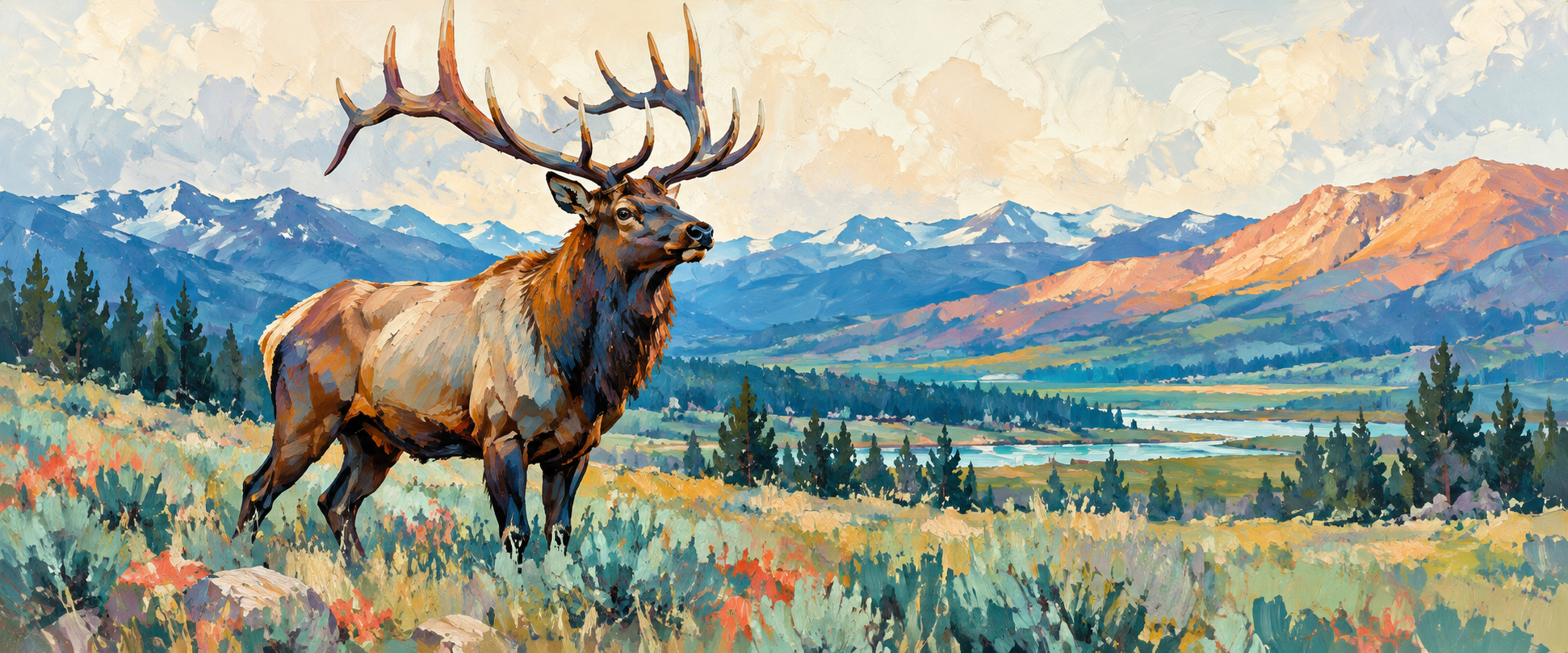
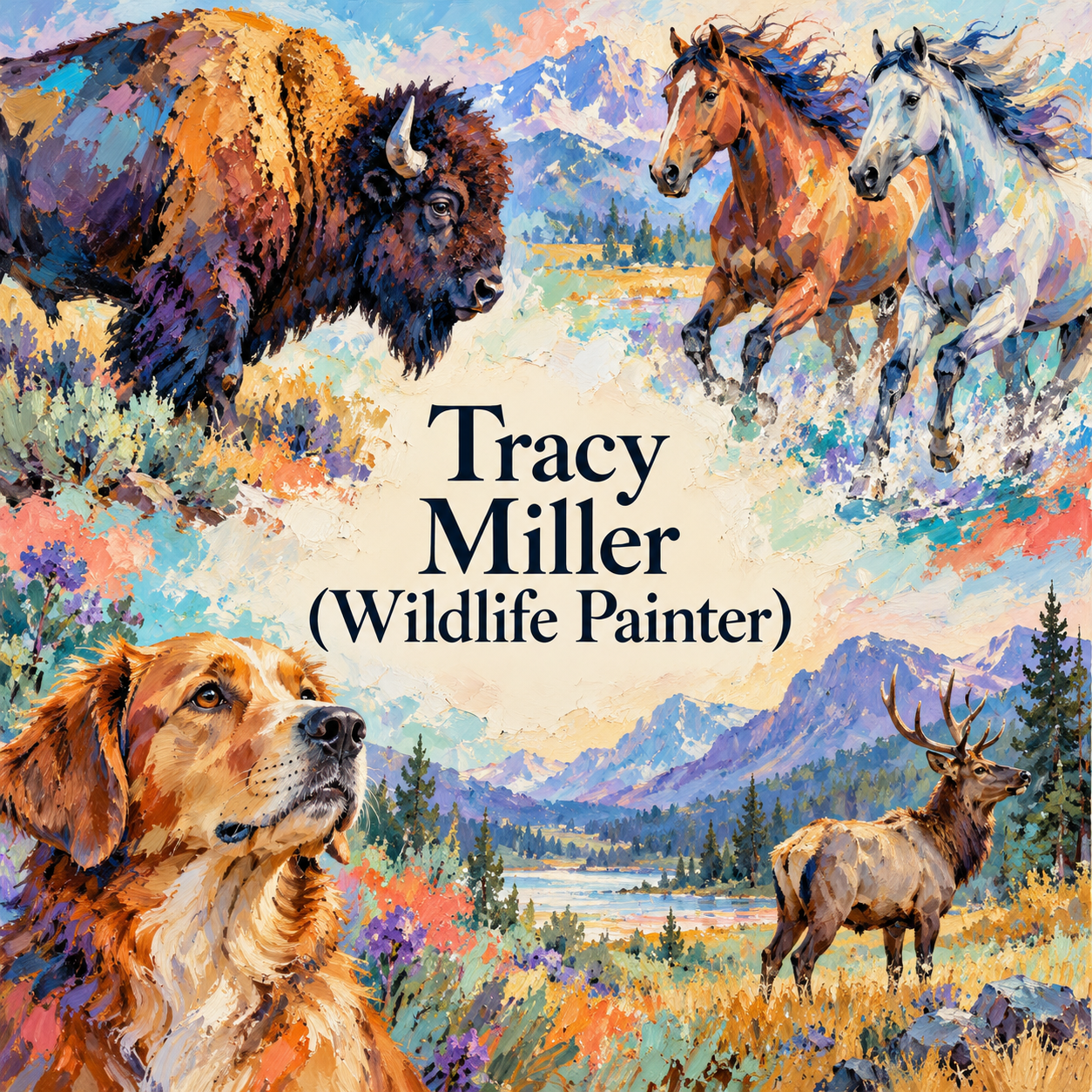
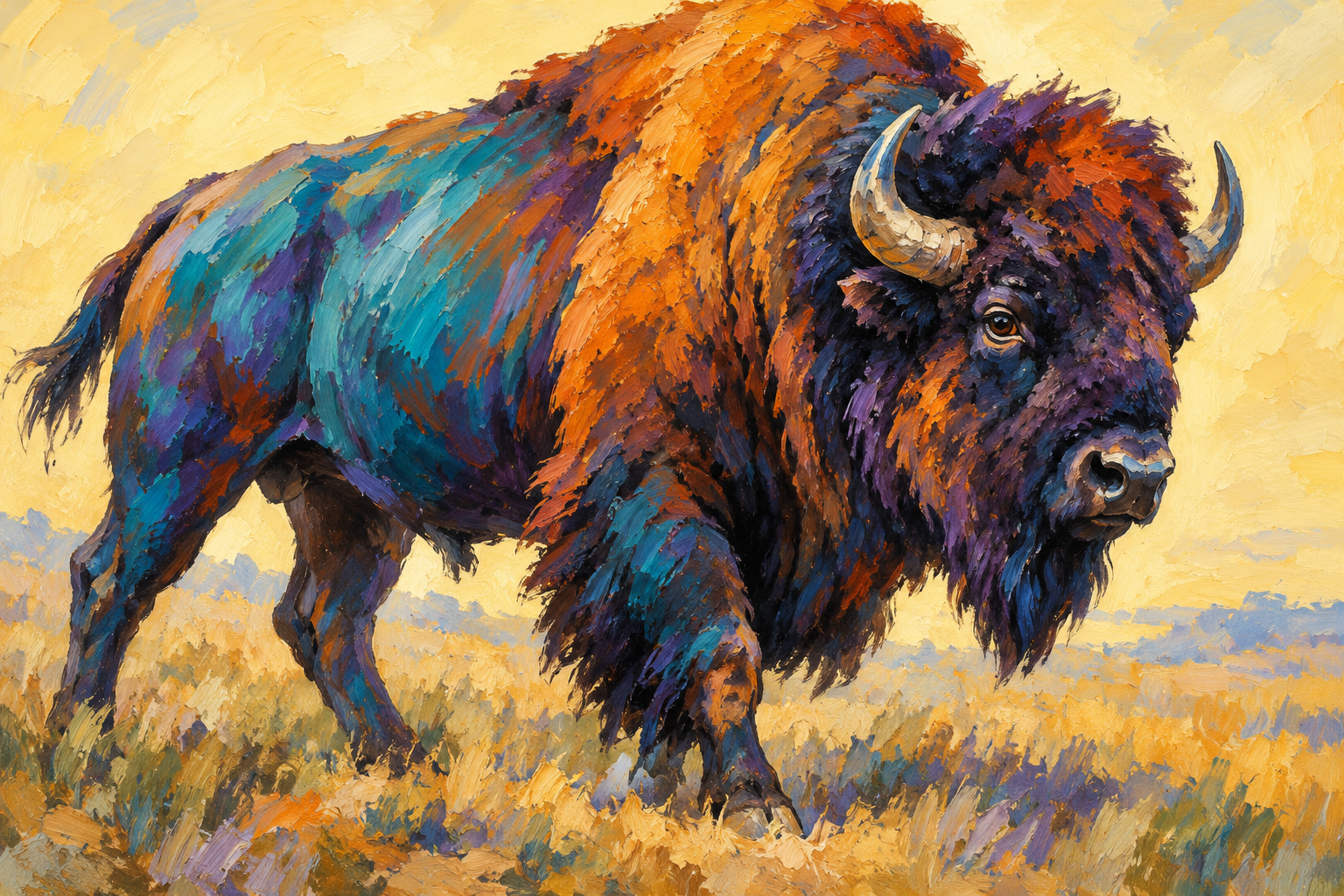
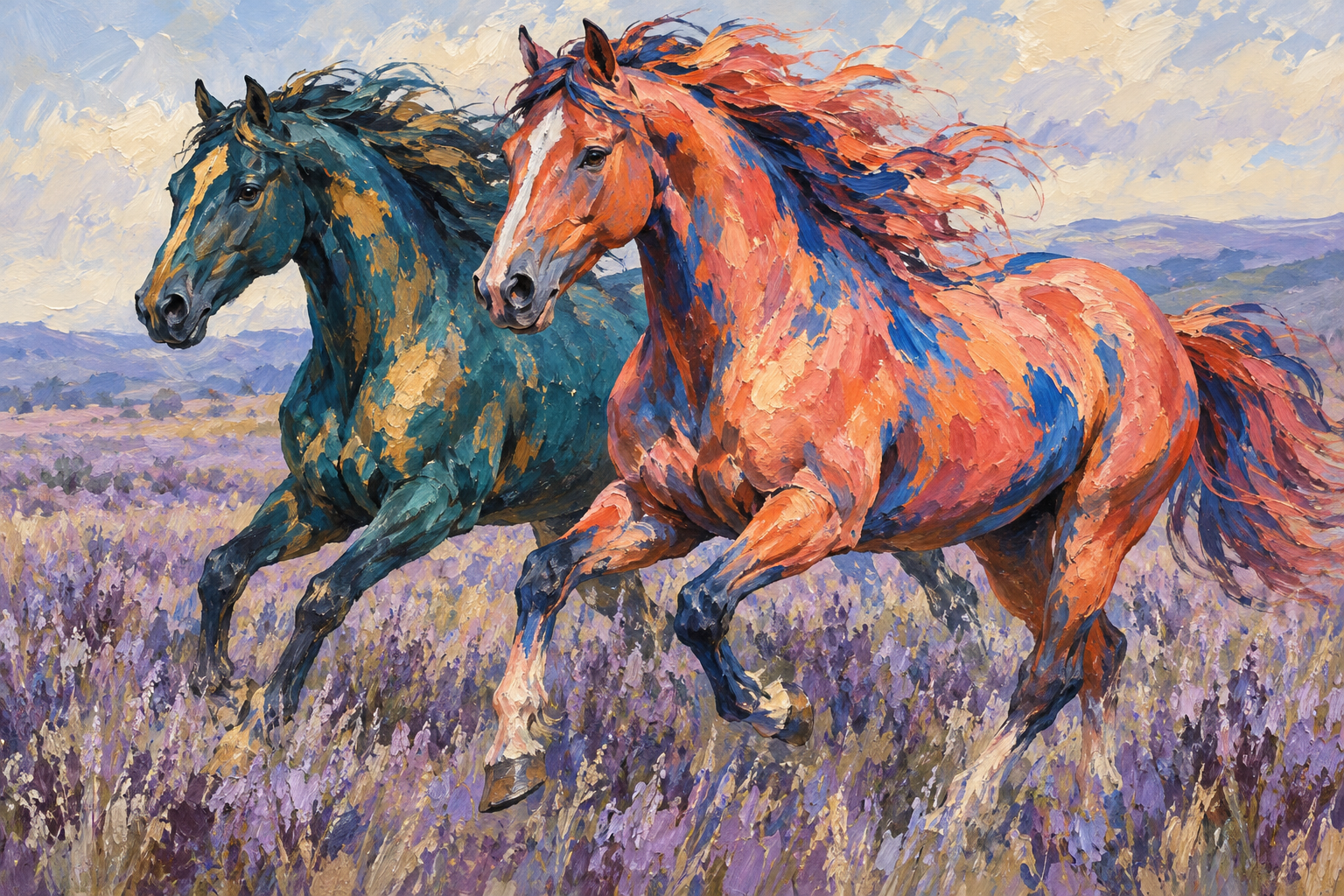
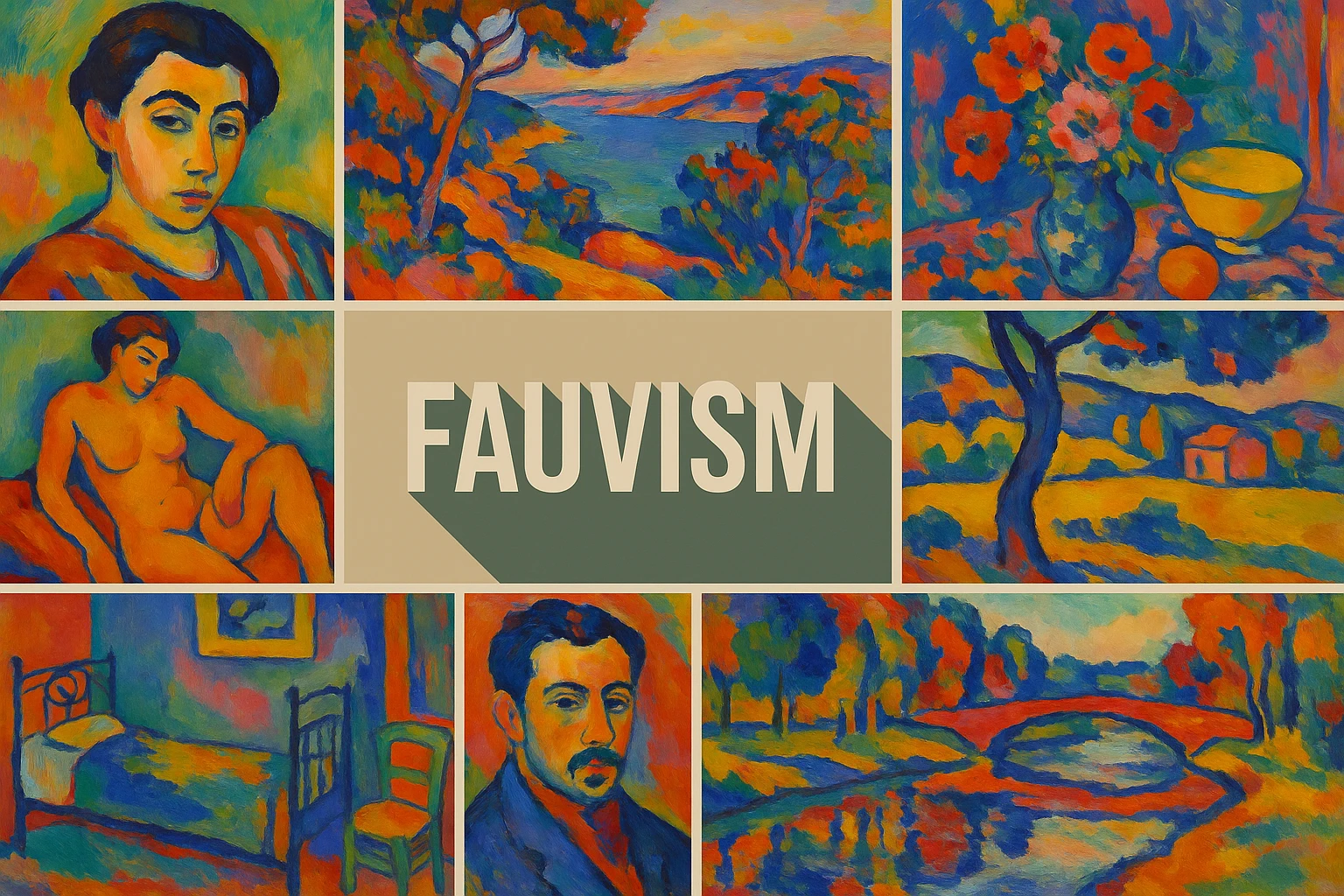
Five original AI-generated AOI studies: a dedicated banner, a centrally titled collage and three standalone examples. These are contemporary interpretations of the visual principles discussed here.
Select an image for a closer look. Use the thumbnails, arrow keys or a swipe to compare examples. Zoom in to inspect details, or share the image that inspires you.
Creative toolbox · take this style further
Choose an input and a destination. Search sends your words to the chosen site; Copy & open puts them on your clipboard to paste there.
Create with AI
Turn your chosen input into an image prompt or a new creative direction.
ChatGPT
Copy your input and paste it into a ChatGPT conversation or image request.
Copy & open ChatGPT (new tab)Claude · Anthropic
Develop an image prompt or explore the style in a new Claude conversation.
Copy & open Claude · Anthropic (new tab)Midjourney
Paste your input into the Imagine bar on the Create page.
Copy & open Midjourney (new tab)Adobe Firefly
Copy your input, open Firefly, and paste it into the prompt field.
Copy & open Adobe Firefly (new tab)Leonardo.Ai
Copy your input, open Leonardo, and paste it into the generation field.
Copy & open Leonardo.Ai (new tab)Image search
Find visual references. Short, concrete keywords usually work best.
Lexica
Search AI images and prompts using your selected input.
Search with this input Lexica (new tab)Pexels
Search the photo and video library. Short keywords often work best.
Search with this input Pexels (new tab)Pixabay
Search photos, illustrations and other images.
Search with this input Pixabay (new tab)Unsplash
Search photographs using the style name or your own keywords.
Search with this input Unsplash (new tab)Wikimedia Commons
Search photographs, artworks and historical images. Check each file for its source and reuse terms.
Search with this input Wikimedia Commons (new tab)Art & research
Explore artists, collections and the ideas behind a style.
Wikipedia
Search for background reading. A style may not have its own article.
Search with this input Wikipedia (new tab)WikiArt
Copy your input into WikiArt’s search to explore artists and artworks.
Copy & open WikiArt (new tab)Europeana
Paste your keywords into the search to explore European museum, library and archive collections.
Copy & open Europeana (new tab)Inspiration
Discover portfolios and visual ideas from creative communities.
Instagram hashtags
Search a hashtag made from your input: spaces and punctuation are removed. Instagram may require sign-in.
Search with this input Instagram hashtags (new tab)ArtStation
Paste your input into artwork search for concept art, environments, characters and visual development.
Copy & open ArtStation (new tab)Behance
Paste your input into project search for illustration, design and visual storytelling.
Copy & open Behance (new tab)A closer look
Broad acrylic color shapes describe animal heads, bodies and surrounding space. Saturated hues replace literal fur colors, while eyes, muzzle, ears and characteristic posture preserve identity and expression.
The wildlife painter, identified clearly
This entry concerns the Tracy Miller associated with tracymillerfineart.com and the artist's Tracy Miller Fine Art portfolio on Pixels. She is the painter of colorful wildlife and pets, distinct from the Brooklyn food and still-life painter who shares her name. The two artists have separate AOI entries so their biographies, examples and visual methods remain clear.
In her own portfolio statement, Miller calls her approach Contemporary Western Expressionism and describes working in acrylic for its color, opacity, transparency and drying behavior. That is her description of a personal practice, rather than evidence of a formally organized movement. Her account also connects her animal subjects to growing up with horses and outdoor experiences in Colorado.
Color as a way to recognize an animal anew
The surprising color does not erase the animal. A bison's shoulder, a horse's long face or a dog's particular ears can remain unmistakable even when their surfaces become turquoise, violet or warm orange. The useful relationship is between a reliable silhouette and an adventurous interpretation of the planes within it.
Start an original study by identifying the features that make the subject itself. For a horse, the length of the muzzle, placement of the eye and turn of the ears matter more than a catalogue of individual hairs. For a dog, small differences in head shape and expression can carry personality. Establish those relationships before letting color run freely.
Then give color a structural job. One hue can carry the broad light-facing plane, another can turn the form away, and a third can interrupt the boundary. A bright accent is strongest when it clarifies a feature or redirects attention. Random patches can make the animal look decorated rather than perceived.
Acrylic encourages decisions in layers
Miller's portfolio statement emphasizes both opaque and transparent qualities of acrylic. Those qualities suggest useful exercises: place a transparent color over a broad shape, then recover a focal edge with an opaque mark. Let earlier decisions remain visible where they contribute energy.
In a digital interpretation, broad brush marks should follow a few meaningful changes of plane. A stroke across the cheek can suggest volume; a contrasting stroke near the muzzle can distinguish it from the neck. Keep some marks open and some edges decisive. Uniformly smooth shading can remove the directness that makes an expressive animal portrait feel alive.
The background needs a role too. It can establish a complementary color, echo a gesture or leave a quiet area around the face. If the animal and background are equally fragmented, the silhouette may disappear. Test the image at thumbnail size before adding more detail.
The eye is an anchor, not an isolated jewel
A strongly rendered eye can gather attention, but it needs the surrounding anatomy to support it. Check its position relative to the brow, ear and muzzle. An eye that is beautifully highlighted but misplaced will make the whole head feel uncertain.
In her published interviews, Miller emphasizes the personality and joy that clients associate with her pet portraits. For an original study, translate that concern into observable choices: an attentive ear, a relaxed mouth, an alert head angle or a calm, steady gaze. Avoid treating every animal as if it were making the same friendly expression.
A wildlife composition can also communicate through the whole body. The weight of a standing bison, the elastic rhythm of a moving horse and the compact balance of a perched bird ask for different brush rhythms. Vary the posture and framing instead of simply changing the species inside one repeated portrait template.
More than one way of painting animals
A 2021 interview describes Miller's Ghost Animals series as visually different from the brighter work for which she was already known. This is a useful reminder that an artist's practice can exceed the most familiar public image. An introductory style study should identify the aspect it explores rather than claiming one formula explains every painting.
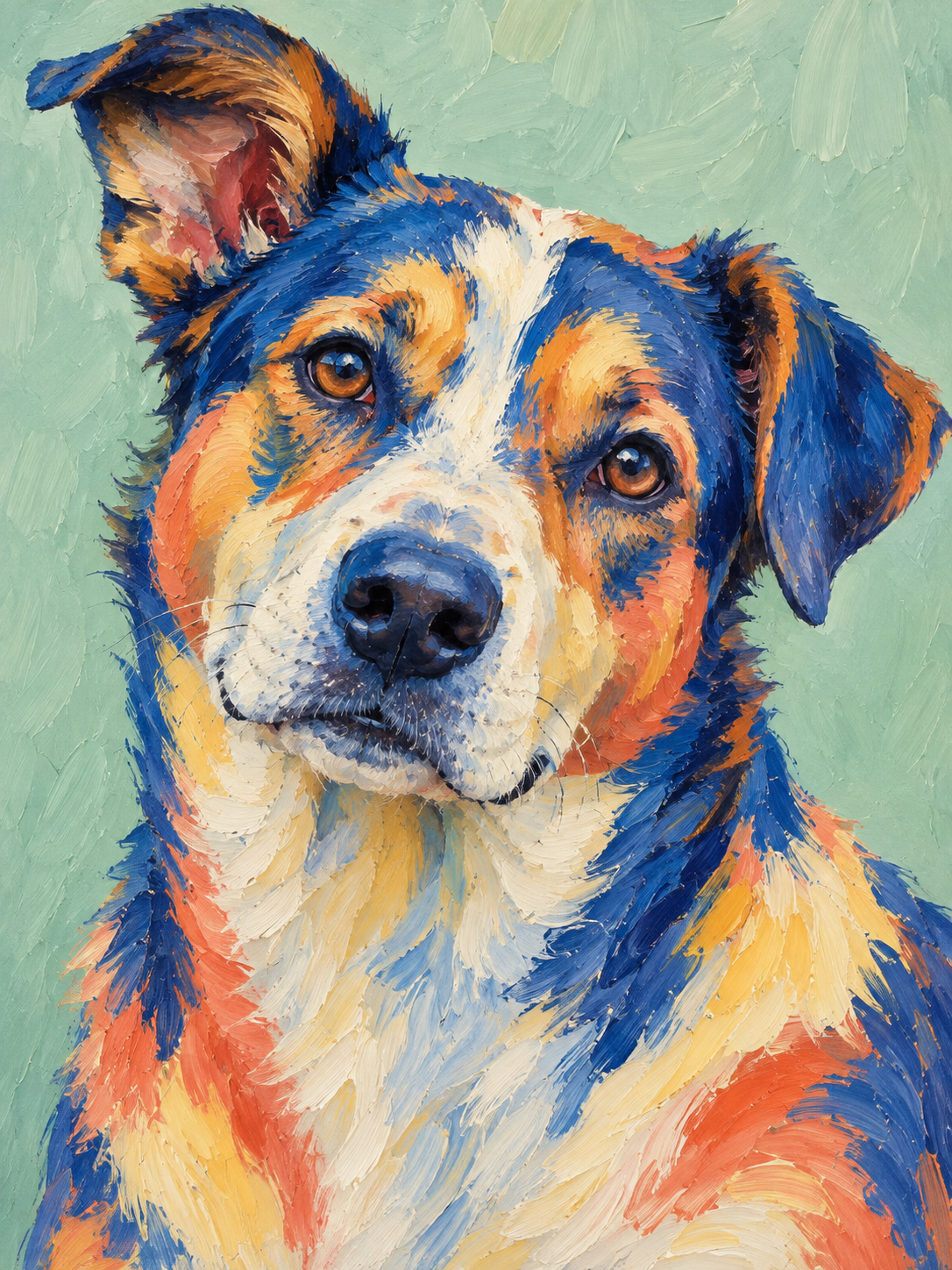
The AOI examples concentrate on bold-color animal painting: a bison study, a pair of horses and a close pet portrait, accompanied by a wildlife banner and titled collage. They are original AI-generated interpretations of the discussed principles, not works by Miller or documentary reproductions of her paintings.
The practical emphasis is recognition through color and gesture. A second series could lower the saturation or increase the amount of unpainted-looking space while retaining a clear animal presence. The point is to test what carries identity when one expressive variable changes.
Keep the energy, edit the noise
The most common weakness in a bright animal study is saturation without hierarchy. If every passage is at maximum intensity, the eye has nowhere to settle. Reserve a quieter area near the focal feature or use one broad color to gather several smaller marks.
Another weakness is a convincing texture wrapped around uncertain anatomy. Return to the silhouette and major landmarks before adding more painterly effects. The expressive choices become stronger when they seem to grow from the animal's structure.
For a first exercise, use three principal colors and one dark accent. Make a small study with broad marks, then a second version with fewer marks. Compare which one better communicates posture and temperament. Vividness is useful; specificity is what makes the animal memorable.
A small poetic detour
Original words from the AOI studio.
Poetry
A color the animal can carry
The shoulder takes a blue the sky has lent;
a rust-red stroke runs warm along the jaw.
The ear turns first, alert to some event
beyond the edge of everything I draw.
I change the field from green to violet light.
The gaze stays steady through the altered air.
A brush can move the daylight out of sight
and leave the creature more completely there.
One dark mark gathers all the colors in.
The animal looks out. The marks begin.
The prompt workshop
Original creative exercises. These prompts create new illustrations, not documentary evidence.
Anchor bold color in a clear animal
Paint an original expressive acrylic study of a standing bison using broad turquoise, violet and burnt-orange planes. Preserve a convincing shoulder, head silhouette and weight-bearing stance. Use one dark eye accent and a quieter background. Leave energetic brushwork visible.
Establish the animal’s structure before adding more color.
Let two horses create a rhythm
Create an original acrylic-style painting of two horses moving together, their distinct heads and legs forming a readable rhythm. Use vivid nonliteral color, broad gestural marks and a restrained landscape, with enough tonal separation to keep the bodies clear.
The two animals should remain individual forms inside a shared motion.
Keep the personality inside the color
Create an original close portrait of an alert dog with a distinctive ear angle and relaxed muzzle, using cobalt, coral, pale yellow and a small dark accent. Mix opaque and transparent-looking acrylic passages, preserve coherent anatomy and let the background remain simple.
An expressive gaze depends on the whole head, not only a bright eye.
Your next inspiration
Discover another art style
Follow a visual thread to the next subject.
People & works to explore
References discussed in this article. Consult the sources below for context.
Artists and practitioners
Tracy Miller (wildlife painter)
A smile from the studio
Jokes
The painter showed a client a purple-and-turquoise portrait of his dog. “Those aren't his colors,” he said. The dog looked at the painting, wagged his tail and sat beside it. “He recognizes the expression,” said the painter. The client studied it again. “Yes. That's exactly the look he gives me when he has eaten something expensive.” They agreed the orange patch should stay. It was probably the sofa.
Sources and further exploration
Tracy Miller Fine Art on Pixels — artist statement, acrylic medium and animal portfolio
Shoutout Colorado — interview with Miller about her animal paintings and pet-portrait practice
VoyageDenver — artist interview, acrylic painting and the distinct Ghost Animals series
KAXE — 2023 interview connecting Miller’s background and animal painting