
Interval-based photographic technique
The jetty stays put. In one frame the rocks around it are dry, in another their lower edges disappear, and a few seconds later the sea reaches the deck. Time-lapse gives a slow change a speed the eye can follow.
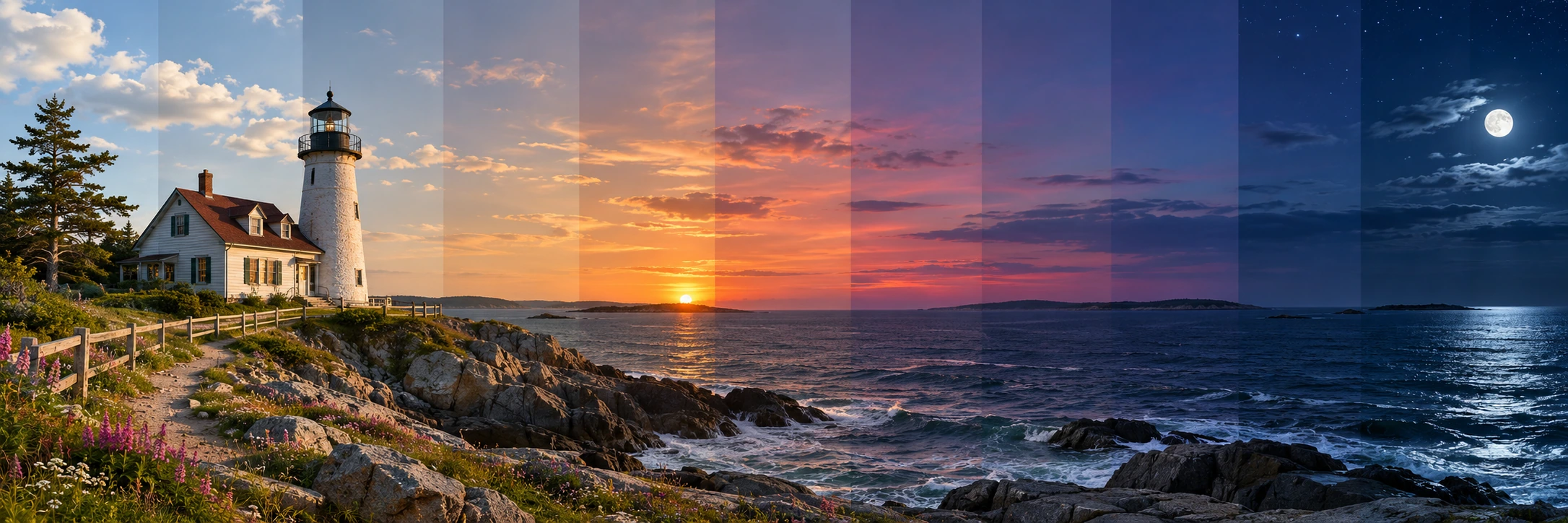
A visual introduction
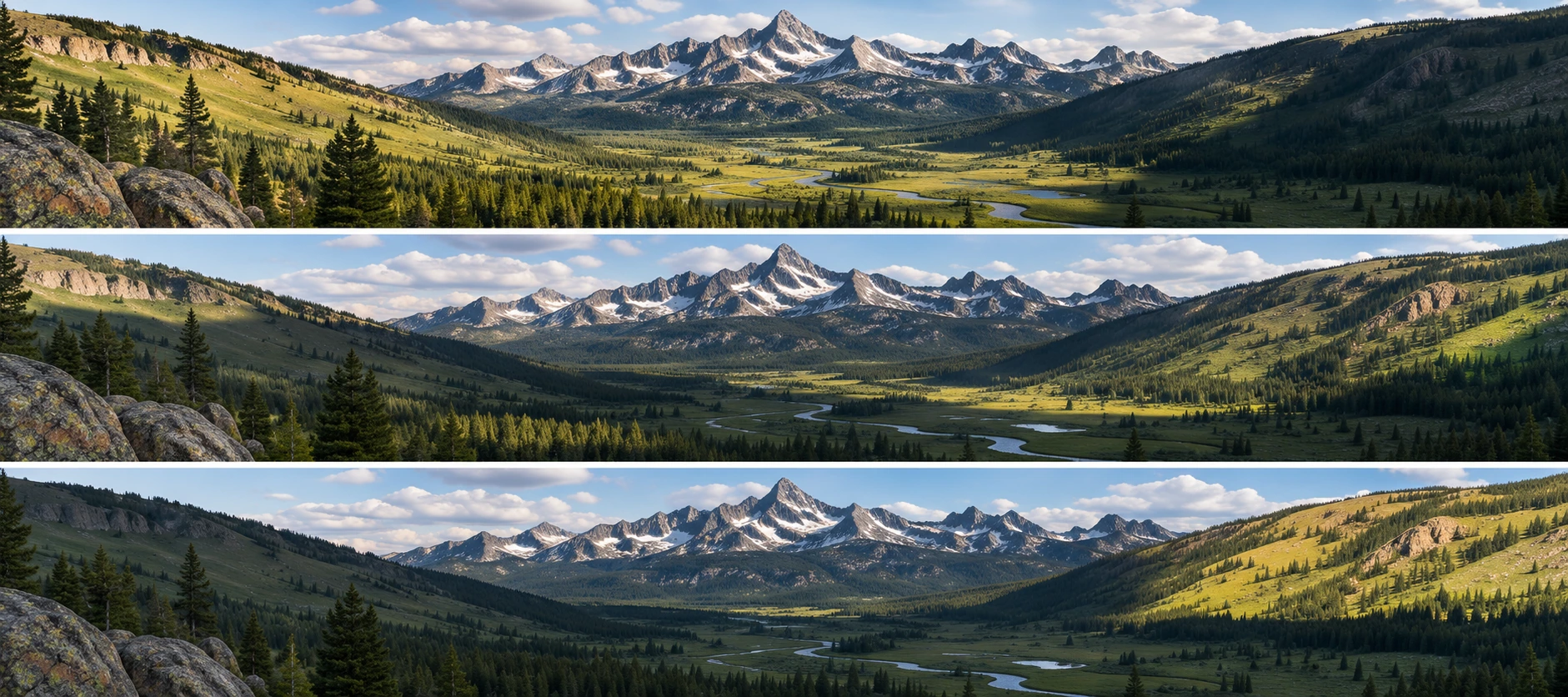
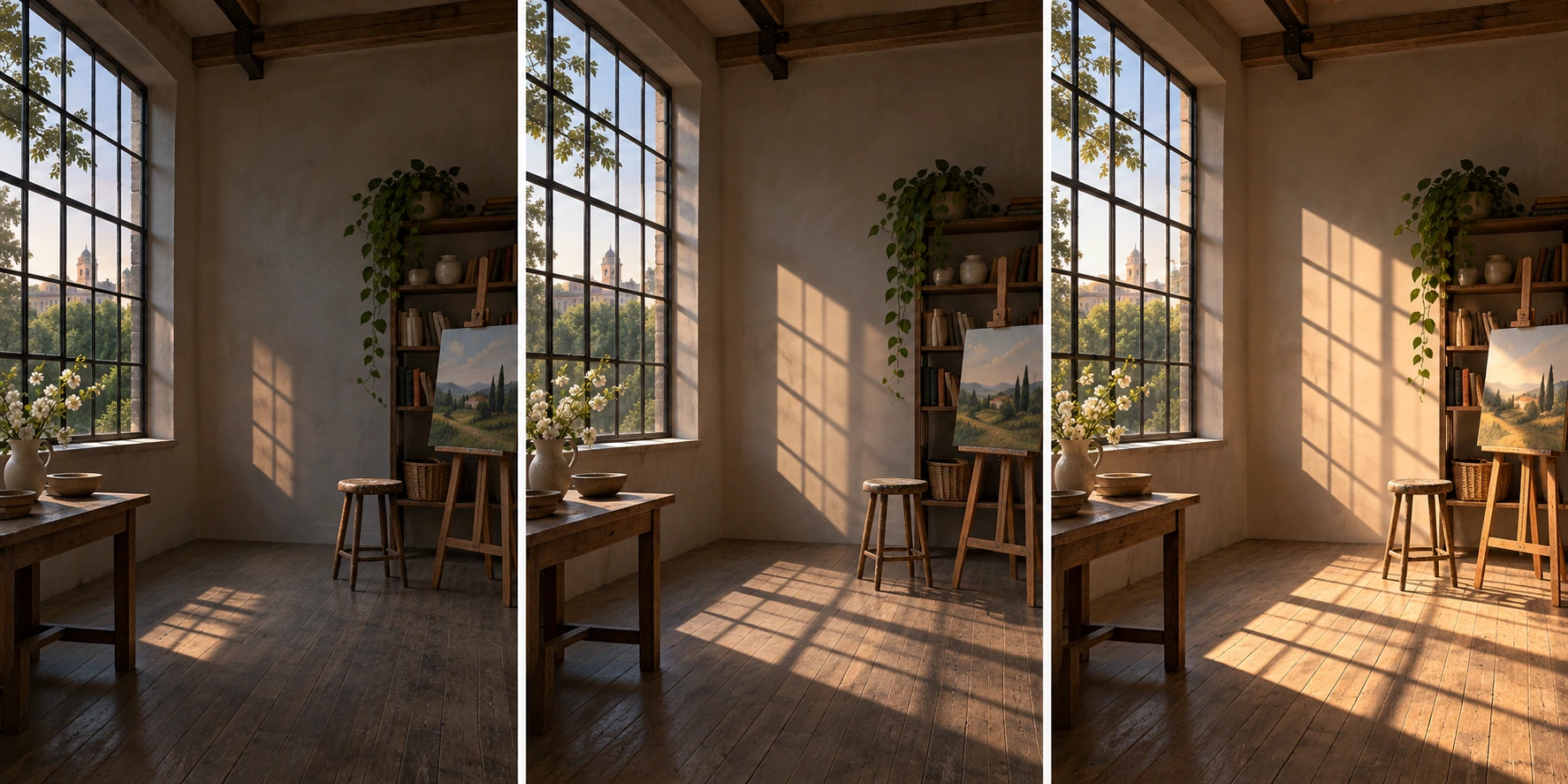
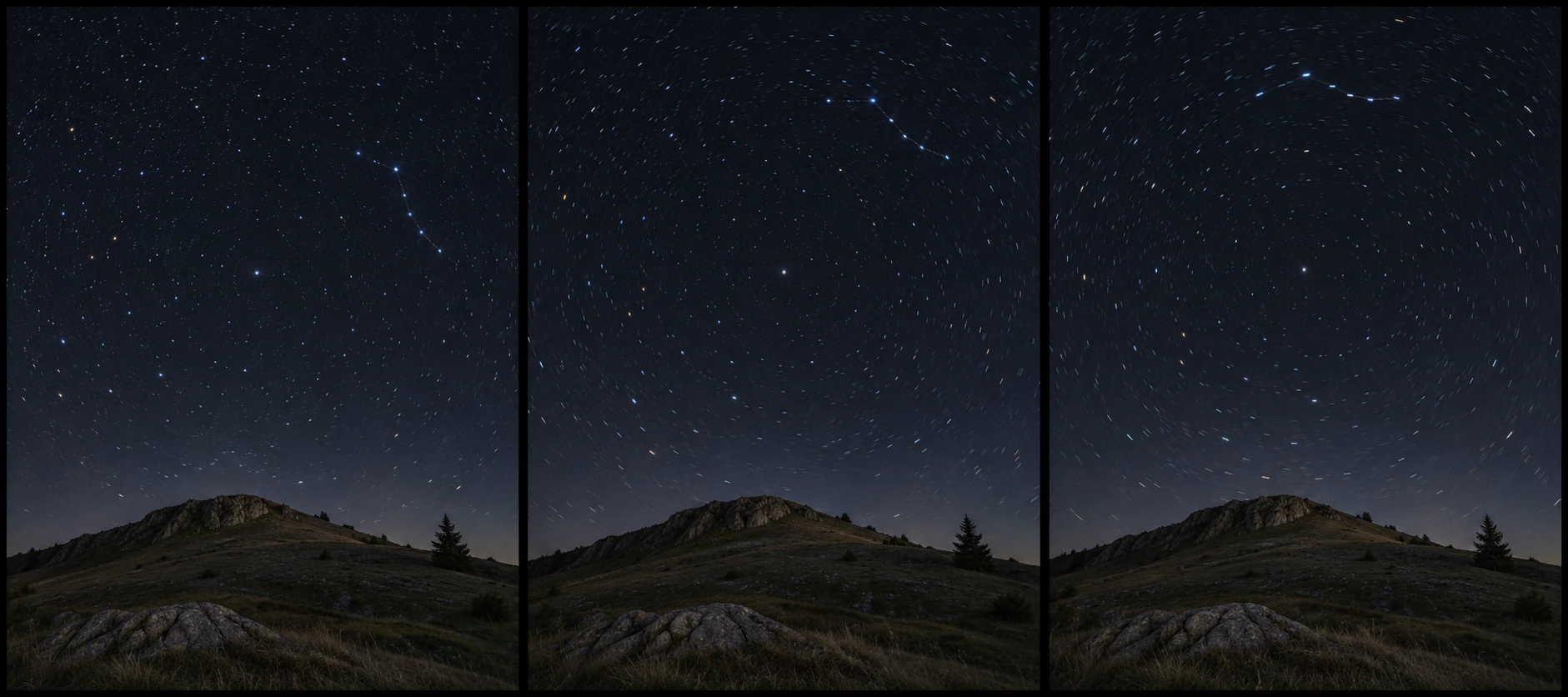
The banner, collage and five studies are AOI interpretations. The linked sources document the works and practices discussed in the article.
Select an image for a closer look. Use the thumbnails, arrow keys or a swipe to compare examples. Zoom in to inspect details, or share the image that inspires you.
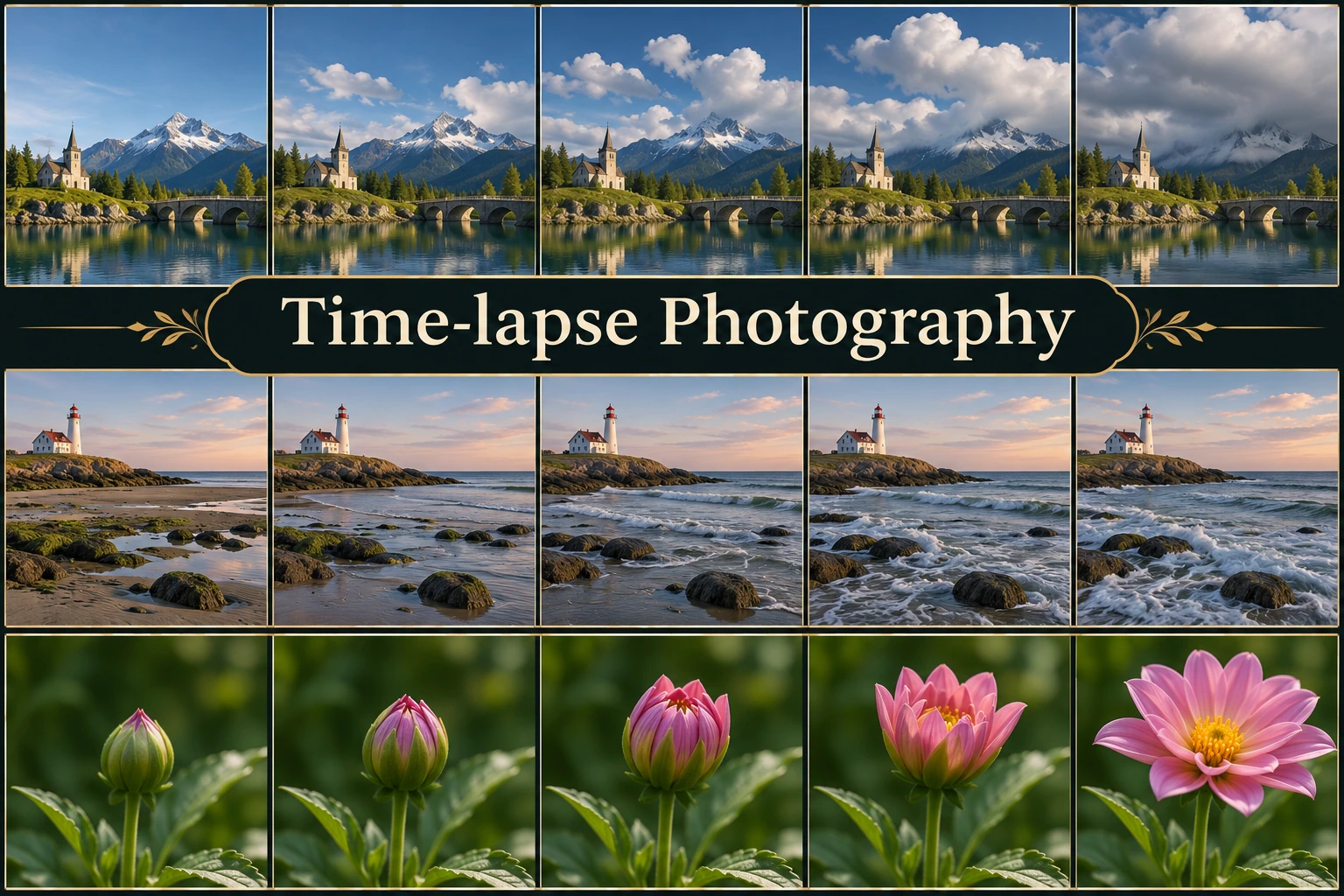
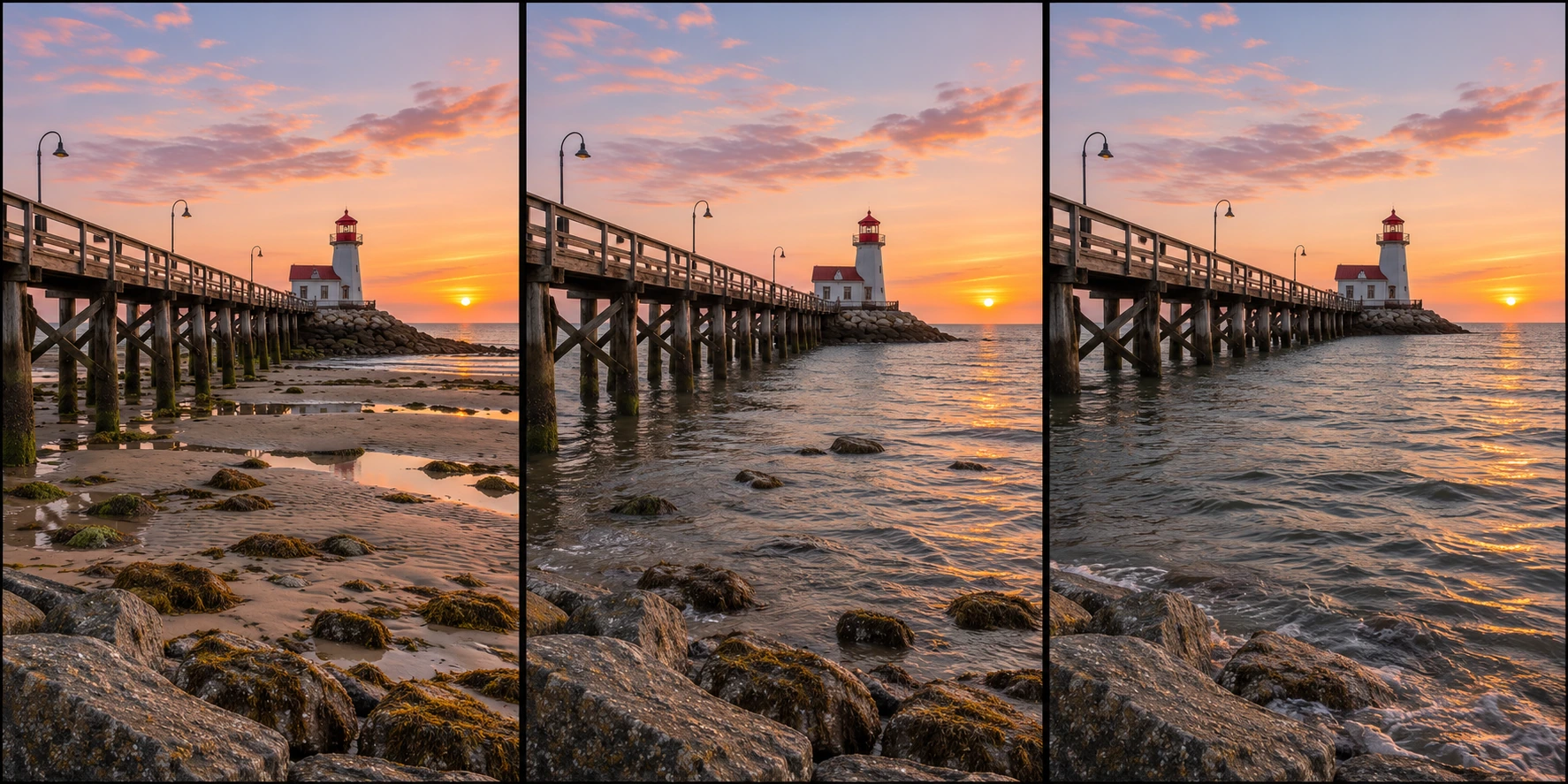
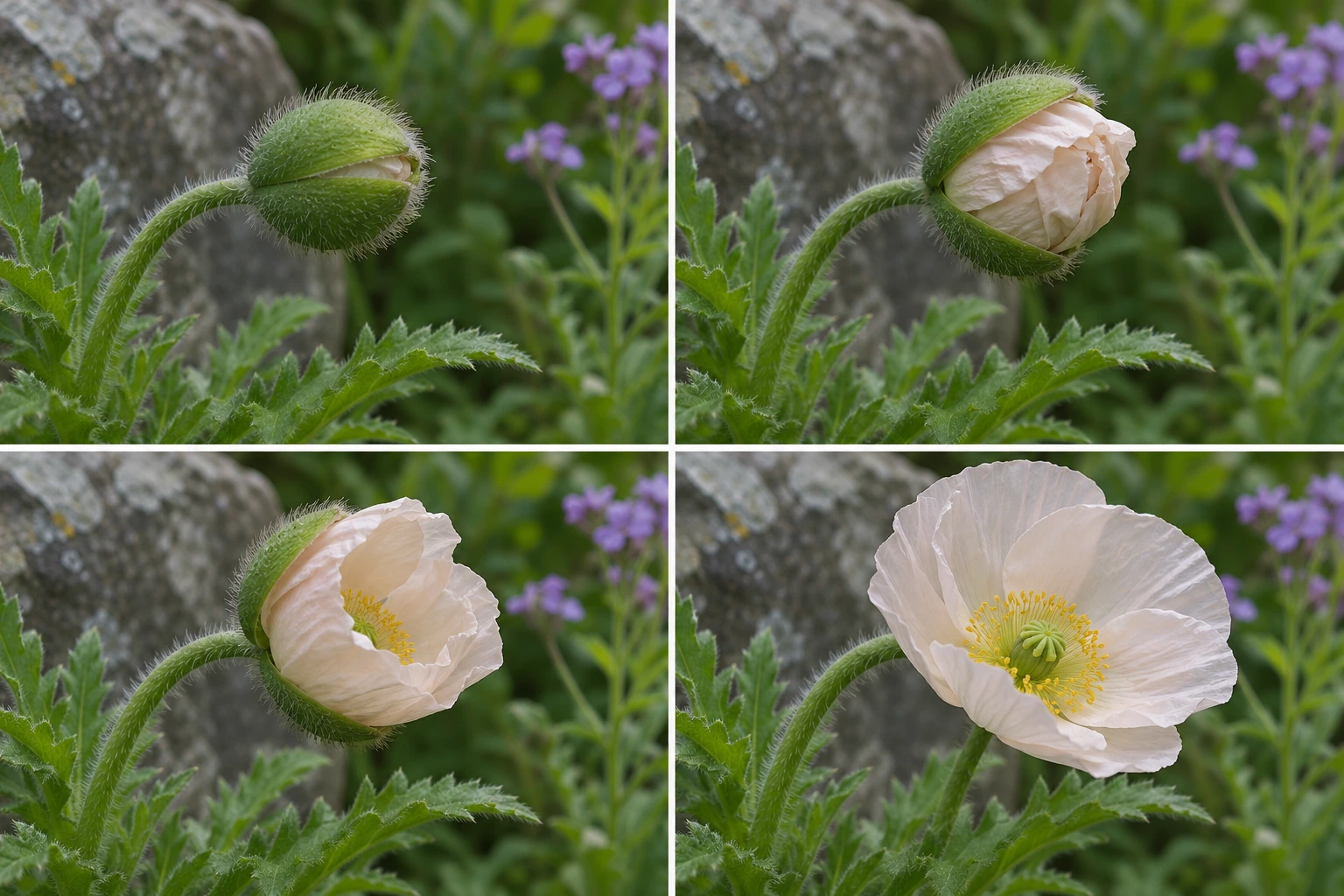
Creative toolbox · take this style further
Choose an input and a destination. Search sends your words to the chosen site; Copy & open puts them on your clipboard to paste there.
Create with AI
Turn your chosen input into an image prompt or a new creative direction.
ChatGPT
Copy your input and paste it into a ChatGPT conversation or image request.
Copy & open ChatGPT (new tab)Claude · Anthropic
Develop an image prompt or explore the style in a new Claude conversation.
Copy & open Claude · Anthropic (new tab)Midjourney
Paste your input into the Imagine bar on the Create page.
Copy & open Midjourney (new tab)Adobe Firefly
Copy your input, open Firefly, and paste it into the prompt field.
Copy & open Adobe Firefly (new tab)Leonardo.Ai
Copy your input, open Leonardo, and paste it into the generation field.
Copy & open Leonardo.Ai (new tab)Image search
Find visual references. Short, concrete keywords usually work best.
Lexica
Search AI images and prompts using your selected input.
Search with this input Lexica (new tab)Pexels
Search the photo and video library. Short keywords often work best.
Search with this input Pexels (new tab)Pixabay
Search photos, illustrations and other images.
Search with this input Pixabay (new tab)Unsplash
Search photographs using the style name or your own keywords.
Search with this input Unsplash (new tab)Wikimedia Commons
Search photographs, artworks and historical images. Check each file for its source and reuse terms.
Search with this input Wikimedia Commons (new tab)Art & research
Explore artists, collections and the ideas behind a style.
Wikipedia
Search for background reading. A style may not have its own article.
Search with this input Wikipedia (new tab)WikiArt
Copy your input into WikiArt’s search to explore artists and artworks.
Copy & open WikiArt (new tab)Europeana
Paste your keywords into the search to explore European museum, library and archive collections.
Copy & open Europeana (new tab)Inspiration
Discover portfolios and visual ideas from creative communities.
Instagram hashtags
Search a hashtag made from your input: spaces and punctuation are removed. Instagram may require sign-in.
Search with this input Instagram hashtags (new tab)ArtStation
Paste your input into artwork search for concept art, environments, characters and visual development.
Copy & open ArtStation (new tab)Behance
Paste your input into project search for illustration, design and visual storytelling.
Copy & open Behance (new tab)A closer look
Find the object that stays fixed, then look for a boundary that moves in one direction across successive frames. The fixed reference gives the change a measure. A still contact sheet lets the reader compare moments at their own pace.
Three clocks for one picture
Keep capture interval, exposure duration and playback rate separate. The interval sets how often a frame begins. The exposure determines how much motion accumulates inside that frame. Playback decides how quickly the series appears to the viewer. At 24 frames per second, 240 frames make a ten-second clip. Capture one every five seconds and the first and last frame starts stand 1,195 seconds apart. A two-second exposure would soften each frame while leaving the same five-second spacing between starts.
Nikon’s Z6III manual recommends an interval longer than the slowest anticipated shutter speed. Count on time to finish each exposure and check how the camera handles a missed one. Test a short series before committing to a changing subject. A smooth few seconds of movement can expose mistakes that look invisible when reviewing the frames one at a time.
Anchor the frame, then choose what is allowed to change
Set two landmarks near opposite edges of the frame. They reveal a slipped tripod, an accidental crop or a focus adjustment that changes apparent scale. For a window shadow, a joint in the floorboards provides a useful reference. For a tide, a notch in a pier makes water height easier to read. If the brightest patch wanders because auto exposure responds to each passing cloud, the house itself can seem to pulse. Choose a consistent exposure or a deliberate transition and inspect the resulting playback.
What a scientific sequence can establish
The US National Park Service describes repeat photography for tracking glacier termini and the use of fixed interval cameras where conditions permit. Recognisable landmarks and repeatable camera positions matter because they let someone compare the ice boundary across dates. A visually convincing film on its own supplies neither a distance calibration nor a missing timestamp. Preserve original frames, timing, position and any alignment or crop changes when the sequence is evidence.
What fits between frames
A long exposure can draw a continuous luminous trail in a single frame. A time-lapse can keep each individual star sharp while the sequence reveals rotation. Both choices can belong to the same shoot. In a three-frame layout, the gaps are especially obvious: two clouds in similar positions could be one cloud changing shape or two different clouds passing. Caption what the evidence shows. The AOI gallery uses invented, AI-generated still sequences and composites to teach these distinctions. It contains no measured tide, observed bloom event or astronomical record.
Positive review · AI-authored editorial assessment
The strongest sequence gives the viewer a witness that stays put. A pier makes water height visible more persuasively than a whole frame full of moving sea.
Negative review · AI-authored editorial assessment
An overlong interval can turn continuous change into unrelated jumps. A polished transition may conceal that loss. Inspect consecutive originals before smoothing away a discontinuity.
Neutral review · AI-authored editorial assessment
Time-lapse works for storytelling and observation. Playback speed is an editorial choice, and documentary claims depend on capture records and identifiable references.
A small poetic detour
Original words from the AOI studio.
Poetry
The sill has kept its place all day.
The bright square crosses the floor.
In the dark between two frames
the afternoon gets up and leaves.
The prompt workshop
Original creative exercises. These prompts create new illustrations, not documentary evidence.
Starting point
Create three locked-off views of an invented jetty as the tide rises. Preserve the pier geometry and horizon across all views. Identify the result as an illustrative sequence.
Richer composition
Design a four-stage bud-opening contact sheet. Keep the stem junction and background fixed while the pale petals unfold progressively. Use the spacing between stages as part of the composition.
Experiment
Imagine three night exposures of stars around a common polar centre above one dark ridge. Keep points distinct in each frame. Let the offset among frames reveal rotation without inventing timestamps.
A smile from the studio
Jokes
The tripod claimed it had done nothing all afternoon. For once, that was exactly the job.