
Photographic lens technique
Tilt-shift photography offers two different controls: changing the orientation of the focus plane and reframing while keeping the camera level. Explore their practical uses, including architecture, tabletop work and selective-focus miniature effects.
A visual introduction
Select an image for a closer look. Use the thumbnails, arrow keys or a swipe to compare examples. Zoom in to inspect details, or share the image that inspires you.



Creative toolbox · take this style further
Choose an input and a destination. Search sends your words to the chosen site; Copy & open puts them on your clipboard to paste there.
Create with AI
Turn your chosen input into an image prompt or a new creative direction.
ChatGPT
Copy your input and paste it into a ChatGPT conversation or image request.
Copy & open ChatGPT (new tab)Claude · Anthropic
Develop an image prompt or explore the style in a new Claude conversation.
Copy & open Claude · Anthropic (new tab)Midjourney
Paste your input into the Imagine bar on the Create page.
Copy & open Midjourney (new tab)Adobe Firefly
Copy your input, open Firefly, and paste it into the prompt field.
Copy & open Adobe Firefly (new tab)Leonardo.Ai
Copy your input, open Leonardo, and paste it into the generation field.
Copy & open Leonardo.Ai (new tab)Image search
Find visual references. Short, concrete keywords usually work best.
Lexica
Search AI images and prompts using your selected input.
Search with this input Lexica (new tab)Pexels
Search the photo and video library. Short keywords often work best.
Search with this input Pexels (new tab)Pixabay
Search photos, illustrations and other images.
Search with this input Pixabay (new tab)Unsplash
Search photographs using the style name or your own keywords.
Search with this input Unsplash (new tab)Wikimedia Commons
Search photographs, artworks and historical images. Check each file for its source and reuse terms.
Search with this input Wikimedia Commons (new tab)Art & research
Explore artists, collections and the ideas behind a style.
Wikipedia
Search for background reading. A style may not have its own article.
Search with this input Wikipedia (new tab)WikiArt
Copy your input into WikiArt’s search to explore artists and artworks.
Copy & open WikiArt (new tab)Europeana
Paste your keywords into the search to explore European museum, library and archive collections.
Copy & open Europeana (new tab)Inspiration
Discover portfolios and visual ideas from creative communities.
Instagram hashtags
Search a hashtag made from your input: spaces and punctuation are removed. Instagram may require sign-in.
Search with this input Instagram hashtags (new tab)ArtStation
Paste your input into artwork search for concept art, environments, characters and visual development.
Copy & open ArtStation (new tab)Behance
Paste your input into project search for illustration, design and visual storytelling.
Copy & open Behance (new tab)A closer look
Deliberately placed sharpness; controlled verticals in architectural views; coherent transitions into blur; careful framing; sometimes an elevated viewpoint and narrow focus zone that make a full-sized scene appear miniature.
Two movements with different jobs
Tilt and shift are separate lens movements. Canon’s technical explanation describes tilt as changing the lens axis relative to the image plane, which changes the orientation of the plane of focus. Shift moves the lens sideways relative to that plane while keeping its axis parallel. The two controls should not be treated as interchangeable effects.
Tilt can help align focus with a receding subject plane or make focus more selective. Shift is useful when photographing a tall building with a level camera: the frame can move upward without tilting the camera back. Neither movement is simply a generic blur filter, and not every use aims to make a scene look small.
Architecture: framing with a level camera
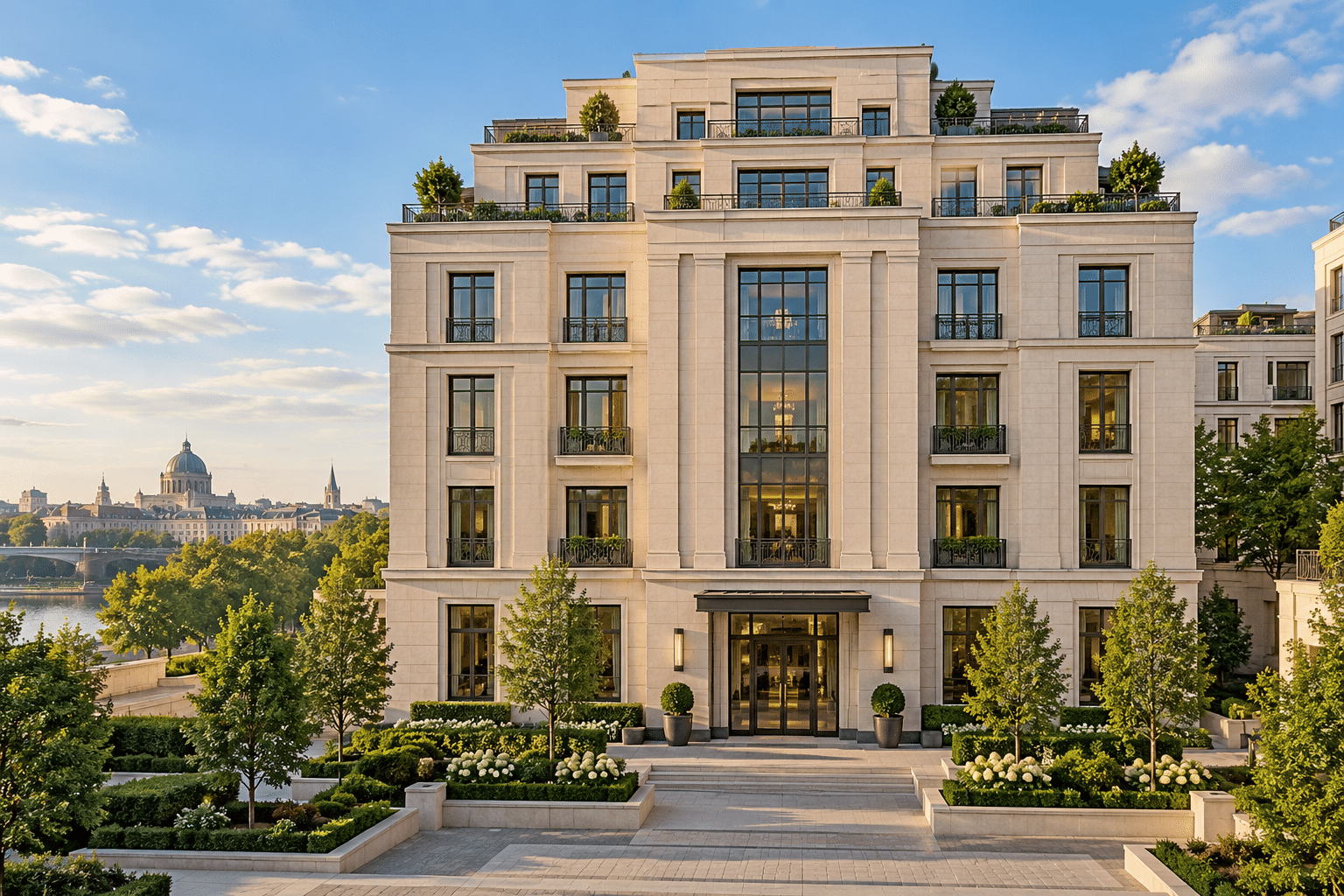
Converging verticals commonly appear when a camera points upward at a building. For a view with upright verticals, first choose a suitable position and keep the camera level. Shift can then include more of the upper façade within the available image circle. Canon’s Camera Museum identifies architectural photography as a principal use of its perspective-control lenses.
Composition still matters. A corrected building can feel cramped if the roof nearly touches the frame or if the foreground has no purpose. Look for a balanced relationship between façade, ground and sky. Lens movements do not make every viewpoint equally informative, and they do not eliminate the need to assess edges and proportions.
Focus along a surface
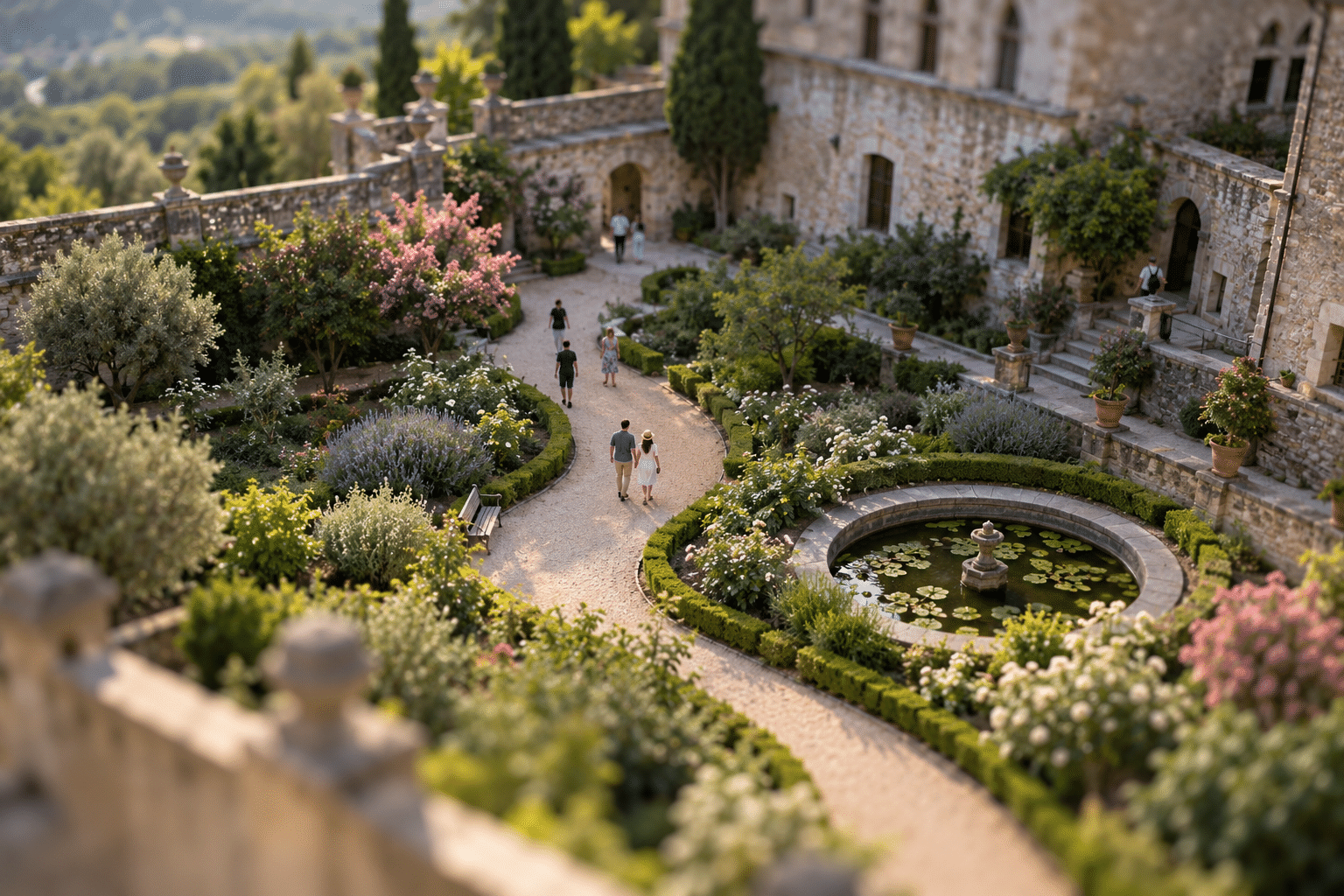
For a tabletop or landscape, consider the surface you want to keep sharp. A receding arrangement may benefit from a focus plane that follows it more closely. This is different from assuming that tilt automatically makes the entire three-dimensional scene sharp.
Check important near and far details at the intended viewing size. Objects that rise away from the selected plane may behave differently from the surface beneath them. Focus, tilt and aperture work together, so make small adjustments and reassess the composition. A useful result communicates the subject clearly rather than displaying an optical trick for its own sake.
Why the miniature effect works visually
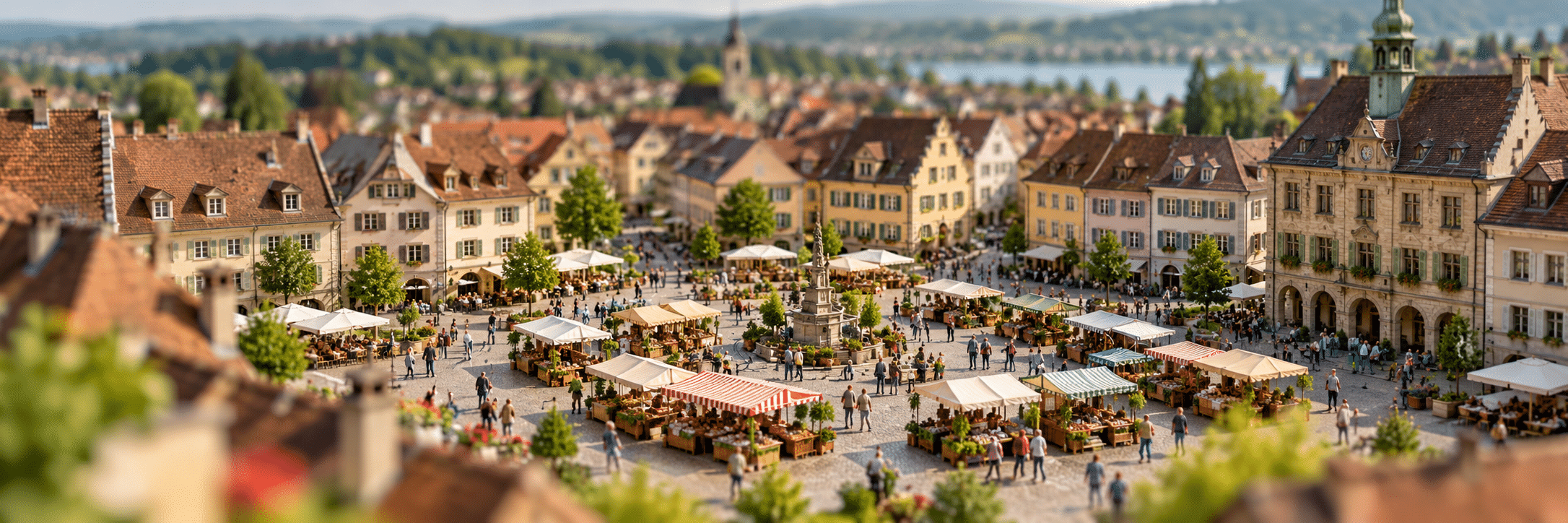
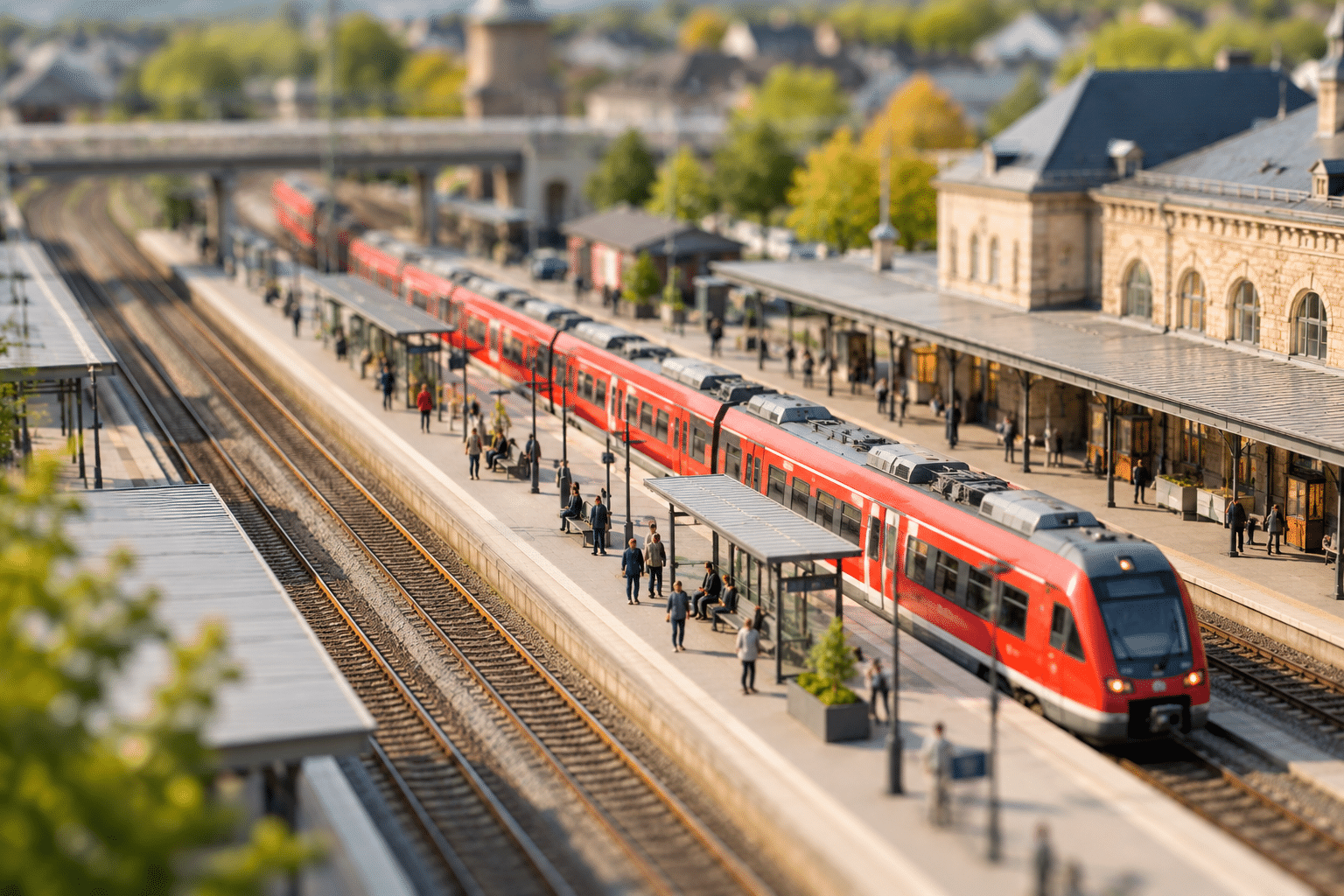
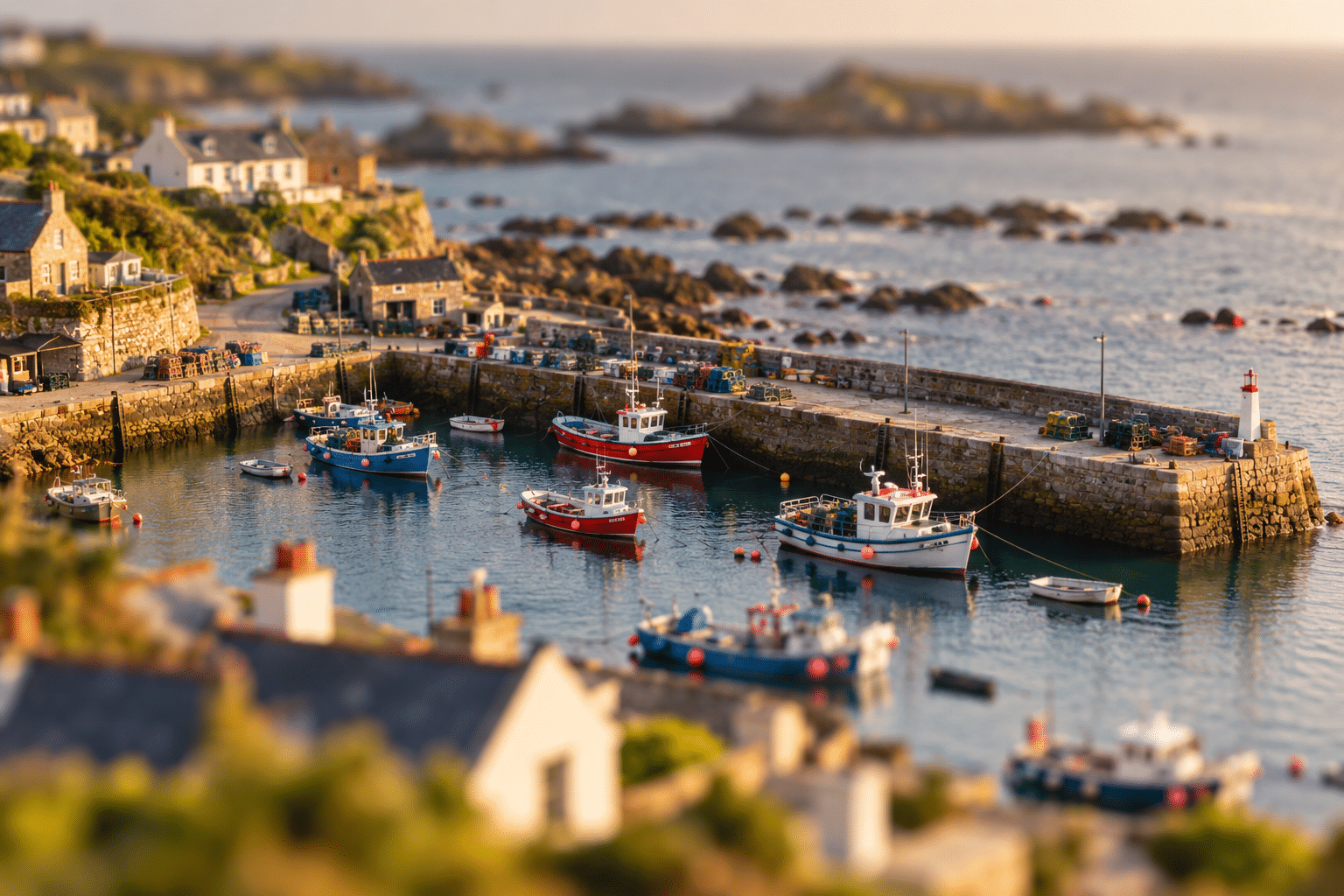
Selective focus can make a large scene resemble a close view of a small model. An elevated view, compact subject arrangement and restrained detail can support that reading. A train yard, town square or harbour may provide understandable scale cues, but the effect depends on their relationship to the sharp and blurred regions.
Place the sharp zone where the main action belongs. A horizontal strip is not obligatory: its direction should suit the scene. Avoid blur that cuts through a tall object arbitrarily while leaving unrelated areas equally sharp. Excessive saturation and toy-like textures can overwhelm the photographic illusion and make every scene look like the same preset.
Capture, editing and generated studies
A digital miniature effect can imitate some visible results, but a blurred image alone does not establish that a tilt-shift lens was used. Record the real capture method when it is known. Do not invent focal length, aperture or lens information for generated images.
The new AI gallery includes both miniature-effect interpretations and architectural or tabletop studies. These are fictional photographic illustrations, not lens tests or evidence of exact optical performance. Their captions state that status. For a prompt, specify viewpoint, intended sharp area, blur transitions and whether upright architecture or apparent miniature scale is the main goal. Those choices are more useful than asking for tilt-shift without explanation.
Positive editorial assessment — AI-authored
Tilt-shift methods can make focus and framing active compositional choices. They support clear architectural description, careful tabletop organization and playful shifts in perceived scale. The strongest results place sharpness where it explains the subject and keep the rest of the image coherent.
Critical editorial assessment — AI-authored
A narrow blur band can become a repetitive gimmick, while careless architectural correction can produce awkward proportions or framing. Improve the image by deciding which problem the movement solves, checking the entire frame and using a subtler effect when the subject already carries interest.
Neutral editorial assessment — AI-authored
Tilt-shift photography describes tools and methods rather than one fixed aesthetic. Its uses range from practical focus control to deliberate miniature illusion. Generated and edited interpretations can illustrate appearances, but reliable claims about optical technique require information about actual capture.
A small poetic detour
Original words from the AOI studio.
Poetry
The city fits within a glance;
the station shrinks beneath the rain.
A narrow place is clear enough
to hold the platform and the train.
Elsewhere the tower stands upright,
its windows quiet, row by row.
The lens decides what space can say;
the picture chooses what we know.
The prompt workshop
Original creative exercises. These prompts create new illustrations, not documentary evidence.
Miniature town square
AI-generated photographic interpretation of a real-scale town square seen from high above, a clear central band of sharp pedestrians and market stalls, gradual blur toward near and far areas, coherent buildings and restrained colour, no text.
Upright architecture
AI-generated architectural photography study of a quiet modern stone façade, level-camera appearance and upright verticals, balanced ground and sky, consistent window geometry, natural daylight, no claim of measured lens performance.
A receding tabletop
AI-generated photographic study of three ceramic cups along a receding tabletop, sharpness following the intended arrangement, soft unobtrusive background, natural side light and plausible contact shadows, no fabricated camera metadata.
Your next inspiration
Discover another art style
Follow a visual thread to the next subject.

Fisheye Lens Photography: Curved Space and Deliberate Exaggeration
Compare selective focus and lens projection.
A smile from the studio
Jokes
The city objected to being called miniature. The focus plane said it was only a matter of perspective.