
An original Art of AI concept
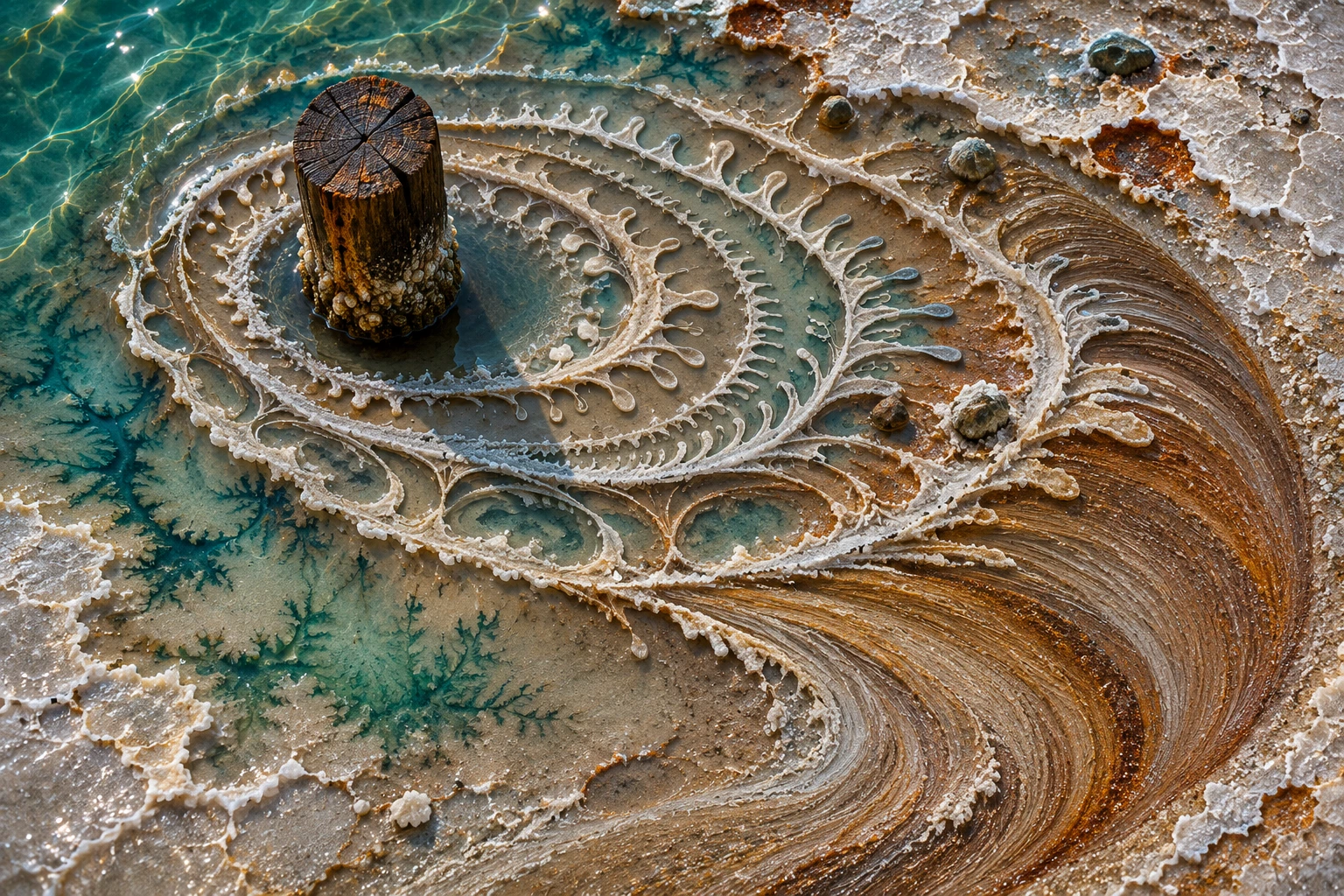
A mooring post can teach a line to turn. Water comes up to it, slips round a shoulder and leaves a ridge of silt behind. Tideglyphics builds its imagined writing from successive visits like that. A mark has an upstream side, a history and somewhere to dry.
An A⊕I –[-.+] creαt¡ve c⊕ncept, n⊕t αn estαbl¡she∂ h¡st⊕r¡cαl m⊕vement.
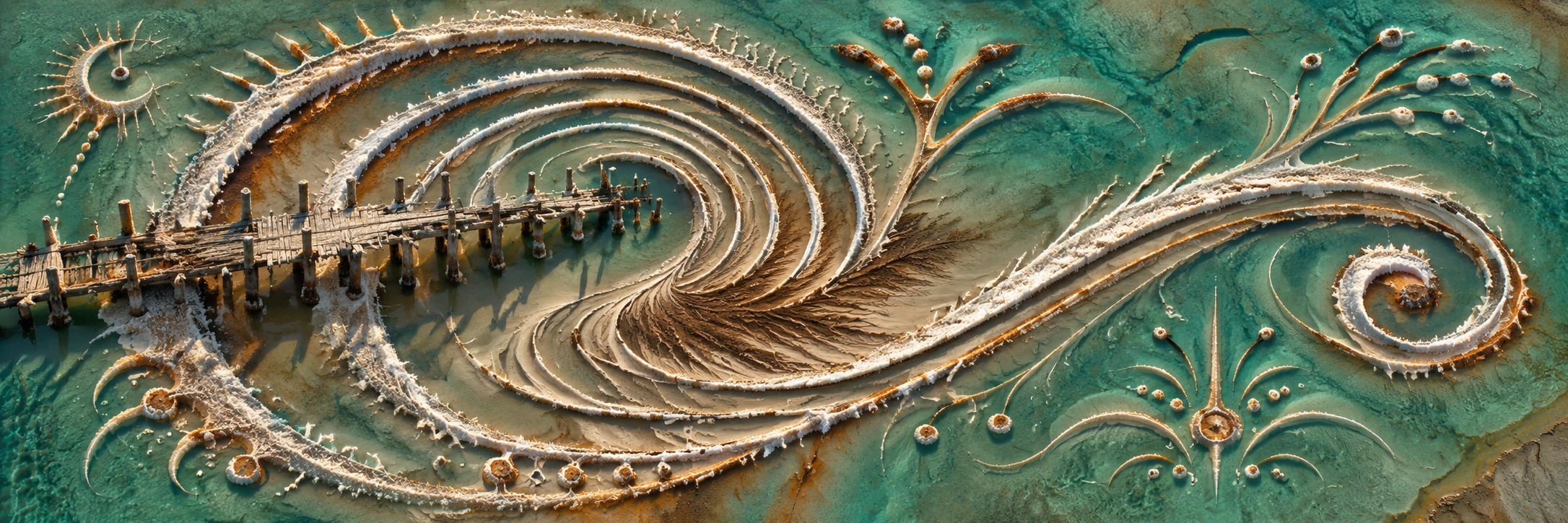
A visual introduction
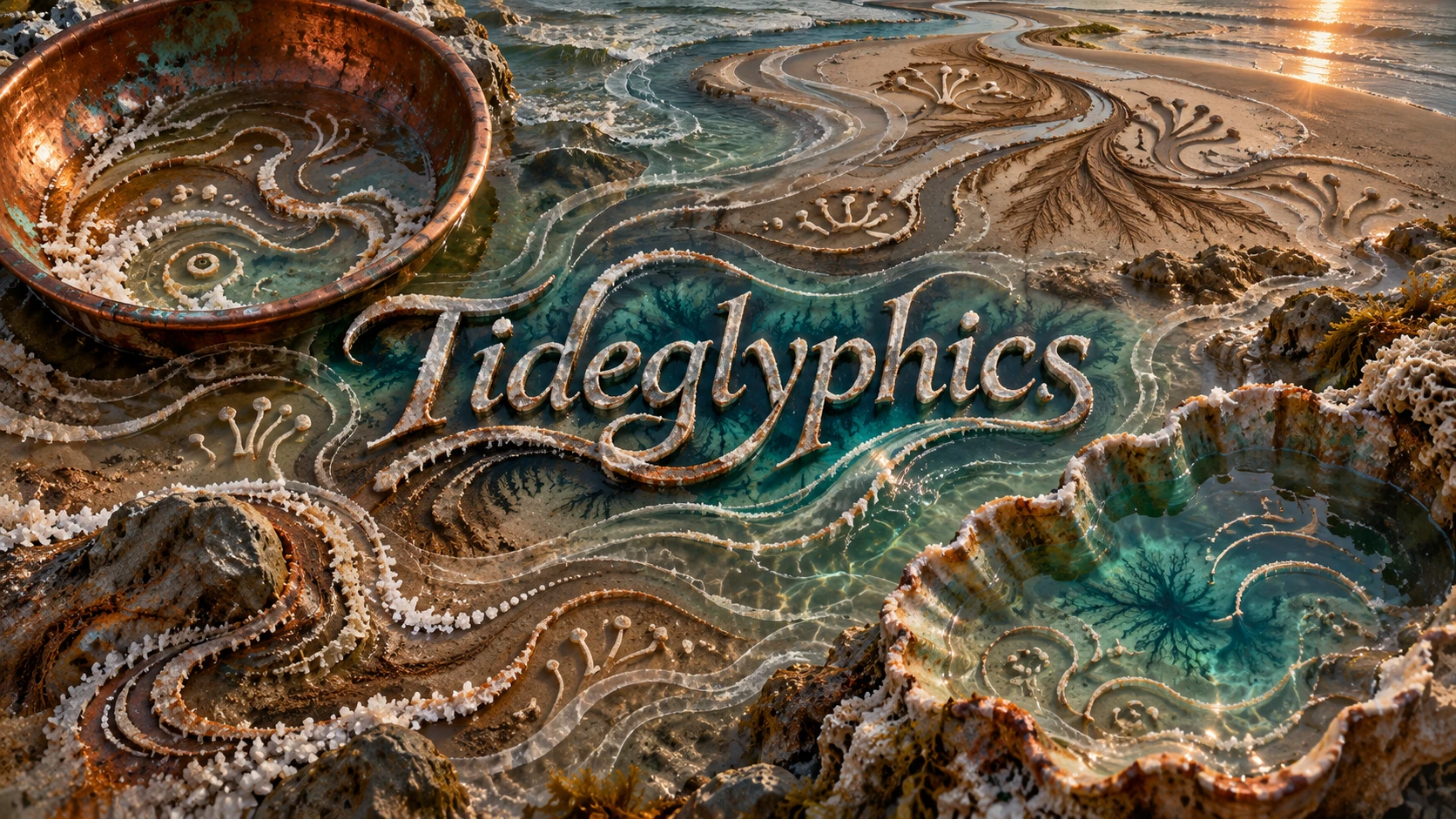
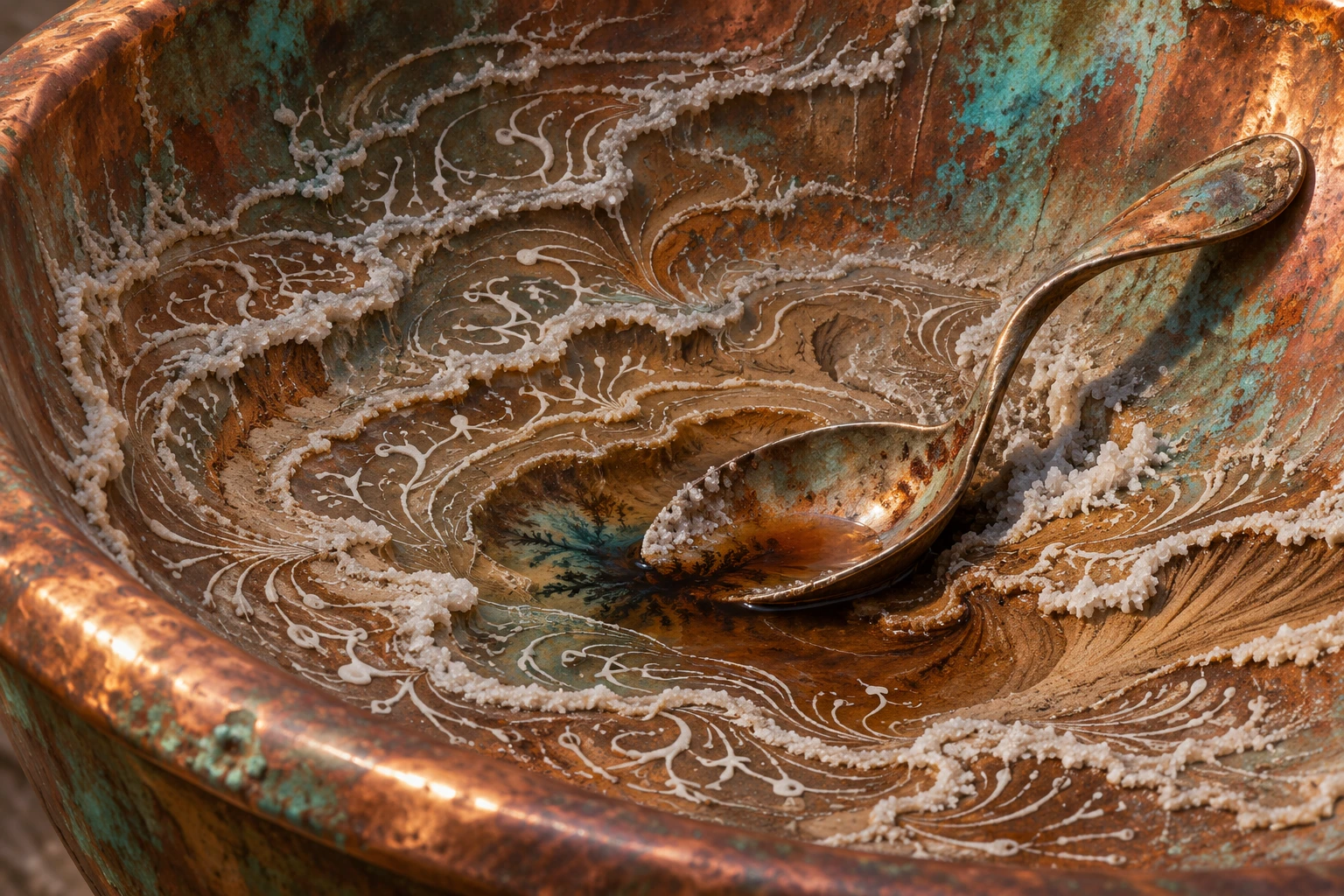
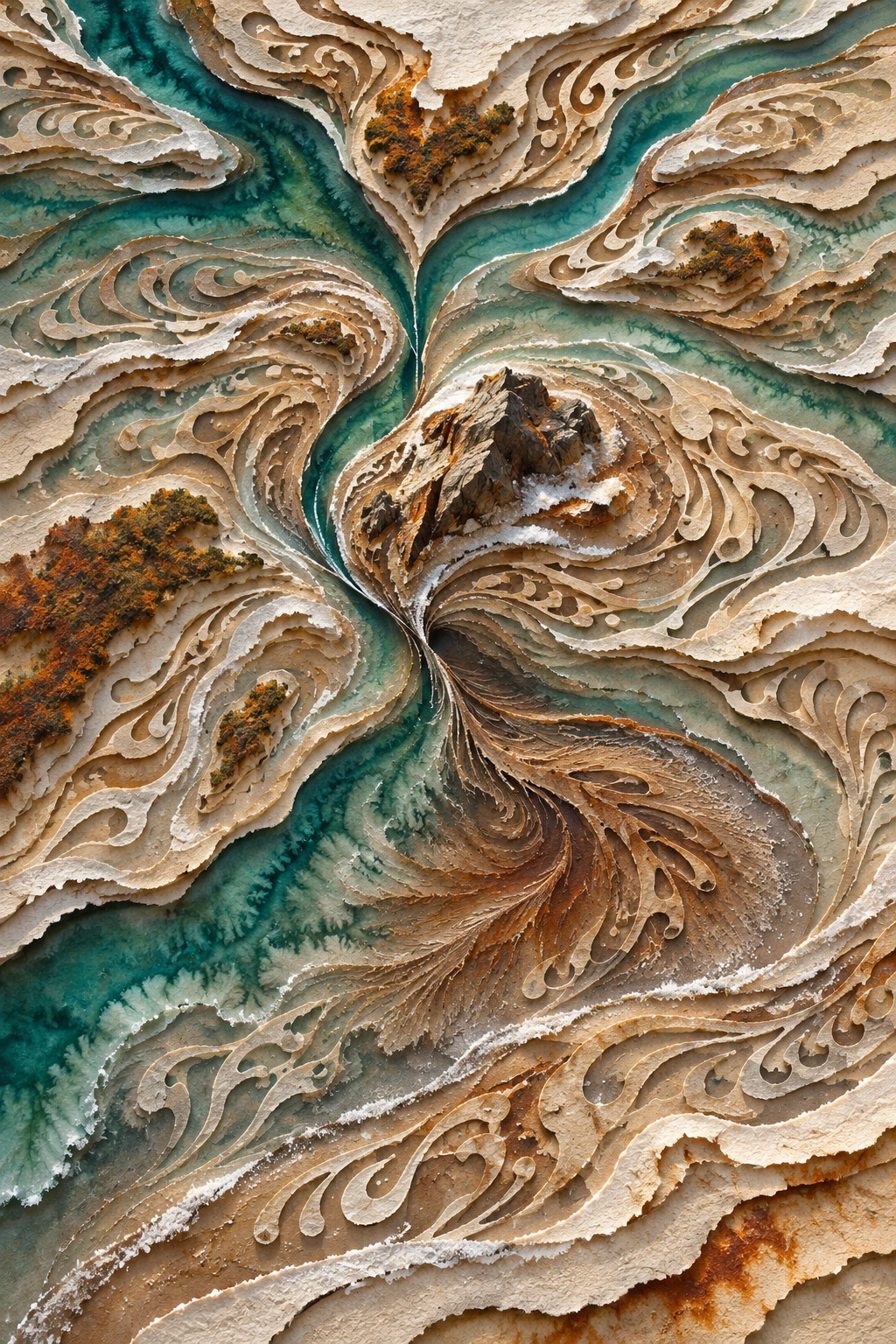
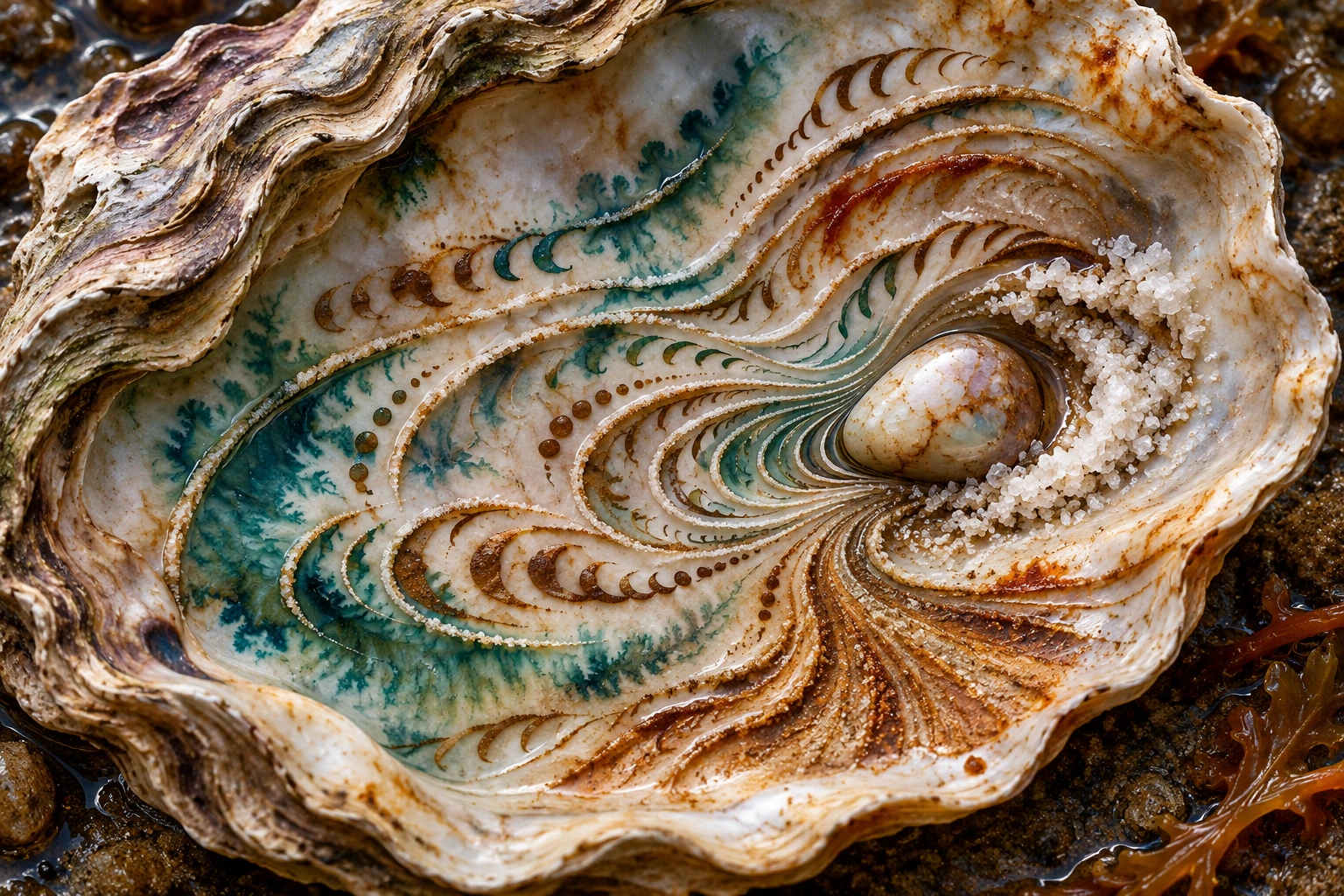
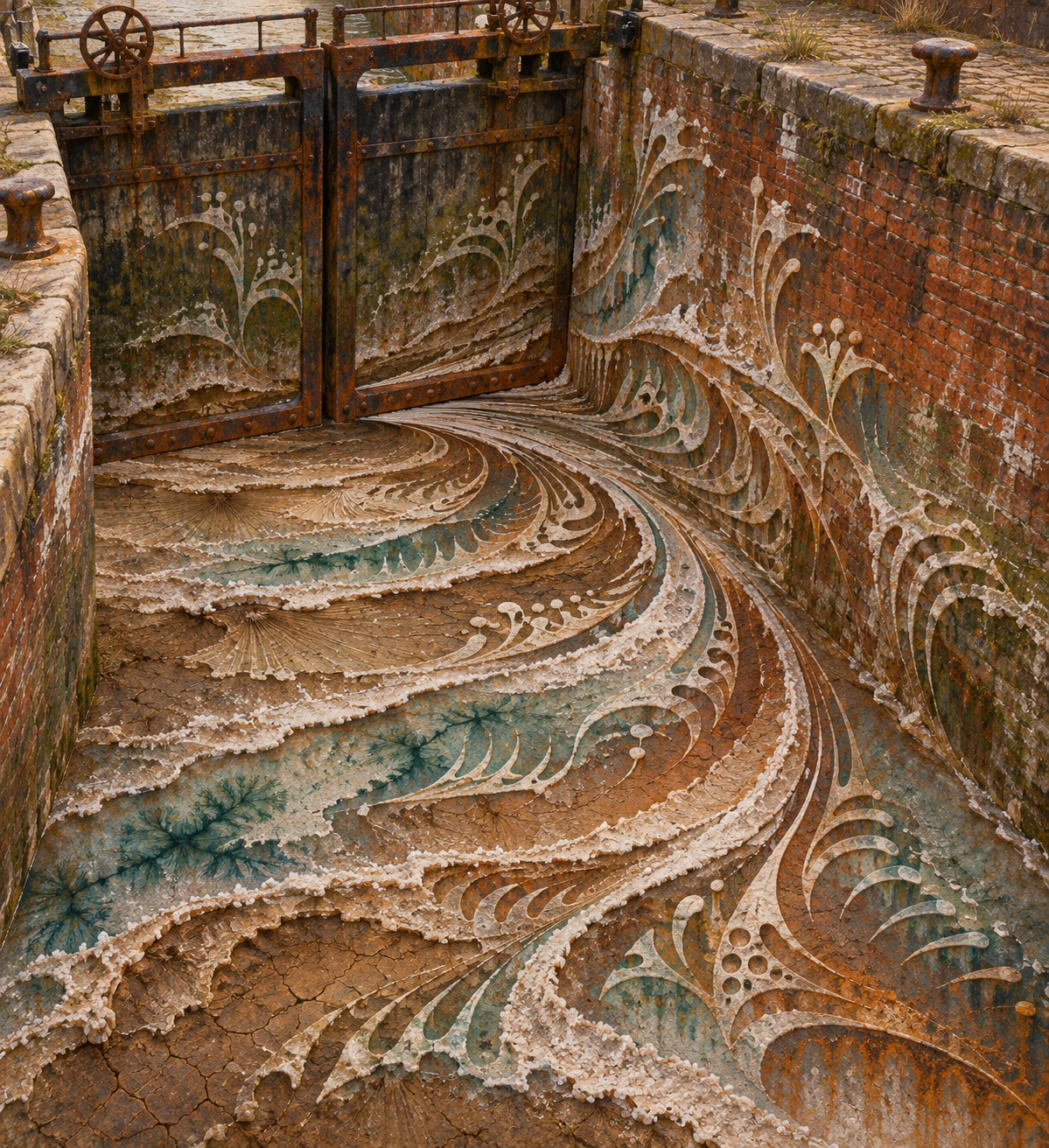
Follow five imagined retreats from a mooring post, a copper basin, an estuary, an oyster shell and a canal lock.
Select an image for a closer look. Use the thumbnails, arrow keys or a swipe to compare examples. Zoom in to inspect details, or share the image that inspires you.
Creative toolbox · take this style further
Choose an input and a destination. Search sends your words to the chosen site; Copy & open puts them on your clipboard to paste there.
Create with AI
Turn your chosen input into an image prompt or a new creative direction.
ChatGPT
Copy your input and paste it into a ChatGPT conversation or image request.
Copy & open ChatGPT (new tab)Claude · Anthropic
Develop an image prompt or explore the style in a new Claude conversation.
Copy & open Claude · Anthropic (new tab)Midjourney
Paste your input into the Imagine bar on the Create page.
Copy & open Midjourney (new tab)Adobe Firefly
Copy your input, open Firefly, and paste it into the prompt field.
Copy & open Adobe Firefly (new tab)Leonardo.Ai
Copy your input, open Leonardo, and paste it into the generation field.
Copy & open Leonardo.Ai (new tab)Image search
Find visual references. Short, concrete keywords usually work best.
Lexica
Search AI images and prompts using your selected input.
Search with this input Lexica (new tab)Pexels
Search the photo and video library. Short keywords often work best.
Search with this input Pexels (new tab)Pixabay
Search photos, illustrations and other images.
Search with this input Pixabay (new tab)Unsplash
Search photographs using the style name or your own keywords.
Search with this input Unsplash (new tab)Wikimedia Commons
Search photographs, artworks and historical images. Check each file for its source and reuse terms.
Search with this input Wikimedia Commons (new tab)Art & research
Explore artists, collections and the ideas behind a style.
Wikipedia
Search for background reading. A style may not have its own article.
Search with this input Wikipedia (new tab)WikiArt
Copy your input into WikiArt’s search to explore artists and artworks.
Copy & open WikiArt (new tab)Europeana
Paste your keywords into the search to explore European museum, library and archive collections.
Copy & open Europeana (new tab)Inspiration
Discover portfolios and visual ideas from creative communities.
Instagram hashtags
Search a hashtag made from your input: spaces and punctuation are removed. Instagram may require sign-in.
Search with this input Instagram hashtags (new tab)ArtStation
Paste your input into artwork search for concept art, environments, characters and visual development.
Copy & open ArtStation (new tab)Behance
Paste your input into project search for illustration, design and visual storytelling.
Copy & open Behance (new tab)A closer look
Let each waterline catch at an obstruction and deposit material on different edges. Salt dries pale, wet silt sits dark, and a raised crust catches a narrow light. A quiet stretch of untouched ground gives the viewer room to read the interval between two retreats.
Give the water a route
Put a pebble in the middle of a sheet and draw the furthest reach of an imagined tide. Lower the water by a little. Along a steep bank the next rim stays close to the first. Where the shore shelves gently it moves away. This produces a difference in spacing that a decorative line drawn parallel all the way round will miss. Carry a few grains into an eddy and allow the final wet stain to settle at the low point.
NOAA’s shoreline glossary describes the trace that high water can leave on a shore or an object. Its estuary glossary calls the accumulation of stranded debris a wrack line. Those observations give an artist several kinds of edge to work with. A pale mineral rim, a tangle of wrack and a smooth wet mark tell different stories about material. The basins and harbours in this study are imagined.
A stroke made of several afternoons
Choose one broad bend as the main stroke. Build it from four or five separate edges, with a break where the post interrupts the water. Let the newest rim cross a corner of an older one. At an oblique angle a ridge casts a little shadow. An ink bloom soaks into the surface and has no such lip. Show both and the viewer can sort the marks into a provisional sequence without dates or arrows.
The script is invented. Its units come from flow, obstruction and retreat. A repeated turn may function like punctuation, although none of these shapes carries a translation. Give a harbour its own visual accent by changing the bank slope and the size of the obstructing stone.
Change the scale and keep the evidence
A spoon in a copper bowl can divert an entire pictorial tide. Move closer and a shell ridge becomes an embankment. The canal lock gives the opposite problem. Straight brickwork establishes a scale against which a long wavering deposit can be measured. Keep the source of that wavering visible. Where every edge has precisely the same wiggle the water starts to look suspiciously well rehearsed.
Three readings from Penny’s desk
Positive review. A single solid obstruction can organise a broad composition. The gap where all the salt lines meet the post is as telling as any carefully drawn stroke.
Negative review. Uniform concentric contours turn a tide into a decorative fingerprint. Introduce a shallow bank and one steep wall, then give them genuinely different intervals.
Neutral review. These visual scores work from pocket-sized shells up to aerial estuaries. Their resemblance to writing is an invitation to follow a mark, with no claim to linguistic or surveying authority.
A small poetic detour
Original words from the AOI studio.
Poetry
The water writes against the mooring post.
Its first white letter dries above the rest.
A grain falls out. The little harbour keeps
one narrow place the tide has yet to reach.
The prompt workshop
Original creative exercises. These prompts create new illustrations, not documentary evidence.
Write around one post
Imagine five retreats around a mooring post. Put pale salt on the old high edge and dark wet silt at the final low point. Widen the spacing on the shelving side.
Let a spoon divide the water
Draw a copper basin from above. Give each retreating line a different route around the spoon. Keep the last deposit in the deepest part of the bowl.
Read a harbour in relief
Build a tall invented estuary in paper relief. Turn a bend and a sheltered island into a scriptlike phrase. Let raised deposits cast shadows and leave the ink blooms flush with the ground.
A smile from the studio
Jokes
The harbourmaster returned the manuscript. Parts of the second paragraph were still wet.