
An original Art of AI concept
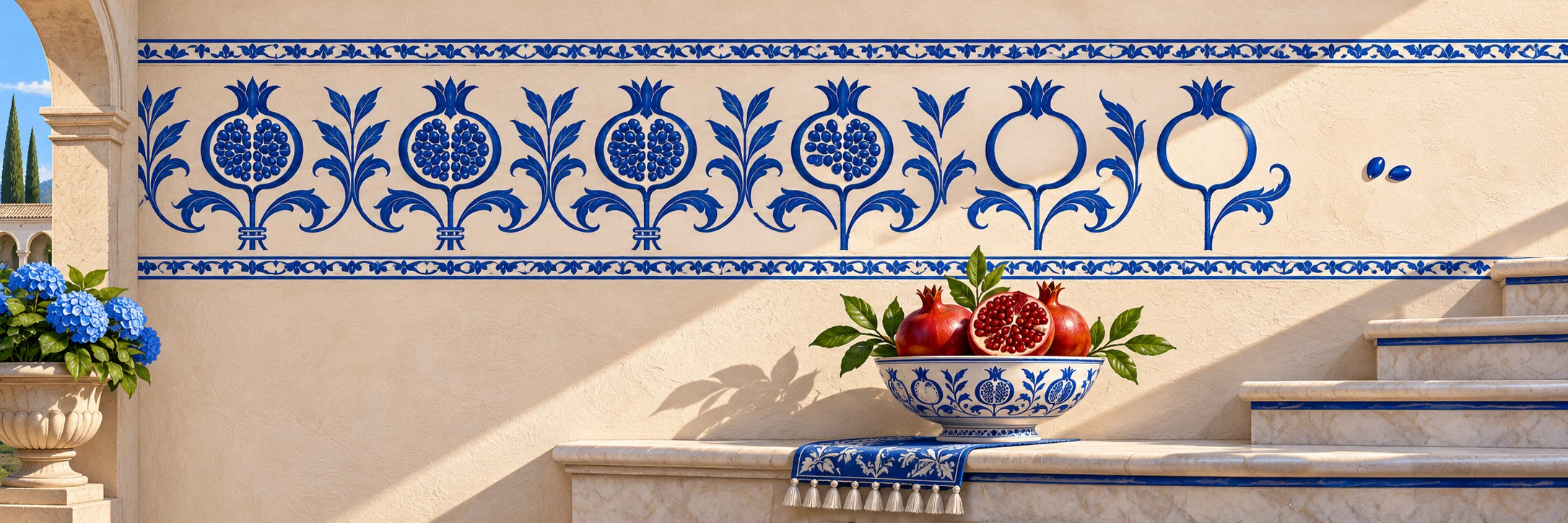
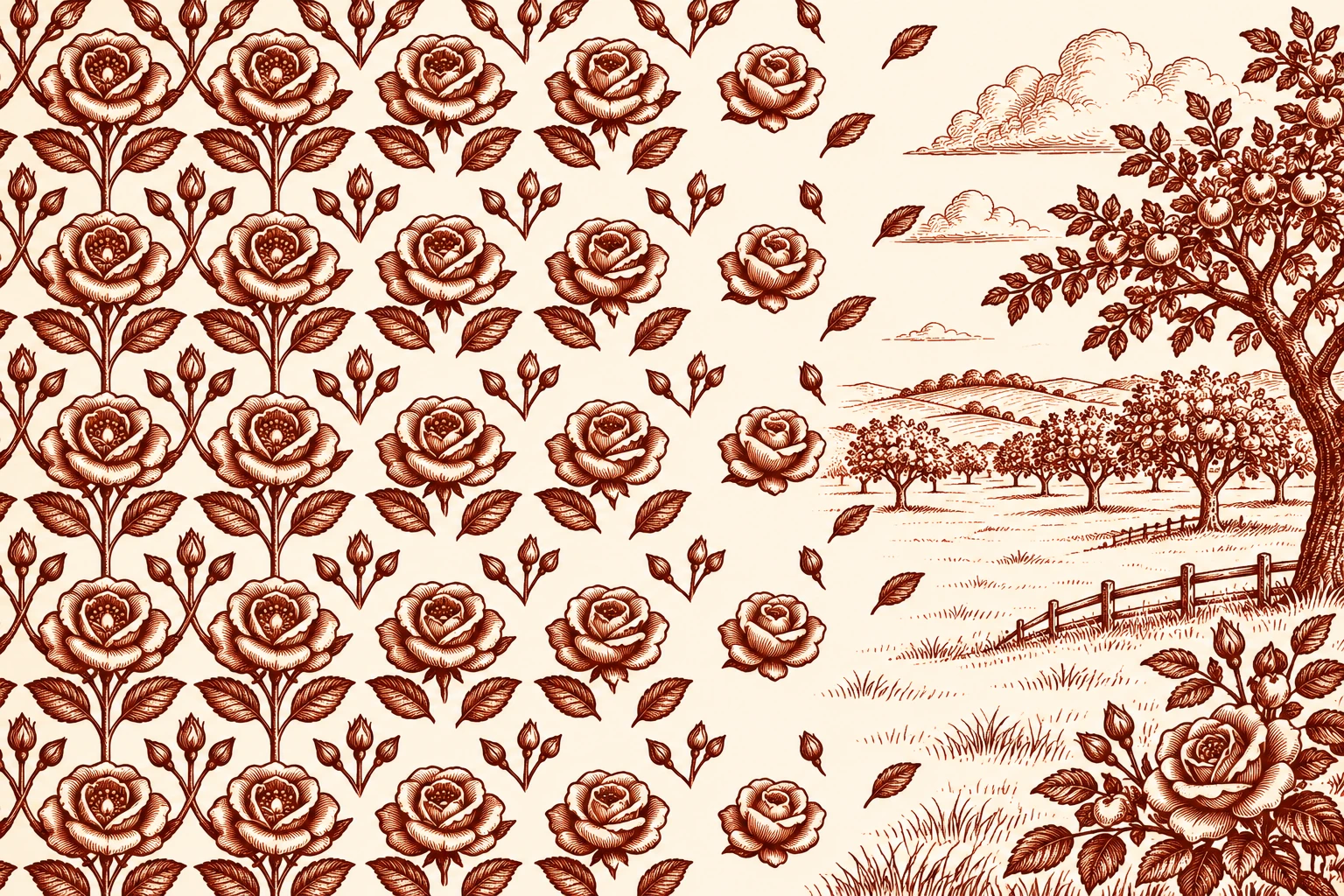
The first three pomegranates agree on practically everything. The fourth has forgotten the clasp that joins it to its neighbour. Farther down the wall even the seeds go absent. Ornamnesia lets us watch an ornament lose its instructions while its ink stays fresh.
An A⊕I –[-.+] creαt¡ve c⊕ncept, n⊕t αn estαbl¡she∂ h¡st⊕r¡cαl m⊕vement.
A visual introduction
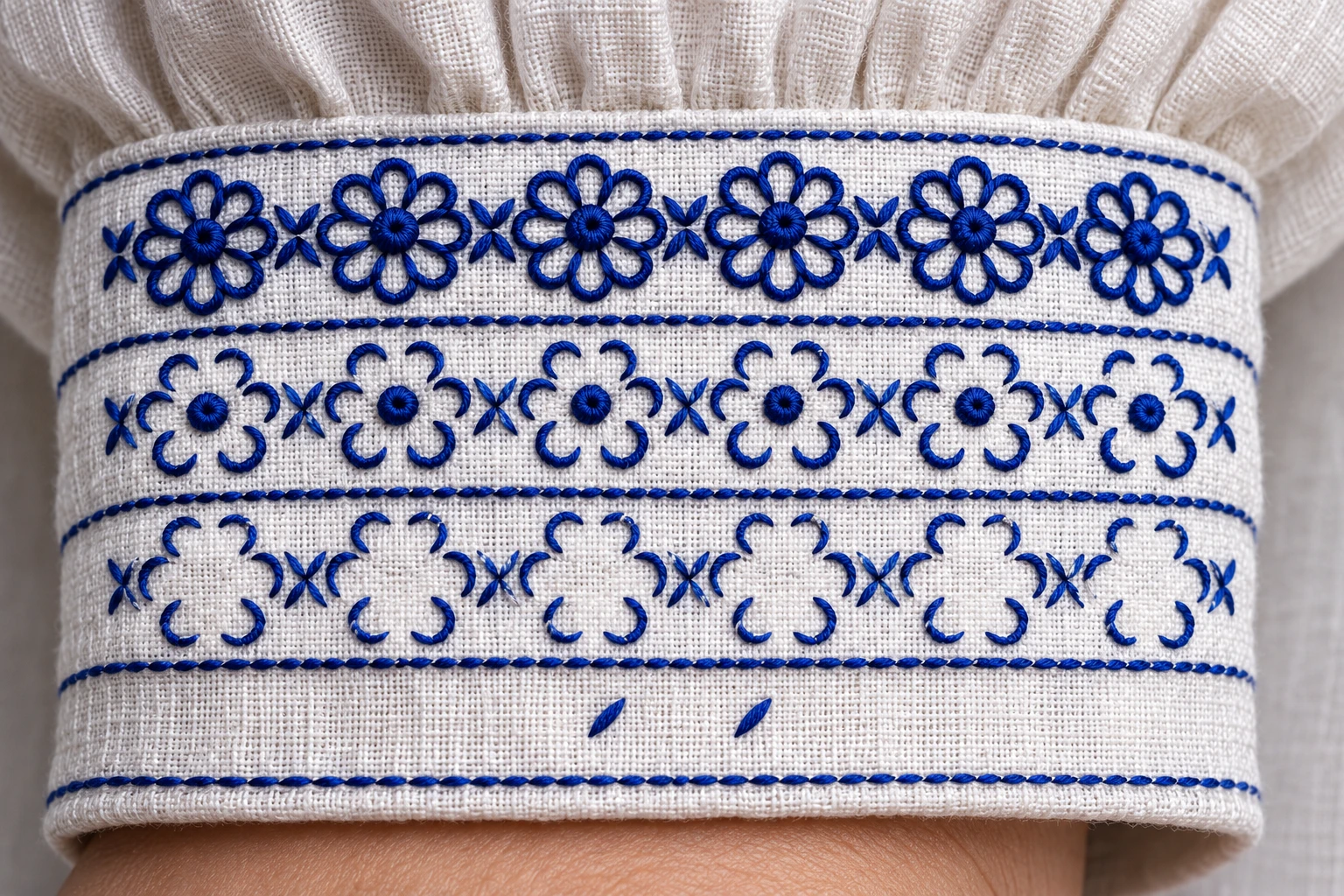
Five studies compare different last survivors, including tile arches, a wing hook and two blue stitches on undyed linen.
Select an image for a closer look. Use the thumbnails, arrow keys or a swipe to compare examples. Zoom in to inspect details, or share the image that inspires you.

Creative toolbox · take this style further
Choose an input and a destination. Search sends your words to the chosen site; Copy & open puts them on your clipboard to paste there.
Create with AI
Turn your chosen input into an image prompt or a new creative direction.
ChatGPT
Copy your input and paste it into a ChatGPT conversation or image request.
Copy & open ChatGPT (new tab)Claude · Anthropic
Develop an image prompt or explore the style in a new Claude conversation.
Copy & open Claude · Anthropic (new tab)Midjourney
Paste your input into the Imagine bar on the Create page.
Copy & open Midjourney (new tab)Adobe Firefly
Copy your input, open Firefly, and paste it into the prompt field.
Copy & open Adobe Firefly (new tab)Leonardo.Ai
Copy your input, open Leonardo, and paste it into the generation field.
Copy & open Leonardo.Ai (new tab)Image search
Find visual references. Short, concrete keywords usually work best.
Lexica
Search AI images and prompts using your selected input.
Search with this input Lexica (new tab)Pexels
Search the photo and video library. Short keywords often work best.
Search with this input Pexels (new tab)Pixabay
Search photos, illustrations and other images.
Search with this input Pixabay (new tab)Unsplash
Search photographs using the style name or your own keywords.
Search with this input Unsplash (new tab)Wikimedia Commons
Search photographs, artworks and historical images. Check each file for its source and reuse terms.
Search with this input Wikimedia Commons (new tab)Art & research
Explore artists, collections and the ideas behind a style.
Wikipedia
Search for background reading. A style may not have its own article.
Search with this input Wikipedia (new tab)WikiArt
Copy your input into WikiArt’s search to explore artists and artworks.
Copy & open WikiArt (new tab)Europeana
Paste your keywords into the search to explore European museum, library and archive collections.
Copy & open Europeana (new tab)Inspiration
Discover portfolios and visual ideas from creative communities.
Instagram hashtags
Search a hashtag made from your input: spaces and punctuation are removed. Instagram may require sign-in.
Search with this input Instagram hashtags (new tab)ArtStation
Paste your input into artwork search for concept art, environments, characters and visual development.
Copy & open ArtStation (new tab)Behance
Paste your input into project search for illustration, design and visual storytelling.
Copy & open Behance (new tab)A closer look
Establish a repeat with a recognisable centre and a link between units. Omit one structural detail at a time. Keep the surviving marks crisp and equally coloured. Linen, plaster, maple and biscuit clay acquire space and presence as the pattern gets thinner.
Print a motif that can be taken apart
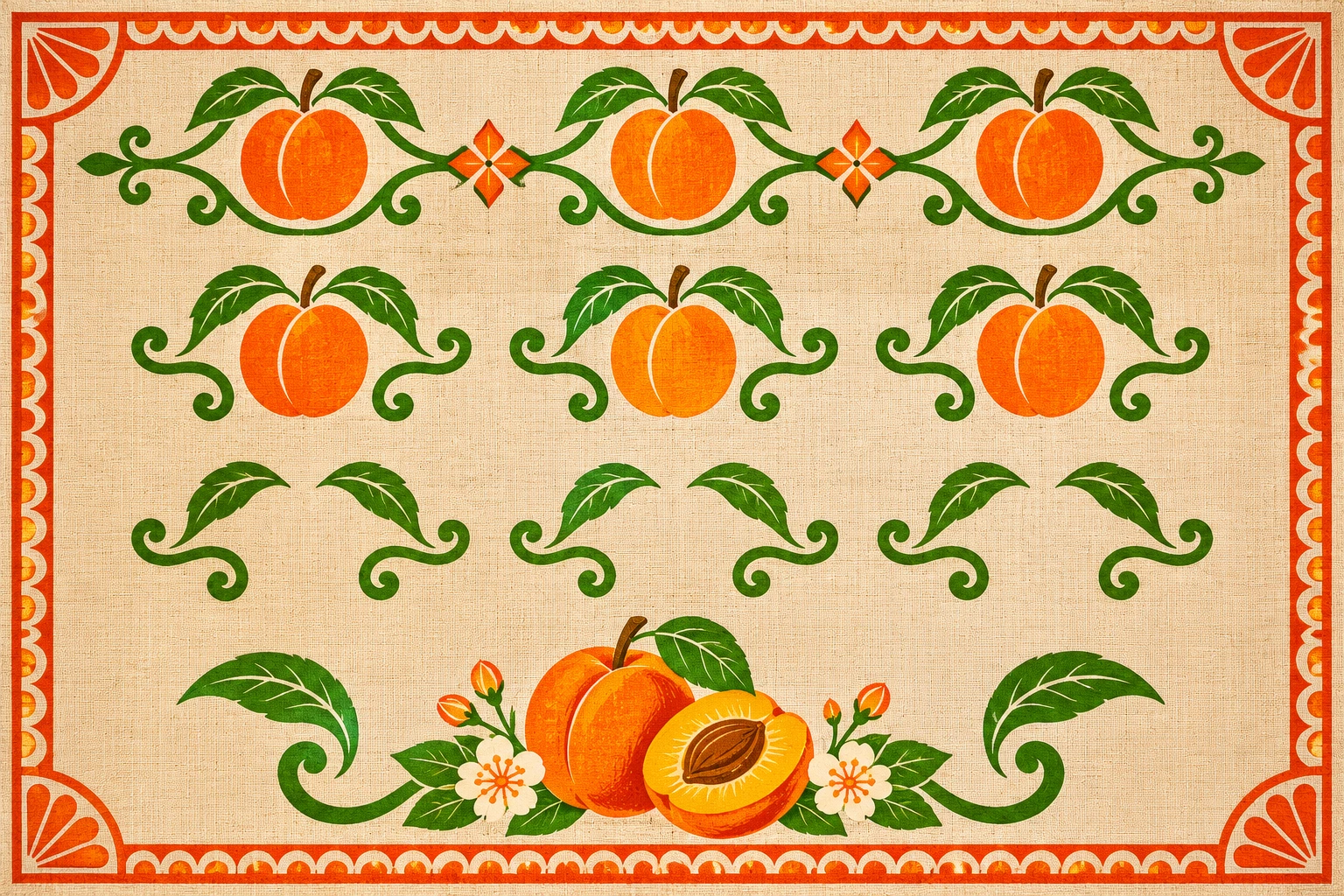
A convincing lapse requires a good memory at the outset. Draw one apricot, two leaves and a stem that joins the next fruit. Repeat it faithfully three times at the same interval. Now cover a joining stem with a slip of matching ground. The eye can supply that connection for quite a distance. Cover a centre as well and the leaves begin to look like independent objects. That is the moment this original AOI style goes looking for.
The V&A describes the different blocks used for the colours of a printed wallpaper and the pins that helped keep them aligned. Imagine leaving a block out on purpose. Then go a step further and omit a relationship that crosses colours, such as the little hook that holds one sprig to the next. The second omission is often stranger to look at.
Give the ground a promotion
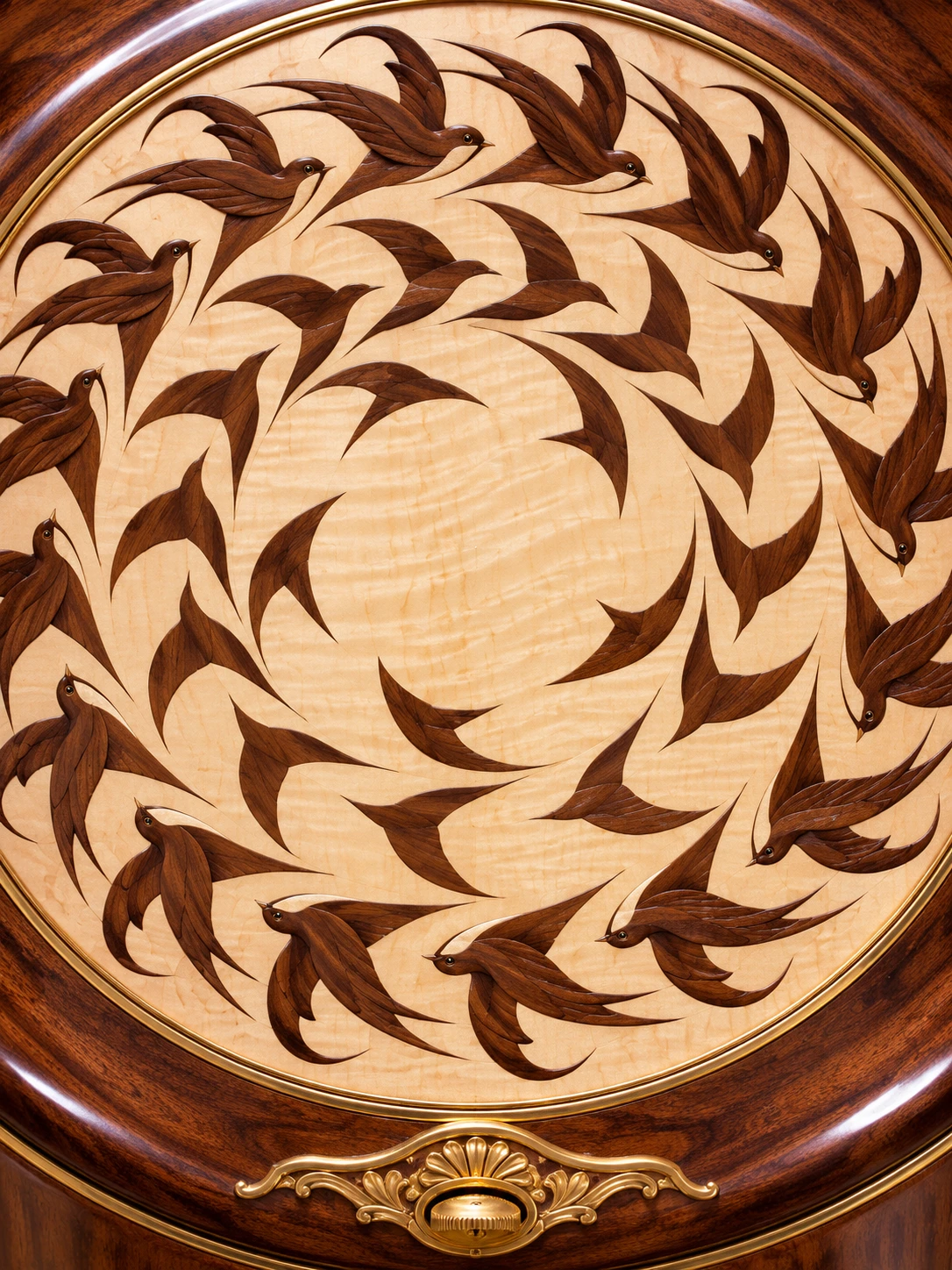
Work on a material worth uncovering. The grain under a marquetry swallow can continue right through the place its neighbour should occupy. A linen cuff can keep its warp and weft clear under a pair of orphan stitches. On a tiled wall the grout carries a steady beat after the green decoration has lost its way. Those surfaces supply a second sort of order, and the exchange between the two gives the picture its ending.
A fade through fifty shades of pale is a different operation. Lift an isolated mark from the sparse end in imagination and return it to the first repeat. Its colour and edge should still fit. Change only what the pattern remembers to do.
Choose the last thing left
Keeping the seed pits makes a pomegranate pattern end as a small constellation. Keeping the connecting stems makes it end as an empty trellis. The same number of omissions can therefore produce opposite emotional effects. Try both endings on tracing paper before deciding which one deserves the exposed wall. For a corridor viewed in perspective, plot the changes on a flat elevation first. Otherwise a missing motif can pass for a small motif lost in the distance.
Three readings from Penny’s desk
Positive review. It takes very little ink to suggest a whole missing orchard once the reader knows the repeat. The bare surface has been patiently earning its turn.
Negative review. An indiscriminate eraser gives the eye no way to discover what has been lost. If the first three motifs already disagree, the final patch of linen has nothing specific to remember.
Neutral review. Read horizontally for a sequence or put the omissions around a lid for a circular experience. On a circle the encounter with the first complete repeat becomes part of the work.
A small poetic detour
Original words from the AOI studio.
Poetry
The first fruit holds its neighbour by the stem.
The fourth lets go. The seventh keeps a leaf.
The linen, having waited through them all,
shows what a space between two threads can hold.
The prompt workshop
Original creative exercises. These prompts create new illustrations, not documentary evidence.
Forget one link
Print a row of seven apricot sprigs on linen. Establish three whole repeats. Omit stems, then fruit centres, then one leaf. Keep the last two marks as sharp as the first.
Let the grout count
Carry a green tile medallion around a hallway. Remove the inner arch and then alternate medallions while the grout joints continue at their ordinary spacing.
Choose a survivor
Make two marquetry lids from the same repeating swallow. Leave only flight feathers on one and only the links between the birds on the other. Compare the shapes of the exposed wood.
A smile from the studio
Jokes
I asked for another roll of the wallpaper. The supplier remembered selling it but couldn’t bring the pattern to mind.