
An original Art of AI concept
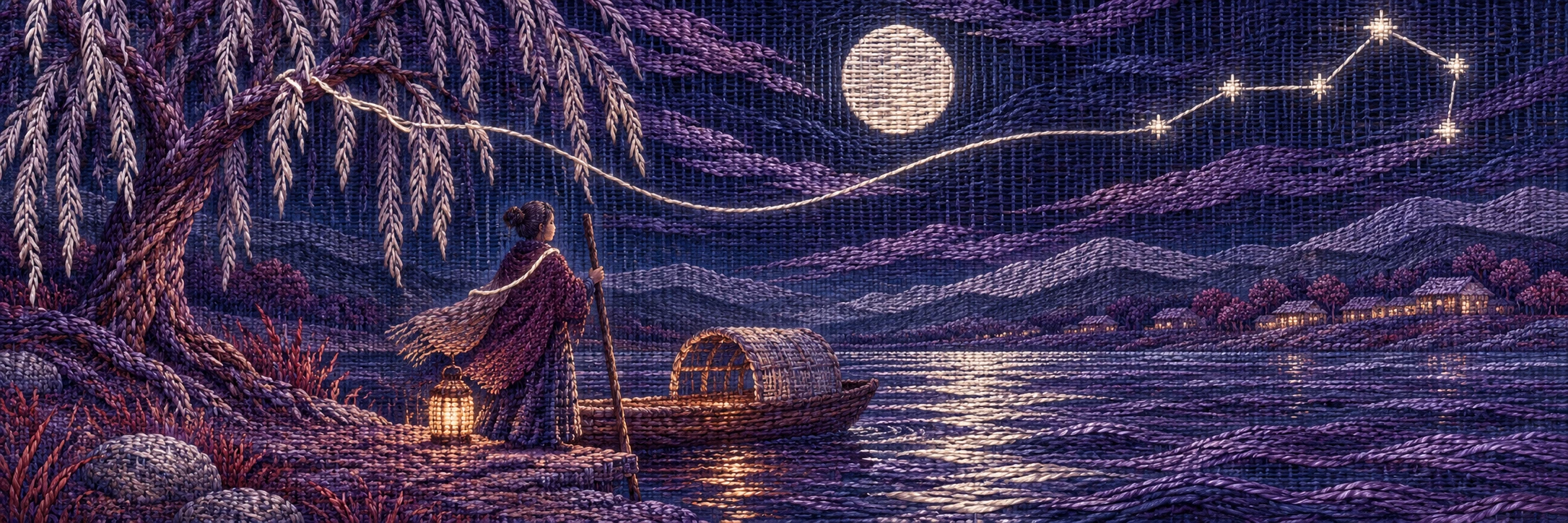
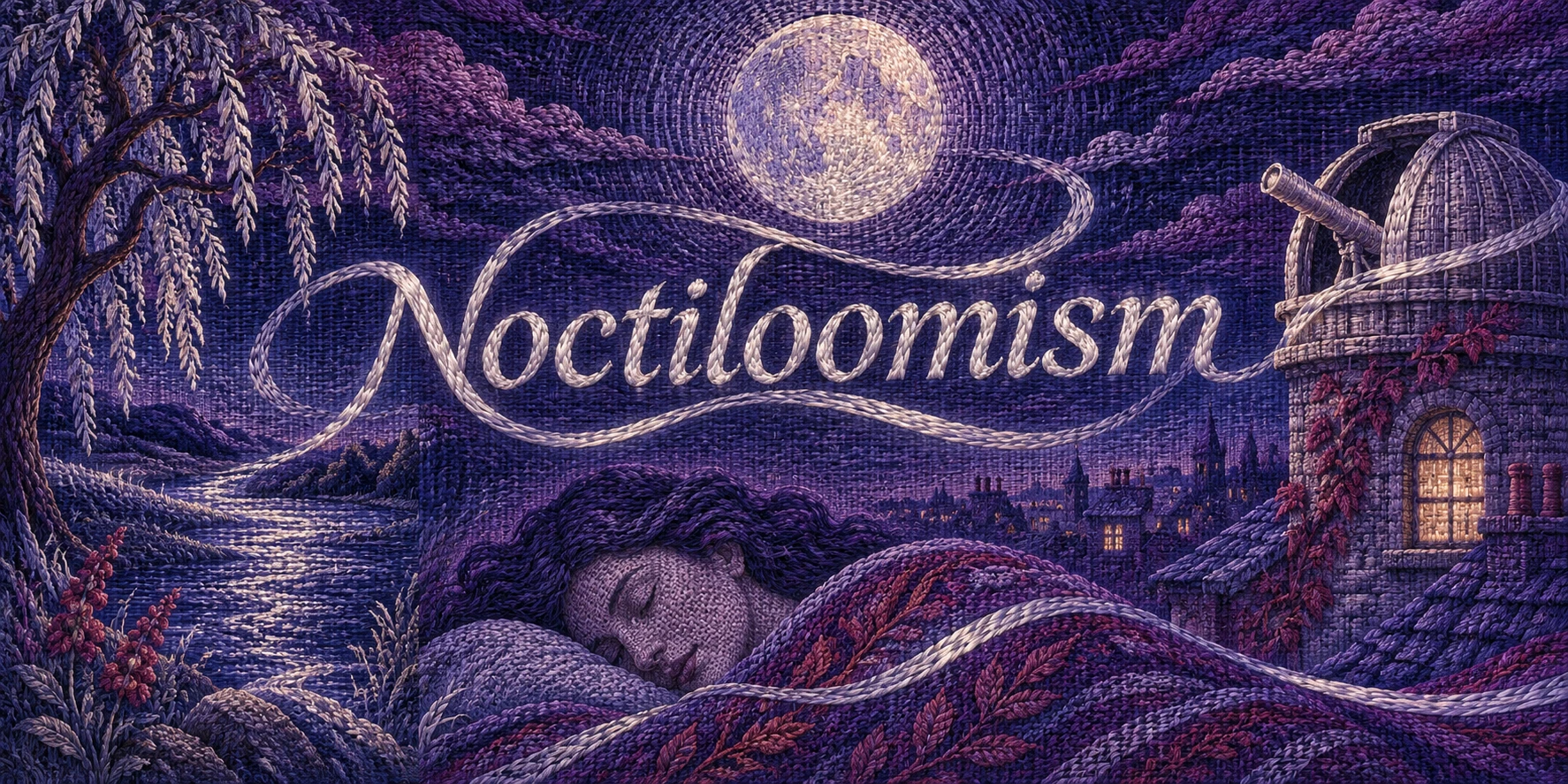
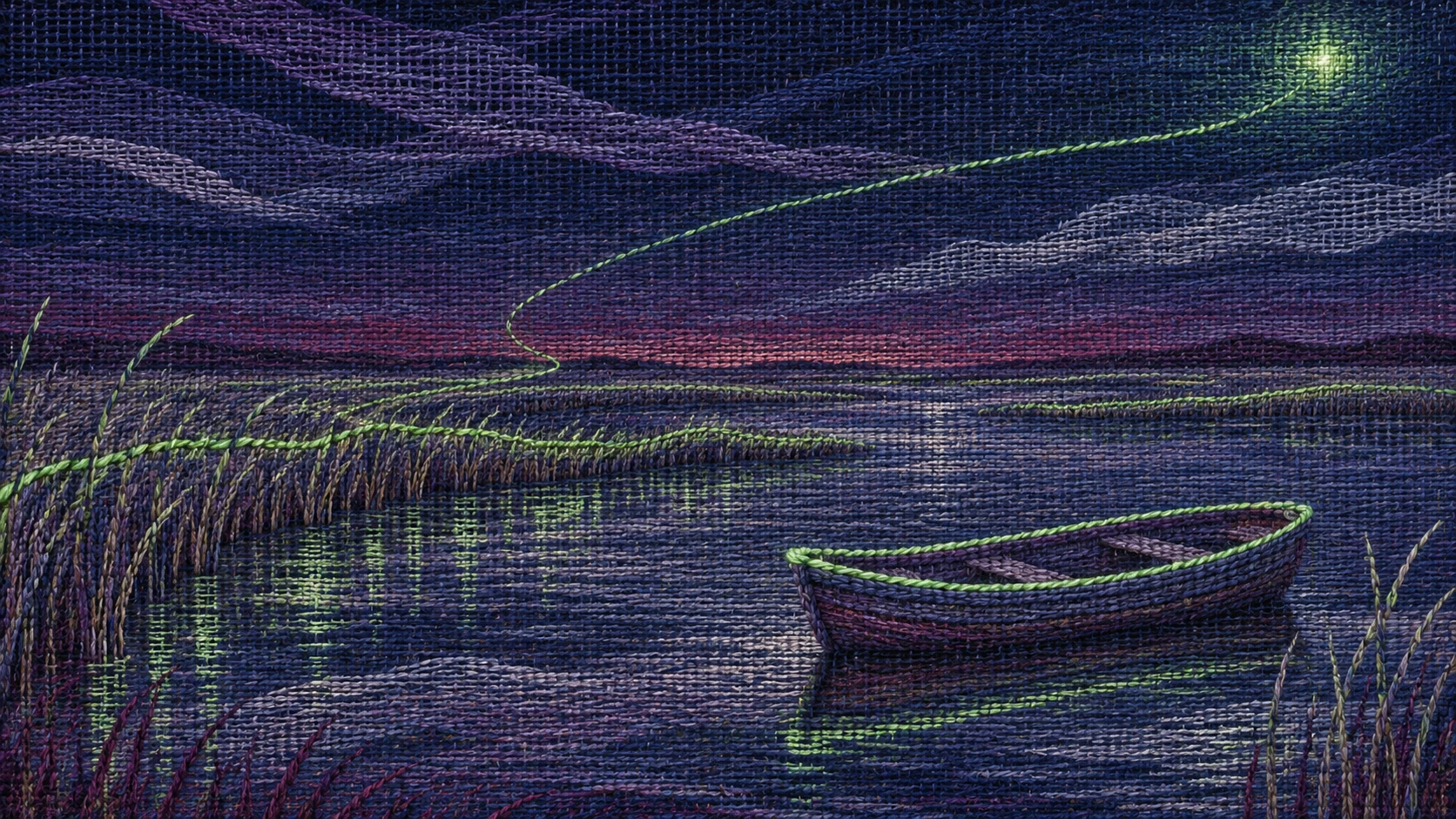
Put a fingertip on the ferryperson’s shoulder and follow the pale yarn. It goes out along a branch, takes a turn above the water and reappears as a few points of starlight. In Noctiloomism the whole night shares a cloth.
An A⊕I –[-.+] creαt¡ve c⊕ncept, n⊕t αn estαbl¡she∂ h¡st⊕r¡cαl m⊕vement.
A visual introduction
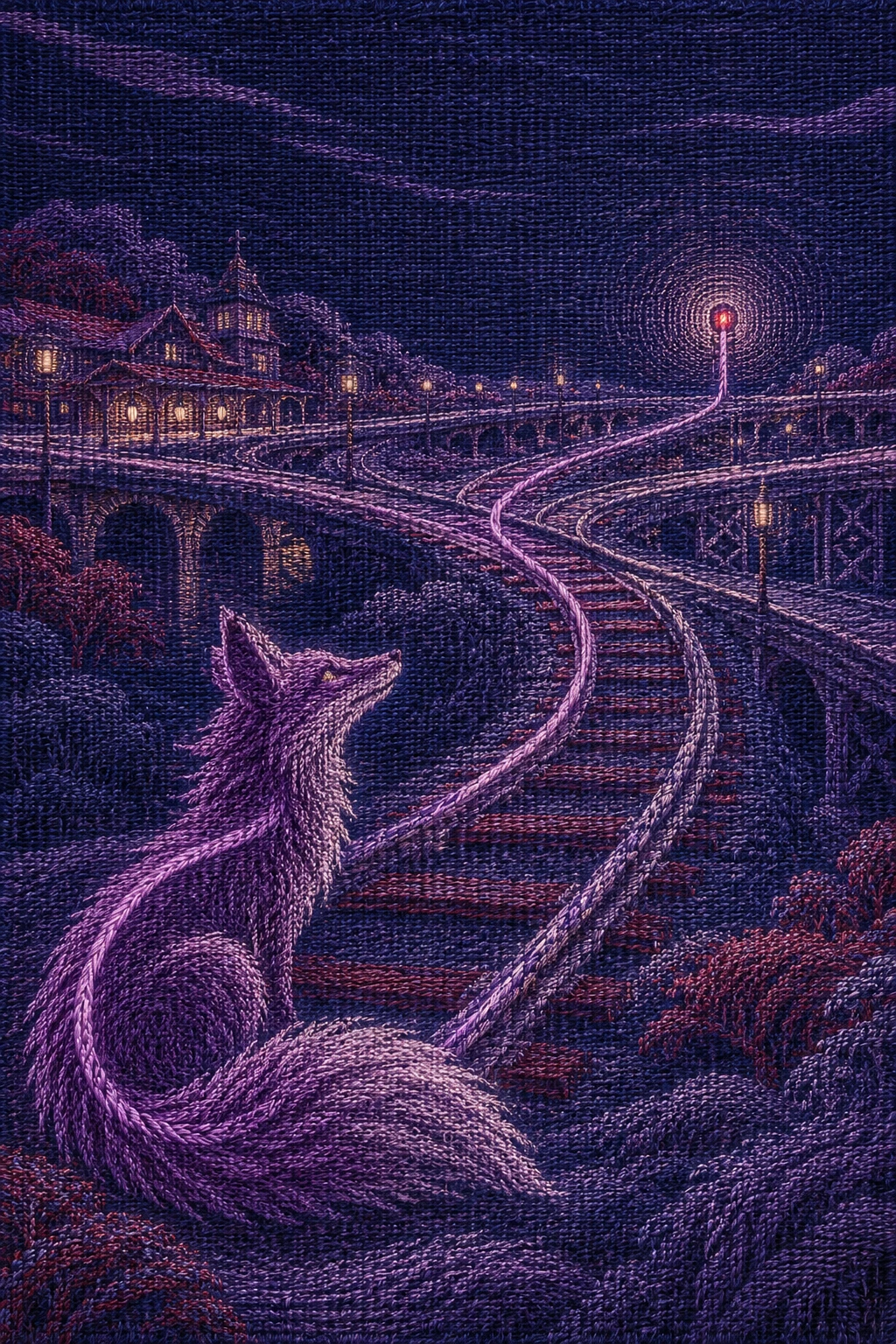
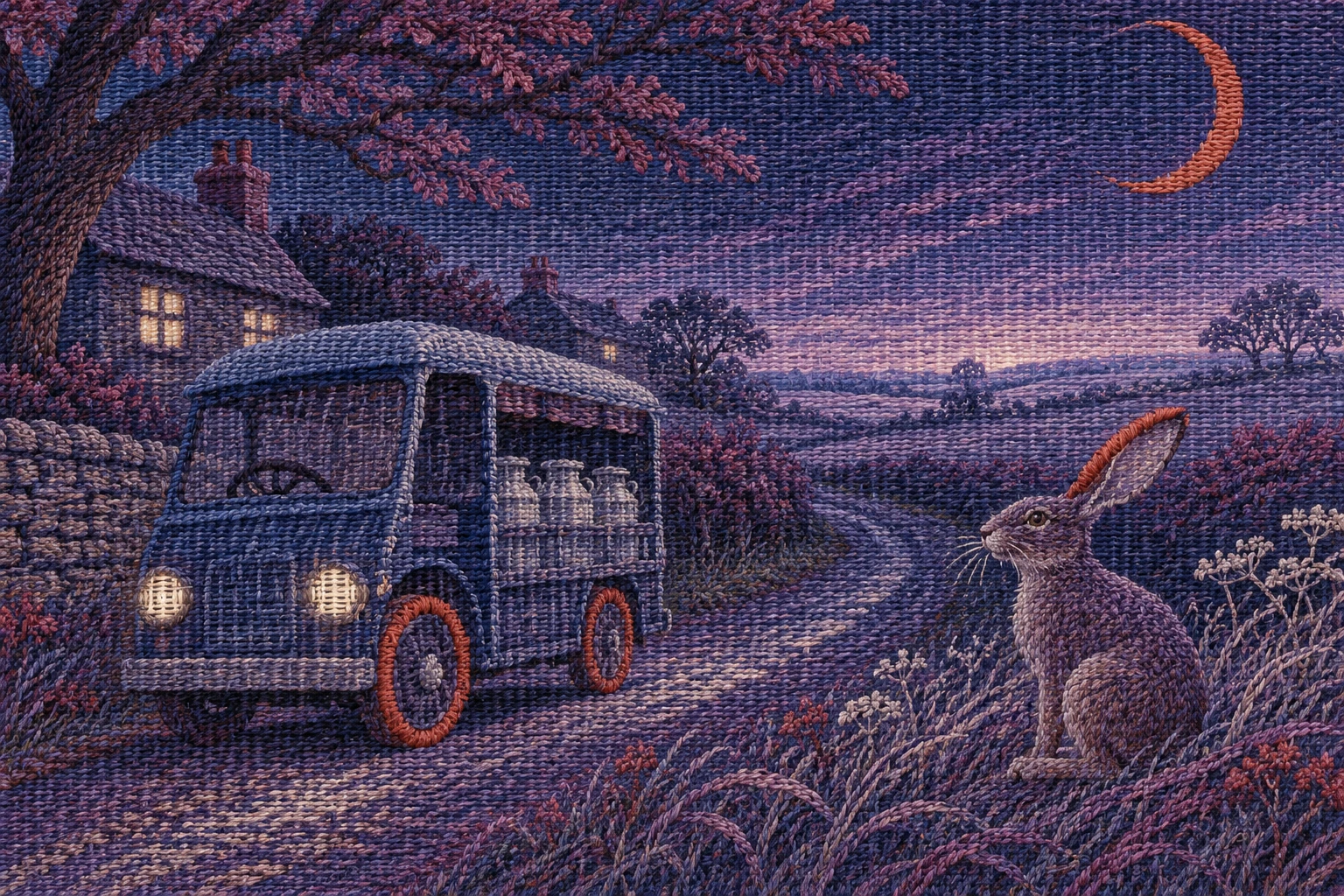
Five imagined night scenes invite you to trace a single yarn across a change of scale, subject or distance.
Select an image for a closer look. Use the thumbnails, arrow keys or a swipe to compare examples. Zoom in to inspect details, or share the image that inspires you.
Creative toolbox · take this style further
Choose an input and a destination. Search sends your words to the chosen site; Copy & open puts them on your clipboard to paste there.
Create with AI
Turn your chosen input into an image prompt or a new creative direction.
ChatGPT
Copy your input and paste it into a ChatGPT conversation or image request.
Copy & open ChatGPT (new tab)Claude · Anthropic
Develop an image prompt or explore the style in a new Claude conversation.
Copy & open Claude · Anthropic (new tab)Midjourney
Paste your input into the Imagine bar on the Create page.
Copy & open Midjourney (new tab)Adobe Firefly
Copy your input, open Firefly, and paste it into the prompt field.
Copy & open Adobe Firefly (new tab)Leonardo.Ai
Copy your input, open Leonardo, and paste it into the generation field.
Copy & open Leonardo.Ai (new tab)Image search
Find visual references. Short, concrete keywords usually work best.
Lexica
Search AI images and prompts using your selected input.
Search with this input Lexica (new tab)Pexels
Search the photo and video library. Short keywords often work best.
Search with this input Pexels (new tab)Pixabay
Search photos, illustrations and other images.
Search with this input Pixabay (new tab)Unsplash
Search photographs using the style name or your own keywords.
Search with this input Unsplash (new tab)Wikimedia Commons
Search photographs, artworks and historical images. Check each file for its source and reuse terms.
Search with this input Wikimedia Commons (new tab)Art & research
Explore artists, collections and the ideas behind a style.
Wikipedia
Search for background reading. A style may not have its own article.
Search with this input Wikipedia (new tab)WikiArt
Copy your input into WikiArt’s search to explore artists and artworks.
Copy & open WikiArt (new tab)Europeana
Paste your keywords into the search to explore European museum, library and archive collections.
Copy & open Europeana (new tab)Inspiration
Discover portfolios and visual ideas from creative communities.
Instagram hashtags
Search a hashtag made from your input: spaces and punctuation are removed. Instagram may require sign-in.
Search with this input Instagram hashtags (new tab)ArtStation
Paste your input into artwork search for concept art, environments, characters and visual development.
Copy & open ArtStation (new tab)Behance
Paste your input into project search for illustration, design and visual storytelling.
Copy & open Behance (new tab)A closer look
Spacing does the work of perspective. Pack indigo and madder close together for a bank or a heavy sleeve. Open the intersections for distant water and sky. One contrasting yarn gives the eye a route across the changes of subject.
Keep the night on the loom
Begin with a sheet of squared paper and an evening scene reduced to three masses. Mark a person, a tree and the sky, then erase the boundaries where they meet. Pass one line through all three. A shoulder is quite a good branch if the line is given enough distance to change its mind. Let that same line take the weight of a star. The interest lies in the turn between uses, particularly the inch where both readings are possible.
The V&A’s account of tapestry describes coloured wefts worked back and forth over parts of a stretched warp. Noctiloomism makes a pictorial demand of its own. The viewer must be able to follow a particular strand across changes of subject. Continuity here means a common woven field and a visible route through it. An invented cloth can use many yarns.
How dense is a moonlit coat?
Assign each distance a different interval. A near coat can contain eight crossings in the space occupied by two crossings over the far bank. Let the coat bulge by gently crowding its threads at the elbow. Carry enough of the regular warp across the bend to remind us of the cloth’s resistance. An outline around the elbow will shorten the experiment considerably.
Try changing only the colour from indigo to silver. If the foreground still sits flat on the sky, restore the dark yarn and open the distant weave. Once the space reads, one short flax highlight will carry a surprising amount of moonlight.
What an uninterrupted line costs
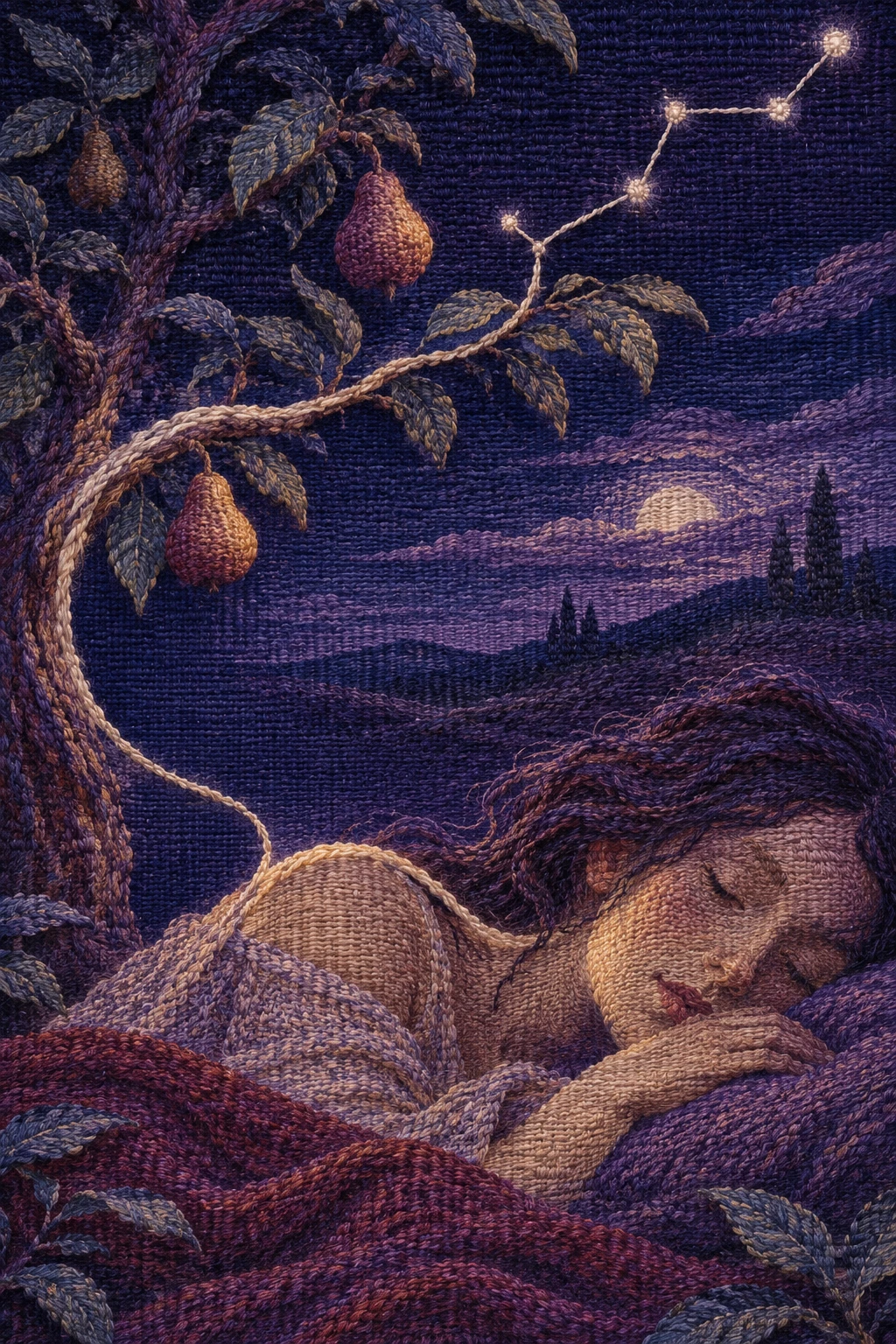
A railway junction gives the yarn several legitimate routes. A fox crossing the tracks offers a change of scale. Decide which rail will turn into the animal’s back and let the other rails remain rails. Carry every track into a fox and the scene starts to look like an exercise sheet. A domestic picture asks for a gentler turn. A sleeper’s rounded shoulder can take on the weight of an orchard bough almost before we notice the fruit.
Three readings from Penny’s desk
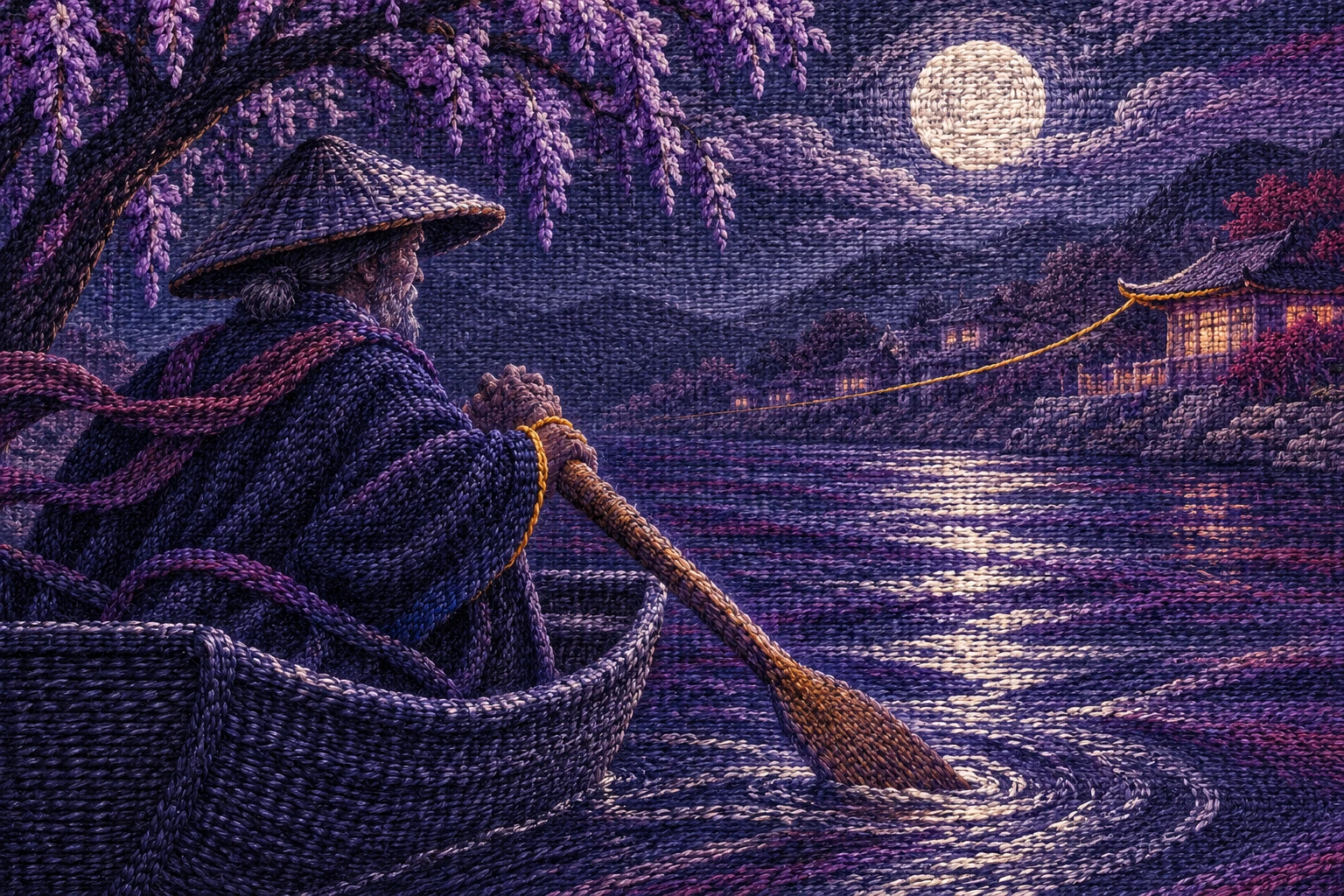
Positive review. The long yarn keeps two readings alive at the same instant. I particularly like the small delay before an oar handle starts to support a roof.
Negative review. A ready-made night scene covered by a uniform textile filter leaves the objects marooned inside their outlines. Trace one strand across an edge before investing in stars.
Neutral review. A busy scene needs a single thread the eye can afford to follow. A sparsely woven night can support several readings of the same strand without adding another object.
A small poetic detour
Original words from the AOI studio.
Poetry
An oar goes out beyond the wall of sleep.
A branch brings back the weight of someone’s arm.
One pale thread passes through the folded dark.
The sky holds fast. The boat comes home.
The prompt workshop
Original creative exercises. These prompts create new illustrations, not documentary evidence.
Cross a shoulder
Weave a sleeping figure and a pear tree in one indigo field. Continue a single flax strand from the shoulder into a branch, then into the night sky.
Give an oar a second shift
Construct a moonlit river crossing. A copper strand runs from a hand along the oar to a roof edge. Tighten the near bank and open up the far water.
Draw distance with intervals
Build a midnight railway yard in two yarn colours. Trace a fox through one rail. Give each distance half as many crossings across the same visible width.
A smile from the studio
Jokes
The night shift on this loom is unusually literal.