Puppet television and performance
The Muppet Show combines designed characters with the visible possibilities of puppetry, stage space and comic timing.
A closer look
Invent a puppet with a clear mouth shape, an easily read posture and a material that supports its personality.
Understanding the subject
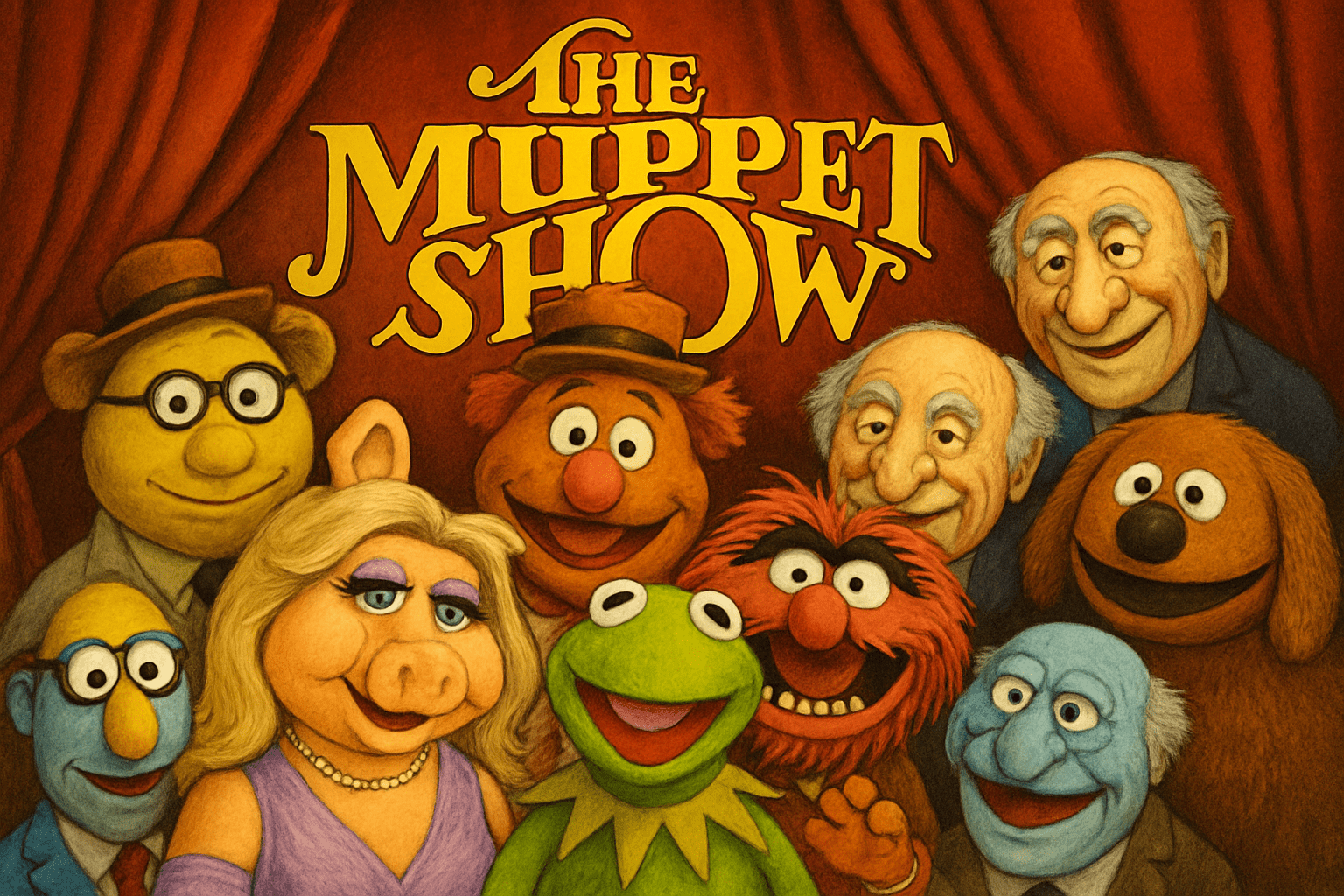
The Muppet Show is a television and performance reference, not a painting school. Its characters are designed for expressive movement and interaction within a variety-show setting. Puppet materials, construction and performance affect what the viewer reads on screen. An image resembling felt or foam captures only part of that language; the relationship between characters and the staging of an action also matters.
AOI looking and making workshop
Invent a puppet with a clear mouth shape, an easily read posture and a material that supports its personality. Place it in a scene with a specific comic problem, such as an oversized instrument or an uncooperative curtain. Keep seams and fabric texture selective rather than making every surface equally fuzzy. Leave space around moving parts so the action remains understandable. A still image cannot reproduce a performer’s timing, but it can suggest the moment before a small mishap. Label invented characters as original creations.
The prompt workshop
Original creative exercises. These prompts create new illustrations, not documentary evidence.
A rehearsal mishap
Create an original felt puppet conductor facing an orchestra of tiny paper instruments, with one enormous triangle on the floor. Use a simple stage, warm theatrical light and an expressive, readable pose.
Backstage teamwork
Illustrate two original fabric puppets trying to untangle a velvet curtain before a show, contrasting tall and round silhouettes, visible cloth texture and a gentle comic situation.
Texture and gesture
Design three original puppet heads made from felt, knitted wool and painted wood, each expressing surprise through shape and angle. Use neutral lighting and no recognizable television characters.
Your next inspiration
Discover another art style
Follow a visual thread to the next subject.